
Search
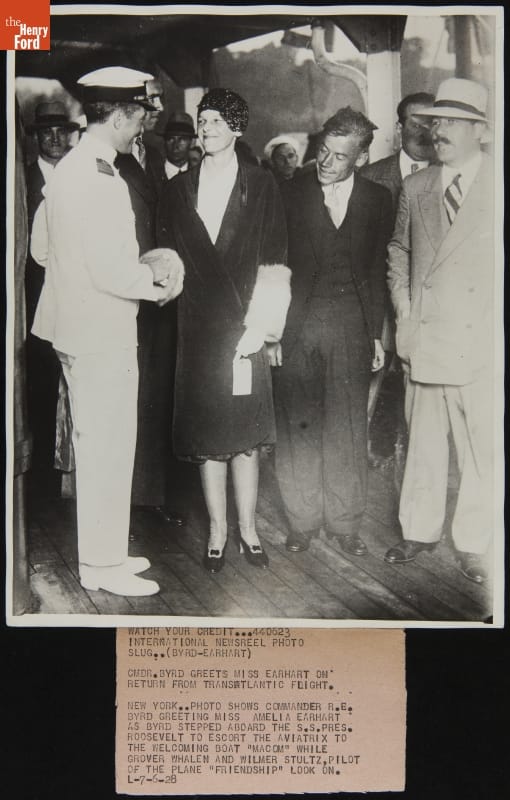
- Amelia Earhart Meets Richard Byrd aboard SS President Roosevelt, Returning from the Transatlantic Flight, July 6, 1928 - Amelia Earhart was congratulated by explorer Richard Byrd for her 1928 flight across the Atlantic Ocean. Earhart, riding as a passenger with pilot Wilmer Stultz and mechanic Louis Gordon, made the crossing in a Fokker F.VII Tri-Motor airplane. Byrd used a similar Fokker on his North Pole flight in 1926.
- July 06, 1928
- Collections - Artifact
Amelia Earhart Meets Richard Byrd aboard SS President Roosevelt, Returning from the Transatlantic Flight, July 6, 1928
Amelia Earhart was congratulated by explorer Richard Byrd for her 1928 flight across the Atlantic Ocean. Earhart, riding as a passenger with pilot Wilmer Stultz and mechanic Louis Gordon, made the crossing in a Fokker F.VII Tri-Motor airplane. Byrd used a similar Fokker on his North Pole flight in 1926.
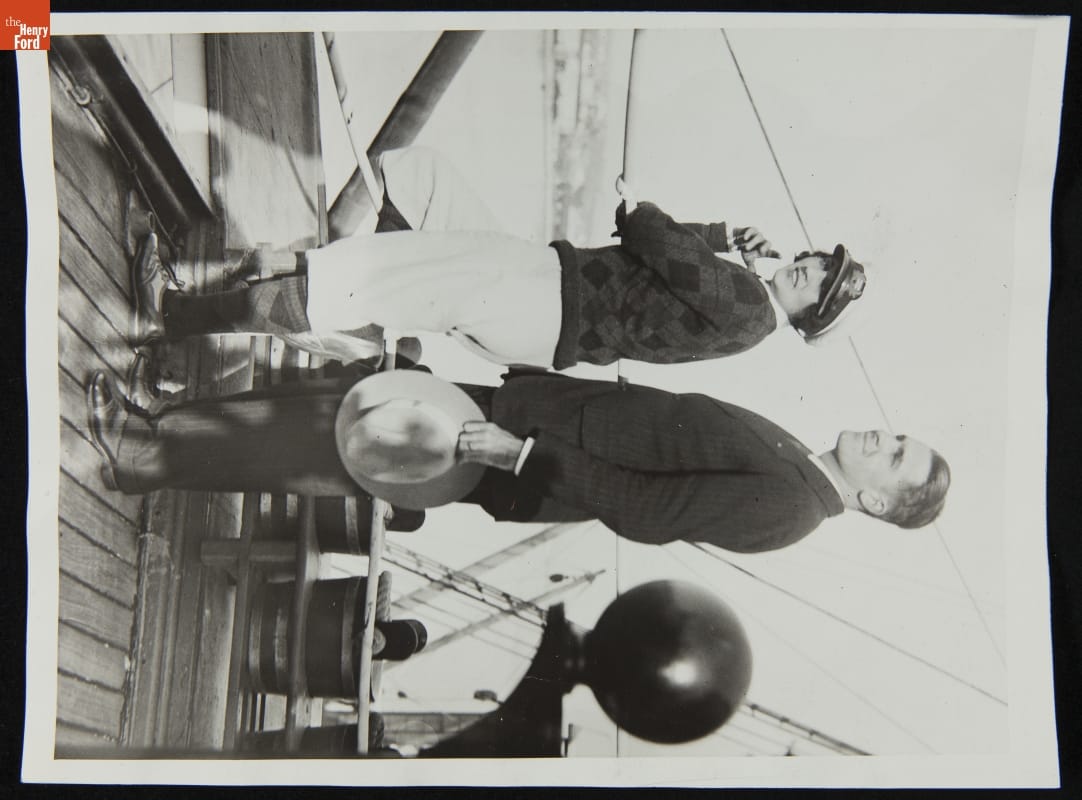
- Ruth Elder and George Haldeman aboard the Mail Ship "Lima," October 25, 1927 - Ruth Elder planned to be the first woman to fly across the Atlantic. On October 11, 1927, Elder and co-pilot George Haldeman took off in their Stinson Detroiter <EM>American Girl</EM>. An oil leak forced them to ditch in the ocean some 360 miles short of land. Still, the 2,623 miles Elder covered set a new distance record for a female pilot.
- October 25, 1927
- Collections - Artifact
Ruth Elder and George Haldeman aboard the Mail Ship "Lima," October 25, 1927
Ruth Elder planned to be the first woman to fly across the Atlantic. On October 11, 1927, Elder and co-pilot George Haldeman took off in their Stinson Detroiter American Girl. An oil leak forced them to ditch in the ocean some 360 miles short of land. Still, the 2,623 miles Elder covered set a new distance record for a female pilot.
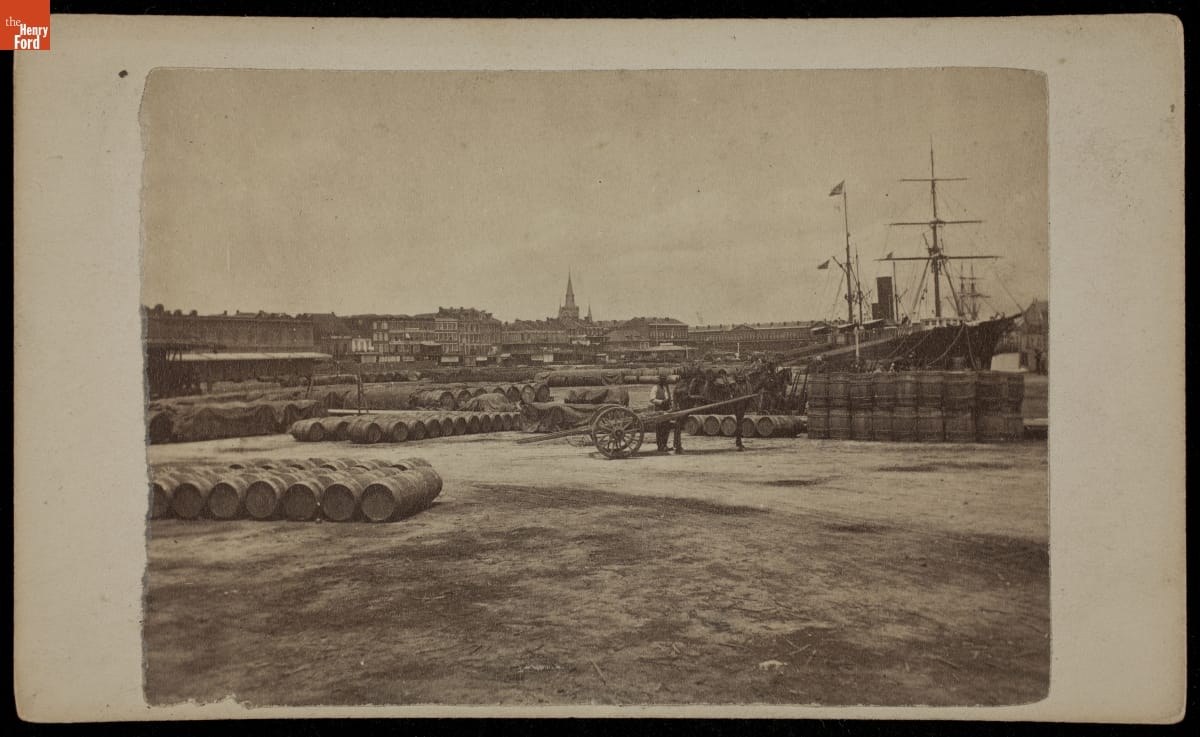
- Steamboat and Cargo at a Landing, New Orleans, Louisiana, 1866-1890 -
- 1866-1890
- Collections - Artifact
Steamboat and Cargo at a Landing, New Orleans, Louisiana, 1866-1890
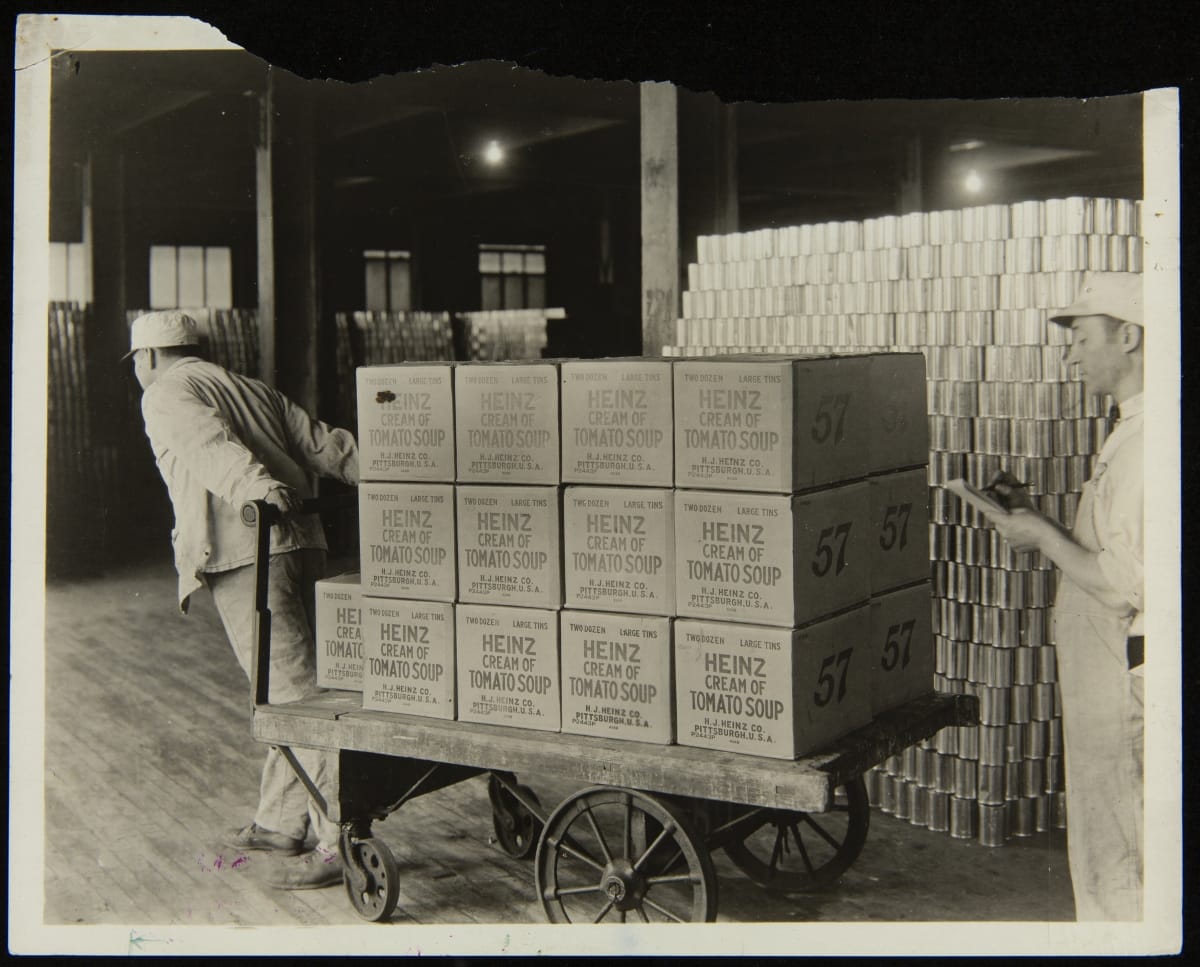
- Employee Moving Boxes of H. J. Heinz Cream of Tomato Soup, Pittsburgh, Pennsylvania, circa 1920 - Before complete mechanization of the manufacturing process, many tasks at the Heinz factory were done by hand. The H.J. Heinz Company documented the many departments of the manufacturing process through photographs. This photograph shows an employee moving boxes. These boxes were possibly heading for the shipping dock to be loaded onto a train or truck.
- circa 1920
- Collections - Artifact
Employee Moving Boxes of H. J. Heinz Cream of Tomato Soup, Pittsburgh, Pennsylvania, circa 1920
Before complete mechanization of the manufacturing process, many tasks at the Heinz factory were done by hand. The H.J. Heinz Company documented the many departments of the manufacturing process through photographs. This photograph shows an employee moving boxes. These boxes were possibly heading for the shipping dock to be loaded onto a train or truck.
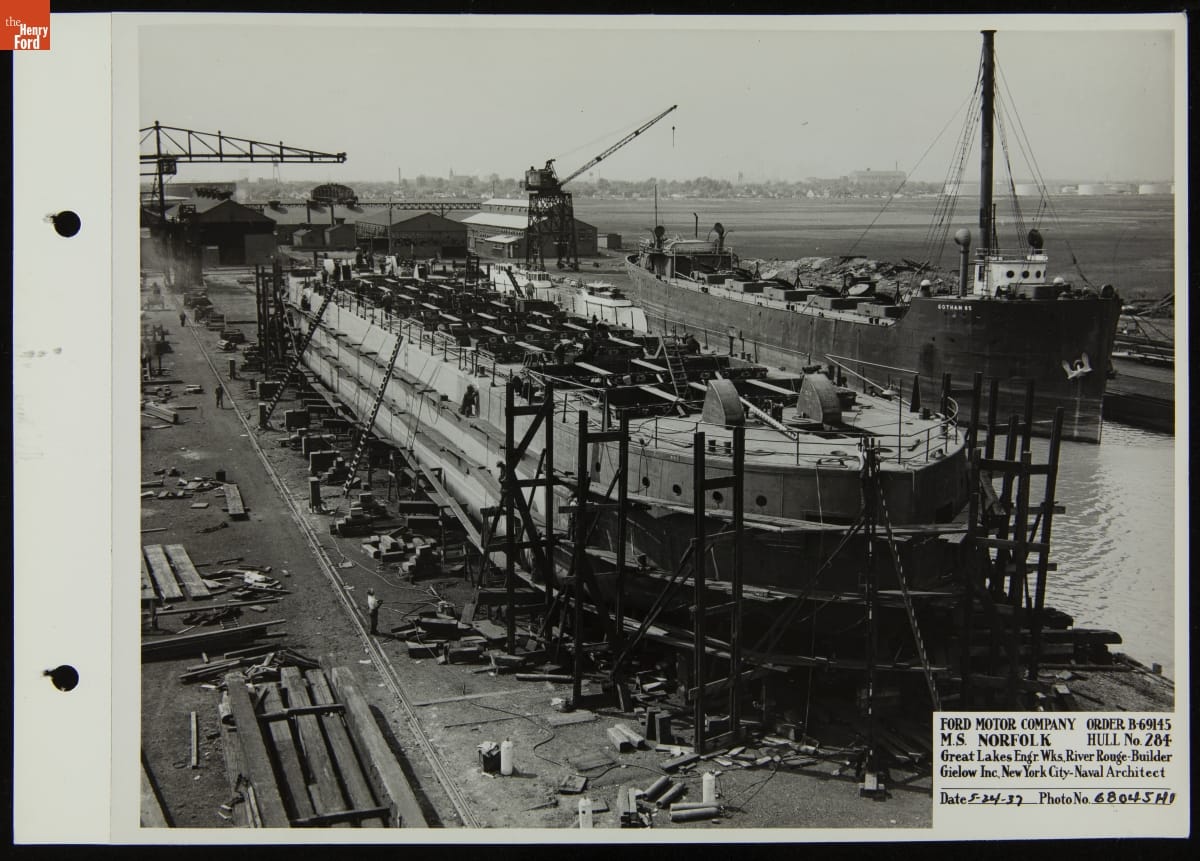
- Ford Freighter "Norfolk" under Construction at Great Lakes Engineering Works, May 24, 1937 - Ford Motor Company built four canal boats in the 1930s to transport finished auto parts between Ford's production plants on the East Coast and its River Rouge complex in Michigan. The freighters were designed to travel on the New York State Barge Canal. The <em>Norfolk</em>, named for the location of one of the Ford's East Coast plants, began service in 1937.
- April 30, 1937
- Collections - Artifact
Ford Freighter "Norfolk" under Construction at Great Lakes Engineering Works, May 24, 1937
Ford Motor Company built four canal boats in the 1930s to transport finished auto parts between Ford's production plants on the East Coast and its River Rouge complex in Michigan. The freighters were designed to travel on the New York State Barge Canal. The Norfolk, named for the location of one of the Ford's East Coast plants, began service in 1937.
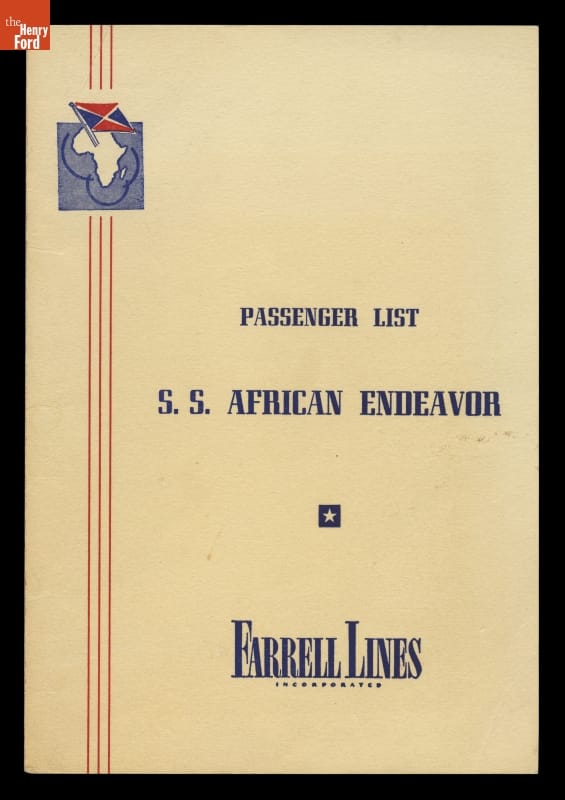
- Passenger List for SS African Endeavor, Farrell Lines, Cape Town to New York, 1954 - Launched in 1939, SS <em>Delbrasil</em> ran between New Orleans and South America. During World War II, the ship became a U.S. Navy troop transport under the name USS <em>George F. Elliott</em>. Following the war, American South African Lines -- later, Farrell Lines -- acquired the ship, rechristened it SS <em>African Endeavor</em>, and operated it between New York City and Cape Town, South Africa.
- 1954
- Collections - Artifact
Passenger List for SS African Endeavor, Farrell Lines, Cape Town to New York, 1954
Launched in 1939, SS Delbrasil ran between New Orleans and South America. During World War II, the ship became a U.S. Navy troop transport under the name USS George F. Elliott. Following the war, American South African Lines -- later, Farrell Lines -- acquired the ship, rechristened it SS African Endeavor, and operated it between New York City and Cape Town, South Africa.
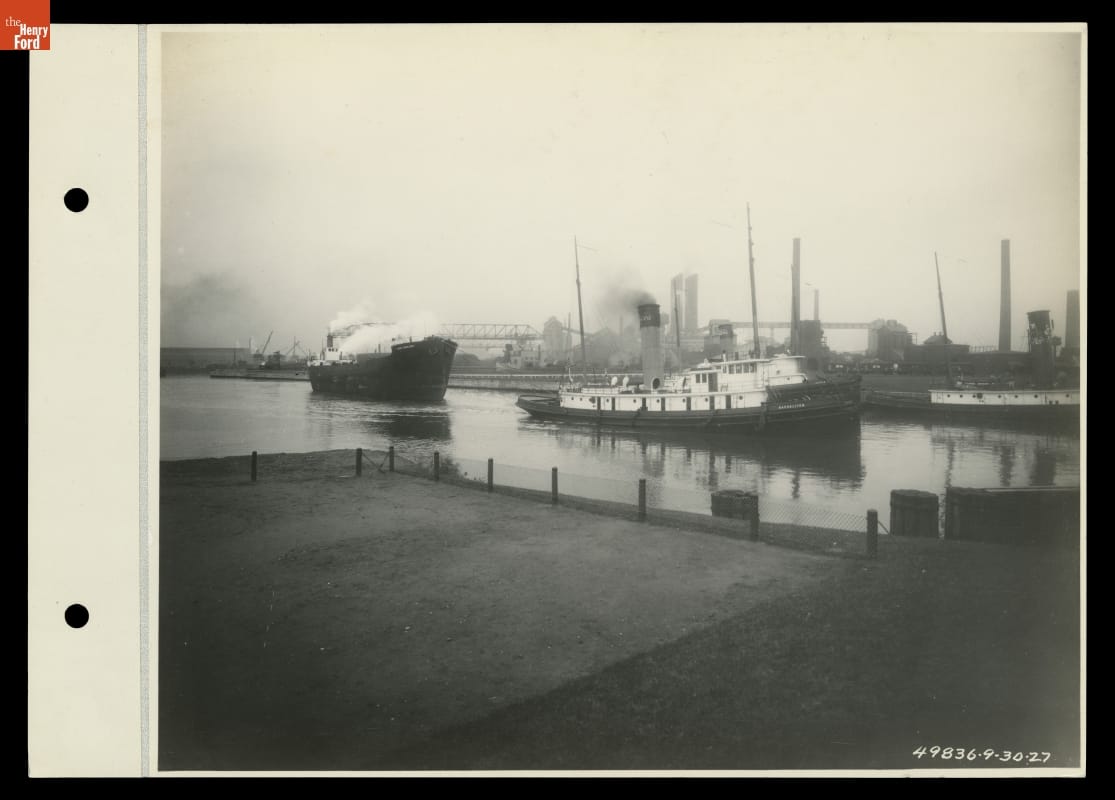
- Tugboat Towing the "Lake Hemlock" to be Salvaged at Ford Motor Company Rouge Plant Shipyard, 1927 - Completed in 1928 along the newly dredged River Rouge, Ford Motor Company's Rouge Plant quickly became an icon of modern industrial productivity. The factory's ship salvaging project exemplified Henry Ford's vision of efficiency at the plant. Workers disassembled surplus vessels, saving hardware and reconditioning functional machinery. Then, in the Rouge's production foundry, they melted down remaining scraps into reusable steel.
- September 30, 1927
- Collections - Artifact
Tugboat Towing the "Lake Hemlock" to be Salvaged at Ford Motor Company Rouge Plant Shipyard, 1927
Completed in 1928 along the newly dredged River Rouge, Ford Motor Company's Rouge Plant quickly became an icon of modern industrial productivity. The factory's ship salvaging project exemplified Henry Ford's vision of efficiency at the plant. Workers disassembled surplus vessels, saving hardware and reconditioning functional machinery. Then, in the Rouge's production foundry, they melted down remaining scraps into reusable steel.
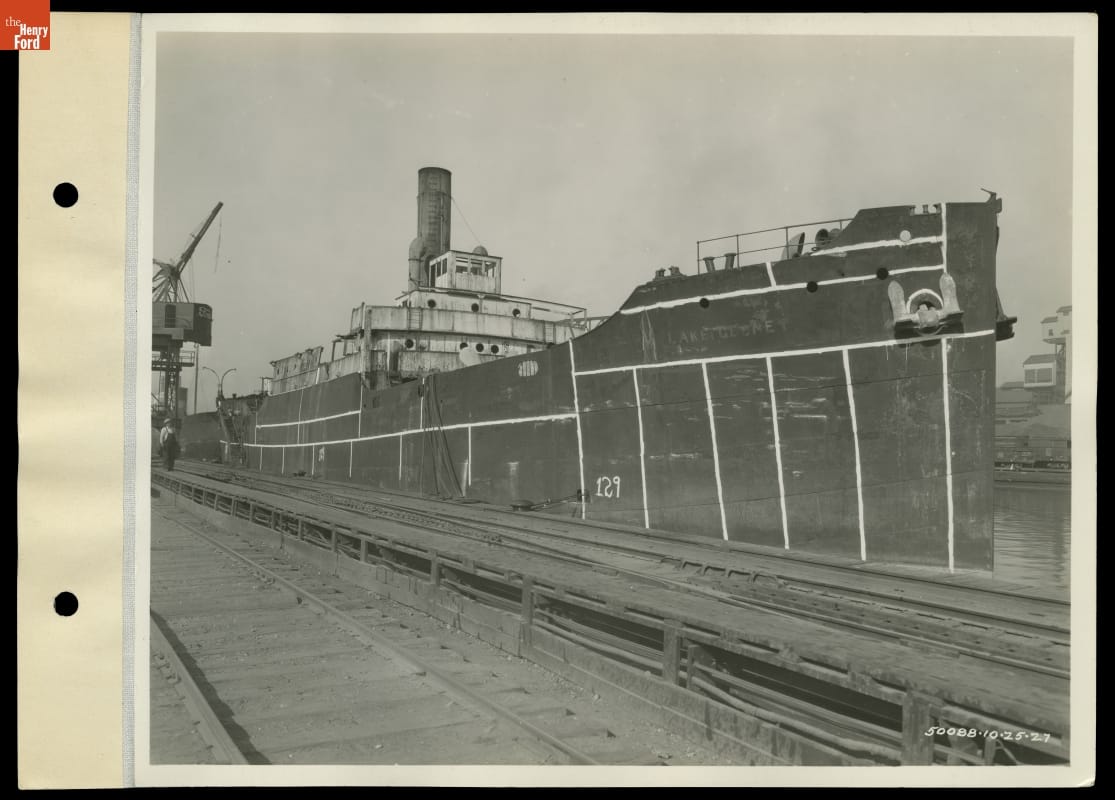
- Ship "Lake Gedney" in Storage Prior to Salvage at Ford Motor Company Rouge Plant Shipyard, 1927 - Completed in 1928 along the newly dredged River Rouge, Ford Motor Company's Rouge Plant quickly became an icon of modern industrial productivity. The factory's ship salvaging project exemplified Henry Ford's vision of efficiency at the plant. Workers disassembled surplus vessels, saving hardware and reconditioning functional machinery. Then, in the Rouge's production foundry, they melted down remaining scraps into reusable steel.
- October 25, 1927
- Collections - Artifact
Ship "Lake Gedney" in Storage Prior to Salvage at Ford Motor Company Rouge Plant Shipyard, 1927
Completed in 1928 along the newly dredged River Rouge, Ford Motor Company's Rouge Plant quickly became an icon of modern industrial productivity. The factory's ship salvaging project exemplified Henry Ford's vision of efficiency at the plant. Workers disassembled surplus vessels, saving hardware and reconditioning functional machinery. Then, in the Rouge's production foundry, they melted down remaining scraps into reusable steel.
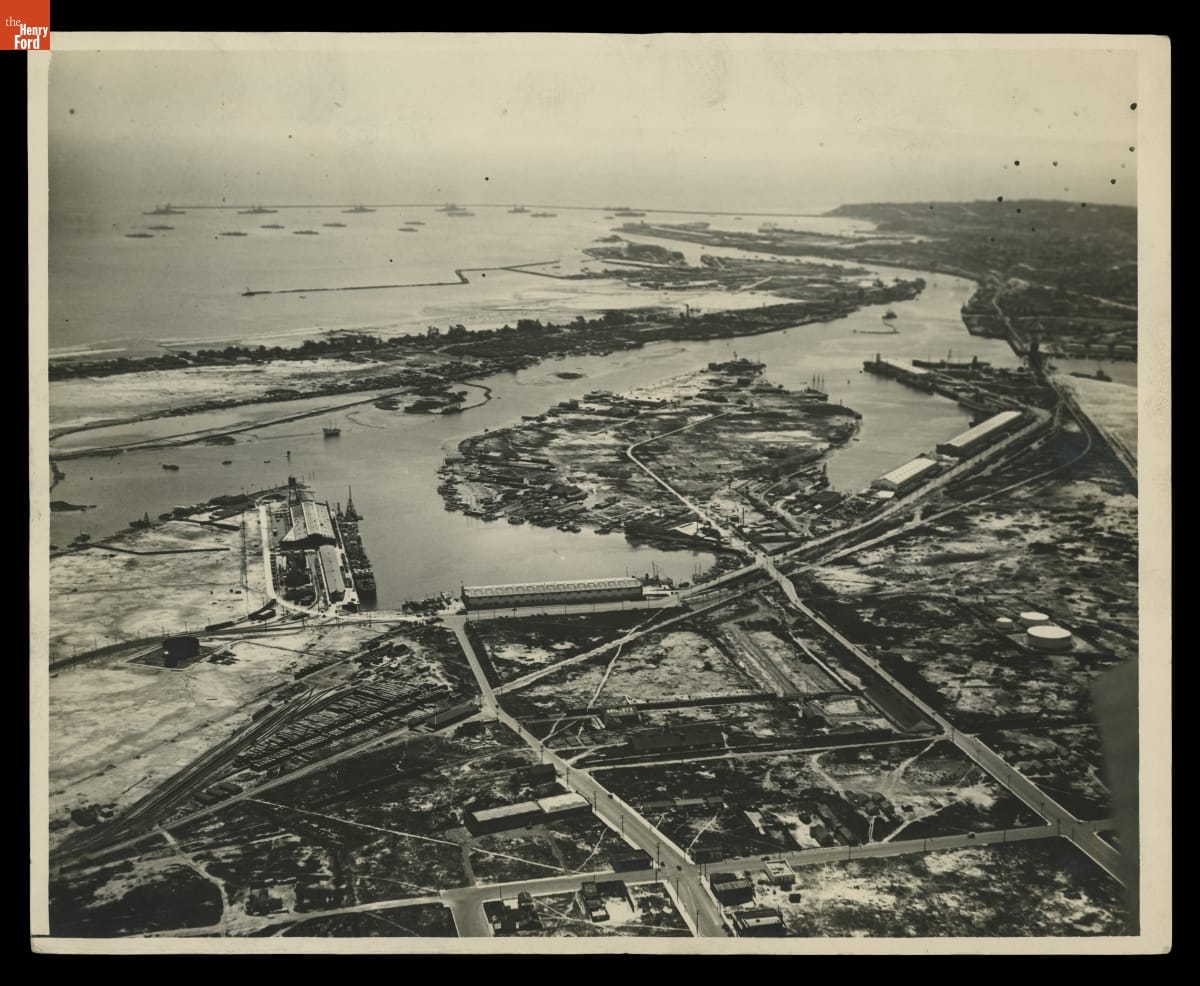
- Aerial View of Los Angeles Harbor and Part of the Pacific Fleet, circa 1922 - Military aerial reconnaissance during World War I accelerated the evolution of domestic aerial photography after the war. The sprawling city of Los Angeles became an important center for commercial aerial photography. Survey companies like Cross Aerial Photos, which captured this view, created images that remain important documents of the rapid urbanization of Southern California in the 1920s.
- circa 1922
- Collections - Artifact
Aerial View of Los Angeles Harbor and Part of the Pacific Fleet, circa 1922
Military aerial reconnaissance during World War I accelerated the evolution of domestic aerial photography after the war. The sprawling city of Los Angeles became an important center for commercial aerial photography. Survey companies like Cross Aerial Photos, which captured this view, created images that remain important documents of the rapid urbanization of Southern California in the 1920s.
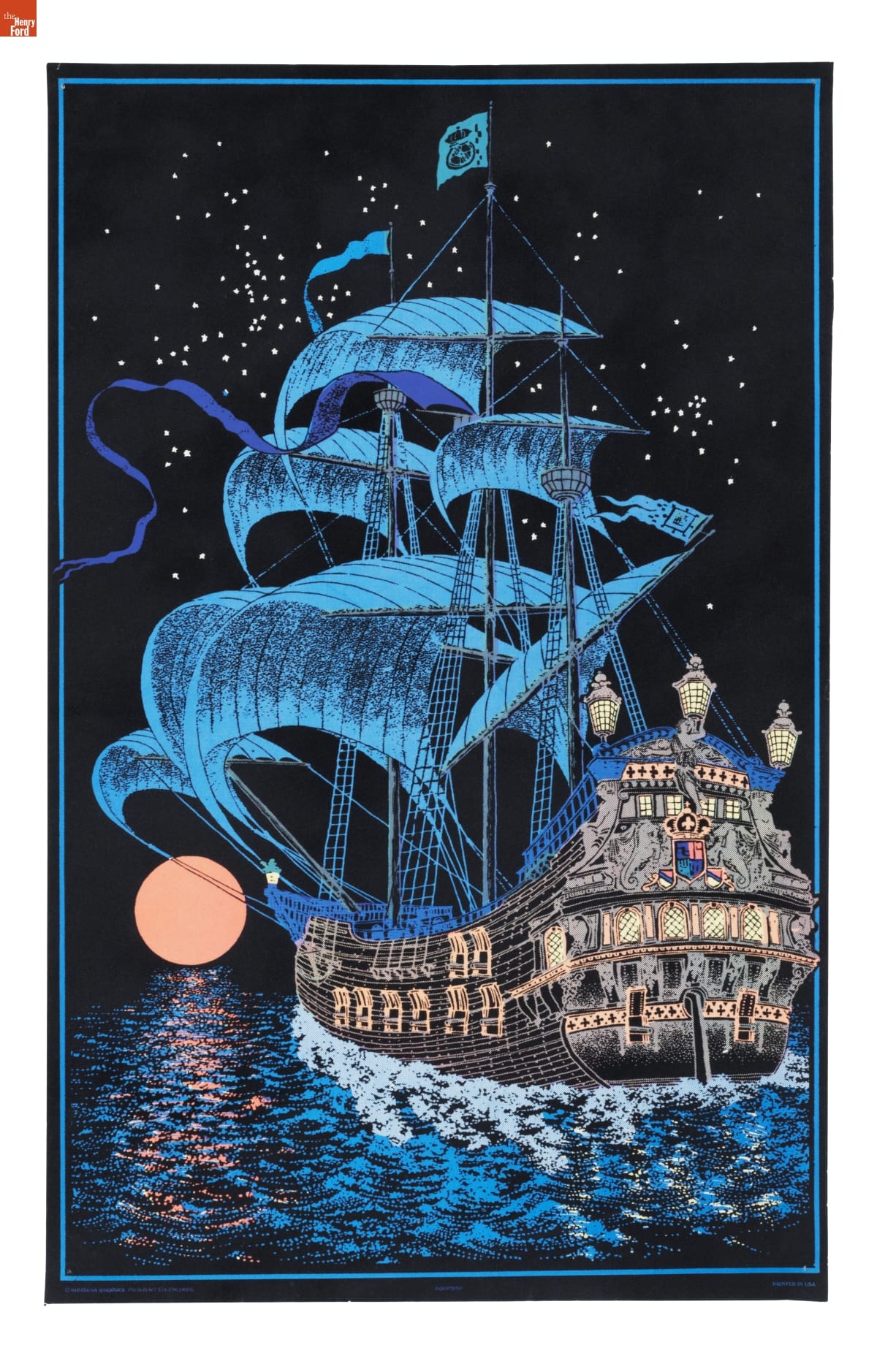
- Black Light Poster Featuring a Ship, 1971-1974 - This poster is printed with phosphorescent ink that fluoresces with an uncanny glow under ultraviolet light. These posters were popular with the counterculture and psychedelic music scenes of the 1960s-70s. Common themes include fantastical creatures, landscapes, new age spirituality, pop culture, and political images associated with the Black Power movement. Recently, nightlife culture has helped revive the blacklight aesthetic.
- 1971-1974
- Collections - Artifact
Black Light Poster Featuring a Ship, 1971-1974
This poster is printed with phosphorescent ink that fluoresces with an uncanny glow under ultraviolet light. These posters were popular with the counterculture and psychedelic music scenes of the 1960s-70s. Common themes include fantastical creatures, landscapes, new age spirituality, pop culture, and political images associated with the Black Power movement. Recently, nightlife culture has helped revive the blacklight aesthetic.