
Search
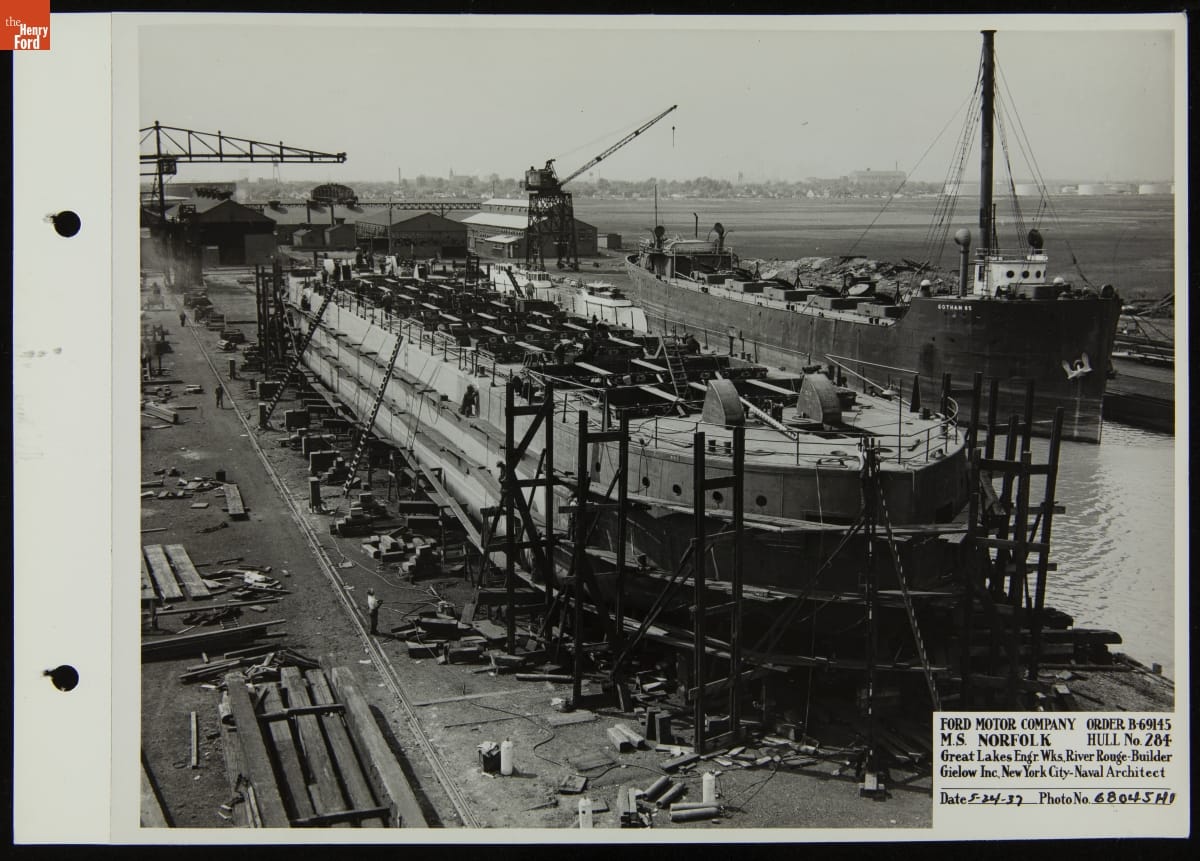
- Ford Freighter "Norfolk" under Construction at Great Lakes Engineering Works, May 24, 1937 - Ford Motor Company built four canal boats in the 1930s to transport finished auto parts between Ford's production plants on the East Coast and its River Rouge complex in Michigan. The freighters were designed to travel on the New York State Barge Canal. The <em>Norfolk</em>, named for the location of one of the Ford's East Coast plants, began service in 1937.
- April 30, 1937
- Collections - Artifact
Ford Freighter "Norfolk" under Construction at Great Lakes Engineering Works, May 24, 1937
Ford Motor Company built four canal boats in the 1930s to transport finished auto parts between Ford's production plants on the East Coast and its River Rouge complex in Michigan. The freighters were designed to travel on the New York State Barge Canal. The Norfolk, named for the location of one of the Ford's East Coast plants, began service in 1937.
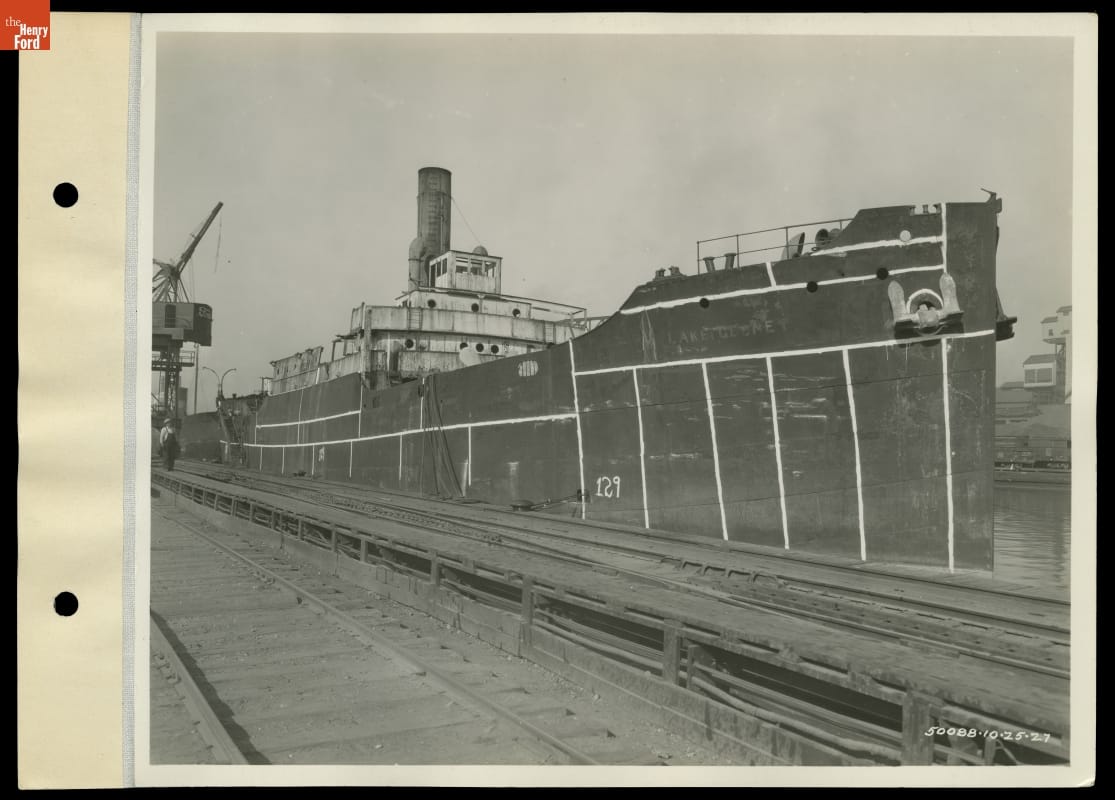
- Ship "Lake Gedney" in Storage Prior to Salvage at Ford Motor Company Rouge Plant Shipyard, 1927 - Completed in 1928 along the newly dredged River Rouge, Ford Motor Company's Rouge Plant quickly became an icon of modern industrial productivity. The factory's ship salvaging project exemplified Henry Ford's vision of efficiency at the plant. Workers disassembled surplus vessels, saving hardware and reconditioning functional machinery. Then, in the Rouge's production foundry, they melted down remaining scraps into reusable steel.
- October 25, 1927
- Collections - Artifact
Ship "Lake Gedney" in Storage Prior to Salvage at Ford Motor Company Rouge Plant Shipyard, 1927
Completed in 1928 along the newly dredged River Rouge, Ford Motor Company's Rouge Plant quickly became an icon of modern industrial productivity. The factory's ship salvaging project exemplified Henry Ford's vision of efficiency at the plant. Workers disassembled surplus vessels, saving hardware and reconditioning functional machinery. Then, in the Rouge's production foundry, they melted down remaining scraps into reusable steel.
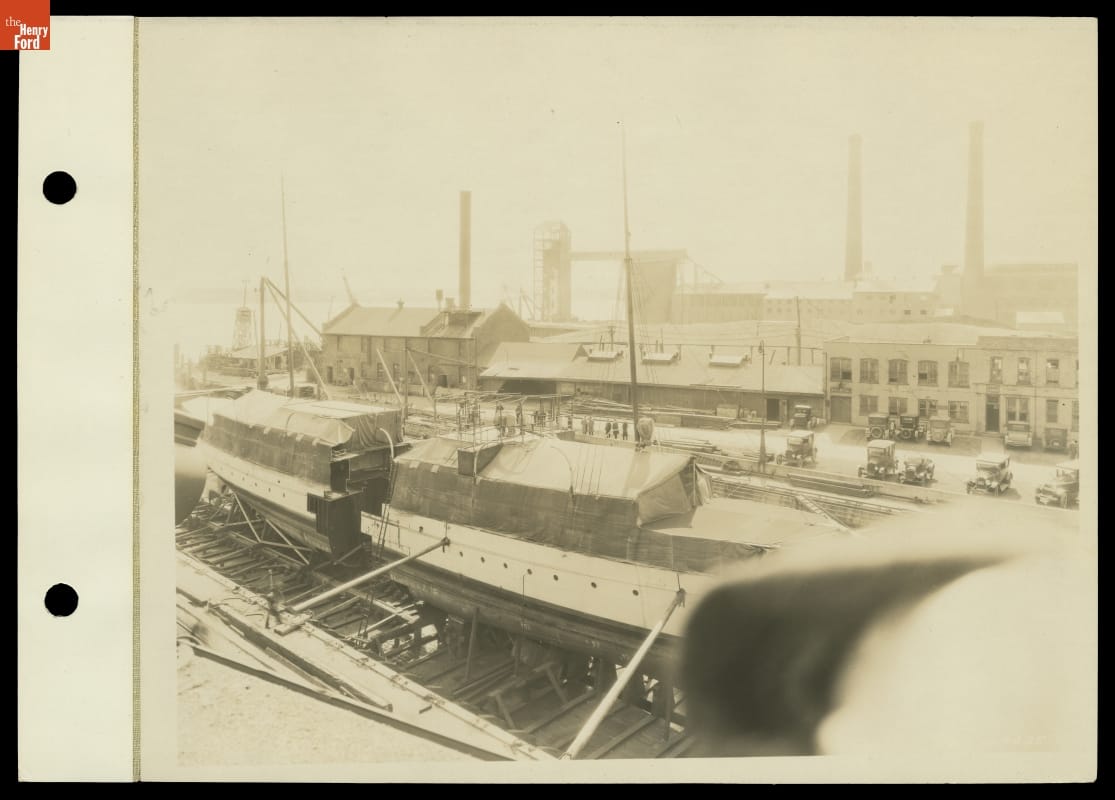
- Henry Ford's Yacht "Sialia" Undergoing Modification at Detroit Shipbuilding Company, 1925 - Henry Ford purchased a yacht in 1917. He retained the vessel's given name, <em>Sialia</em>, the scientific name for the bluebird. Intended as private transportation during trips to investigate possible industrial supply sources, the yacht also carried the Fords and their guests on family excursions. This photograph was taken during an operation to add diesel engines and lengthen <em>Sialia</em> by 21 feet.
- April 02, 1925
- Collections - Artifact
Henry Ford's Yacht "Sialia" Undergoing Modification at Detroit Shipbuilding Company, 1925
Henry Ford purchased a yacht in 1917. He retained the vessel's given name, Sialia, the scientific name for the bluebird. Intended as private transportation during trips to investigate possible industrial supply sources, the yacht also carried the Fords and their guests on family excursions. This photograph was taken during an operation to add diesel engines and lengthen Sialia by 21 feet.
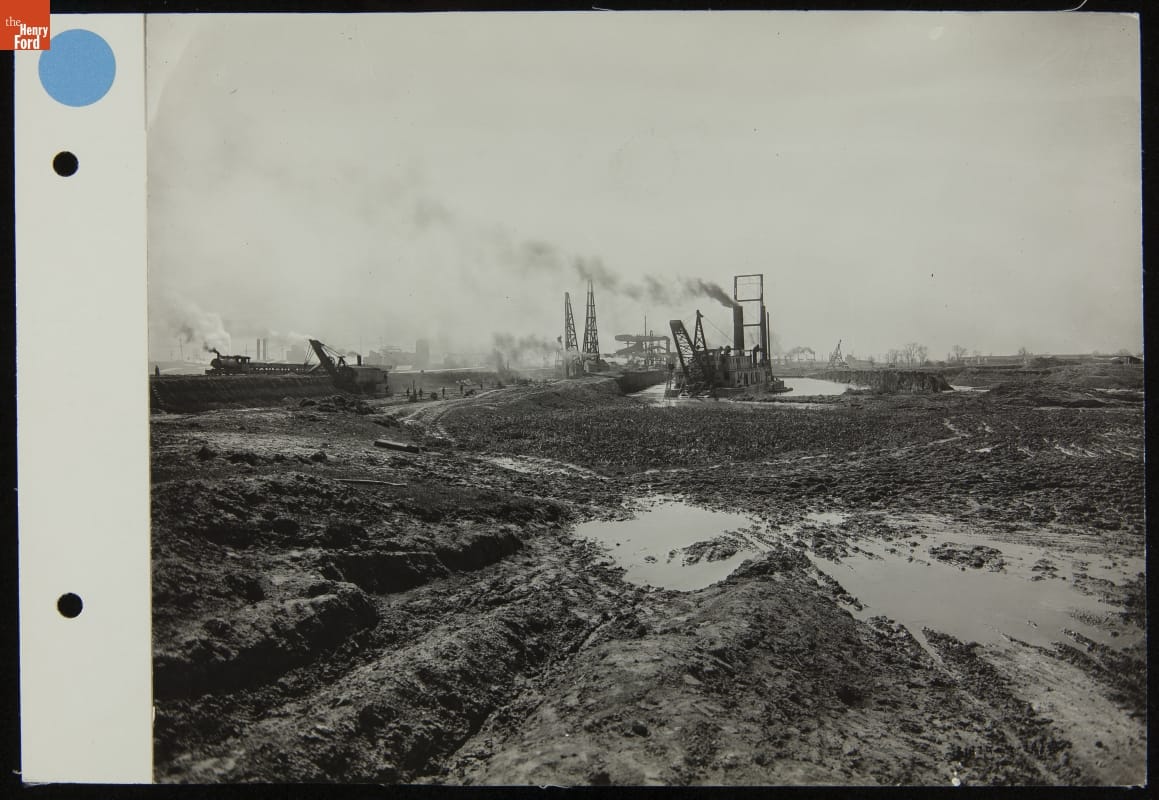
- Ford Rouge Plant "B" Building Shipyard Construction, 1918 - Henry Ford began buying land near the mouth of the Rouge River in 1915. Ford was thinking of future expansion. His new property was on level ground, near multiple railroad lines, and -- after dredging -- within navigable reach of the Detroit River and the Great Lakes. In 1918, the site became home to Ford's Eagle anti-submarine patrol boat factory.
- April 09, 1918
- Collections - Artifact
Ford Rouge Plant "B" Building Shipyard Construction, 1918
Henry Ford began buying land near the mouth of the Rouge River in 1915. Ford was thinking of future expansion. His new property was on level ground, near multiple railroad lines, and -- after dredging -- within navigable reach of the Detroit River and the Great Lakes. In 1918, the site became home to Ford's Eagle anti-submarine patrol boat factory.
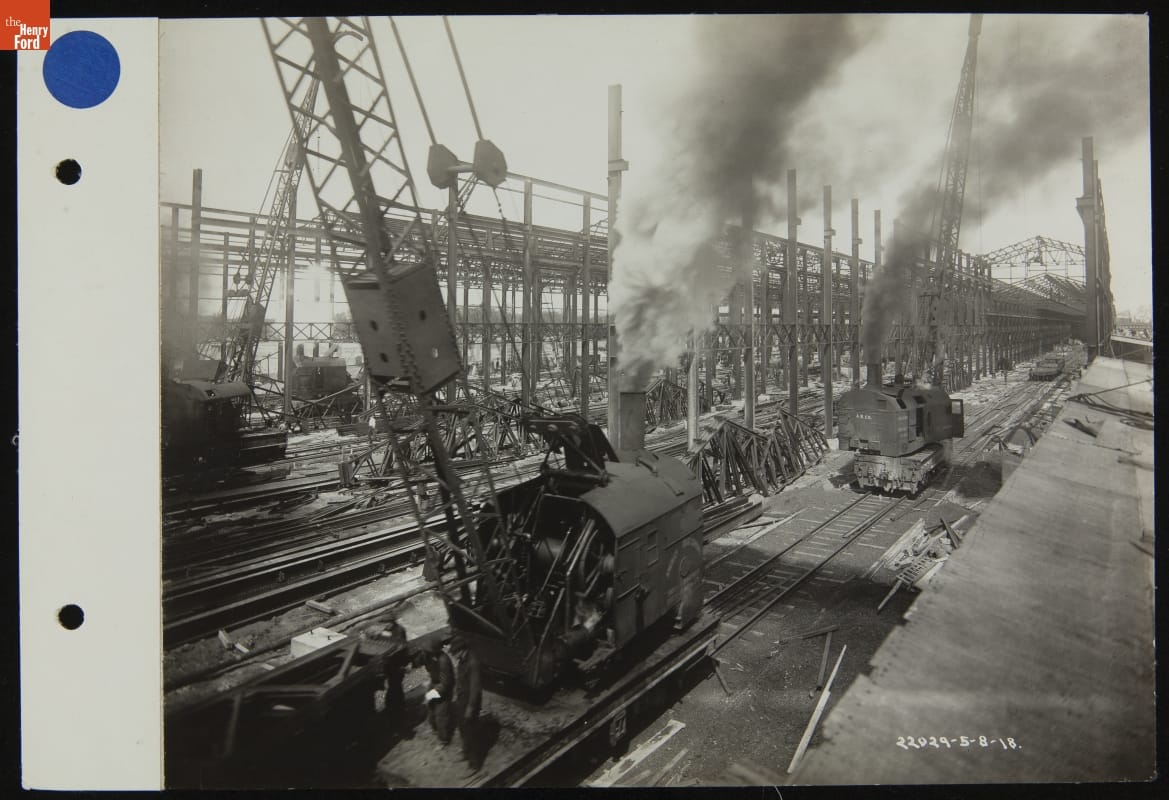
- Ford Rouge Plant Shipyard, May 1918 - Ford Motor Company built Eagle anti-submarine patrol boats during the First World War. Ford assembled the boats at a new factory, constructed with funding from the federal government, at the mouth of the Rouge River. After the war, Ford exercised its option to buy some of the facilities. The site formed the core of Ford's massive Rouge automobile plant.
- May 08, 1918
- Collections - Artifact
Ford Rouge Plant Shipyard, May 1918
Ford Motor Company built Eagle anti-submarine patrol boats during the First World War. Ford assembled the boats at a new factory, constructed with funding from the federal government, at the mouth of the Rouge River. After the war, Ford exercised its option to buy some of the facilities. The site formed the core of Ford's massive Rouge automobile plant.
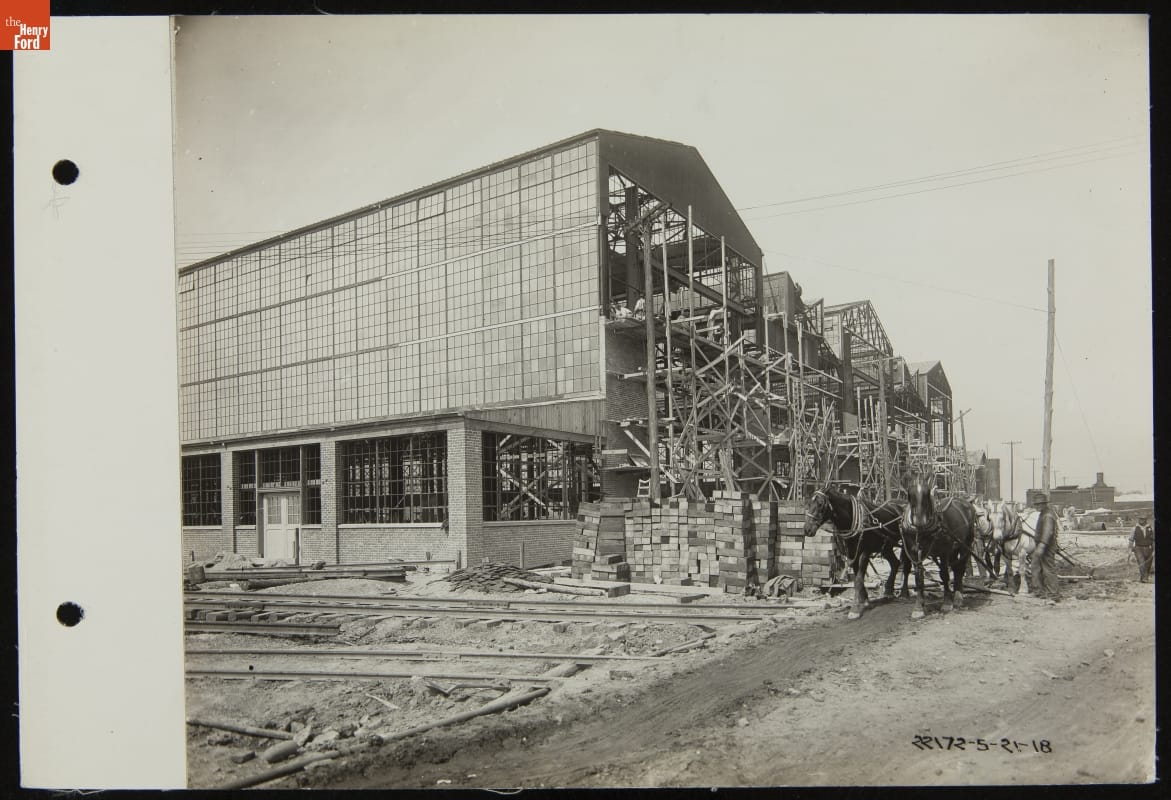
- Construction of the Rouge Plant "B" Building, May 1918 - Ford Motor Company built Eagle anti-submarine patrol boats during the First World War. Ford assembled the boats at a new factory, constructed with funding from the federal government, at the mouth of the Rouge River. After the war, Ford exercised its option to buy some of the facilities. The site formed the core of Ford's massive Rouge automobile plant.
- May 21, 1918
- Collections - Artifact
Construction of the Rouge Plant "B" Building, May 1918
Ford Motor Company built Eagle anti-submarine patrol boats during the First World War. Ford assembled the boats at a new factory, constructed with funding from the federal government, at the mouth of the Rouge River. After the war, Ford exercised its option to buy some of the facilities. The site formed the core of Ford's massive Rouge automobile plant.
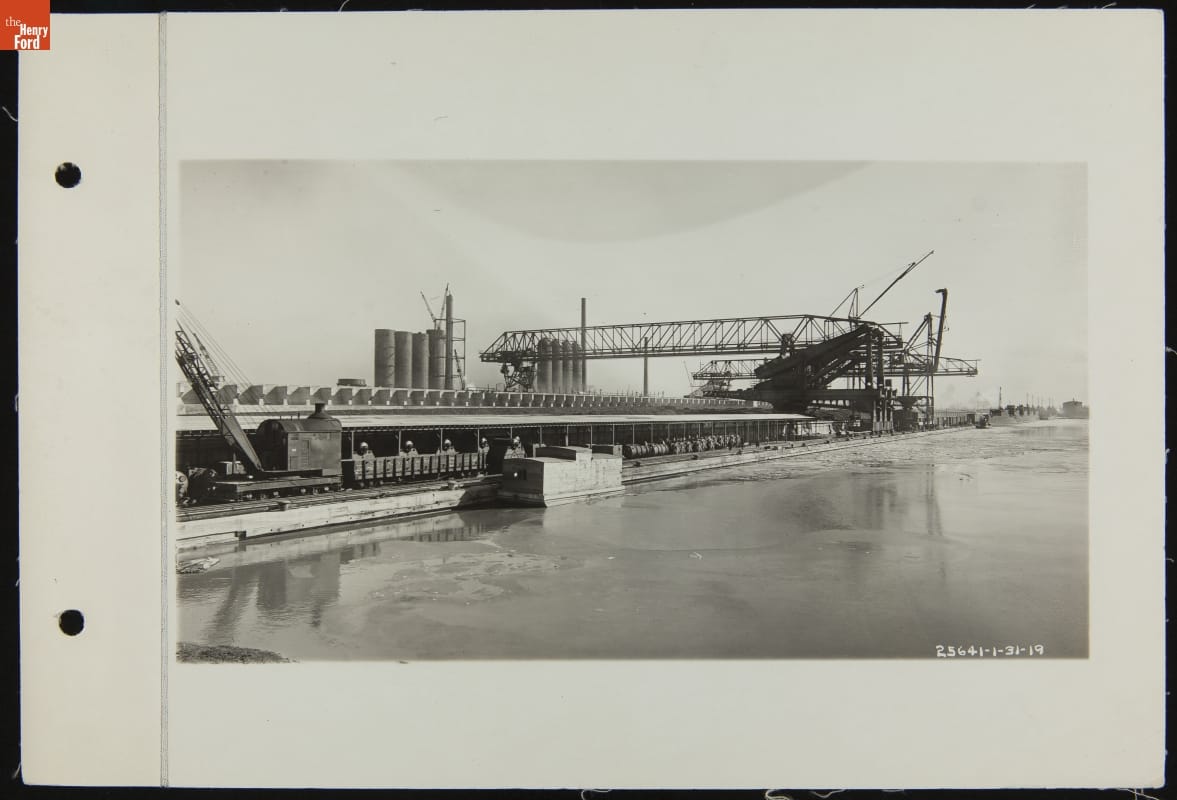
- Unloading Cranes at Dock by the Ford Rouge Plant Blast Furnace, January 1919 - Iron ore and limestone used at the Rouge were sourced from Great Lakes mines and quarries. These bulk commodities generally were delivered to the plant by lake-going freighters. Large cranes at the Rouge's mile-long boat slip unloaded the materials and moved them to nearby storage bins.
- January 31, 1919
- Collections - Artifact
Unloading Cranes at Dock by the Ford Rouge Plant Blast Furnace, January 1919
Iron ore and limestone used at the Rouge were sourced from Great Lakes mines and quarries. These bulk commodities generally were delivered to the plant by lake-going freighters. Large cranes at the Rouge's mile-long boat slip unloaded the materials and moved them to nearby storage bins.
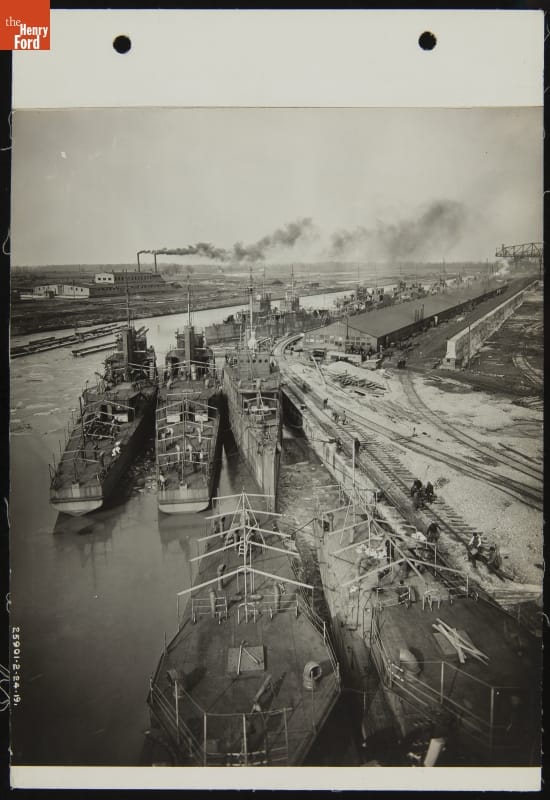
- Eagle Boats Lined Up at Ford Rouge Plant Dock, February 1919 - During World War I, Ford Motor Company manufactured Eagle anti-submarine patrol boats for the U.S. Navy. Built in Dearborn on the Rouge River, the boats reached the Atlantic via the Detroit River, Lakes Erie and Ontario, and the St. Lawrence River. Ice blocked the route during the winter of 1918-19. More than 40 Eagles awaited warmer weather at the Rouge.
- February 22, 1919
- Collections - Artifact
Eagle Boats Lined Up at Ford Rouge Plant Dock, February 1919
During World War I, Ford Motor Company manufactured Eagle anti-submarine patrol boats for the U.S. Navy. Built in Dearborn on the Rouge River, the boats reached the Atlantic via the Detroit River, Lakes Erie and Ontario, and the St. Lawrence River. Ice blocked the route during the winter of 1918-19. More than 40 Eagles awaited warmer weather at the Rouge.
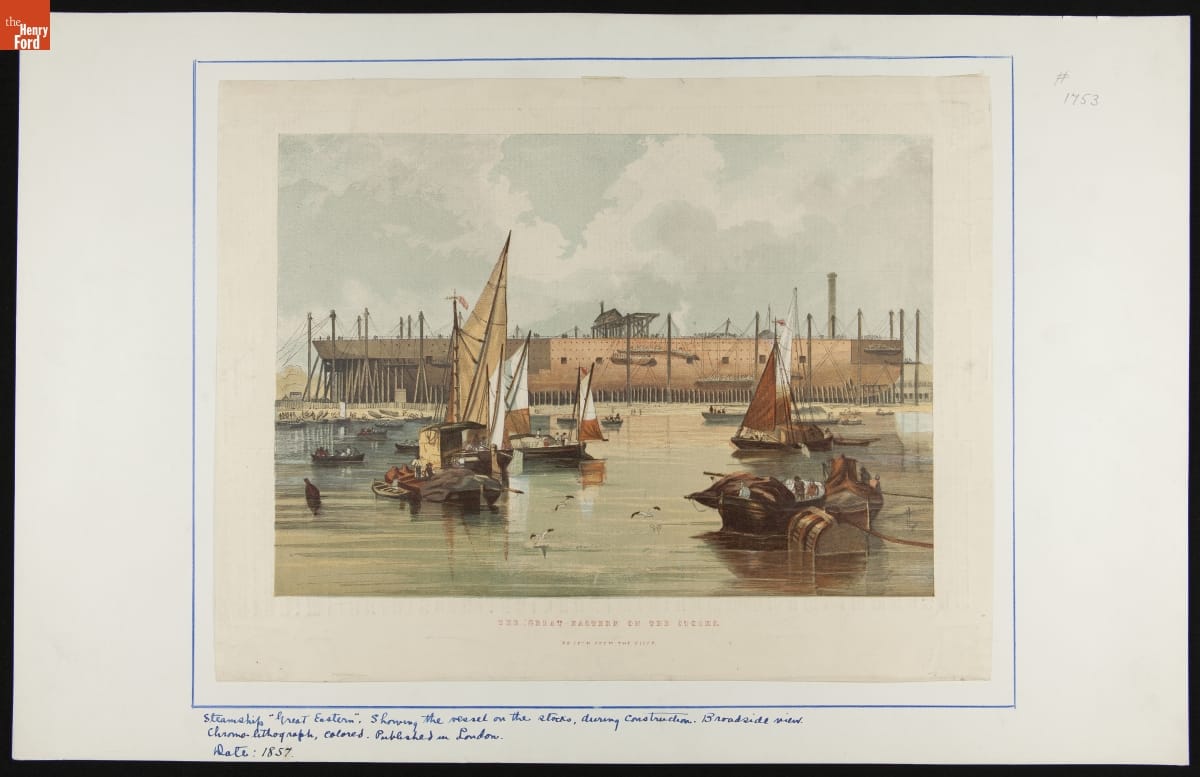
- Chromolithograph, "The Great Eastern on the Stocks as Seen From the River," 1857 - The SS <em>Great Eastern</em> is shown under construction in this print. It was the largest passenger ship ever built at the time of its launch in 1858. In 1866, the <em>Great Eastern</em> was converted to lay the second--and first successful--transatlantic cable. During its career, this ship laid multiple submarine communication cables totaling over 32,000 miles.
- 1857
- Collections - Artifact
Chromolithograph, "The Great Eastern on the Stocks as Seen From the River," 1857
The SS Great Eastern is shown under construction in this print. It was the largest passenger ship ever built at the time of its launch in 1858. In 1866, the Great Eastern was converted to lay the second--and first successful--transatlantic cable. During its career, this ship laid multiple submarine communication cables totaling over 32,000 miles.
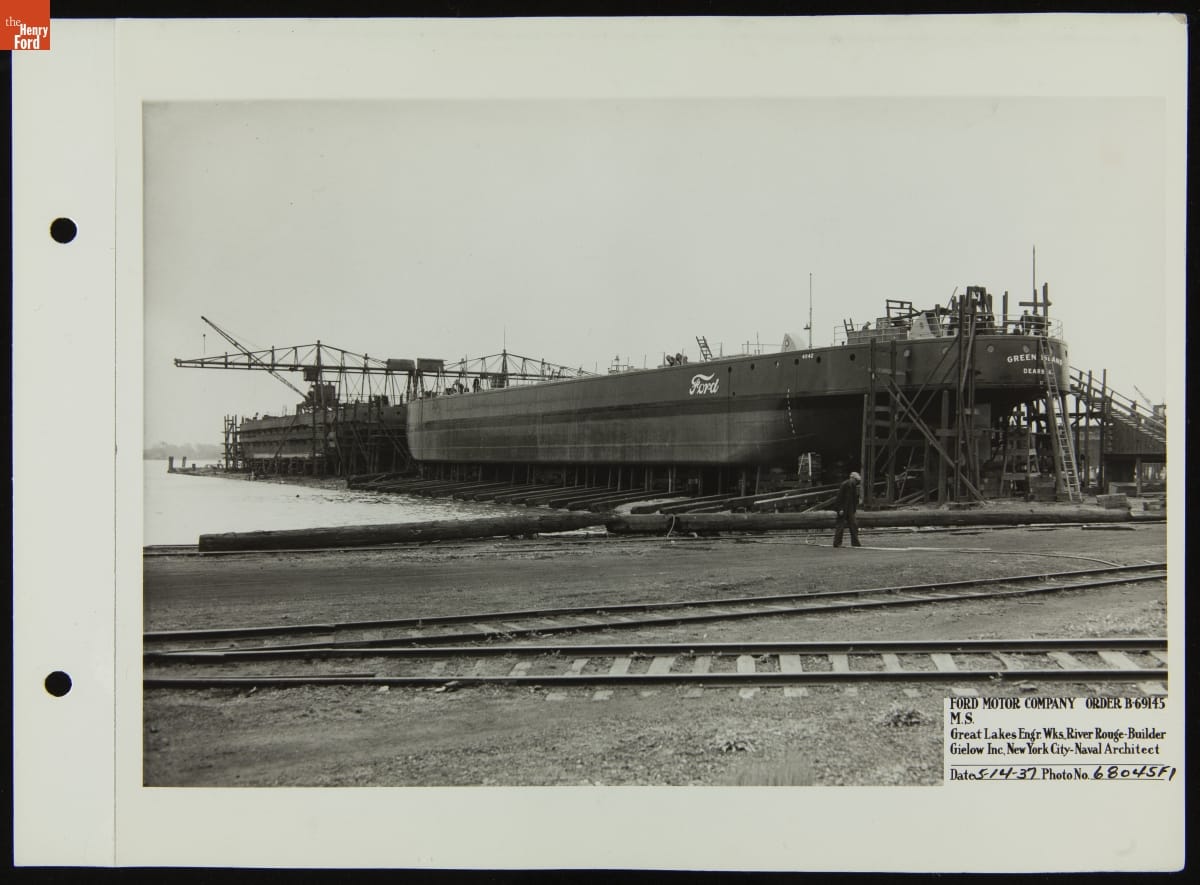
- Ford Freighter "Green Island" under Construction at Great Lakes Engineering Works, May 14, 1937 - Ford Motor Company built four canal boats in the 1930s to transport finished auto parts between Ford's production plants on the East Coast and its River Rouge complex in Michigan. The freighters were designed to travel on the New York State Barge Canal. The <em>Green Island</em>, named for the location of one of Ford's East Coast plants, began service in 1937.
- May 14, 1937
- Collections - Artifact
Ford Freighter "Green Island" under Construction at Great Lakes Engineering Works, May 14, 1937
Ford Motor Company built four canal boats in the 1930s to transport finished auto parts between Ford's production plants on the East Coast and its River Rouge complex in Michigan. The freighters were designed to travel on the New York State Barge Canal. The Green Island, named for the location of one of Ford's East Coast plants, began service in 1937.