
Search
- Brannock Device, 1950-1965 - Many people may not know that the scientific-looking gadget found in most shoe stores is called a Brannock device. Charles Brannock, a shoe store owner from Syracuse, New York, invented this tool in the late 1920s. It replaced a simple wooden ruler-type stick. The Brannock device provides more precise measurements of a person's foot ensuring a better fitting shoe.
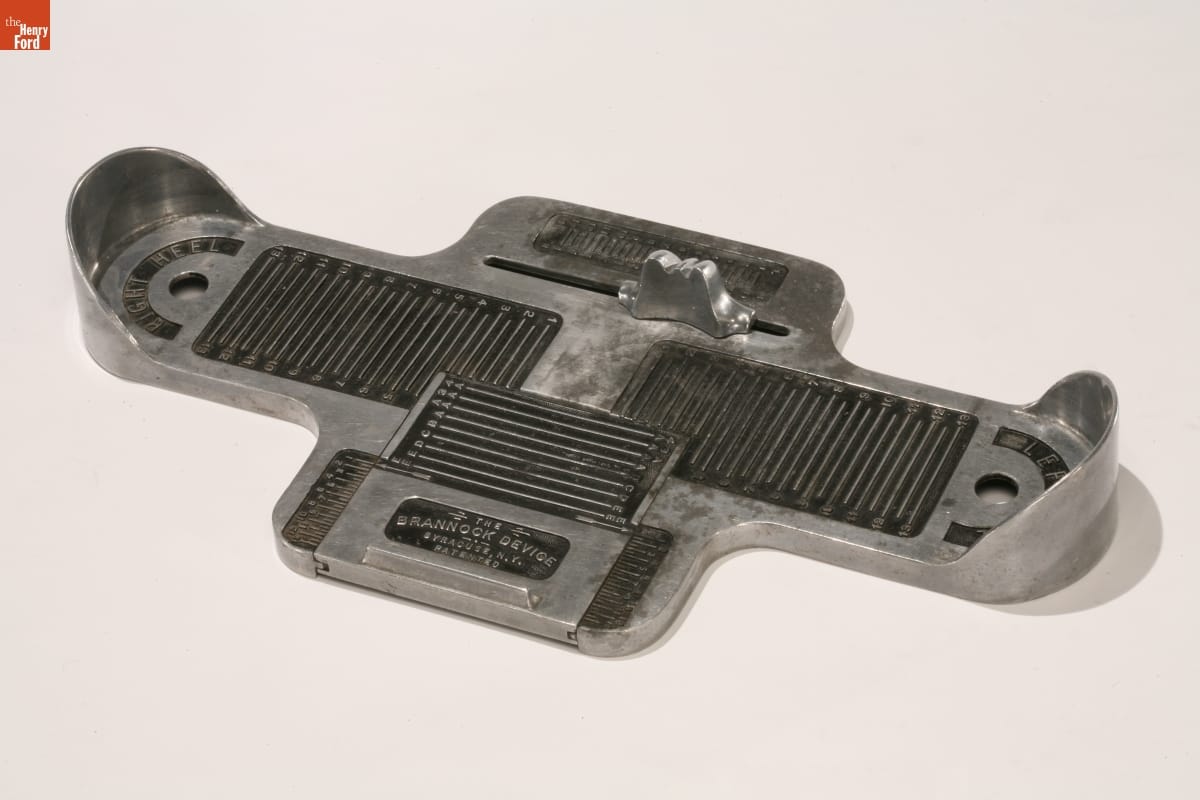
- 1950-1965
- Collections - Artifact
Brannock Device, 1950-1965
Many people may not know that the scientific-looking gadget found in most shoe stores is called a Brannock device. Charles Brannock, a shoe store owner from Syracuse, New York, invented this tool in the late 1920s. It replaced a simple wooden ruler-type stick. The Brannock device provides more precise measurements of a person's foot ensuring a better fitting shoe.
- Women and Men in a Made-to-Order Shoe Store in Belterra, Brazil, 1938 - Henry Ford established Fordlandia and Belterra in the Brazilian rainforest to supply rubber for automobile production. He began shipping machinery and supplies to the Amazon in 1928. Ford paid the indigenous workers good wages and supplied various amenities -- he also imposed foreign work traditions and behavioral restrictions which the workers resented. The plantations failed and Ford Motor Company disposed of the project in 1945.
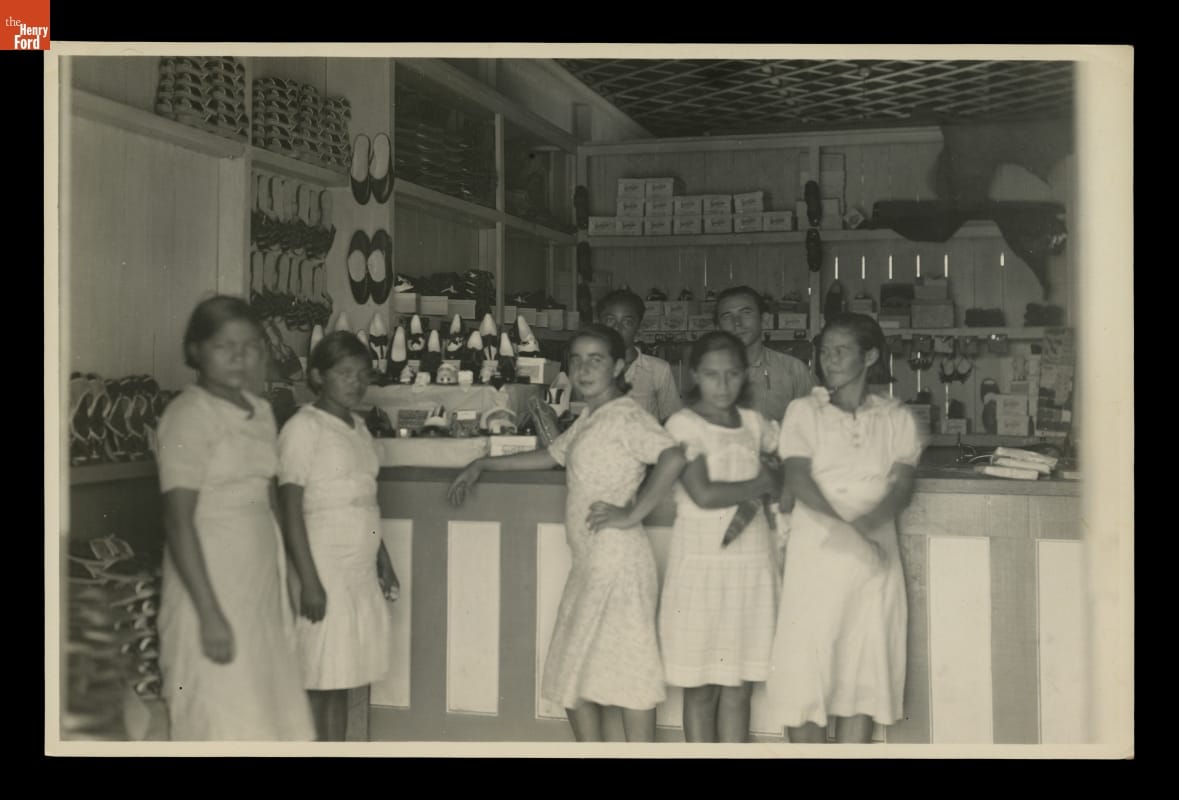
- 1938
- Collections - Artifact
Women and Men in a Made-to-Order Shoe Store in Belterra, Brazil, 1938
Henry Ford established Fordlandia and Belterra in the Brazilian rainforest to supply rubber for automobile production. He began shipping machinery and supplies to the Amazon in 1928. Ford paid the indigenous workers good wages and supplied various amenities -- he also imposed foreign work traditions and behavioral restrictions which the workers resented. The plantations failed and Ford Motor Company disposed of the project in 1945.
- Button's Raven Gloss Shoe Dressing Trade Card, 1880-1890 - In the last third of the nineteenth century, an unprecedented variety of consumer goods and services flooded the American market. Advertisers, armed with new methods of color printing, bombarded potential customers with trade cards. Americans enjoyed and often saved the vibrant little advertisements found in product packages or distributed by local merchants. Many survive as historical records of commercialism in the United States.
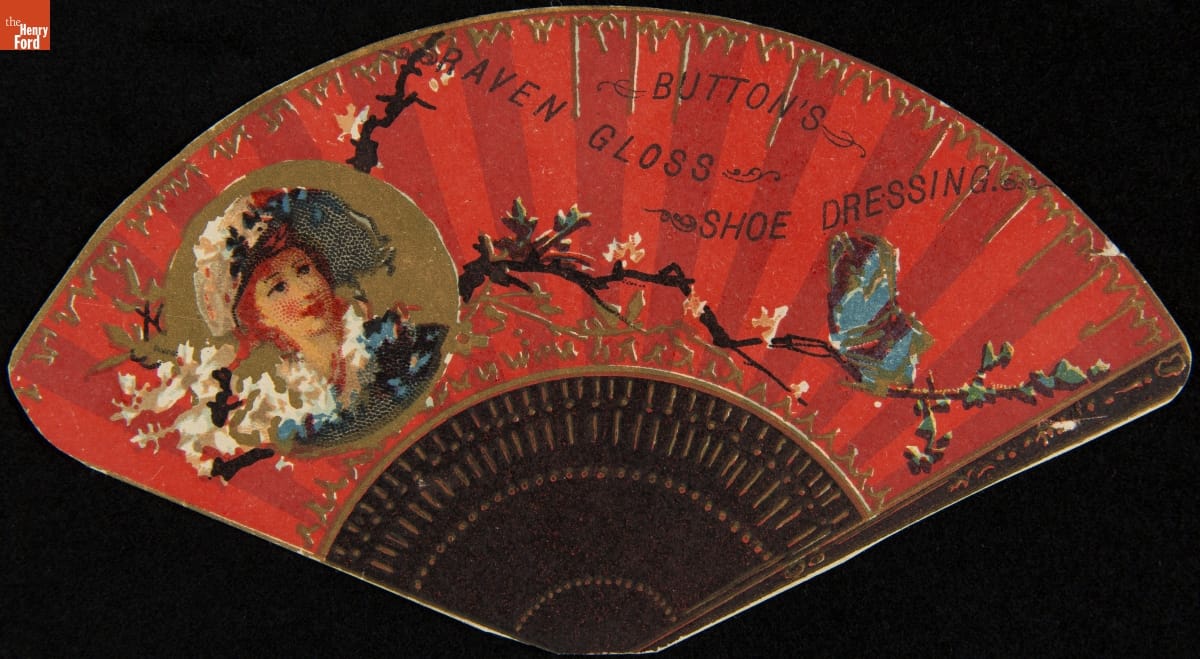
- 1880-1890
- Collections - Artifact
Button's Raven Gloss Shoe Dressing Trade Card, 1880-1890
In the last third of the nineteenth century, an unprecedented variety of consumer goods and services flooded the American market. Advertisers, armed with new methods of color printing, bombarded potential customers with trade cards. Americans enjoyed and often saved the vibrant little advertisements found in product packages or distributed by local merchants. Many survive as historical records of commercialism in the United States.
- Trade Card for Childs' Shoe Store, Westfield, Massachusetts, circa 1890 - In the last third of the nineteenth century, an unprecedented variety of consumer goods and services flooded the American market. Advertisers, armed with new methods of color printing, bombarded potential customers with trade cards. Americans enjoyed and often saved the vibrant little advertisements found in product packages or distributed by local merchants. Many survive as historical records of commercialism in the United States.
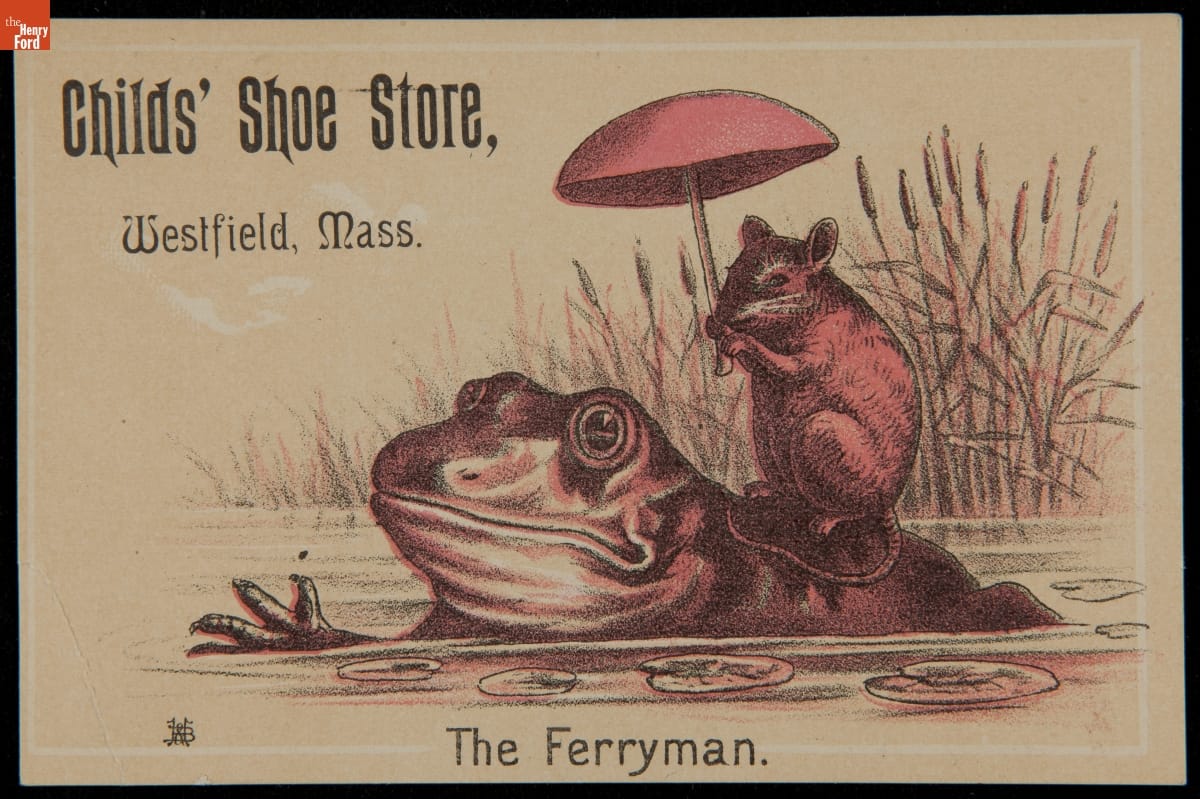
- circa 1890
- Collections - Artifact
Trade Card for Childs' Shoe Store, Westfield, Massachusetts, circa 1890
In the last third of the nineteenth century, an unprecedented variety of consumer goods and services flooded the American market. Advertisers, armed with new methods of color printing, bombarded potential customers with trade cards. Americans enjoyed and often saved the vibrant little advertisements found in product packages or distributed by local merchants. Many survive as historical records of commercialism in the United States.
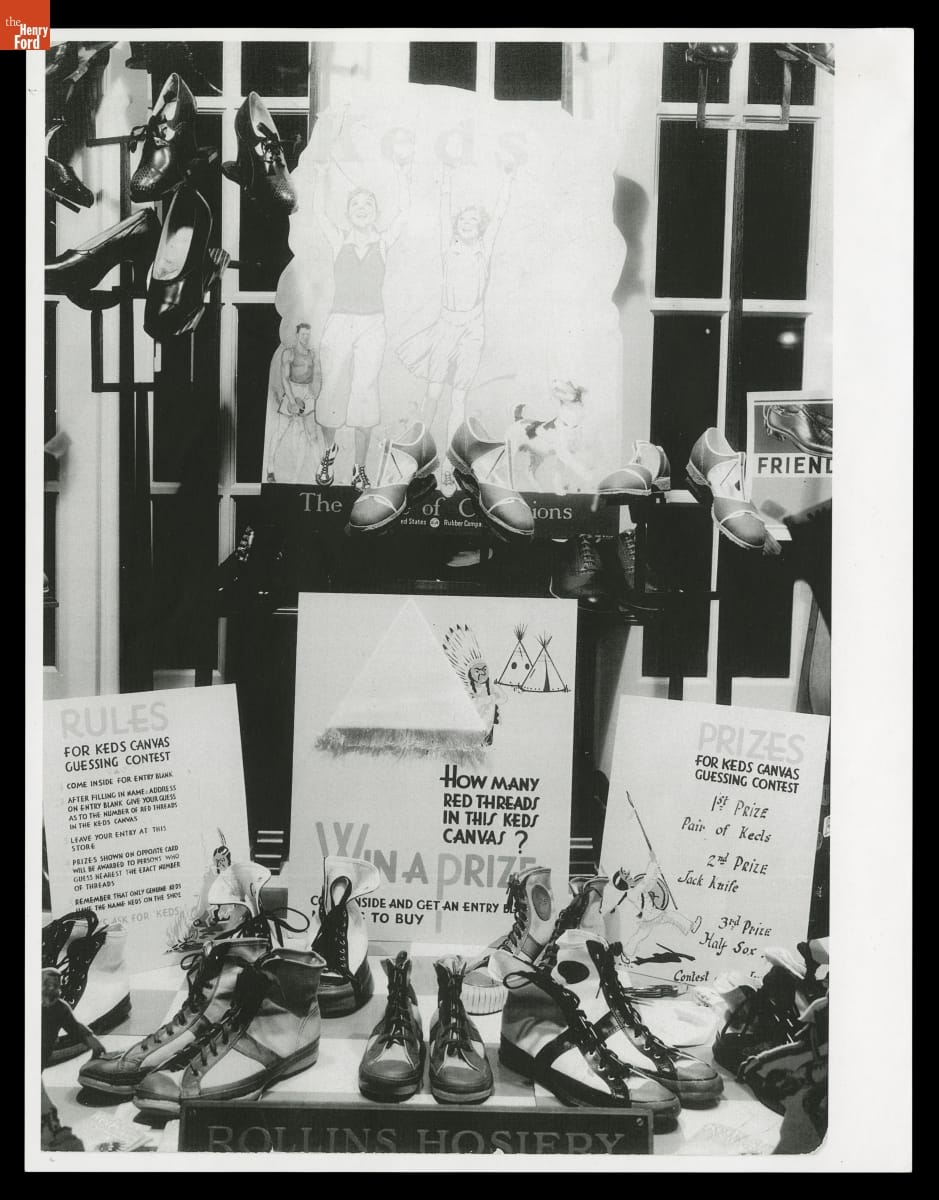
- Keds Window Display at the Campbell Boot Shop, Charlevoix, Michigan, circa 1930 - In the 1920s and 1930s, experts in advertising footwear encouraged shoes retailers to attract potential customers through prize contests. This Charlevoix, Michigan store held a guessing contest based on art with stereotypical depictions of Indigenous Americans. The winner received a free pair of Keds canvas shoes, which were among the most popular athletic shoes at the time.
- circa 1930
- Collections - Artifact
Keds Window Display at the Campbell Boot Shop, Charlevoix, Michigan, circa 1930
In the 1920s and 1930s, experts in advertising footwear encouraged shoes retailers to attract potential customers through prize contests. This Charlevoix, Michigan store held a guessing contest based on art with stereotypical depictions of Indigenous Americans. The winner received a free pair of Keds canvas shoes, which were among the most popular athletic shoes at the time.
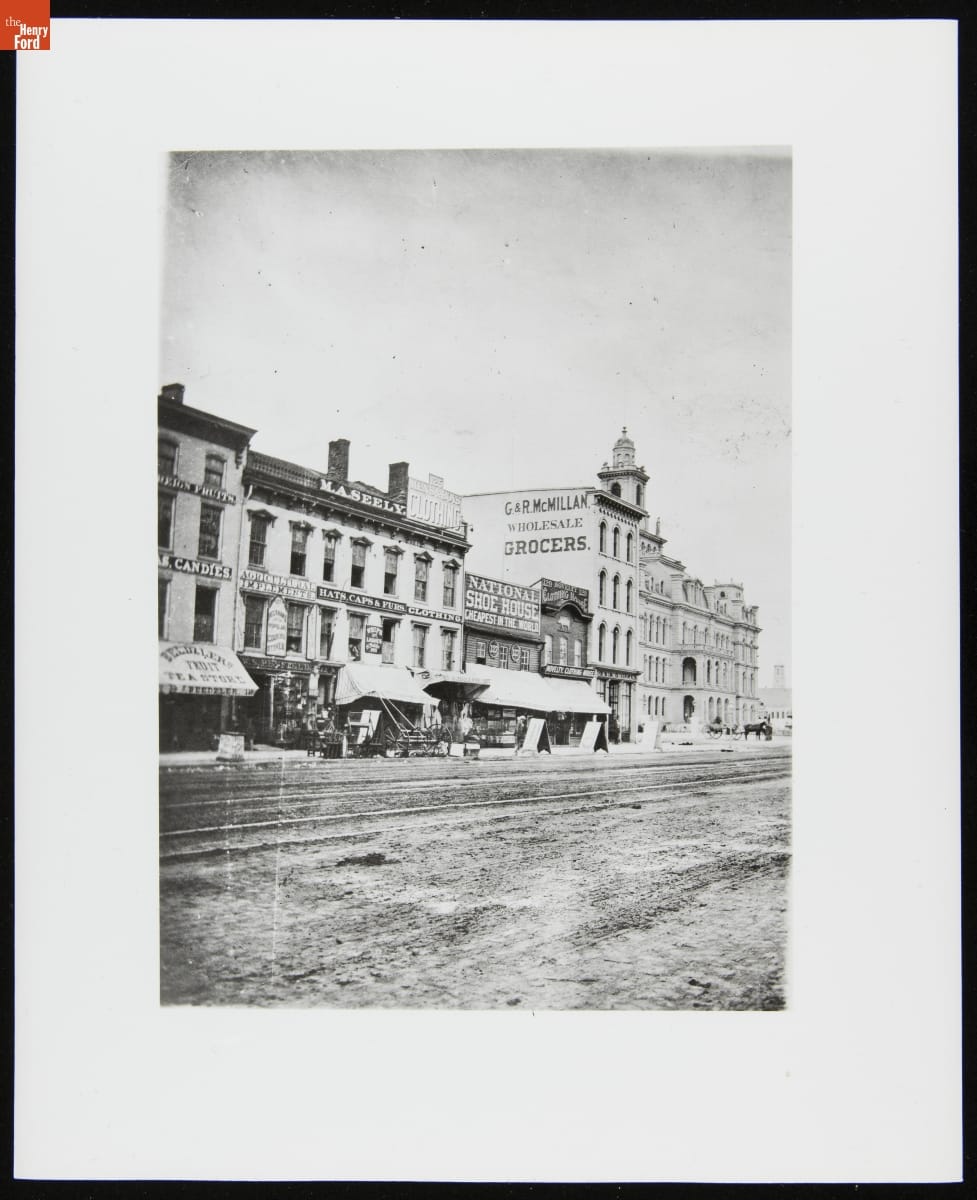
- Businesses along Woodward Avenue, Detroit, Michigan, 1871 -
- 1871
- Collections - Artifact
Businesses along Woodward Avenue, Detroit, Michigan, 1871
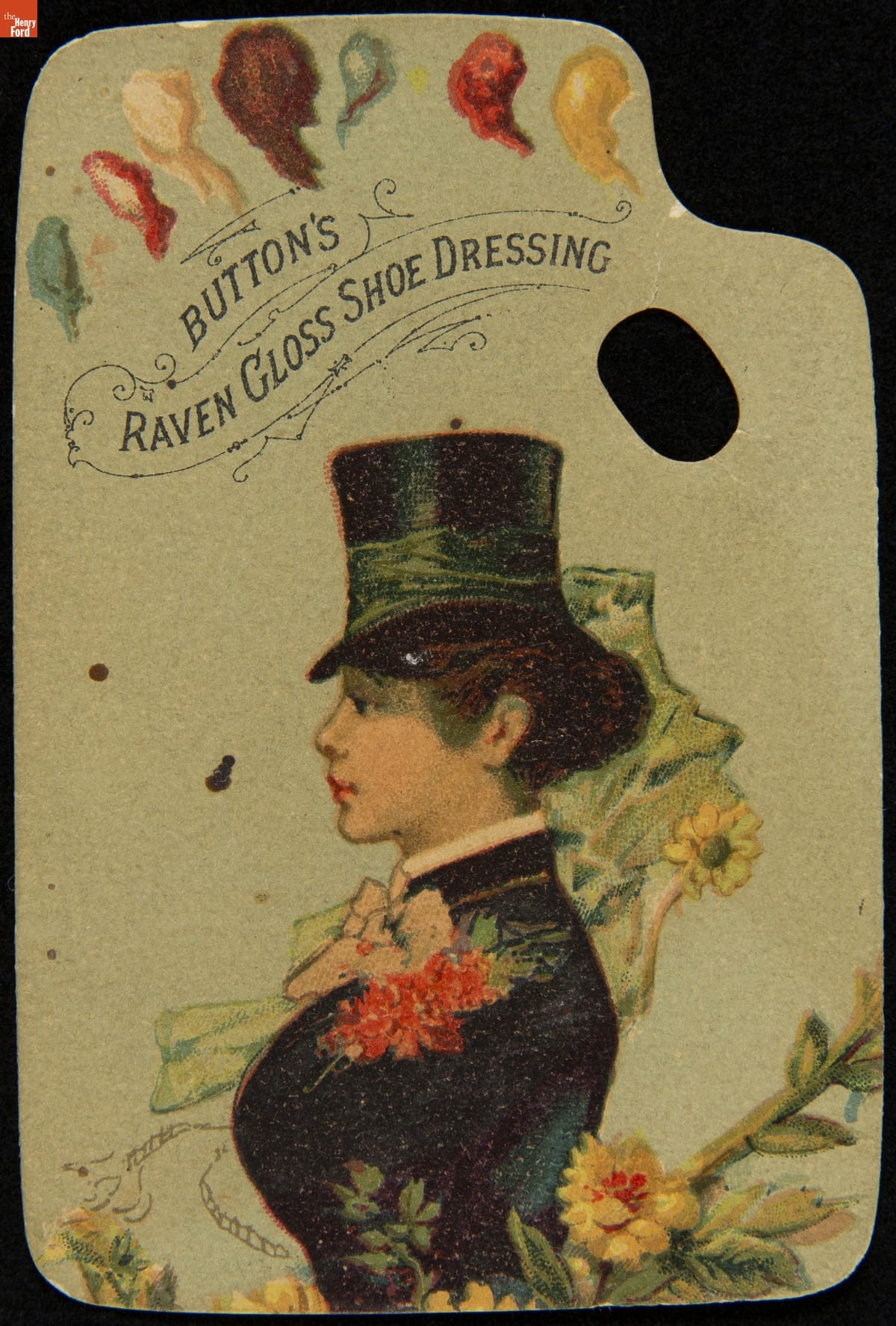
- Trade Card for Button's Raven Gloss Shoe Dressing, Button & Ottley Mfg. Co., 1880-1890 - In the last third of the nineteenth century, an unprecedented variety of consumer goods and services flooded the American market. Advertisers, armed with new methods of color printing, bombarded potential customers with trade cards. Americans enjoyed and often saved the vibrant little advertisements found in product packages or distributed by local merchants. Many survive as historical records of commercialism in the United States.
- 1880-1890
- Collections - Artifact
Trade Card for Button's Raven Gloss Shoe Dressing, Button & Ottley Mfg. Co., 1880-1890
In the last third of the nineteenth century, an unprecedented variety of consumer goods and services flooded the American market. Advertisers, armed with new methods of color printing, bombarded potential customers with trade cards. Americans enjoyed and often saved the vibrant little advertisements found in product packages or distributed by local merchants. Many survive as historical records of commercialism in the United States.
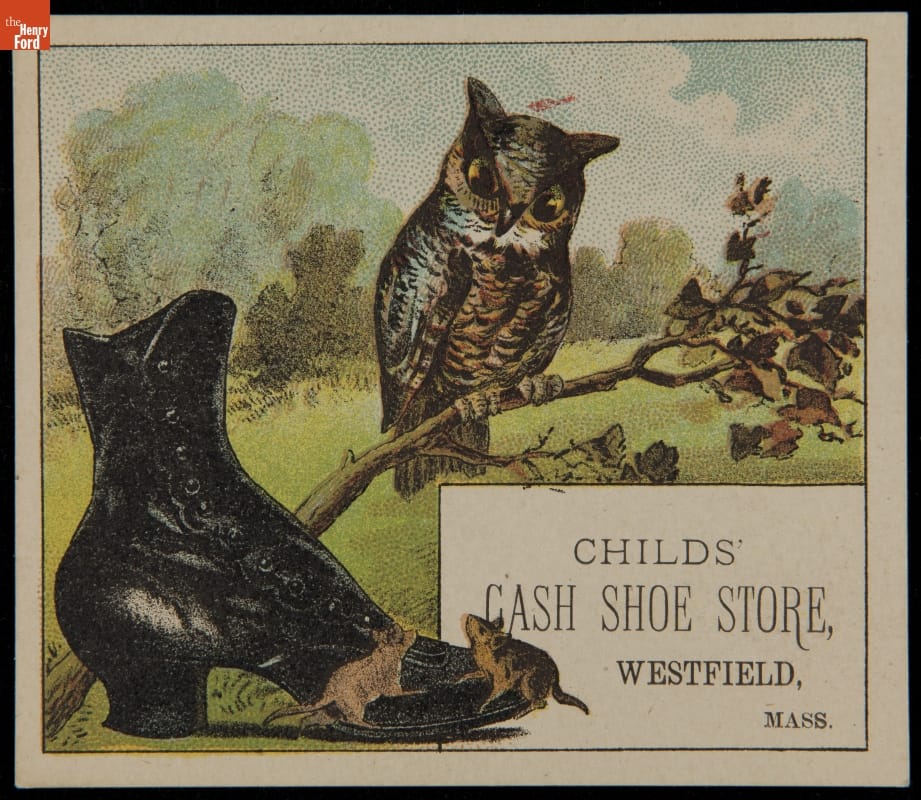
- Trade Card for Childs' Cash Shoe Store, Westfield, Massachusetts, circa 1890 - In the last third of the nineteenth century, an unprecedented variety of consumer goods and services flooded the American market. Advertisers, armed with new methods of color printing, bombarded potential customers with trade cards. Americans enjoyed and often saved the vibrant little advertisements found in product packages or distributed by local merchants. Many survive as historical records of commercialism in the United States.
- circa 1890
- Collections - Artifact
Trade Card for Childs' Cash Shoe Store, Westfield, Massachusetts, circa 1890
In the last third of the nineteenth century, an unprecedented variety of consumer goods and services flooded the American market. Advertisers, armed with new methods of color printing, bombarded potential customers with trade cards. Americans enjoyed and often saved the vibrant little advertisements found in product packages or distributed by local merchants. Many survive as historical records of commercialism in the United States.
- Business Card with Handwritten Receipt, Studio Mantellassi "High Class Shoes," circa 1960 -
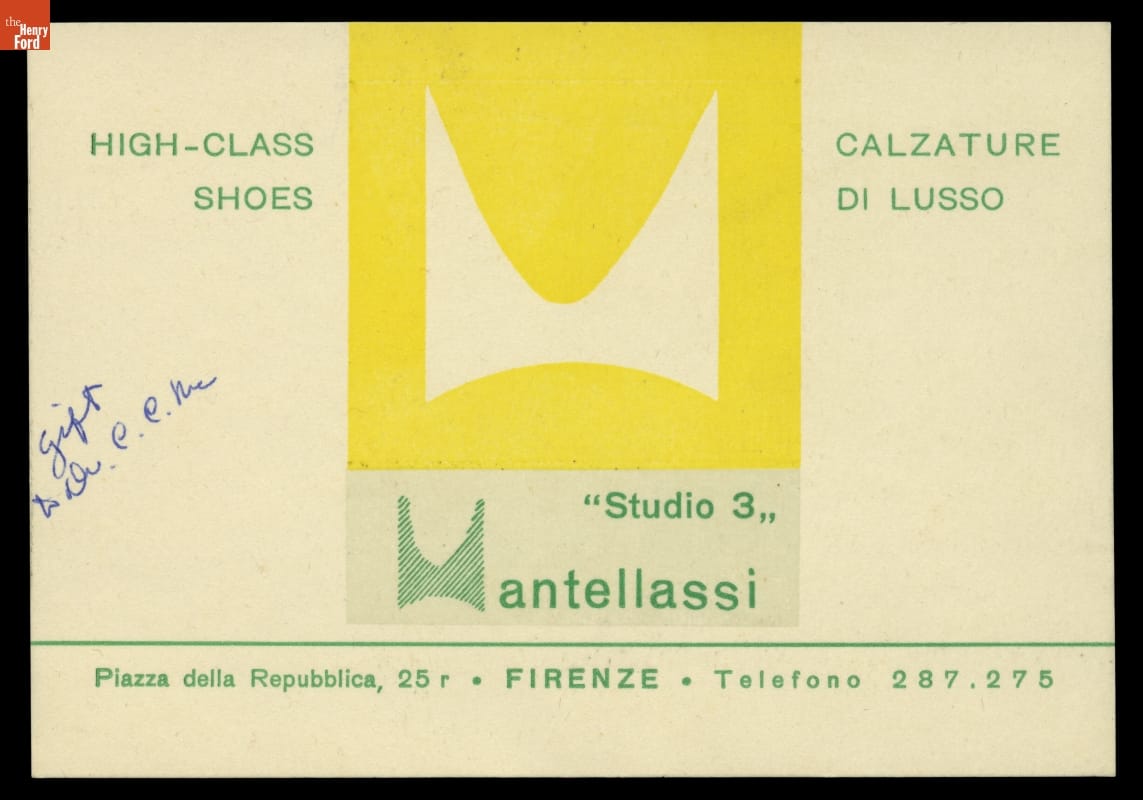
- circa 1960
- Collections - Artifact
Business Card with Handwritten Receipt, Studio Mantellassi "High Class Shoes," circa 1960
- Trade Sign, G. Smith Boot & Shoe Store, circa 1875 - The tradition of hand-painted shop signs dates back to colonial days in America. These colorful signs, usually painted on both sides, confirmed to customers that they had indeed reached their destination and enticed potential customers to stop in. The number "5" on this sign also indicates that, by this time, stores were required to post street addresses.
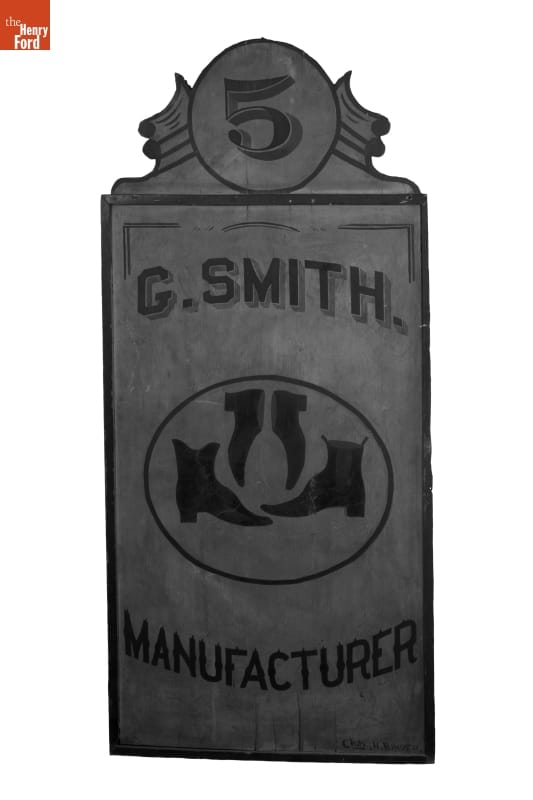
- circa 1875
- Collections - Artifact
Trade Sign, G. Smith Boot & Shoe Store, circa 1875
The tradition of hand-painted shop signs dates back to colonial days in America. These colorful signs, usually painted on both sides, confirmed to customers that they had indeed reached their destination and enticed potential customers to stop in. The number "5" on this sign also indicates that, by this time, stores were required to post street addresses.