
Search
- Patent Model of Marine Signal Lantern, 1863 - This marine lantern was designed to burn oil. An opaque metal shade could be moved to expose and block its glow. Moveable red and green glass shades are its most innovative feature, which served two purposes. They allowed the lantern to act as a communications device, to send messages between ships--and as an anchor light, to avoid collisions between vessels.
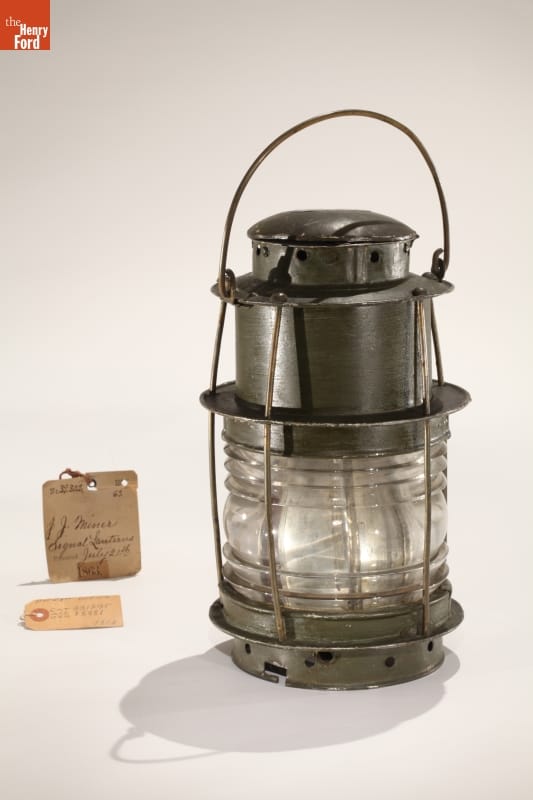
- July 21, 1863
- Collections - Artifact
Patent Model of Marine Signal Lantern, 1863
This marine lantern was designed to burn oil. An opaque metal shade could be moved to expose and block its glow. Moveable red and green glass shades are its most innovative feature, which served two purposes. They allowed the lantern to act as a communications device, to send messages between ships--and as an anchor light, to avoid collisions between vessels.
- Patent Model of Lantern, 1867 - From 1790 to 1880, the U.S. Patent Office required applicants to submit a miniature model along with diagrams and written descriptions detailing the operation of their invention. Patent models could be no larger than 12" by 12" by 12". Though they were usually not operational, these models helped explain an inventor's idea and protect it from competitors.
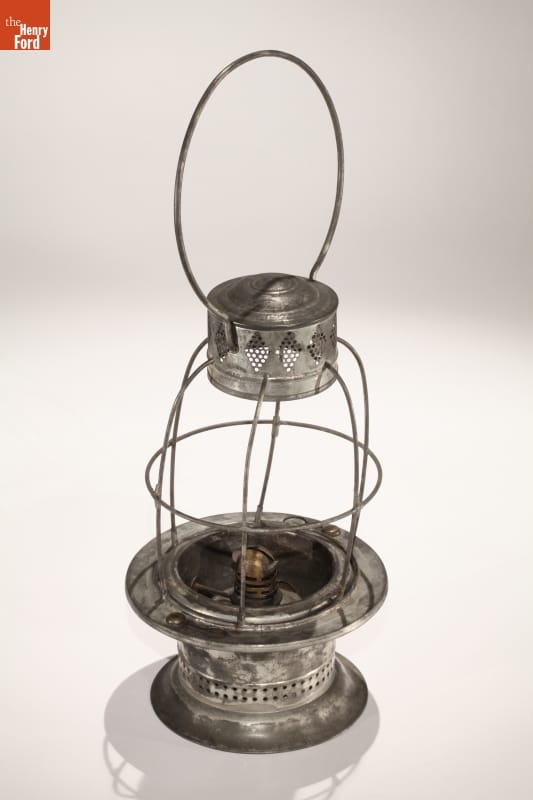
- April 02, 1867
- Collections - Artifact
Patent Model of Lantern, 1867
From 1790 to 1880, the U.S. Patent Office required applicants to submit a miniature model along with diagrams and written descriptions detailing the operation of their invention. Patent models could be no larger than 12" by 12" by 12". Though they were usually not operational, these models helped explain an inventor's idea and protect it from competitors.
- Patent Model of Signal Lantern, 1857 - From 1790 to 1880, the U.S. Patent Office required applicants to submit a miniature model along with diagrams and written descriptions detailing the operation of their invention. Patent models could be no larger than 12" by 12" by 12". Though they were usually not operational, these models helped explain an inventor's idea and protect it from competitors.
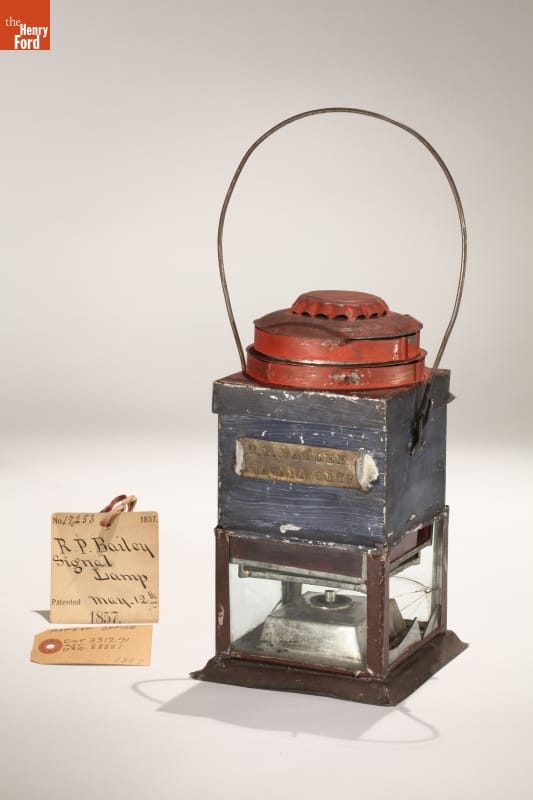
- May 12, 1857
- Collections - Artifact
Patent Model of Signal Lantern, 1857
From 1790 to 1880, the U.S. Patent Office required applicants to submit a miniature model along with diagrams and written descriptions detailing the operation of their invention. Patent models could be no larger than 12" by 12" by 12". Though they were usually not operational, these models helped explain an inventor's idea and protect it from competitors.
- Patent Model of Railroad Signal Lantern, 1867 - Flags and lanterns were the primary means of communication between conductors, brakemen, and engineers on American railroads. Different movements and colors indicated different instructions as crews assembled and operated trains. Lanterns with red globes typically were used to signal a train to stop at places like "flag" stations -- where trains did not regularly halt -- and crossings with other railroad lines.
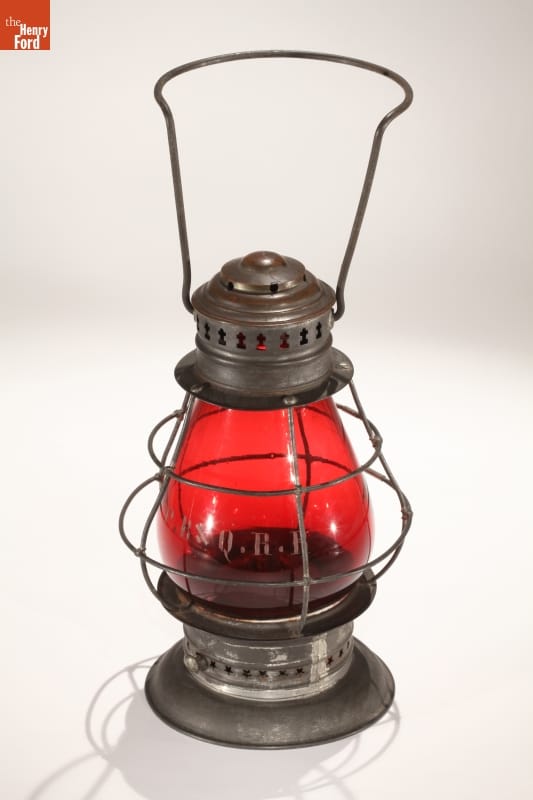
- April 16, 1867
- Collections - Artifact
Patent Model of Railroad Signal Lantern, 1867
Flags and lanterns were the primary means of communication between conductors, brakemen, and engineers on American railroads. Different movements and colors indicated different instructions as crews assembled and operated trains. Lanterns with red globes typically were used to signal a train to stop at places like "flag" stations -- where trains did not regularly halt -- and crossings with other railroad lines.