
Search
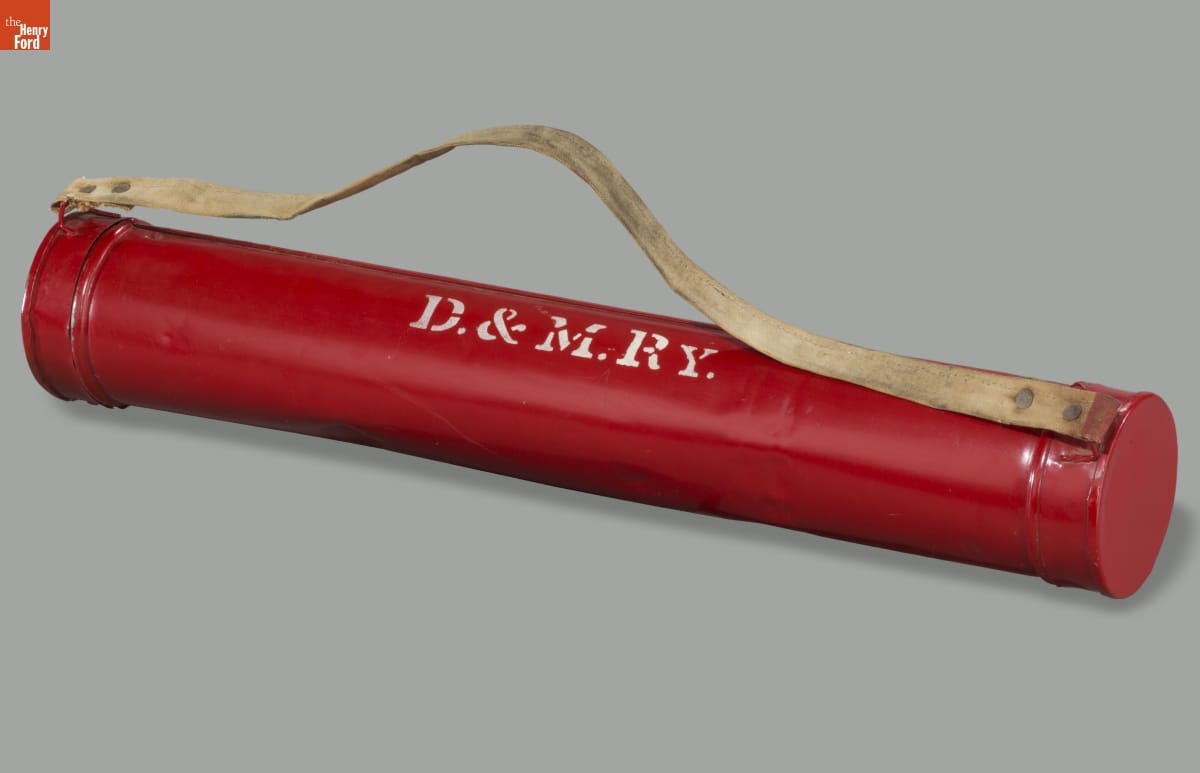
- Detroit & Mackinac Railway Flare Box, 1894-1944 - In an emergency, flares were important tools on the railroad -- especially at night. If a train made an unscheduled stop, perhaps due to a mechanical problem or a derailment, its crew placed lighted flares along the track some distance behind the disabled train. These flares warned any following trains of the trouble and reduced the risk of a rear-end collision.
- 1894-1944
- Collections - Artifact
Detroit & Mackinac Railway Flare Box, 1894-1944
In an emergency, flares were important tools on the railroad -- especially at night. If a train made an unscheduled stop, perhaps due to a mechanical problem or a derailment, its crew placed lighted flares along the track some distance behind the disabled train. These flares warned any following trains of the trouble and reduced the risk of a rear-end collision.
- Hallmark "Batman: The Bat-Signal" Christmas Ornament, 2006 - Already known for greeting cards, Hallmark introduced a line of Christmas ornaments in 1973. The company's annual release of an increasing array of ornaments revolutionized Christmas decorating, appealing to customers' interest in marking memories and milestones as well as expressing one's personality and unique tastes.

- 2006
- Collections - Artifact
Hallmark "Batman: The Bat-Signal" Christmas Ornament, 2006
Already known for greeting cards, Hallmark introduced a line of Christmas ornaments in 1973. The company's annual release of an increasing array of ornaments revolutionized Christmas decorating, appealing to customers' interest in marking memories and milestones as well as expressing one's personality and unique tastes.
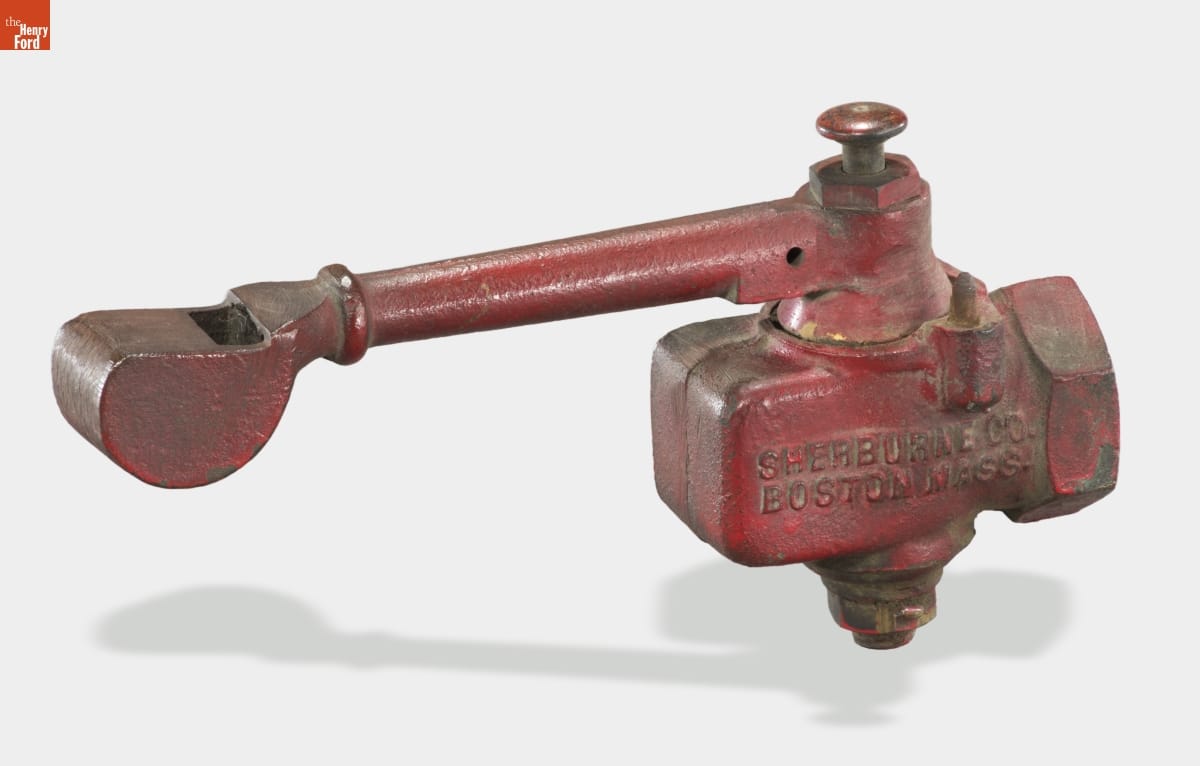
- Sherburne Company Caboose Whistle, 1932-1940 - Usually the caboose was at the rear of a freight train, where it served as a workspace for the conductor and crew. But when a train ran in reverse, the caboose became the front. The crew used a whistle like this to signal a warning when approaching railroad crossings. Air pressure from the train's brake line produced the whistle's sound.
- 1932-1940
- Collections - Artifact
Sherburne Company Caboose Whistle, 1932-1940
Usually the caboose was at the rear of a freight train, where it served as a workspace for the conductor and crew. But when a train ran in reverse, the caboose became the front. The crew used a whistle like this to signal a warning when approaching railroad crossings. Air pressure from the train's brake line produced the whistle's sound.
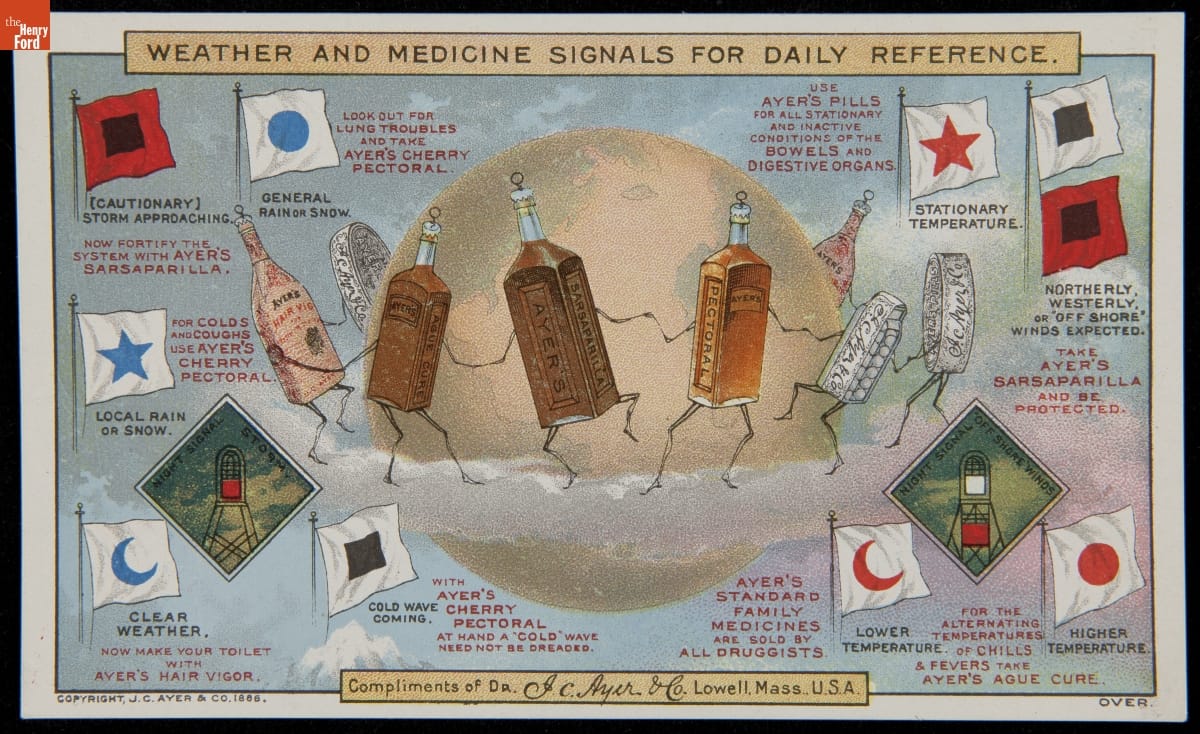
- Trade Card for Ayer's Products, Weather and Medicine Signals for Daily Reference, 1886 - These weather signal flags are in the company of a dancing troupe of anthropomorphic Ayer's cherry cough syrup bottles. The flags signal "cold wave coming," "storm approaching," and temperature changes as patterns that are similar to the common cold and flu. The reverse tells us that our body, like the weather, can be read by its warning systems.
- 1886
- Collections - Artifact
Trade Card for Ayer's Products, Weather and Medicine Signals for Daily Reference, 1886
These weather signal flags are in the company of a dancing troupe of anthropomorphic Ayer's cherry cough syrup bottles. The flags signal "cold wave coming," "storm approaching," and temperature changes as patterns that are similar to the common cold and flu. The reverse tells us that our body, like the weather, can be read by its warning systems.
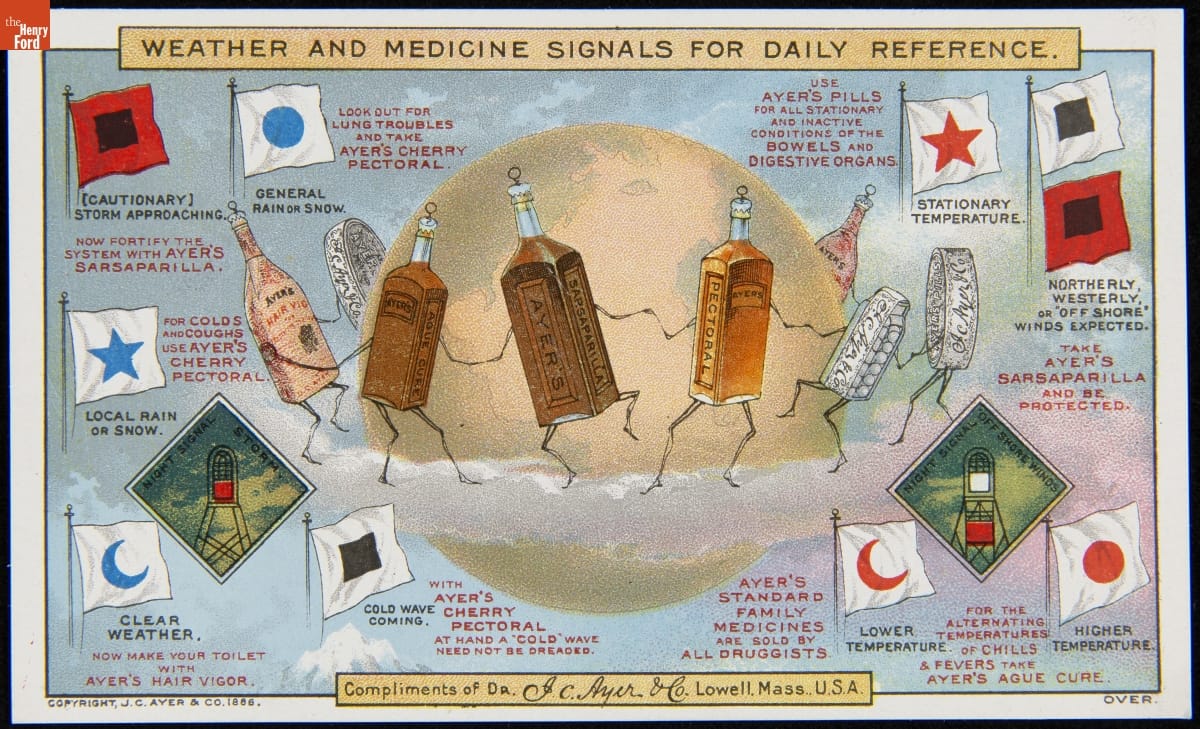
- Trade Card for Ayer's Products, Weather and Medicine Signals for Daily Reference, 1886 - James C. Ayer (1818-1878), a purveyor of patent medicines in the 19th century, claimed his treatments could cure colds, coughs, and other ailments, purify the blood, and invigorate the hair. Ayer--and later his company--successfully marketed his products by printing thousands of trade cards, almanacs, and newspaper and magazine ads. Ayer's company continued production well into the 20th century.
- 1886
- Collections - Artifact
Trade Card for Ayer's Products, Weather and Medicine Signals for Daily Reference, 1886
James C. Ayer (1818-1878), a purveyor of patent medicines in the 19th century, claimed his treatments could cure colds, coughs, and other ailments, purify the blood, and invigorate the hair. Ayer--and later his company--successfully marketed his products by printing thousands of trade cards, almanacs, and newspaper and magazine ads. Ayer's company continued production well into the 20th century.
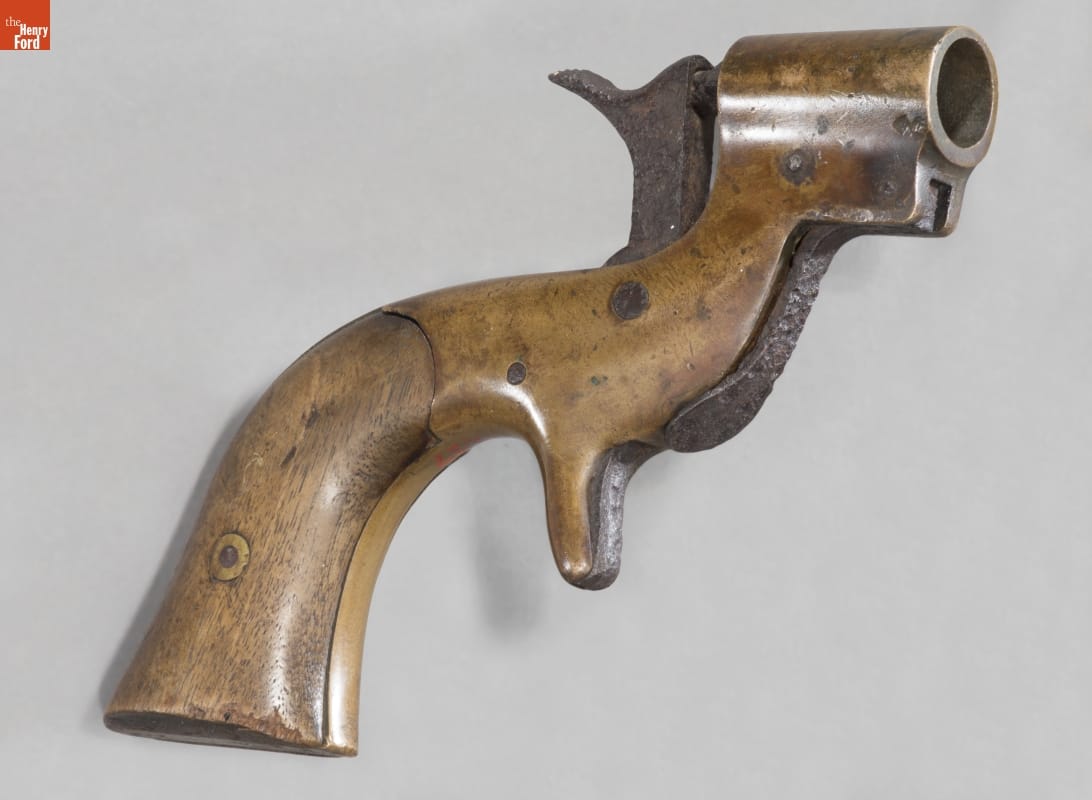
- U.S. Army Model 1862 Percussion Signal Pistol, circa 1862 - In 1859, inventor and entrepreneur Martha Coston was granted a patent for her pyrotechnic night signal and code system. During the Civil War, Coston's flares allowed ships in the Union Navy to effectively communicate with each other at night, strengthening military coordination. New York gun manufacturer William Marston produced this signal pistol to exclusively fire Coston's multiple colored signal flare.
- circa 1862
- Collections - Artifact
U.S. Army Model 1862 Percussion Signal Pistol, circa 1862
In 1859, inventor and entrepreneur Martha Coston was granted a patent for her pyrotechnic night signal and code system. During the Civil War, Coston's flares allowed ships in the Union Navy to effectively communicate with each other at night, strengthening military coordination. New York gun manufacturer William Marston produced this signal pistol to exclusively fire Coston's multiple colored signal flare.
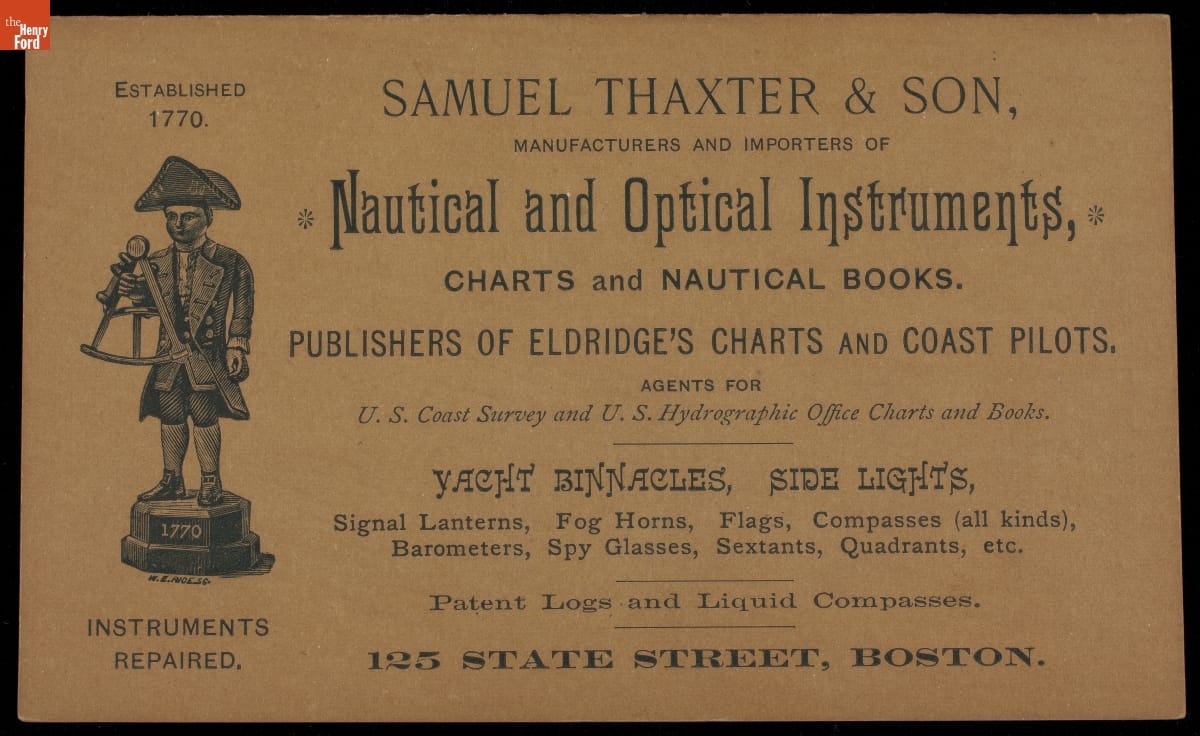
- Trade Card for Nautical and Optical Instruments, Samuel Thaxter & Son, 1886 - In the last third of the nineteenth century, an unprecedented variety of consumer goods and services flooded the American market. Advertisers bombarded potential customers with trade cards. Americans enjoyed and saved the often illustrated little advertisements found in product packages or distributed by local merchants. Many survive as historical records of commercialism in the United States.
- 1886
- Collections - Artifact
Trade Card for Nautical and Optical Instruments, Samuel Thaxter & Son, 1886
In the last third of the nineteenth century, an unprecedented variety of consumer goods and services flooded the American market. Advertisers bombarded potential customers with trade cards. Americans enjoyed and saved the often illustrated little advertisements found in product packages or distributed by local merchants. Many survive as historical records of commercialism in the United States.
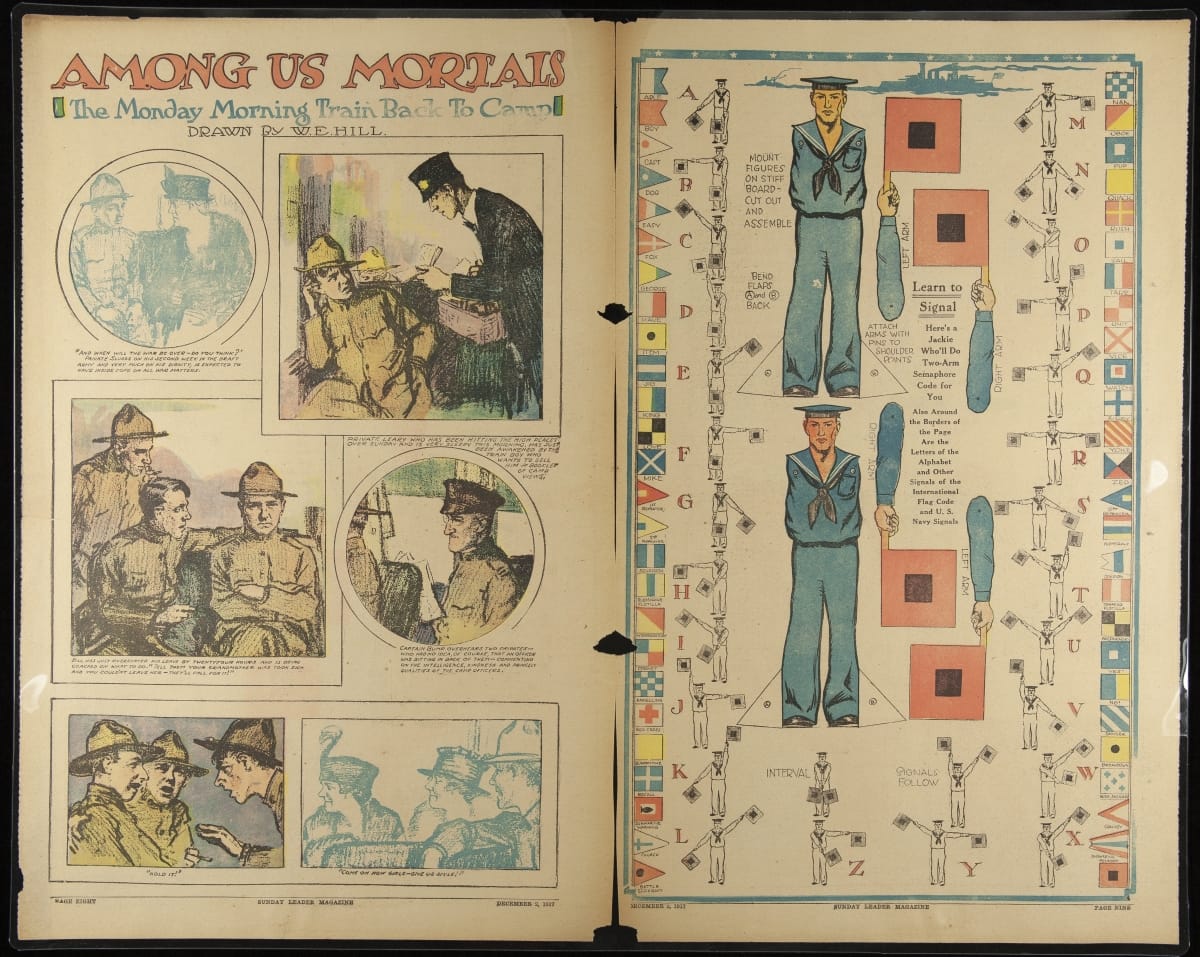
- "Among Us Mortals-The Monday Morning Train Back to Camp" and "Learn to Signal," December 2, 1917 -
- December 02, 1917
- Collections - Artifact
"Among Us Mortals-The Monday Morning Train Back to Camp" and "Learn to Signal," December 2, 1917