
Search
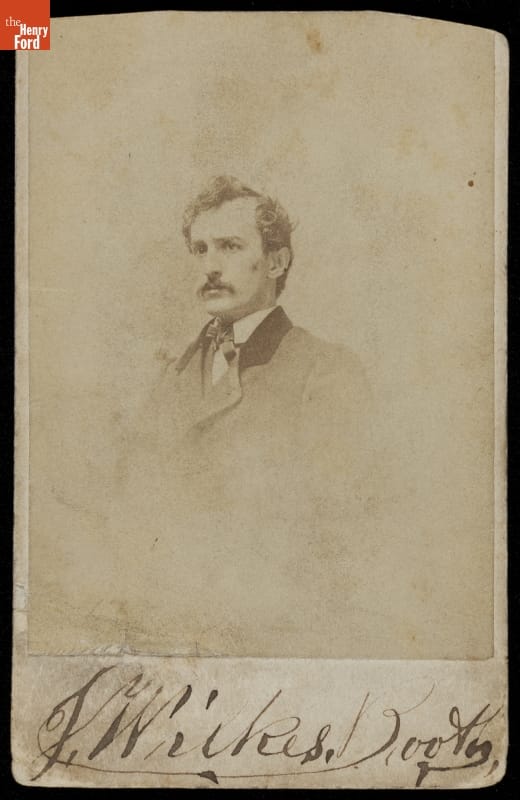
- Autographed Portrait of John Wilkes Booth, circa 1860 - Well-known actor John Wilkes Booth--better remembered for the 1865 assassination of President Abraham Lincoln--posed for this carte-de-visite in a professional photographer's studio around 1860. Cartes-de-visite, small photographic prints on cardboard stock, remained popular from the Civil War in the 1860s through the 1880s. Americans commonly collected and exchanged them to commemorate family members or celebrities.
- circa 1860
- Collections - Artifact
Autographed Portrait of John Wilkes Booth, circa 1860
Well-known actor John Wilkes Booth--better remembered for the 1865 assassination of President Abraham Lincoln--posed for this carte-de-visite in a professional photographer's studio around 1860. Cartes-de-visite, small photographic prints on cardboard stock, remained popular from the Civil War in the 1860s through the 1880s. Americans commonly collected and exchanged them to commemorate family members or celebrities.
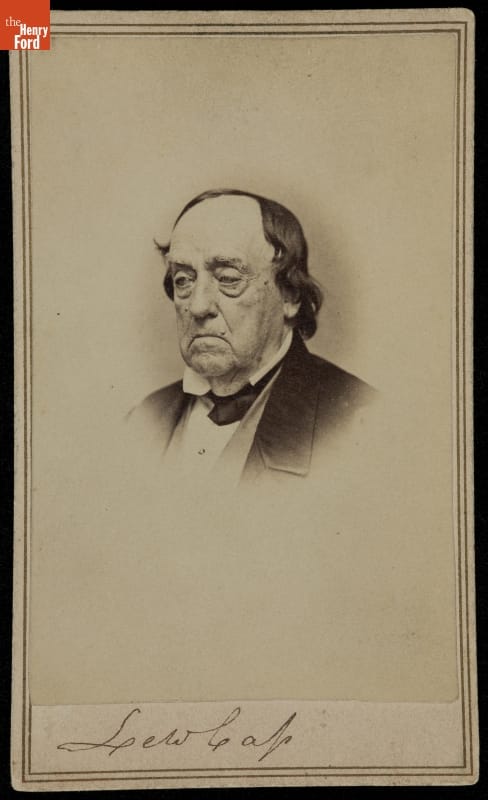
- Lewis Cass, circa 1860 - Politician Lewis Cass, who served from 1857 to 1860 as Secretary of State under President James Buchanan, posed for this carte-de-visite in a professional photographer's studio around 1860. Cartes-de-visite, small photographic prints on cardboard stock, remained popular from the Civil War in the 1860s through the 1880s. Americans commonly collected and exchanged them to commemorate family members or celebrities.
- circa 1860
- Collections - Artifact
Lewis Cass, circa 1860
Politician Lewis Cass, who served from 1857 to 1860 as Secretary of State under President James Buchanan, posed for this carte-de-visite in a professional photographer's studio around 1860. Cartes-de-visite, small photographic prints on cardboard stock, remained popular from the Civil War in the 1860s through the 1880s. Americans commonly collected and exchanged them to commemorate family members or celebrities.
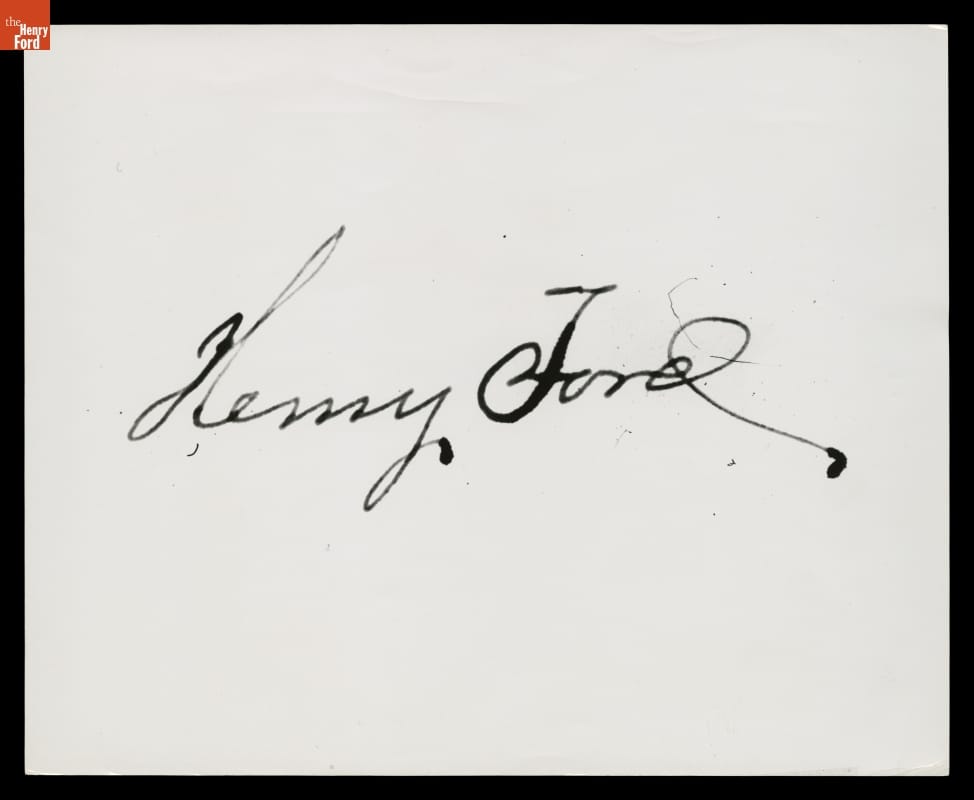
- Signature of Henry Ford, circa 1925-1930 - Like the Walt Disney Company, Ford Motor Company's logo features its founder's name in a flowing script. Also like Disney, Ford's logo isn't a direct copy of its founder's handwriting. C. Harold Wills, a Ford engineer and a former letterpress printer, created the distinctive logo script with his typesetting kit in 1906. Henry Ford's actual signature is seen here.
- June 01, 1960
- Collections - Artifact
Signature of Henry Ford, circa 1925-1930
Like the Walt Disney Company, Ford Motor Company's logo features its founder's name in a flowing script. Also like Disney, Ford's logo isn't a direct copy of its founder's handwriting. C. Harold Wills, a Ford engineer and a former letterpress printer, created the distinctive logo script with his typesetting kit in 1906. Henry Ford's actual signature is seen here.
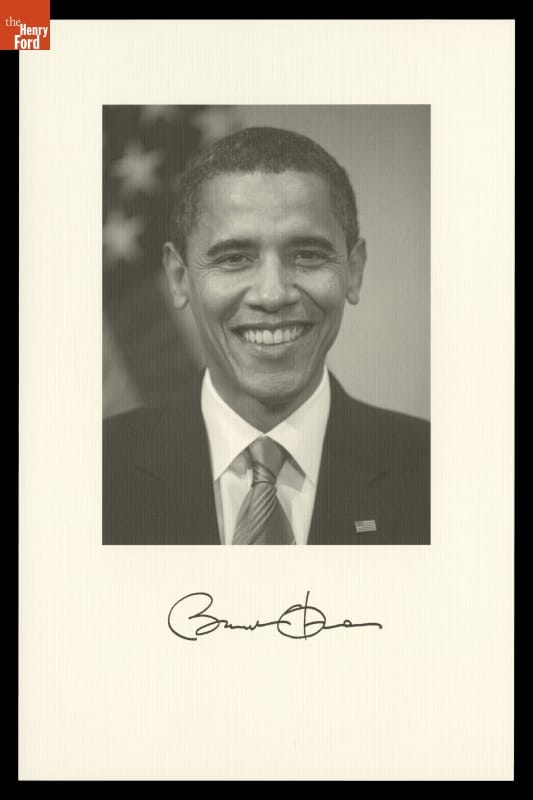
- Portrait of Barack Obama, Enclosed with Inauguration Invitation, 2009 -
- January 20, 2009
- Collections - Artifact
Portrait of Barack Obama, Enclosed with Inauguration Invitation, 2009
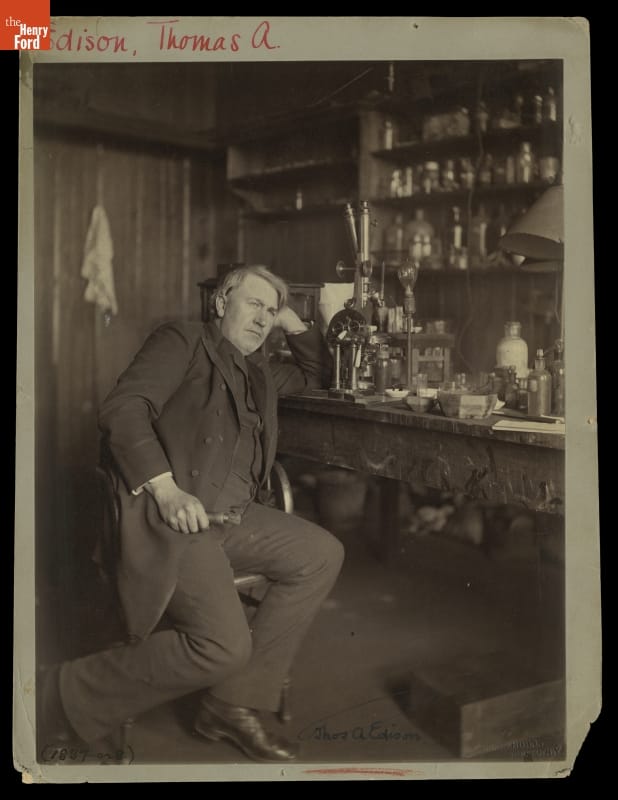
- Thomas Edison at West Orange Laboratory, New Jersey, 1887-1888 -
- 1887-1888
- Collections - Artifact
Thomas Edison at West Orange Laboratory, New Jersey, 1887-1888
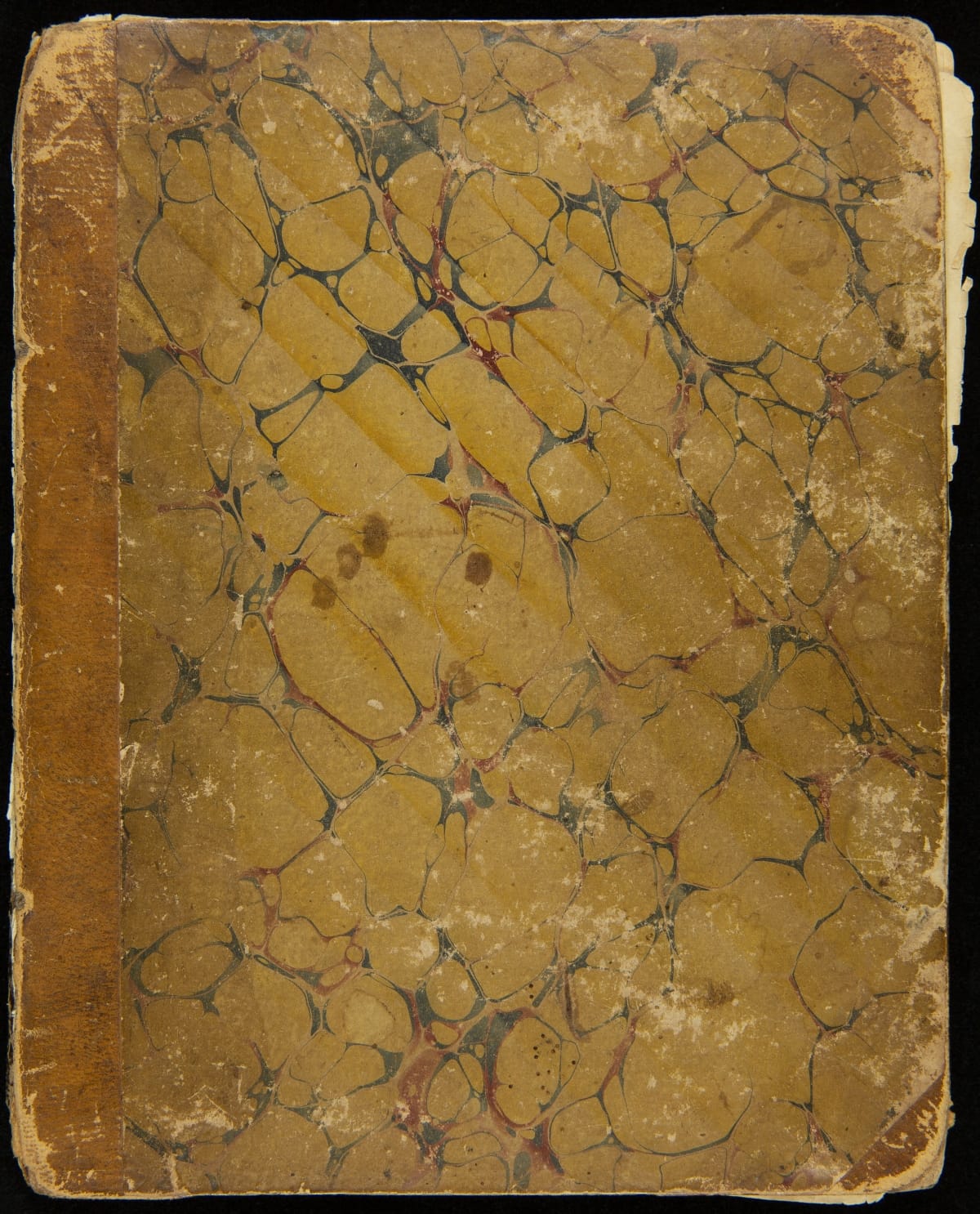
- Martha W. Martin Autograph Album, 1837-1858 -
- 1837-1858
- Collections - Artifact
Martha W. Martin Autograph Album, 1837-1858
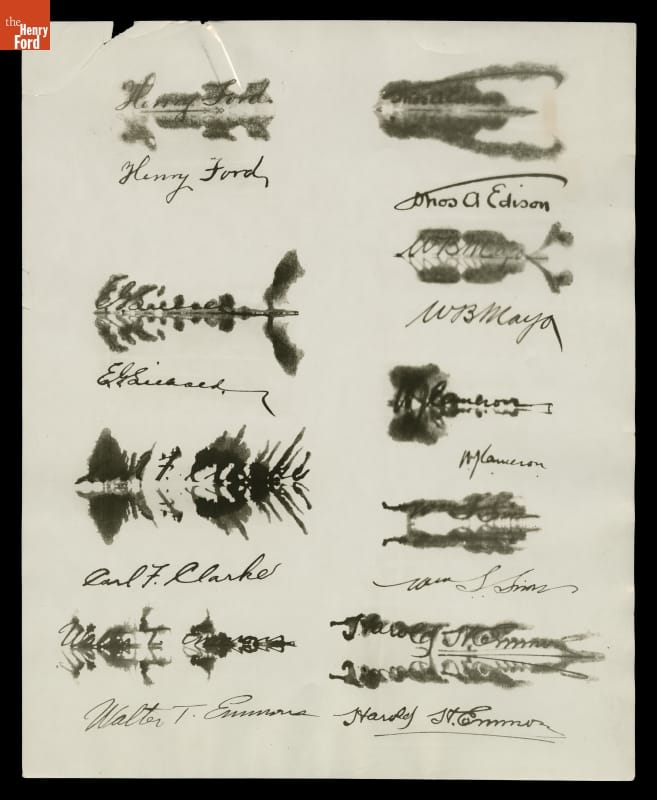
- Signatures of Henry Ford, Thomas Edison, and Other Business Associates, 1922 - Like the Walt Disney Company, Ford Motor Company's logo features its founder's name in a flowing script. Also like Disney, Ford's logo isn't a direct copy of its founder's handwriting. C. Harold Wills, a Ford engineer and a former letterpress printer, created the distinctive logo script with his typesetting kit in 1906. Henry Ford's actual signature is seen here.
- February 16, 1922
- Collections - Artifact
Signatures of Henry Ford, Thomas Edison, and Other Business Associates, 1922
Like the Walt Disney Company, Ford Motor Company's logo features its founder's name in a flowing script. Also like Disney, Ford's logo isn't a direct copy of its founder's handwriting. C. Harold Wills, a Ford engineer and a former letterpress printer, created the distinctive logo script with his typesetting kit in 1906. Henry Ford's actual signature is seen here.
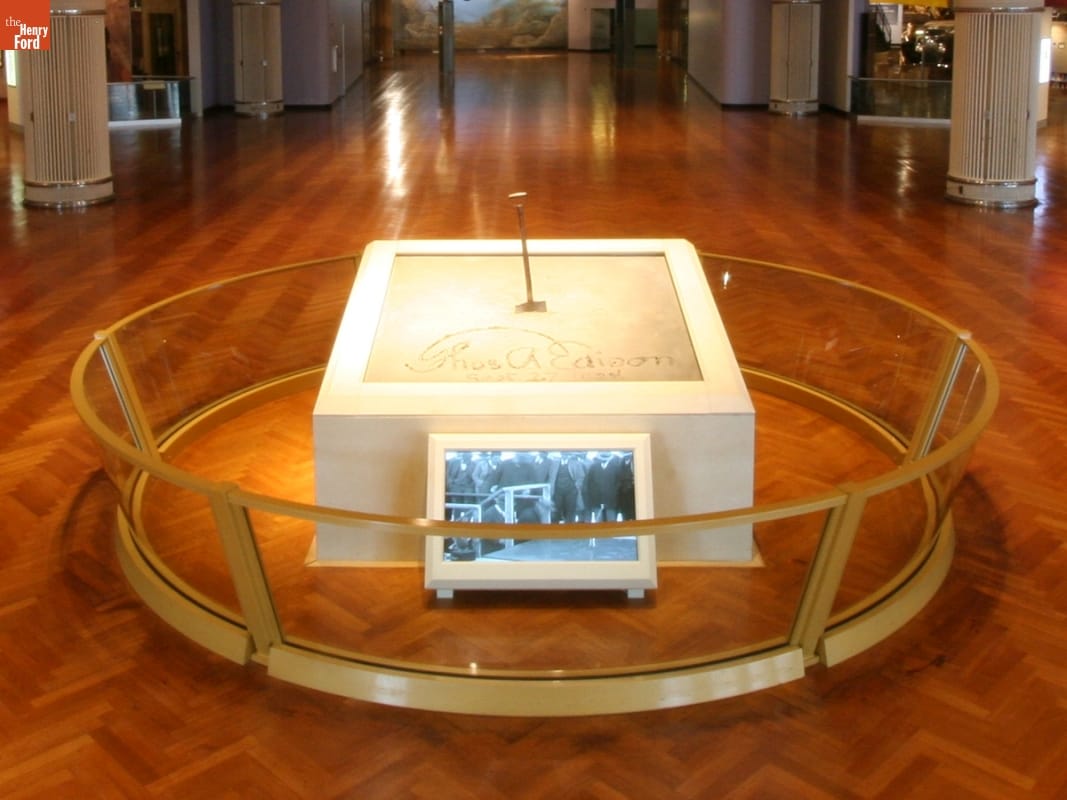
- Cornerstone of Edison Institute Signed by Thomas A. Edison, September 27, 1928 - The cornerstone commemorates the dedication of The Henry Ford. It suggests a union of nature (Luther Burbank's spade) and technology (Edison's signature and footprints). That unity is borne out by the block itself, made from Portland cement refined from blast furnace slag at the Ford's Rouge plant--a great example of Henry Ford approaching industry like a good farmer, denying the concept of waste.
- September 27, 1928
- Collections - Artifact
Cornerstone of Edison Institute Signed by Thomas A. Edison, September 27, 1928
The cornerstone commemorates the dedication of The Henry Ford. It suggests a union of nature (Luther Burbank's spade) and technology (Edison's signature and footprints). That unity is borne out by the block itself, made from Portland cement refined from blast furnace slag at the Ford's Rouge plant--a great example of Henry Ford approaching industry like a good farmer, denying the concept of waste.
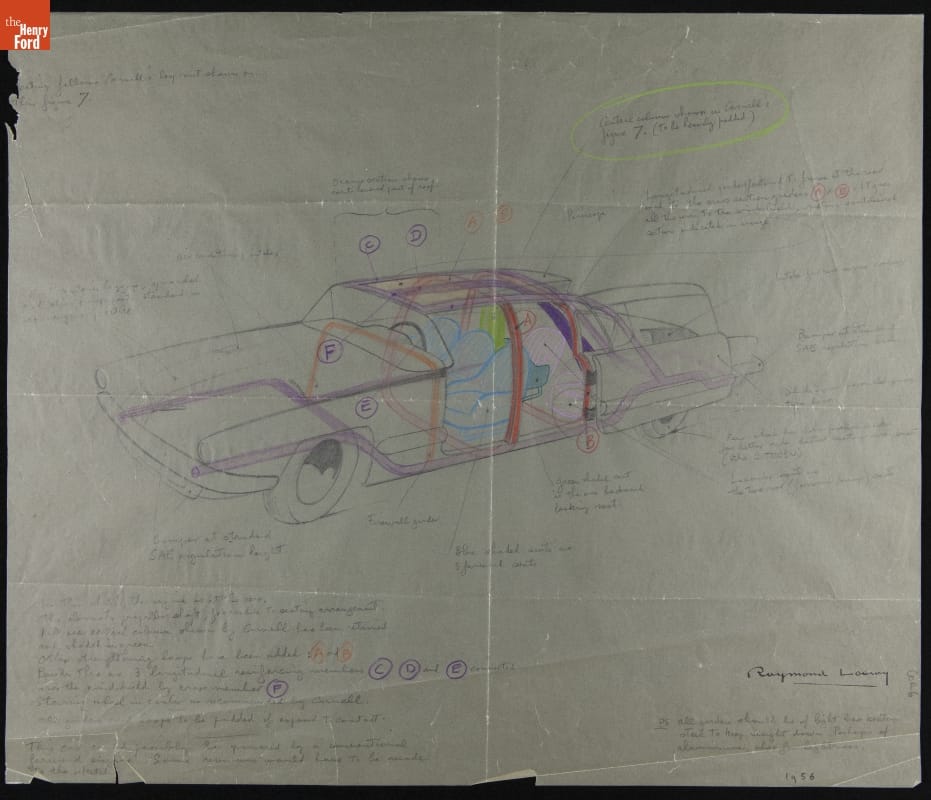
- Sketch for the Cornell-Liberty Safety Car, 1956 - Industrial designer Raymond Loewy produced a series of design drawings for the "Safety Car" built in 1957 by Cornell University and the Liberty Mutual Insurance Company. The finished concept car incorporated more than 60 safety improvements from seat belts, to padded interior surfaces, to accordion-style folding doors.
- 1956
- Collections - Artifact
Sketch for the Cornell-Liberty Safety Car, 1956
Industrial designer Raymond Loewy produced a series of design drawings for the "Safety Car" built in 1957 by Cornell University and the Liberty Mutual Insurance Company. The finished concept car incorporated more than 60 safety improvements from seat belts, to padded interior surfaces, to accordion-style folding doors.
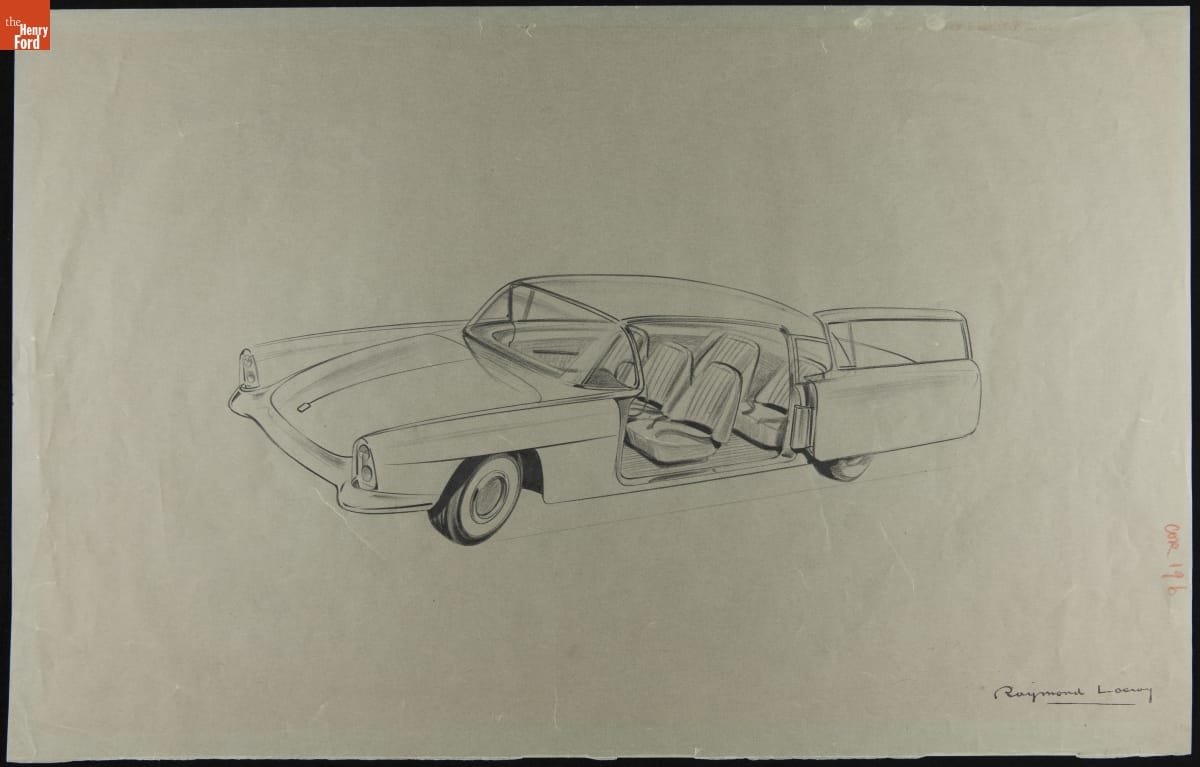
- Sketch for the Cornell-Liberty Safety Car, 1956 - Industrial designer Raymond Loewy produced a series of design drawings for the "Safety Car" built in 1957 by Cornell University and the Liberty Mutual Insurance Company. The finished concept car incorporated more than 60 safety improvements from seat belts, to padded interior surfaces, to accordion-style folding doors.
- 1956
- Collections - Artifact
Sketch for the Cornell-Liberty Safety Car, 1956
Industrial designer Raymond Loewy produced a series of design drawings for the "Safety Car" built in 1957 by Cornell University and the Liberty Mutual Insurance Company. The finished concept car incorporated more than 60 safety improvements from seat belts, to padded interior surfaces, to accordion-style folding doors.