
Search
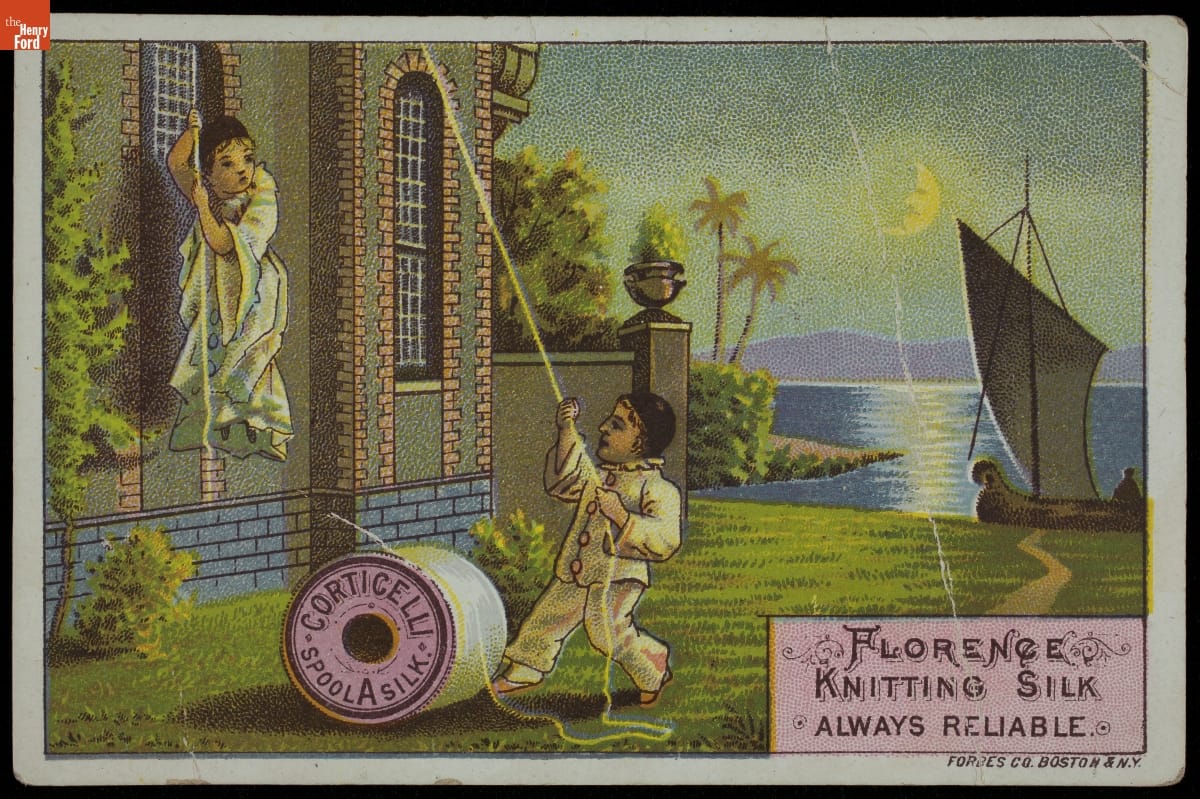
- Trade Card for Florence Knitting Silk and Corticelli Silk Thread, Nonotuck Silk Co., 1880-1900 - In the last third of the nineteenth century, an unprecedented variety of consumer goods and services flooded the American market. Advertisers, armed with new methods of color printing, bombarded potential customers with trade cards. Americans enjoyed and often saved the vibrant little advertisements found in product packages or distributed by local merchants. Many survive as historical records of commercialism in the United States.
- 1880-1900
- Collections - Artifact
Trade Card for Florence Knitting Silk and Corticelli Silk Thread, Nonotuck Silk Co., 1880-1900
In the last third of the nineteenth century, an unprecedented variety of consumer goods and services flooded the American market. Advertisers, armed with new methods of color printing, bombarded potential customers with trade cards. Americans enjoyed and often saved the vibrant little advertisements found in product packages or distributed by local merchants. Many survive as historical records of commercialism in the United States.
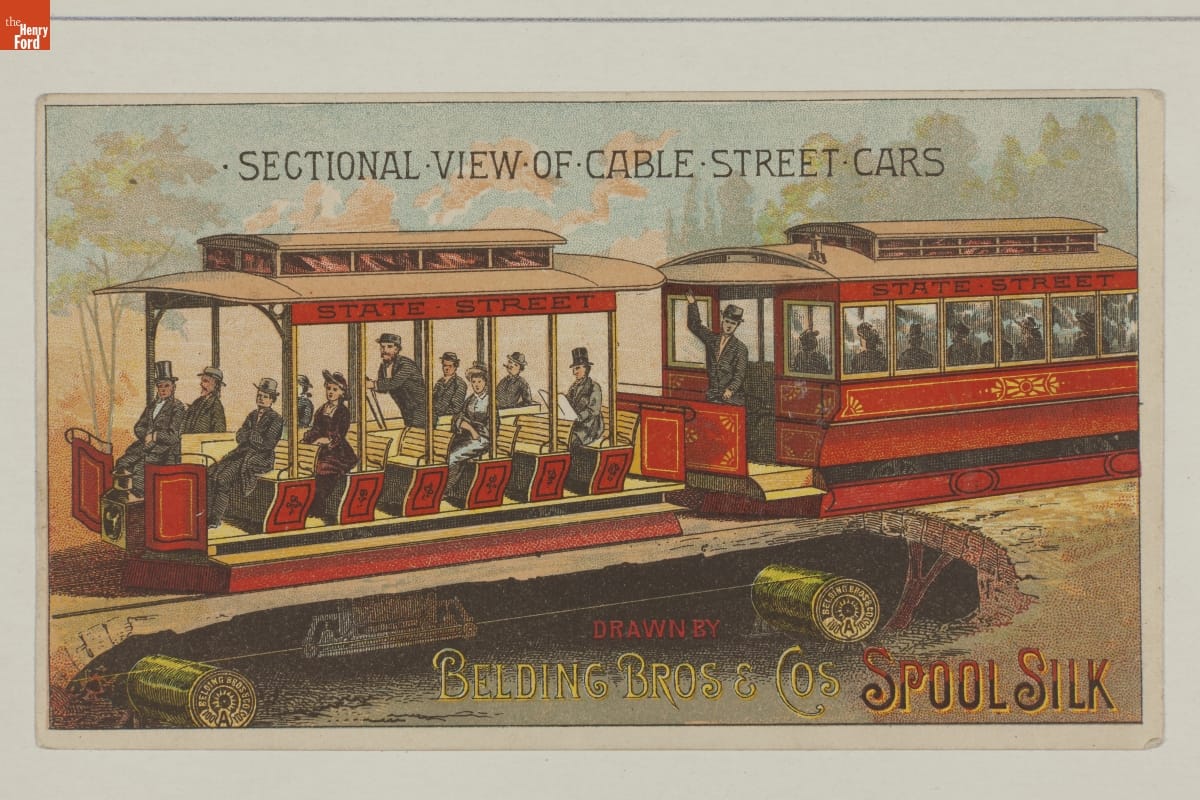
- Lithograph Advertising Belding Bros. & Co. Silk Thread, "Sectional View of Cable Street Cars," circa 1880 - This print shows a cutaway of Chicago City Railways' State Street cable car line. In the 1880s Chicago transit companies invested heavily in cable railways, but most had switched to electric streetcars by 1900. Belding Brothers, a leading manufacturer of silk thread, put the strong fiber to work pulling cable cars-but most transit companies eventually settled on cheap, sturdy wire rope.
- circa 1880
- Collections - Artifact
Lithograph Advertising Belding Bros. & Co. Silk Thread, "Sectional View of Cable Street Cars," circa 1880
This print shows a cutaway of Chicago City Railways' State Street cable car line. In the 1880s Chicago transit companies invested heavily in cable railways, but most had switched to electric streetcars by 1900. Belding Brothers, a leading manufacturer of silk thread, put the strong fiber to work pulling cable cars-but most transit companies eventually settled on cheap, sturdy wire rope.