
Search
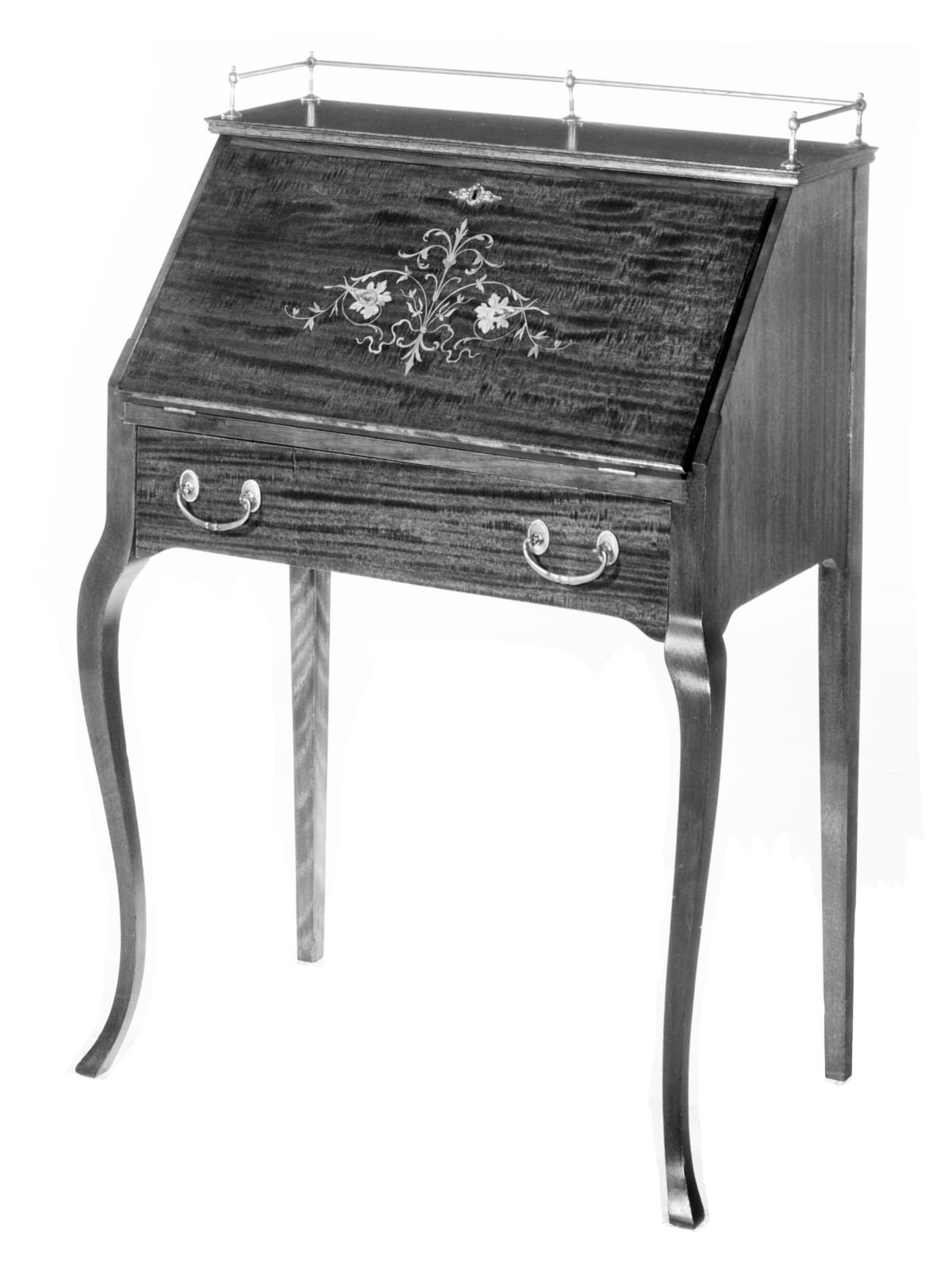
- Wright Family Writing Desk, 1890-1900 - This ladies' writing desk is the starting point for a transportation revolution. On May 30, 1899, a Dayton, Ohio, bicycle shop owner named Wilbur Wright sat down at his sister's desk and wrote a letter to the secretary of the Smithsonian Institution. Wilbur's letter sparked a series of events that led to the world's first powered airplane flight in 1903.
- 1890-1900
- Collections - Artifact
Wright Family Writing Desk, 1890-1900
This ladies' writing desk is the starting point for a transportation revolution. On May 30, 1899, a Dayton, Ohio, bicycle shop owner named Wilbur Wright sat down at his sister's desk and wrote a letter to the secretary of the Smithsonian Institution. Wilbur's letter sparked a series of events that led to the world's first powered airplane flight in 1903.
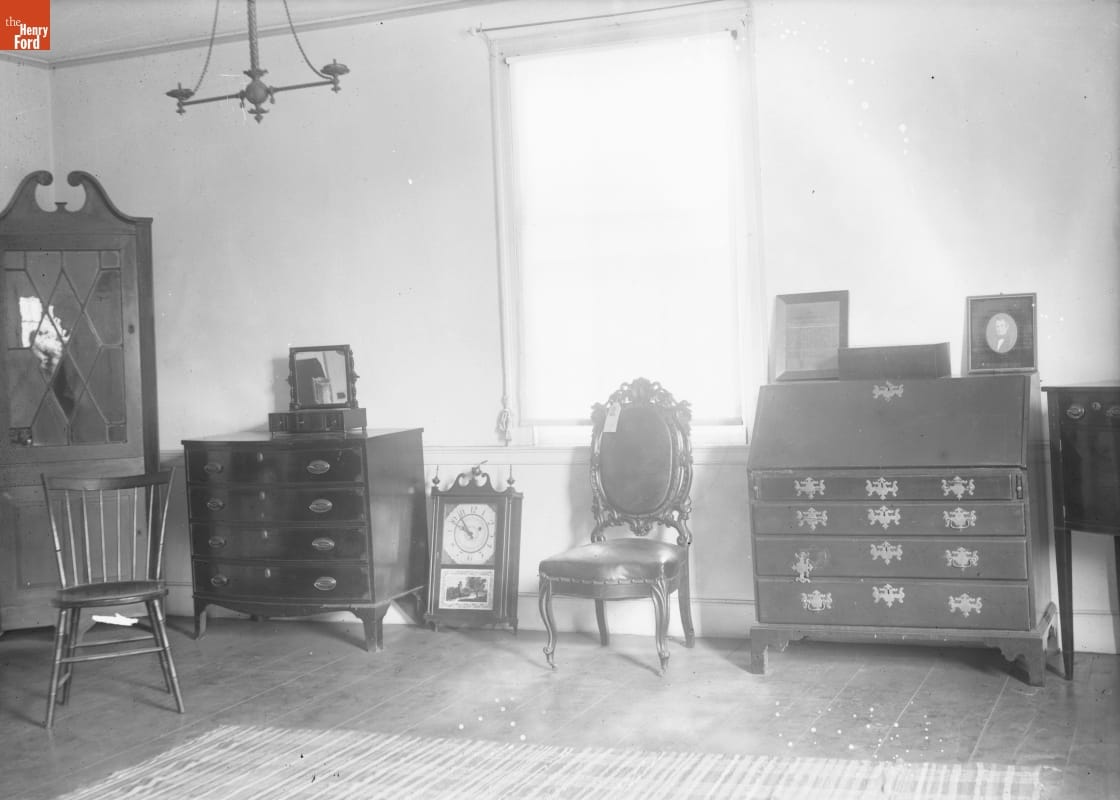
- Furniture, Miscellaneous Pieces, 1890-1915 - In 1890, Jenny Young Chandler, 25 years old and recently widowed, began working for the <EM>New York Herald</EM>. As a photojournalist and feature writer, Chandler captured life in Brooklyn, New York, and vicinity. She also documented collections of private individuals and museums -- some of which were featured in magazine articles for collectors. By 1922, the time of her death, she had produced over 800 glass plate negatives.
- 1890-1915
- Collections - Artifact
Furniture, Miscellaneous Pieces, 1890-1915
In 1890, Jenny Young Chandler, 25 years old and recently widowed, began working for the New York Herald. As a photojournalist and feature writer, Chandler captured life in Brooklyn, New York, and vicinity. She also documented collections of private individuals and museums -- some of which were featured in magazine articles for collectors. By 1922, the time of her death, she had produced over 800 glass plate negatives.
- Doll Slant-Front Desk, circa 1760 -
- circa 1760
- Collections - Artifact
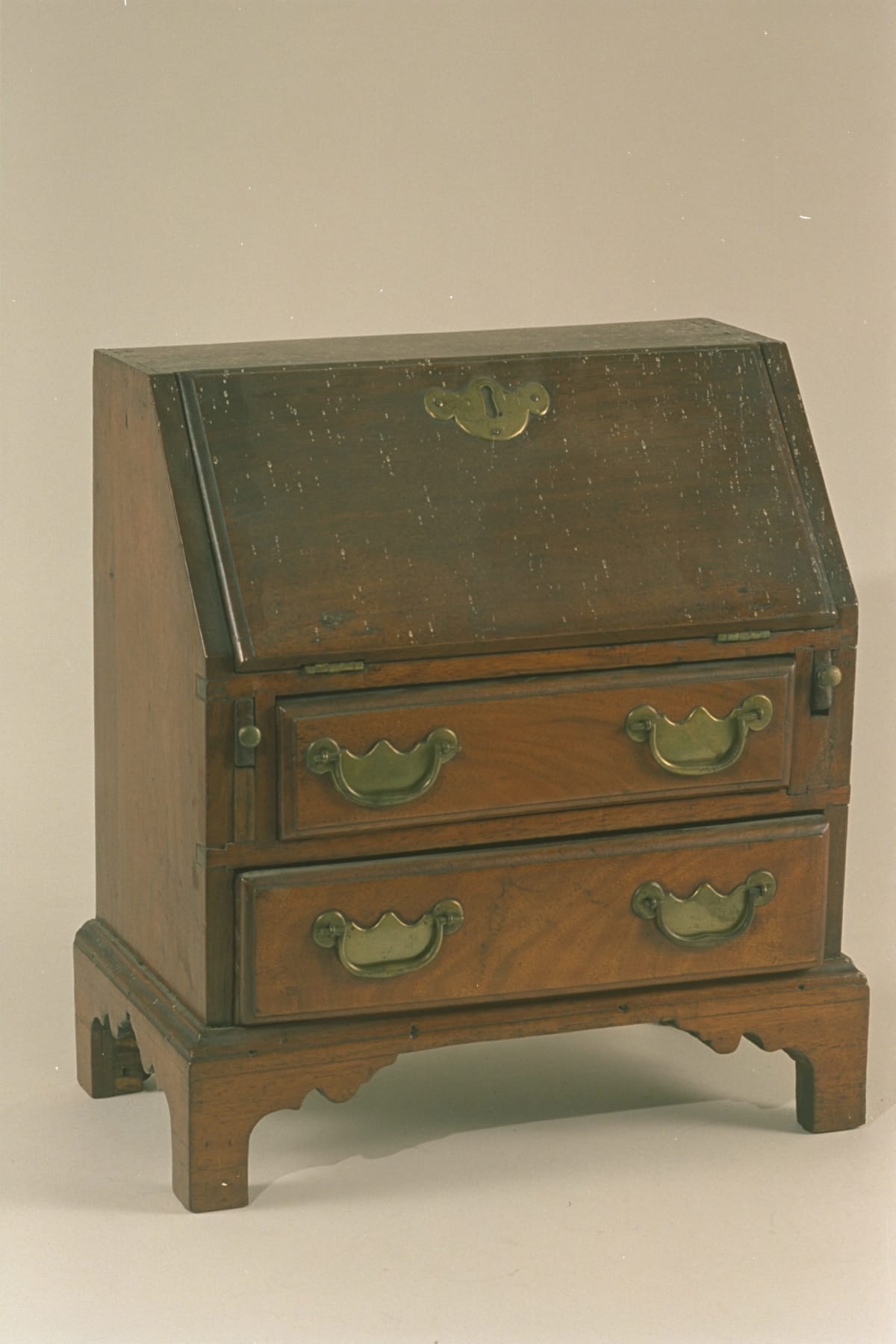
Doll Slant-Front Desk, circa 1760
- Doll Slant-Front Desk, 1790-1810 -
- 1790-1810
- Collections - Artifact
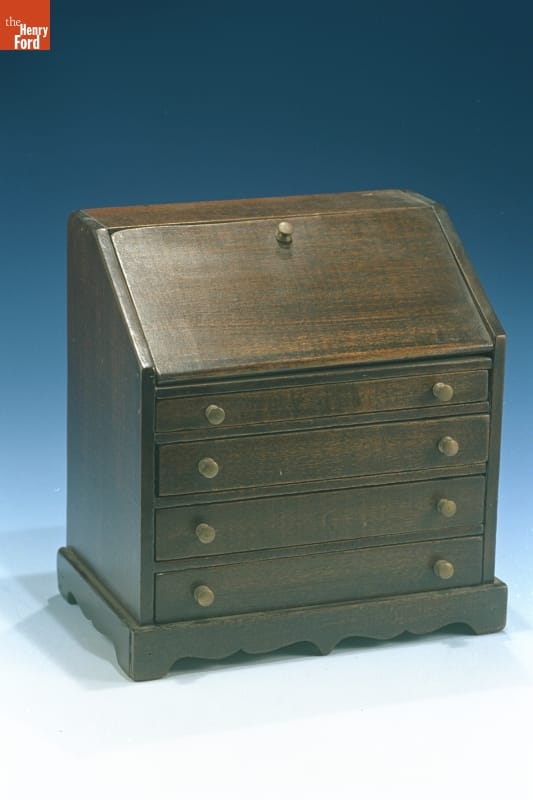
Doll Slant-Front Desk, 1790-1810
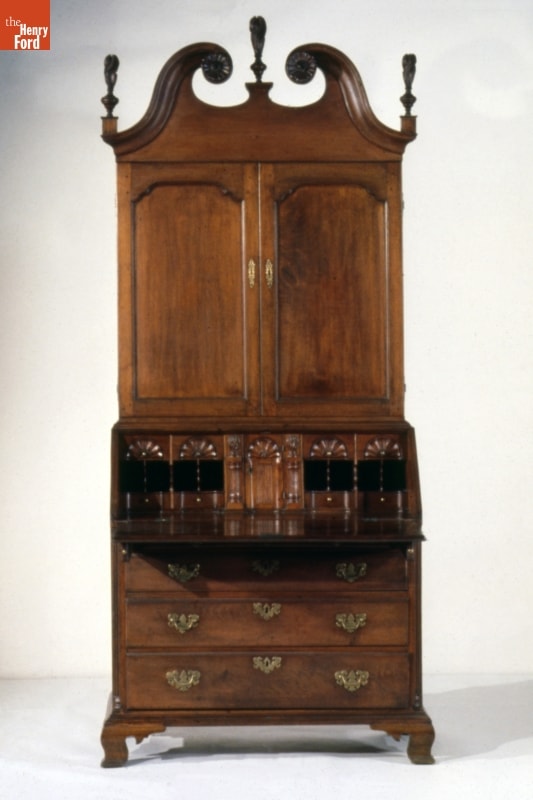
- Secretary Desk, 1750-1780 - American businessmen and merchants in the mid-18th century used secretary desks as home offices. These large desks provide a writing surface, shelves for books and a storage space for papers -- perhaps even a secret drawer for important documents. Placed in a parlor or other public room, this secretary projected the owner's wealth and social status to visitors.
- 1750-1780
- Collections - Artifact
Secretary Desk, 1750-1780
American businessmen and merchants in the mid-18th century used secretary desks as home offices. These large desks provide a writing surface, shelves for books and a storage space for papers -- perhaps even a secret drawer for important documents. Placed in a parlor or other public room, this secretary projected the owner's wealth and social status to visitors.
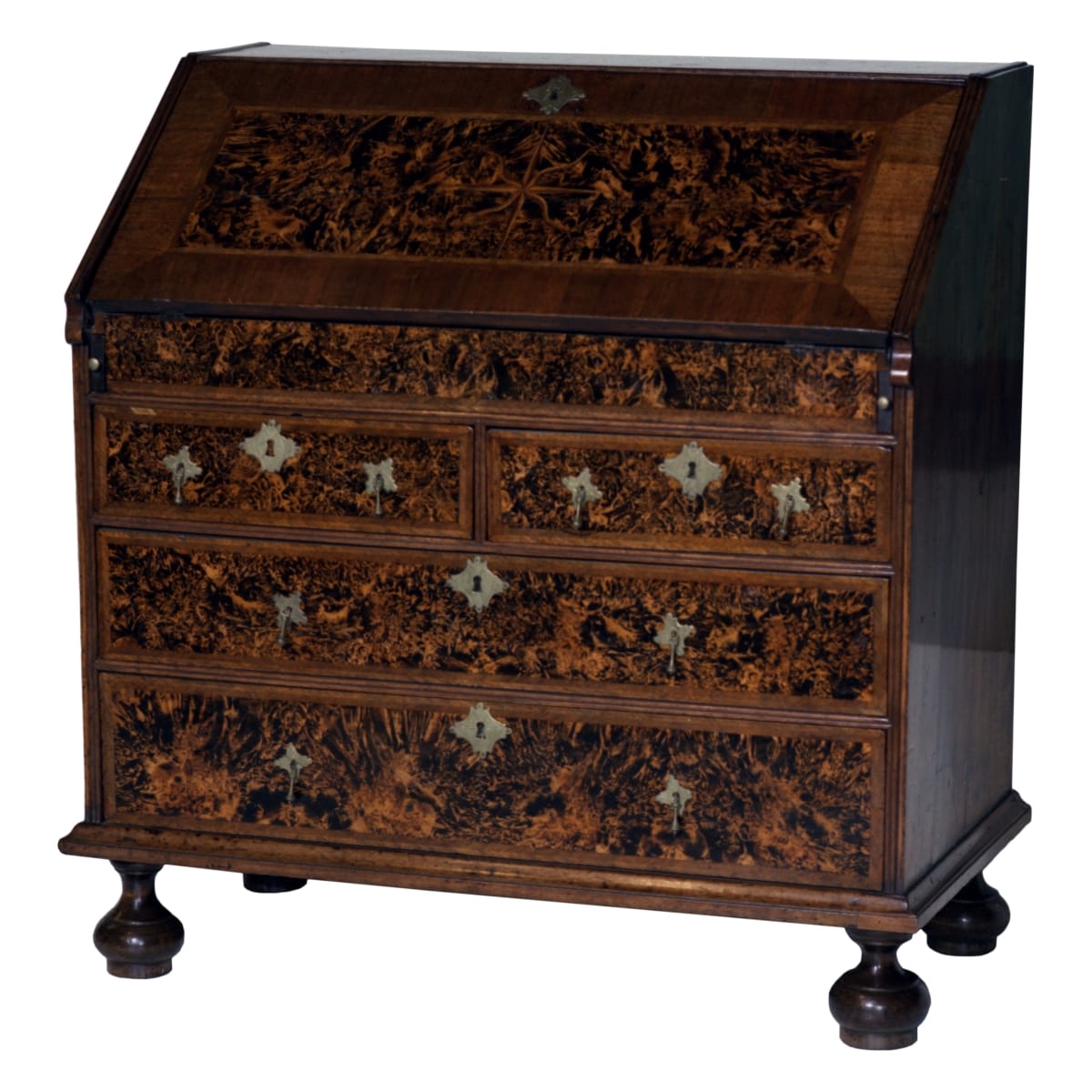
- Fall Front Desk, 1700-1730 - In the early 1700s, prosperous, yet frugal New England merchants showed off their wealth and good taste through functional objects, like furniture. This desk served as place to store important documents and valuables. It has numerous lockable drawers and several secret compartments. The fashionable and expensive walnut burl veneers make this object suitable for display in a parlor, where guests would be impressed.
- 1700-1730
- Collections - Artifact
Fall Front Desk, 1700-1730
In the early 1700s, prosperous, yet frugal New England merchants showed off their wealth and good taste through functional objects, like furniture. This desk served as place to store important documents and valuables. It has numerous lockable drawers and several secret compartments. The fashionable and expensive walnut burl veneers make this object suitable for display in a parlor, where guests would be impressed.
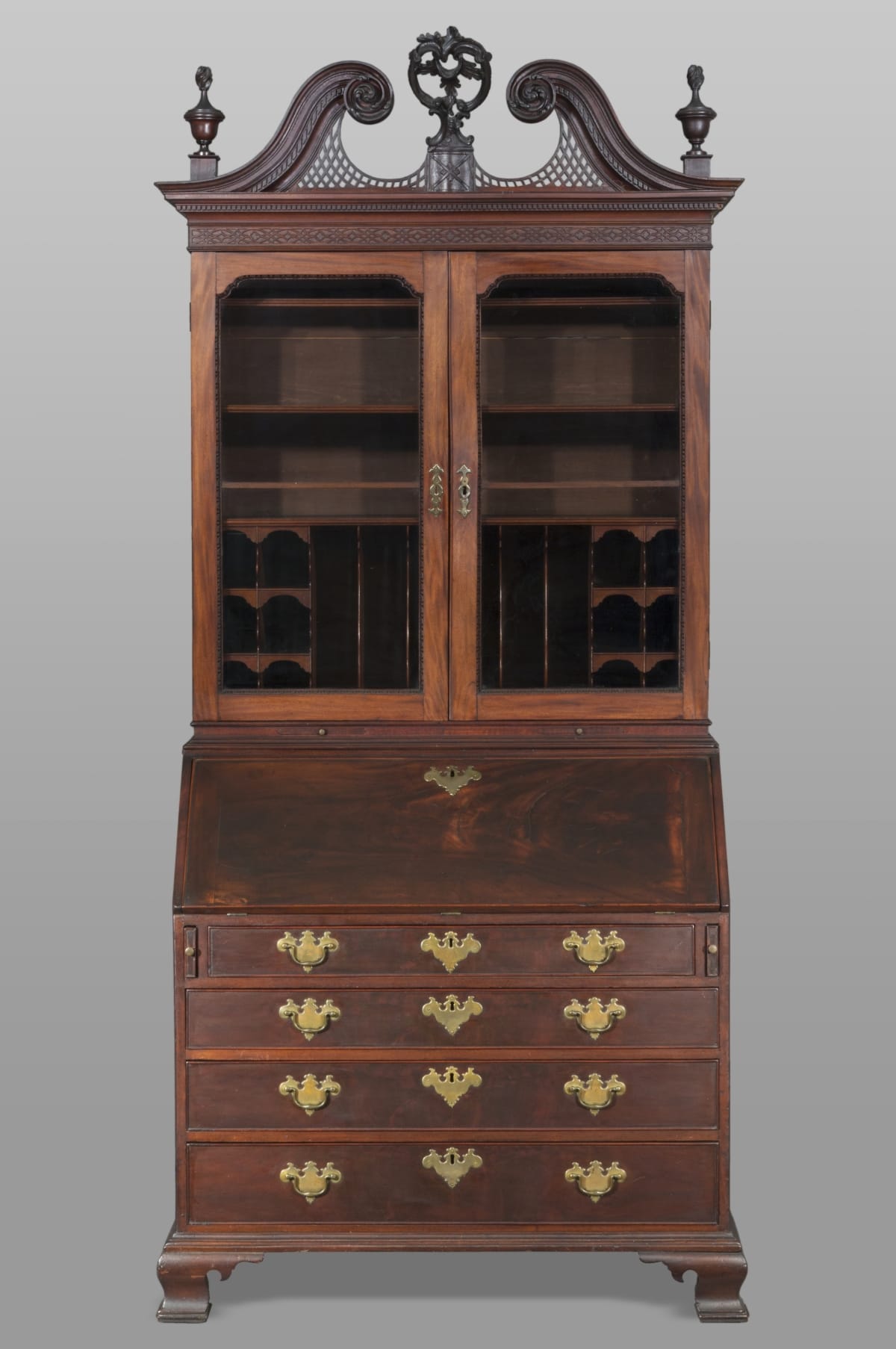
- Slant-Front Desk and Bookcase, 1750-1780 - American businessmen and merchants in the mid-18th century used secretary desks as home offices. These large desks provide a writing surface, shelves for books and a storage space for papers -- perhaps even a secret drawer for important documents. Placed in a parlor or other public room, this secretary projected the owner's wealth and social status to visitors.
- 1750-1780
- Collections - Artifact
Slant-Front Desk and Bookcase, 1750-1780
American businessmen and merchants in the mid-18th century used secretary desks as home offices. These large desks provide a writing surface, shelves for books and a storage space for papers -- perhaps even a secret drawer for important documents. Placed in a parlor or other public room, this secretary projected the owner's wealth and social status to visitors.
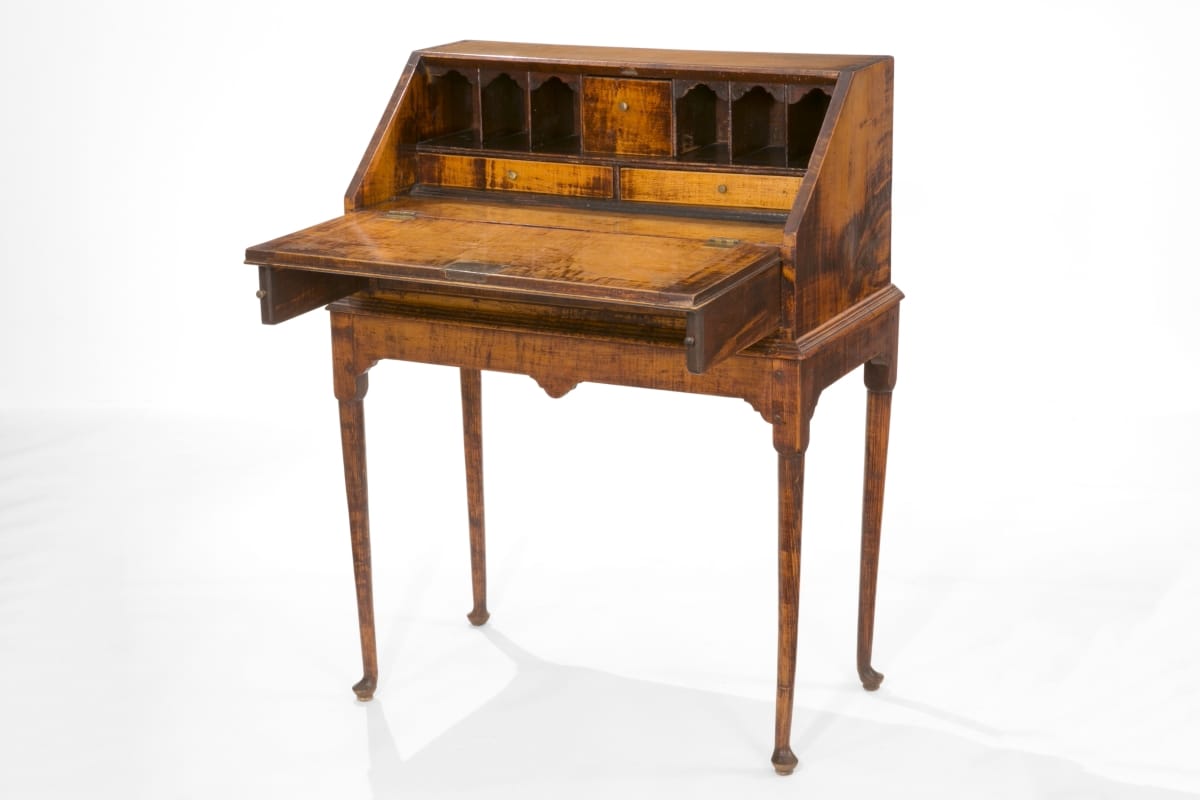
- Fall-Front Desk on Frame, 1745-1785 - Furniture fashions of this era combined utility, comfort and grace with great success. This simple Queen Anne fall-front desk symbolized the gentility of its owner through its elegant proportions. Likely used in a parlor or a bedroom, the desk may have been used by a man or a woman to compose correspondence or book keeping.
- 1745-1785
- Collections - Artifact
Fall-Front Desk on Frame, 1745-1785
Furniture fashions of this era combined utility, comfort and grace with great success. This simple Queen Anne fall-front desk symbolized the gentility of its owner through its elegant proportions. Likely used in a parlor or a bedroom, the desk may have been used by a man or a woman to compose correspondence or book keeping.
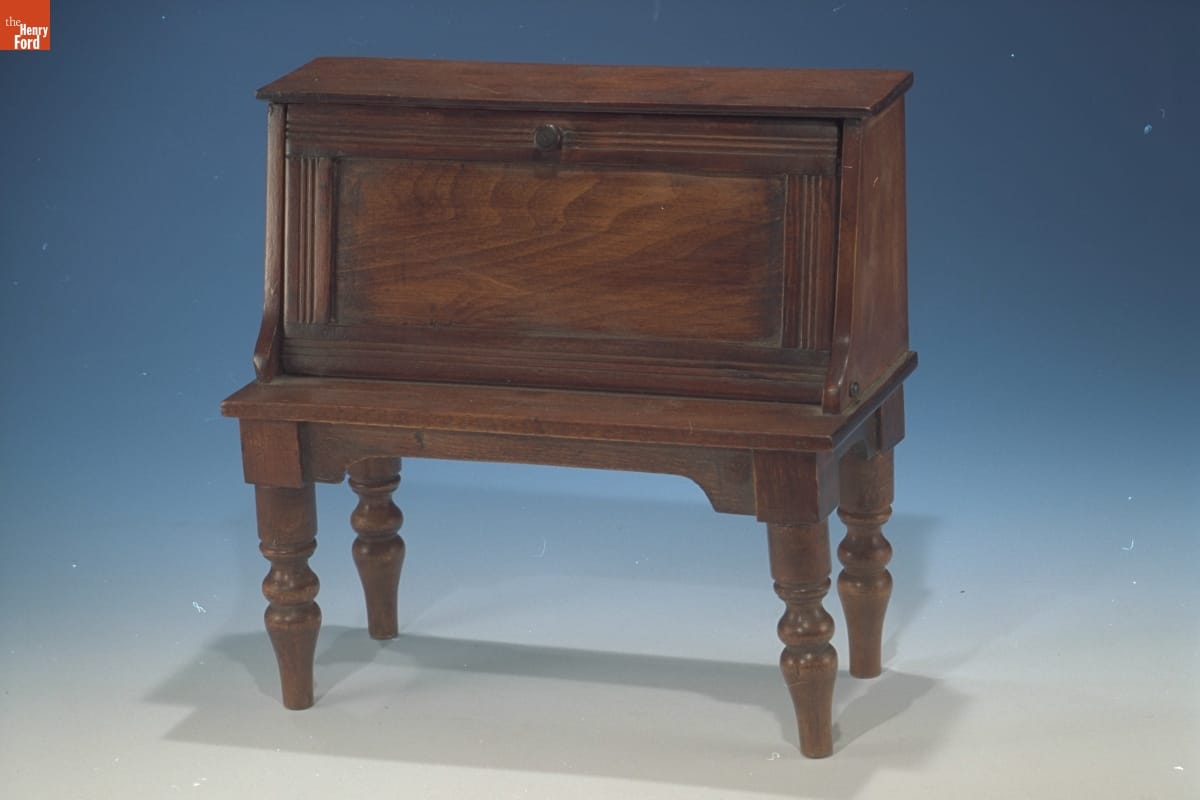
- Doll Slant-Front Desk, 1860-1880 -
- 1860-1880
- Collections - Artifact
Doll Slant-Front Desk, 1860-1880
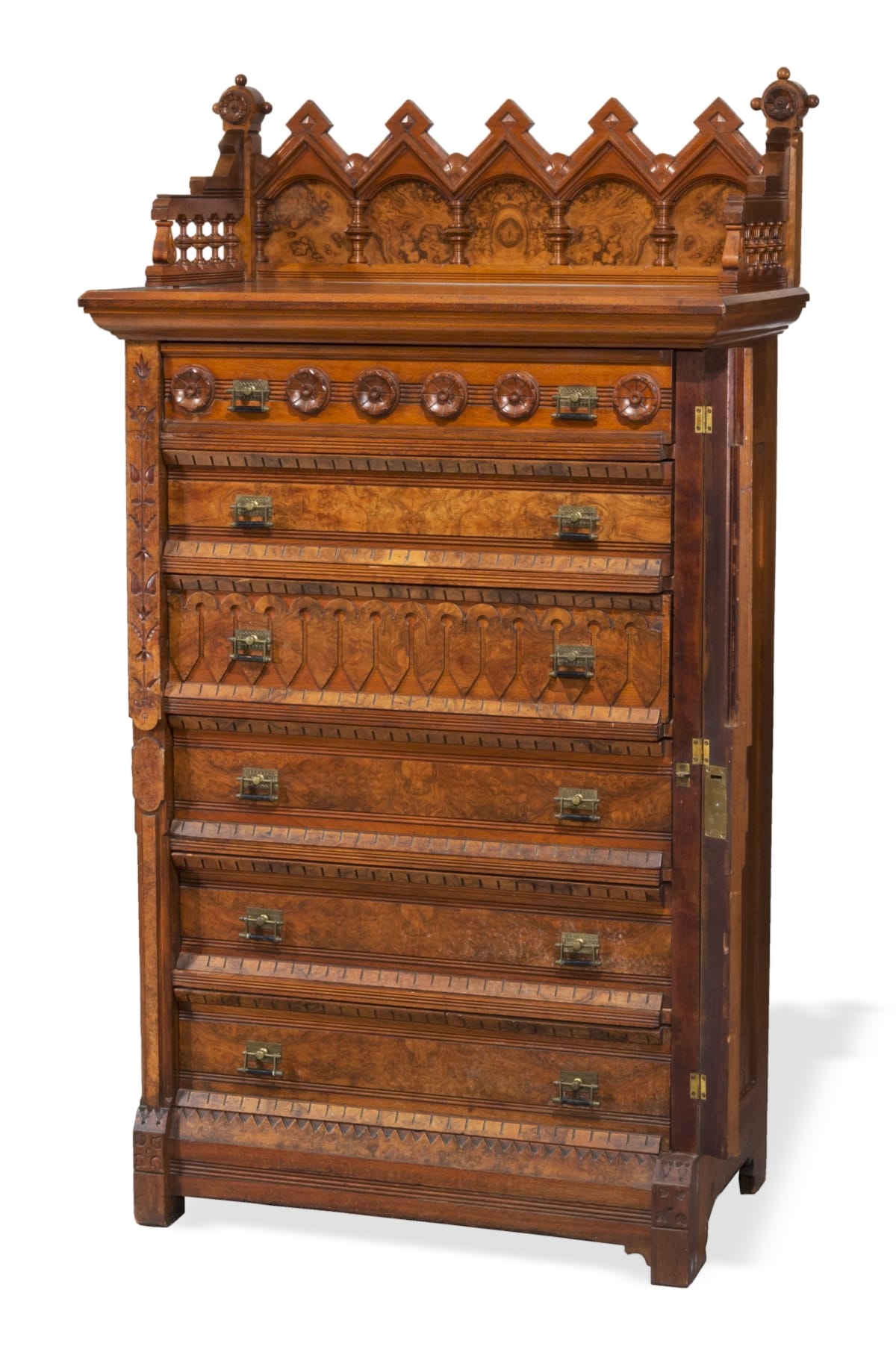
- Bureau Desk, 1875-1885 - This stylish bureau includes a row of carved gothic arches, harkening back to the Middle Ages. Discreetly hidden behind one of the drawer fronts is a retractable writing desk. A green baize-covered writing surface conveniently flips open. The overall effect is an elegant, yet compact desk and storage unit that would have fit nicely into a fashionable middle-class bedroom or library.
- 1875-1885
- Collections - Artifact
Bureau Desk, 1875-1885
This stylish bureau includes a row of carved gothic arches, harkening back to the Middle Ages. Discreetly hidden behind one of the drawer fronts is a retractable writing desk. A green baize-covered writing surface conveniently flips open. The overall effect is an elegant, yet compact desk and storage unit that would have fit nicely into a fashionable middle-class bedroom or library.