
Search
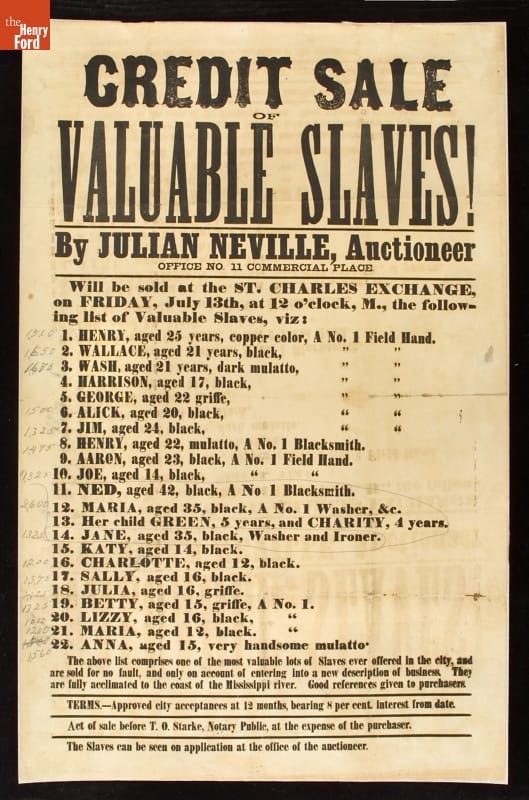
- "Credit Sale of Valuable Slaves! by Julian Neville, Auctioneer," New Orleans, Louisiana, circa 1850 - The wealth and power of Southern plantation owners depended upon a large labor force of enslaved people -- especially when cotton became "king" in the Deep South during the 1800s. They justified their actions by considering enslaved people to be mere pieces of property. New Orleans became a major slave auction center after about 1820.
- circa 1850
- Collections - Artifact
"Credit Sale of Valuable Slaves! by Julian Neville, Auctioneer," New Orleans, Louisiana, circa 1850
The wealth and power of Southern plantation owners depended upon a large labor force of enslaved people -- especially when cotton became "king" in the Deep South during the 1800s. They justified their actions by considering enslaved people to be mere pieces of property. New Orleans became a major slave auction center after about 1820.
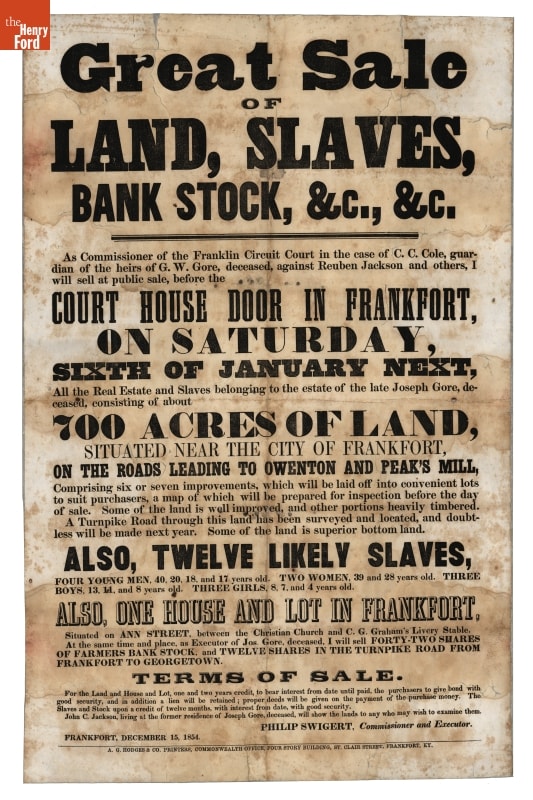
- "Great Sale of Land, Slaves, Bank Stock, &c., &c.," 1855 - The wealth and power of Southern plantation owners depended upon a large labor force of enslaved people. They justified their actions by considering enslaved people to be mere pieces of property. Slaves are included in this public sale of the personal possessions of a G. W. Gore of Frankfort, Kentucky.
- January 06, 1855
- Collections - Artifact
"Great Sale of Land, Slaves, Bank Stock, &c., &c.," 1855
The wealth and power of Southern plantation owners depended upon a large labor force of enslaved people. They justified their actions by considering enslaved people to be mere pieces of property. Slaves are included in this public sale of the personal possessions of a G. W. Gore of Frankfort, Kentucky.