
Search
- Anti-Slavery Token, 1838 -
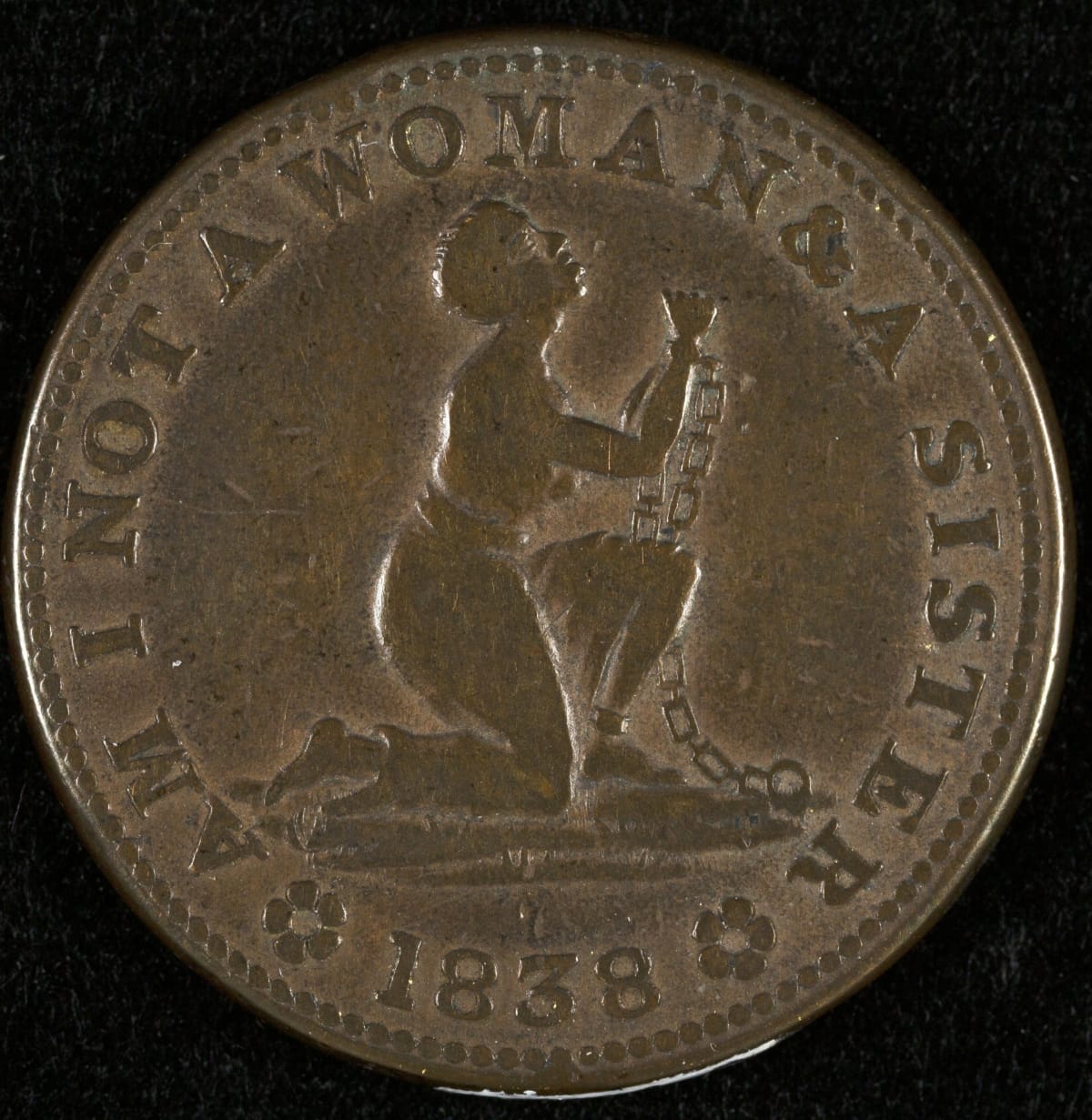
- 1838
- Collections - Artifact
Anti-Slavery Token, 1838
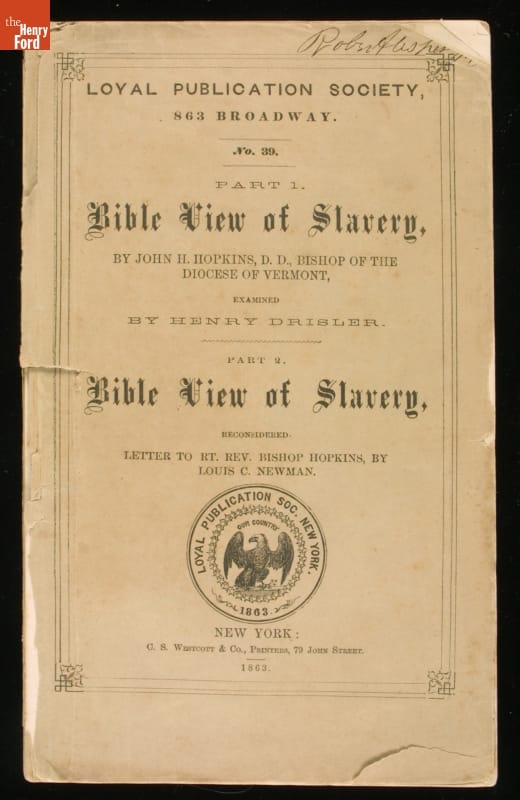
- Pamphlet with Two Essays, "Bible View of Slavery, Examined" and "Bible View of Slavery, Reconsidered," 1863 - In 1776 America's Founding Fathers established a nation based on the principles of freedom -- but that didn't include enslaved African Americans. Through the 1800s, the question of slavery escalated into civil war. John H. Hopkins, a controversial Episcopal Bishop from Vermont, argued in 1863 that the Bible did not forbid slavery -- but he still opposed Southern states seceding from the Union.
- 1863
- Collections - Artifact
Pamphlet with Two Essays, "Bible View of Slavery, Examined" and "Bible View of Slavery, Reconsidered," 1863
In 1776 America's Founding Fathers established a nation based on the principles of freedom -- but that didn't include enslaved African Americans. Through the 1800s, the question of slavery escalated into civil war. John H. Hopkins, a controversial Episcopal Bishop from Vermont, argued in 1863 that the Bible did not forbid slavery -- but he still opposed Southern states seceding from the Union.
- Martha W. Martin Autograph Album, 1837-1858 -
- 1837-1858
- Collections - Artifact
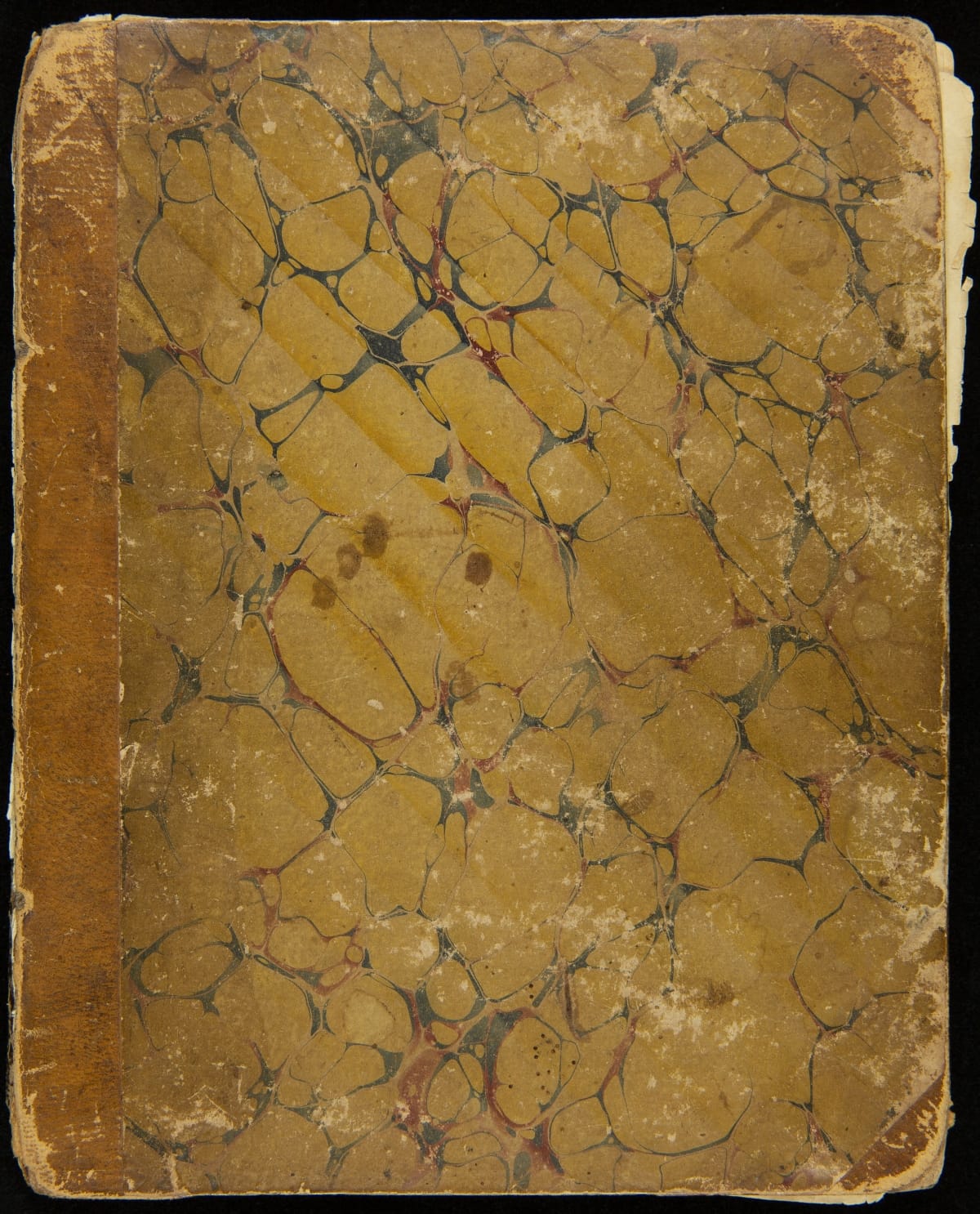
Martha W. Martin Autograph Album, 1837-1858
- New York Evening Post Newspaper for September 23, 1862, "Emancipation Proclamation of President Lincoln" -
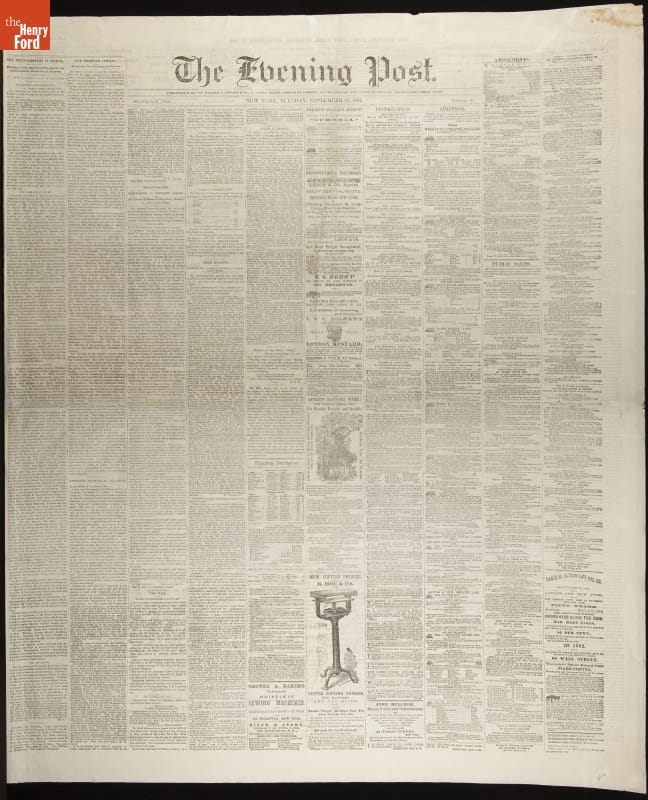
- September 23, 1862
- Collections - Artifact
New York Evening Post Newspaper for September 23, 1862, "Emancipation Proclamation of President Lincoln"
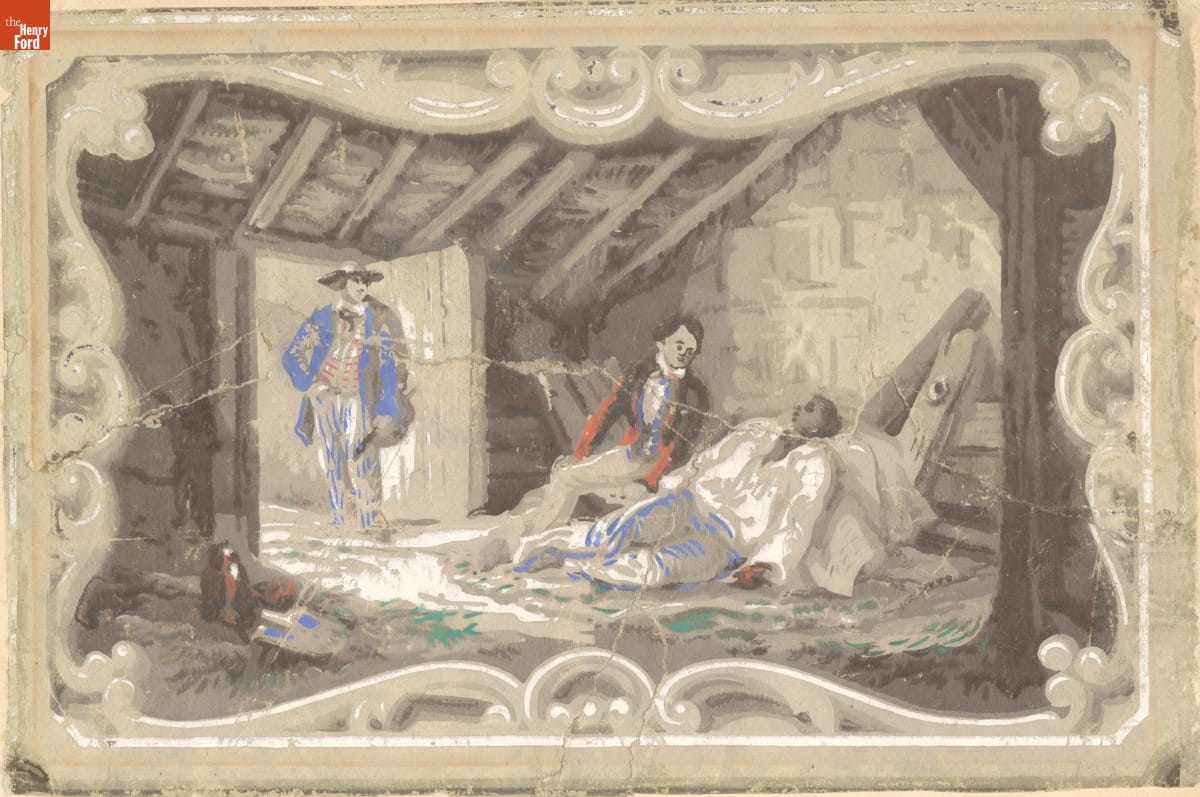
- Wallpaper Fragment with Scene from Uncle Tom's Cabin, Used at Crotta House, circa 1852 - Harriet Beecher Stowe's book, <em>Uncle Tom's Cabin</em>, became a national and international best-seller when first published in 1852. A number of illustrated editions were produced soon after. This section of wallpaper may have been based on one of the illustrations called "Death of Uncle Tom." This section was removed from a house in Ireland -- a testament to the international acclaim of the novel.
- circa 1852
- Collections - Artifact
Wallpaper Fragment with Scene from Uncle Tom's Cabin, Used at Crotta House, circa 1852
Harriet Beecher Stowe's book, Uncle Tom's Cabin, became a national and international best-seller when first published in 1852. A number of illustrated editions were produced soon after. This section of wallpaper may have been based on one of the illustrations called "Death of Uncle Tom." This section was removed from a house in Ireland -- a testament to the international acclaim of the novel.
- Susquehanna Dairy - This dairy house stood on Susquehanna Plantation, near the main dwelling house. Here, enslaved African Americans had responsibility for the time consuming tasks of making butter and cheese, an important part of the planters' diet. Besides a dairy, plantation outbuildings typically included slave quarters, tobacco barn, corn house, stable, meat house, poultry house, blacksmith and carpentry shops.

- circa 1800
- Collections - Artifact
Susquehanna Dairy
This dairy house stood on Susquehanna Plantation, near the main dwelling house. Here, enslaved African Americans had responsibility for the time consuming tasks of making butter and cheese, an important part of the planters' diet. Besides a dairy, plantation outbuildings typically included slave quarters, tobacco barn, corn house, stable, meat house, poultry house, blacksmith and carpentry shops.
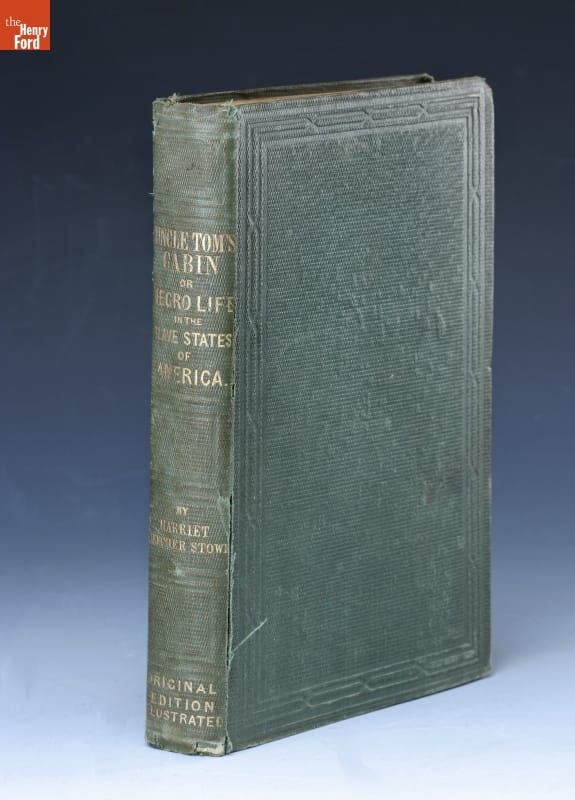
- "Uncle Tom's Cabin; or, Negro Life in the Slave States of America," 1852 - The trials of an enslaved black family seeking freedom are told in the pages of Harriet Beecher Stowe's <em>Uncle Tom's Cabin</em>. The work of fiction became a national and international best-seller when first published in 1852. In one year, 1.5 million copies were sold in Great Britain. The book advanced anti-slavery sympathies throughout Europe and made Stowe an international celebrity.
- 1852
- Collections - Artifact
"Uncle Tom's Cabin; or, Negro Life in the Slave States of America," 1852
The trials of an enslaved black family seeking freedom are told in the pages of Harriet Beecher Stowe's Uncle Tom's Cabin. The work of fiction became a national and international best-seller when first published in 1852. In one year, 1.5 million copies were sold in Great Britain. The book advanced anti-slavery sympathies throughout Europe and made Stowe an international celebrity.
- Letter from T. Cooney to John W. Campbell, Tennessee, 1833 -
- October 27, 1833
- Collections - Artifact
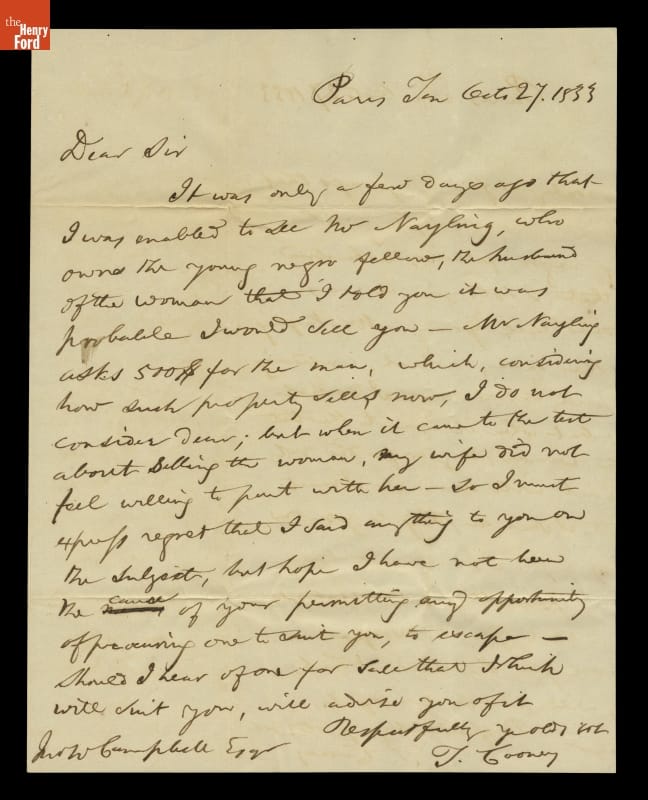
Letter from T. Cooney to John W. Campbell, Tennessee, 1833
- The Liberator, Vol. 9, No. 33, August 16, 1839 -
- August 16, 1839
- Collections - Artifact
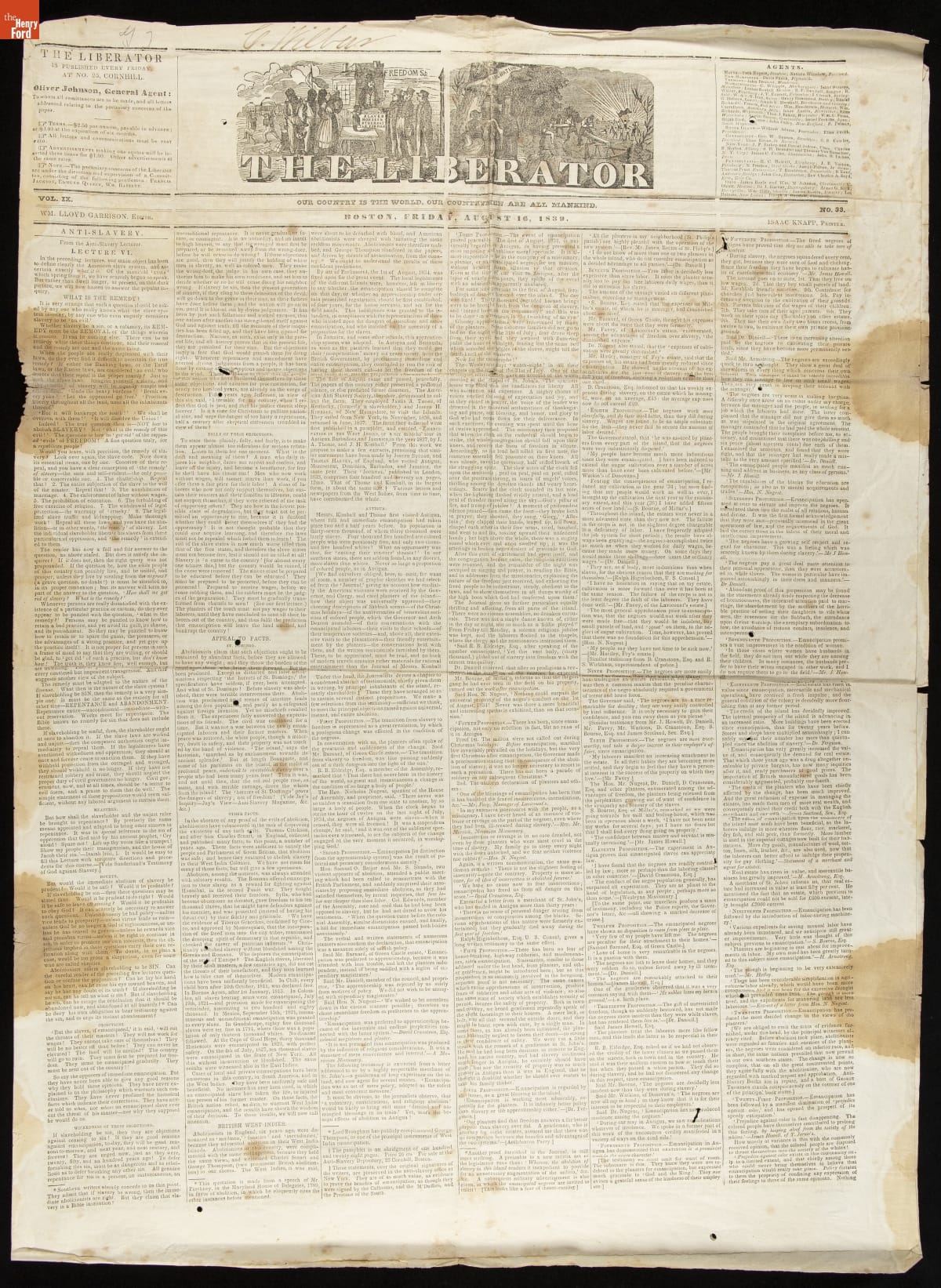
The Liberator, Vol. 9, No. 33, August 16, 1839
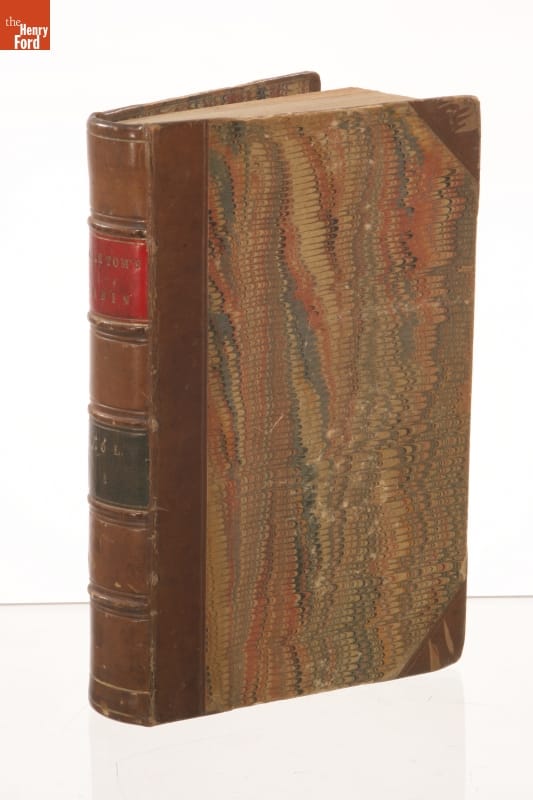
- "Uncle Tom's Cabin; or Life among the Lowly," Vol. 1, 1852 - The trials of an enslaved black family seeking freedom are told in the pages of Harriet Beecher Stowe's <em>Uncle Tom's Cabin</em>. The work of fiction became an instant best-seller when first published in 1852. Stowe's emotional descriptions touched many readers while others dismissed it as lies. Abolitionist praised the book, but it was reviled by pro-slavery advocates.
- 1852
- Collections - Artifact
"Uncle Tom's Cabin; or Life among the Lowly," Vol. 1, 1852
The trials of an enslaved black family seeking freedom are told in the pages of Harriet Beecher Stowe's Uncle Tom's Cabin. The work of fiction became an instant best-seller when first published in 1852. Stowe's emotional descriptions touched many readers while others dismissed it as lies. Abolitionist praised the book, but it was reviled by pro-slavery advocates.