
Search
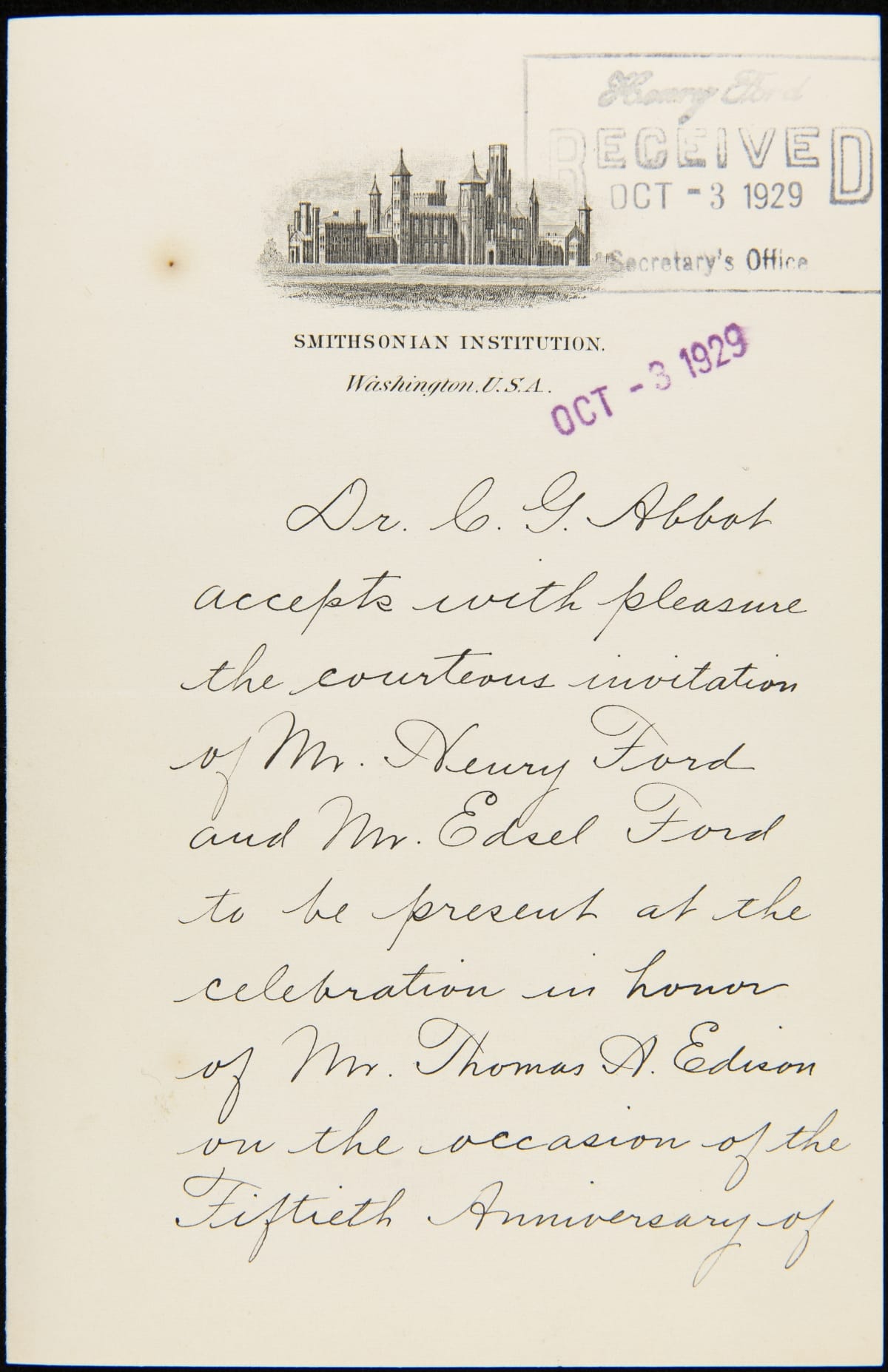
- Letter from Charles Greely (C.G.) Abbot to Henry Ford and Edsel Ford regarding Invitation to Light's Golden Jubilee, October 1, 1929 - On October 21, 1929, Henry Ford hosted an event, Light's Golden Jubilee, which celebrated the 50th anniversary of Thomas Edison's invention of the incandescent lamp. The event also served as the official dedication of The Edison Institute, Ford's museum complex named in honor of his friend. Among the invited guests was Secretary of the Smithsonian Dr. C.G. Abbott, who accepted the Ford's courteous invitation.
- October 21, 1929
- Collections - Artifact
Letter from Charles Greely (C.G.) Abbot to Henry Ford and Edsel Ford regarding Invitation to Light's Golden Jubilee, October 1, 1929
On October 21, 1929, Henry Ford hosted an event, Light's Golden Jubilee, which celebrated the 50th anniversary of Thomas Edison's invention of the incandescent lamp. The event also served as the official dedication of The Edison Institute, Ford's museum complex named in honor of his friend. Among the invited guests was Secretary of the Smithsonian Dr. C.G. Abbott, who accepted the Ford's courteous invitation.
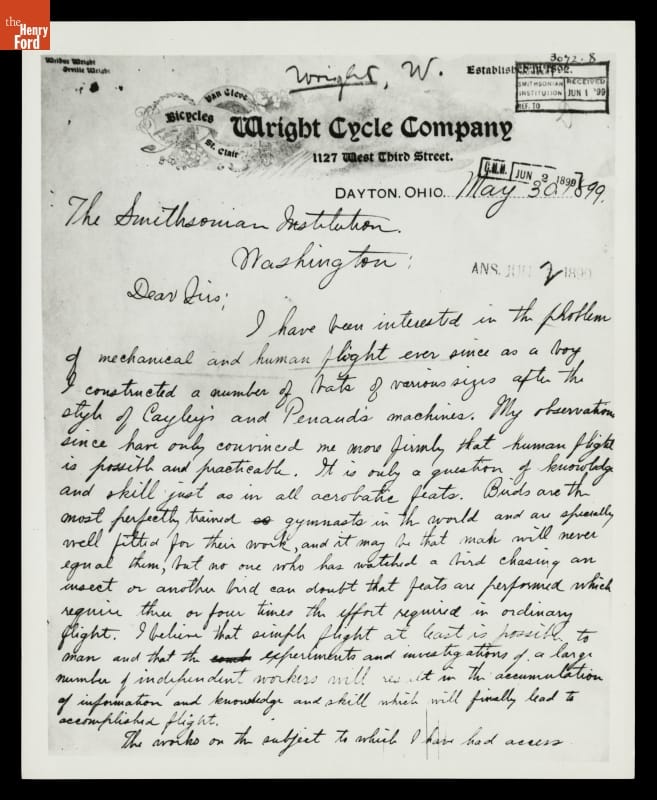
- First Page of a Letter From Wilbur Wright to the Smithsonian Institution, May 30, 1899 - On May 30, 1899, Wilbur Wright wrote to the Smithsonian Institution for recommended readings on the problem of human flight. Wright noted that he was "not a crank" but genuinely interested. That simple letter, and the response he received, set Wilbur and his brother Orville on an inventive journey that led to their first flight at Kill Devil Hills in 1903.
- May 30, 1899
- Collections - Artifact
First Page of a Letter From Wilbur Wright to the Smithsonian Institution, May 30, 1899
On May 30, 1899, Wilbur Wright wrote to the Smithsonian Institution for recommended readings on the problem of human flight. Wright noted that he was "not a crank" but genuinely interested. That simple letter, and the response he received, set Wilbur and his brother Orville on an inventive journey that led to their first flight at Kill Devil Hills in 1903.
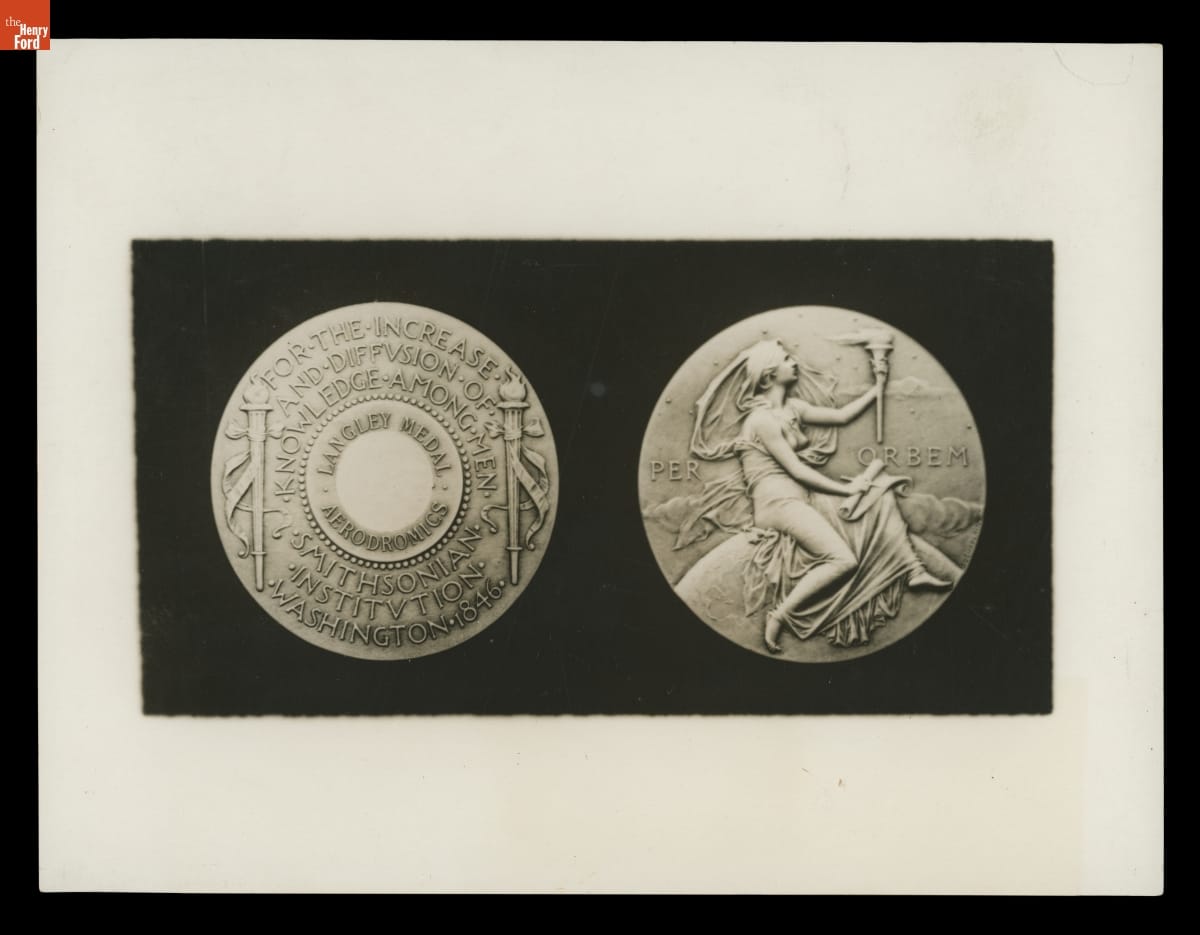
- Langley Gold Medal Awarded to Richard E. Byrd, 1929 - Explorer and U.S. Navy aviator Richard E. Byrd led a flight to the North Pole in 1926 and a flight to the South Pole in 1929. For his efforts, the Smithsonian Institution presented Byrd with its Samuel P. Langley Medal for Aerodynamics. Langley was the Smithsonian's third secretary and a pioneer aviator.
- 1929
- Collections - Artifact
Langley Gold Medal Awarded to Richard E. Byrd, 1929
Explorer and U.S. Navy aviator Richard E. Byrd led a flight to the North Pole in 1926 and a flight to the South Pole in 1929. For his efforts, the Smithsonian Institution presented Byrd with its Samuel P. Langley Medal for Aerodynamics. Langley was the Smithsonian's third secretary and a pioneer aviator.
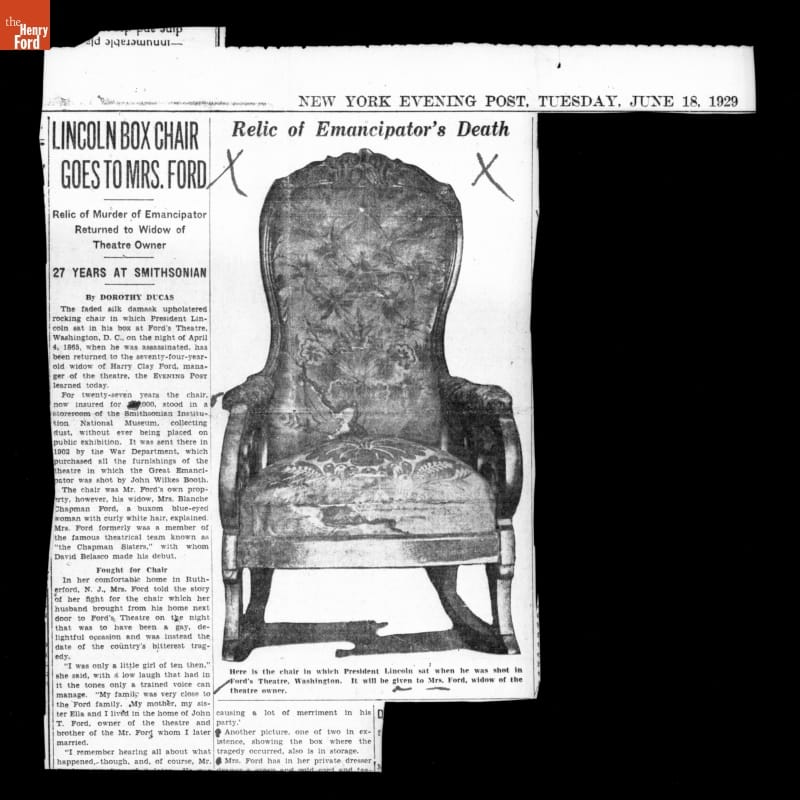
- New York Evening Post Article from June 18, 1929, "Lincoln Box Chair Goes to Mrs. Ford" -
- June 18, 1929
- Collections - Artifact
New York Evening Post Article from June 18, 1929, "Lincoln Box Chair Goes to Mrs. Ford"
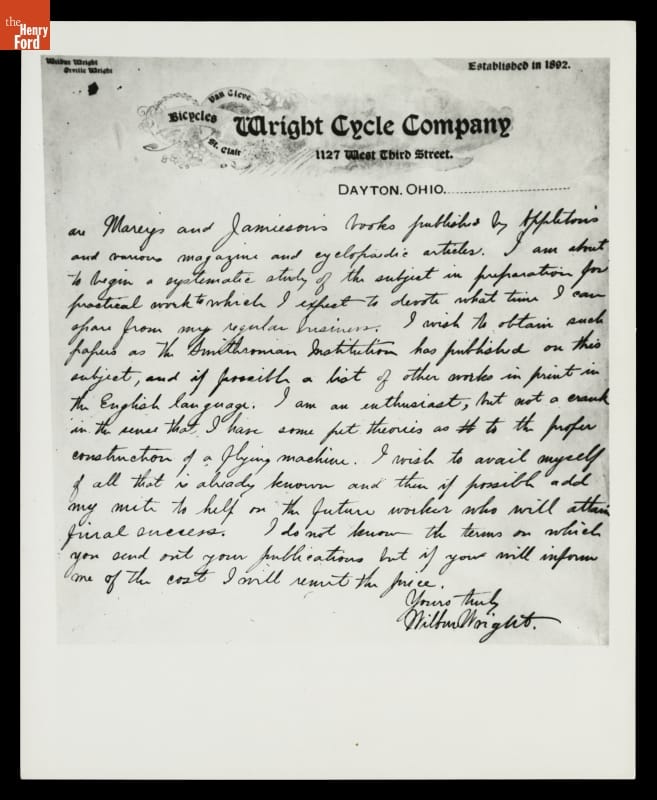
- Second Page of a Letter From Wilbur Wright to the Smithsonian Institution, May 30, 1899 - On May 30, 1899, Wilbur Wright wrote to the Smithsonian Institution for recommended readings on the problem of human flight. Wright noted that he was "not a crank" but genuinely interested. That simple letter, and the response he received, set Wilbur and his brother Orville on an inventive journey that led to their first flight at Kill Devil Hills in 1903.
- May 30, 1899
- Collections - Artifact
Second Page of a Letter From Wilbur Wright to the Smithsonian Institution, May 30, 1899
On May 30, 1899, Wilbur Wright wrote to the Smithsonian Institution for recommended readings on the problem of human flight. Wright noted that he was "not a crank" but genuinely interested. That simple letter, and the response he received, set Wilbur and his brother Orville on an inventive journey that led to their first flight at Kill Devil Hills in 1903.
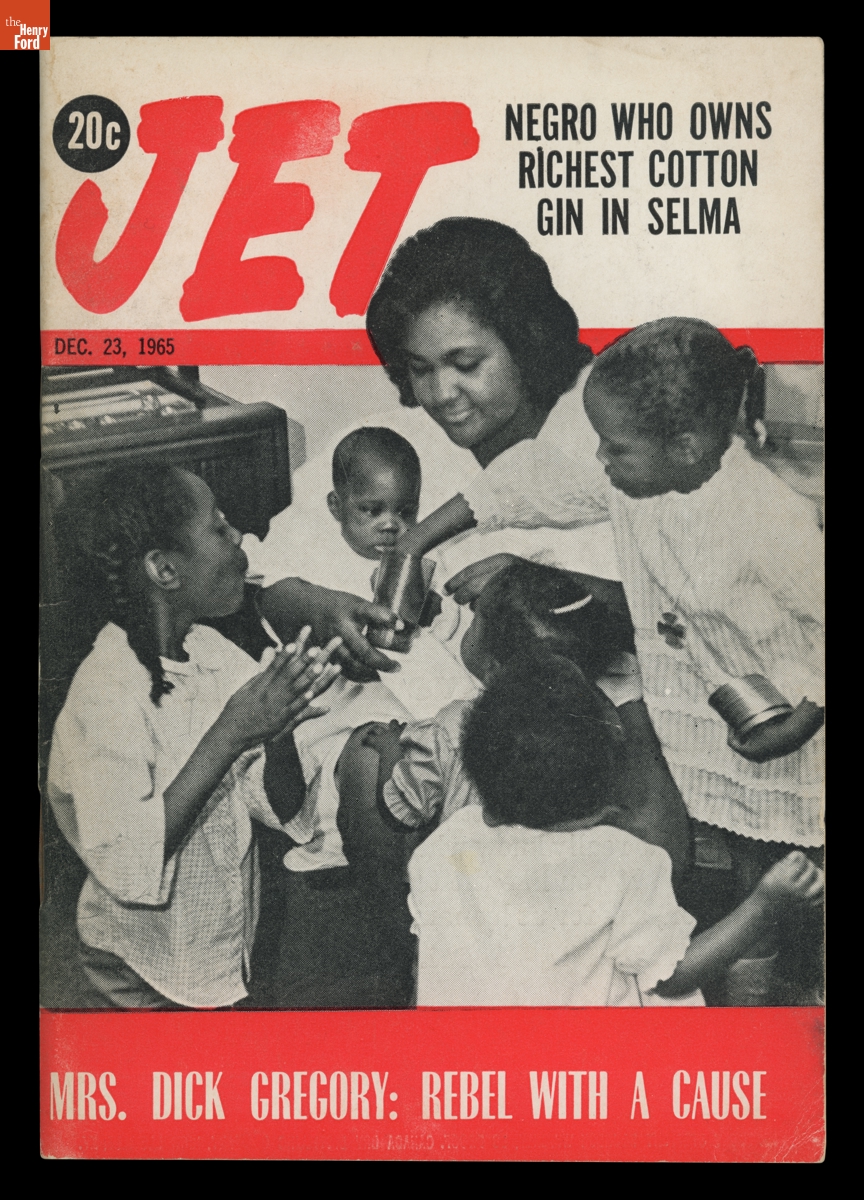
- "Jet," December 23, 1965 -
- December 23, 1965
- Collections - Artifact
"Jet," December 23, 1965