
Search
- Tattoo Flash, circa 1925 - Tattoos communicate stories. Their content ranges from deeply personal and traditional--to regrettable and frivolous. In the early 1900s, "Professor" Waters apprenticed as a tattoo artist in carnivals and New York's Bowery District. He ran a successful supply shop in Detroit (1918-1939), patenting the standard "two-coil" tattoo machine in 1929. Designs from his flash sheets continue to inspire tattooists today.
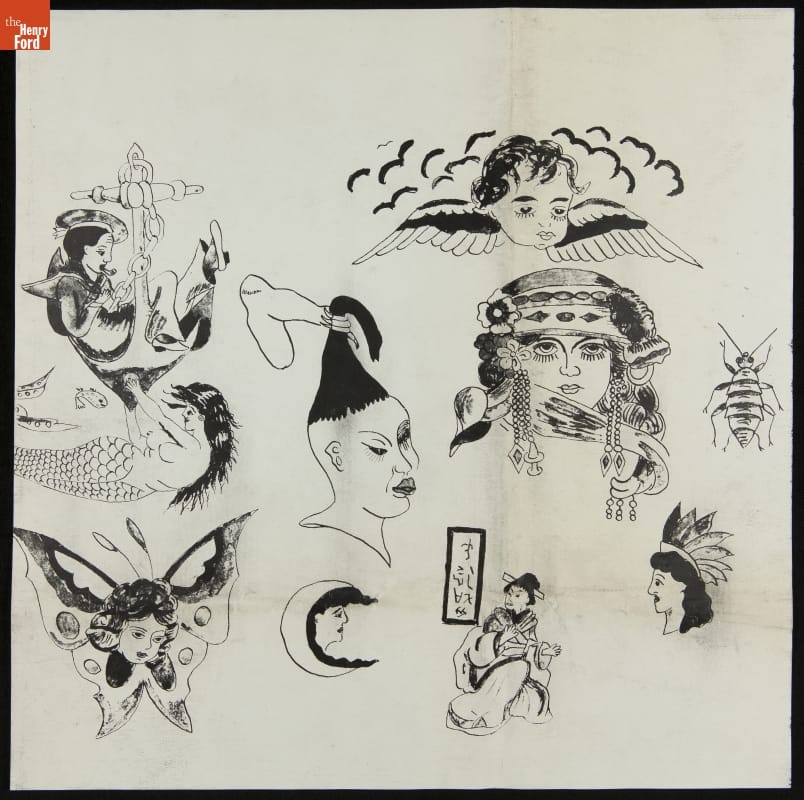
- circa 1925
- Collections - Artifact
Tattoo Flash, circa 1925
Tattoos communicate stories. Their content ranges from deeply personal and traditional--to regrettable and frivolous. In the early 1900s, "Professor" Waters apprenticed as a tattoo artist in carnivals and New York's Bowery District. He ran a successful supply shop in Detroit (1918-1939), patenting the standard "two-coil" tattoo machine in 1929. Designs from his flash sheets continue to inspire tattooists today.
- Boa Constrictor Automobile Horn, circa 1910 - Motor vehicles can be dangerous if you don't hear them coming. Early automobiles were required to have some sort of horn to alert pedestrians, animals and horse-drawn vehicles. Some motorists used whistles or bells. Others installed brass, bulb horns. In addition to the sound this horn made, its snake-like appearance provided an added incentive to move quickly out of the way.
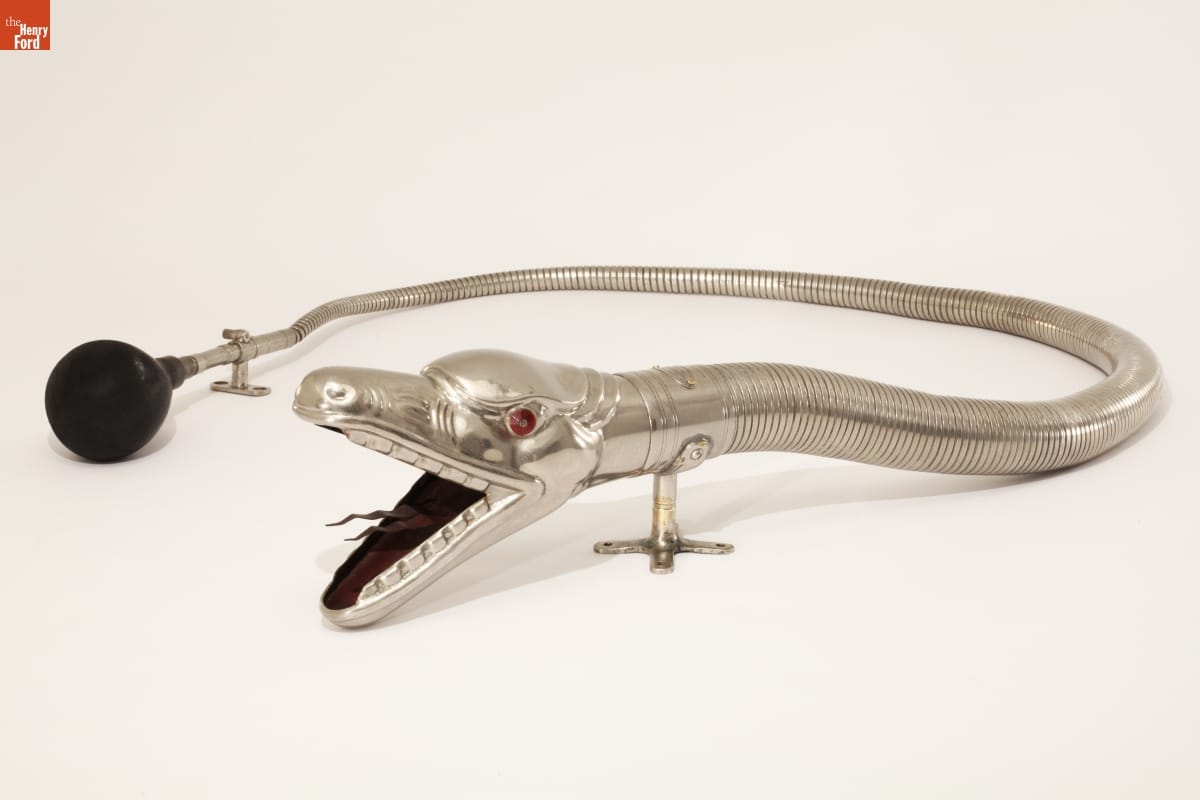
- circa 1910
- Collections - Artifact
Boa Constrictor Automobile Horn, circa 1910
Motor vehicles can be dangerous if you don't hear them coming. Early automobiles were required to have some sort of horn to alert pedestrians, animals and horse-drawn vehicles. Some motorists used whistles or bells. Others installed brass, bulb horns. In addition to the sound this horn made, its snake-like appearance provided an added incentive to move quickly out of the way.
- Miniature Glass Figure, Snake, 1955-1985 - For visitors to the resort towns around Pentwater, Michigan, a trip to Henry Carter Johnson's "Glass Menagerie" was a cherished vacation ritual. For over forty years, beginning in 1952, Johnson heated colored glass rods and fashioned them into multicolored figures. His whimsical creatures captured the imaginations of children and adults who purchased them, providing a tangible reminder of an enjoyable Michigan summer.
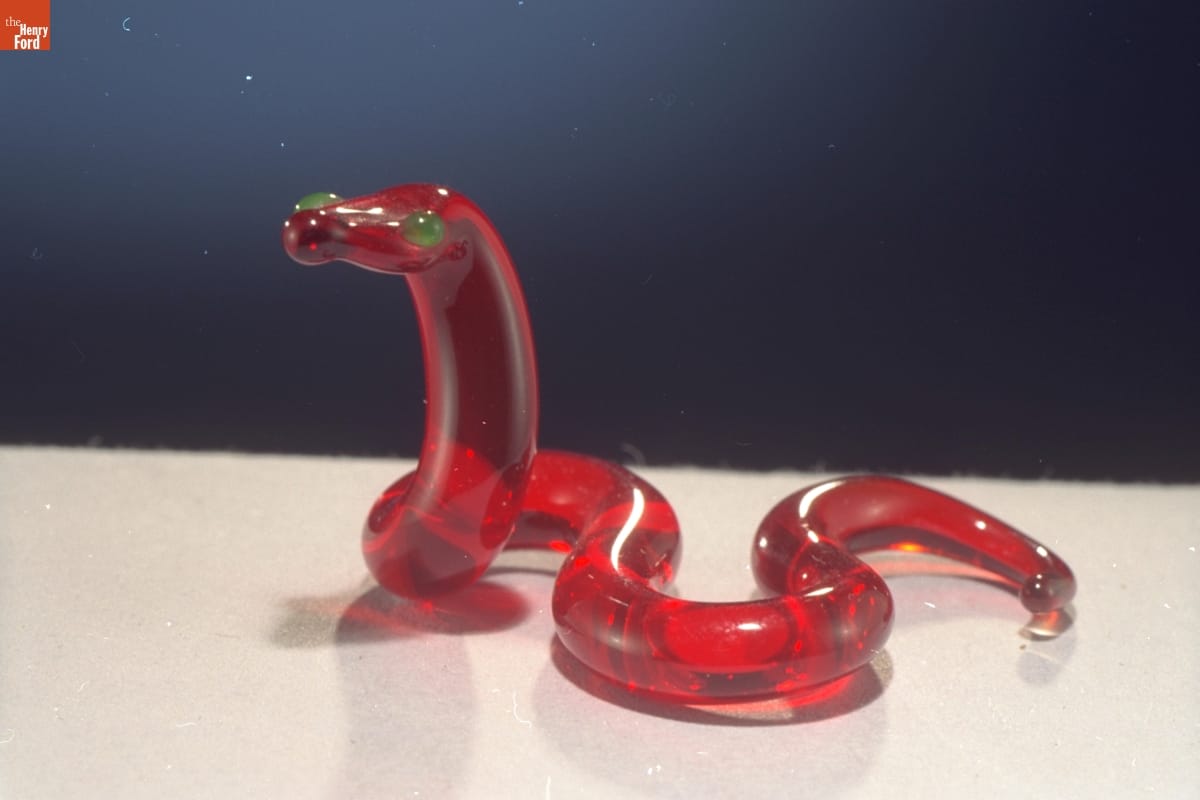
- 1955-1985
- Collections - Artifact
Miniature Glass Figure, Snake, 1955-1985
For visitors to the resort towns around Pentwater, Michigan, a trip to Henry Carter Johnson's "Glass Menagerie" was a cherished vacation ritual. For over forty years, beginning in 1952, Johnson heated colored glass rods and fashioned them into multicolored figures. His whimsical creatures captured the imaginations of children and adults who purchased them, providing a tangible reminder of an enjoyable Michigan summer.
- Environmental Enrichment Panel, "Snake," Designed by Alexander Girard for Herman Miller, 1972 - Alexander Girard, Herman Miller Textile Division's Director of Design, created a series of forty folk art-inspired graphic panels aptly named "Environmental Enrichment Panels" in 1972. They were meant to enrich the office environment, adorning the moveable walls of Robert Propst's Action Office II -- more commonly known as the cubicle.
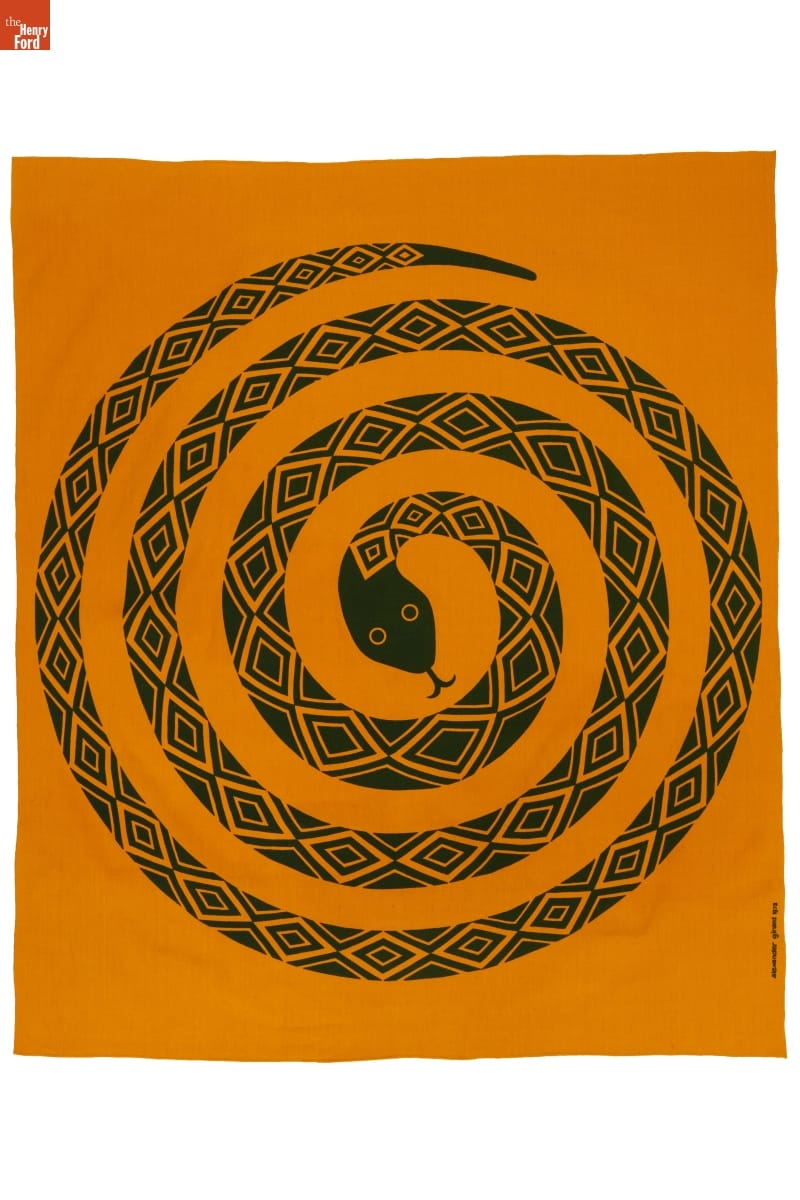
- 1972
- Collections - Artifact
Environmental Enrichment Panel, "Snake," Designed by Alexander Girard for Herman Miller, 1972
Alexander Girard, Herman Miller Textile Division's Director of Design, created a series of forty folk art-inspired graphic panels aptly named "Environmental Enrichment Panels" in 1972. They were meant to enrich the office environment, adorning the moveable walls of Robert Propst's Action Office II -- more commonly known as the cubicle.
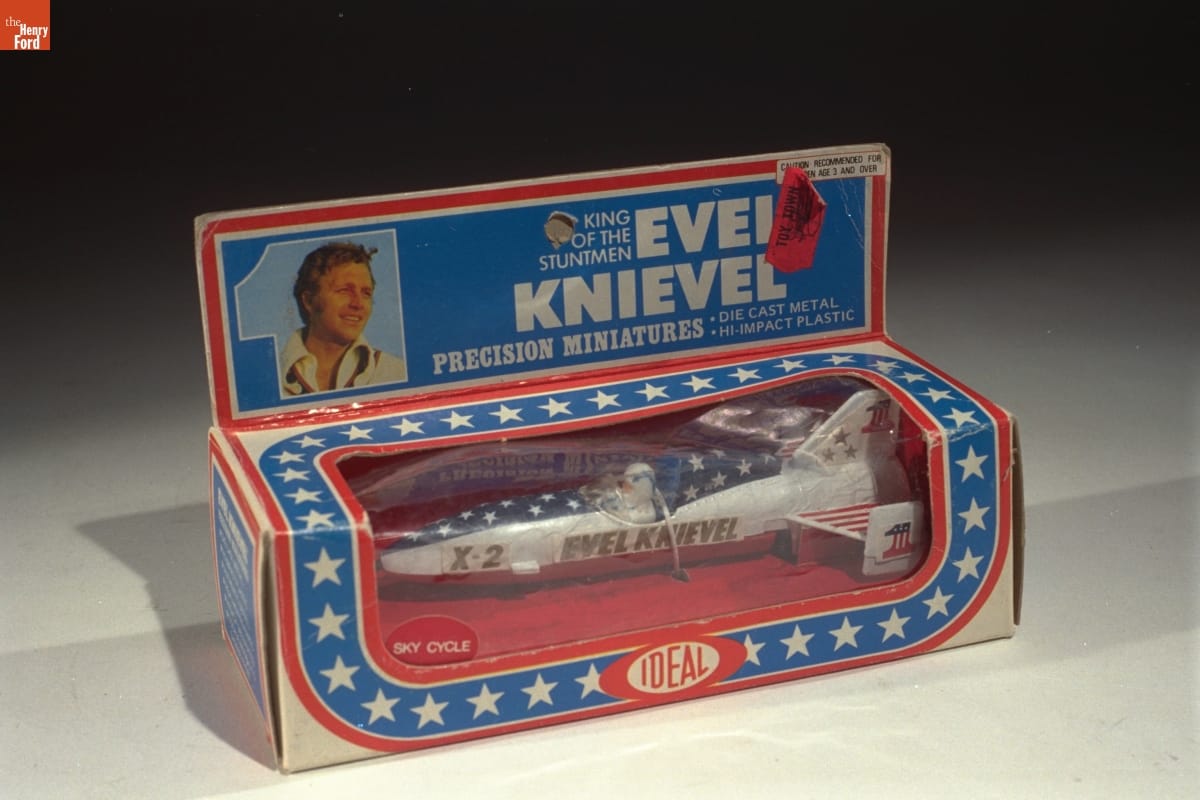
- Evel Knievel X-2 Sky-Cycle Toy, 1976-1978 -
- 1976-1978
- Collections - Artifact
Evel Knievel X-2 Sky-Cycle Toy, 1976-1978
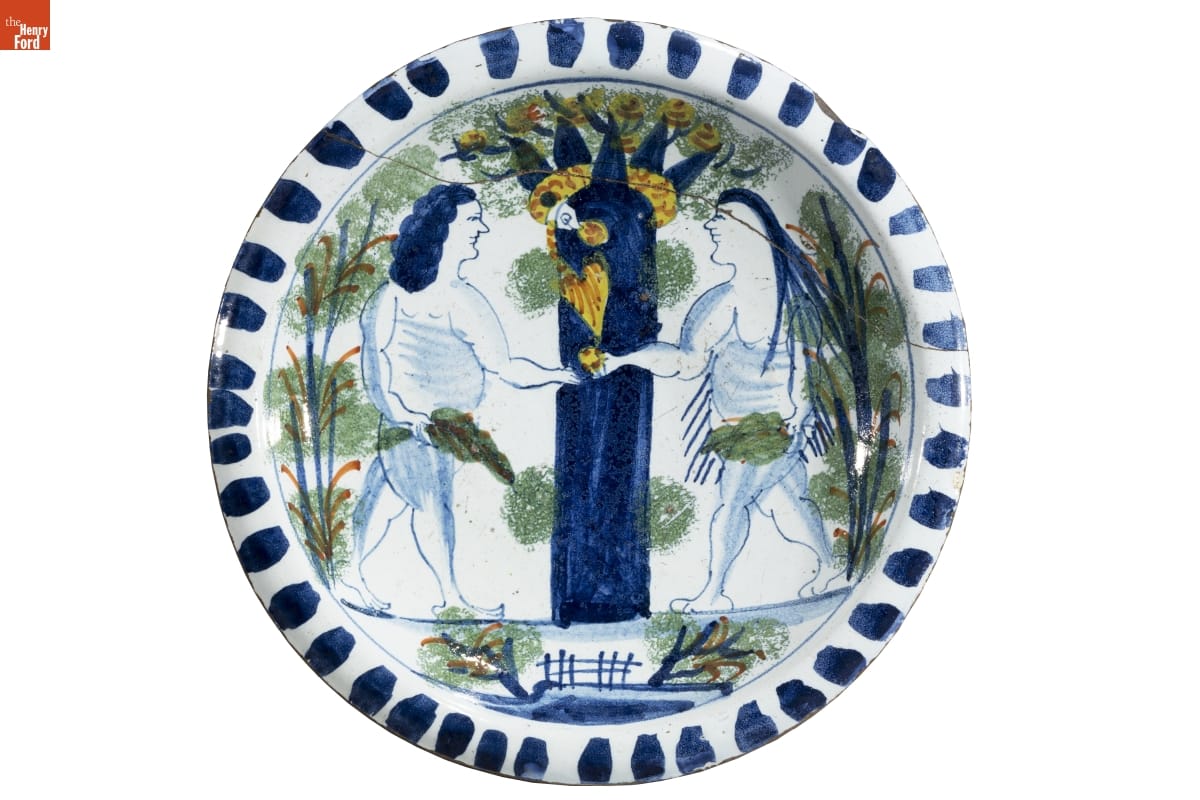
- Dish, 1680-1700 - Large, decorative, late-17th century dishes, also known as chargers, were serving plates displayed on tables or in open cupboards in the households of well-to-do individuals. The chargers showed off the owner's good taste and wealth. While decorative motifs varied, popular themes included: royalty, biblical stories, and flowers.
- 1680-1700
- Collections - Artifact
Dish, 1680-1700
Large, decorative, late-17th century dishes, also known as chargers, were serving plates displayed on tables or in open cupboards in the households of well-to-do individuals. The chargers showed off the owner's good taste and wealth. While decorative motifs varied, popular themes included: royalty, biblical stories, and flowers.
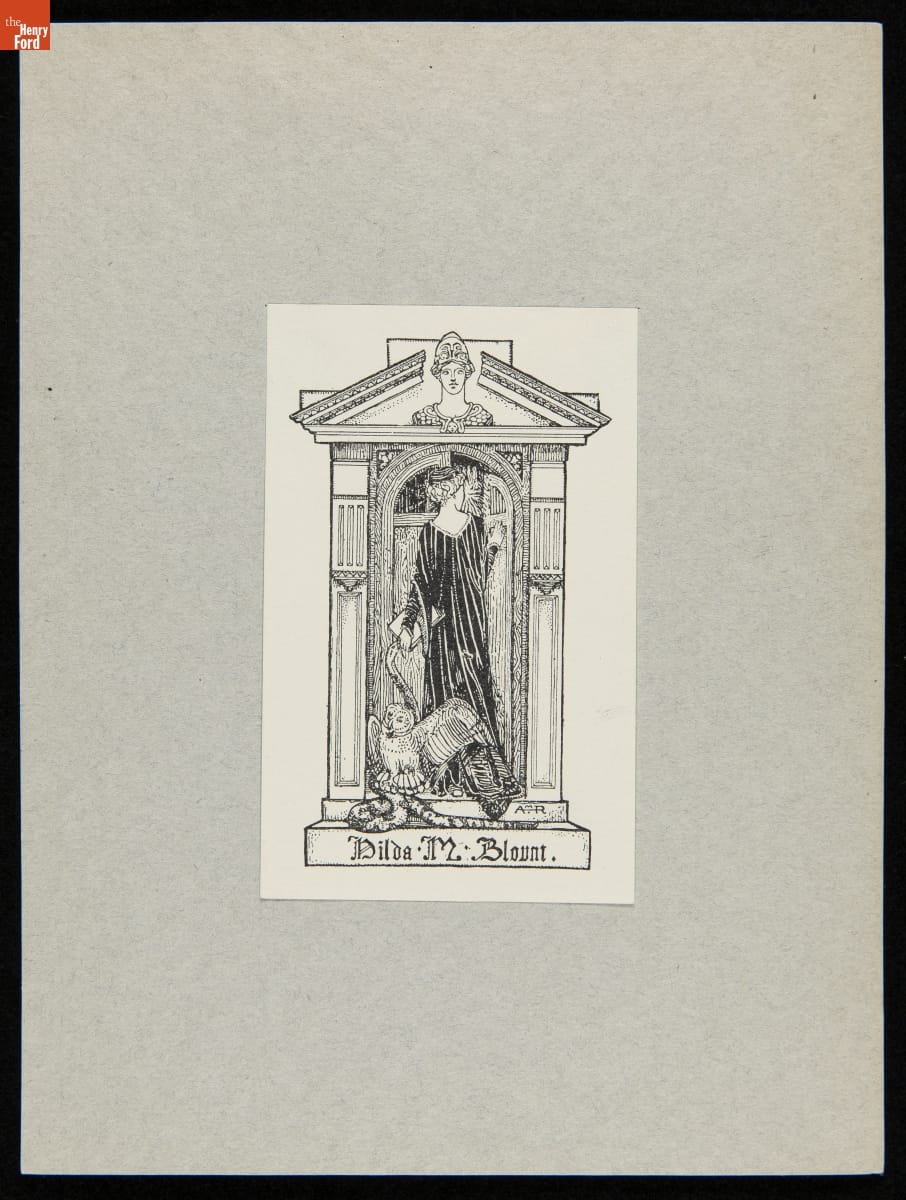
- Bookplate of Hilda M. Blount, 1904-1905 - Bookplates show ownership, but they can also tell us more. Often pasted on the inside of a book's front cover or endpaper, these printed labels contain the owner's name and sometimes the words "ex-libris" (Latin for "from the library of"). Coats of arms, crests, other decorative images, poems, mottoes, and even font type provide insight into the beliefs, passions, and interests of the book's owner.
- 1904-1905
- Collections - Artifact
Bookplate of Hilda M. Blount, 1904-1905
Bookplates show ownership, but they can also tell us more. Often pasted on the inside of a book's front cover or endpaper, these printed labels contain the owner's name and sometimes the words "ex-libris" (Latin for "from the library of"). Coats of arms, crests, other decorative images, poems, mottoes, and even font type provide insight into the beliefs, passions, and interests of the book's owner.
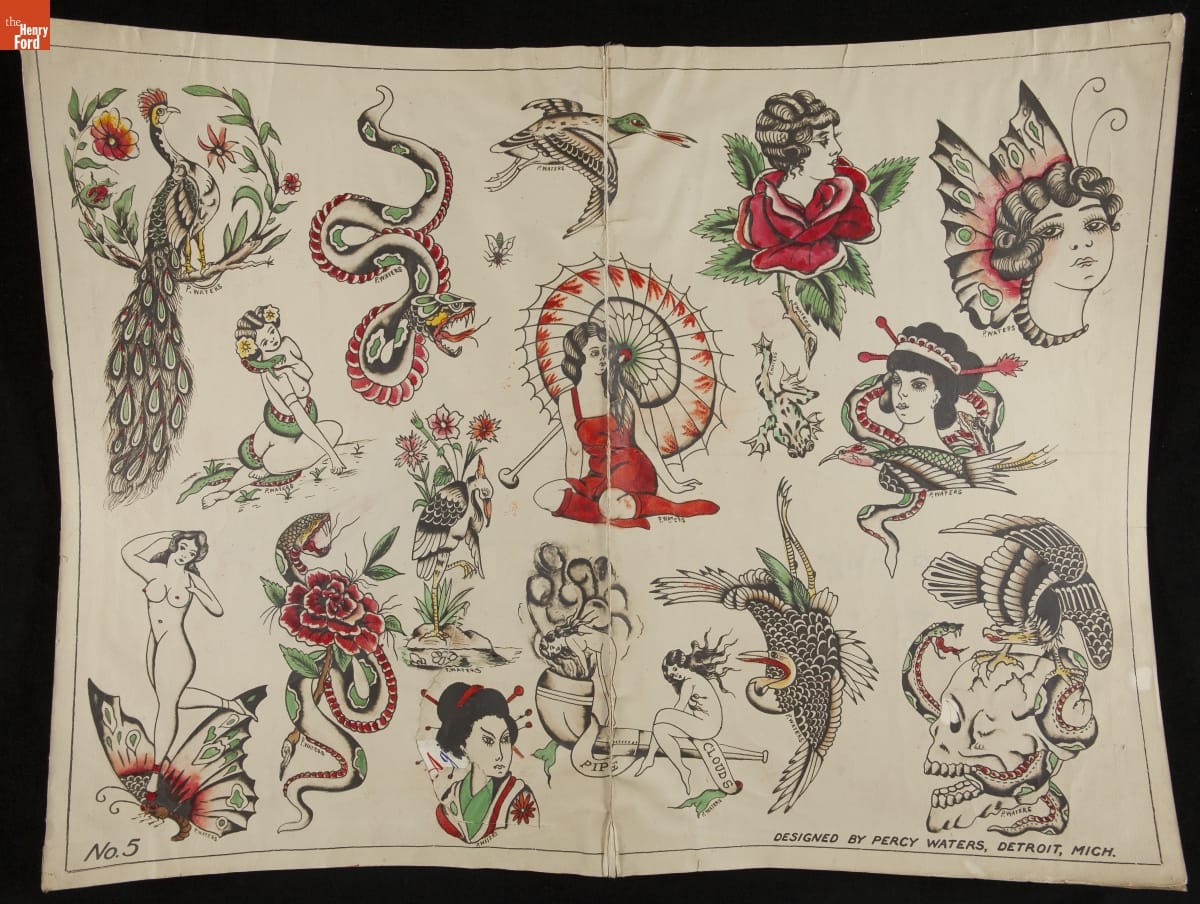
- Tattoo Flash, circa 1920 - Tattoos communicate stories. Their content ranges from deeply personal and traditional--to regrettable and frivolous. In the early 1900s, "Professor" Waters apprenticed as a tattoo artist in carnivals and New York's Bowery District. He ran a successful supply shop in Detroit (1918-1939), patenting the standard "two-coil" tattoo machine in 1929. Designs from his flash sheets continue to inspire tattooists today.
- circa 1920
- Collections - Artifact
Tattoo Flash, circa 1920
Tattoos communicate stories. Their content ranges from deeply personal and traditional--to regrettable and frivolous. In the early 1900s, "Professor" Waters apprenticed as a tattoo artist in carnivals and New York's Bowery District. He ran a successful supply shop in Detroit (1918-1939), patenting the standard "two-coil" tattoo machine in 1929. Designs from his flash sheets continue to inspire tattooists today.
- "We Came to Fight a Black Snake until It's Dead...," September 2022 -
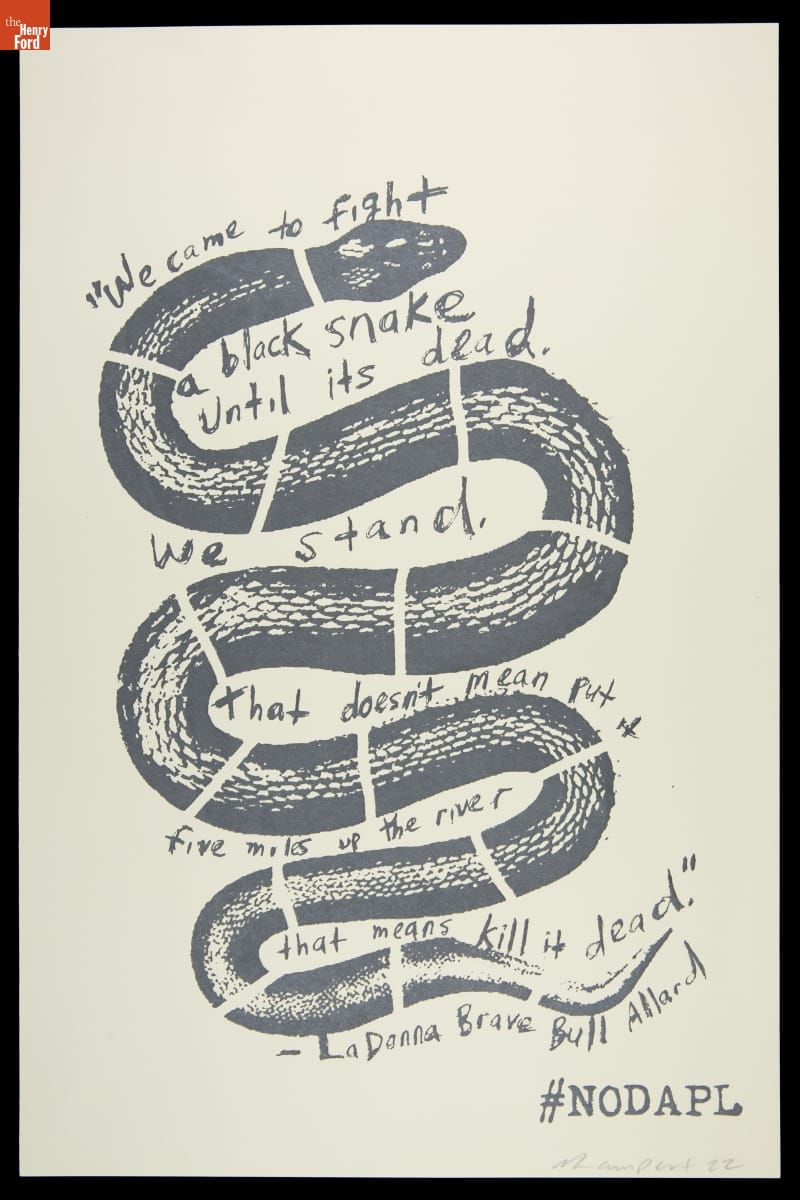
- September 01, 2022
- Collections - Artifact
"We Came to Fight a Black Snake until It's Dead...," September 2022
- Miniature Glass Figure, Snake, 1955-1985 - For visitors to the resort towns around Pentwater, Michigan, a trip to Henry Carter Johnson's "Glass Menagerie" was a cherished vacation ritual. For over forty years, beginning in 1952, Johnson heated colored glass rods and fashioned them into multicolored figures. His whimsical creatures captured the imaginations of children and adults who purchased them, providing a tangible reminder of an enjoyable Michigan summer.
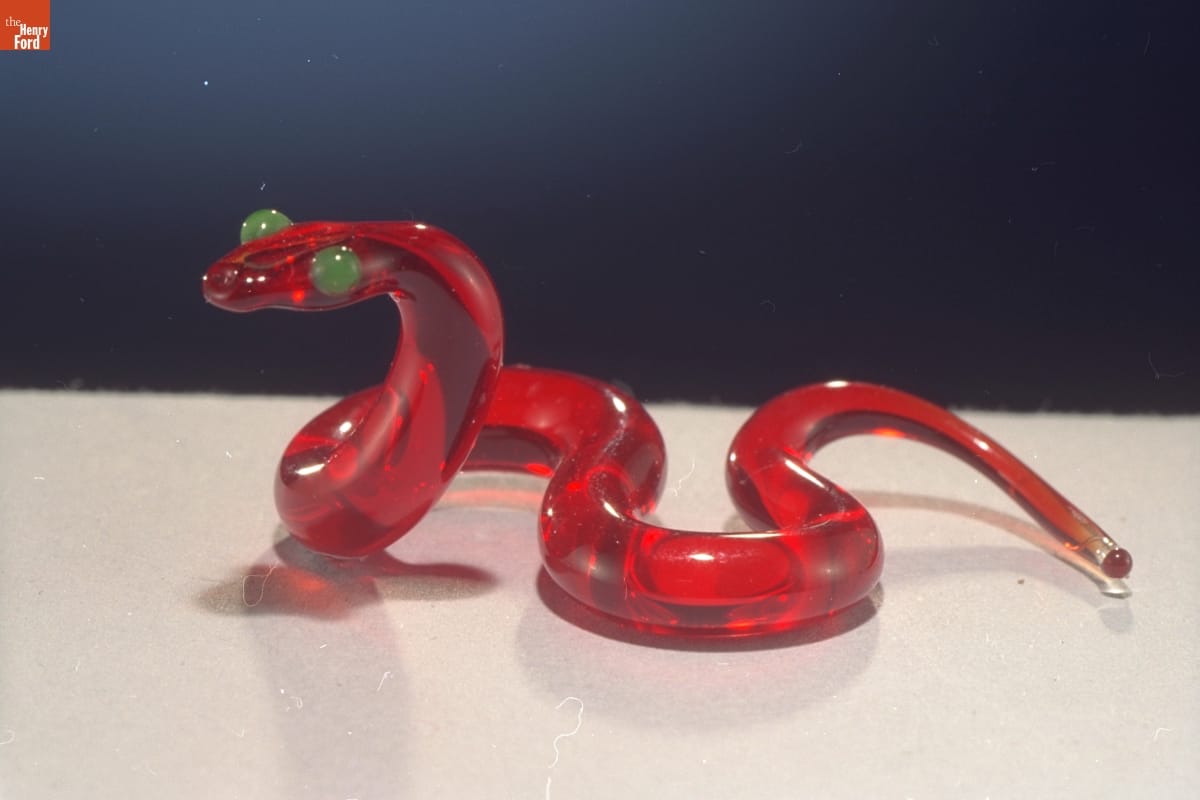
- 1955-1985
- Collections - Artifact
Miniature Glass Figure, Snake, 1955-1985
For visitors to the resort towns around Pentwater, Michigan, a trip to Henry Carter Johnson's "Glass Menagerie" was a cherished vacation ritual. For over forty years, beginning in 1952, Johnson heated colored glass rods and fashioned them into multicolored figures. His whimsical creatures captured the imaginations of children and adults who purchased them, providing a tangible reminder of an enjoyable Michigan summer.