
Search
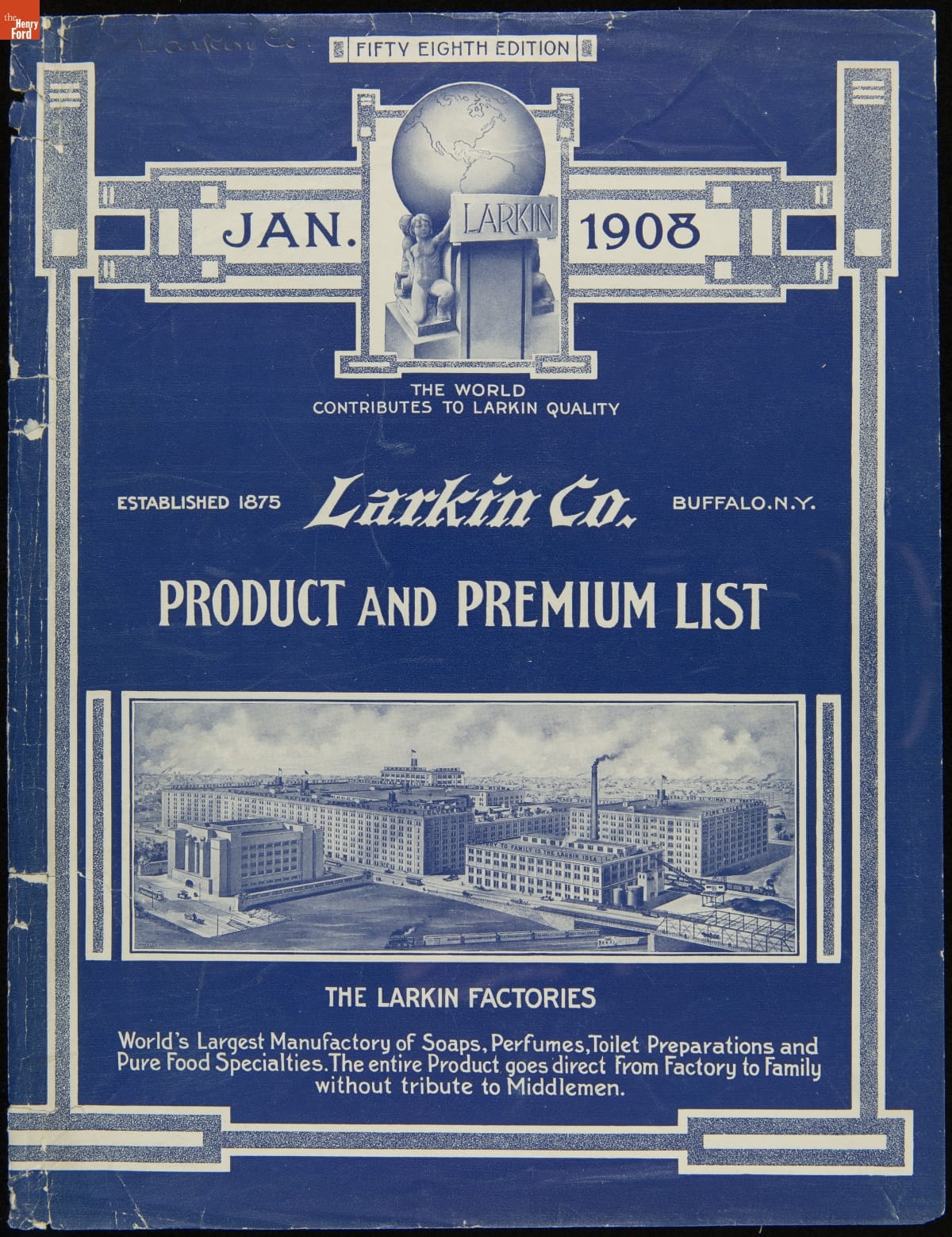
- Larkin Company Trade Catalog, "Product and Premium List," January 1908 (58th Edition) - John D. Larkin established a soap manufacturing company in 1875. He hired his brother-in-law, Elbert Hubbard, as a salesman. Hubbard developed "The Larkin Idea," a plan that sold goods directly to consumers through mail-order catalogs and offered incentivizing giveaways. It was a success. By the early 1900s, Larkin's catalogs contained pages of products and even more pages of premiums from which customers could choose.
- January 01, 1908
- Collections - Artifact
Larkin Company Trade Catalog, "Product and Premium List," January 1908 (58th Edition)
John D. Larkin established a soap manufacturing company in 1875. He hired his brother-in-law, Elbert Hubbard, as a salesman. Hubbard developed "The Larkin Idea," a plan that sold goods directly to consumers through mail-order catalogs and offered incentivizing giveaways. It was a success. By the early 1900s, Larkin's catalogs contained pages of products and even more pages of premiums from which customers could choose.
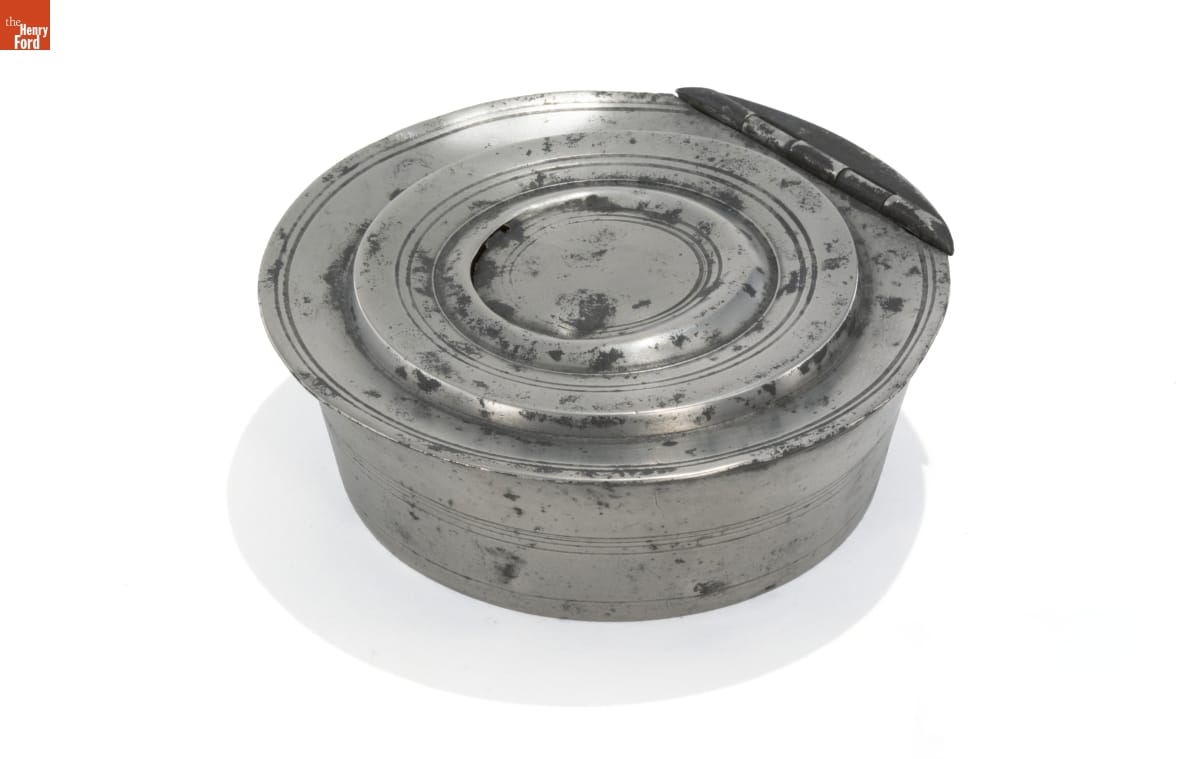
- Soap Box, 1802-1842 - Pewter goods could be found in many American homes and public buildings in the late 18th and early 19th centuries. Most Americans of modest means could afford to have pewter spoons, ladles, tankards, dishes, plates, porringers, or other items. This lidded dish provided a place for men to store soap used to make lather when they shaved.
- 1802-1842
- Collections - Artifact
Soap Box, 1802-1842
Pewter goods could be found in many American homes and public buildings in the late 18th and early 19th centuries. Most Americans of modest means could afford to have pewter spoons, ladles, tankards, dishes, plates, porringers, or other items. This lidded dish provided a place for men to store soap used to make lather when they shaved.
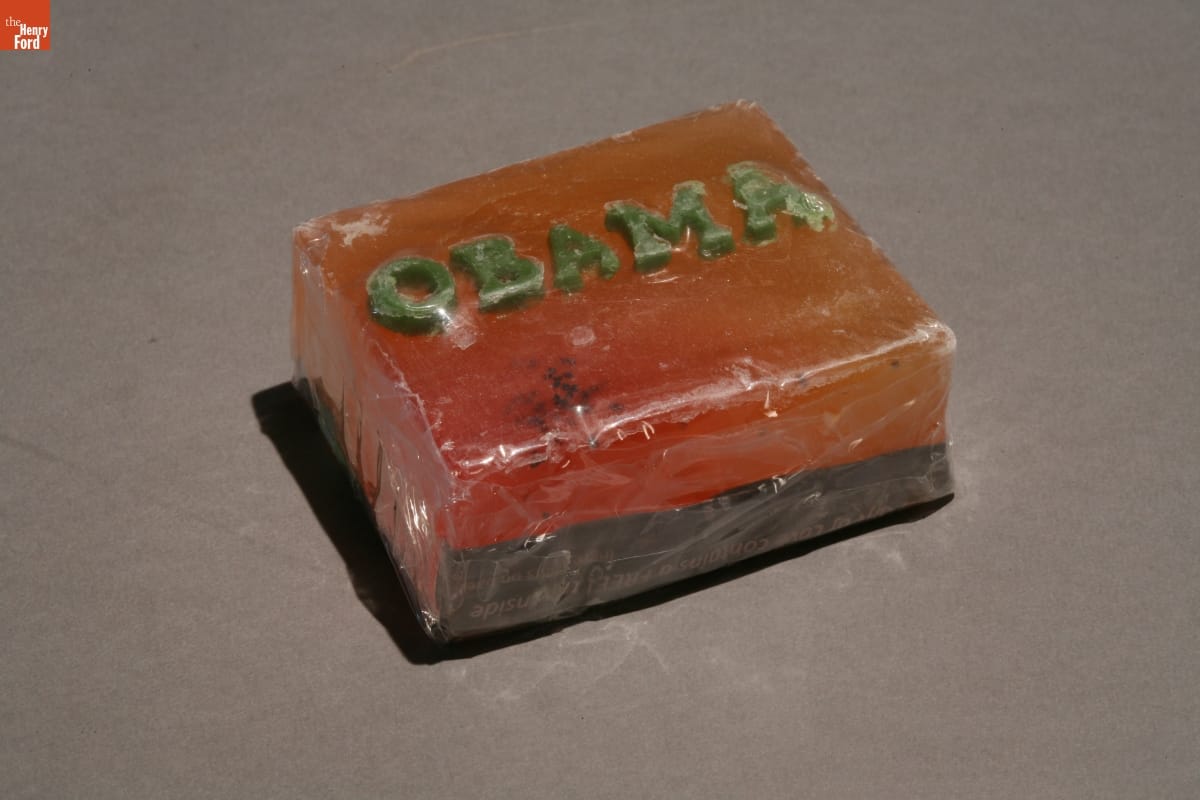
- "Obama" Soap, 2009 - On January 20th, 2009, more than one million Americans came to Washington, D.C., to witness the inauguration of Barack Obama, America's first African American president. Souvenir vendors sold a wide range of materials to commemorate this historic event. Along with more traditional mementos -- buttons, ribbons and mugs -- vendors offered some non-traditional items like this bar of soap.
- 2009
- Collections - Artifact
"Obama" Soap, 2009
On January 20th, 2009, more than one million Americans came to Washington, D.C., to witness the inauguration of Barack Obama, America's first African American president. Souvenir vendors sold a wide range of materials to commemorate this historic event. Along with more traditional mementos -- buttons, ribbons and mugs -- vendors offered some non-traditional items like this bar of soap.
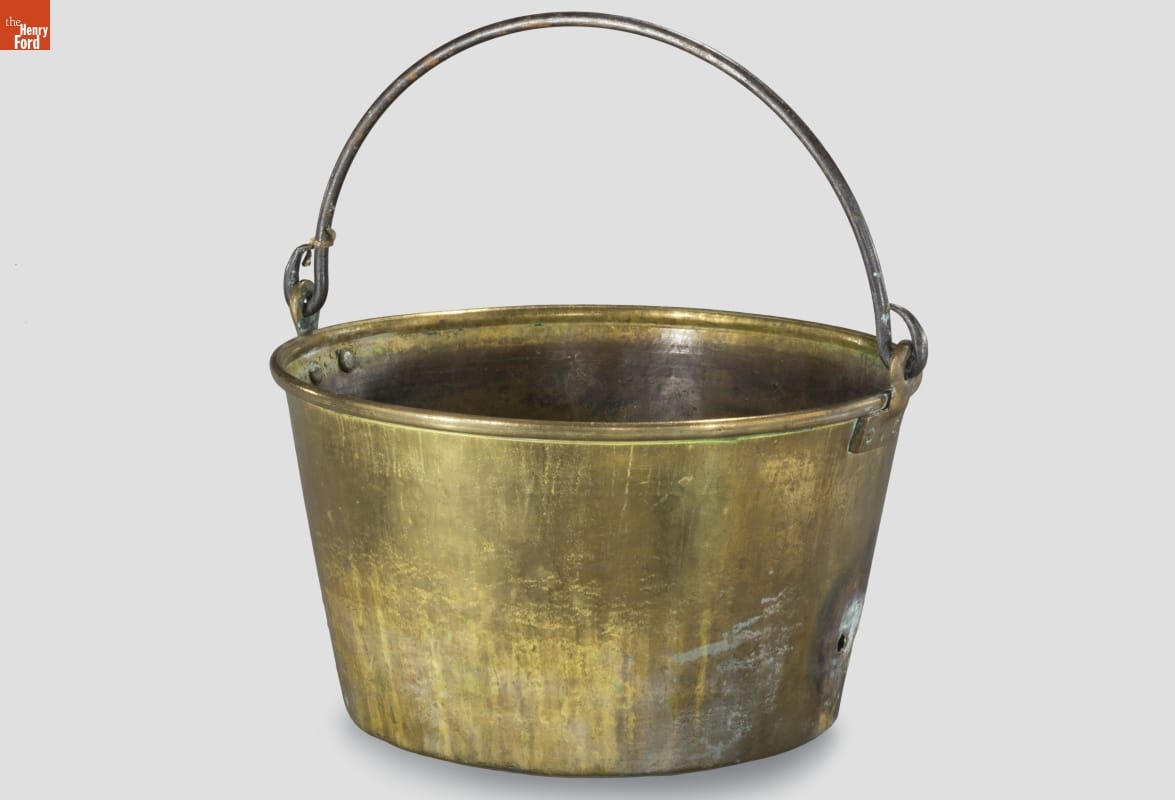
- Kettle -
- Collections - Artifact
Kettle
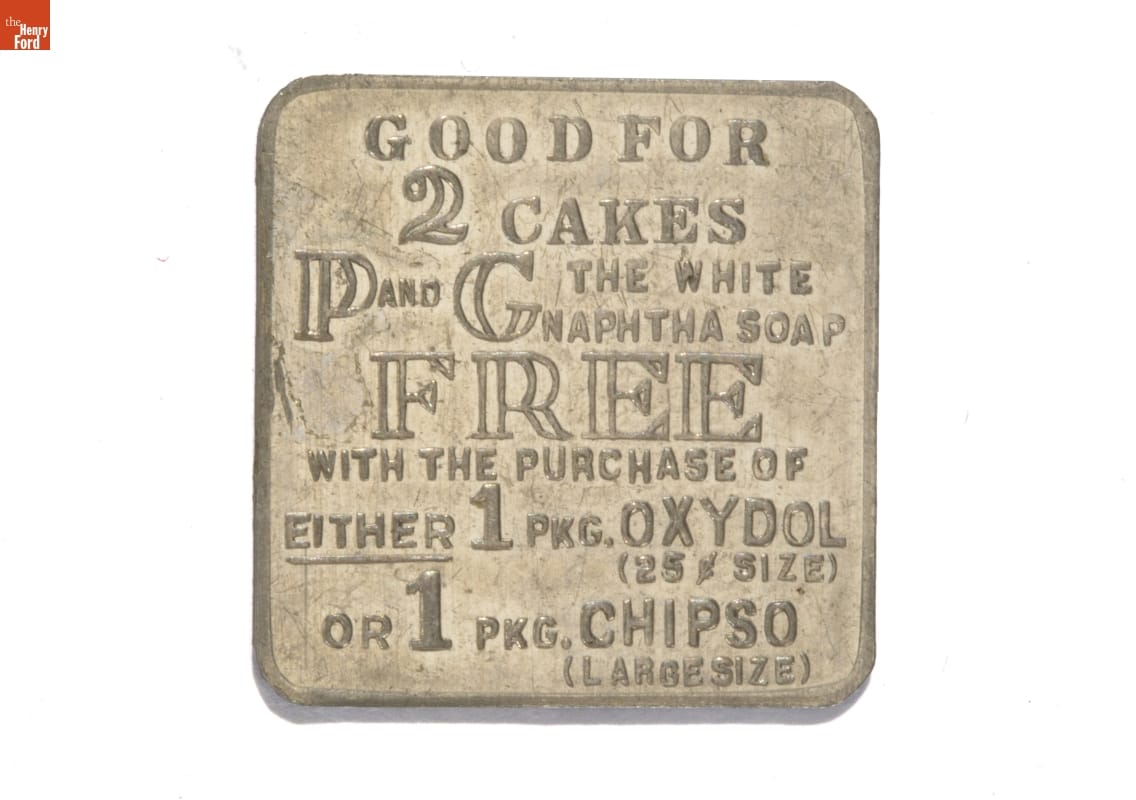
- Naptha Soap Token, 1900-1910 -
- 1900-1910
- Collections - Artifact
Naptha Soap Token, 1900-1910
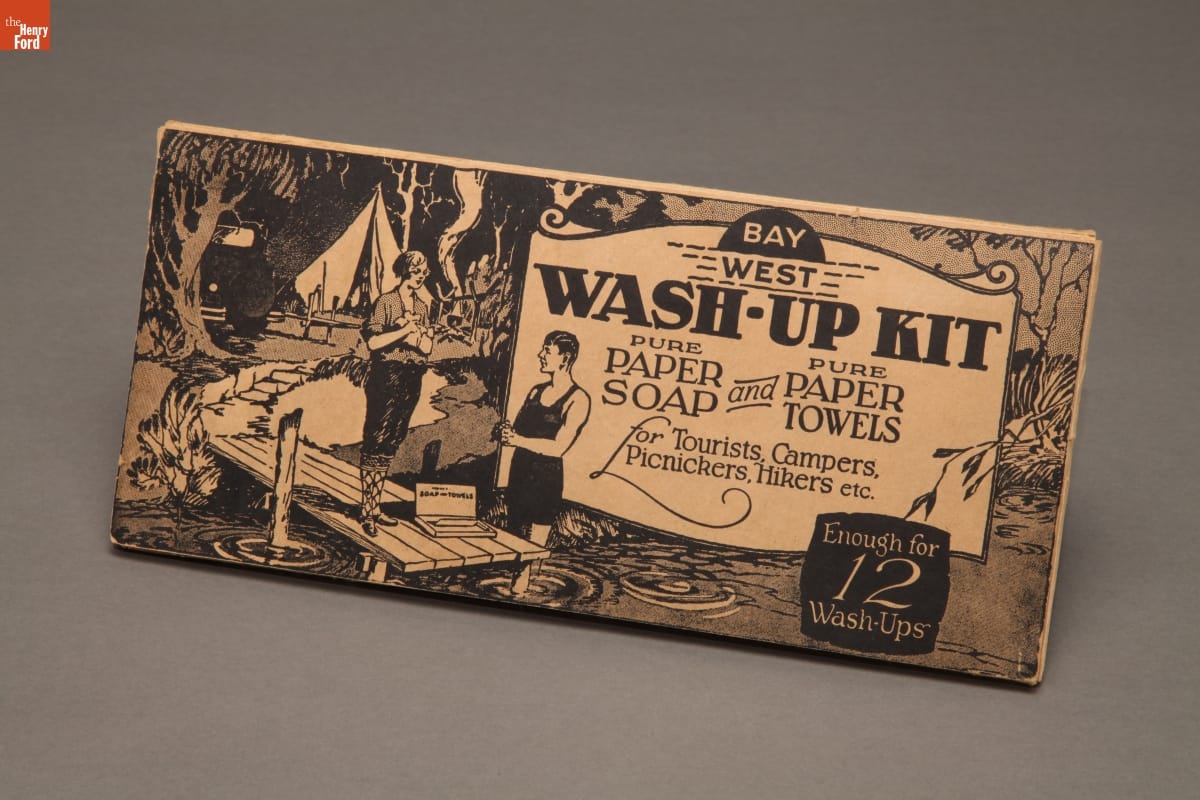
- Bay West Wash-Up Kit, circa 1925 - Traveling doesn't mean that you shouldn't be clean. This 1920s "wash-up kit" provided tourists, campers, hikers, picnickers, and motorists a quick and easy way to get clean. The kit includes soap in the form a paper sheet and paper towels. No need to carry a bar of soap and bath towels when you have this novel product in your automobile.
- circa 1925
- Collections - Artifact
Bay West Wash-Up Kit, circa 1925
Traveling doesn't mean that you shouldn't be clean. This 1920s "wash-up kit" provided tourists, campers, hikers, picnickers, and motorists a quick and easy way to get clean. The kit includes soap in the form a paper sheet and paper towels. No need to carry a bar of soap and bath towels when you have this novel product in your automobile.
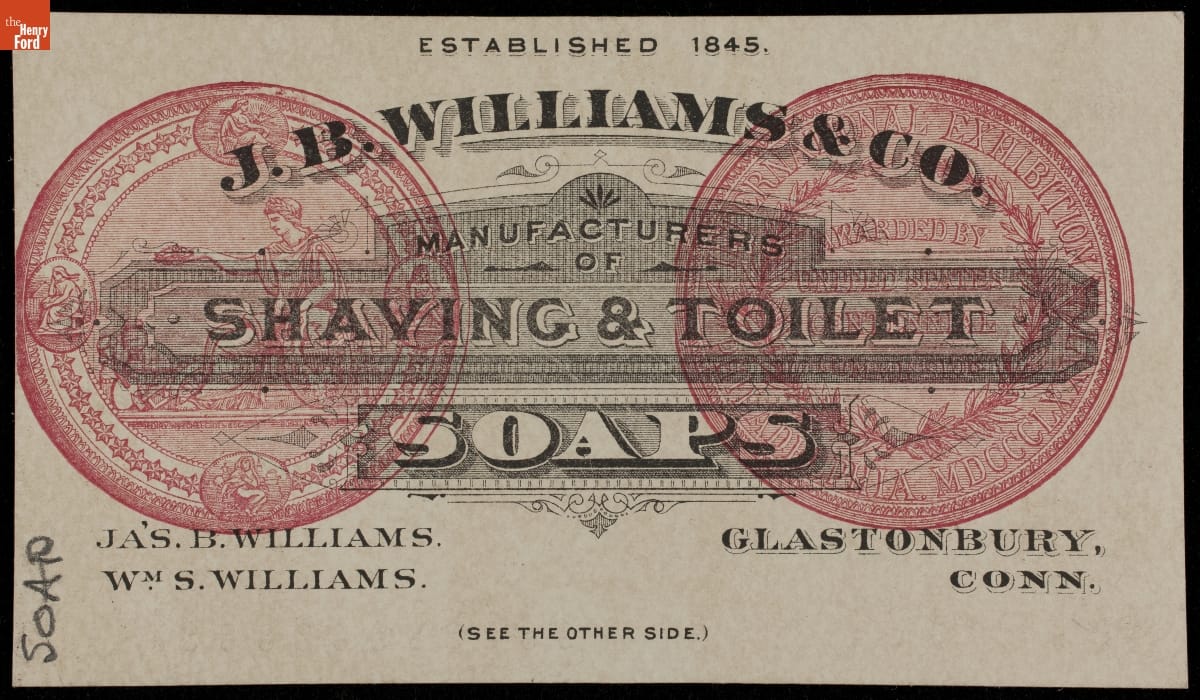
- Trade Card for Shaving and Toilet Soaps, J. B. Williams Company, 1875-1880 - In the last third of the nineteenth century, an unprecedented variety of consumer goods and services flooded the American market. Advertisers bombarded potential customers with trade cards. Americans often saved the informative little advertisements found in product packages or distributed by local merchants. Many survive as historical records of commercialism in the United States.
- 1875-1880
- Collections - Artifact
Trade Card for Shaving and Toilet Soaps, J. B. Williams Company, 1875-1880
In the last third of the nineteenth century, an unprecedented variety of consumer goods and services flooded the American market. Advertisers bombarded potential customers with trade cards. Americans often saved the informative little advertisements found in product packages or distributed by local merchants. Many survive as historical records of commercialism in the United States.
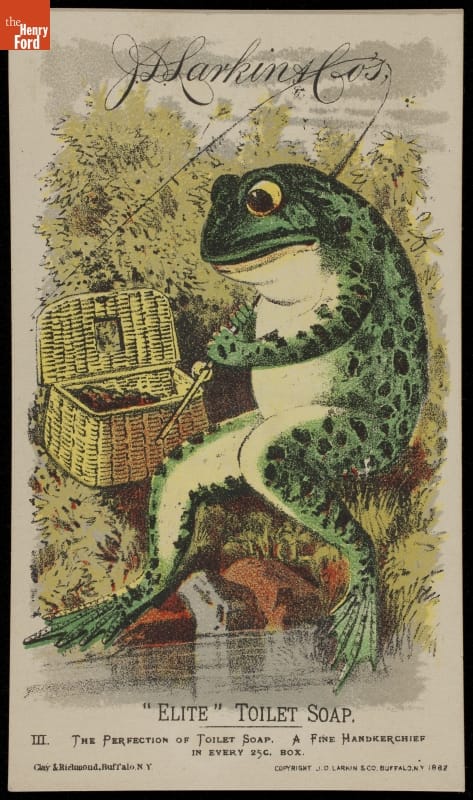
- Trade Card for "Elite" Toilet Soap, J. D. Larkin and Company, 1882 - In the last third of the nineteenth century, an unprecedented variety of consumer goods and services flooded the American market. Advertisers, armed with new methods of color printing, bombarded potential customers with trade cards. Americans enjoyed and often saved the vibrant little advertisements found in product packages or distributed by local merchants. Many survive as historical records of commercialism in the United States.
- 1882
- Collections - Artifact
Trade Card for "Elite" Toilet Soap, J. D. Larkin and Company, 1882
In the last third of the nineteenth century, an unprecedented variety of consumer goods and services flooded the American market. Advertisers, armed with new methods of color printing, bombarded potential customers with trade cards. Americans enjoyed and often saved the vibrant little advertisements found in product packages or distributed by local merchants. Many survive as historical records of commercialism in the United States.
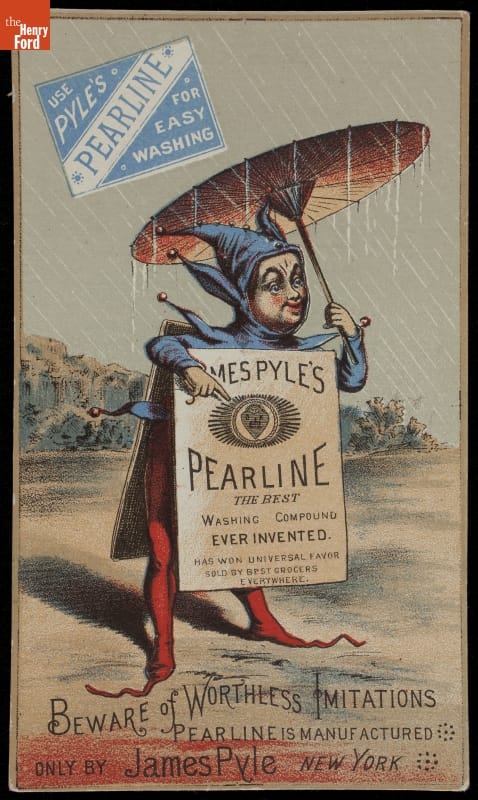
- Trade Card for Pearline Washing Compound, James Pyle, 1870-1890 - In the last third of the nineteenth century, an unprecedented variety of consumer goods and services flooded the American market. Advertisers, armed with new methods of color printing, bombarded potential customers with trade cards. Americans enjoyed and often saved the vibrant little advertisements found in product packages or distributed by local merchants. Many survive as historical records of commercialism in the United States.
- 1870-1890
- Collections - Artifact
Trade Card for Pearline Washing Compound, James Pyle, 1870-1890
In the last third of the nineteenth century, an unprecedented variety of consumer goods and services flooded the American market. Advertisers, armed with new methods of color printing, bombarded potential customers with trade cards. Americans enjoyed and often saved the vibrant little advertisements found in product packages or distributed by local merchants. Many survive as historical records of commercialism in the United States.
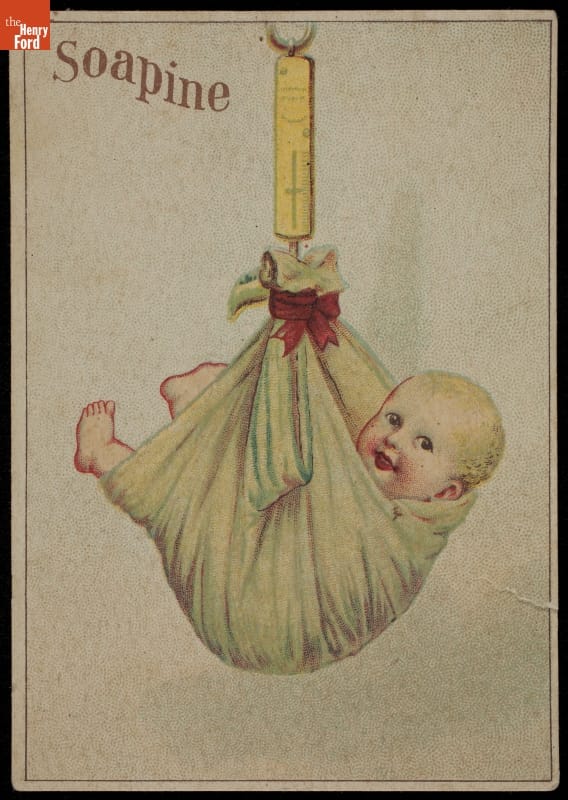
- Trade Card for Soapine, Kendall Mfg. Co., 1880-1900 - In the last third of the nineteenth century, an unprecedented variety of consumer goods and services flooded the American market. Advertisers, armed with new methods of color printing, bombarded potential customers with trade cards. Americans enjoyed and often saved the vibrant little advertisements found in product packages or distributed by local merchants. Many survive as historical records of commercialism in the United States.
- 1880-1900
- Collections - Artifact
Trade Card for Soapine, Kendall Mfg. Co., 1880-1900
In the last third of the nineteenth century, an unprecedented variety of consumer goods and services flooded the American market. Advertisers, armed with new methods of color printing, bombarded potential customers with trade cards. Americans enjoyed and often saved the vibrant little advertisements found in product packages or distributed by local merchants. Many survive as historical records of commercialism in the United States.