
Search
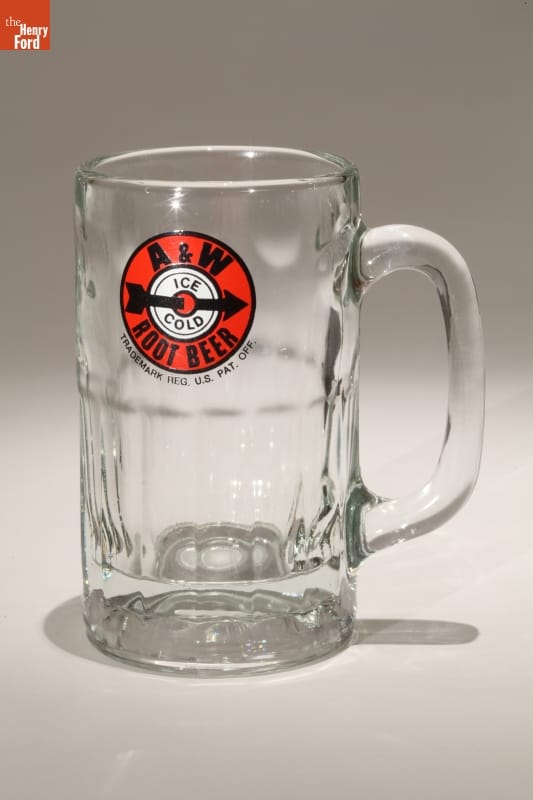
- A & W Mug, 1950-1960 - In 1919, Roy W. Allen ran a small walk-up root beer stand in California, when he partnered with his employee Frank Wright. The partners opened three subsequent root beer stands, then franchised their concept nationwide. Glass handled mugs, simulating beer mugs, became a recognizable symbol of A & W's uniquely flavorful root beer.
- 1950-1960
- Collections - Artifact
A & W Mug, 1950-1960
In 1919, Roy W. Allen ran a small walk-up root beer stand in California, when he partnered with his employee Frank Wright. The partners opened three subsequent root beer stands, then franchised their concept nationwide. Glass handled mugs, simulating beer mugs, became a recognizable symbol of A & W's uniquely flavorful root beer.
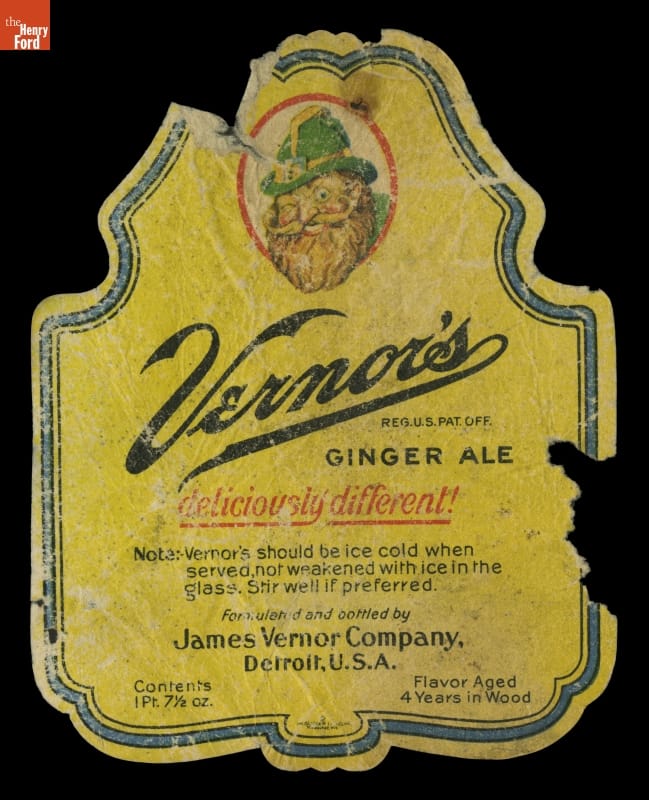
- Vernor's Ginger Ale Bottle Label, circa 1928-1940 - Vernor's Ginger Ale, one of the oldest surviving soft drinks in the United States, was created in 1866 in Detroit and remains a favorite beverage of Michiganders. Creator James Vernor's mixture included ingredients such as ginger, vanilla, spices, and sugar, but his process of aging the concoction in oak barrels is credited for the beverage's "deliciously different" taste, as this label declares.
- circa 1928-circa 1940
- Collections - Artifact
Vernor's Ginger Ale Bottle Label, circa 1928-1940
Vernor's Ginger Ale, one of the oldest surviving soft drinks in the United States, was created in 1866 in Detroit and remains a favorite beverage of Michiganders. Creator James Vernor's mixture included ingredients such as ginger, vanilla, spices, and sugar, but his process of aging the concoction in oak barrels is credited for the beverage's "deliciously different" taste, as this label declares.
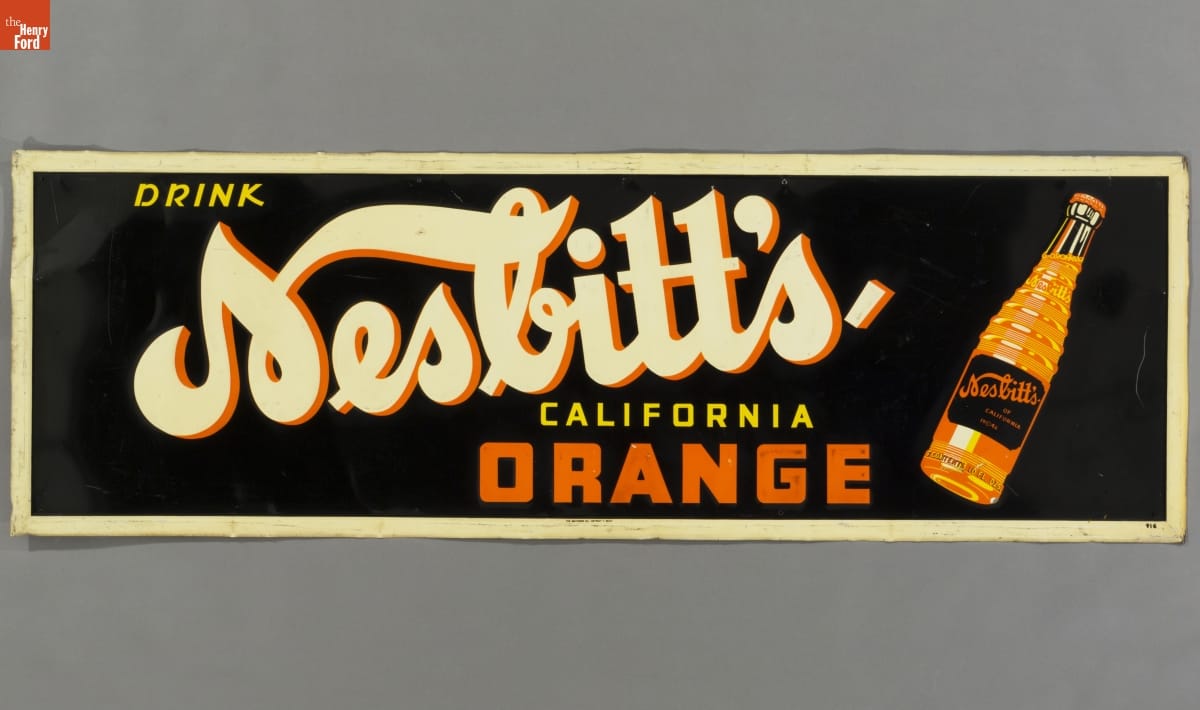
- Nesbitt's California Orange Sign, 1946-1950 - The Nesbitt Fruit Products Company was founded in 1924. In 1927, the company began producing orange-flavored syrup for soda fountains and, in 1938, the company started bottling it -- featuring 10% California orange juice. Nesbitt's was later franchised to independent bottling companies both nationally and internationally. From Disneyland's 1955 opening into the 1960s, Nesbitt's was the park's "Official" Orange Drink.
- 1946-1950
- Collections - Artifact
Nesbitt's California Orange Sign, 1946-1950
The Nesbitt Fruit Products Company was founded in 1924. In 1927, the company began producing orange-flavored syrup for soda fountains and, in 1938, the company started bottling it -- featuring 10% California orange juice. Nesbitt's was later franchised to independent bottling companies both nationally and internationally. From Disneyland's 1955 opening into the 1960s, Nesbitt's was the park's "Official" Orange Drink.
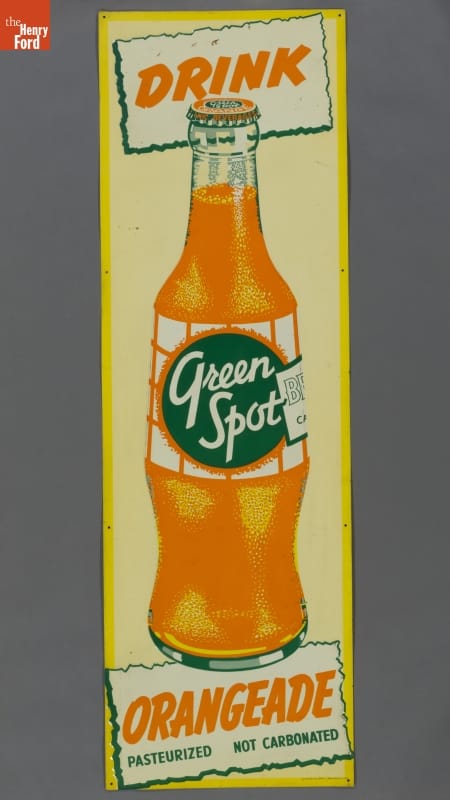
- Green Spot Orangeade Sign, 1935-1955 -
- 1935-1955
- Collections - Artifact
Green Spot Orangeade Sign, 1935-1955
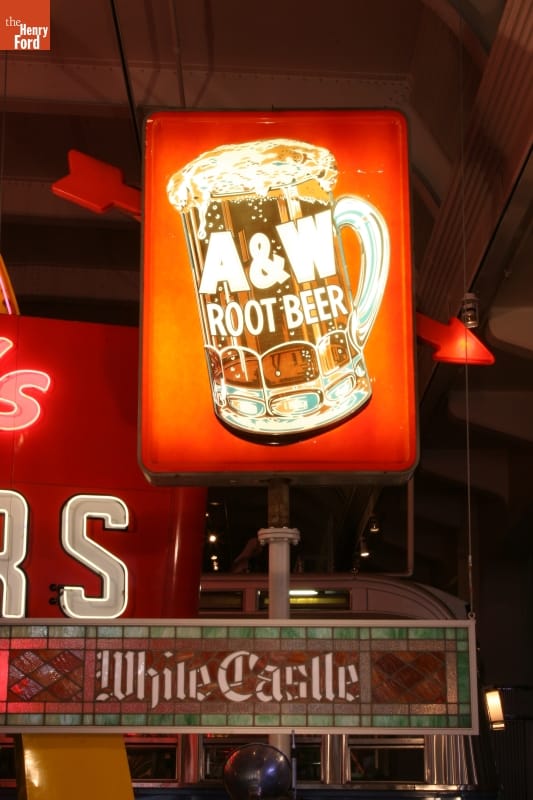
- A&W Highway Sign for Drive-In Restaurant, circa 1965 - This A&W root beer mug sign stood along the roadside in Litchfield, Minnesota, in the 1960s. Similar signs enticed motorists during the drive-in boom years after the Second World War.
- circa 1965
- Collections - Artifact
A&W Highway Sign for Drive-In Restaurant, circa 1965
This A&W root beer mug sign stood along the roadside in Litchfield, Minnesota, in the 1960s. Similar signs enticed motorists during the drive-in boom years after the Second World War.
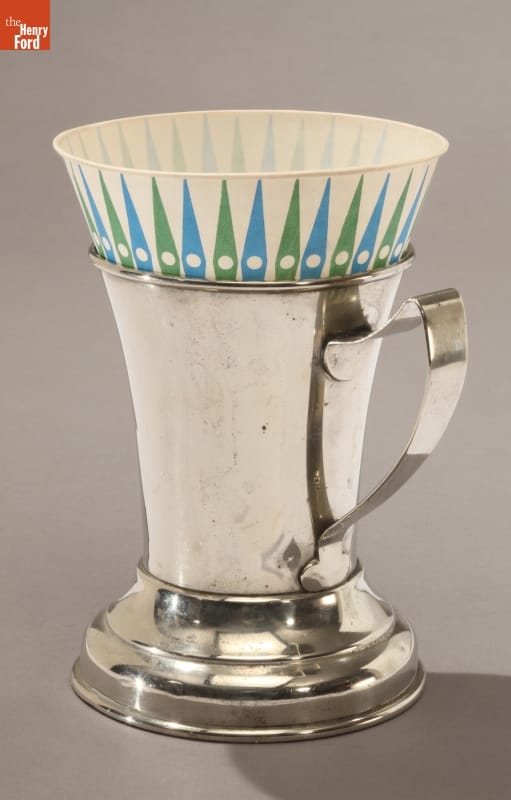
- Soda Fountain Cup and Holder, 1925-1950 - A soda fountain establishment served drinks in disposable paper cups placed in glass or silver-plated cup holders. The paper cup was disposed of after use. This provided a sanitary option to any carelessly washed glasses.
- 1925-1950
- Collections - Artifact
Soda Fountain Cup and Holder, 1925-1950
A soda fountain establishment served drinks in disposable paper cups placed in glass or silver-plated cup holders. The paper cup was disposed of after use. This provided a sanitary option to any carelessly washed glasses.
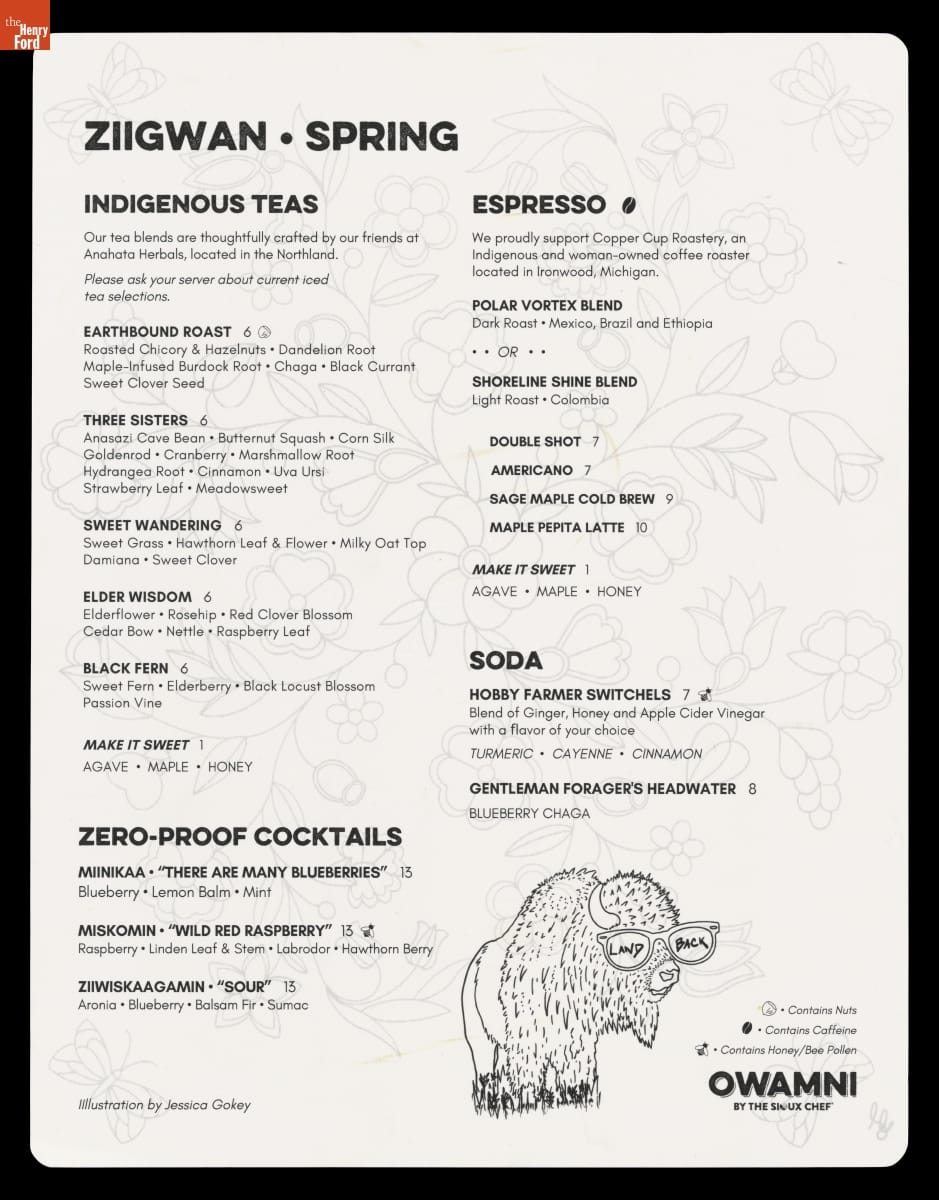
- "Ziigwan-Spring," Owamni Restaurant Drink Menu, 2025 - <body>Sean Sherman, a member of the Oglala Lakota nation, found success as an executive chef, and channeled that into advocacy for indigenous foodways as The Sioux Chef. He earned several James Beard awards for his leadership, for his first cookbook, <i>The Sioux Chef's Indigenous Kitchen</i> (2017) and for the restaurant Owamni, owned by the not-for-profit North American Traditional Indigenous Food Systems (NATIFS). </body>
- 2025
- Collections - Artifact
"Ziigwan-Spring," Owamni Restaurant Drink Menu, 2025
Sean Sherman, a member of the Oglala Lakota nation, found success as an executive chef, and channeled that into advocacy for indigenous foodways as The Sioux Chef. He earned several James Beard awards for his leadership, for his first cookbook, The Sioux Chef's Indigenous Kitchen (2017) and for the restaurant Owamni, owned by the not-for-profit North American Traditional Indigenous Food Systems (NATIFS). - 2008 Presidential Election Jones Pure Cane Cola, 2008 -
- 2008
- Collections - Artifact
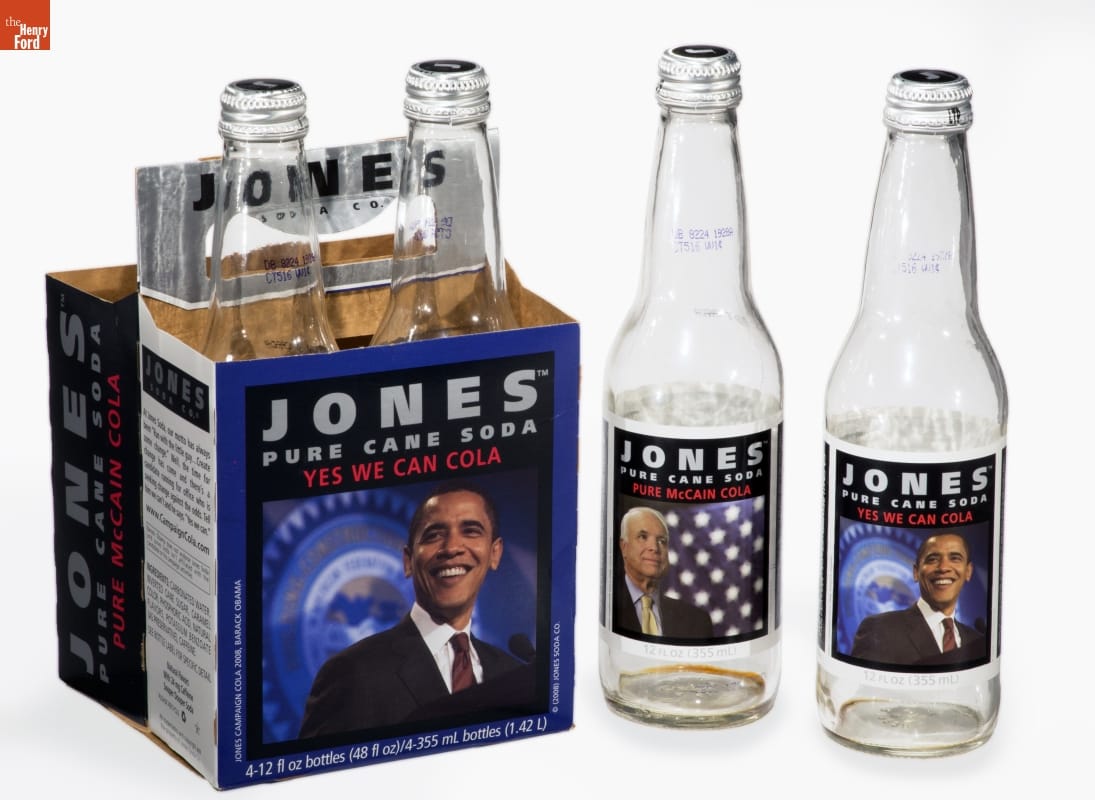
2008 Presidential Election Jones Pure Cane Cola, 2008
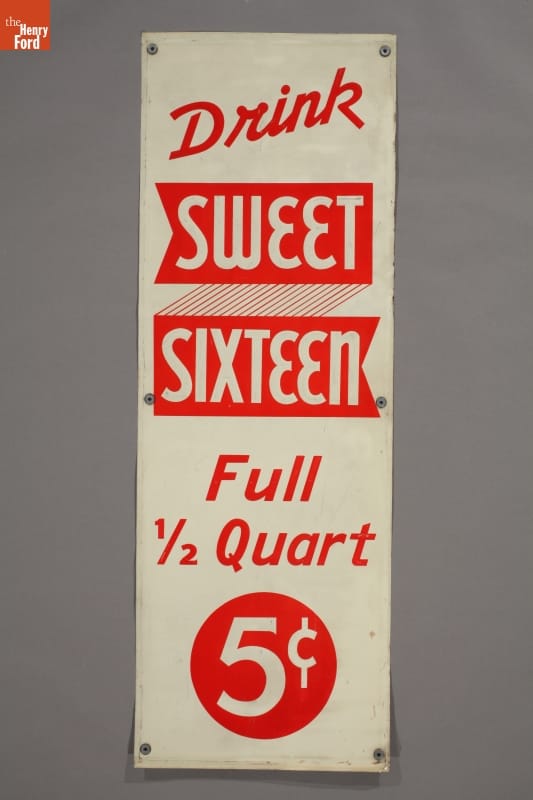
- Sweet Sixteen Sign, circa 1935 - Before the days of national brands, locally-made products were advertised in community newspapers, through free giveaways, and by signs like this one -- that were affixed to the front and side walls of stores. The Mathews Company of Detroit, who produced this sign, specialized in the production of metal signs that advertised local products like Detroit-based Sweet Sixteen soda.
- circa 1935
- Collections - Artifact
Sweet Sixteen Sign, circa 1935
Before the days of national brands, locally-made products were advertised in community newspapers, through free giveaways, and by signs like this one -- that were affixed to the front and side walls of stores. The Mathews Company of Detroit, who produced this sign, specialized in the production of metal signs that advertised local products like Detroit-based Sweet Sixteen soda.
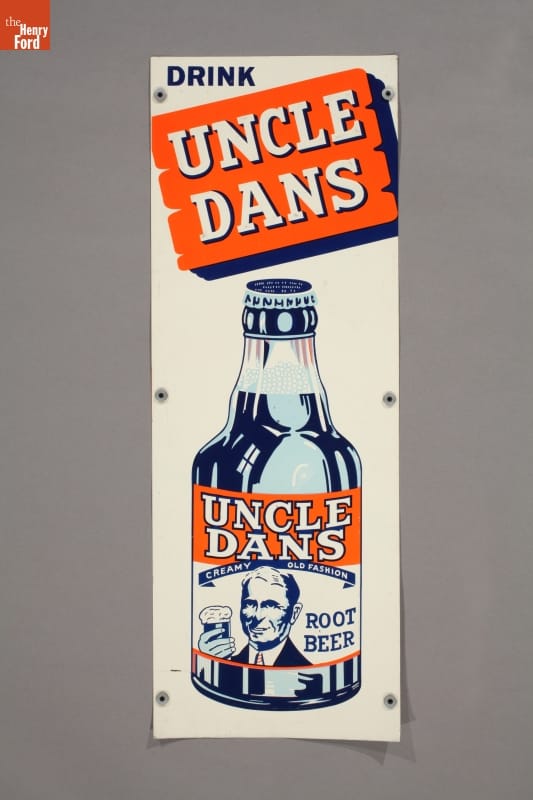
- Uncle Dan's Root Beer Sign, circa 1935 - Before the days of national brands, locally-made products were advertised in community newspapers, through free giveaways, and by signs like this one -- that were affixed to the front and side walls of stores. The Mathews Company of Detroit, who produced this sign, specialized in the production of metal signs that advertised local products like Detroit-based Uncle Dan's Root Beer.
- circa 1935
- Collections - Artifact
Uncle Dan's Root Beer Sign, circa 1935
Before the days of national brands, locally-made products were advertised in community newspapers, through free giveaways, and by signs like this one -- that were affixed to the front and side walls of stores. The Mathews Company of Detroit, who produced this sign, specialized in the production of metal signs that advertised local products like Detroit-based Uncle Dan's Root Beer.