
Search
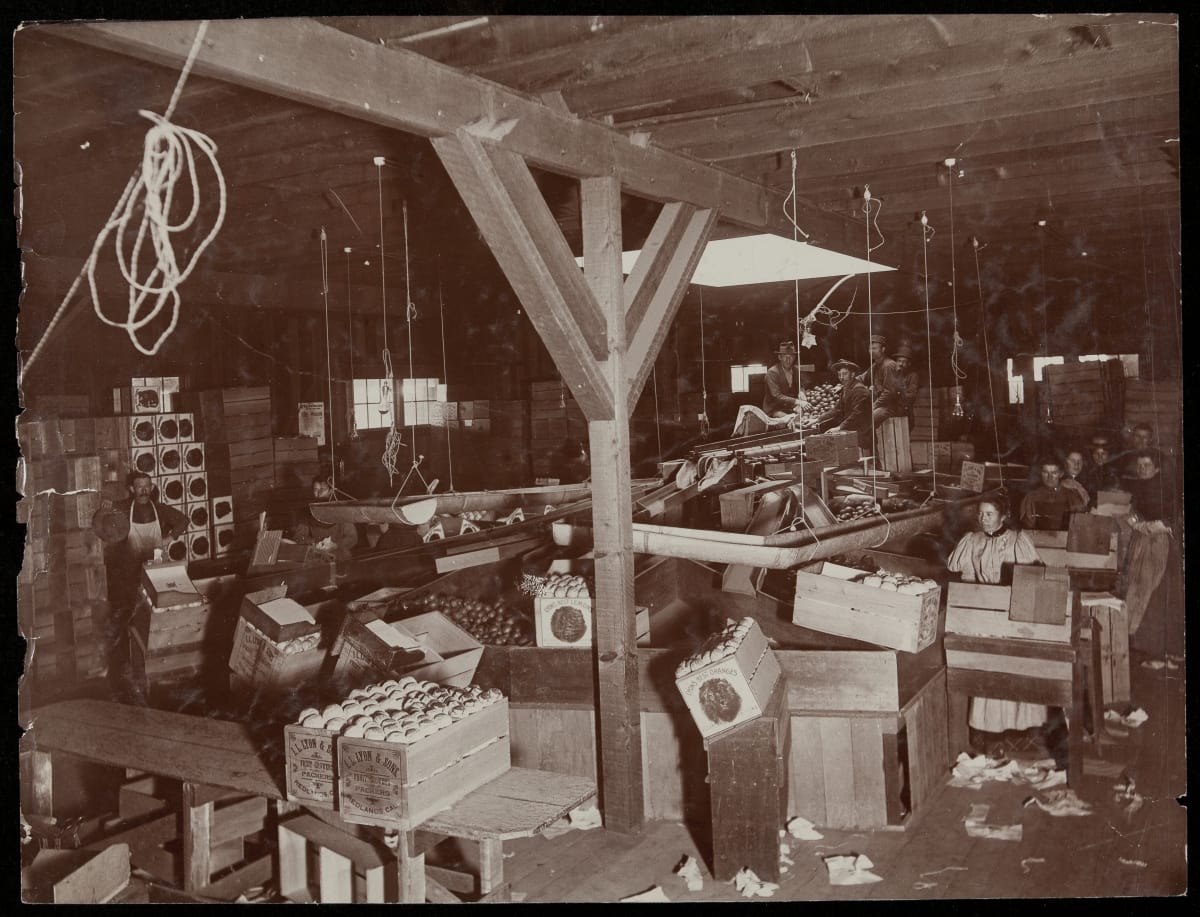
- Workers at L. L. Lyon & Sons Fruit Growers & Packers, Redlands, California, circa 1900 - For nearly thirty years, 1895 to 1924, the Detroit Publishing Company was one of the major image publishers in the world. The company had a wide-ranging stock of original photographs, including many scenes from across North America. Here, workers in California pack lemons and oranges for shipping.
- circa 1900
- Collections - Artifact
Workers at L. L. Lyon & Sons Fruit Growers & Packers, Redlands, California, circa 1900
For nearly thirty years, 1895 to 1924, the Detroit Publishing Company was one of the major image publishers in the world. The company had a wide-ranging stock of original photographs, including many scenes from across North America. Here, workers in California pack lemons and oranges for shipping.
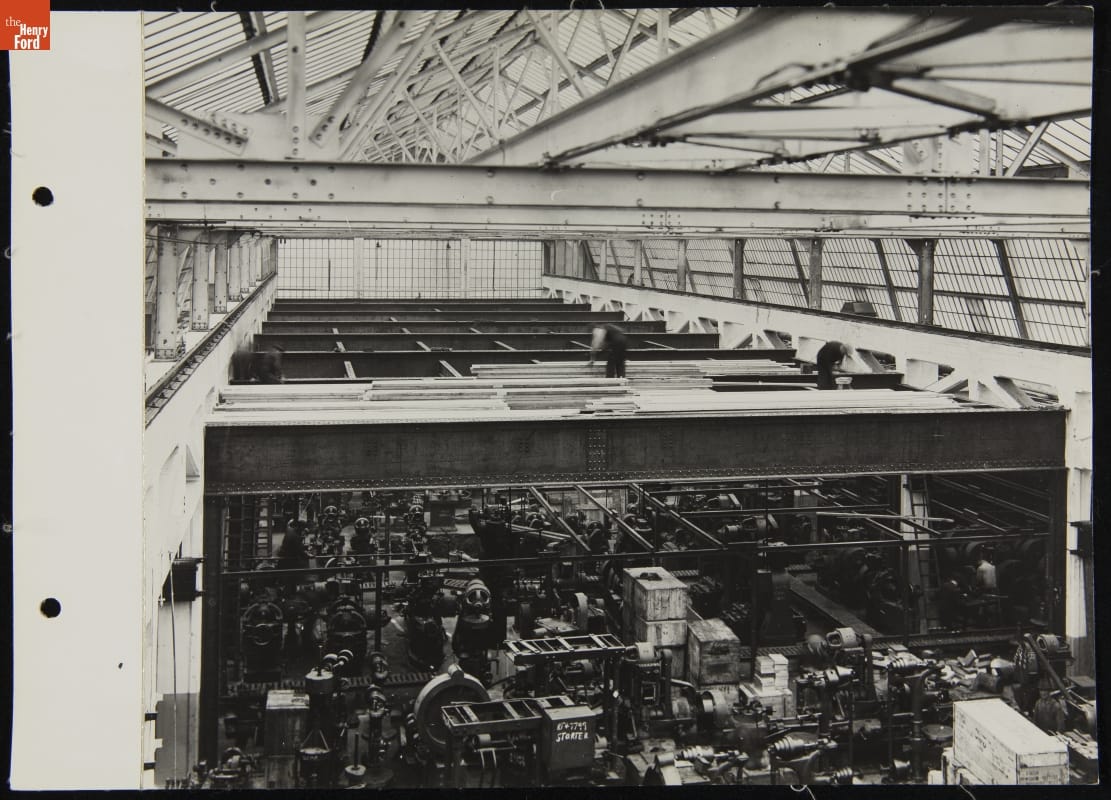
- Steelwork Craneway Balcony, Ford Plant in Cork, Ireland, January 1929 - Henry Ford formed an Irish subsidiary company, Henry Ford & Son Limited, in 1917. Two years later, he opened a tractor plant in County Cork, Ireland -- his father's birthplace. Soon the factory began producing automobile engines and parts for Ford factories in England. Apart from a temporary closure during World War II, the plant remained in operation until 1984.
- January 10, 1929
- Collections - Artifact
Steelwork Craneway Balcony, Ford Plant in Cork, Ireland, January 1929
Henry Ford formed an Irish subsidiary company, Henry Ford & Son Limited, in 1917. Two years later, he opened a tractor plant in County Cork, Ireland -- his father's birthplace. Soon the factory began producing automobile engines and parts for Ford factories in England. Apart from a temporary closure during World War II, the plant remained in operation until 1984.
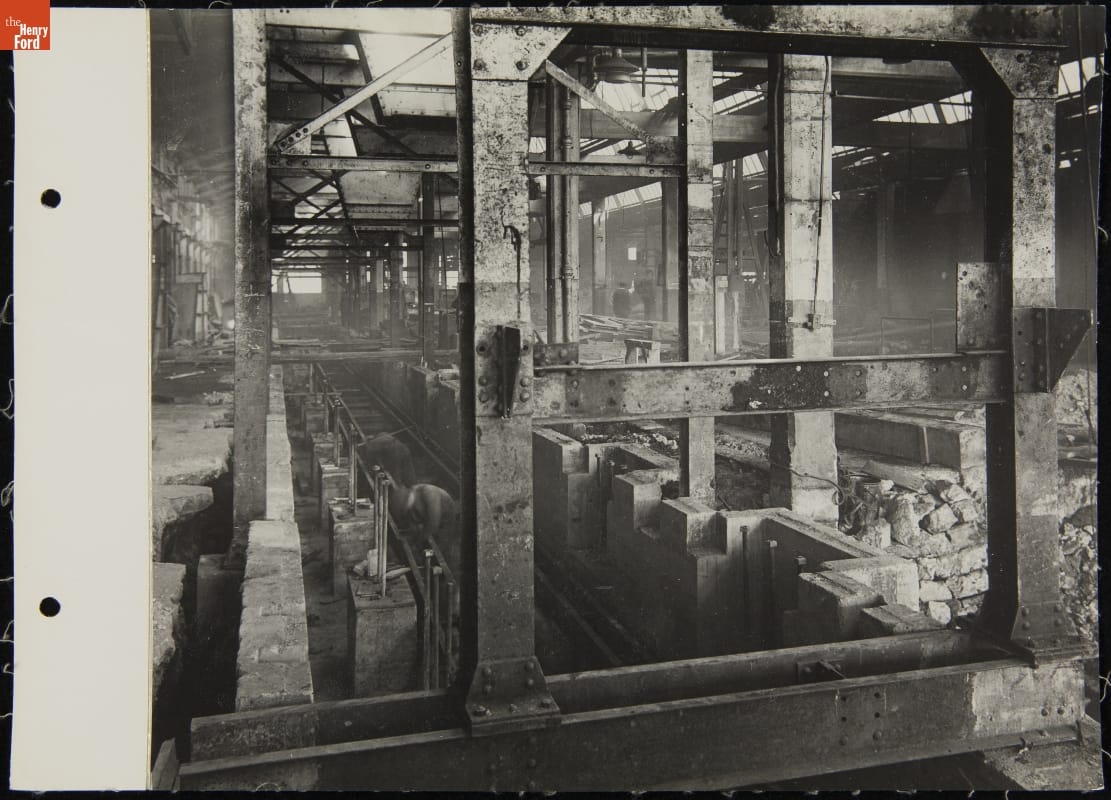
- Drag Conveyor in Foundry, Ford Plant in Cork, Ireland, February 1929 - Henry Ford formed an Irish subsidiary company, Henry Ford & Son Limited, in 1917. Two years later, he opened a tractor plant in County Cork, Ireland -- his father's birthplace. Soon the factory began producing automobile engines and parts for Ford factories in England. Apart from a temporary closure during World War II, the plant remained in operation until 1984.
- February 05, 1929
- Collections - Artifact
Drag Conveyor in Foundry, Ford Plant in Cork, Ireland, February 1929
Henry Ford formed an Irish subsidiary company, Henry Ford & Son Limited, in 1917. Two years later, he opened a tractor plant in County Cork, Ireland -- his father's birthplace. Soon the factory began producing automobile engines and parts for Ford factories in England. Apart from a temporary closure during World War II, the plant remained in operation until 1984.
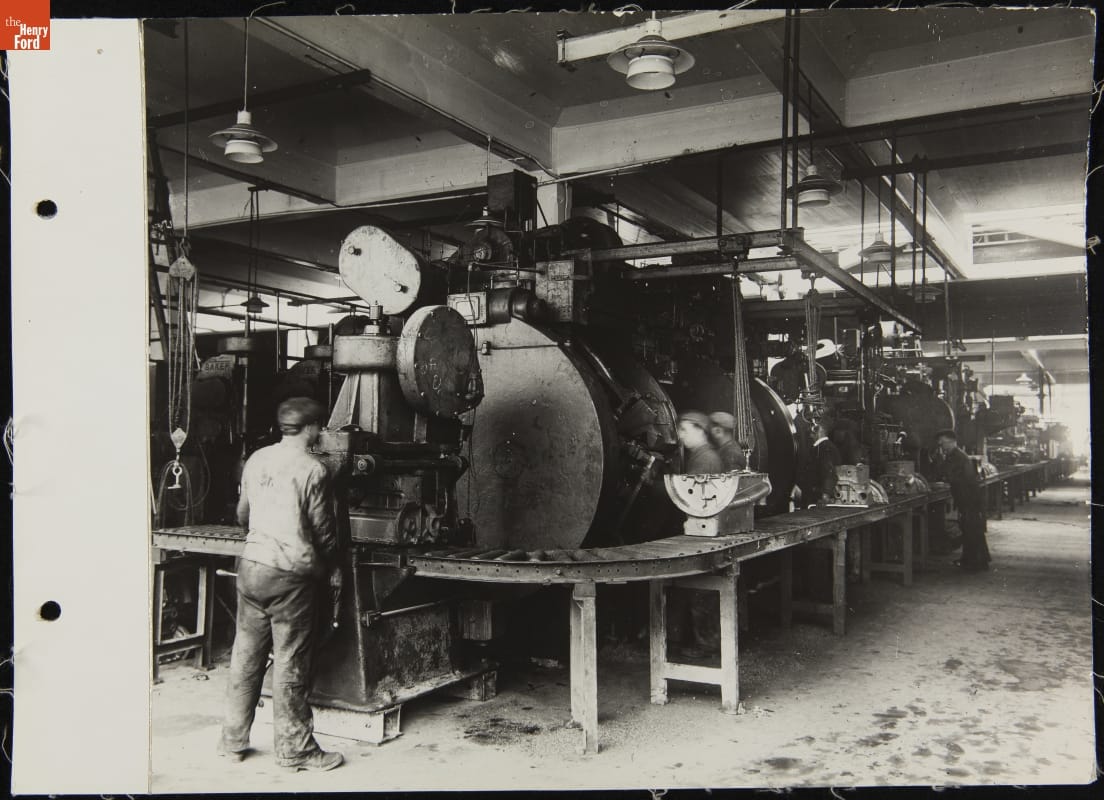
- Cylinder Block Line, Ford Plant in Cork, Ireland, February 1929 - Henry Ford formed an Irish subsidiary company, Henry Ford & Son Limited, in 1917. Two years later, he opened a tractor plant in County Cork, Ireland -- his father's birthplace. Soon the factory began producing automobile engines and parts for Ford factories in England. Apart from a temporary closure during World War II, the plant remained in operation until 1984.
- February 12, 1929
- Collections - Artifact
Cylinder Block Line, Ford Plant in Cork, Ireland, February 1929
Henry Ford formed an Irish subsidiary company, Henry Ford & Son Limited, in 1917. Two years later, he opened a tractor plant in County Cork, Ireland -- his father's birthplace. Soon the factory began producing automobile engines and parts for Ford factories in England. Apart from a temporary closure during World War II, the plant remained in operation until 1984.
- Oiling and Packing Parts for Shipping, Ford Plant at Cork, Ireland, March 1929 - Henry Ford formed an Irish subsidiary company, Henry Ford & Son Limited, in 1917. Two years later, he opened a tractor plant in County Cork, Ireland -- his father's birthplace. Soon the factory began producing automobile engines and parts for Ford factories in England. Apart from a temporary closure during World War II, the plant remained in operation until 1984.
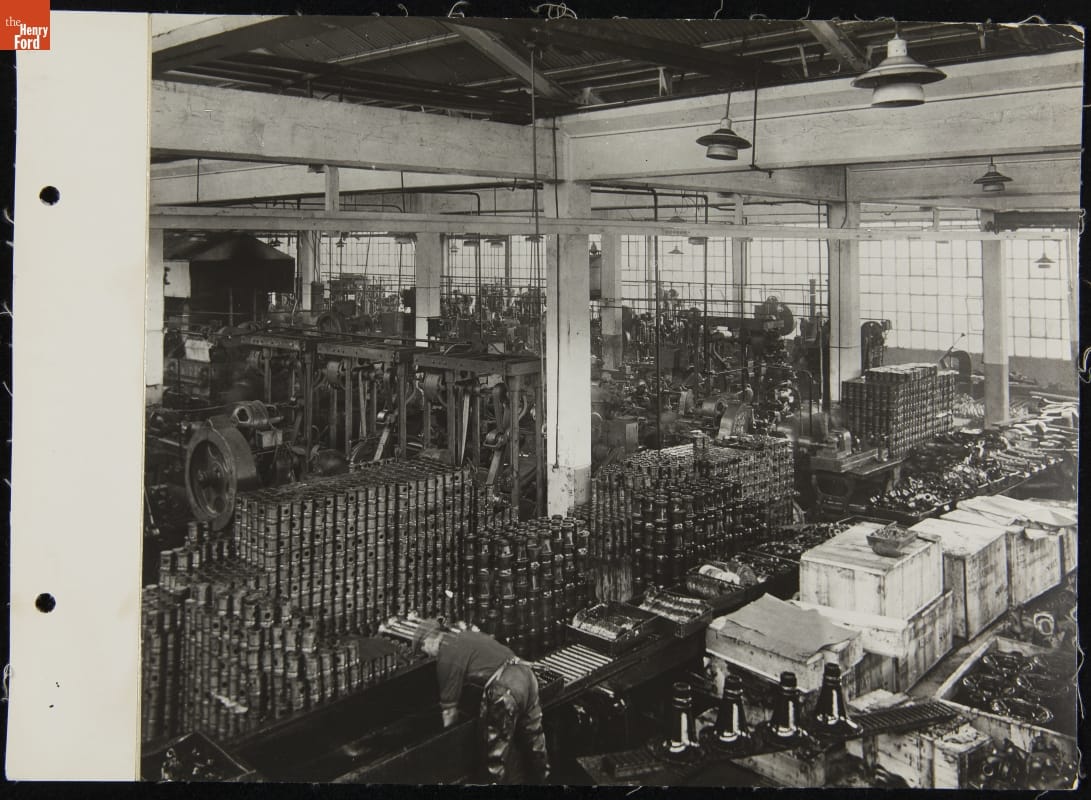
- March 13, 1929
- Collections - Artifact
Oiling and Packing Parts for Shipping, Ford Plant at Cork, Ireland, March 1929
Henry Ford formed an Irish subsidiary company, Henry Ford & Son Limited, in 1917. Two years later, he opened a tractor plant in County Cork, Ireland -- his father's birthplace. Soon the factory began producing automobile engines and parts for Ford factories in England. Apart from a temporary closure during World War II, the plant remained in operation until 1984.
- South End View of Press Building, Ford Plant at Cork, Ireland, March 1929 - Henry Ford formed an Irish subsidiary company, Henry Ford & Son Limited, in 1917. Two years later, he opened a tractor plant in County Cork, Ireland -- his father's birthplace. Soon the factory began producing automobile engines and parts for Ford factories in England. Apart from a temporary closure during World War II, the plant remained in operation until 1984.
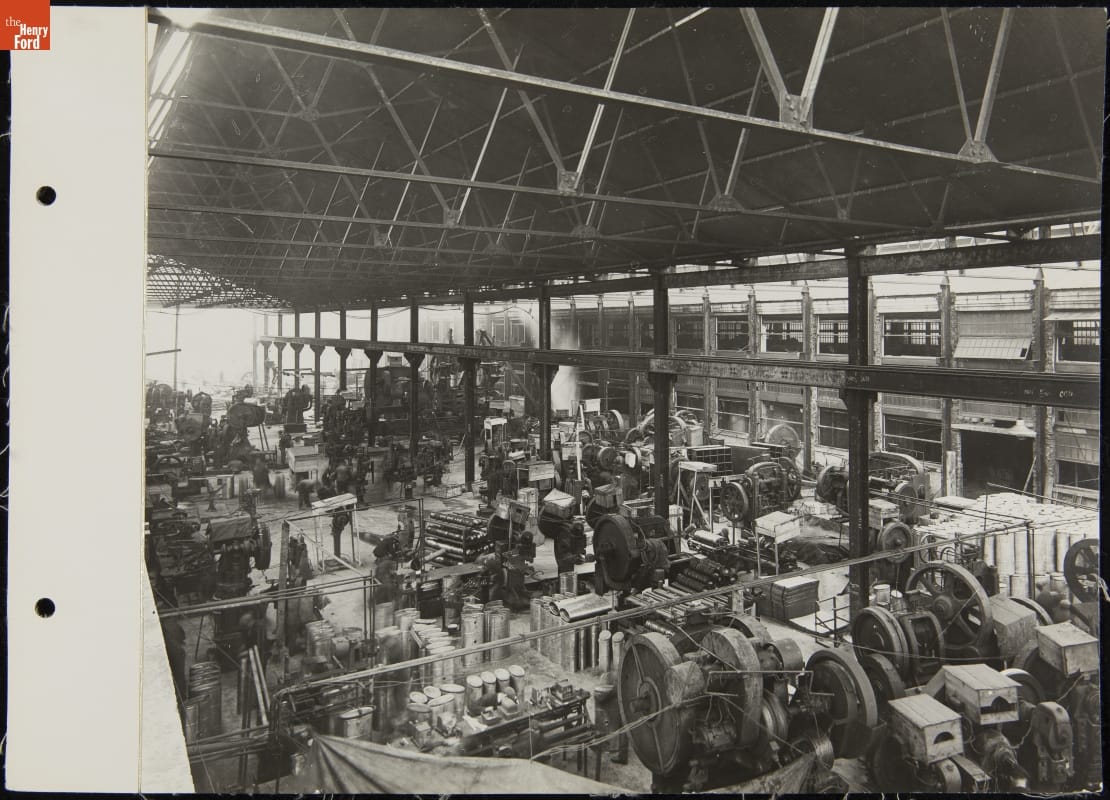
- March 22, 1929
- Collections - Artifact
South End View of Press Building, Ford Plant at Cork, Ireland, March 1929
Henry Ford formed an Irish subsidiary company, Henry Ford & Son Limited, in 1917. Two years later, he opened a tractor plant in County Cork, Ireland -- his father's birthplace. Soon the factory began producing automobile engines and parts for Ford factories in England. Apart from a temporary closure during World War II, the plant remained in operation until 1984.
- Hallmark "Son" Christmas Ornament, 1997 - Already known for greeting cards, Hallmark introduced a line of Christmas ornaments in 1973. The company's annual release of an increasing array of ornaments revolutionized Christmas decorating, appealing to customers' interest in marking memories and milestones as well as expressing one's personality and unique tastes.
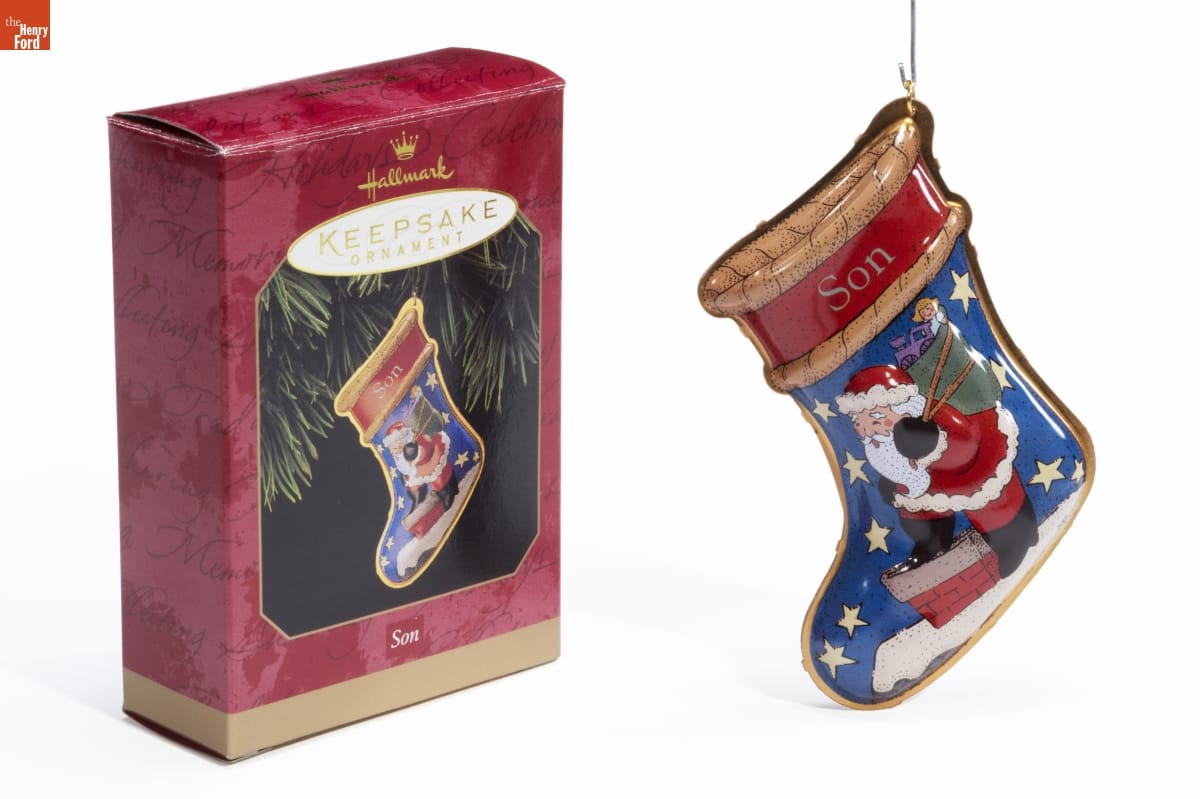
- 1997
- Collections - Artifact
Hallmark "Son" Christmas Ornament, 1997
Already known for greeting cards, Hallmark introduced a line of Christmas ornaments in 1973. The company's annual release of an increasing array of ornaments revolutionized Christmas decorating, appealing to customers' interest in marking memories and milestones as well as expressing one's personality and unique tastes.
- Hallmark "Son" Christmas Ornament, 1990 - Already known for greeting cards, Hallmark introduced a line of Christmas ornaments in 1973. The company's annual release of an increasing array of ornaments revolutionized Christmas decorating, appealing to customers' interest in marking memories and milestones as well as expressing one's personality and unique tastes.
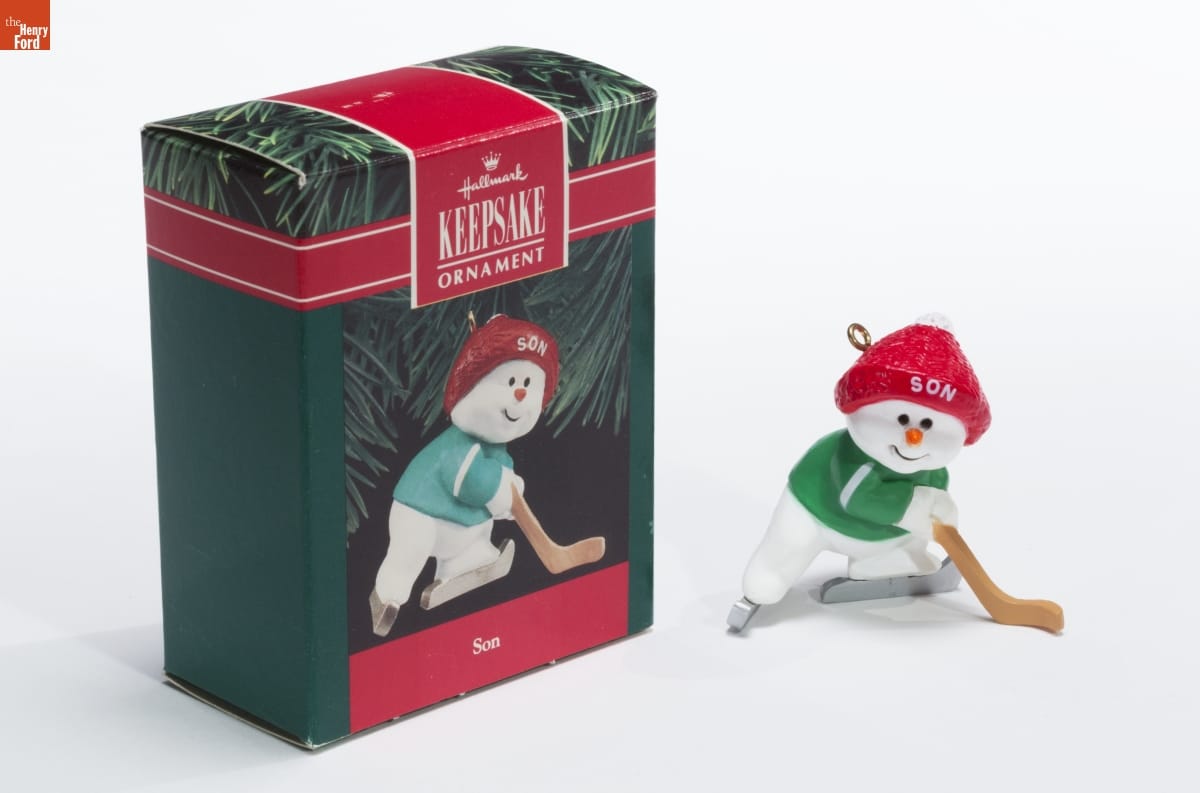
- 1990
- Collections - Artifact
Hallmark "Son" Christmas Ornament, 1990
Already known for greeting cards, Hallmark introduced a line of Christmas ornaments in 1973. The company's annual release of an increasing array of ornaments revolutionized Christmas decorating, appealing to customers' interest in marking memories and milestones as well as expressing one's personality and unique tastes.
- Hallmark "Son" Christmas Ornament, 1989 - Already known for greeting cards, Hallmark introduced a line of Christmas ornaments in 1973. The company's annual release of an increasing array of ornaments revolutionized Christmas decorating, appealing to customers' interest in marking memories and milestones as well as expressing one's personality and unique tastes.
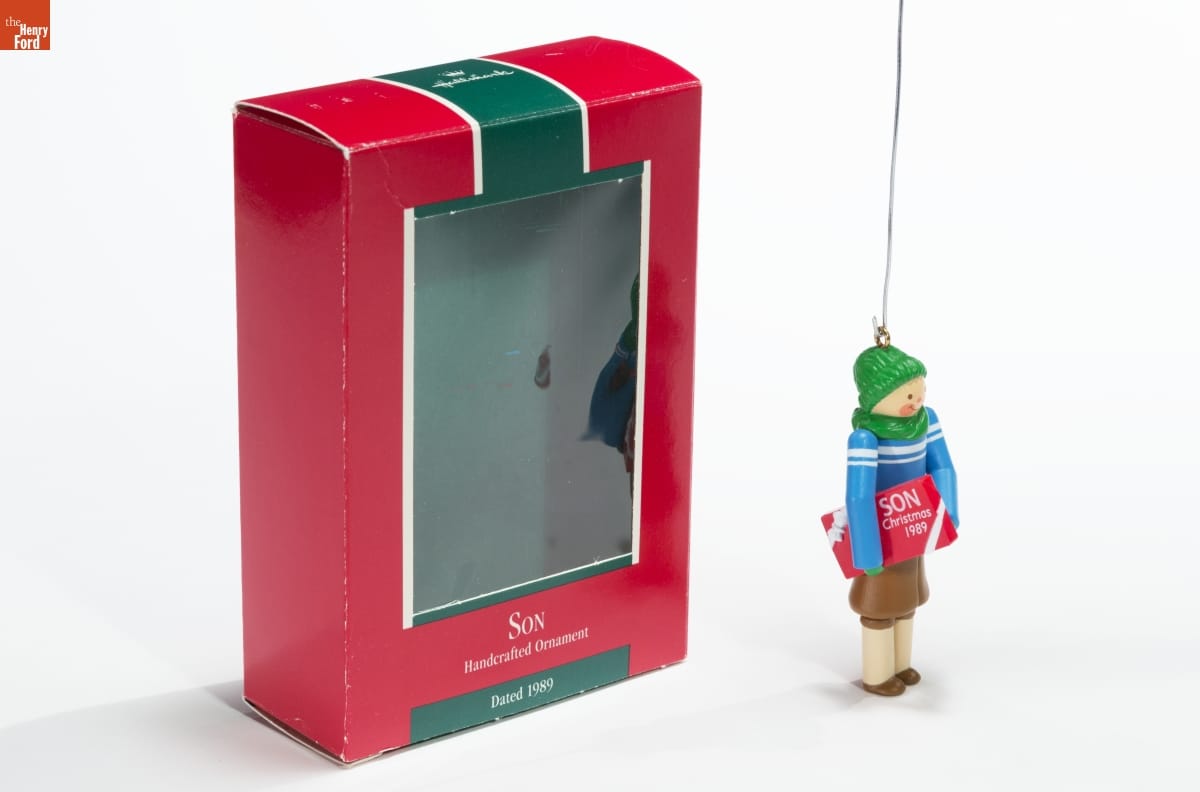
- 1989
- Collections - Artifact
Hallmark "Son" Christmas Ornament, 1989
Already known for greeting cards, Hallmark introduced a line of Christmas ornaments in 1973. The company's annual release of an increasing array of ornaments revolutionized Christmas decorating, appealing to customers' interest in marking memories and milestones as well as expressing one's personality and unique tastes.
- Hallmark "Son" Christmas Ornament, 1980 - Already known for greeting cards, Hallmark introduced a line of Christmas ornaments in 1973. The company's annual release of an increasing array of ornaments revolutionized Christmas decorating, appealing to customers' interest in marking memories and milestones as well as expressing one's personality and unique tastes.
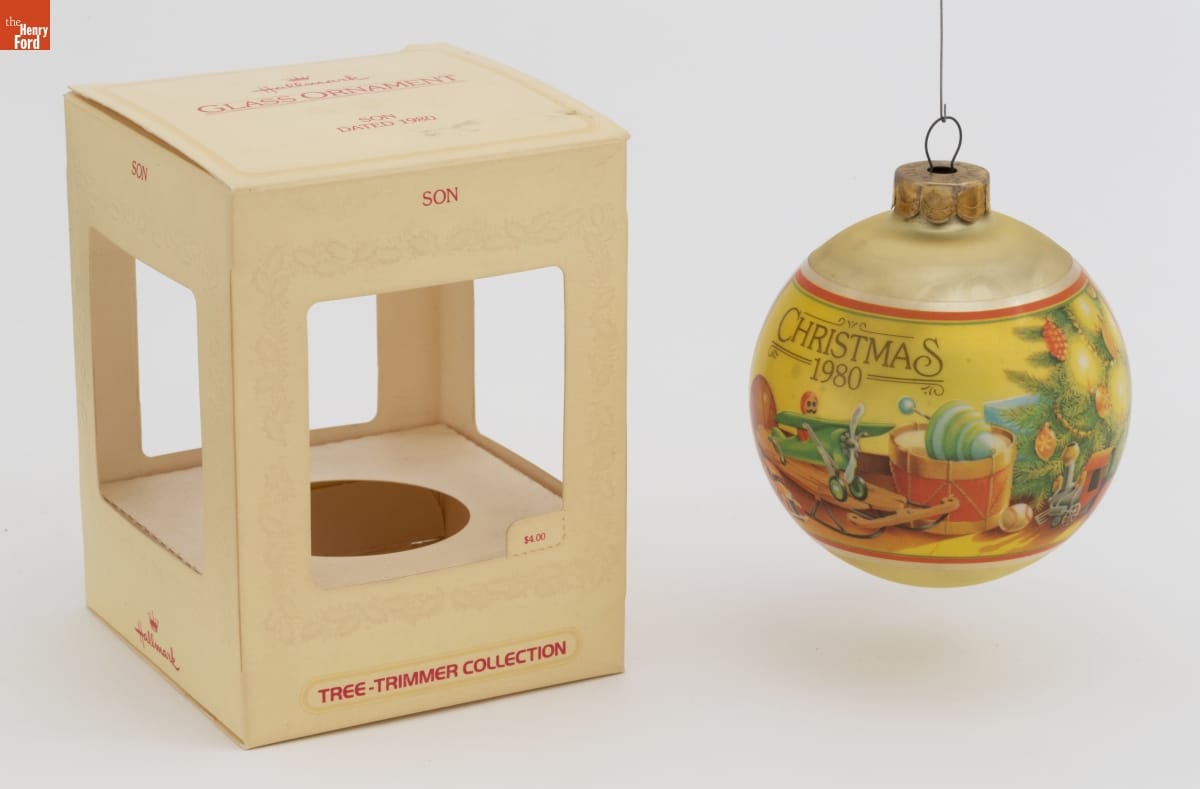
- 1980
- Collections - Artifact
Hallmark "Son" Christmas Ornament, 1980
Already known for greeting cards, Hallmark introduced a line of Christmas ornaments in 1973. The company's annual release of an increasing array of ornaments revolutionized Christmas decorating, appealing to customers' interest in marking memories and milestones as well as expressing one's personality and unique tastes.