
Search
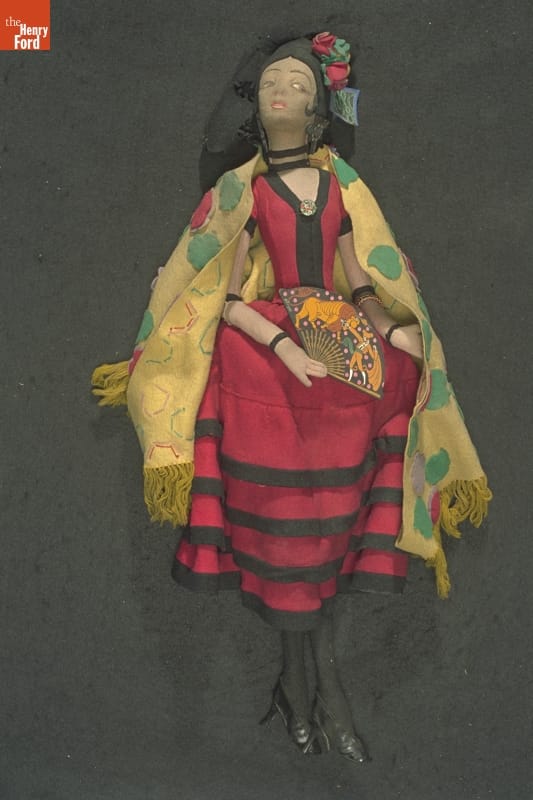
- Spanish Dancer Cloth Doll, 1920-1935 -
- 1920-1935
- Collections - Artifact
Spanish Dancer Cloth Doll, 1920-1935
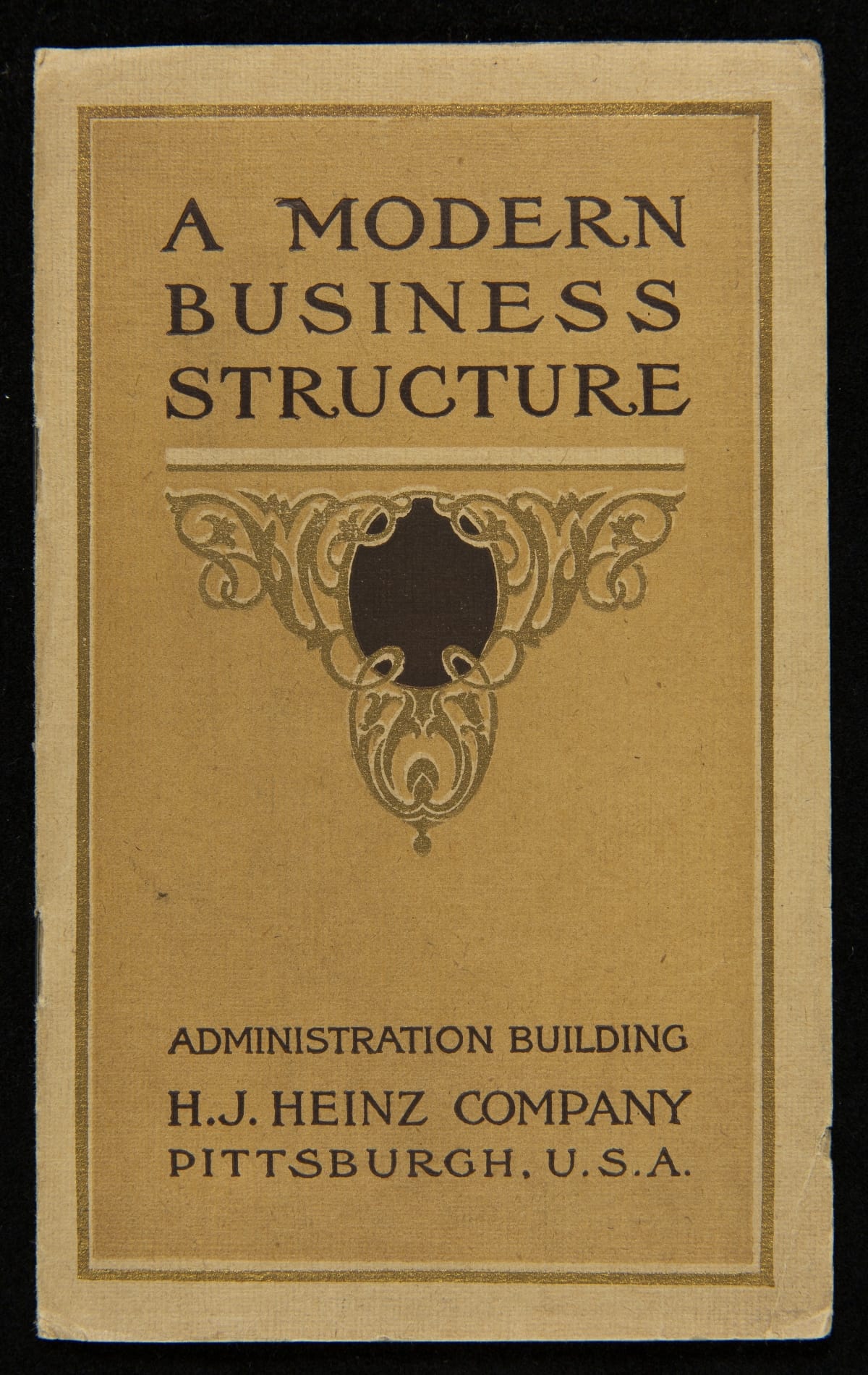
- "A Modern Business Structure," H. J. Heinz Company, Pittsburgh, Pennsylvania, circa 1910 - By the early 1900s, the H.J. Heinz Company had become well-known in the manufactured food industry. Its success resulted in the expansion of its production and distribution operations, which in turn created a need for larger executive quarters. This booklet provides an overview of the Administration Building at the Pittsburgh, Pennsylvania, factory, and describes the mural decorations which adorn its walls.
- circa 1910
- Collections - Artifact
"A Modern Business Structure," H. J. Heinz Company, Pittsburgh, Pennsylvania, circa 1910
By the early 1900s, the H.J. Heinz Company had become well-known in the manufactured food industry. Its success resulted in the expansion of its production and distribution operations, which in turn created a need for larger executive quarters. This booklet provides an overview of the Administration Building at the Pittsburgh, Pennsylvania, factory, and describes the mural decorations which adorn its walls.
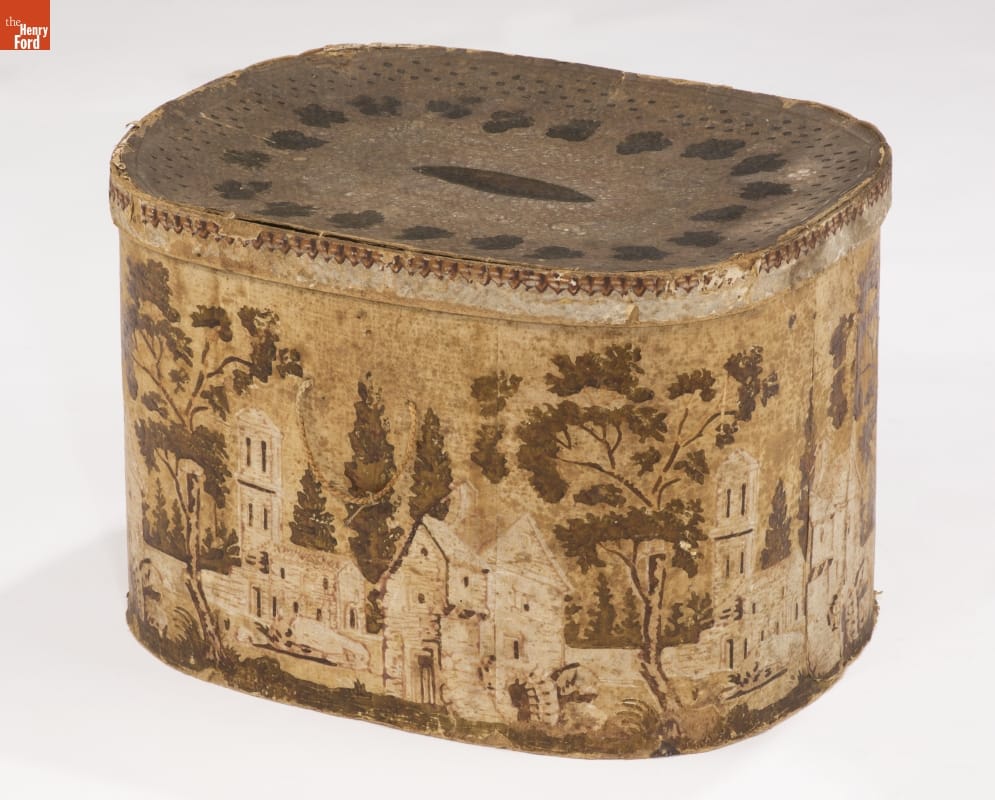
- Bandbox, circa 1835 - In the early 1800s, Americans used bandboxes to store clothing, accessories, and other small items. Bandboxes were handy containers in the home or when traveling by stage, boat, or rail. Manufacturers covered these inexpensive pasteboard or wooden boxes with colorful papers. This bandbox's paper depicts an idyllic scene with a towered home and mill.
- circa 1835
- Collections - Artifact
Bandbox, circa 1835
In the early 1800s, Americans used bandboxes to store clothing, accessories, and other small items. Bandboxes were handy containers in the home or when traveling by stage, boat, or rail. Manufacturers covered these inexpensive pasteboard or wooden boxes with colorful papers. This bandbox's paper depicts an idyllic scene with a towered home and mill.
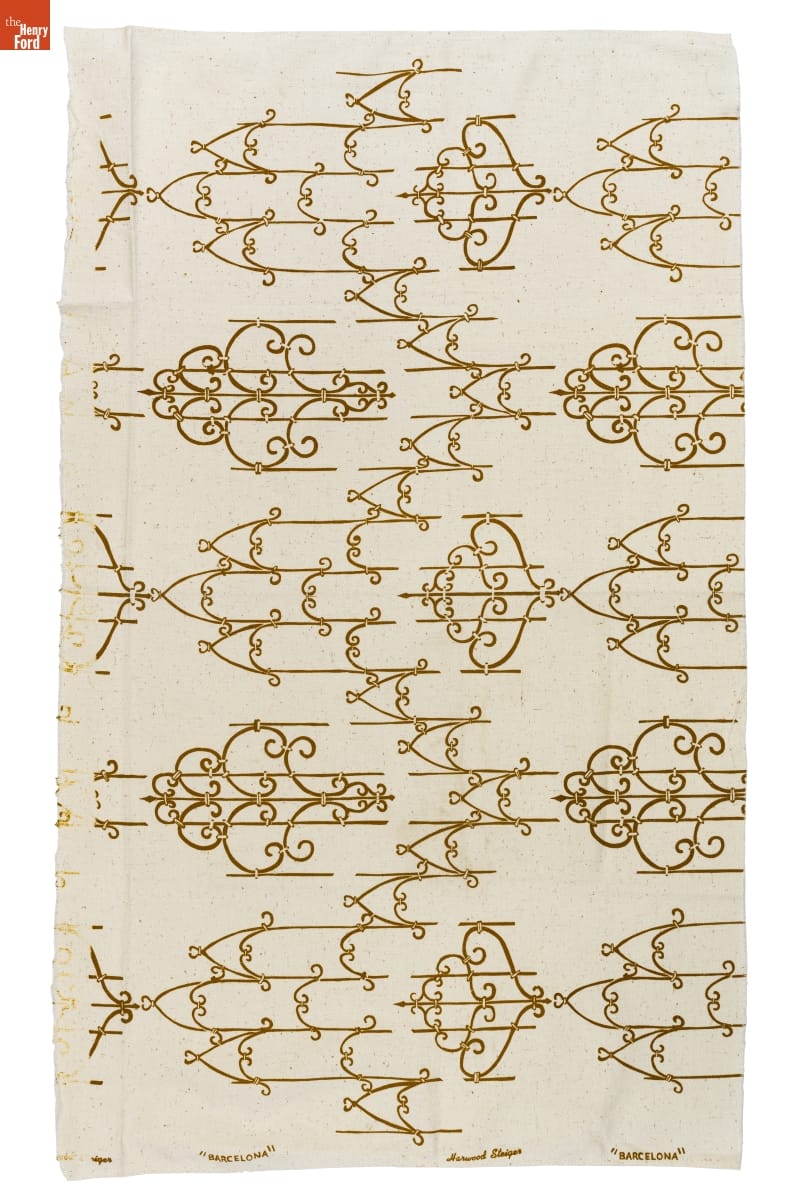
- Harwood Steiger Fabric, "Barcelona" -
- 1956-1980
- Collections - Artifact
Harwood Steiger Fabric, "Barcelona"
- Harvesting Olives, H. J. Heinz Company, Seville, Spain, circa 1915 - H. J. Heinz recognized that specific climates and soil-types were best for each fruit and vegetable, ensuring a better taste for his products. He considered Spain to be the best for olives. Laborers picked the olives and sent them to the nearby Heinz factory where they were cleaned, processed, and packaged in clear glass jars for market.
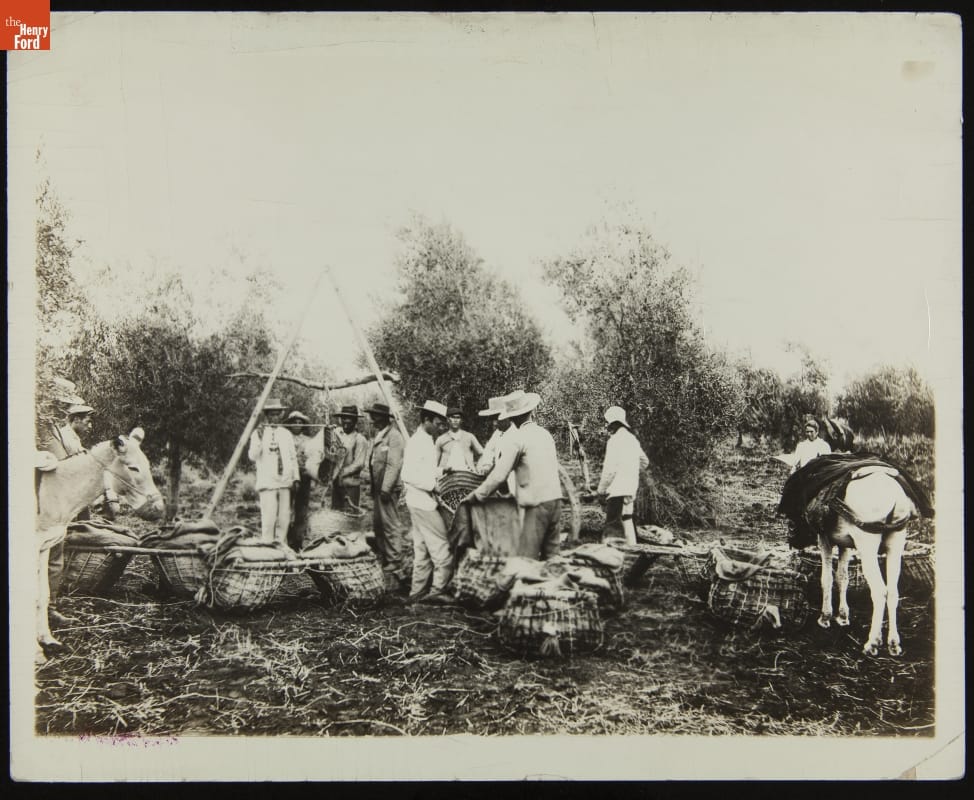
- circa 1915
- Collections - Artifact
Harvesting Olives, H. J. Heinz Company, Seville, Spain, circa 1915
H. J. Heinz recognized that specific climates and soil-types were best for each fruit and vegetable, ensuring a better taste for his products. He considered Spain to be the best for olives. Laborers picked the olives and sent them to the nearby Heinz factory where they were cleaned, processed, and packaged in clear glass jars for market.
- Advertising Layout Drawing of Heinz Company Olive Harvesters in Seville, Spain, March 31, 1910 - The H.J. Heinz Company published pamphlets, brochures, and booklets that detailed the company's history and manufacturing process. Sometimes, hand-drawn images accompanied text related to a specific topic. This advertising layout drawing of olive harvesters in Seville, Spain, was drawn for publication purposes and would have surrounded text related to Heinz's olive production in Spain.
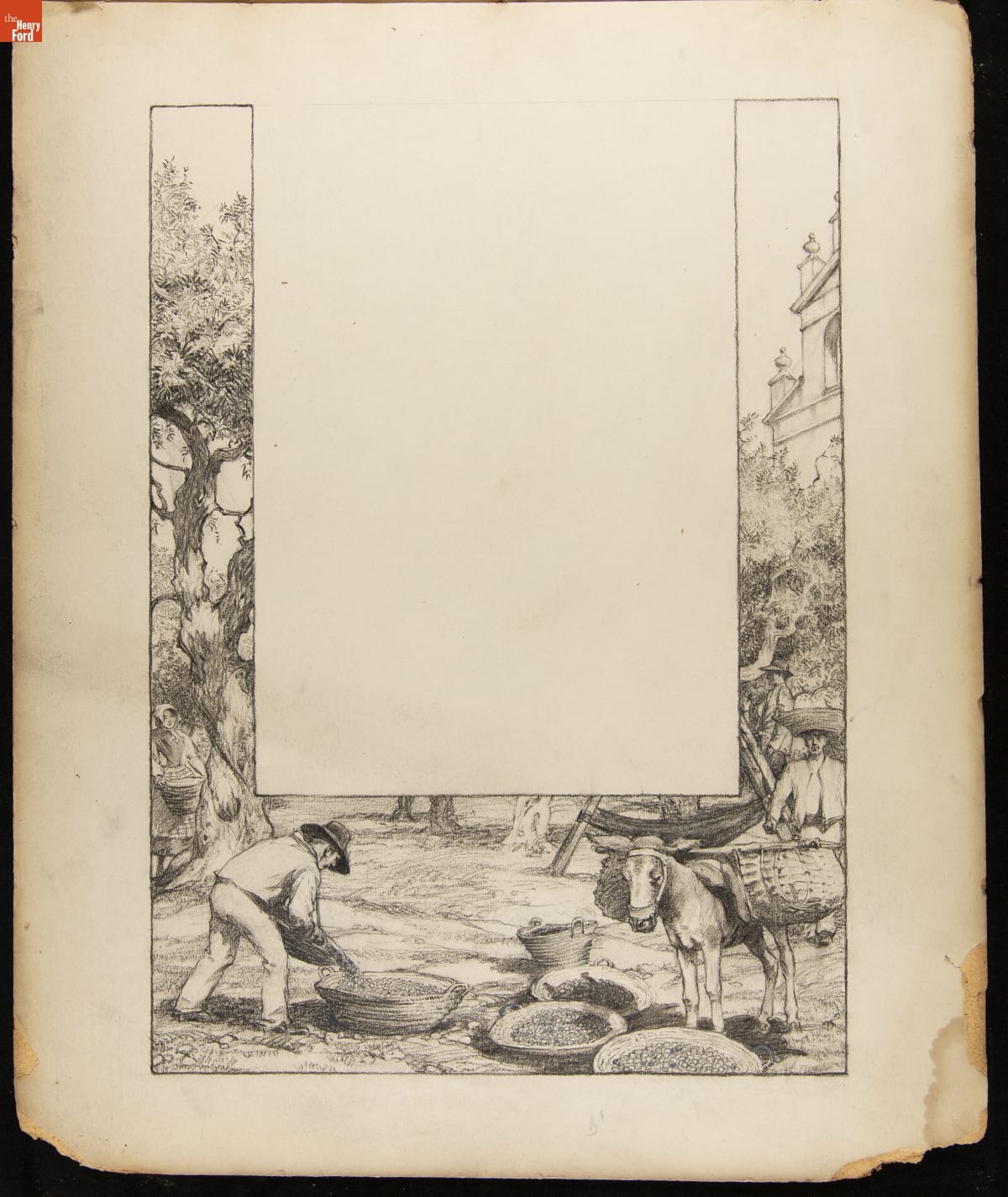
- March 31, 1910
- Collections - Artifact
Advertising Layout Drawing of Heinz Company Olive Harvesters in Seville, Spain, March 31, 1910
The H.J. Heinz Company published pamphlets, brochures, and booklets that detailed the company's history and manufacturing process. Sometimes, hand-drawn images accompanied text related to a specific topic. This advertising layout drawing of olive harvesters in Seville, Spain, was drawn for publication purposes and would have surrounded text related to Heinz's olive production in Spain.
- Advertising Layout Photograph of Heinz Employees Harvesting Olives in Seville, Spain, circa 1920 - The H.J. Heinz Company published pamphlets, brochures, and booklets that detailed the company's history and manufacturing process. Sometimes, images accompanied text related to a specific topic. This advertising layout features modified photographs of men picking olives in Spain and ox carts being loaded for transport. This layout would have surrounded text related to Heinz's olive production in Spain.
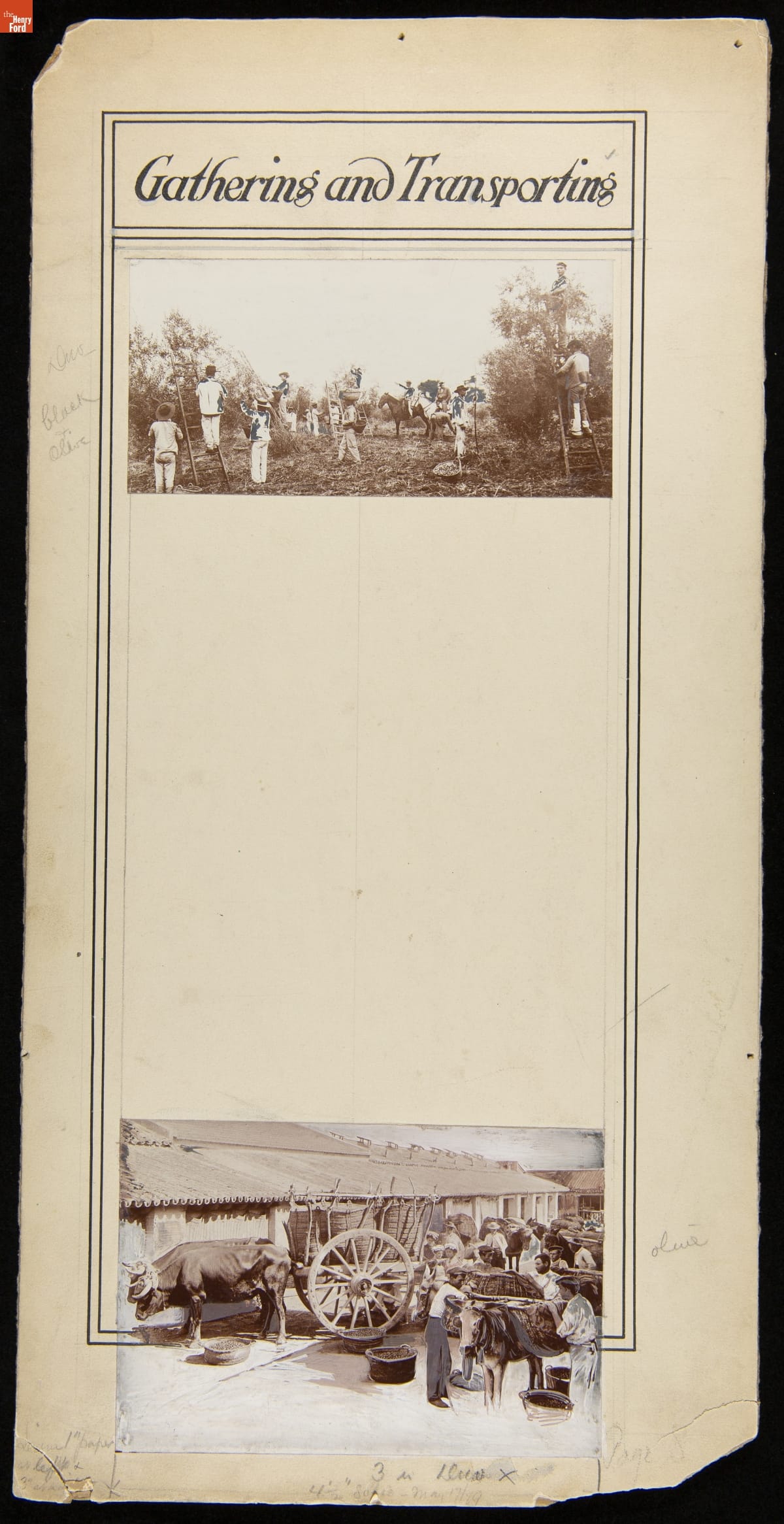
- circa 1920
- Collections - Artifact
Advertising Layout Photograph of Heinz Employees Harvesting Olives in Seville, Spain, circa 1920
The H.J. Heinz Company published pamphlets, brochures, and booklets that detailed the company's history and manufacturing process. Sometimes, images accompanied text related to a specific topic. This advertising layout features modified photographs of men picking olives in Spain and ox carts being loaded for transport. This layout would have surrounded text related to Heinz's olive production in Spain.
- Ruth Elder and George Haldeman Arrive at the Getafe Aerodrome, 1927 - Ruth Elder planned to be the first woman to fly across the Atlantic. On October 11, 1927, Elder and co-pilot George Haldeman took off in their Stinson Detroiter <EM>American Girl</EM>. An oil leak forced them to ditch in the ocean some 360 miles short of land. Still, the 2,623 miles Elder covered set a new distance record for a female pilot.
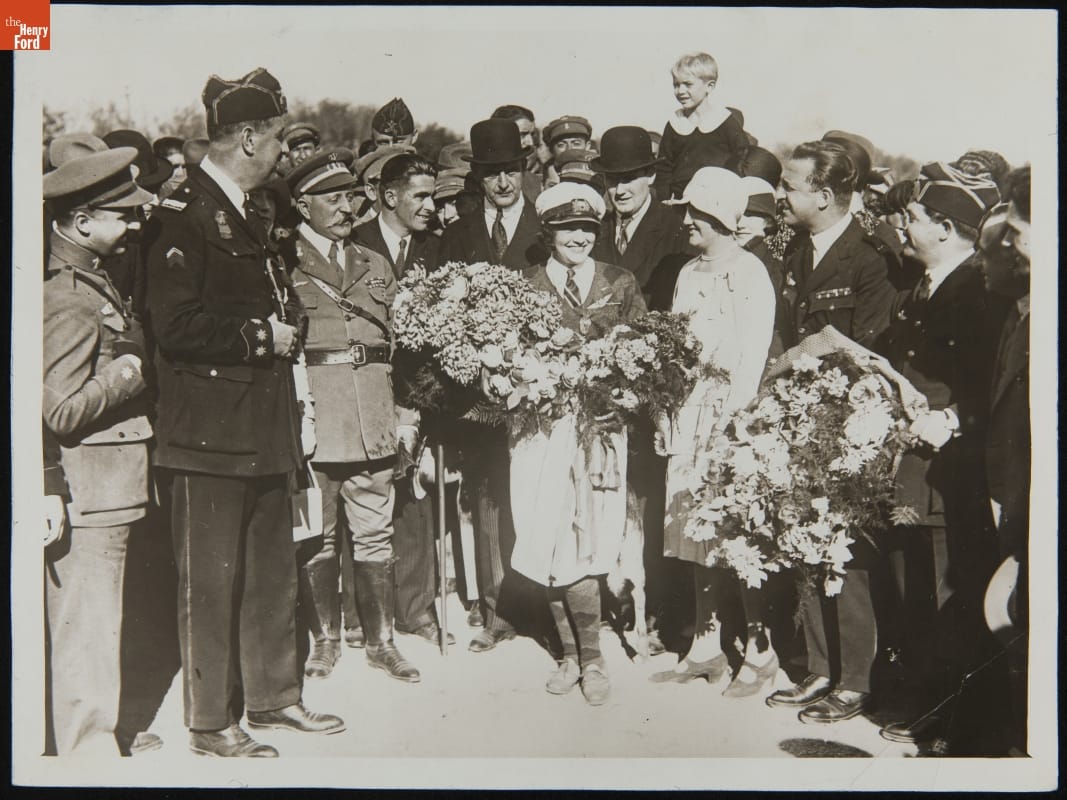
- 1927
- Collections - Artifact
Ruth Elder and George Haldeman Arrive at the Getafe Aerodrome, 1927
Ruth Elder planned to be the first woman to fly across the Atlantic. On October 11, 1927, Elder and co-pilot George Haldeman took off in their Stinson Detroiter American Girl. An oil leak forced them to ditch in the ocean some 360 miles short of land. Still, the 2,623 miles Elder covered set a new distance record for a female pilot.
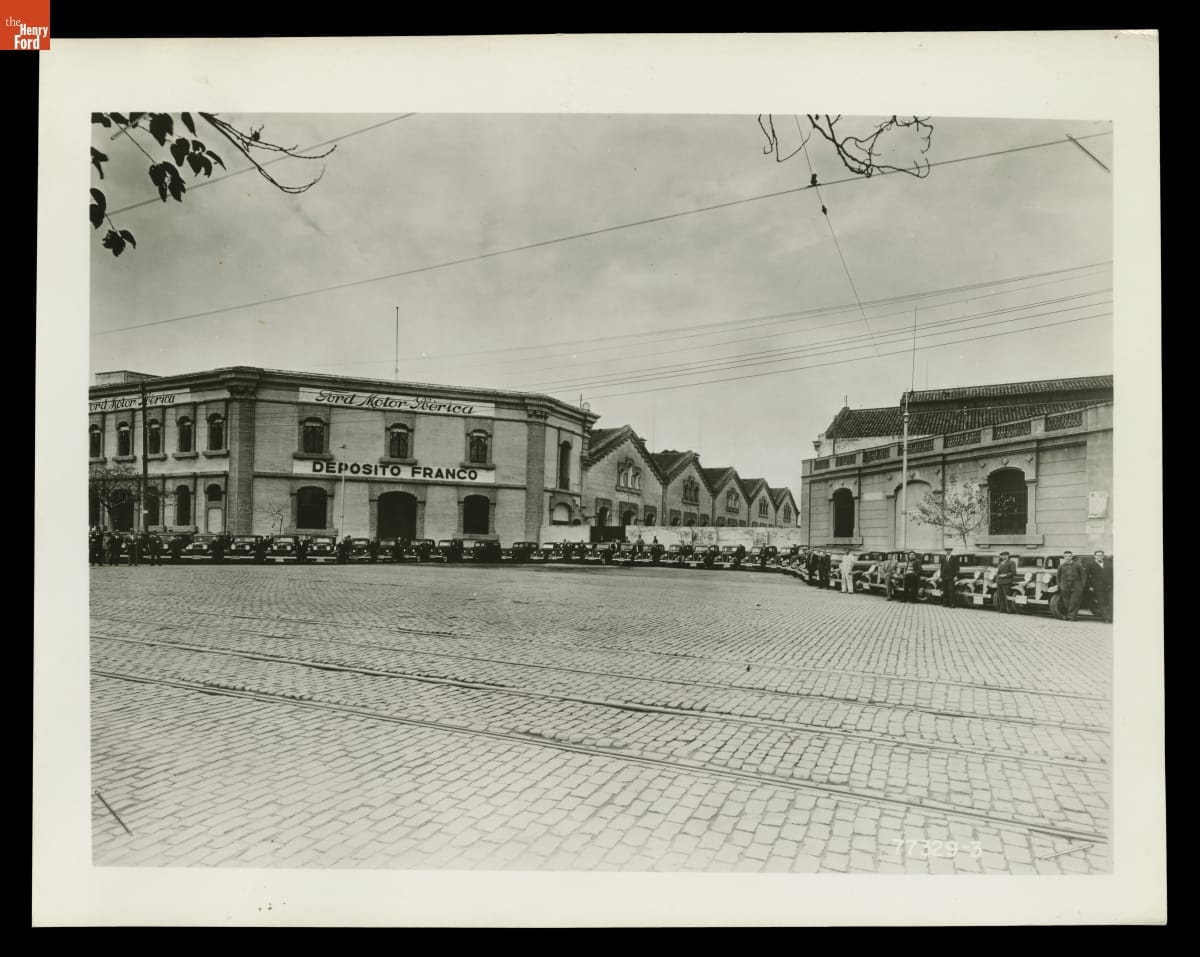
- Ford Motor Company Plant, Barcelona, Spain, 1943 - Ford Motor Company operated sales and service branches, as well as assembly plants, in cities around the world. The company's branch in Barcelona, Spain, opened in 1925. It replaced a smaller facility built in Cadiz a few years earlier. This photo shows the plant as it appeared in 1943.
- January 06, 1943
- Collections - Artifact
Ford Motor Company Plant, Barcelona, Spain, 1943
Ford Motor Company operated sales and service branches, as well as assembly plants, in cities around the world. The company's branch in Barcelona, Spain, opened in 1925. It replaced a smaller facility built in Cadiz a few years earlier. This photo shows the plant as it appeared in 1943.
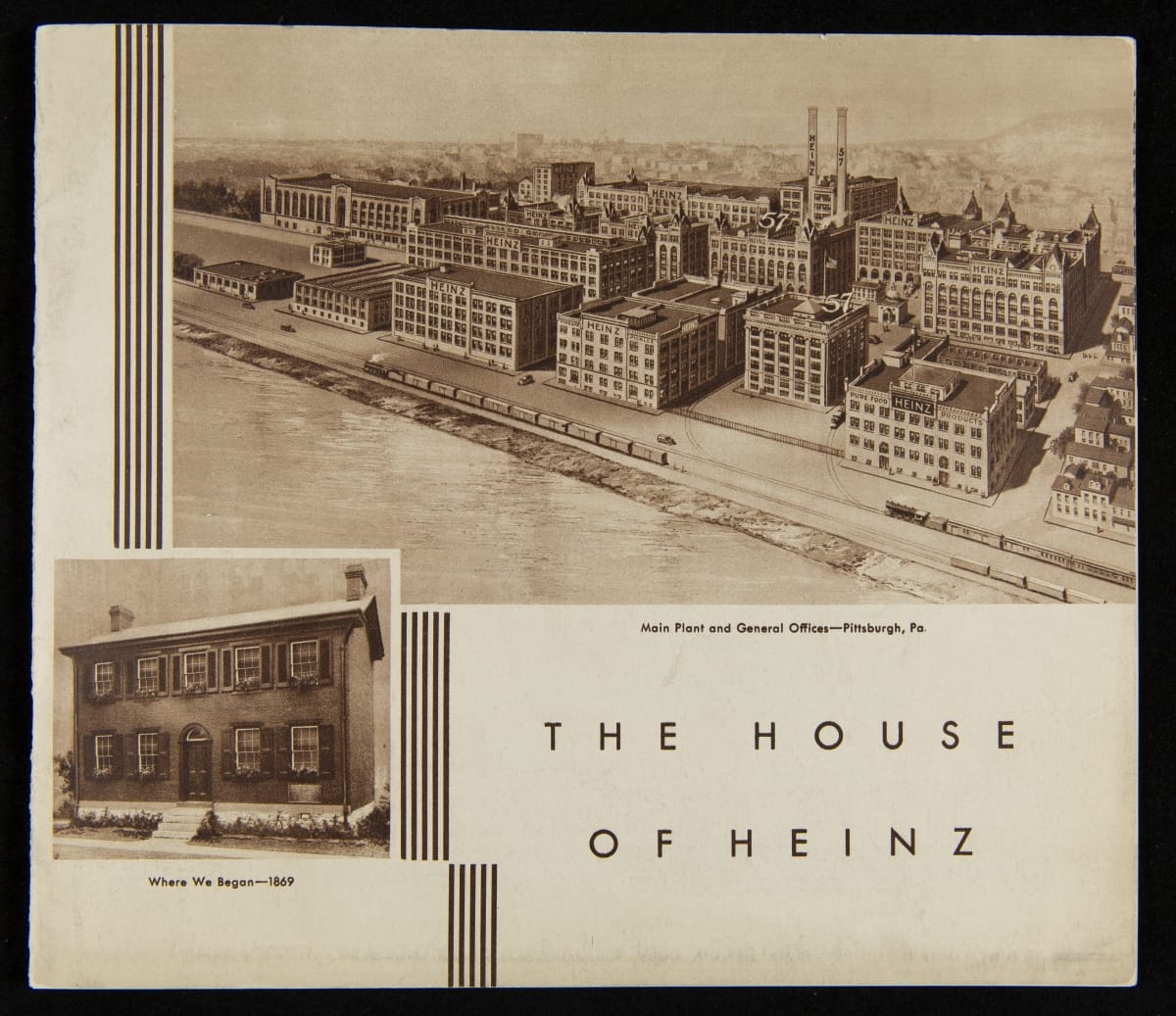
- The House of Heinz, circa 1929 - The H.J. Heinz Company was founded from humble beginnings in 1869. By the turn of the century it had become a well-known manufacturer of processed food. Its rapid success resulted in the expansion of its operations at home and abroad. This booklet from 1929 provides an overview of the many branch factories and buildings operated by the company, referred to as "The House of Heinz."
- circa 1929
- Collections - Artifact
The House of Heinz, circa 1929
The H.J. Heinz Company was founded from humble beginnings in 1869. By the turn of the century it had become a well-known manufacturer of processed food. Its rapid success resulted in the expansion of its operations at home and abroad. This booklet from 1929 provides an overview of the many branch factories and buildings operated by the company, referred to as "The House of Heinz."