
Search
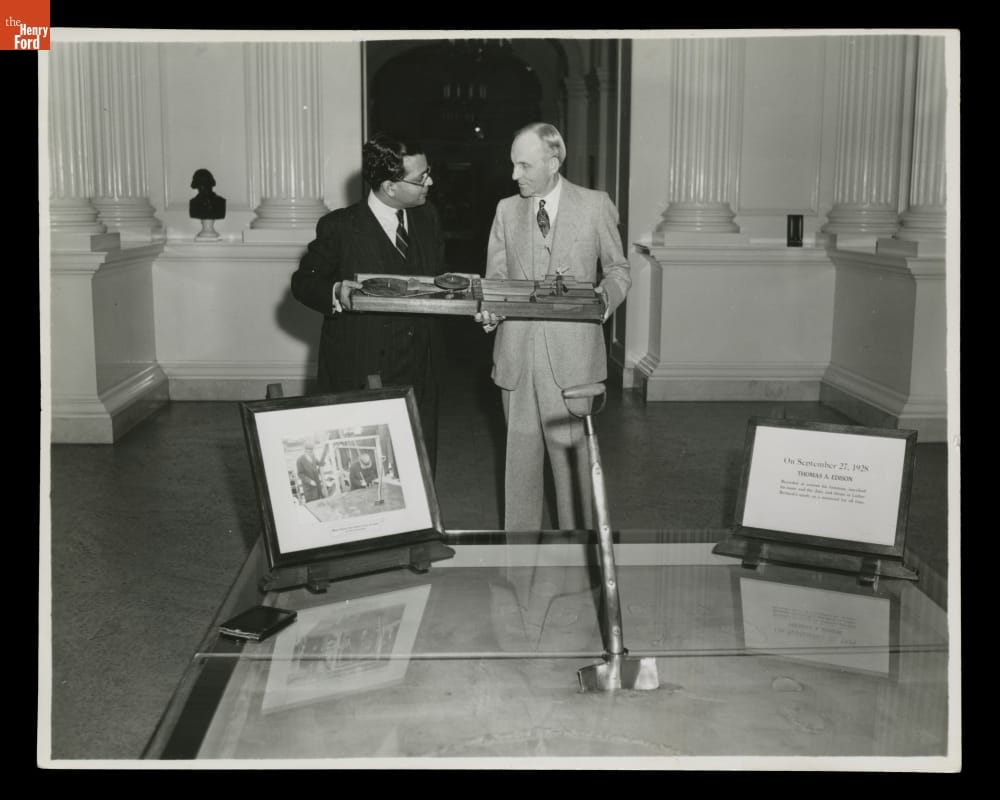
- Mr. T. A. Raman Presents a Portable Spinning Wheel to Henry Ford, a Gift from Mahatma Gandhi, 1942 - In response to a letter of good wishes from Henry Ford, Mahatma Gandhi sent a portable spinning wheel to the industrialist as a gift. Gandhi used the spinning wheel as a symbol in his struggle for India's independence and economic self-sufficiency. Gandhi and Ford shared a mutual admiration for one another because of their longstanding commitments to peace.
- December 01, 1942
- Collections - Artifact
Mr. T. A. Raman Presents a Portable Spinning Wheel to Henry Ford, a Gift from Mahatma Gandhi, 1942
In response to a letter of good wishes from Henry Ford, Mahatma Gandhi sent a portable spinning wheel to the industrialist as a gift. Gandhi used the spinning wheel as a symbol in his struggle for India's independence and economic self-sufficiency. Gandhi and Ford shared a mutual admiration for one another because of their longstanding commitments to peace.
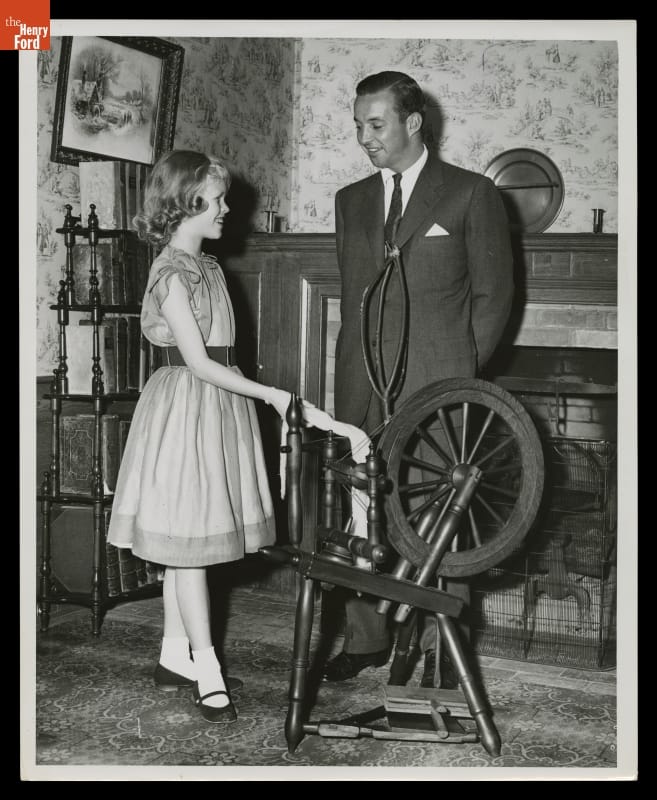
- William Clay Ford and Karen Dayne at the Opening of Ford Home in Greenfield Village, April 1, 1953 - William Clay Ford (1925-2014) was Henry Ford's grandson and the youngest of Edsel and Eleanor Clay Ford's four children. In 1951, he became Chairman of the Board of Trustees of the Edison Institute (now The Henry Ford). On April 1, 1953, William officially opened his grandfather Henry's birthplace and childhood home to the public in Greenfield Village.
- April 01, 1953
- Collections - Artifact
William Clay Ford and Karen Dayne at the Opening of Ford Home in Greenfield Village, April 1, 1953
William Clay Ford (1925-2014) was Henry Ford's grandson and the youngest of Edsel and Eleanor Clay Ford's four children. In 1951, he became Chairman of the Board of Trustees of the Edison Institute (now The Henry Ford). On April 1, 1953, William officially opened his grandfather Henry's birthplace and childhood home to the public in Greenfield Village.
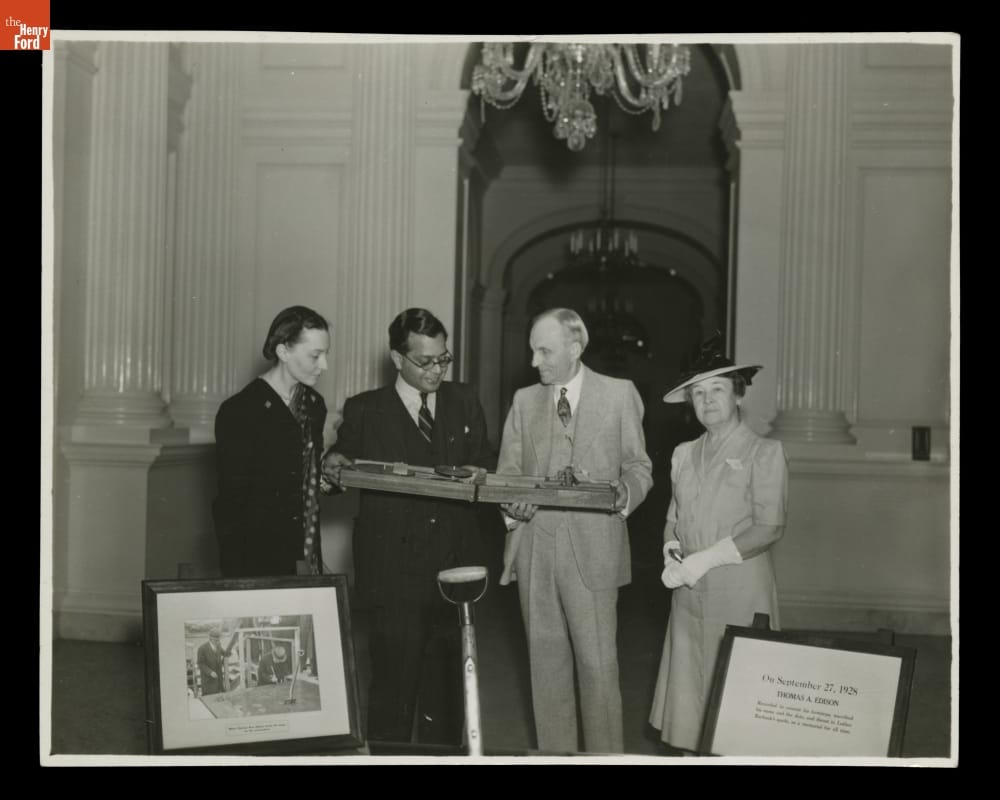
- Mr. T. A. Raman Presents a Portable Spinning Wheel to Henry Ford, a Gift from Mahatma Gandhi, 1942 - In response to a letter of good wishes from Henry Ford, Mahatma Gandhi sent a portable spinning wheel to the industrialist as a gift. Gandhi used the spinning wheel as a symbol in his struggle for India's independence and economic self-sufficiency. Gandhi and Ford shared a mutual admiration for one another because of their longstanding commitments to peace.
- December 01, 1942
- Collections - Artifact
Mr. T. A. Raman Presents a Portable Spinning Wheel to Henry Ford, a Gift from Mahatma Gandhi, 1942
In response to a letter of good wishes from Henry Ford, Mahatma Gandhi sent a portable spinning wheel to the industrialist as a gift. Gandhi used the spinning wheel as a symbol in his struggle for India's independence and economic self-sufficiency. Gandhi and Ford shared a mutual admiration for one another because of their longstanding commitments to peace.
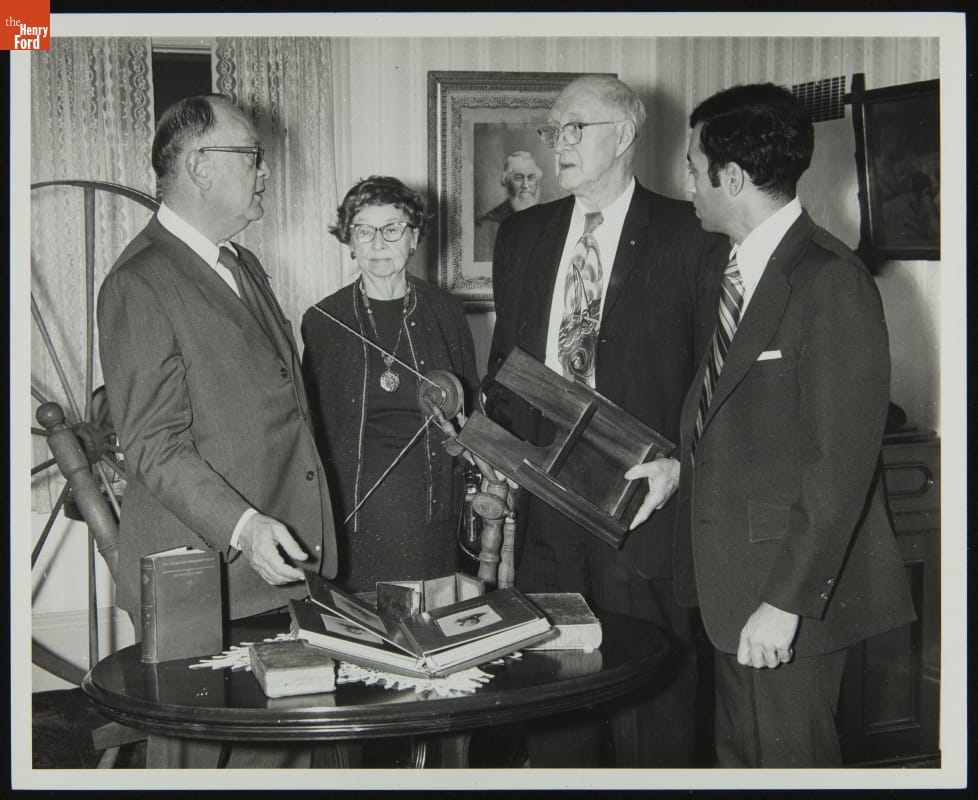
- Edison Family Members Visiting Edison Homestead in Greenfield Village, October 31, 1974 -
- October 31, 1974
- Collections - Artifact
Edison Family Members Visiting Edison Homestead in Greenfield Village, October 31, 1974
- Mr. T. A. Raman Presents a Portable Spinning Wheel to Henry Ford, a Gift from Mahatma Gandhi, 1942 - In response to a letter of good wishes from Henry Ford, Mahatma Gandhi sent a portable spinning wheel to the industrialist as a gift. Gandhi used the spinning wheel as a symbol in his struggle for India's independence and economic self-sufficiency. Gandhi and Ford shared a mutual admiration for one another because of their longstanding commitments to peace.
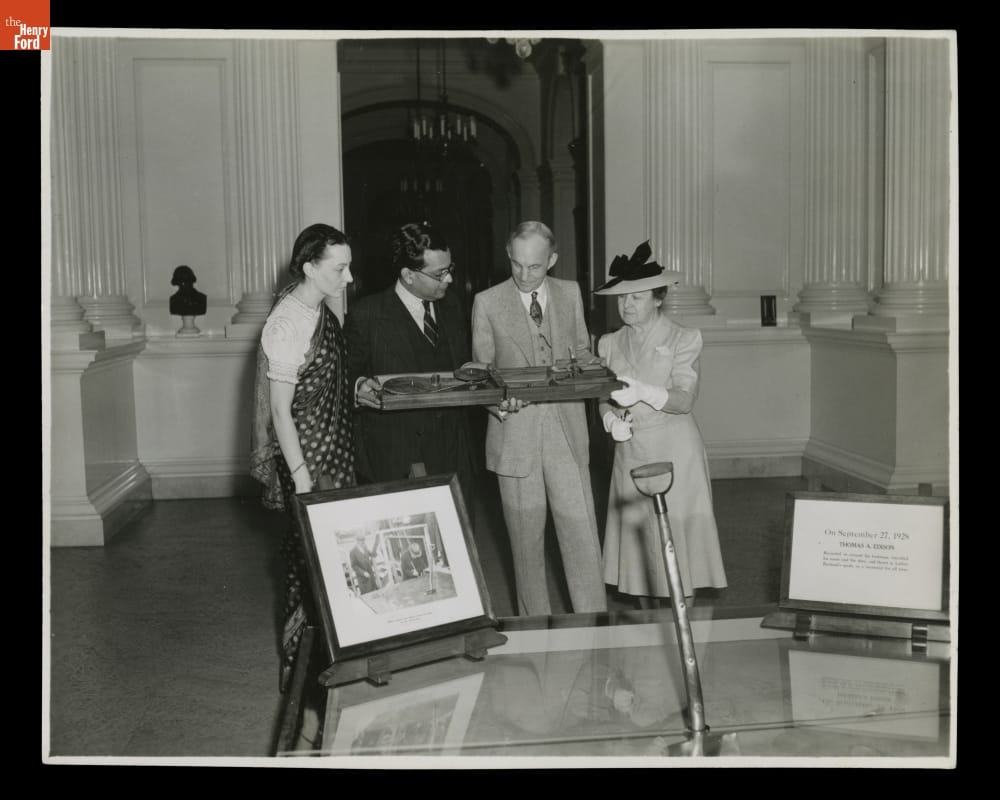
- December 01, 1942
- Collections - Artifact
Mr. T. A. Raman Presents a Portable Spinning Wheel to Henry Ford, a Gift from Mahatma Gandhi, 1942
In response to a letter of good wishes from Henry Ford, Mahatma Gandhi sent a portable spinning wheel to the industrialist as a gift. Gandhi used the spinning wheel as a symbol in his struggle for India's independence and economic self-sufficiency. Gandhi and Ford shared a mutual admiration for one another because of their longstanding commitments to peace.
- Presenter Shirley Schwarchoff Using a Spinning Wheel in Daggett Farmhouse in Greenfield Village, July 1983 - In 1977, Henry Ford Museum acquired an 18th-century farmhouse from northeastern Connecticut for Greenfield Village. It was originally interpreted with a focus on architecture and antiques, but demonstrations of colonial-era activities enlivened the structure in the 1980s. Later, based on new research, activities more accurately recreated the life of the home's original occupants, the Daggett family, in the 1760s.
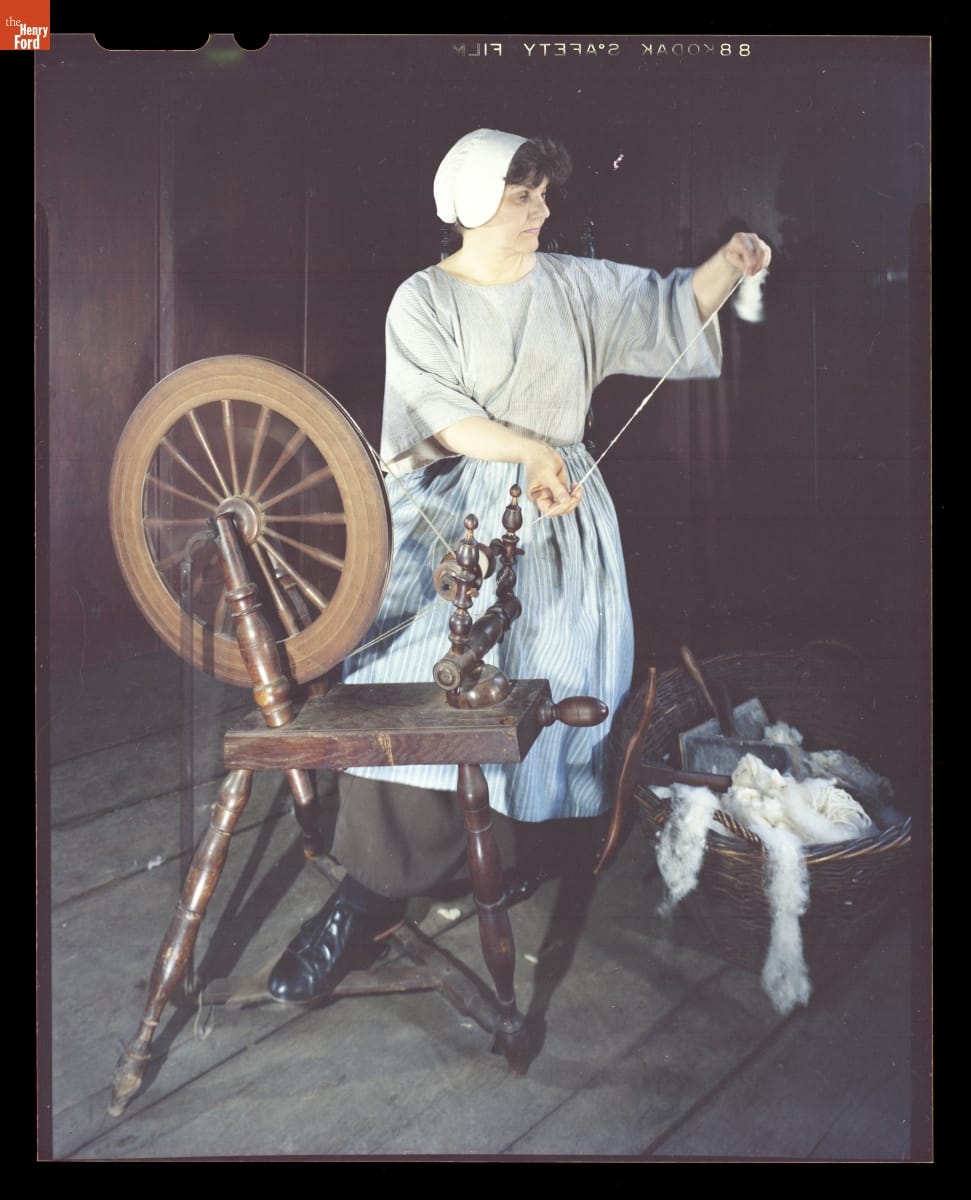
- July 01, 1983
- Collections - Artifact
Presenter Shirley Schwarchoff Using a Spinning Wheel in Daggett Farmhouse in Greenfield Village, July 1983
In 1977, Henry Ford Museum acquired an 18th-century farmhouse from northeastern Connecticut for Greenfield Village. It was originally interpreted with a focus on architecture and antiques, but demonstrations of colonial-era activities enlivened the structure in the 1980s. Later, based on new research, activities more accurately recreated the life of the home's original occupants, the Daggett family, in the 1760s.
- Portable Wool Wheel, 1872-1900 -
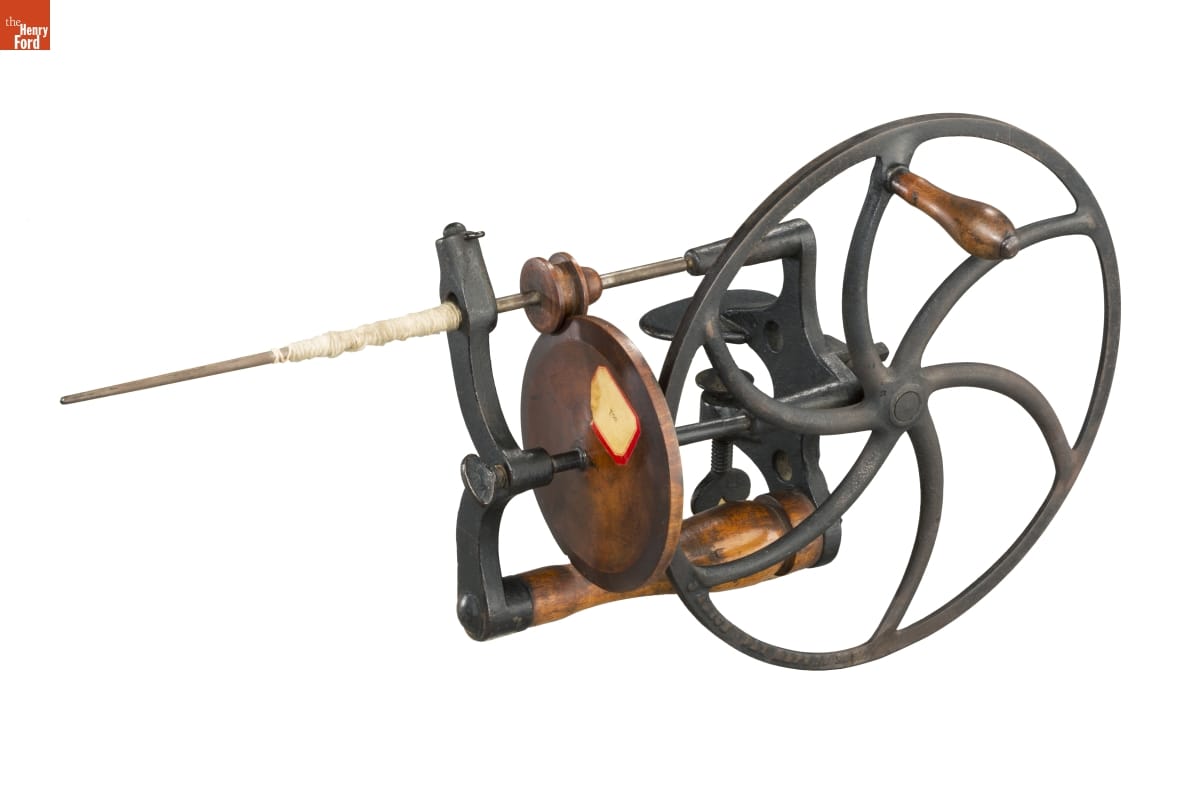
- 1872-1900
- Collections - Artifact
Portable Wool Wheel, 1872-1900
- Charka Wheel, 1880-1930 -
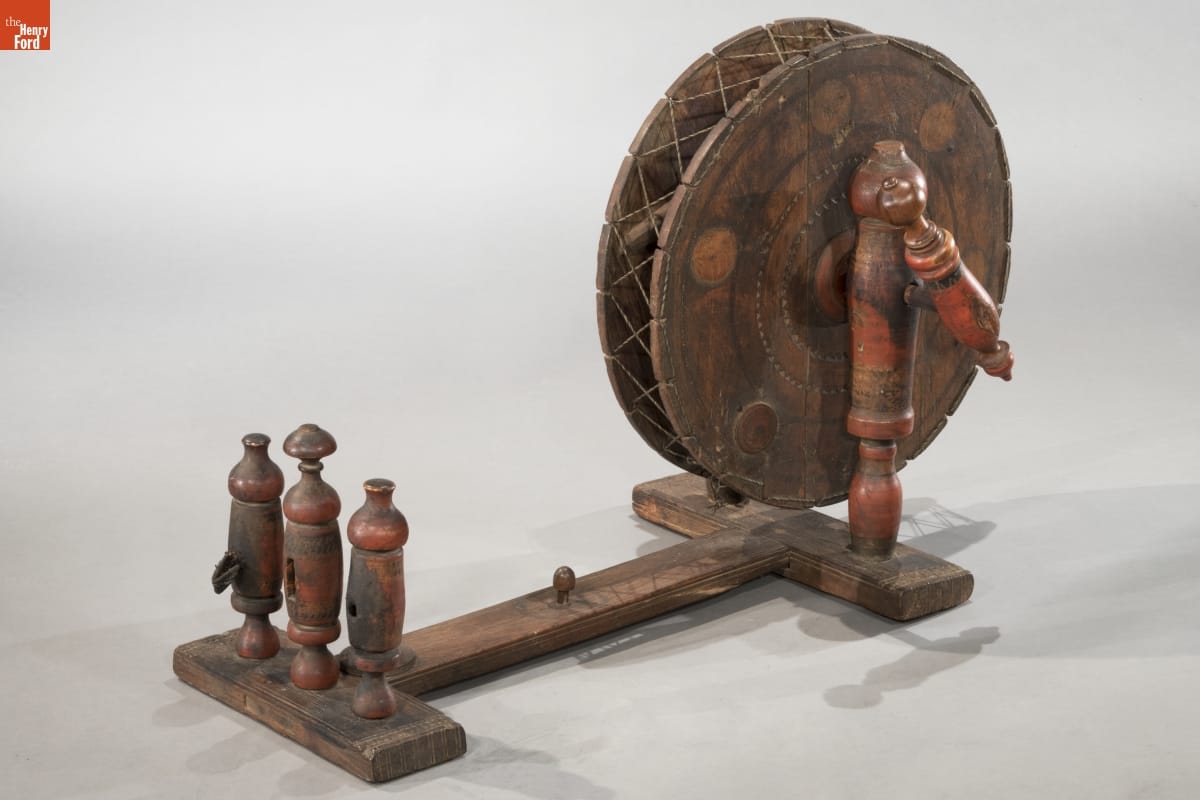
- 1880-1930
- Collections - Artifact
Charka Wheel, 1880-1930
- Model of Spinning Wheel by Julius Orth, 1909-1931 -
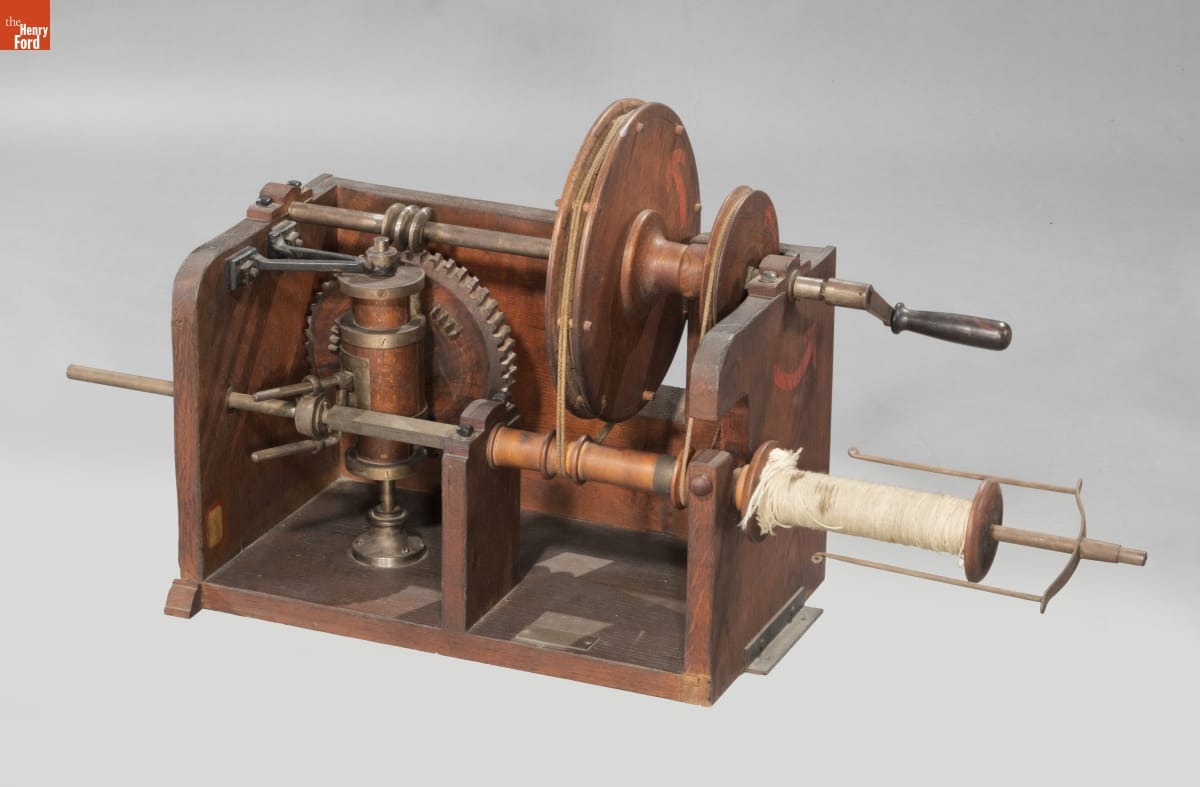
- 1909-1931
- Collections - Artifact
Model of Spinning Wheel by Julius Orth, 1909-1931
- Flax Wheel, 1750-1800 -
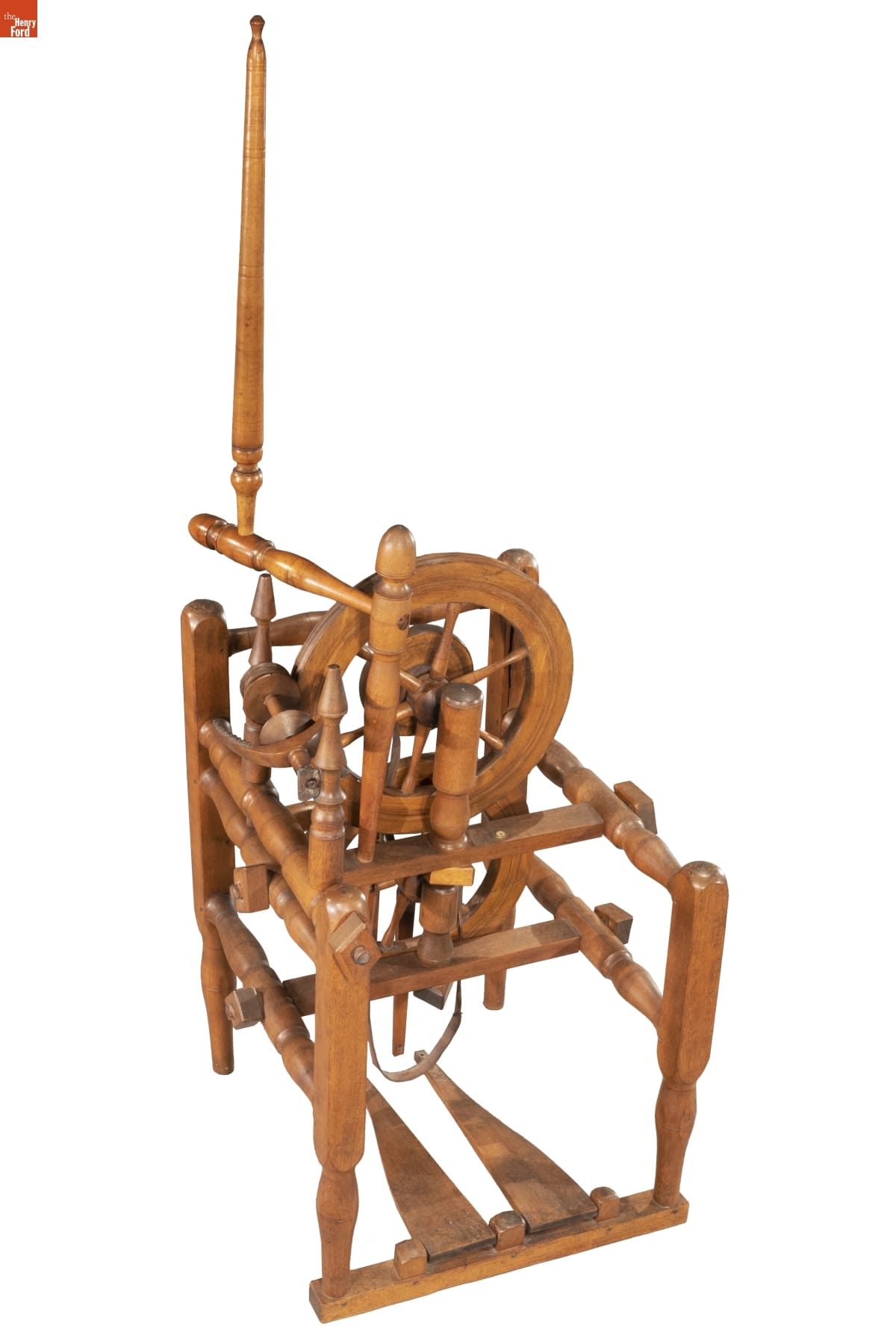
- 1750-1800
- Collections - Artifact
Flax Wheel, 1750-1800