
Search
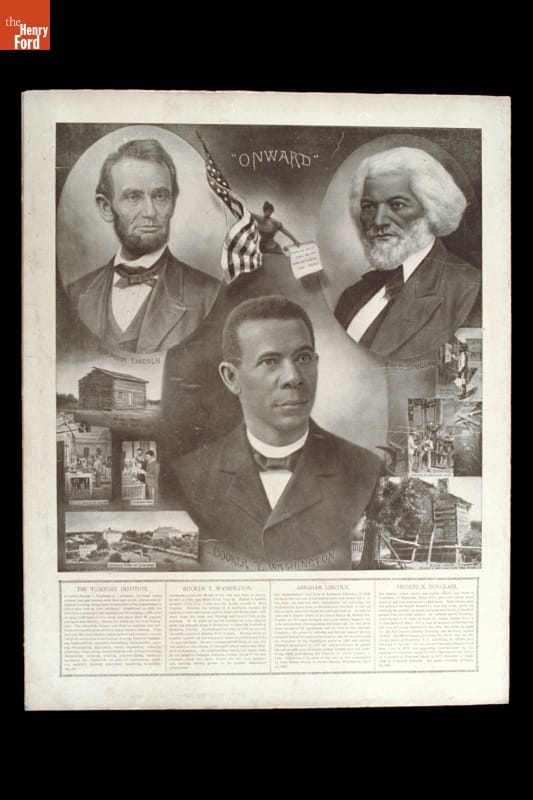
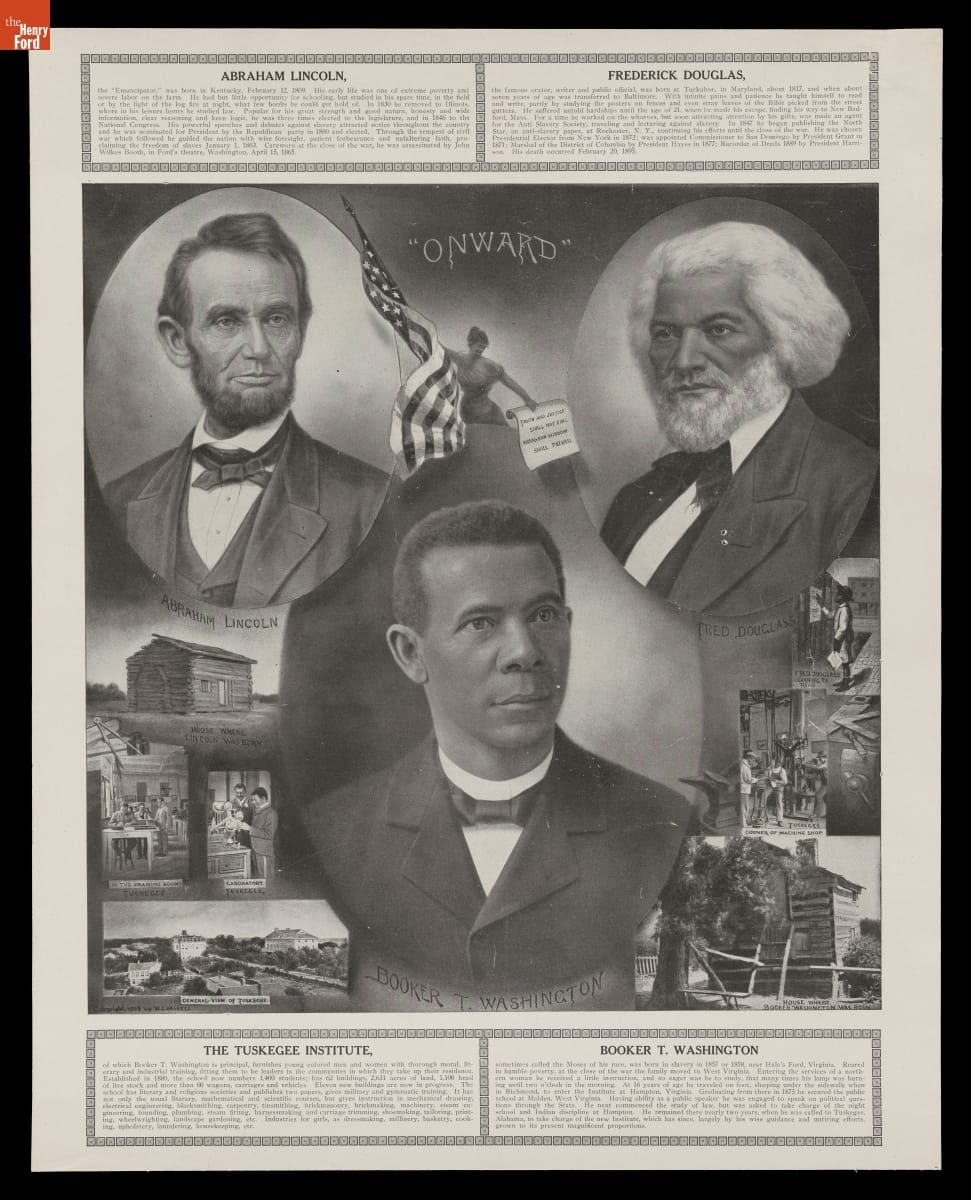
- Print of Abraham Lincoln, Frederick Douglass, and Booker T. Washington, "Onward," 1903 - This poster depicts three leading Americans who advanced African-American life at the turn of the 20th century. Frederick Douglass challenged slavery and worked for its abolition. President Abraham Lincoln signed the Emancipation Proclamation to preserve the Union by declaring freedom to slaves in rebel states. Booker T. Washington, leader of the Tuskegee Institute, promoted African-American rights through education and industry.
- 1903
- Collections - Artifact
Print of Abraham Lincoln, Frederick Douglass, and Booker T. Washington, "Onward," 1903
This poster depicts three leading Americans who advanced African-American life at the turn of the 20th century. Frederick Douglass challenged slavery and worked for its abolition. President Abraham Lincoln signed the Emancipation Proclamation to preserve the Union by declaring freedom to slaves in rebel states. Booker T. Washington, leader of the Tuskegee Institute, promoted African-American rights through education and industry.
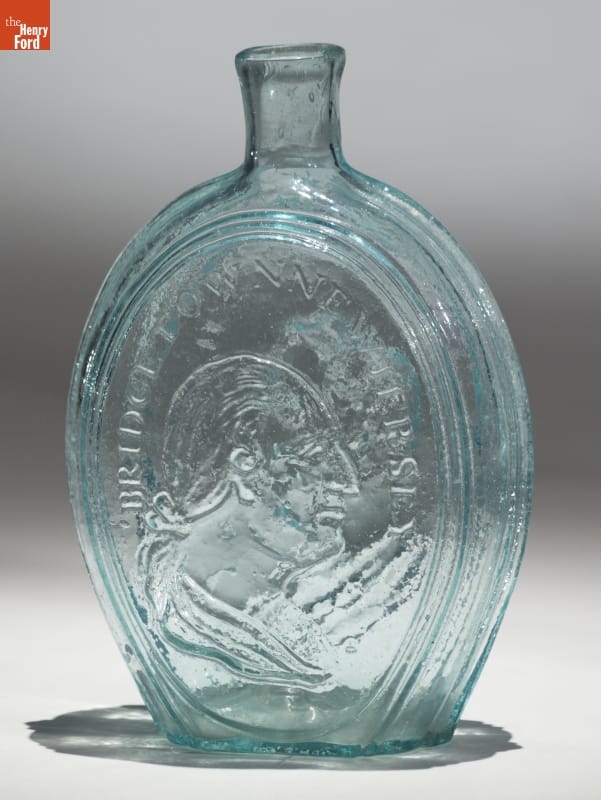
- Flask, 1837-1842 - Whether depicted as commander-in-chief of the Continental Army, the first president of the United States, or a symbol of the republic, George Washington is a common likeness on early American flasks. Washington appears on 72 recorded flask designs--more than any other person. This example shows Washington with later politician, Henry Clay. Both are depicted as classical statesmen.
- 1837-1842
- Collections - Artifact
Flask, 1837-1842
Whether depicted as commander-in-chief of the Continental Army, the first president of the United States, or a symbol of the republic, George Washington is a common likeness on early American flasks. Washington appears on 72 recorded flask designs--more than any other person. This example shows Washington with later politician, Henry Clay. Both are depicted as classical statesmen.
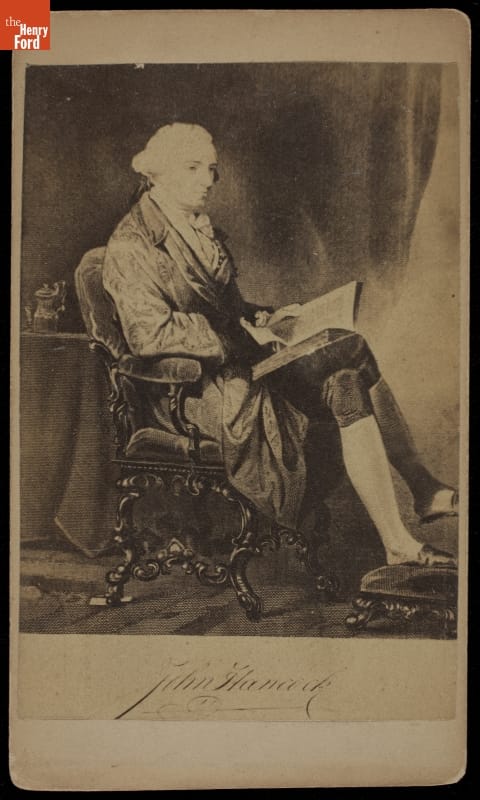
- Portrait from a Drawing of John Hancock, 1860-1890 -
- circa 1780
- Collections - Artifact
Portrait from a Drawing of John Hancock, 1860-1890
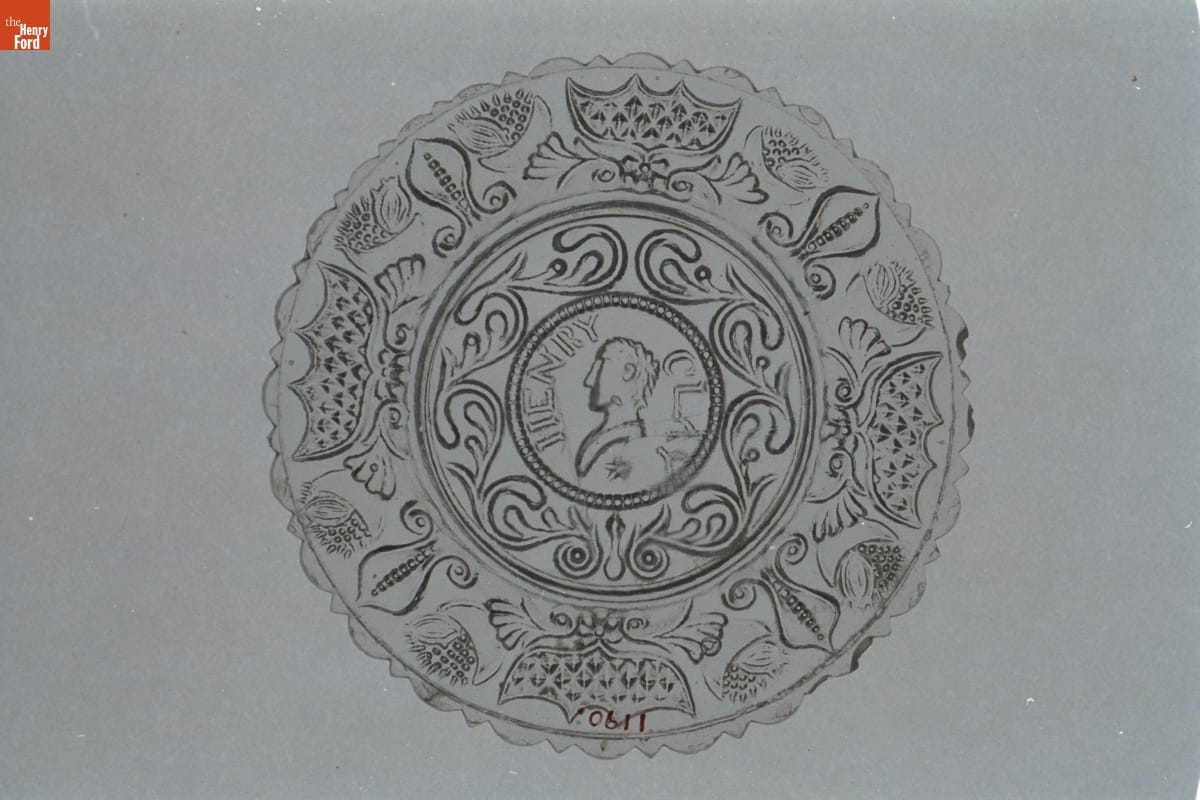
- Cup Plate, 1832-1852 - Americans in the early 19th century poured hot tea into their saucers to cool -- leaving the staining liquid around the teacup's base. Hostesses would provide guests with cup plates to prevent damage to tablecloths and wood. Pressed glass cup plates were popular from the 1820s to the 1860s. Pressed designs varied from purely decorative to images of famous men, places and events.
- 1832-1852
- Collections - Artifact
Cup Plate, 1832-1852
Americans in the early 19th century poured hot tea into their saucers to cool -- leaving the staining liquid around the teacup's base. Hostesses would provide guests with cup plates to prevent damage to tablecloths and wood. Pressed glass cup plates were popular from the 1820s to the 1860s. Pressed designs varied from purely decorative to images of famous men, places and events.
- Print of Abraham Lincoln, Frederick Douglass, and Booker T. Washington, "Onward," 1903 - This poster depicts three leading Americans who advanced African-American life at the turn of the 20th century. Frederick Douglass challenged slavery and worked for its abolition. President Abraham Lincoln signed the Emancipation Proclamation to preserve the Union by declaring freedom to slaves in rebel states. Booker T. Washington, leader of the Tuskegee Institute, promoted African-American rights through education and industry.
- 1903
- Collections - Artifact
Print of Abraham Lincoln, Frederick Douglass, and Booker T. Washington, "Onward," 1903
This poster depicts three leading Americans who advanced African-American life at the turn of the 20th century. Frederick Douglass challenged slavery and worked for its abolition. President Abraham Lincoln signed the Emancipation Proclamation to preserve the Union by declaring freedom to slaves in rebel states. Booker T. Washington, leader of the Tuskegee Institute, promoted African-American rights through education and industry.
- Photograph Album of Cartes-de-Visite, 1859-1870 -
- 1859-1865
- Collections - Artifact
Photograph Album of Cartes-de-Visite, 1859-1870
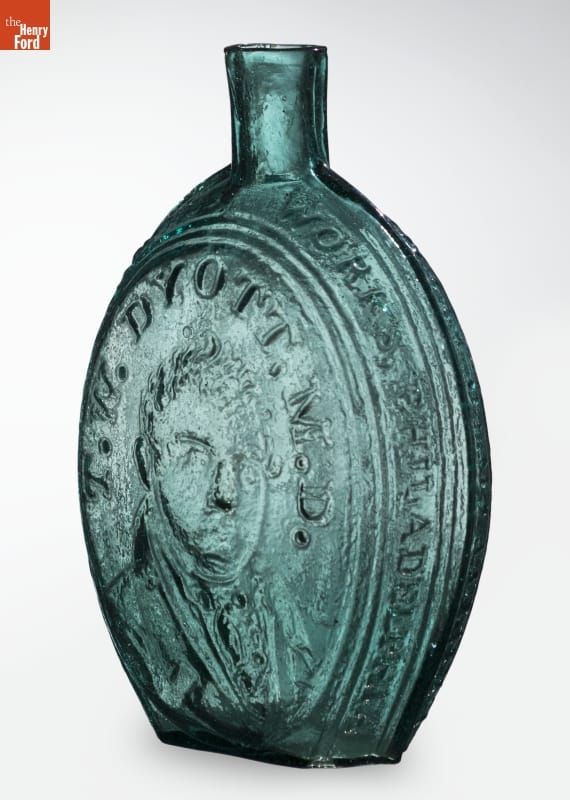
- Flask, 1824-1828 - Glass factories in America began producing inexpensive, mold-formed flasks in the early 1800s. These figured flasks, often decorated with symbols of national pride or political or cultural affiliation, appealed to America's common man. Some of these flasks contain images of revered Revolutionary War-era patriots. Benjamin Franklin -- writer, philosopher, statesman and diplomat -- adorns this flask from the early 1800s.
- 1824-1828
- Collections - Artifact
Flask, 1824-1828
Glass factories in America began producing inexpensive, mold-formed flasks in the early 1800s. These figured flasks, often decorated with symbols of national pride or political or cultural affiliation, appealed to America's common man. Some of these flasks contain images of revered Revolutionary War-era patriots. Benjamin Franklin -- writer, philosopher, statesman and diplomat -- adorns this flask from the early 1800s.
- Letter from Sun Yat-Sen to Henry Ford, 1924 -
- June 12, 1924
- Collections - Artifact
Letter from Sun Yat-Sen to Henry Ford, 1924
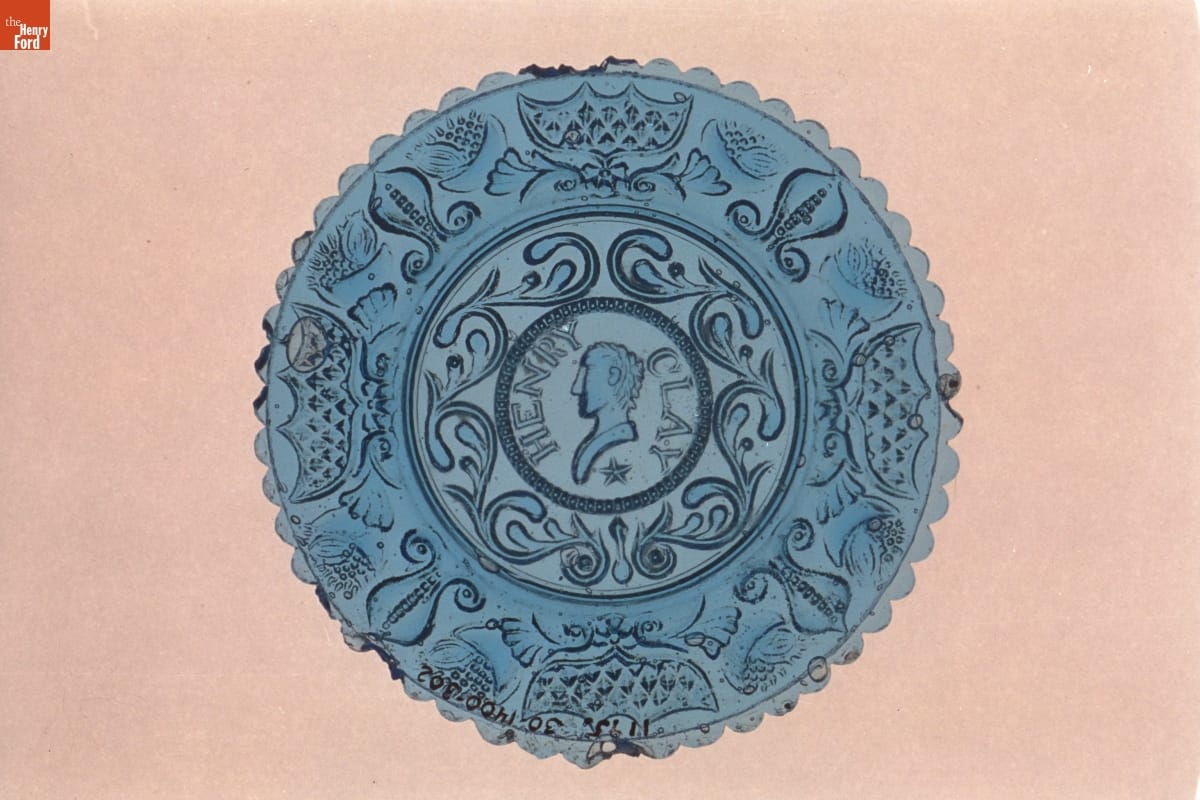
- Cup Plate, 1832-1852 - Americans in the early 19th century poured hot tea into their saucers to cool -- leaving the staining liquid around the teacup's base. Hostesses would provide guests with cup plates to prevent damage to tablecloths and wood. Pressed glass cup plates were popular from the 1820s to the 1860s. Pressed designs varied from purely decorative to images of famous men, places and events.
- 1832-1852
- Collections - Artifact
Cup Plate, 1832-1852
Americans in the early 19th century poured hot tea into their saucers to cool -- leaving the staining liquid around the teacup's base. Hostesses would provide guests with cup plates to prevent damage to tablecloths and wood. Pressed glass cup plates were popular from the 1820s to the 1860s. Pressed designs varied from purely decorative to images of famous men, places and events.
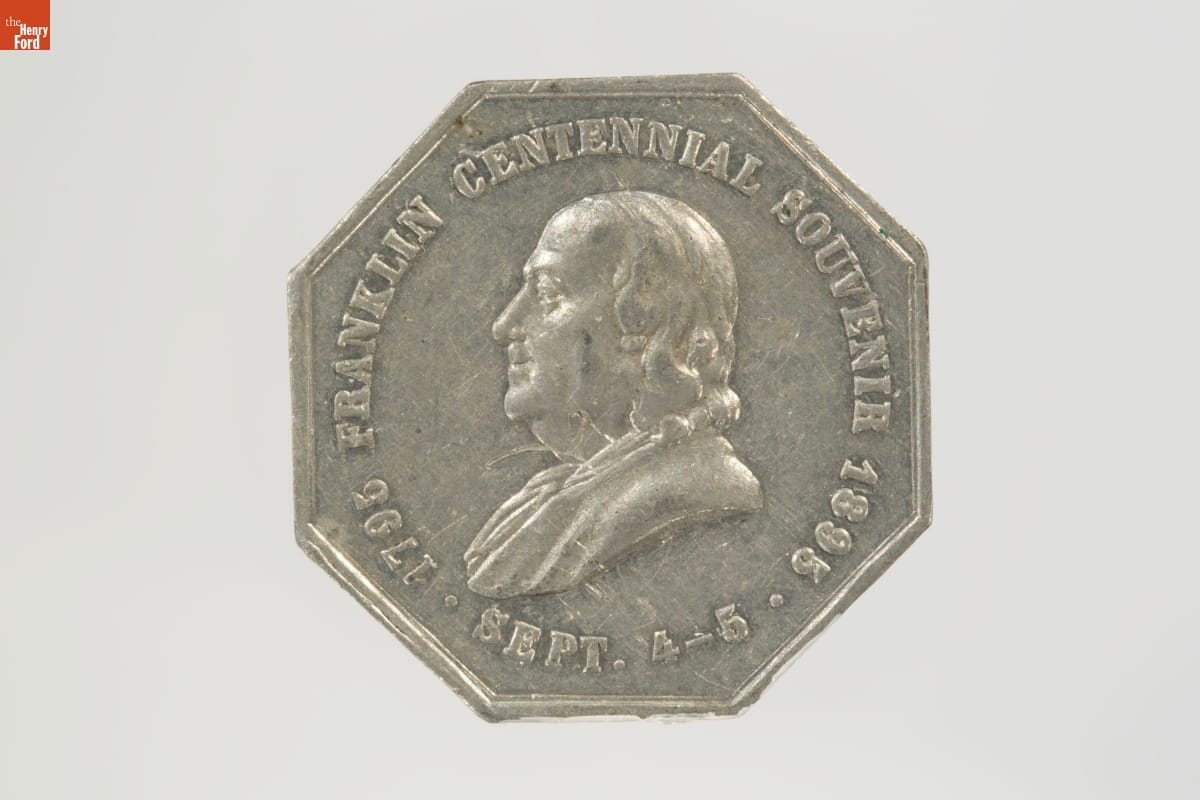
- Franklin, Pennsylvania Centennial Souvenir, 1895 - In 1795, the town of Franklin, named in honor of Benjamin Franklin, was laid out around a small military post in northwestern Pennsylvania. One hundred years later, citizens celebrated their city's beginnings. Community boosters planned centennial events, published histories in local newspapers and created commemorative souvenirs, like this medal.
- 1895
- Collections - Artifact
Franklin, Pennsylvania Centennial Souvenir, 1895
In 1795, the town of Franklin, named in honor of Benjamin Franklin, was laid out around a small military post in northwestern Pennsylvania. One hundred years later, citizens celebrated their city's beginnings. Community boosters planned centennial events, published histories in local newspapers and created commemorative souvenirs, like this medal.