
Search
- Presenting the 29-Millionth Ford to the Red Cross Women's Motor Corps, April 29, 1941 - The 29 millionth Ford automobile rolled off the Rouge Plant assembly line in April 1941. Edsel Ford presented the Super DeLuxe station wagon to the Detroit chapter of the Red Cross. This production milestone vehicle became one of the vehicles used by the Red Cross Volunteer Motor Corps. Ford Motor Company had worked with this group previously, providing automobile maintenance training for its members.
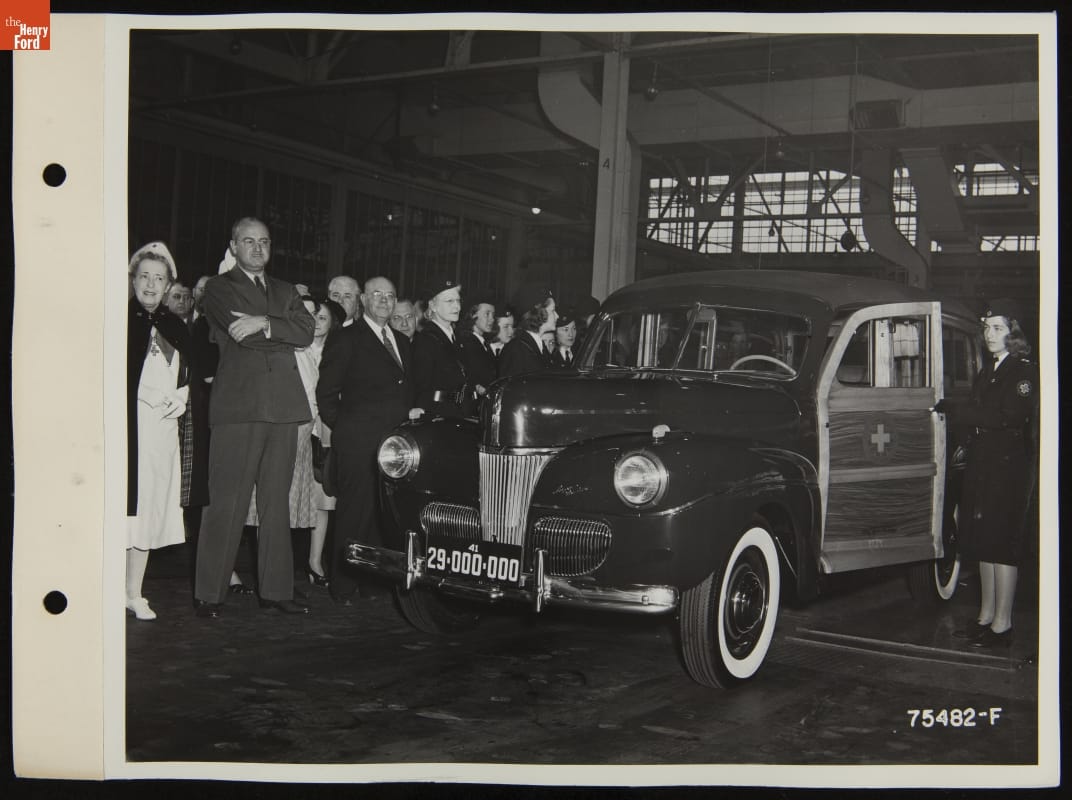
- April 29, 1941
- Collections - Artifact
Presenting the 29-Millionth Ford to the Red Cross Women's Motor Corps, April 29, 1941
The 29 millionth Ford automobile rolled off the Rouge Plant assembly line in April 1941. Edsel Ford presented the Super DeLuxe station wagon to the Detroit chapter of the Red Cross. This production milestone vehicle became one of the vehicles used by the Red Cross Volunteer Motor Corps. Ford Motor Company had worked with this group previously, providing automobile maintenance training for its members.
- The 29-Millionth Ford is Presented to the Red Cross Women's Motor Corps, April 29, 1941 - The 29 millionth Ford automobile rolled off the Rouge Plant assembly line in April 1941. Edsel Ford presented the Super DeLuxe station wagon to the Detroit chapter of the Red Cross. This production milestone vehicle became one of the vehicles used by the Red Cross Volunteer Motor Corps. Ford Motor Company had worked with this group previously, providing automobile maintenance training for its members.
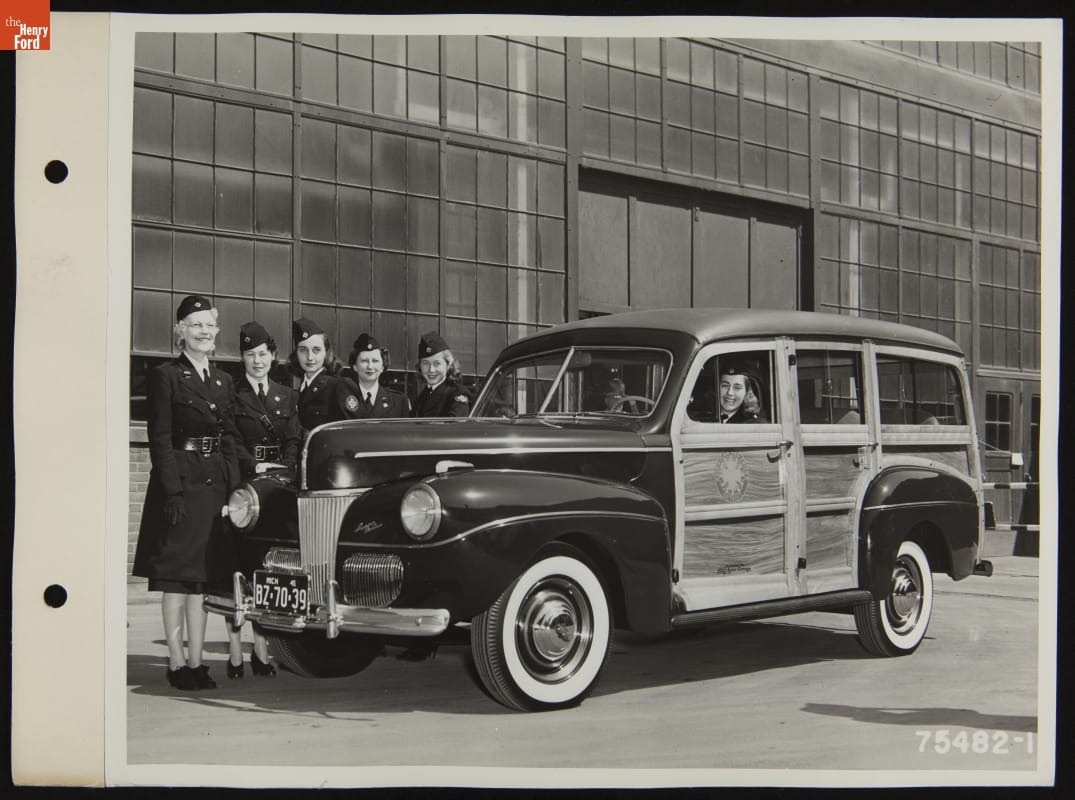
- April 29, 1941
- Collections - Artifact
The 29-Millionth Ford is Presented to the Red Cross Women's Motor Corps, April 29, 1941
The 29 millionth Ford automobile rolled off the Rouge Plant assembly line in April 1941. Edsel Ford presented the Super DeLuxe station wagon to the Detroit chapter of the Red Cross. This production milestone vehicle became one of the vehicles used by the Red Cross Volunteer Motor Corps. Ford Motor Company had worked with this group previously, providing automobile maintenance training for its members.
- The 29-Millionth Ford, Presented to the Red Cross Women's Motor Corps, April 29, 1941 - The 29 millionth Ford automobile rolled off the Rouge Plant assembly line in April 1941. Edsel Ford presented the Super DeLuxe station wagon to the Detroit chapter of the Red Cross. This production milestone vehicle became one of the vehicles used by the Red Cross Volunteer Motor Corps. Ford Motor Company had worked with this group previously, providing automobile maintenance training for its members.

- April 29, 1941
- Collections - Artifact
The 29-Millionth Ford, Presented to the Red Cross Women's Motor Corps, April 29, 1941
The 29 millionth Ford automobile rolled off the Rouge Plant assembly line in April 1941. Edsel Ford presented the Super DeLuxe station wagon to the Detroit chapter of the Red Cross. This production milestone vehicle became one of the vehicles used by the Red Cross Volunteer Motor Corps. Ford Motor Company had worked with this group previously, providing automobile maintenance training for its members.
- Model with 1979 Ford Country Squire Station Wagon - The Country Squire was Ford Motor Company's top-of-the-line station wagon throughout its production run from 1950 to 1991. Ford downsized its full-size cars -- including the Country Squire -- for the 1979 model year. The 1979 wagon was 11 inches shorter and some 1,000 pounds lighter than the previous year's model.
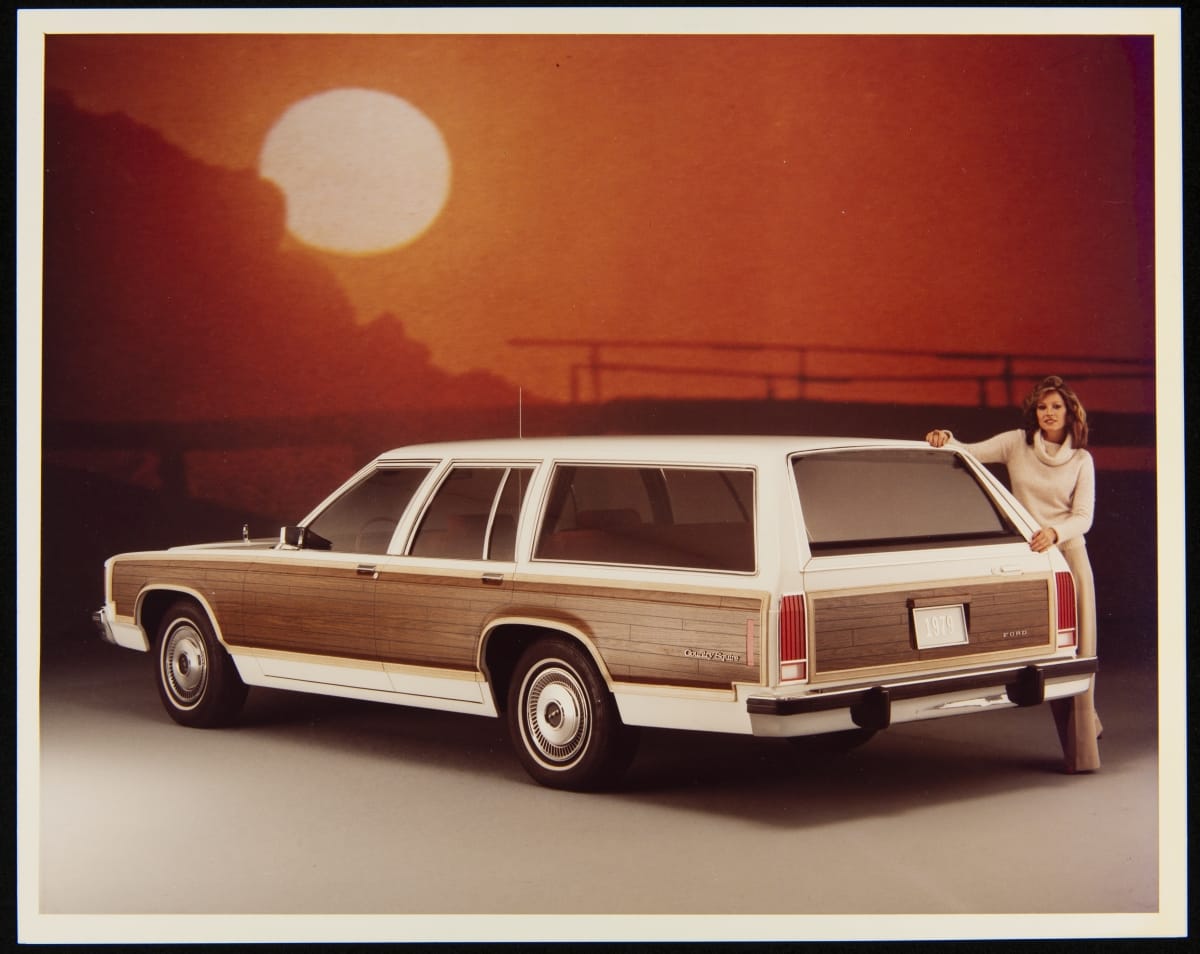
- 1979
- Collections - Artifact
Model with 1979 Ford Country Squire Station Wagon
The Country Squire was Ford Motor Company's top-of-the-line station wagon throughout its production run from 1950 to 1991. Ford downsized its full-size cars -- including the Country Squire -- for the 1979 model year. The 1979 wagon was 11 inches shorter and some 1,000 pounds lighter than the previous year's model.
- Close-up of Adhesive on Wood Veneer Door Frame Pillar for Ford Station Wagons, Iron Mountain Plant, March 1949 - Ford Motor Company built wood station wagon bodies at its Iron Mountain plant in Michigan's Upper Peninsula. For 1949, Ford eliminated wood framing from its wagons in favor of steel. Wood was still used on the wagons, but in the form of specially laminated paneling bolted onto the steel frames. Iron Mountain closed when Ford switched to all-steel wagons in 1952.
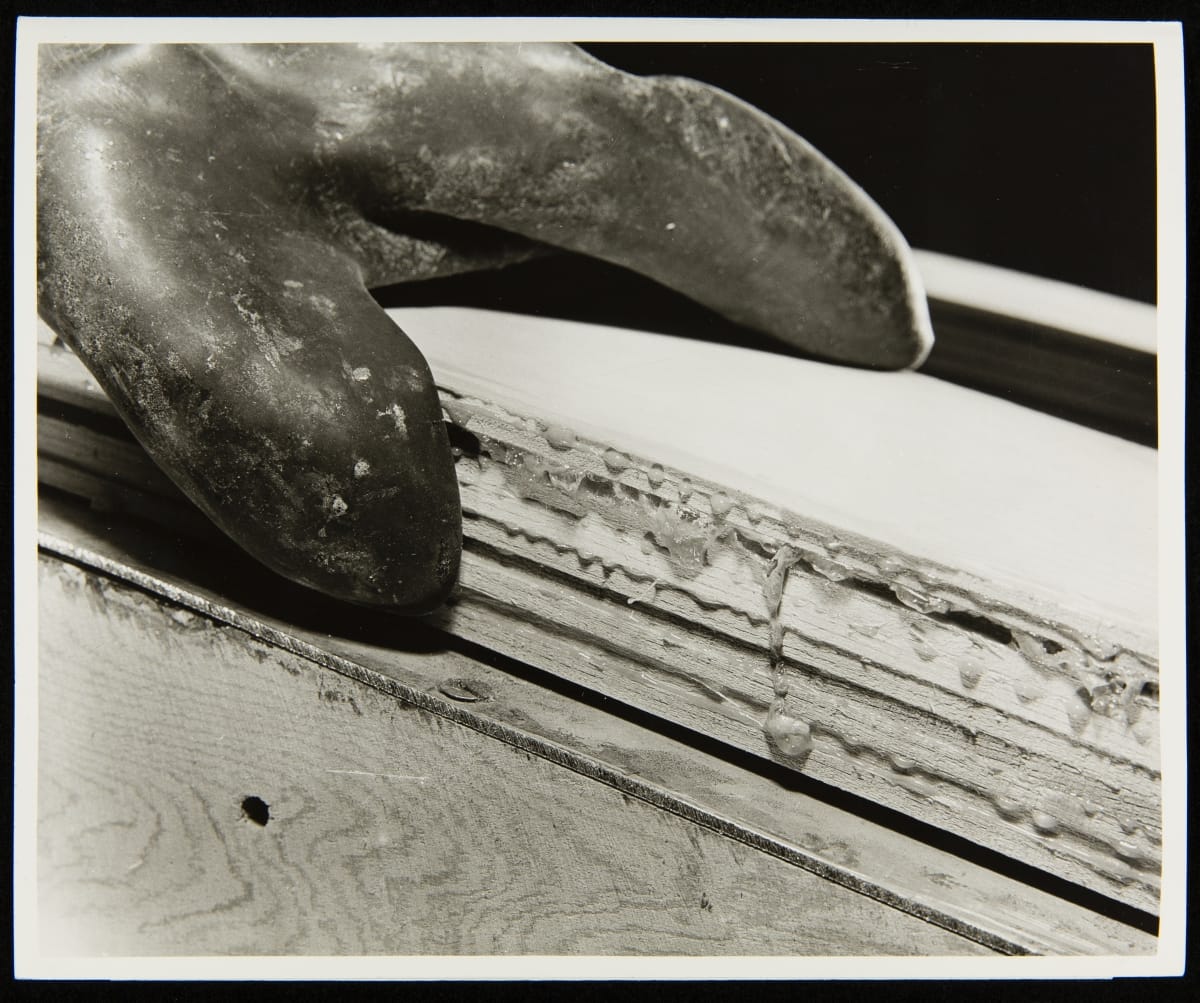
- circa 1949
- Collections - Artifact
Close-up of Adhesive on Wood Veneer Door Frame Pillar for Ford Station Wagons, Iron Mountain Plant, March 1949
Ford Motor Company built wood station wagon bodies at its Iron Mountain plant in Michigan's Upper Peninsula. For 1949, Ford eliminated wood framing from its wagons in favor of steel. Wood was still used on the wagons, but in the form of specially laminated paneling bolted onto the steel frames. Iron Mountain closed when Ford switched to all-steel wagons in 1952.
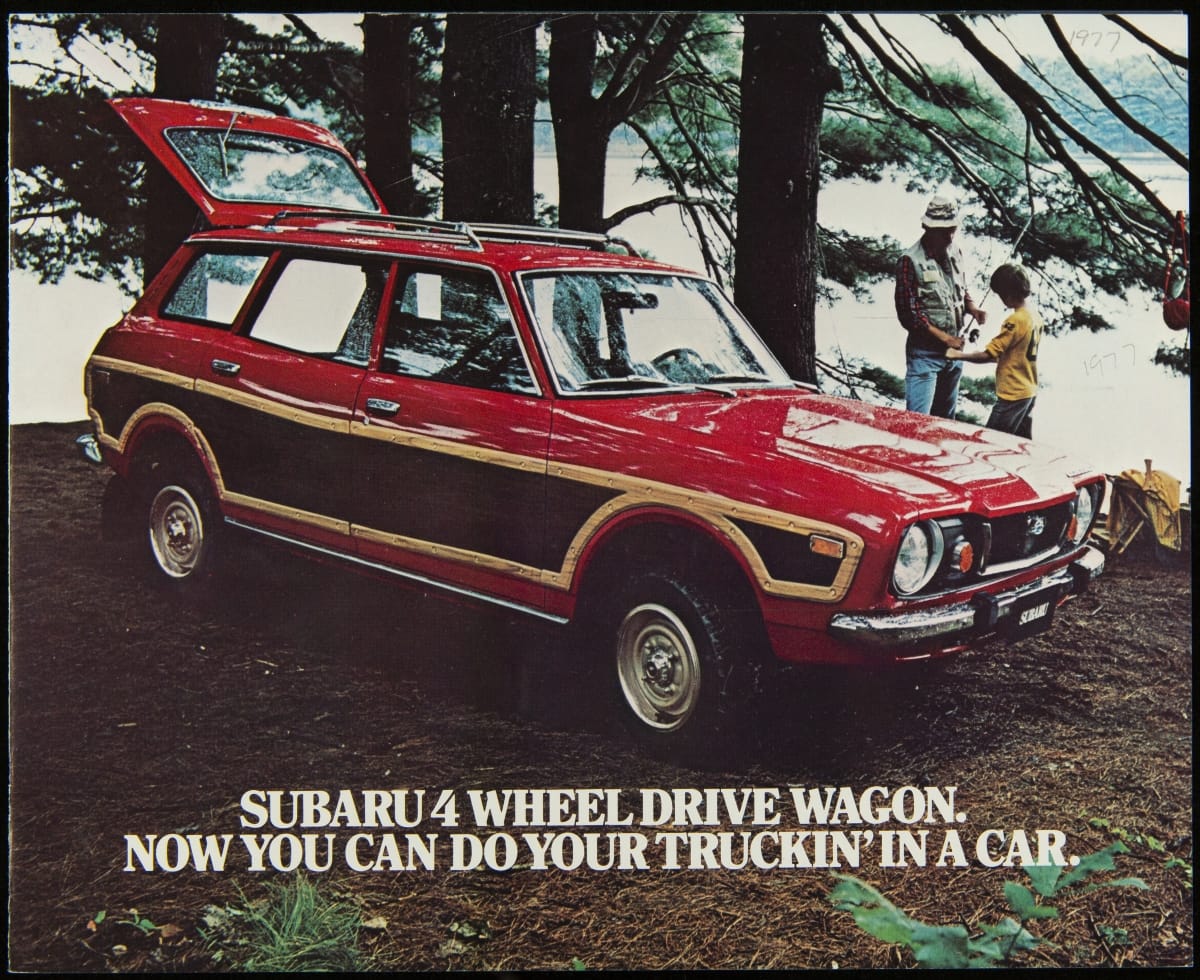
- Subaru Sales Brochure, "4 Wheel Drive Wagon, Now You Can Do Your Truckin' In a Car," 1977 - Japanese automaker Subaru was founded in 1953 and exported its first cars to the United States in 1968. The company became known for its horizontally opposed boxer engines and its widespread use of all-wheel drive. Subaru's outdoorsy wagons and crossovers attracted a devoted following among American car buyers.
- 1977
- Collections - Artifact
Subaru Sales Brochure, "4 Wheel Drive Wagon, Now You Can Do Your Truckin' In a Car," 1977
Japanese automaker Subaru was founded in 1953 and exported its first cars to the United States in 1968. The company became known for its horizontally opposed boxer engines and its widespread use of all-wheel drive. Subaru's outdoorsy wagons and crossovers attracted a devoted following among American car buyers.
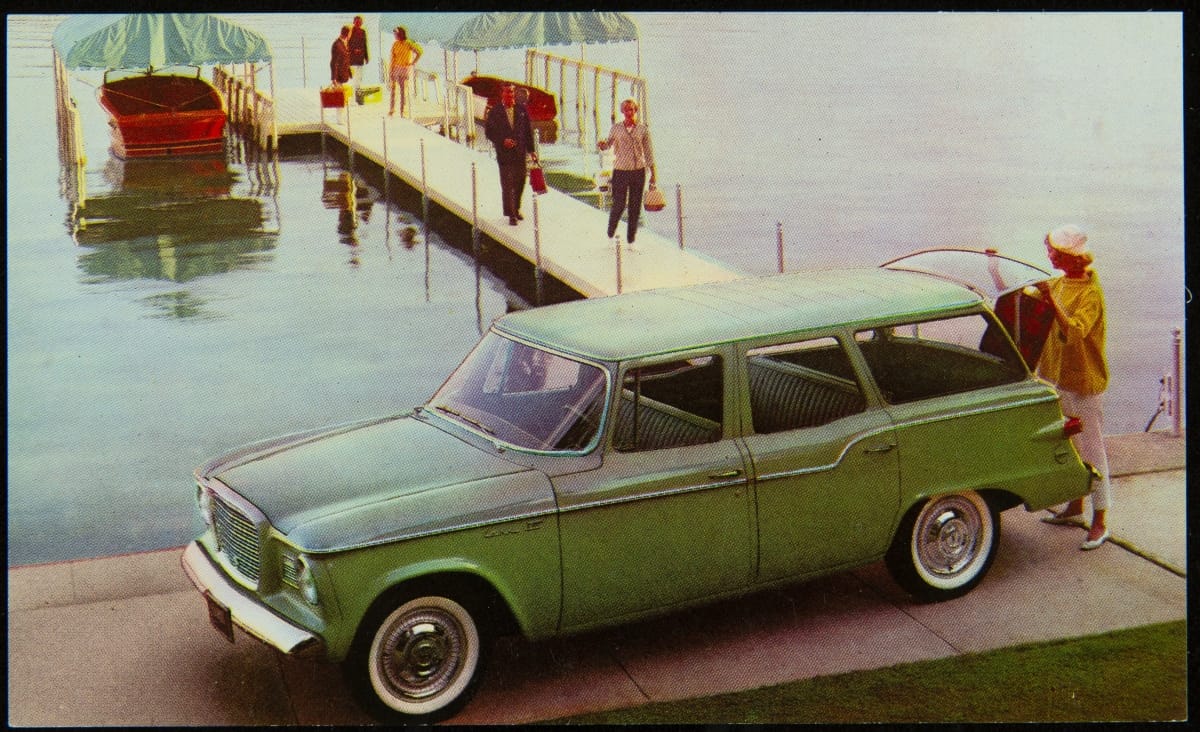
- Postcard Advertising the Studebaker Lark 4-Door Station Wagon, 1960 - When people started buying smaller imported cars, particularly Volkswagens, American automakers changed their "one size fits all" approach and offered small cars of their own. Studebaker of South Bend, Indiana, was one of the first. Its compact Lark debuted in 1959 and was a strong seller, partly for lack of competition. Chrysler, Ford, and General Motors introduced compacts for 1960.
- 1960
- Collections - Artifact
Postcard Advertising the Studebaker Lark 4-Door Station Wagon, 1960
When people started buying smaller imported cars, particularly Volkswagens, American automakers changed their "one size fits all" approach and offered small cars of their own. Studebaker of South Bend, Indiana, was one of the first. Its compact Lark debuted in 1959 and was a strong seller, partly for lack of competition. Chrysler, Ford, and General Motors introduced compacts for 1960.
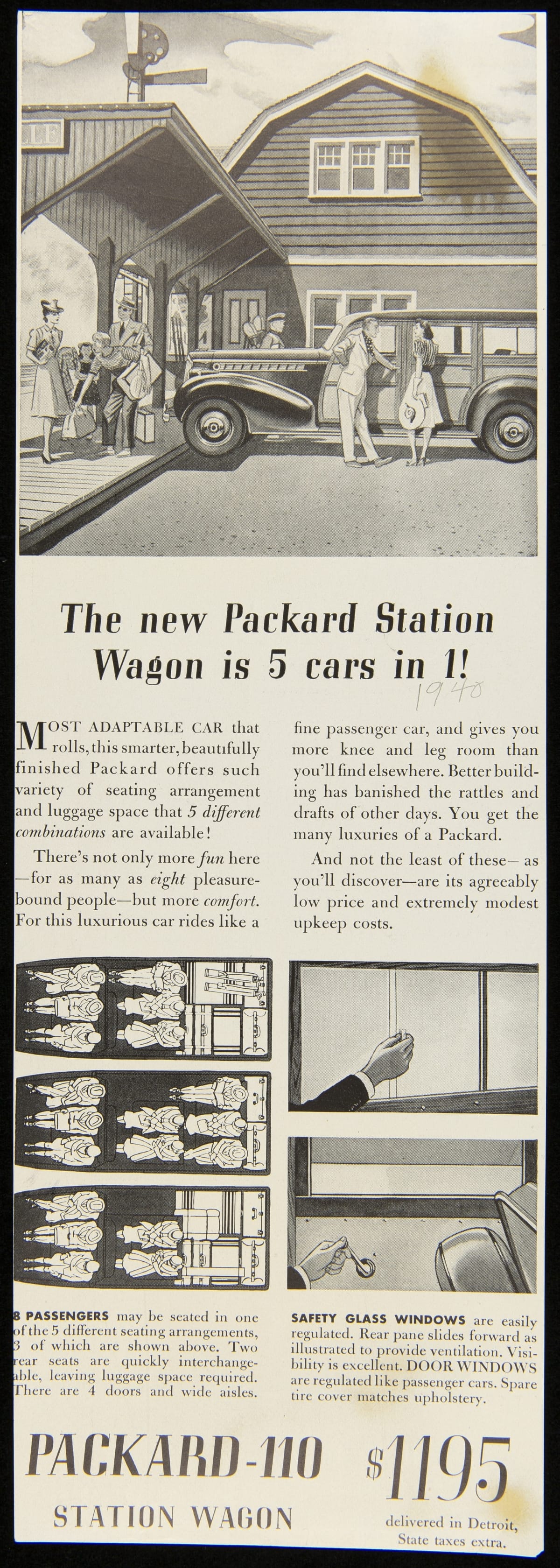
- "New Packard Station Wagon is 5 Cars In 1!," 1940 - Flexibility is generally a strong selling point when it comes to marketing automobiles. This 1940 advertisement from Packard claimed that the company's station wagons could be arranged in five different seating and cargo-carrying configurations. The 110 series cars were a more affordable option in the upmarket automaker's lineup -- but still with "the many luxuries of a Packard."
- 1940
- Collections - Artifact
"New Packard Station Wagon is 5 Cars In 1!," 1940
Flexibility is generally a strong selling point when it comes to marketing automobiles. This 1940 advertisement from Packard claimed that the company's station wagons could be arranged in five different seating and cargo-carrying configurations. The 110 series cars were a more affordable option in the upmarket automaker's lineup -- but still with "the many luxuries of a Packard."
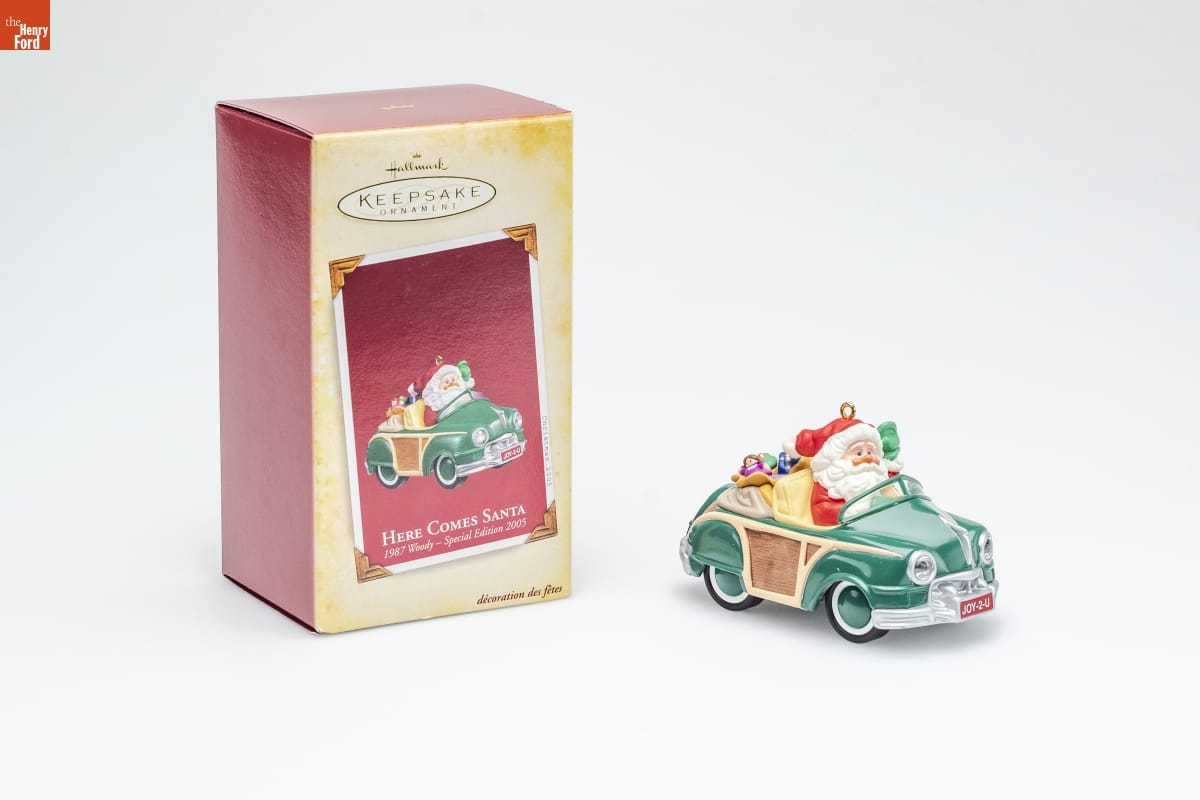
- Hallmark "Here Comes Santa: 1987 Woody Special Edition" Christmas Ornament, 2005 - Already known for greeting cards, Hallmark introduced a line of Christmas ornaments in 1973. The company's annual release of an increasing array of ornaments revolutionized Christmas decorating, appealing to customers' interest in marking memories and milestones as well as expressing one's personality and unique tastes.
- 2005
- Collections - Artifact
Hallmark "Here Comes Santa: 1987 Woody Special Edition" Christmas Ornament, 2005
Already known for greeting cards, Hallmark introduced a line of Christmas ornaments in 1973. The company's annual release of an increasing array of ornaments revolutionized Christmas decorating, appealing to customers' interest in marking memories and milestones as well as expressing one's personality and unique tastes.
- 1929 Ford Model A Station Wagon, 1928 - In 1925, Edsel and Eleanor Ford built a summer house in Seal Harbor, Maine. Skylands was designed by architect Duncan Candler and landscaped by Jens Jensen, who also planned the grounds at the Fords' Gaukler Pointe estate in Michigan. The family enjoyed their time at Seal Harbor. This 1929 Ford Model A station wagon may have been used at Skylands.
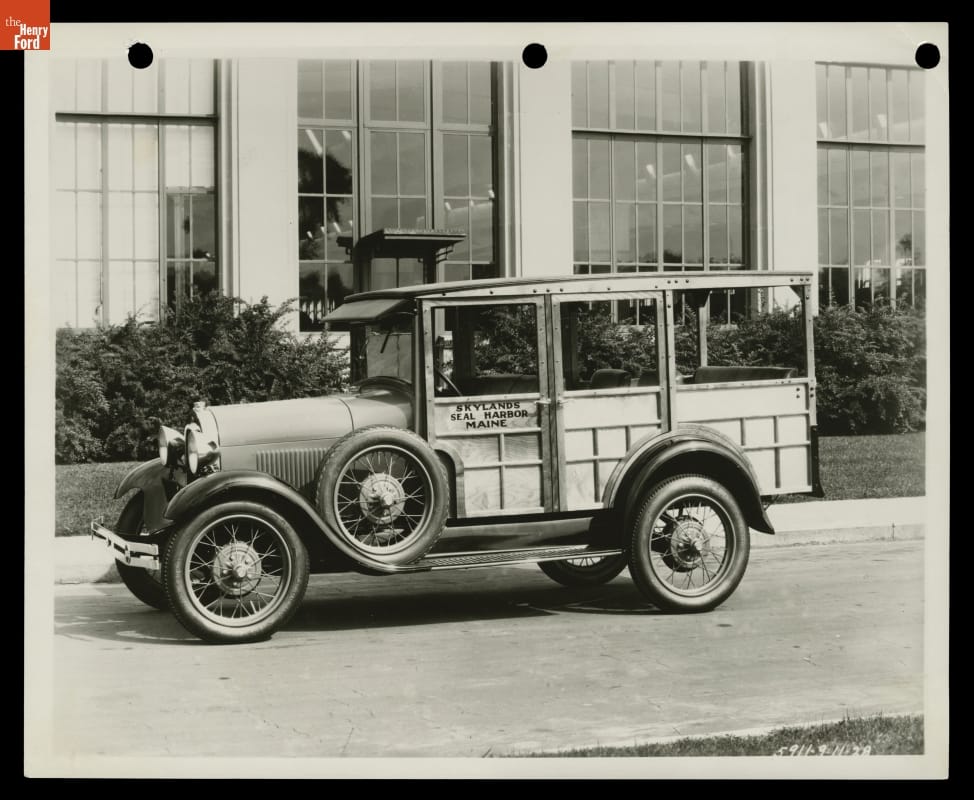
- September 11, 1928
- Collections - Artifact
1929 Ford Model A Station Wagon, 1928
In 1925, Edsel and Eleanor Ford built a summer house in Seal Harbor, Maine. Skylands was designed by architect Duncan Candler and landscaped by Jens Jensen, who also planned the grounds at the Fords' Gaukler Pointe estate in Michigan. The family enjoyed their time at Seal Harbor. This 1929 Ford Model A station wagon may have been used at Skylands.