
Search
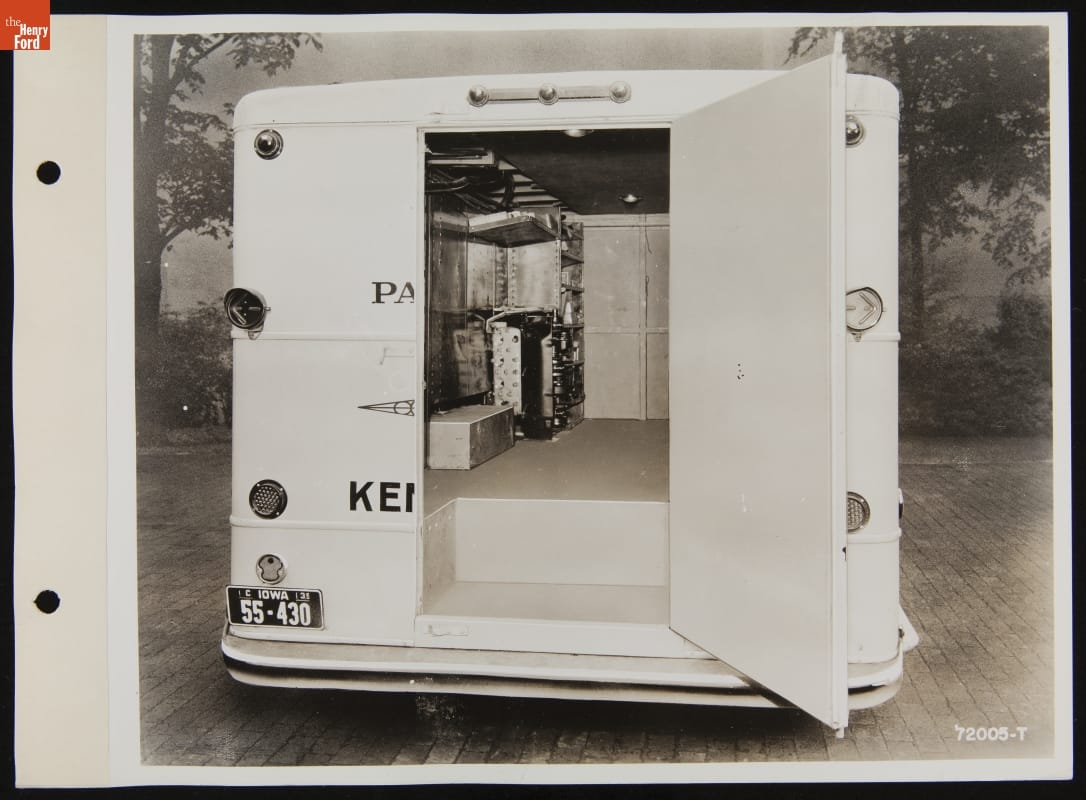
- Interior of Kent Motor Company Parts Delivery Truck, Alogona, Iowa, June 1939 - Ford Motor Company's truck lineup for 1939 included pickups, panel trucks, stake body and platform models, and sedan delivery vehicles. Larger commercial models were available in dump truck and cab-over-engine configurations. Power came from V-8 engines available with displacements of 136 or 221 cubic inches.
- June 23, 1939
- Collections - Artifact
Interior of Kent Motor Company Parts Delivery Truck, Alogona, Iowa, June 1939
Ford Motor Company's truck lineup for 1939 included pickups, panel trucks, stake body and platform models, and sedan delivery vehicles. Larger commercial models were available in dump truck and cab-over-engine configurations. Power came from V-8 engines available with displacements of 136 or 221 cubic inches.
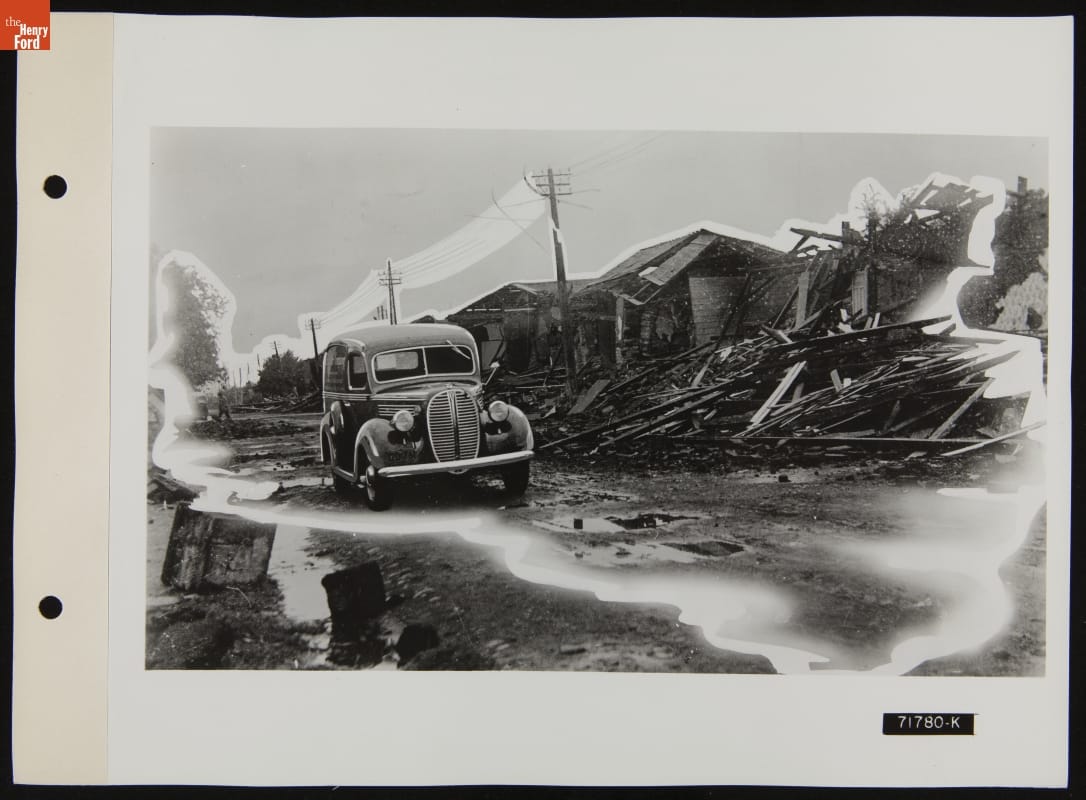
- Parts Delivery Car with Broken Down Buildings, Illustration in April 1939 Ford Merchandising Bulletin - Ford Motor Company's truck lineup for 1939 included pickups, panel trucks, stake body and platform models, and sedan delivery vehicles. Larger commercial models were available in dump truck and cab-over-engine configurations. Power came from V-8 engines available with displacements of 136 or 221 cubic inches.
- May 05, 1939
- Collections - Artifact
Parts Delivery Car with Broken Down Buildings, Illustration in April 1939 Ford Merchandising Bulletin
Ford Motor Company's truck lineup for 1939 included pickups, panel trucks, stake body and platform models, and sedan delivery vehicles. Larger commercial models were available in dump truck and cab-over-engine configurations. Power came from V-8 engines available with displacements of 136 or 221 cubic inches.
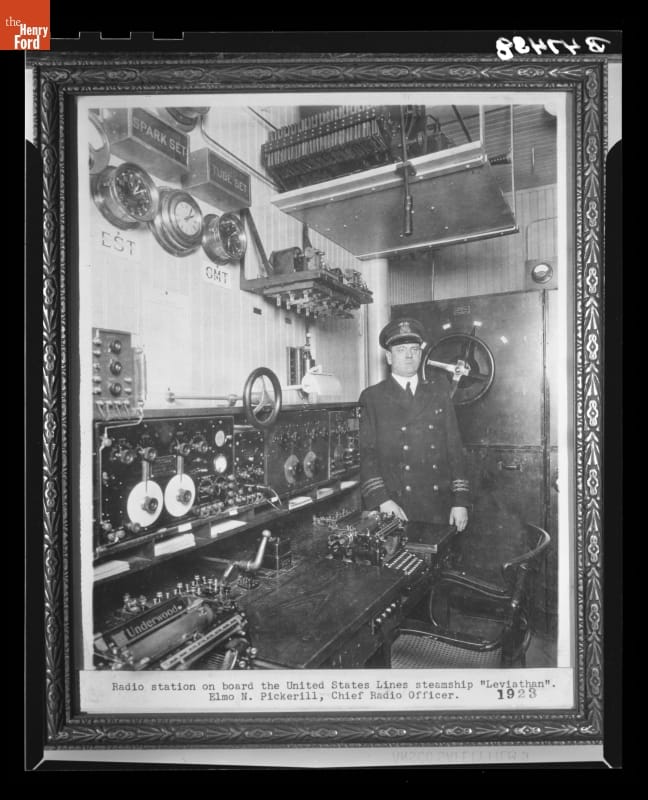
- Chief Radio Officer Elmo Pickerill in the Radio Station on the SS Leviathan, 1923 -
- 1923
- Collections - Artifact
Chief Radio Officer Elmo Pickerill in the Radio Station on the SS Leviathan, 1923
- Stenographic Report of Proceedings of Light's Golden Jubilee at Dearborn, Michigan, October 21, 1929 -
- October 21, 1929
- Collections - Artifact
Stenographic Report of Proceedings of Light's Golden Jubilee at Dearborn, Michigan, October 21, 1929
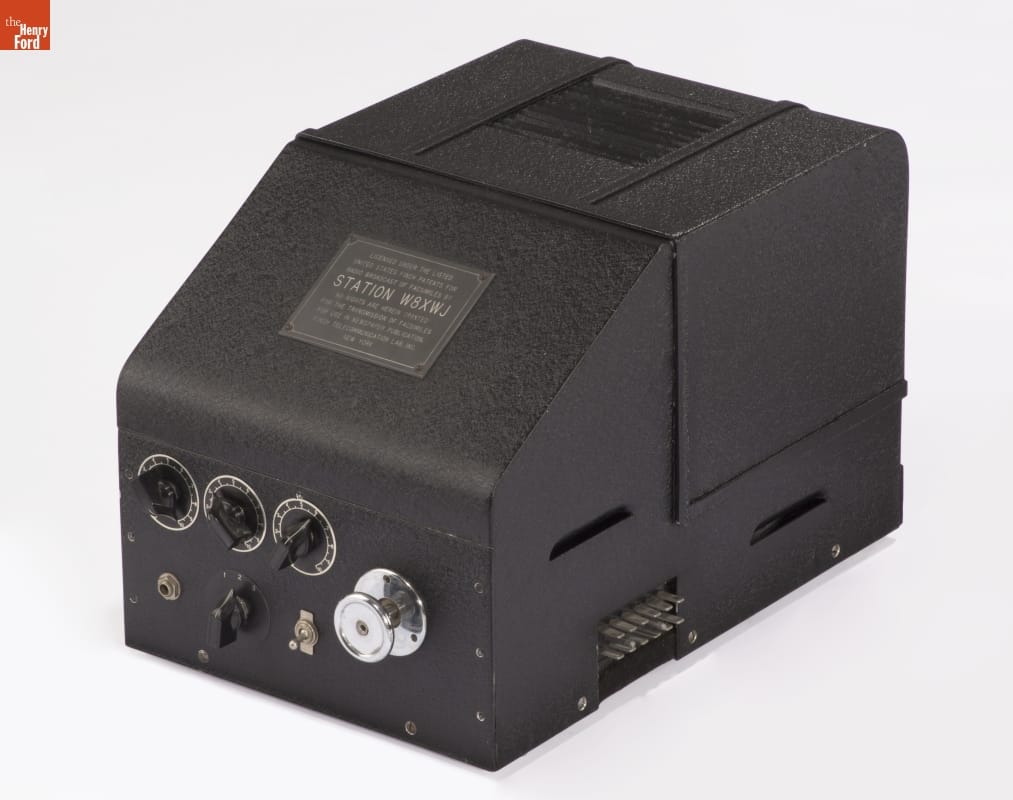
- Finch Facsimile Transmitter, 1938-1940 - From 1938-1940, the <EM>Detroit News</EM> experimented with a domestic radio-facsimile subscription service. This transmitter converted images and text into electrical impulses, sent over the radio waves--reassembled by receivers in the homes of customers. The idea was revolutionary, however, the process was slow and signal reception was unreliable beyond a mile or two of the transmission tower.
- 1938-1940
- Collections - Artifact
Finch Facsimile Transmitter, 1938-1940
From 1938-1940, the Detroit News experimented with a domestic radio-facsimile subscription service. This transmitter converted images and text into electrical impulses, sent over the radio waves--reassembled by receivers in the homes of customers. The idea was revolutionary, however, the process was slow and signal reception was unreliable beyond a mile or two of the transmission tower.
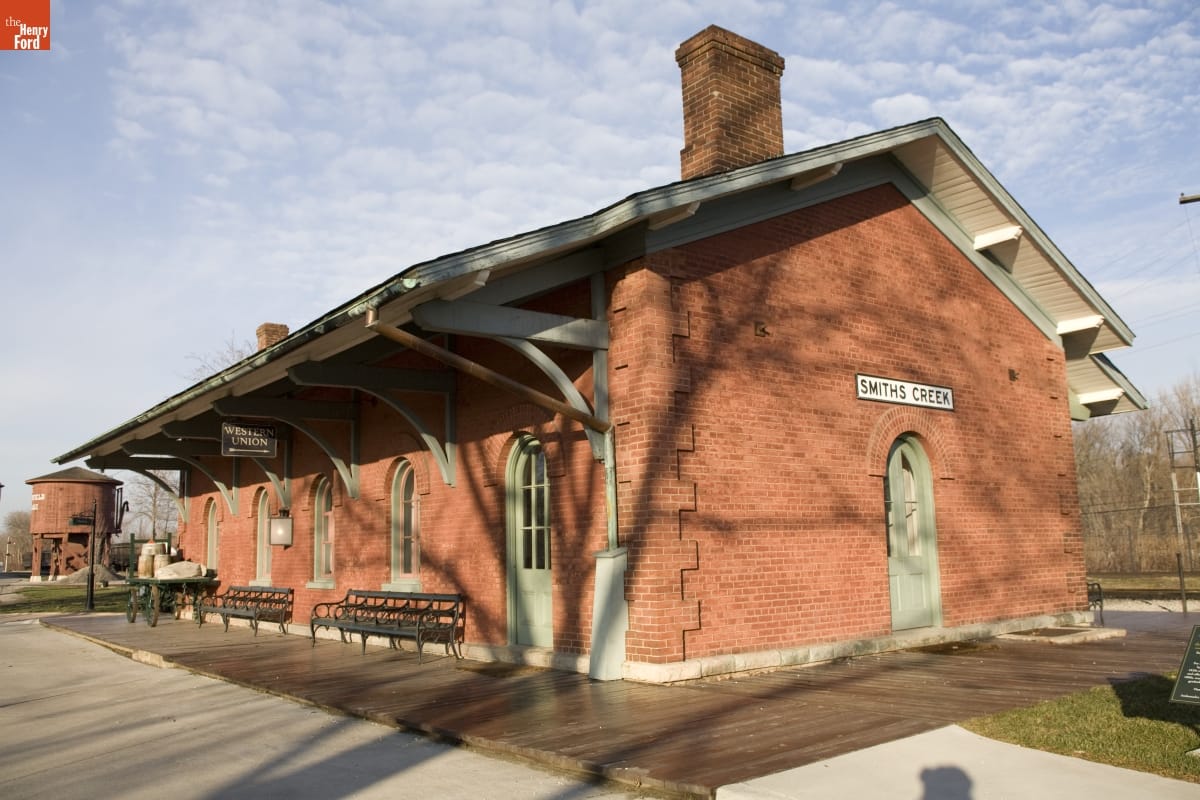
- Smiths Creek Depot in Greenfield Village, September 2007 - Henry Ford purchased Smiths Creek Depot from the Grand Trunk Western Railway in 1929. Thomas Edison passed the building often while working as a railroad newsboy. Originally located about nine miles southwest of Port Huron, Michigan, the depot was moved to Ford's museum complex in Dearborn, Michigan. This photo shows Smiths Creek Depot at Greenfield Village in 2007.

- September 01, 2007
- Collections - Artifact
Smiths Creek Depot in Greenfield Village, September 2007
Henry Ford purchased Smiths Creek Depot from the Grand Trunk Western Railway in 1929. Thomas Edison passed the building often while working as a railroad newsboy. Originally located about nine miles southwest of Port Huron, Michigan, the depot was moved to Ford's museum complex in Dearborn, Michigan. This photo shows Smiths Creek Depot at Greenfield Village in 2007.
- Smiths Creek Depot in Greenfield Village, September 2007 - Henry Ford purchased Smiths Creek Depot from the Grand Trunk Western Railway in 1929. Thomas Edison passed the building often while working as a railroad newsboy. Originally located about nine miles southwest of Port Huron, Michigan, the depot was moved to Ford's museum complex in Dearborn, Michigan. This photo shows Smiths Creek Depot at Greenfield Village in 2007.
- September 01, 2007
- Collections - Artifact
Smiths Creek Depot in Greenfield Village, September 2007
Henry Ford purchased Smiths Creek Depot from the Grand Trunk Western Railway in 1929. Thomas Edison passed the building often while working as a railroad newsboy. Originally located about nine miles southwest of Port Huron, Michigan, the depot was moved to Ford's museum complex in Dearborn, Michigan. This photo shows Smiths Creek Depot at Greenfield Village in 2007.
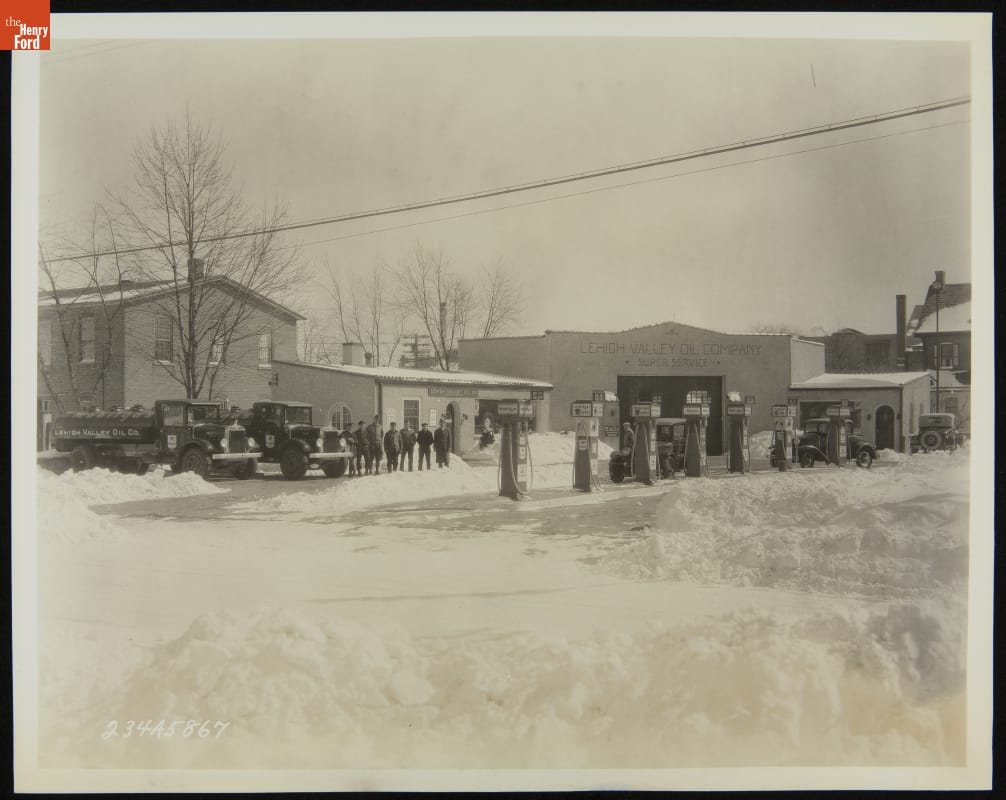
- Mack Model AB Tank Trucks at a Gas Station, February 1934 - Founded in Brooklyn, New York, in 1900, Mack Brothers Company relocated to Allentown, Pennsylvania, in 1905 and adopted the name Mack Trucks in 1922. Mack-built tank trucks like this had separate compartments for gasoline, diesel fuel, lubricants, and other oil and petroleum products. The delivery trucks transported these products from distributors to gas stations.
- February 01, 1934
- Collections - Artifact
Mack Model AB Tank Trucks at a Gas Station, February 1934
Founded in Brooklyn, New York, in 1900, Mack Brothers Company relocated to Allentown, Pennsylvania, in 1905 and adopted the name Mack Trucks in 1922. Mack-built tank trucks like this had separate compartments for gasoline, diesel fuel, lubricants, and other oil and petroleum products. The delivery trucks transported these products from distributors to gas stations.
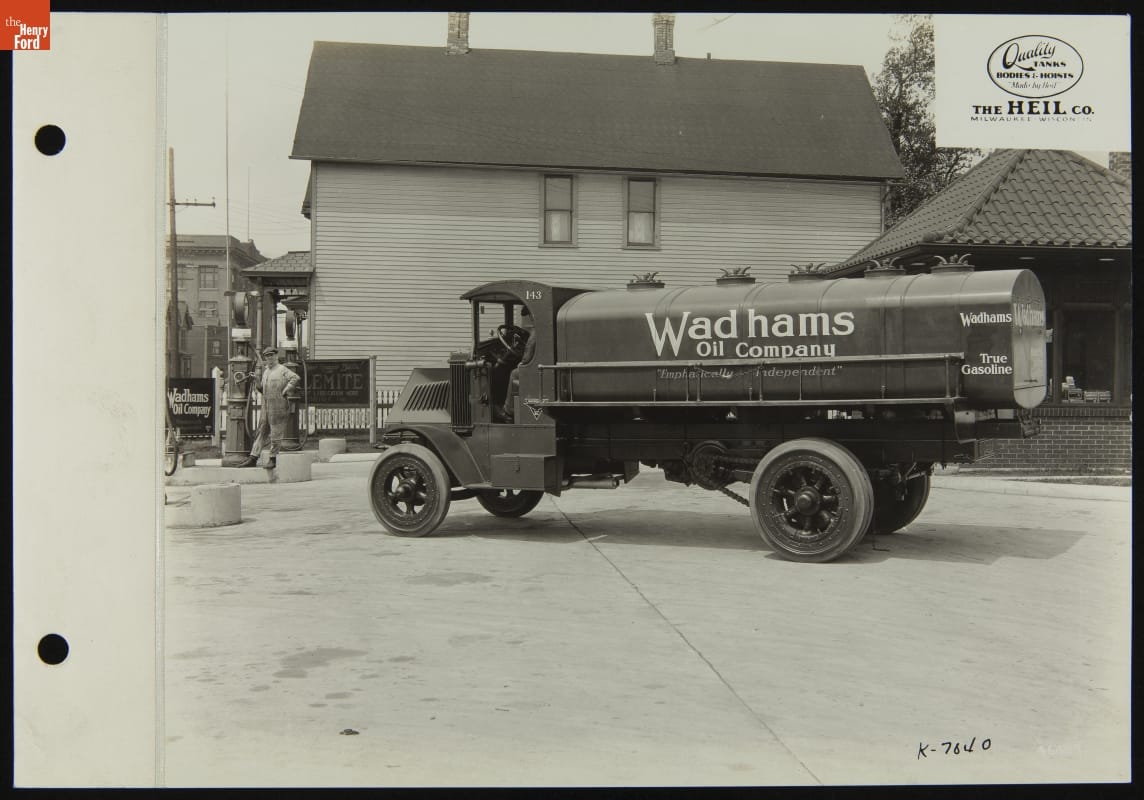
- Mack Model AC Tank Truck at a Gas Station, June 1925 - Founded in Brooklyn, New York, in 1900, Mack Brothers Company relocated to Allentown, Pennsylvania, in 1905 and adopted the name Mack Trucks in 1922. Mack-built tank trucks like this had separate compartments for gasoline, diesel fuel, lubricants, and other oil and petroleum products. The delivery trucks transported these products from distributors to gas stations.
- June 01, 1925
- Collections - Artifact
Mack Model AC Tank Truck at a Gas Station, June 1925
Founded in Brooklyn, New York, in 1900, Mack Brothers Company relocated to Allentown, Pennsylvania, in 1905 and adopted the name Mack Trucks in 1922. Mack-built tank trucks like this had separate compartments for gasoline, diesel fuel, lubricants, and other oil and petroleum products. The delivery trucks transported these products from distributors to gas stations.
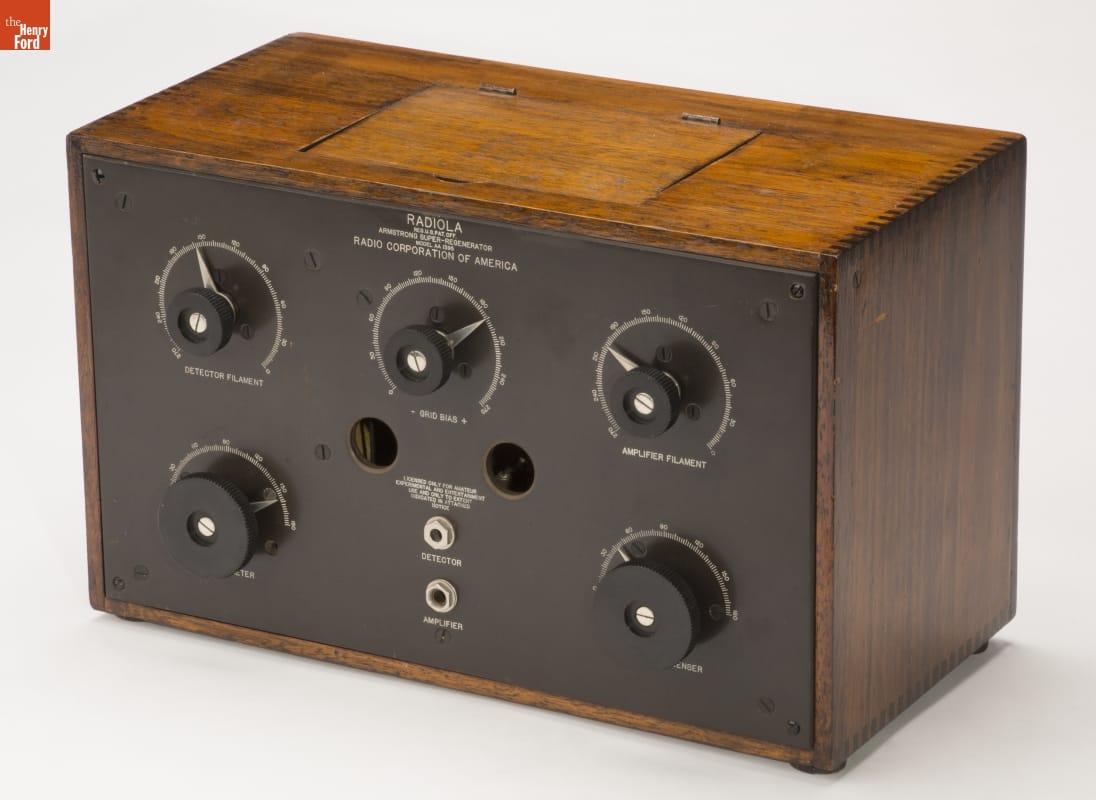
- Radiola Broadcast Receiver, Type 1375, Used at Tuckerton Wireless Station, 1922-1923 - This radio equipment was used at the German-built Tuckerton Wireless Station in New Jersey. A powerful 820-foot antenna communicated with an identical station in Germany. National security concerns during WWI led to the seizure of Tuckerton by the U.S. government in 1917. It is cited to be the origin of information leaks leading to the RMS <em>Lusitania</em> disaster through U-boat attack.
- 1922-1923
- Collections - Artifact
Radiola Broadcast Receiver, Type 1375, Used at Tuckerton Wireless Station, 1922-1923
This radio equipment was used at the German-built Tuckerton Wireless Station in New Jersey. A powerful 820-foot antenna communicated with an identical station in Germany. National security concerns during WWI led to the seizure of Tuckerton by the U.S. government in 1917. It is cited to be the origin of information leaks leading to the RMS Lusitania disaster through U-boat attack.