
Search
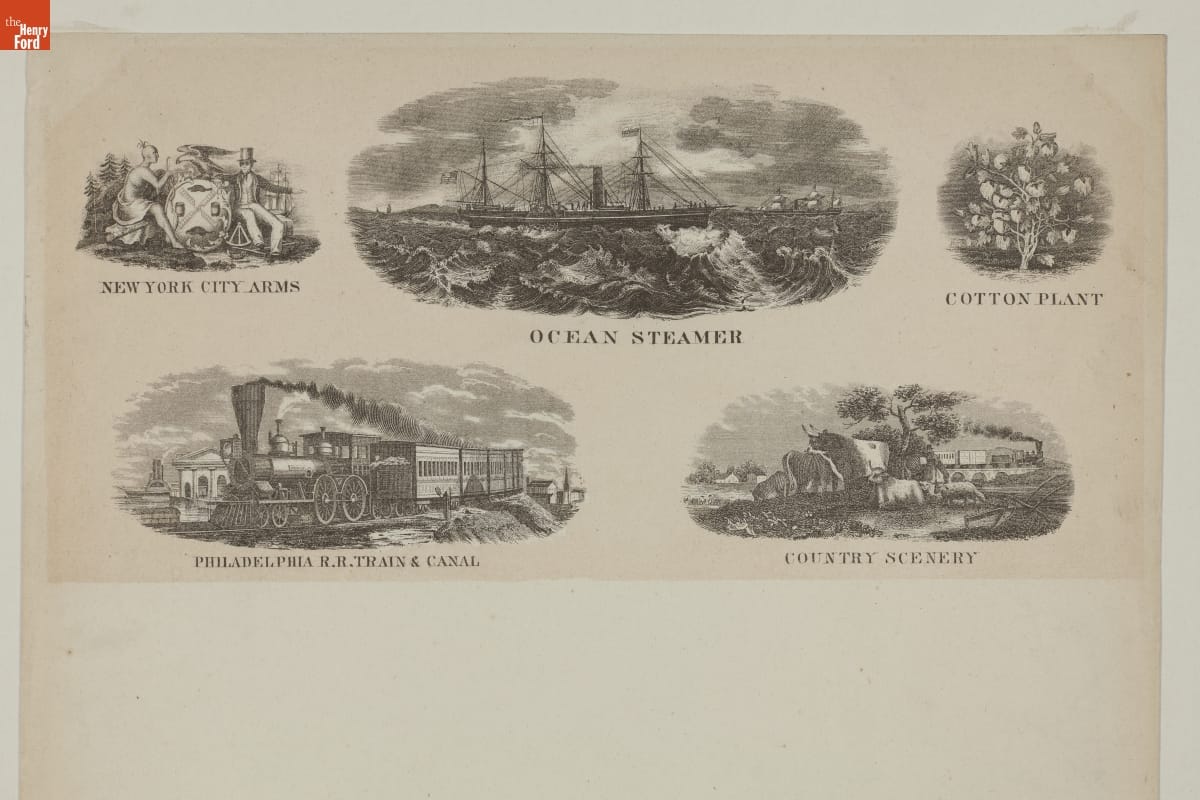
- Letterhead Samples, circa 1855 - Steam power stood at the technological forefront in the 19th century, so it's not surprising that steamships and steam locomotives were popular letterhead vignettes for companies wishing to project a modern image. Natural scenes still held some appeal, as shown by the cotton plant at upper right. The "country scenery" vignette at lower right blended the pastoral with the industrial.
- circa 1855
- Collections - Artifact
Letterhead Samples, circa 1855
Steam power stood at the technological forefront in the 19th century, so it's not surprising that steamships and steam locomotives were popular letterhead vignettes for companies wishing to project a modern image. Natural scenes still held some appeal, as shown by the cotton plant at upper right. The "country scenery" vignette at lower right blended the pastoral with the industrial.
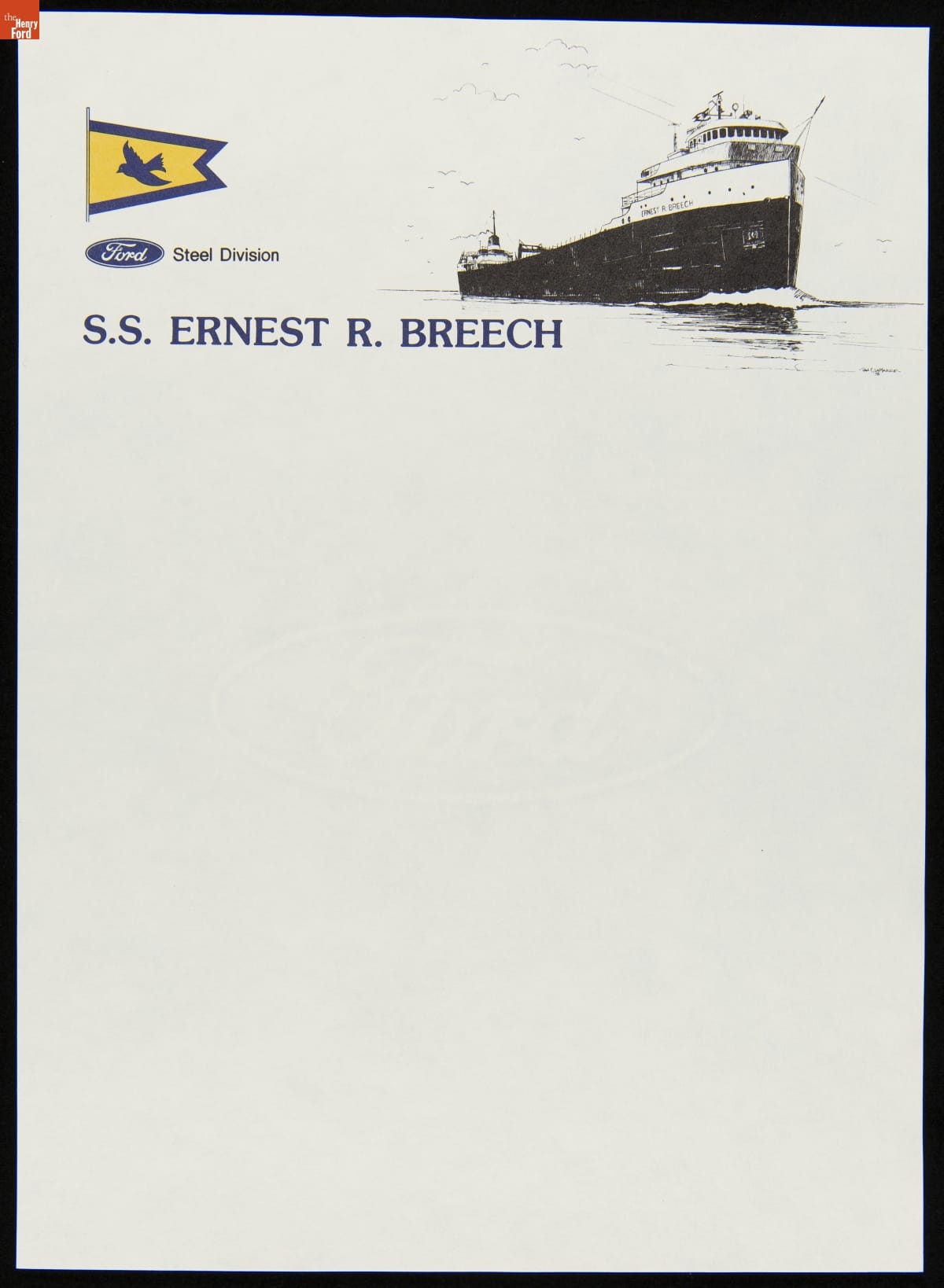
- Stationery from Ford Motor Company Freighter "Ernest R. Breech," circa 1970 - Stationery for the Ford Motor Company's ore carrier <em>Ernest R. Breech</em> contains images of the freighter, the Ford logo, and the house flag flown when the ship was underway. The flag depicts a bluebird -- a favorite of Henry Ford, an amateur birdwatcher. The <em>Breech</em>, named for a former board chairman at Ford, hauled raw material to Ford's River Rouge factory near Detroit, Michigan.
- circa 1970
- Collections - Artifact
Stationery from Ford Motor Company Freighter "Ernest R. Breech," circa 1970
Stationery for the Ford Motor Company's ore carrier Ernest R. Breech contains images of the freighter, the Ford logo, and the house flag flown when the ship was underway. The flag depicts a bluebird -- a favorite of Henry Ford, an amateur birdwatcher. The Breech, named for a former board chairman at Ford, hauled raw material to Ford's River Rouge factory near Detroit, Michigan.
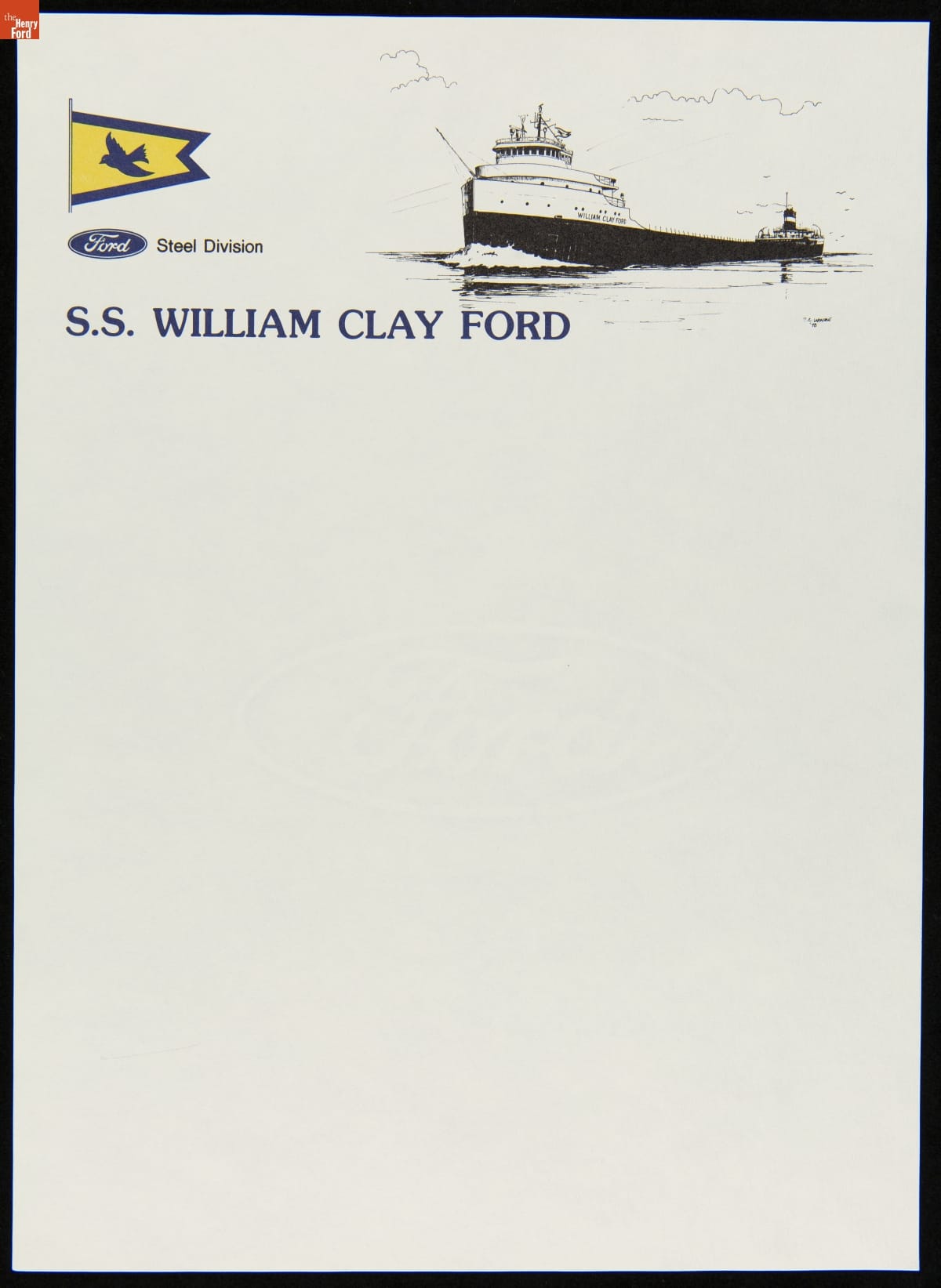
- Stationery from Ford Motor Company Freighter "William Clay Ford," circa 1970 - Stationery for the Ford Motor Company's ore carrier <em>William Clay Ford</em> contains images of the freighter, the Ford logo, and the house flag flown when the ship was underway. The flag depicts a bluebird -- a favorite of Henry Ford, an amateur birdwatcher. The ship, launched in 1953, hauled raw material to Ford's River Rouge factory near Detroit, Michigan.
- circa 1970
- Collections - Artifact
Stationery from Ford Motor Company Freighter "William Clay Ford," circa 1970
Stationery for the Ford Motor Company's ore carrier William Clay Ford contains images of the freighter, the Ford logo, and the house flag flown when the ship was underway. The flag depicts a bluebird -- a favorite of Henry Ford, an amateur birdwatcher. The ship, launched in 1953, hauled raw material to Ford's River Rouge factory near Detroit, Michigan.
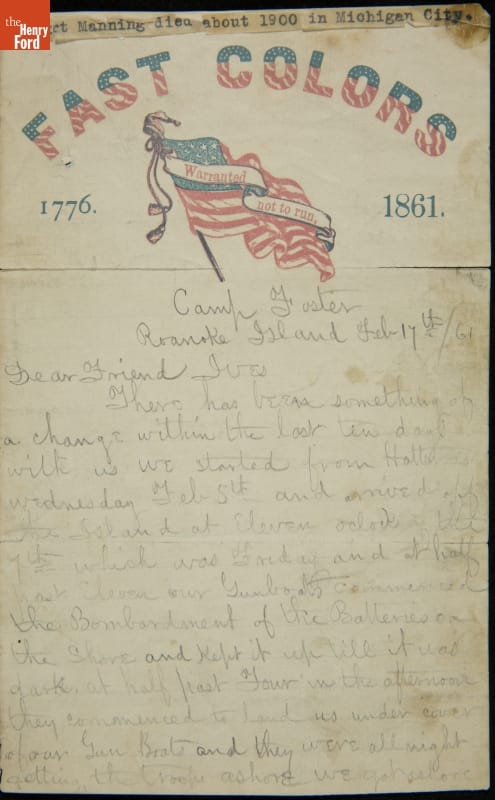
- Letter Written by Union Army Private Albert Manning from "Camp Foster," Roanoke Island, North Carolina, February 17, 1862 -
- February 17, 1862
- Collections - Artifact
Letter Written by Union Army Private Albert Manning from "Camp Foster," Roanoke Island, North Carolina, February 17, 1862
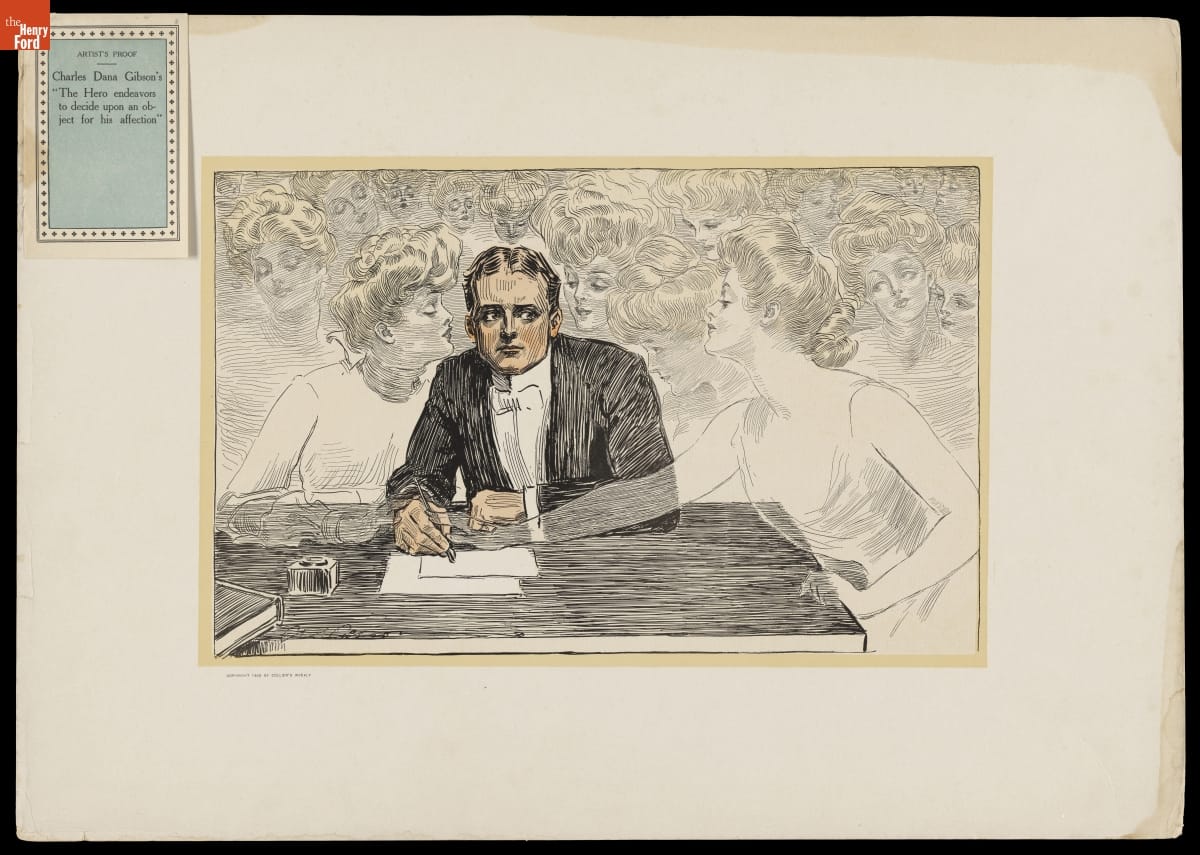
- Engraving, "Hero Endeavors to Decide...," 1903 - Charles Dana Gibson's illustrations of beautiful, independent young women reflected and helped define a new ideal of American femininity in the 1890s and early 1900s. These popular images, known collectively as "the Gibson Girl," became a cultural phenomenon referenced in fashion and entertainment. A powerful marketing tool, the widely imitated Gibson Girl proliferated in advertisements and on product packaging.
- 1903
- Collections - Artifact
Engraving, "Hero Endeavors to Decide...," 1903
Charles Dana Gibson's illustrations of beautiful, independent young women reflected and helped define a new ideal of American femininity in the 1890s and early 1900s. These popular images, known collectively as "the Gibson Girl," became a cultural phenomenon referenced in fashion and entertainment. A powerful marketing tool, the widely imitated Gibson Girl proliferated in advertisements and on product packaging.
- Invitation to a Party, circa 1960 -
- circa 1960
- Collections - Artifact
Invitation to a Party, circa 1960
- Letterhead Stationery for The Edison Institute, Dearborn, Michigan, circa 1952 -
- circa 1952
- Collections - Artifact
Letterhead Stationery for The Edison Institute, Dearborn, Michigan, circa 1952
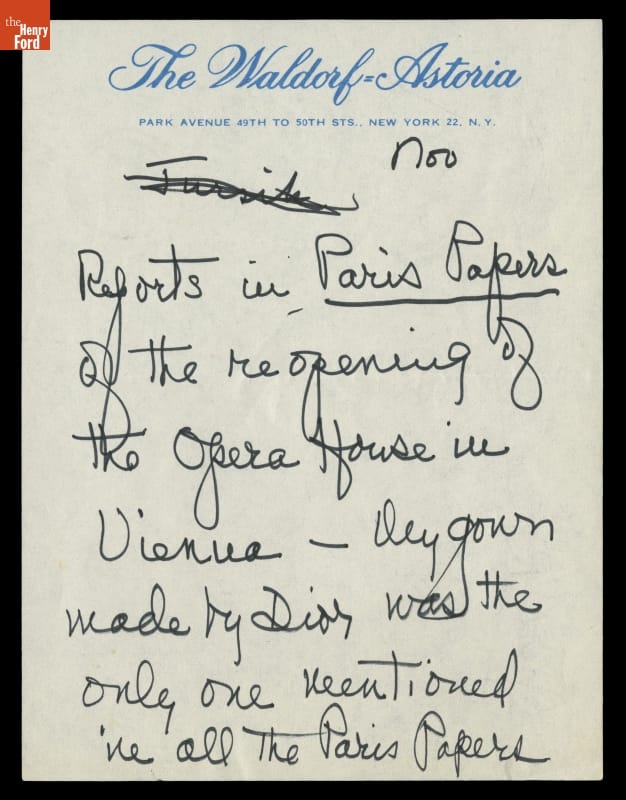
- Note by Elizabeth Parke Firestone regarding Her Christian Dior Dress for the Reopening of Vienna Opera House, November 1955 - Elizabeth Parke Firestone's refined sense of fashion reflected years of interest in clothing design and collaboration with world-renowned couturiers. She often appeared in fashion and society magazines. In 1955, Firestone proudly noted that the custom Christian Dior gown she had worn for the reopening of the Vienna Opera House "was the only one mentioned in all the Paris papers."
- November 01, 1955
- Collections - Artifact
Note by Elizabeth Parke Firestone regarding Her Christian Dior Dress for the Reopening of Vienna Opera House, November 1955
Elizabeth Parke Firestone's refined sense of fashion reflected years of interest in clothing design and collaboration with world-renowned couturiers. She often appeared in fashion and society magazines. In 1955, Firestone proudly noted that the custom Christian Dior gown she had worn for the reopening of the Vienna Opera House "was the only one mentioned in all the Paris papers."
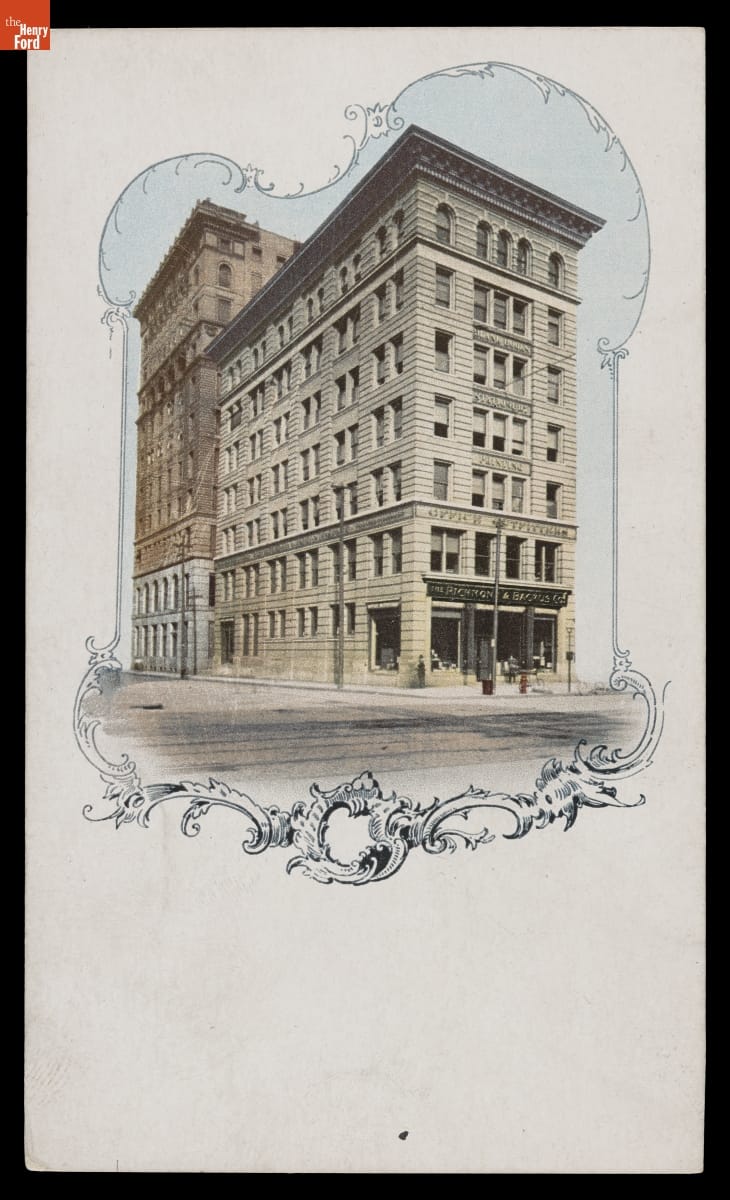
- Richmond & Backus Company, Detroit, Michigan -
- 1900-1910
- Collections - Artifact
Richmond & Backus Company, Detroit, Michigan
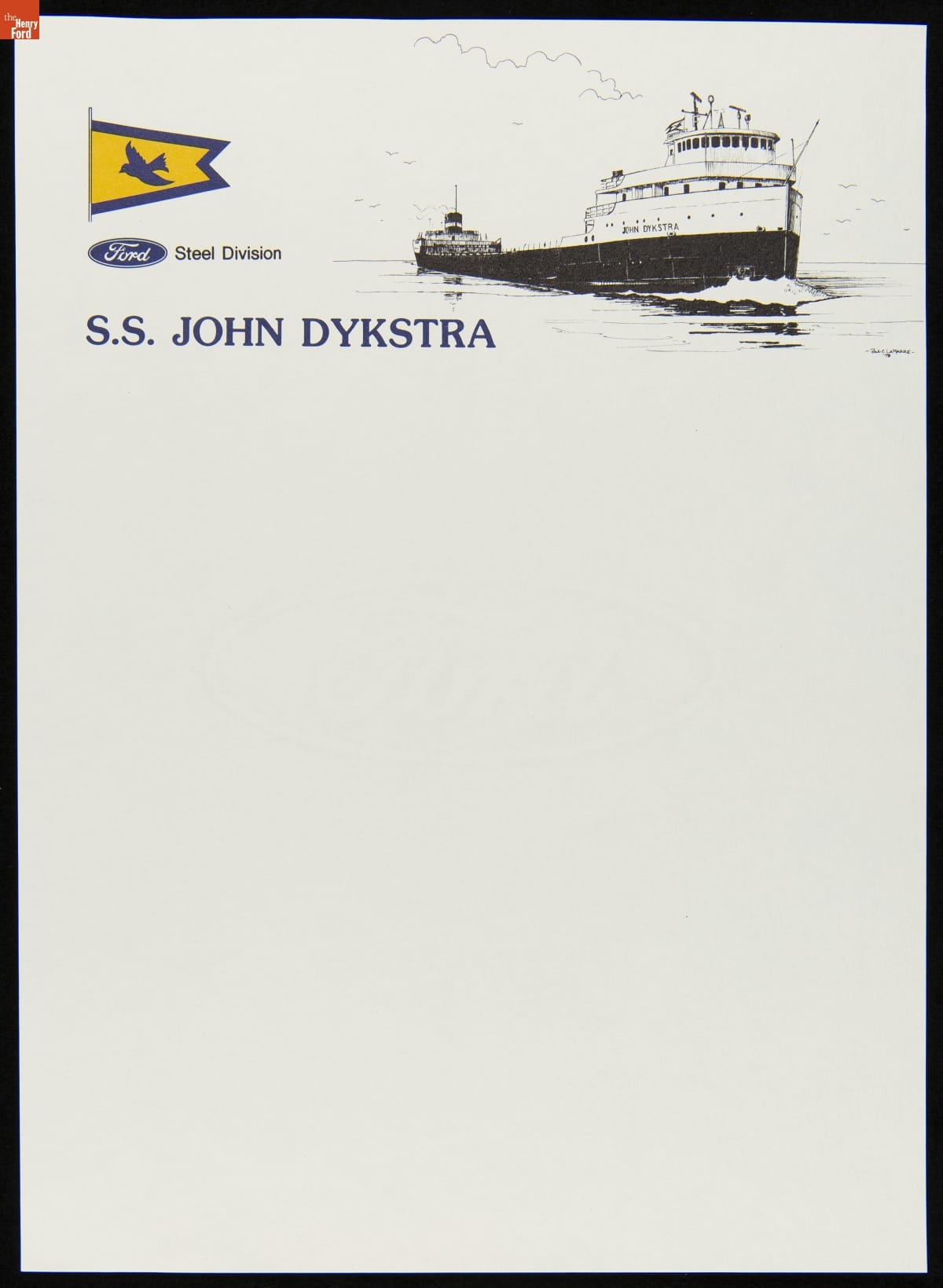
- Stationery from Ford Motor Company Freighter "John Dykstra," circa 1970 - Stationery for the Ford Motor Company's ore carrier <em>John Dykstra</em> contains images of the freighter, the Ford logo, and the house flag flown when the ship was underway. The flag depicts a bluebird -- a favorite of Henry Ford, an amateur birdwatcher. The <em>Dykstra</em>, named for a past president of Ford, hauled raw material to Ford's River Rouge factory near Detroit, Michigan.
- circa 1970
- Collections - Artifact
Stationery from Ford Motor Company Freighter "John Dykstra," circa 1970
Stationery for the Ford Motor Company's ore carrier John Dykstra contains images of the freighter, the Ford logo, and the house flag flown when the ship was underway. The flag depicts a bluebird -- a favorite of Henry Ford, an amateur birdwatcher. The Dykstra, named for a past president of Ford, hauled raw material to Ford's River Rouge factory near Detroit, Michigan.