
Search
- Installing New Boiler in "Suwanee" Steamboat, July 1954 - The <em>Suwanee</em>, a replica of a circa 1880 flat-bottomed steamboat, was constructed in Greenfield Village in 1929. Careful maintenance of the boat and its steam engine required that parts be inspected, repaired, and sometimes even replaced on a regular basis. <em>Suwanee</em> underwent thorough rebuilds in 1935, 1969, and 1989.
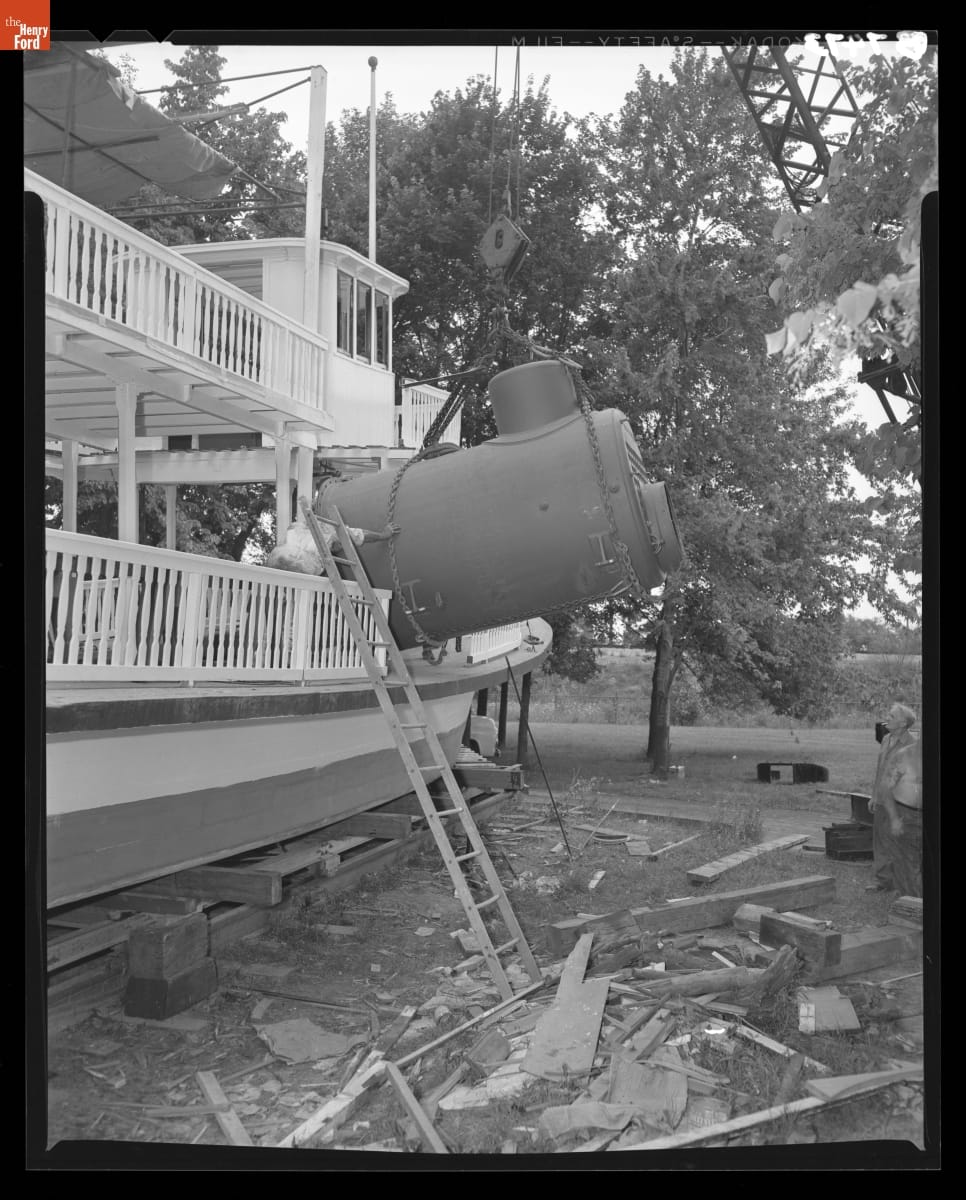
- July 28, 1954
- Collections - Artifact
Installing New Boiler in "Suwanee" Steamboat, July 1954
The Suwanee, a replica of a circa 1880 flat-bottomed steamboat, was constructed in Greenfield Village in 1929. Careful maintenance of the boat and its steam engine required that parts be inspected, repaired, and sometimes even replaced on a regular basis. Suwanee underwent thorough rebuilds in 1935, 1969, and 1989.
- Edson Recording and Alarm Gauge, circa 1920 -
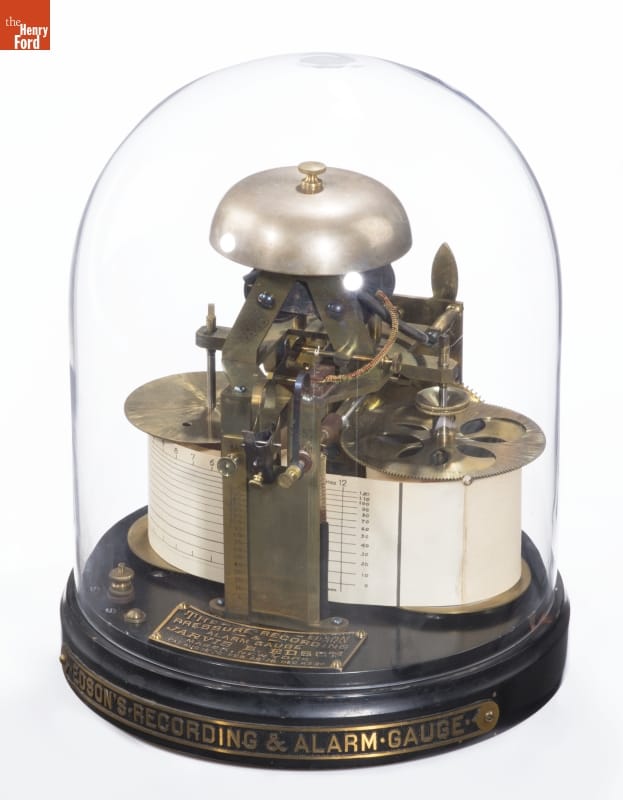
- circa 1920
- Collections - Artifact
Edson Recording and Alarm Gauge, circa 1920
- Worker inside the Sawmill at the Willow Run Bomber Plant, March 5, 1942 - During World War II, Ford Motor Company built B-24 bomber airplanes at its Willow Run plant, located 35 miles west of Detroit. Work on the factory's buildings started in March 1941. As trees were cleared, Ford erected an on-site sawmill that processed them into lumber. Much of that lumber went into temporary structures and housing at the rising factory.
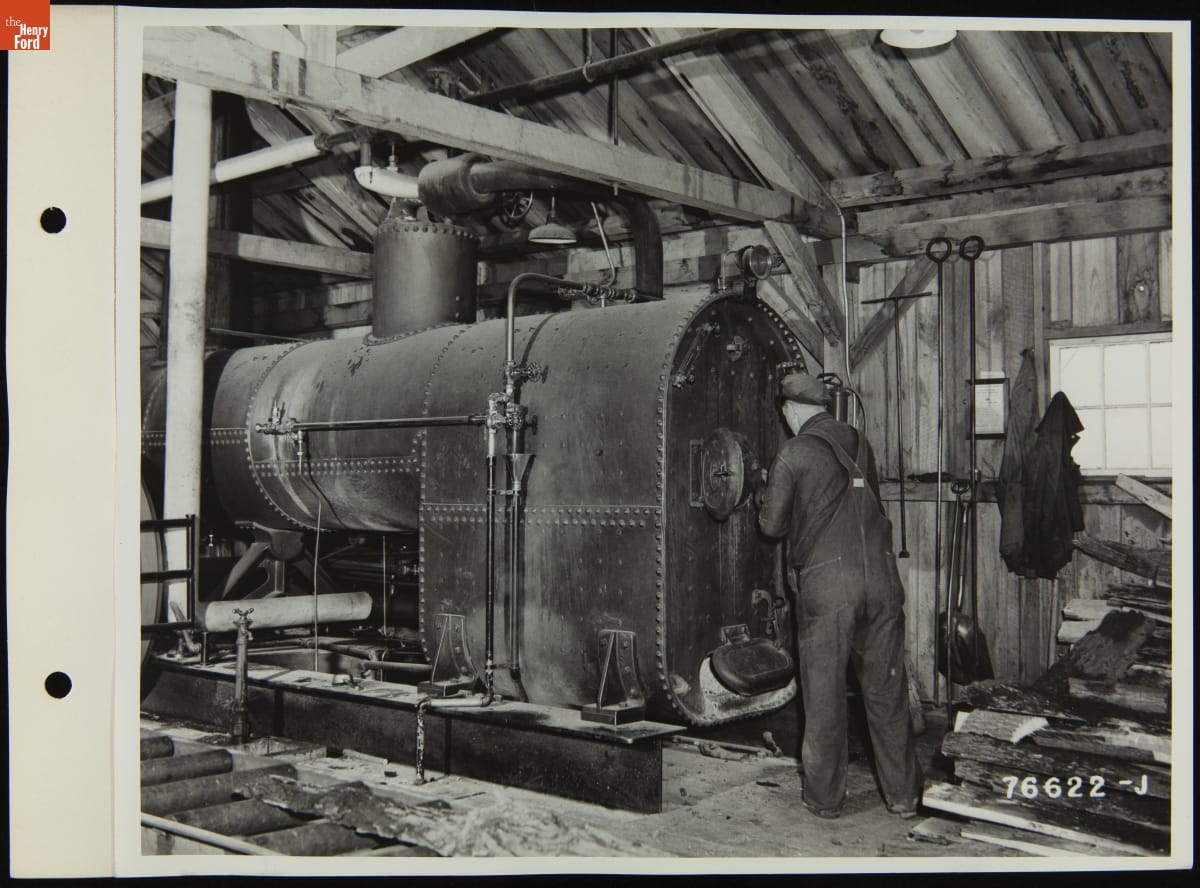
- March 05, 1942
- Collections - Artifact
Worker inside the Sawmill at the Willow Run Bomber Plant, March 5, 1942
During World War II, Ford Motor Company built B-24 bomber airplanes at its Willow Run plant, located 35 miles west of Detroit. Work on the factory's buildings started in March 1941. As trees were cleared, Ford erected an on-site sawmill that processed them into lumber. Much of that lumber went into temporary structures and housing at the rising factory.
- Drawing, "Cross Sections of the Boilers, Warwick and Birmingham Canal," 1795 -
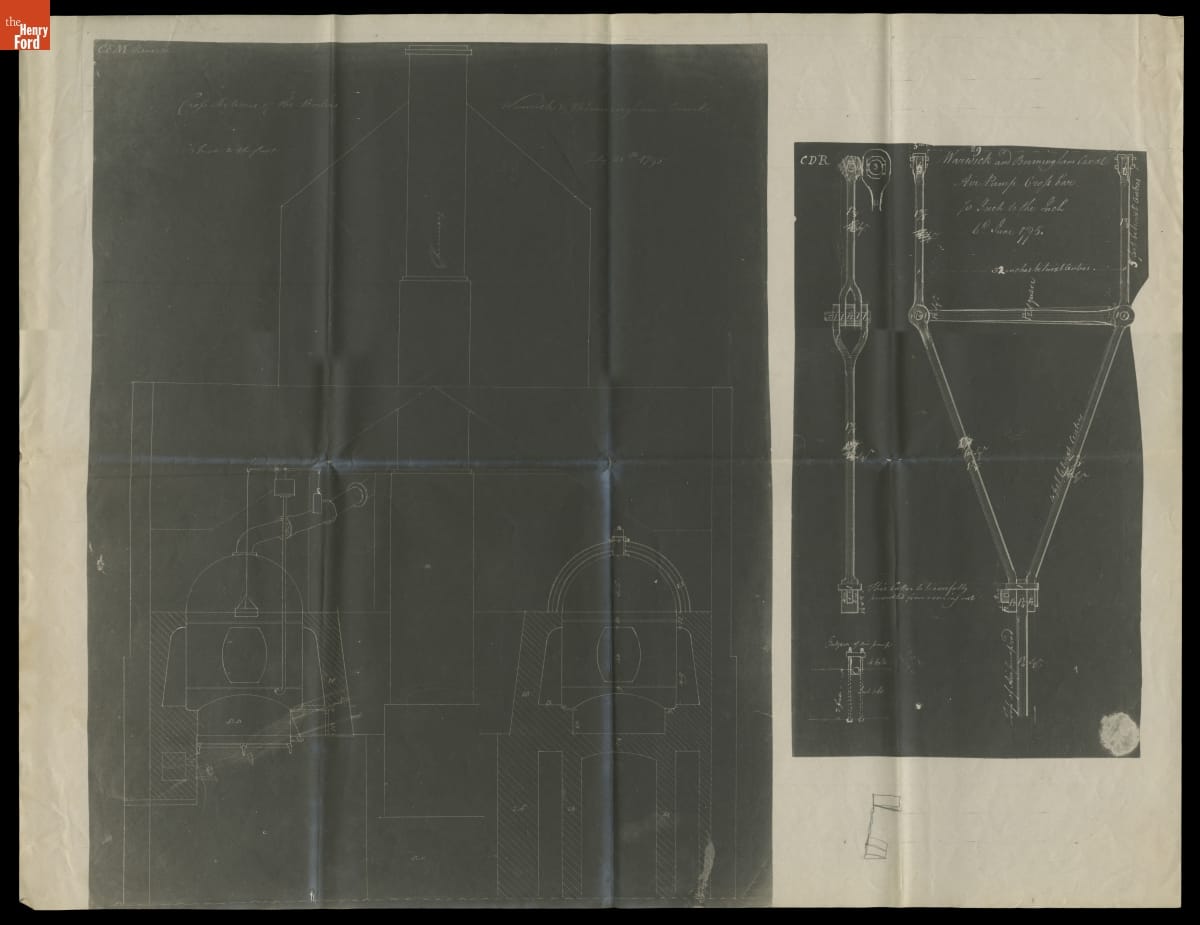
- 1795
- Collections - Artifact
Drawing, "Cross Sections of the Boilers, Warwick and Birmingham Canal," 1795
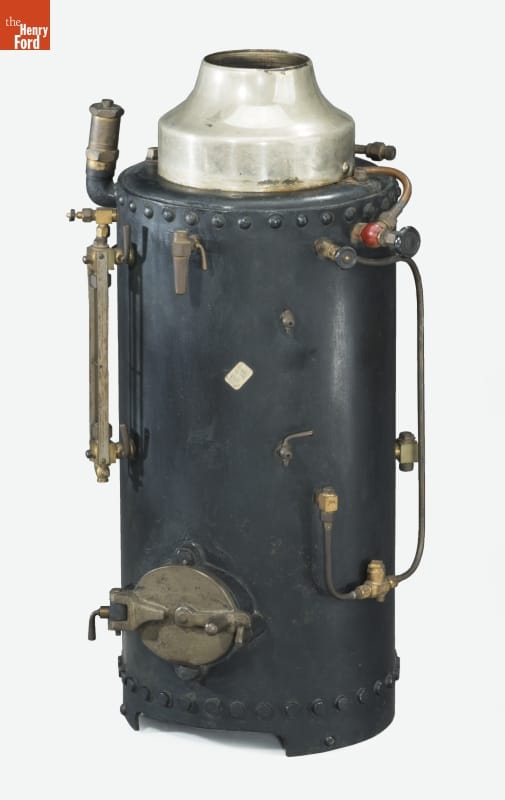
- Model of a Vertical Boiler -
- Collections - Artifact
Model of a Vertical Boiler
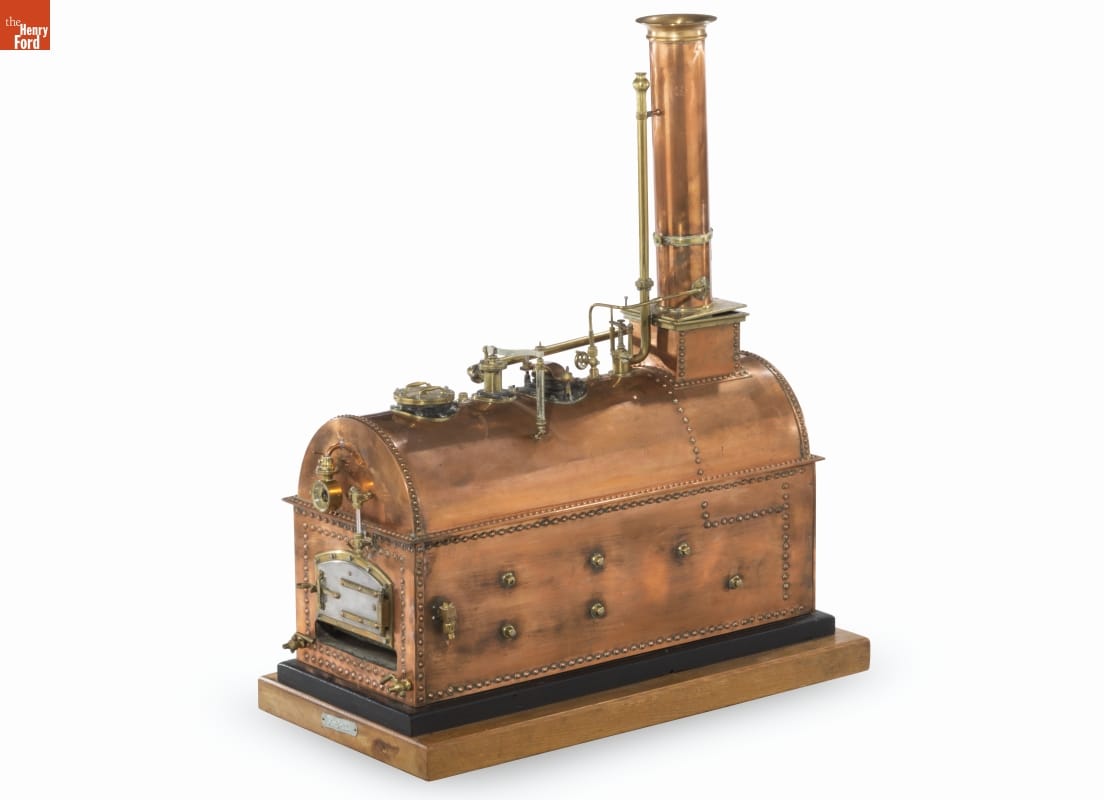
- Model of a Boiler, circa 1860 -
- circa 1860
- Collections - Artifact
Model of a Boiler, circa 1860
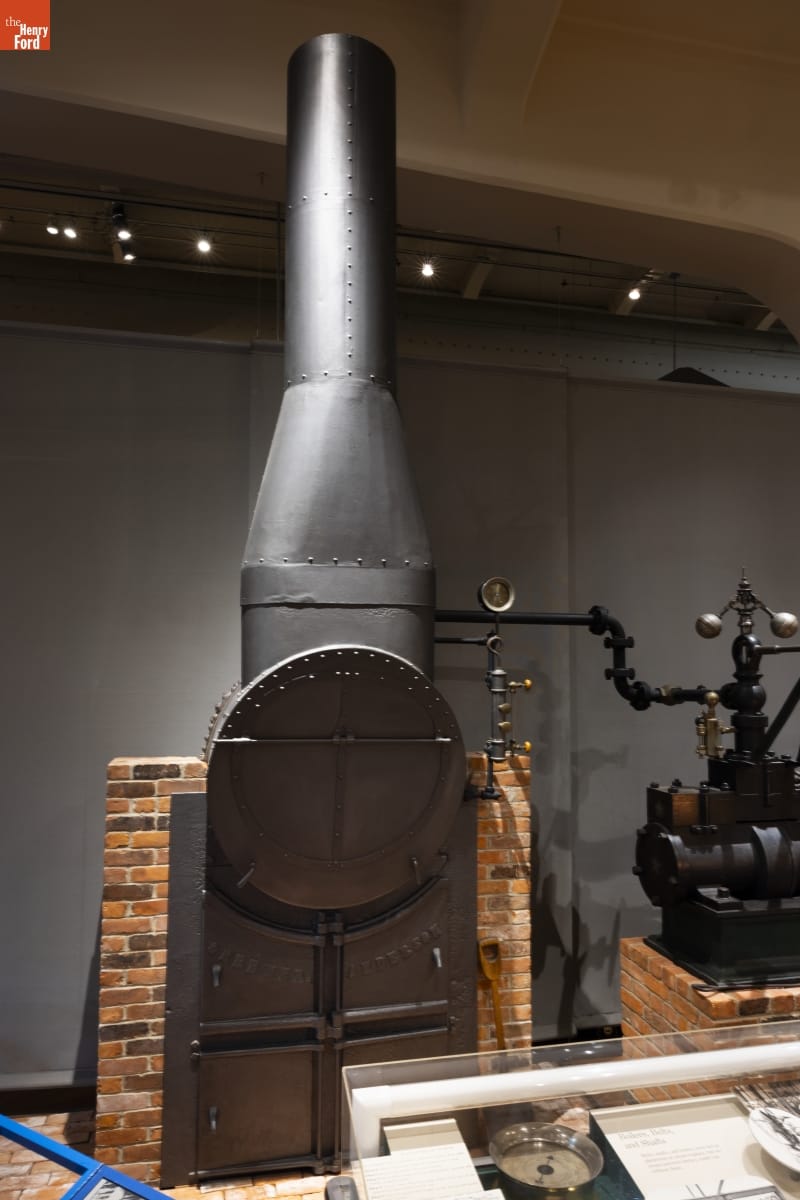
- Steam Boiler, Used at the Tripp Sawmill, 1851-1880 -
- 1851-1880
- Collections - Artifact
Steam Boiler, Used at the Tripp Sawmill, 1851-1880
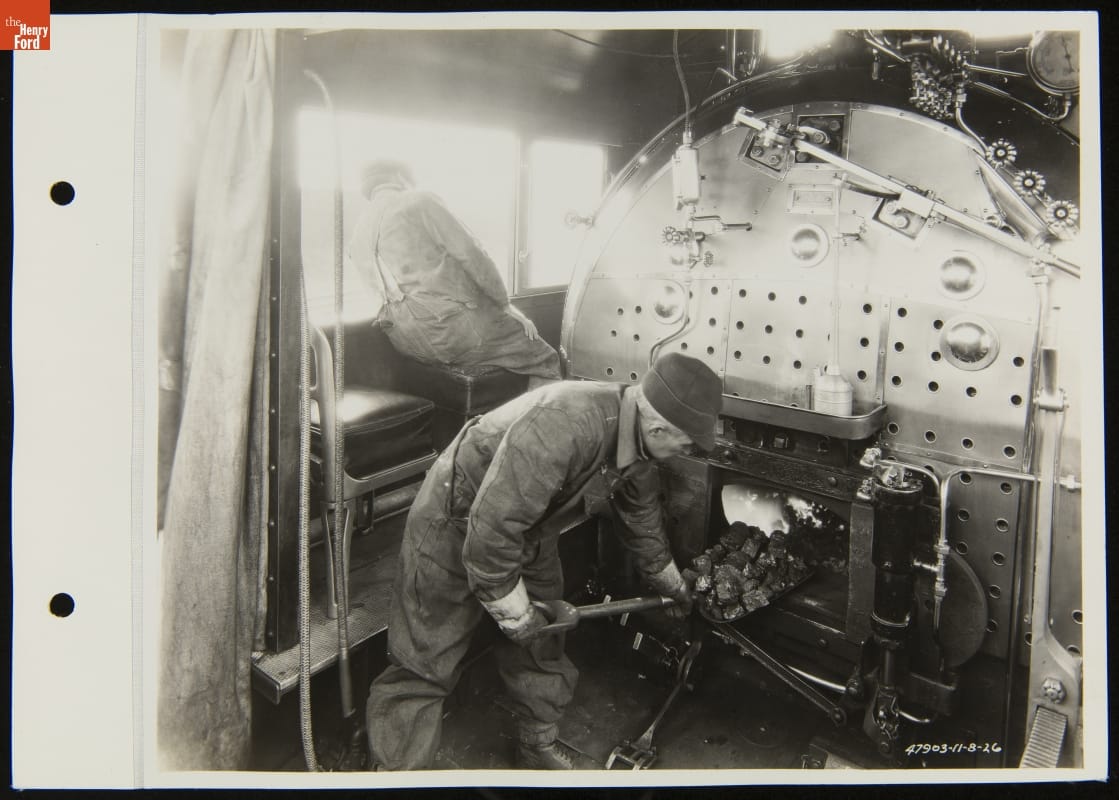
- Railroad Fireman Shoveling Coal inside Steam Locomotive, Detroit, Toledo & Ironton Railroad, November 1926 - The fireman tended the fire on a steam locomotive. It took skill and practice. Shovel too little coal and there wasn't enough heat to produce the necessary steam. Shovel too much and you wasted fuel and money. Adoption of the mechanical stoker, which fed coal into the firebox with a screw conveyor, eased the fireman's job after World War I.
- November 08, 1926
- Collections - Artifact
Railroad Fireman Shoveling Coal inside Steam Locomotive, Detroit, Toledo & Ironton Railroad, November 1926
The fireman tended the fire on a steam locomotive. It took skill and practice. Shovel too little coal and there wasn't enough heat to produce the necessary steam. Shovel too much and you wasted fuel and money. Adoption of the mechanical stoker, which fed coal into the firebox with a screw conveyor, eased the fireman's job after World War I.
- Tracing of Setting Plan for the First Heine Company Steam Boiler Made and Used in the United States, August 1882 -
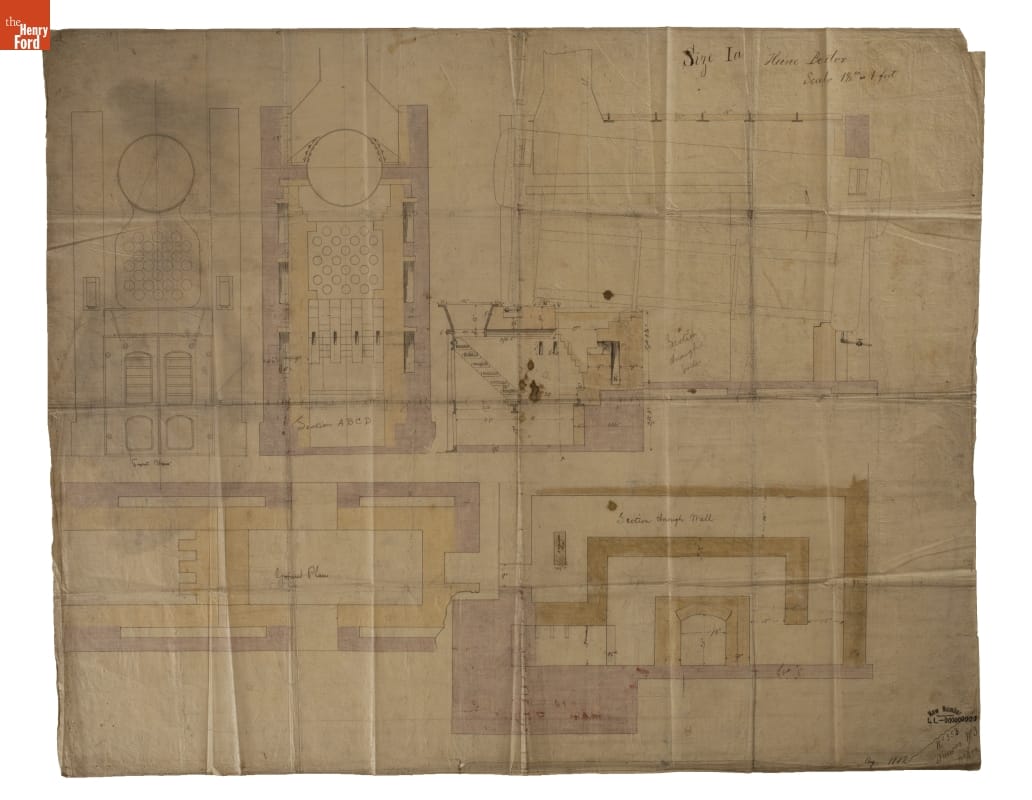
- August 01, 1882
- Collections - Artifact
Tracing of Setting Plan for the First Heine Company Steam Boiler Made and Used in the United States, August 1882
- Railroad Fireman Shoveling Coal inside Steam Locomotive, Detroit, Toledo & Ironton Railroad, November 1926 - The fireman tended the fire on a steam locomotive. It took skill and practice. Shovel too little coal and there wasn't enough heat to produce the necessary steam. Shovel too much and you wasted fuel and money. Adoption of the mechanical stoker, which fed coal into the firebox with a screw conveyor, eased the fireman's job after World War I.
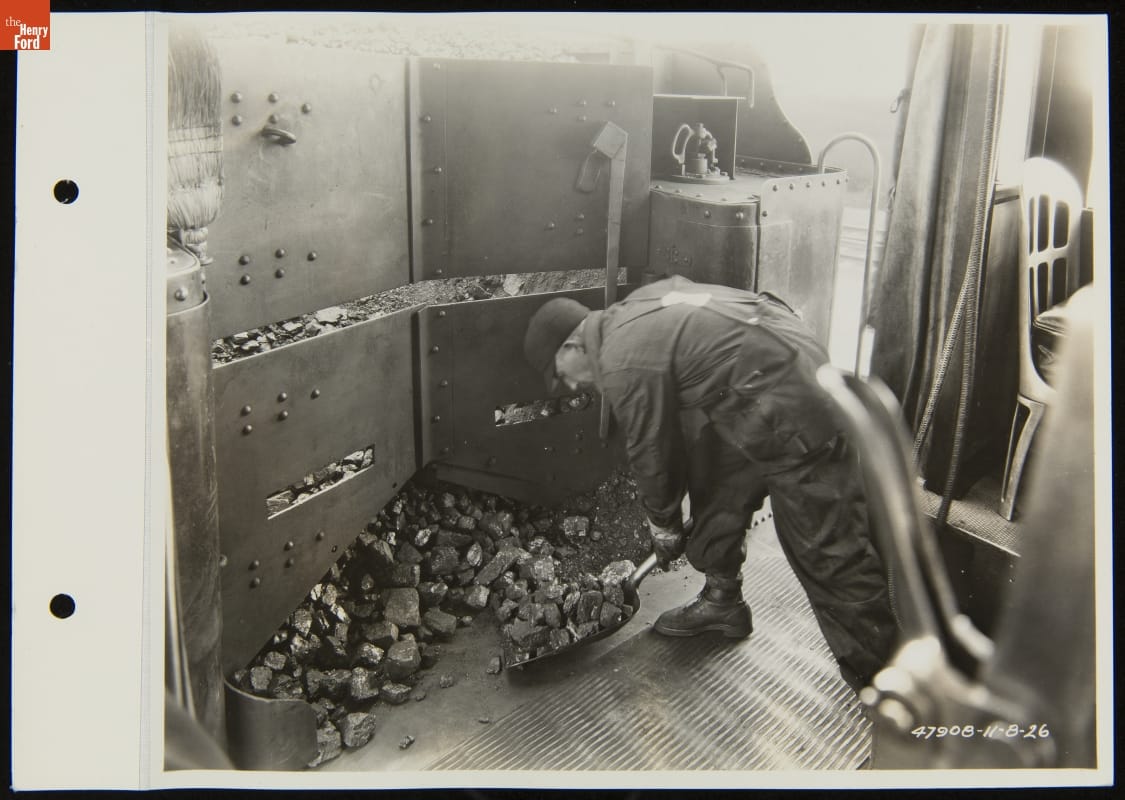
- November 08, 1926
- Collections - Artifact
Railroad Fireman Shoveling Coal inside Steam Locomotive, Detroit, Toledo & Ironton Railroad, November 1926
The fireman tended the fire on a steam locomotive. It took skill and practice. Shovel too little coal and there wasn't enough heat to produce the necessary steam. Shovel too much and you wasted fuel and money. Adoption of the mechanical stoker, which fed coal into the firebox with a screw conveyor, eased the fireman's job after World War I.