
Search
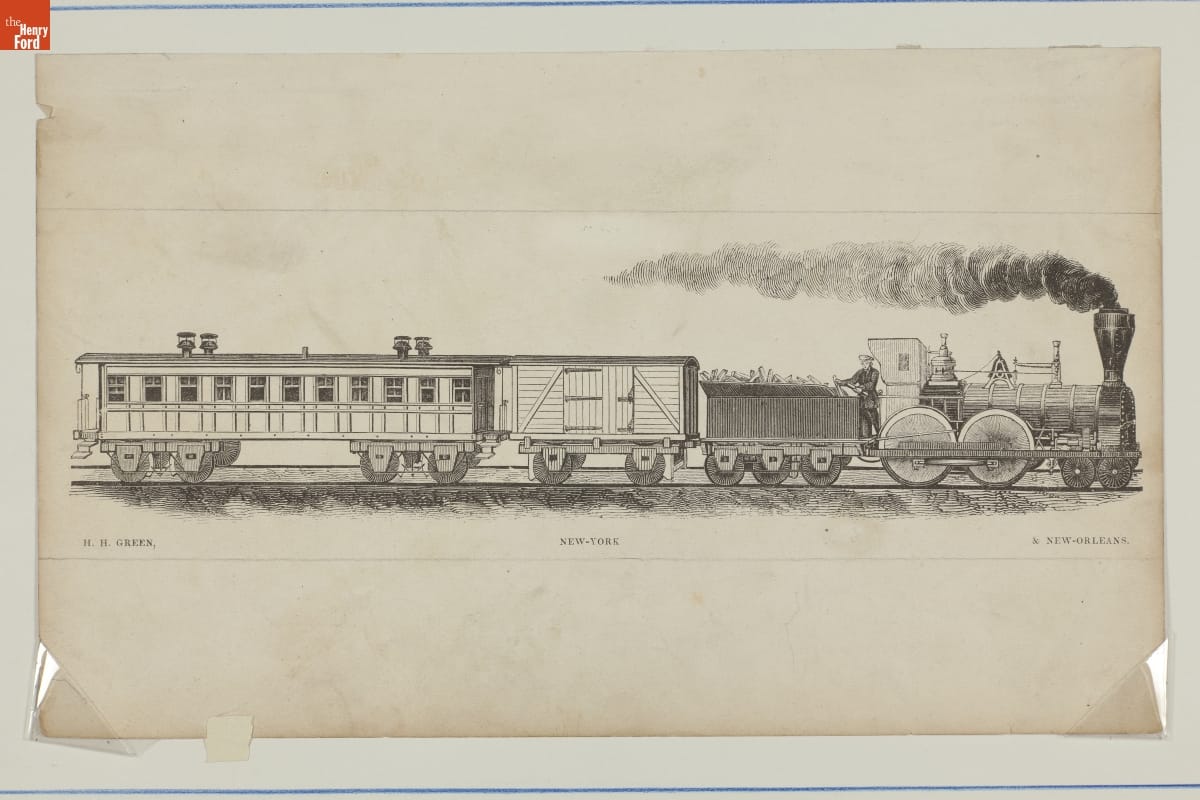
- Train with Steam Locomotive, Passenger and Freight Cars, circa 1856 - Locomotive boilers had to stay hot to produce steam. Lagging -- insulation around the boiler -- was crucial. This American-type locomotive of the 1850s had narrow wooden strips mounted around its boiler for insulation. But the wood deteriorated quickly when exposed to weather and sparks. Improved designs placed a protective sheet metal jacket over the wood.
- circa 1856
- Collections - Artifact
Train with Steam Locomotive, Passenger and Freight Cars, circa 1856
Locomotive boilers had to stay hot to produce steam. Lagging -- insulation around the boiler -- was crucial. This American-type locomotive of the 1850s had narrow wooden strips mounted around its boiler for insulation. But the wood deteriorated quickly when exposed to weather and sparks. Improved designs placed a protective sheet metal jacket over the wood.
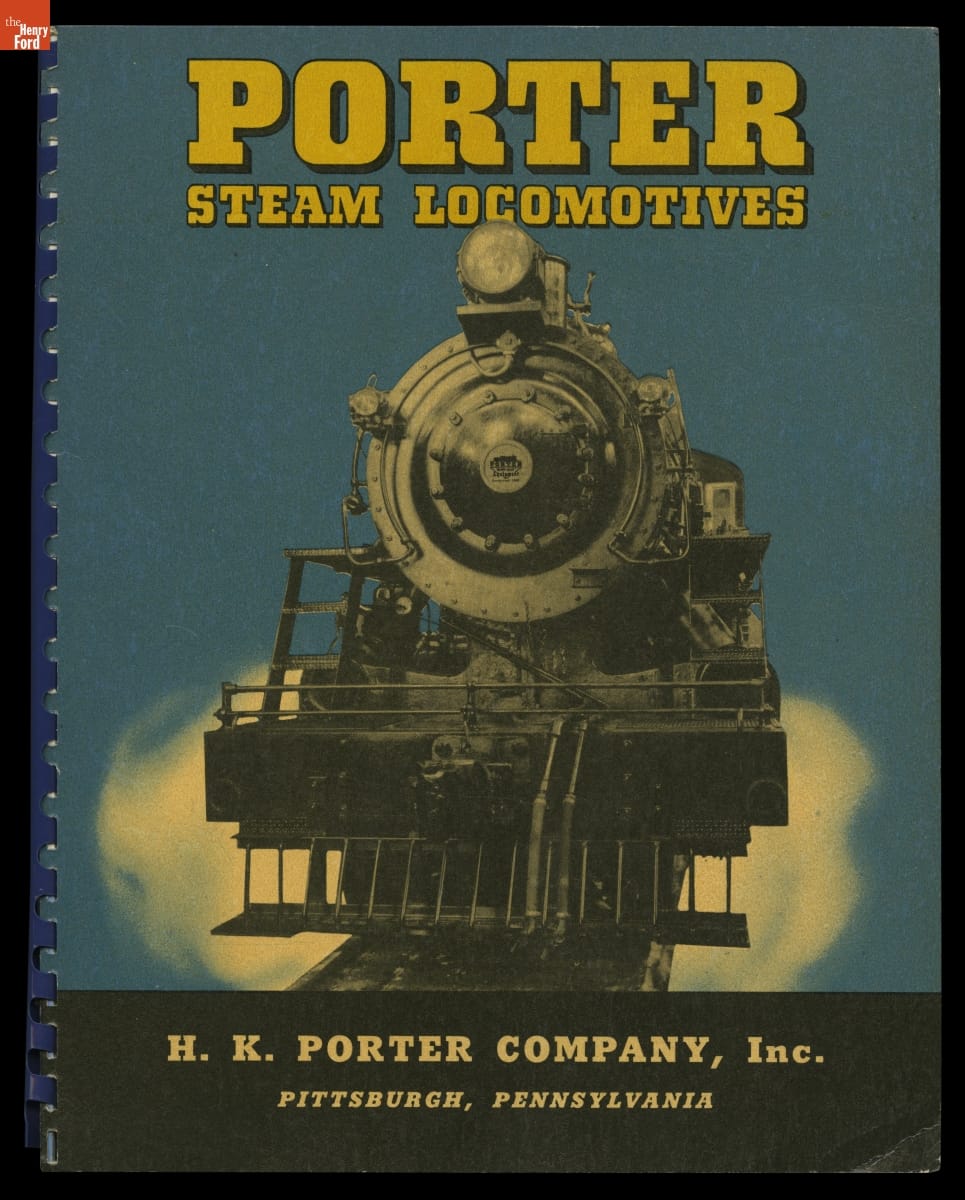
- H.K. Porter Company Catalog, "Porter Steam Locomotives," 1943 - Founded in 1866, the H.K. Porter Company of Pittsburgh, Pennsylvania, built light industrial locomotives. These smaller engines were used in mines, mills, factories, construction sites, agricultural operations, and other specialized applications. Porter manufactured more than 8,000 steam, gasoline, and diesel-powered locomotives before exiting the business in 1950.
- 1943
- Collections - Artifact
H.K. Porter Company Catalog, "Porter Steam Locomotives," 1943
Founded in 1866, the H.K. Porter Company of Pittsburgh, Pennsylvania, built light industrial locomotives. These smaller engines were used in mines, mills, factories, construction sites, agricultural operations, and other specialized applications. Porter manufactured more than 8,000 steam, gasoline, and diesel-powered locomotives before exiting the business in 1950.
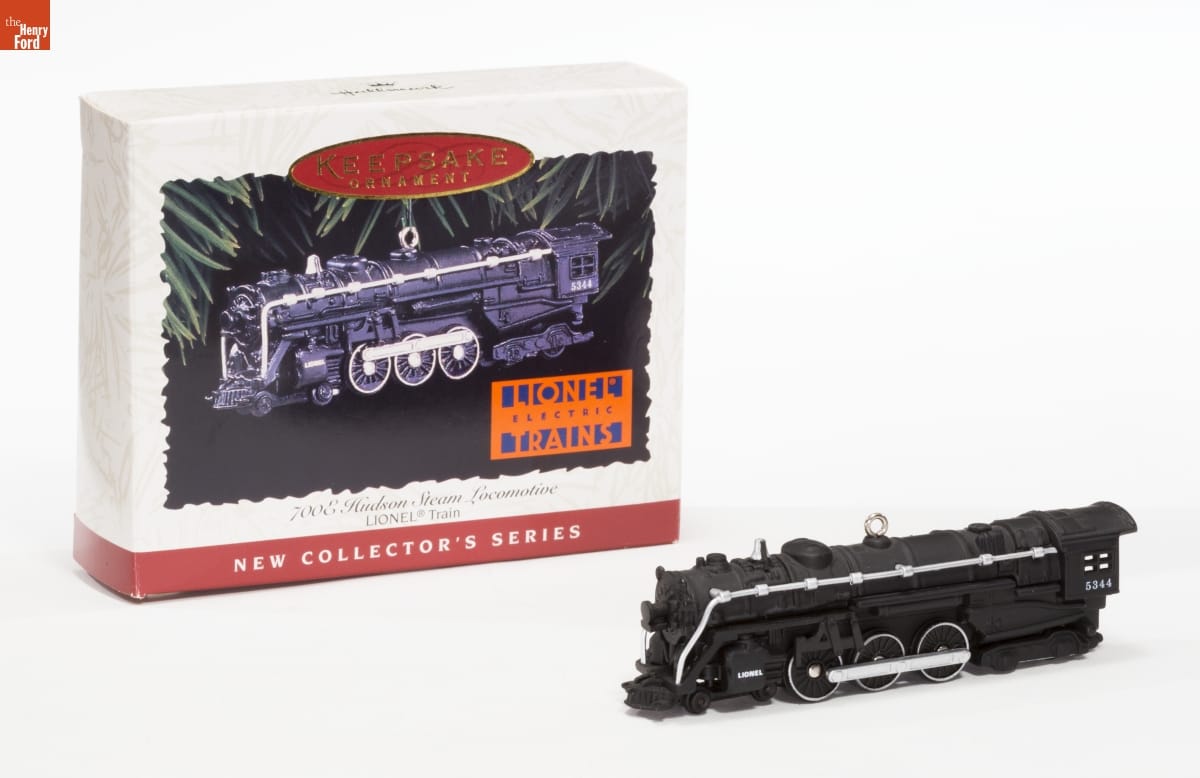
- Hallmark "LIONEL Train Series: 700E Hudson Steam Locomotive" Christmas Ornament, 1996 - Already known for greeting cards, Hallmark introduced a line of Christmas ornaments in 1973. The company's annual release of an increasing array of ornaments revolutionized Christmas decorating, appealing to customers' interest in marking memories and milestones as well as expressing one's personality and unique tastes.
- 1996
- Collections - Artifact
Hallmark "LIONEL Train Series: 700E Hudson Steam Locomotive" Christmas Ornament, 1996
Already known for greeting cards, Hallmark introduced a line of Christmas ornaments in 1973. The company's annual release of an increasing array of ornaments revolutionized Christmas decorating, appealing to customers' interest in marking memories and milestones as well as expressing one's personality and unique tastes.
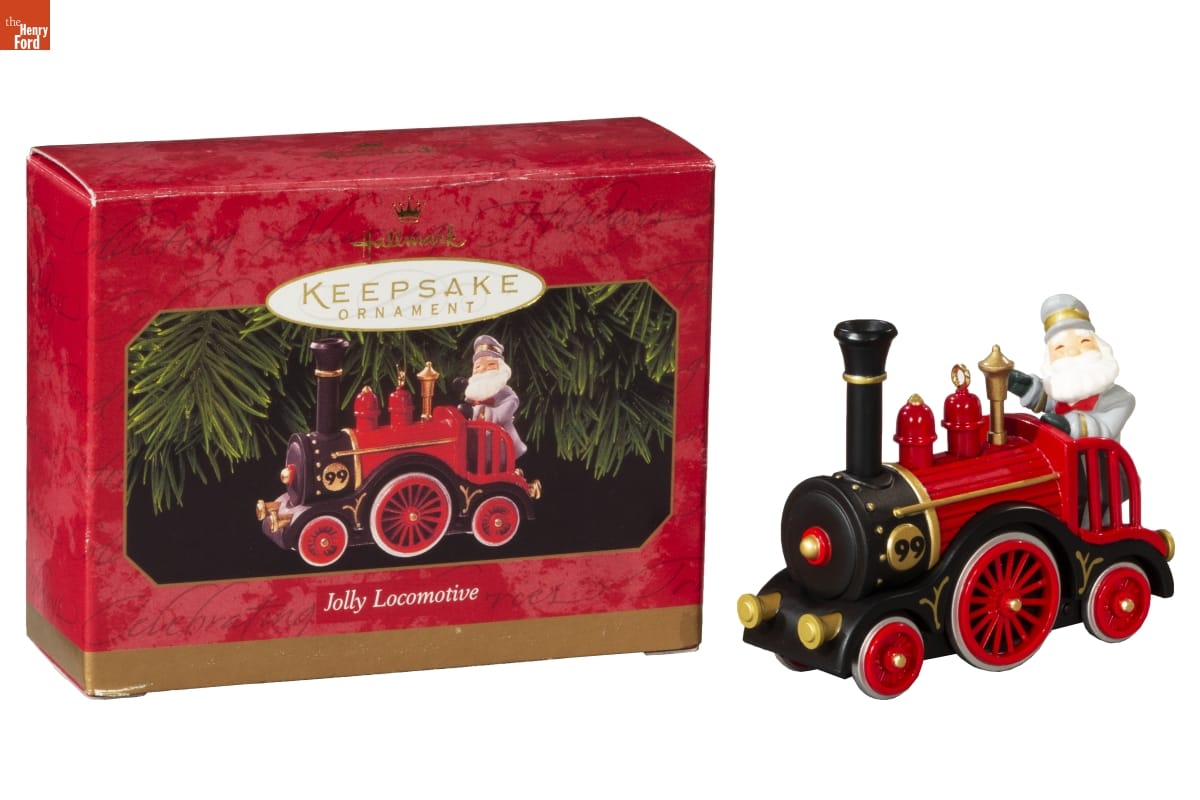
- Hallmark "Jolly Locomotive" Christmas Ornament, 1999 - Already known for greeting cards, Hallmark introduced a line of Christmas ornaments in 1973. The company's annual release of an increasing array of ornaments revolutionized Christmas decorating, appealing to customers' interest in marking memories and milestones as well as expressing one's personality and unique tastes.
- 1999
- Collections - Artifact
Hallmark "Jolly Locomotive" Christmas Ornament, 1999
Already known for greeting cards, Hallmark introduced a line of Christmas ornaments in 1973. The company's annual release of an increasing array of ornaments revolutionized Christmas decorating, appealing to customers' interest in marking memories and milestones as well as expressing one's personality and unique tastes.
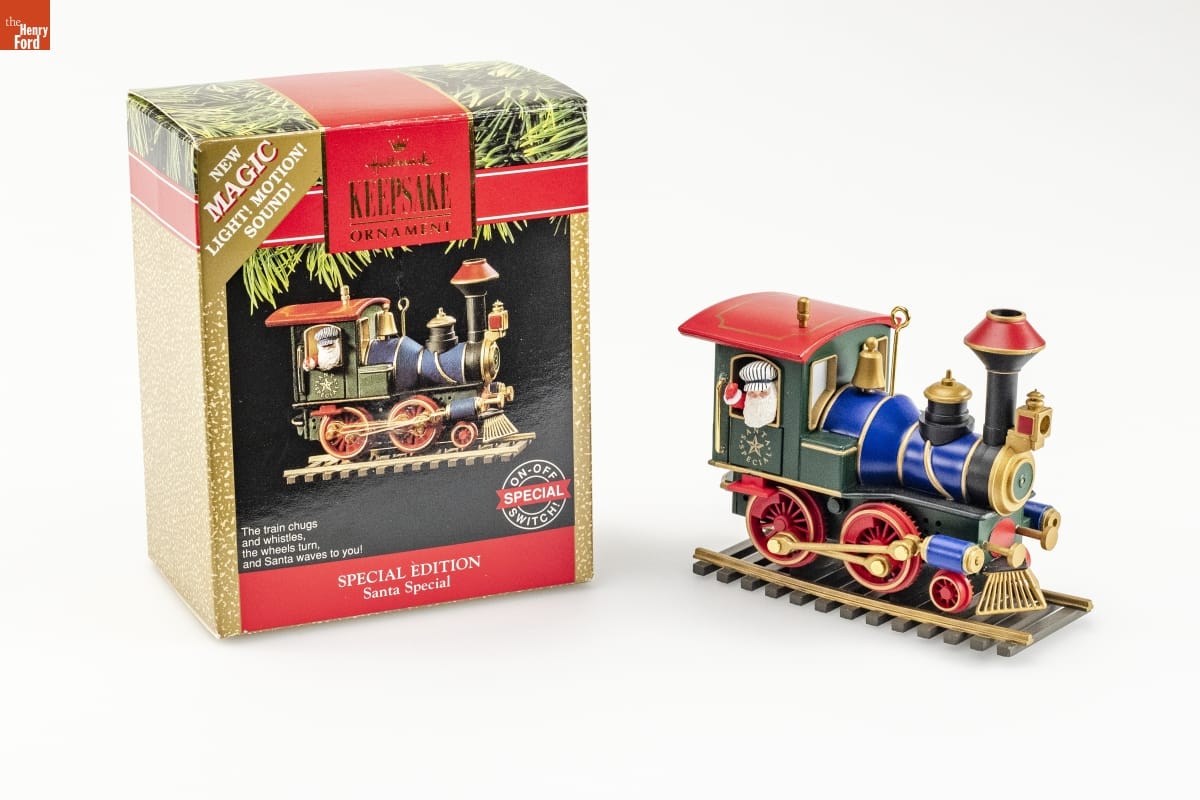
- Hallmark "Special Edition: Santa Special" Christmas Ornament, 1991 - Already known for greeting cards, Hallmark introduced a line of Christmas ornaments in 1973. The company's annual release of an increasing array of ornaments revolutionized Christmas decorating, appealing to customers' interest in marking memories and milestones as well as expressing one's personality and unique tastes.
- 1991
- Collections - Artifact
Hallmark "Special Edition: Santa Special" Christmas Ornament, 1991
Already known for greeting cards, Hallmark introduced a line of Christmas ornaments in 1973. The company's annual release of an increasing array of ornaments revolutionized Christmas decorating, appealing to customers' interest in marking memories and milestones as well as expressing one's personality and unique tastes.
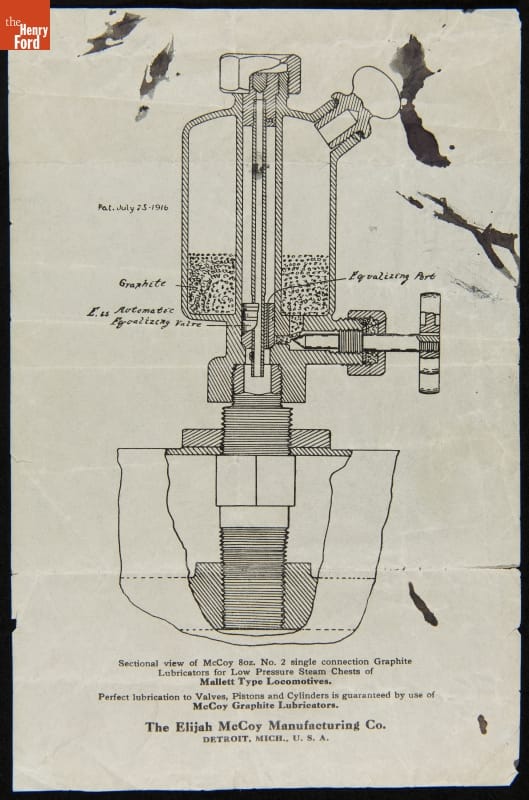
- Single-Connection McCoy Graphite Lubricator for Low-Pressure, Mallet-Type Steam Locomotives, July 1916 - Canadian-American inventor Elijah McCoy developed a mechanical lubricator to oil slide valves on steam locomotives. McCoy's device automatically supplied measured amounts of oil to valves, reducing the need for crews to lubricate them manually. This updated version from 1916 was designed for Mallet compound steam locomotives, which used steam twice -- in high- and low-pressure cylinders.
- July 25, 1916
- Collections - Artifact
Single-Connection McCoy Graphite Lubricator for Low-Pressure, Mallet-Type Steam Locomotives, July 1916
Canadian-American inventor Elijah McCoy developed a mechanical lubricator to oil slide valves on steam locomotives. McCoy's device automatically supplied measured amounts of oil to valves, reducing the need for crews to lubricate them manually. This updated version from 1916 was designed for Mallet compound steam locomotives, which used steam twice -- in high- and low-pressure cylinders.
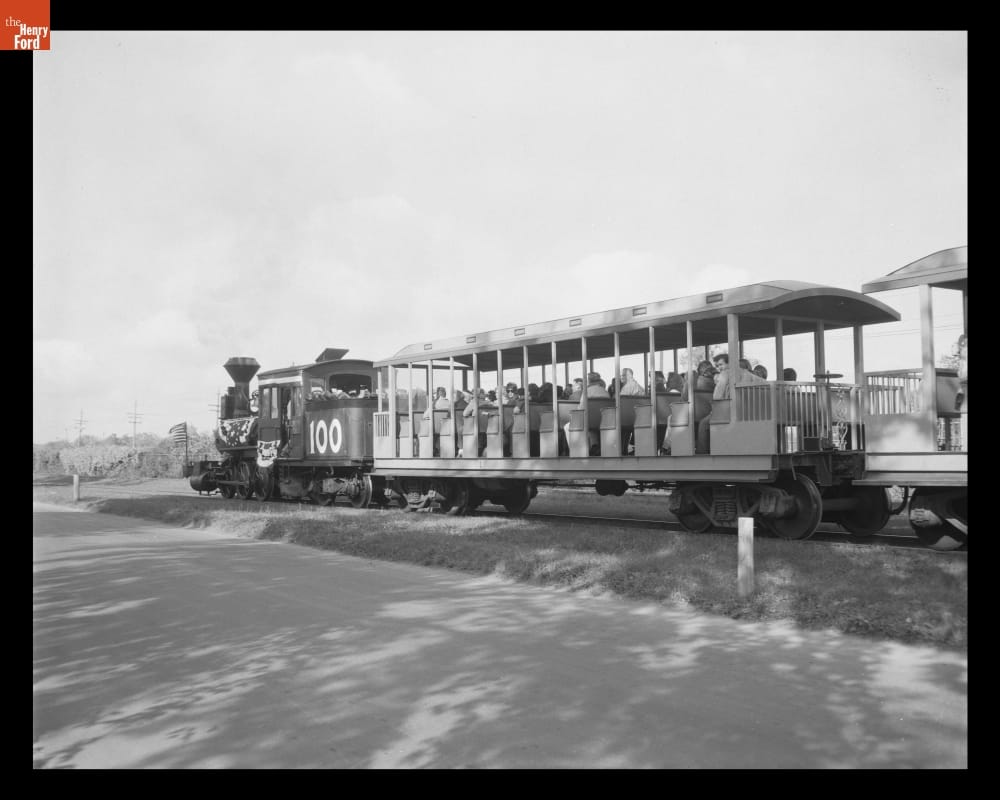
- Torch Lake Locomotive at its 100th Anniversary Celebration in Greenfield Village, October 1973 - Built by Mason Machine Works in 1873, the steam locomotive <EM>Torch Lake</EM> was used in copper mining operations in Michigan's Upper Peninsula until 1933. The Henry Ford acquired the locomotive in 1969. After its arrival here, the engine was returned to operating condition and put into service on the Greenfield Village railroad. In 1973, staff decorated the locomotive to celebrate its 100th anniversary.
- October 18, 1973
- Collections - Artifact
Torch Lake Locomotive at its 100th Anniversary Celebration in Greenfield Village, October 1973
Built by Mason Machine Works in 1873, the steam locomotive Torch Lake was used in copper mining operations in Michigan's Upper Peninsula until 1933. The Henry Ford acquired the locomotive in 1969. After its arrival here, the engine was returned to operating condition and put into service on the Greenfield Village railroad. In 1973, staff decorated the locomotive to celebrate its 100th anniversary.
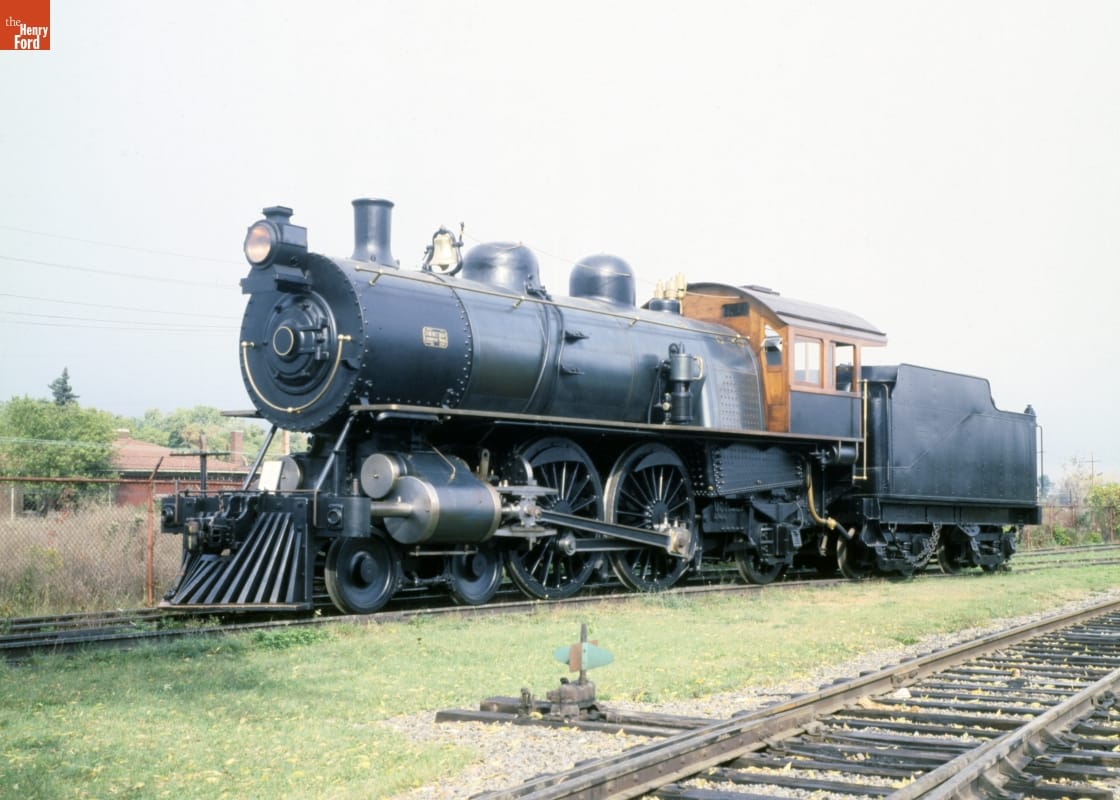
- American Locomotive Company Steam Locomotive, 1902 - The American Locomotive Company of Schenectady, New York, built this locomotive in 1902. It is a 4-4-2 Atlantic type, with four leading wheels, four driving wheels, and two trailing wheels. The Atlantic was designed to pull light wooden passenger cars at high speeds. This locomotive operated on the Michigan Central Railroad's Detroit-Chicago line until heavier steel cars made it obsolete.
- 1902
- Collections - Artifact
American Locomotive Company Steam Locomotive, 1902
The American Locomotive Company of Schenectady, New York, built this locomotive in 1902. It is a 4-4-2 Atlantic type, with four leading wheels, four driving wheels, and two trailing wheels. The Atlantic was designed to pull light wooden passenger cars at high speeds. This locomotive operated on the Michigan Central Railroad's Detroit-Chicago line until heavier steel cars made it obsolete.
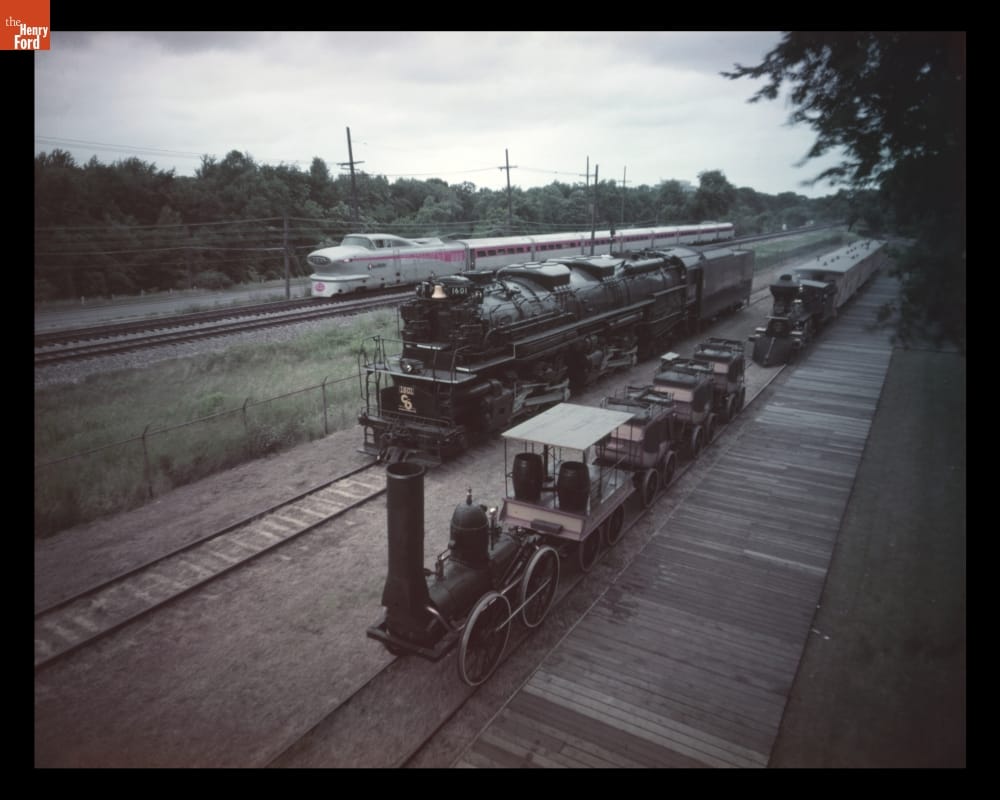
- "Allegheny," "DeWitt Clinton," and "Sam Hill" Locomotives alongside New York Central Diesel Aerotrain, circa 1956 - Three historic locomotives from The Henry Ford -- the <EM>DeWitt Clinton</EM> (replica of the 1831 original), <EM>Sam Hill</EM> (1858) and Allegheny (1941) -- pose alongside the Aerotrain in 1956. Railroads hoped that the streamlined Aerotrain, designed by General Motors, might lure travelers back onto trains. But its lightweight coaches gave a rough ride and Aerotrain failed to catch on with passengers.
- circa 1956
- Collections - Artifact
"Allegheny," "DeWitt Clinton," and "Sam Hill" Locomotives alongside New York Central Diesel Aerotrain, circa 1956
Three historic locomotives from The Henry Ford -- the DeWitt Clinton (replica of the 1831 original), Sam Hill (1858) and Allegheny (1941) -- pose alongside the Aerotrain in 1956. Railroads hoped that the streamlined Aerotrain, designed by General Motors, might lure travelers back onto trains. But its lightweight coaches gave a rough ride and Aerotrain failed to catch on with passengers.
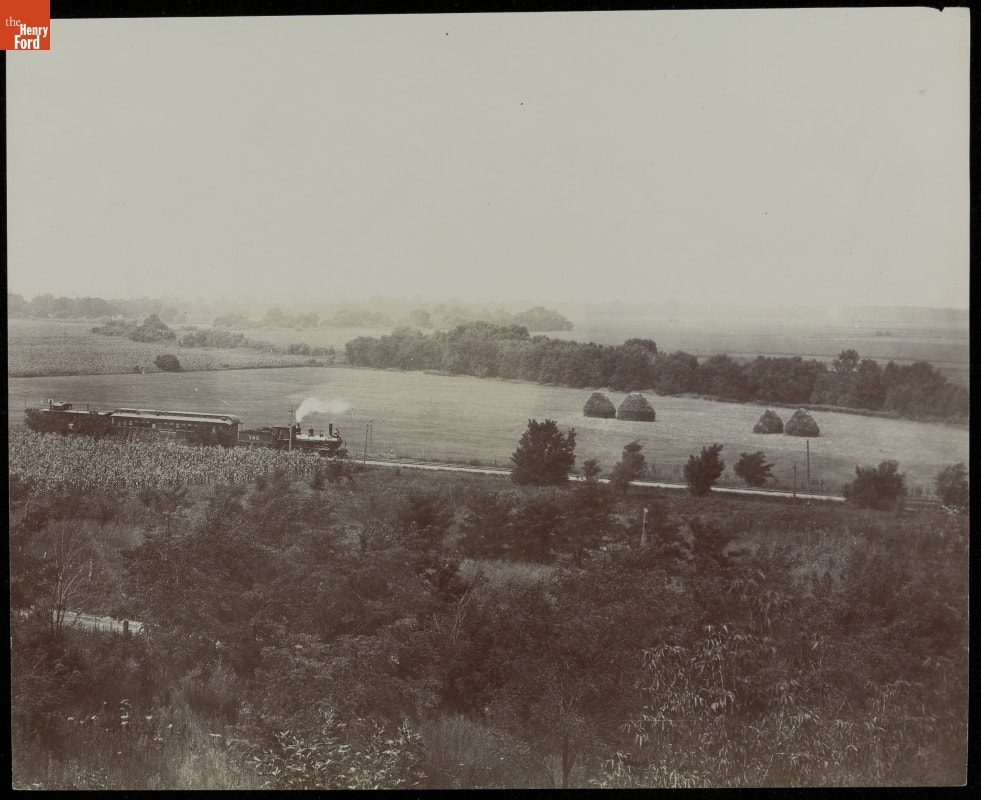
- Steam Train Traveling Through the Countryside, circa 1905 - For nearly thirty years, 1895 to 1924, the Detroit Publishing Company was one of the major image publishers in the world. The company had a wide-ranging stock of original photographs, including this image of a steam locomotive chugging across the North American countryside. It pulls a short load: just one passenger car and a caboose.
- circa 1905
- Collections - Artifact
Steam Train Traveling Through the Countryside, circa 1905
For nearly thirty years, 1895 to 1924, the Detroit Publishing Company was one of the major image publishers in the world. The company had a wide-ranging stock of original photographs, including this image of a steam locomotive chugging across the North American countryside. It pulls a short load: just one passenger car and a caboose.