
Search
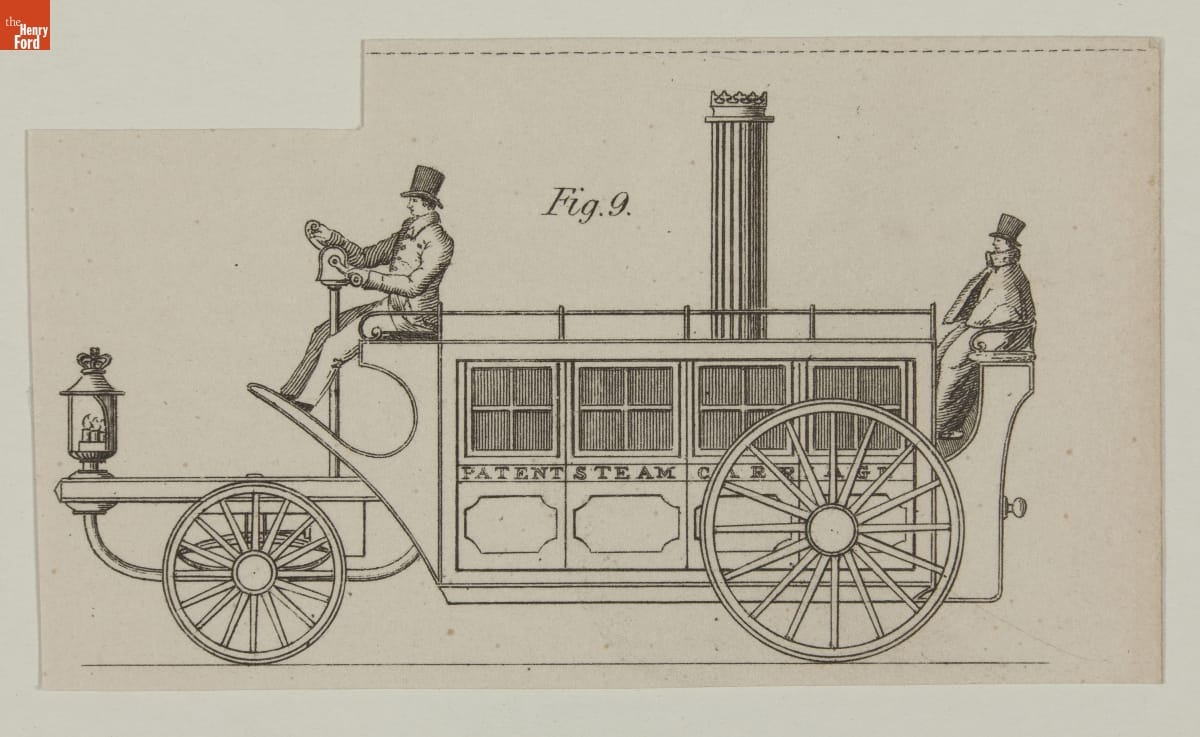
- Wood Engraving, English Steam Carriage, circa 1830 -
- circa 1830
- Collections - Artifact
Wood Engraving, English Steam Carriage, circa 1830
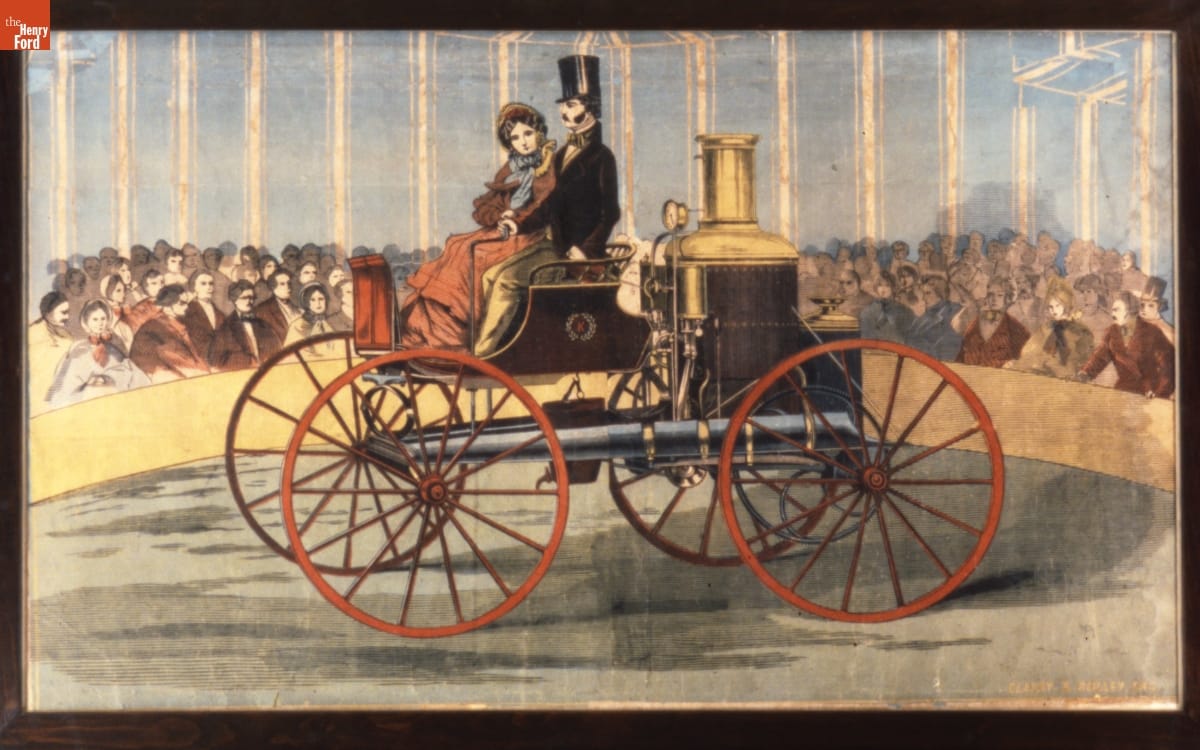
- Roper Steam Carriage at a Public Exhibition, circa 1863 - Early horseless vehicles tended to be viewed as curiosities rather than serious transportation alternatives. This c. 1863 colored engraving shows a couple in one of those steam-powered vehicles. Early automotive innovators displayed their novel inventions at circuses and local fairs. The vehicles were even raced against horses.
- circa 1863
- Collections - Artifact
Roper Steam Carriage at a Public Exhibition, circa 1863
Early horseless vehicles tended to be viewed as curiosities rather than serious transportation alternatives. This c. 1863 colored engraving shows a couple in one of those steam-powered vehicles. Early automotive innovators displayed their novel inventions at circuses and local fairs. The vehicles were even raced against horses.
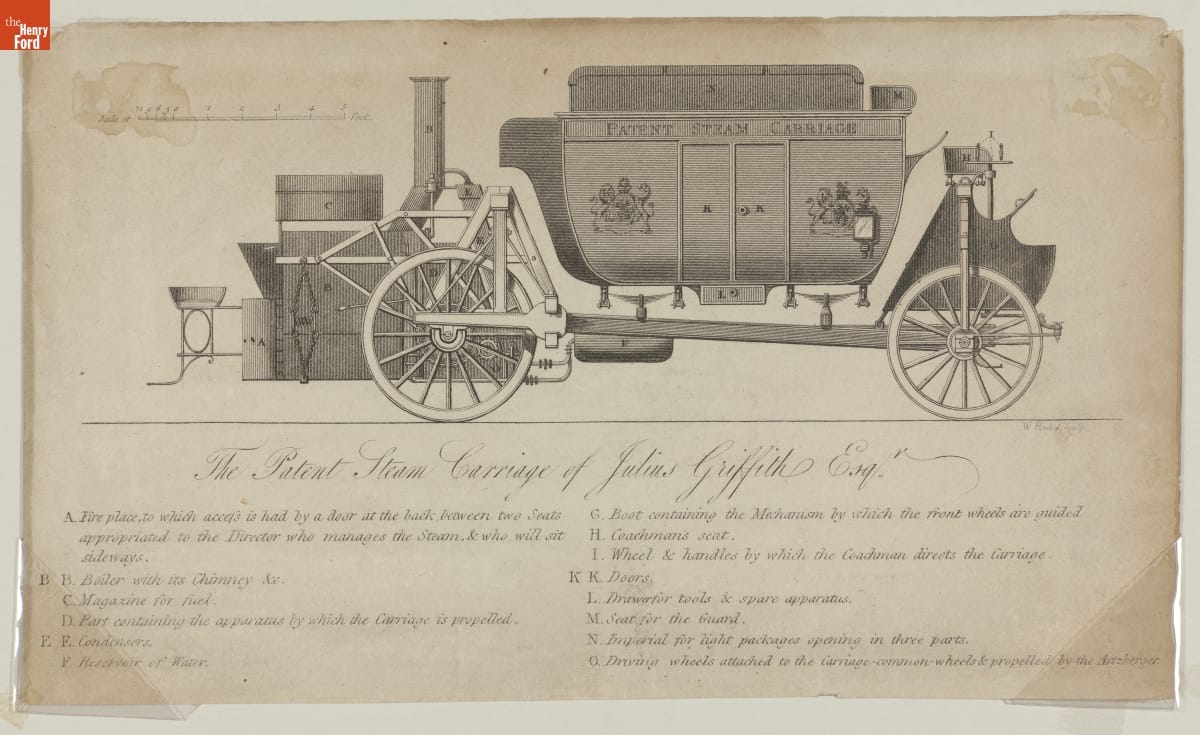
- Copperplate Engraving, "Patent Steam Carriage of Julius Griffith Esq.," circa 1821 -
- circa 1821
- Collections - Artifact
Copperplate Engraving, "Patent Steam Carriage of Julius Griffith Esq.," circa 1821
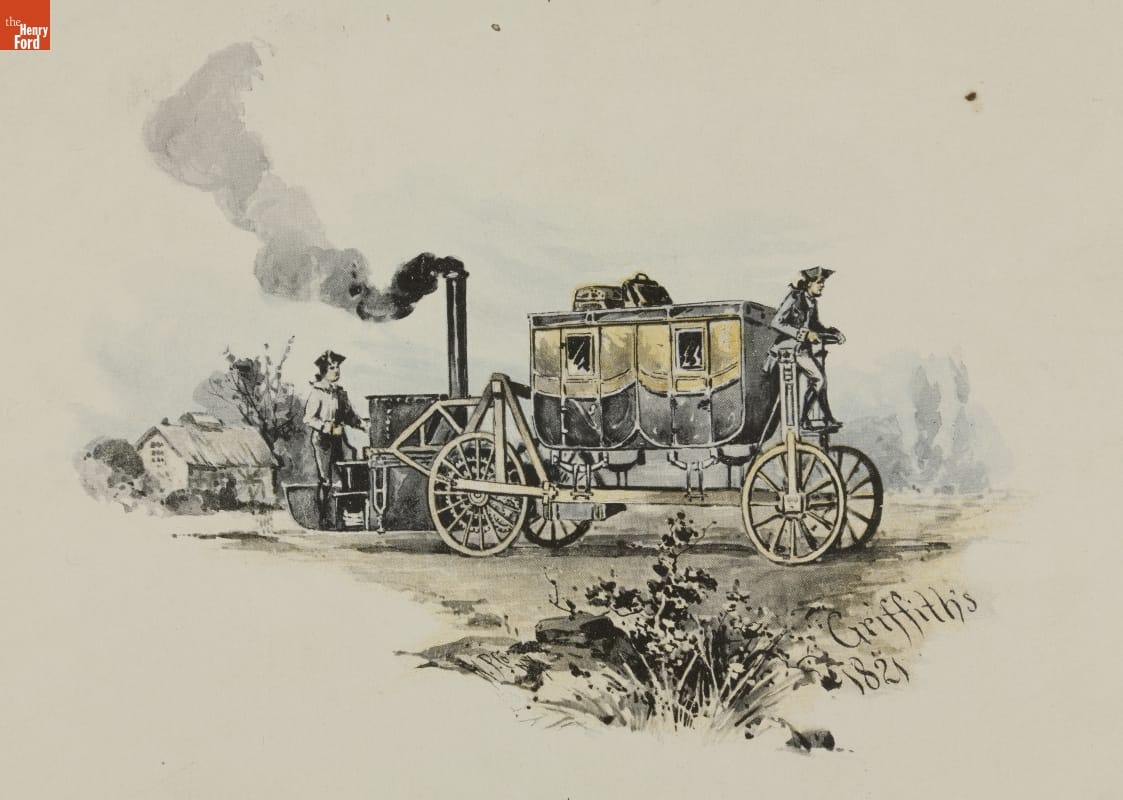
- Photoengraving, of Steam Carriage, circa 1915 -
- 1821
- Collections - Artifact
Photoengraving, of Steam Carriage, circa 1915
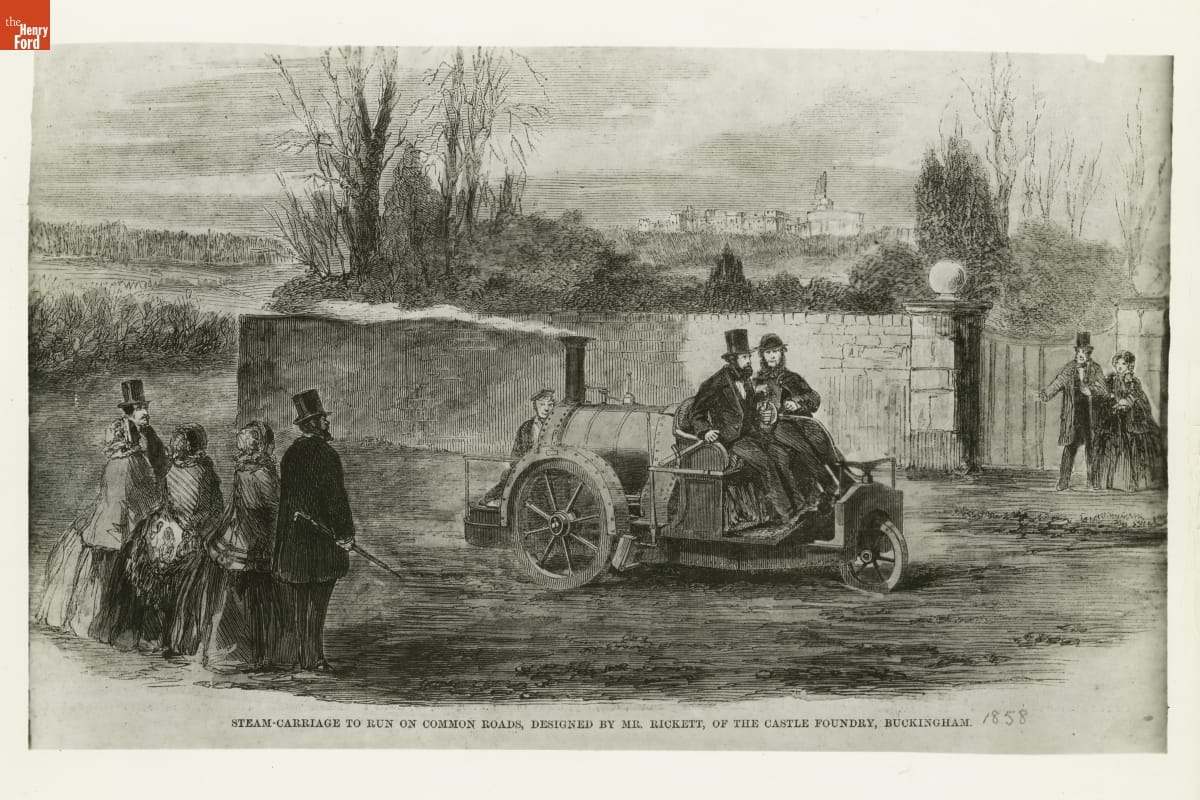
- Photograph of an 1858 Print, "Steam-Carriage to Run on Common Roads, Designed by Mr. Rickett, of the Castle Foundry, Buckingham" - Steam powered England's Industrial Revolution and moved people and material by rail. In the 1800s, British inventors began experimenting with steam for road transportation. Thomas Rickett built several steam-powered cars in the late 1850s. This photograph of a print depicts his invention, free of horses and rails, puffing down an English road.
- 1858
- Collections - Artifact
Photograph of an 1858 Print, "Steam-Carriage to Run on Common Roads, Designed by Mr. Rickett, of the Castle Foundry, Buckingham"
Steam powered England's Industrial Revolution and moved people and material by rail. In the 1800s, British inventors began experimenting with steam for road transportation. Thomas Rickett built several steam-powered cars in the late 1850s. This photograph of a print depicts his invention, free of horses and rails, puffing down an English road.
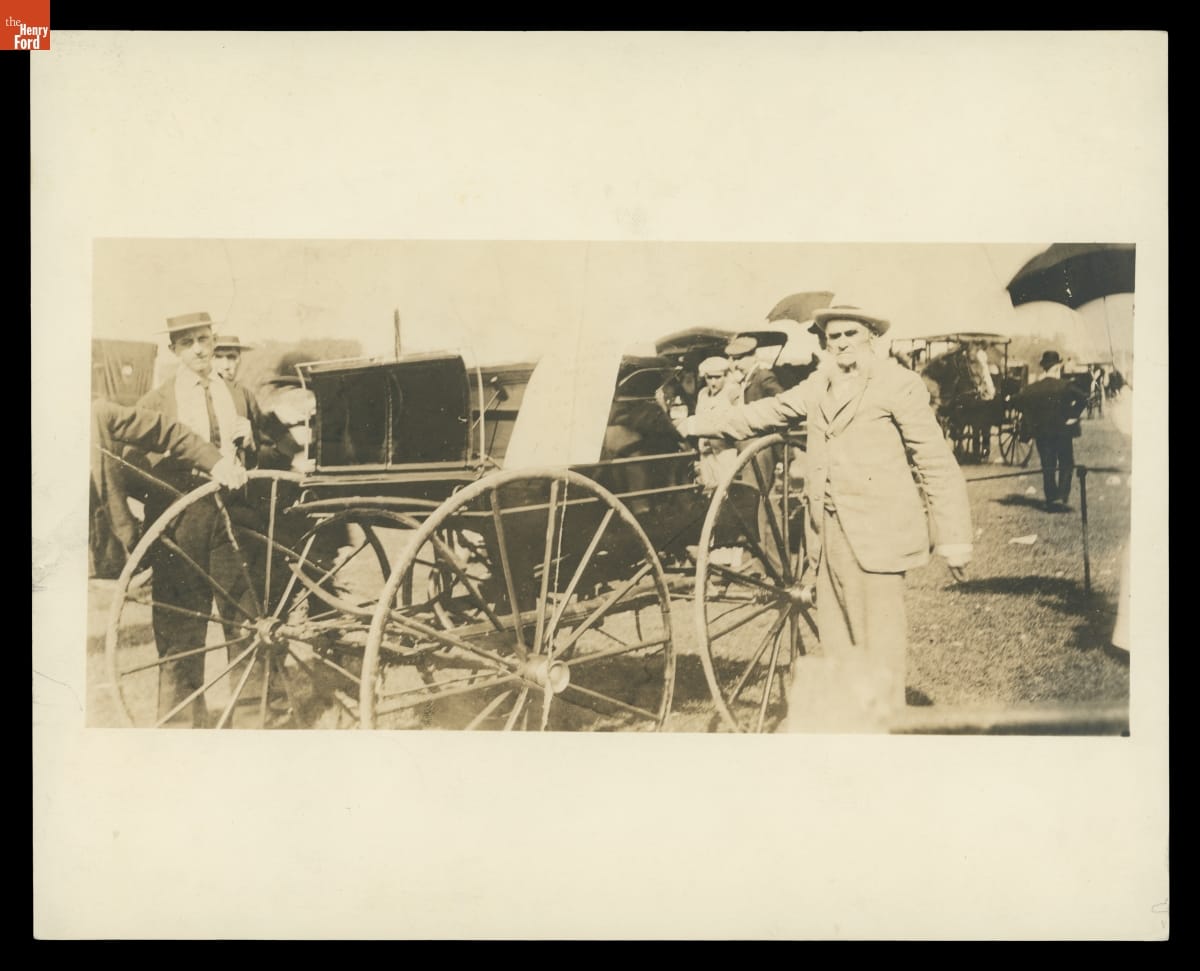
- William Wallace Austin Standing with the 1865 Roper Steam Carriage, 1905 - Sylvester Roper built several self-propelled, steam-powered vehicles from about 1863 to 1895. One of his machines, made in 1865, was sold to William Wallace Austin of Lowell, Massachusetts. Austin's steam carriage was in the possession of a Lowell car dealer when it came to Henry Ford's attention in 1930. Ford acquired the vehicle for his museum in Dearborn, Michigan.
- 1905
- Collections - Artifact
William Wallace Austin Standing with the 1865 Roper Steam Carriage, 1905
Sylvester Roper built several self-propelled, steam-powered vehicles from about 1863 to 1895. One of his machines, made in 1865, was sold to William Wallace Austin of Lowell, Massachusetts. Austin's steam carriage was in the possession of a Lowell car dealer when it came to Henry Ford's attention in 1930. Ford acquired the vehicle for his museum in Dearborn, Michigan.
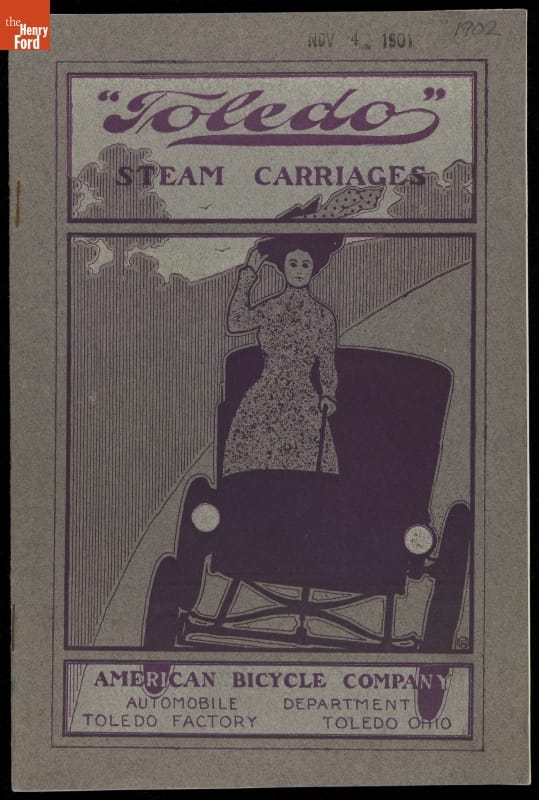
- Catalog for Toledo Steam Carriages by American Bicycle Company, 1901 - Car brochures have evolved from straightforward product catalogues into polished creative sales tools. Their quality paper, rich color, inventive formats, and sophisticated graphic design all contribute to a buyer's developing impression of a car in a showroom. Advertising might entice people to a dealership, but brochures extend and deepen the relationship between vehicle and potential buyer.
- 1902
- Collections - Artifact
Catalog for Toledo Steam Carriages by American Bicycle Company, 1901
Car brochures have evolved from straightforward product catalogues into polished creative sales tools. Their quality paper, rich color, inventive formats, and sophisticated graphic design all contribute to a buyer's developing impression of a car in a showroom. Advertising might entice people to a dealership, but brochures extend and deepen the relationship between vehicle and potential buyer.
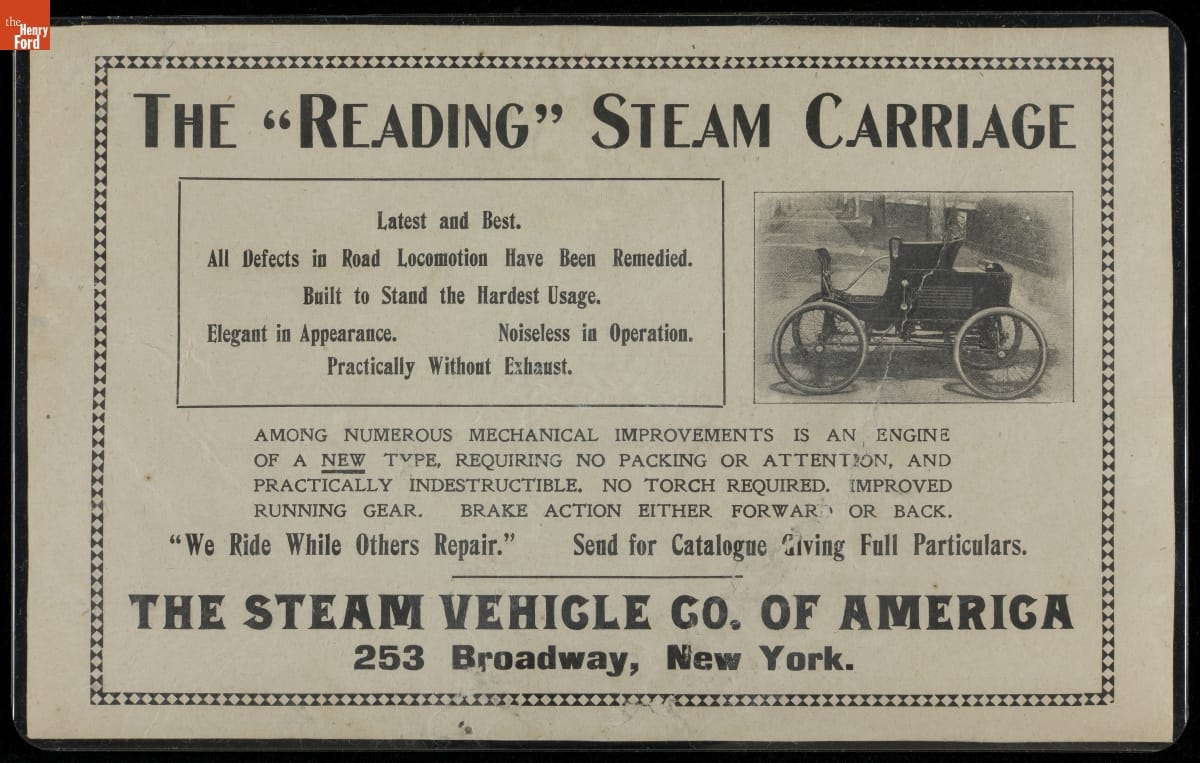
- Advertisement for the Reading Steam Carriage, Steam Vehicle Company of America, 1900 - The Steam Vehicle Company of America, in operation from 1900 to 1902, named its steam-powered "Reading" model in honor of Reading, Pennsylvania, where the car was conceived. This advertisement promotes the Reading's durability and design. It also touts the model's quiet operation and minimal exhaust -- two virtues not shared by gasoline-powered cars at the time.
- December 19, 1900
- Collections - Artifact
Advertisement for the Reading Steam Carriage, Steam Vehicle Company of America, 1900
The Steam Vehicle Company of America, in operation from 1900 to 1902, named its steam-powered "Reading" model in honor of Reading, Pennsylvania, where the car was conceived. This advertisement promotes the Reading's durability and design. It also touts the model's quiet operation and minimal exhaust -- two virtues not shared by gasoline-powered cars at the time.
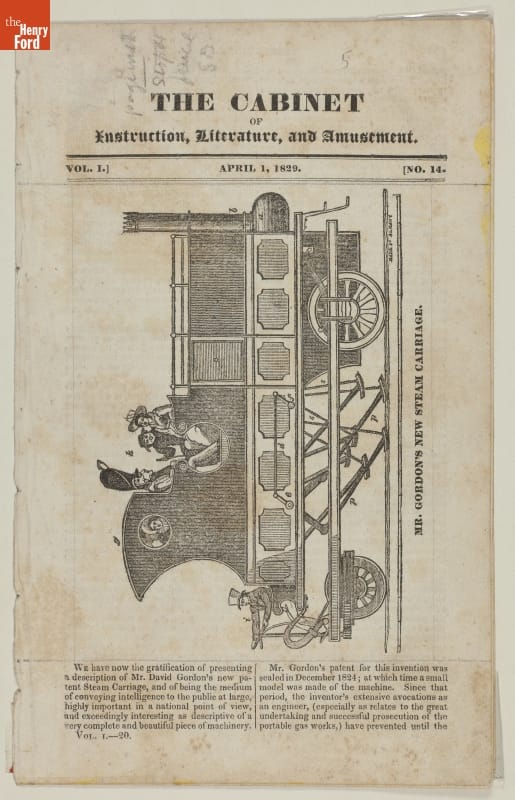
- Clipping from Cabinet Magazine, "Mr. Gordon's New Steam Carriage," 1829 - This clipping from <em>The Cabinet</em> magazine, dated April 1, 1829, is an entry about inventor David Gordon's 1824 patent for a steam carriage. Gordon's invention had the steam carriage imitate a horse, "walking" by means of "feet" on the ends of "legs" attached to the crankshaft.
- April 01, 1829
- Collections - Artifact
Clipping from Cabinet Magazine, "Mr. Gordon's New Steam Carriage," 1829
This clipping from The Cabinet magazine, dated April 1, 1829, is an entry about inventor David Gordon's 1824 patent for a steam carriage. Gordon's invention had the steam carriage imitate a horse, "walking" by means of "feet" on the ends of "legs" attached to the crankshaft.
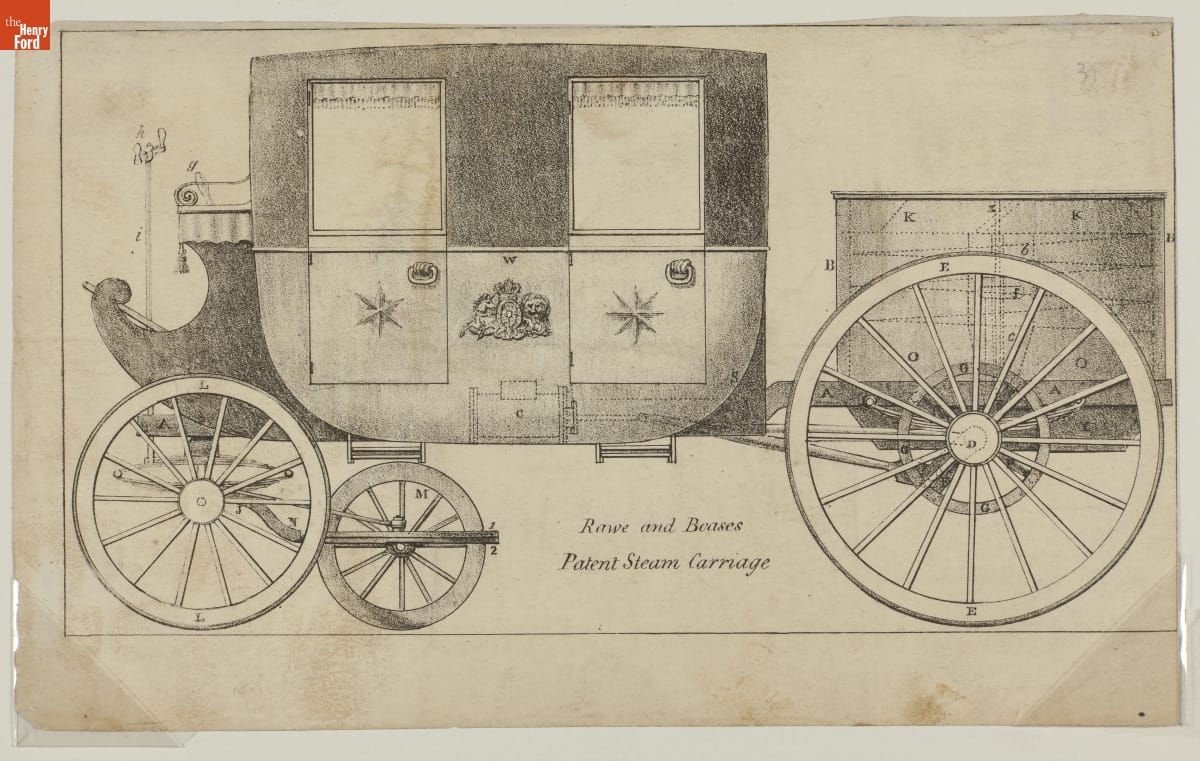
- Copperplate Engraving, "Rawe and Beases Patent Steam Carriage," circa 1830 -
- circa 1830
- Collections - Artifact
Copperplate Engraving, "Rawe and Beases Patent Steam Carriage," circa 1830