
Search
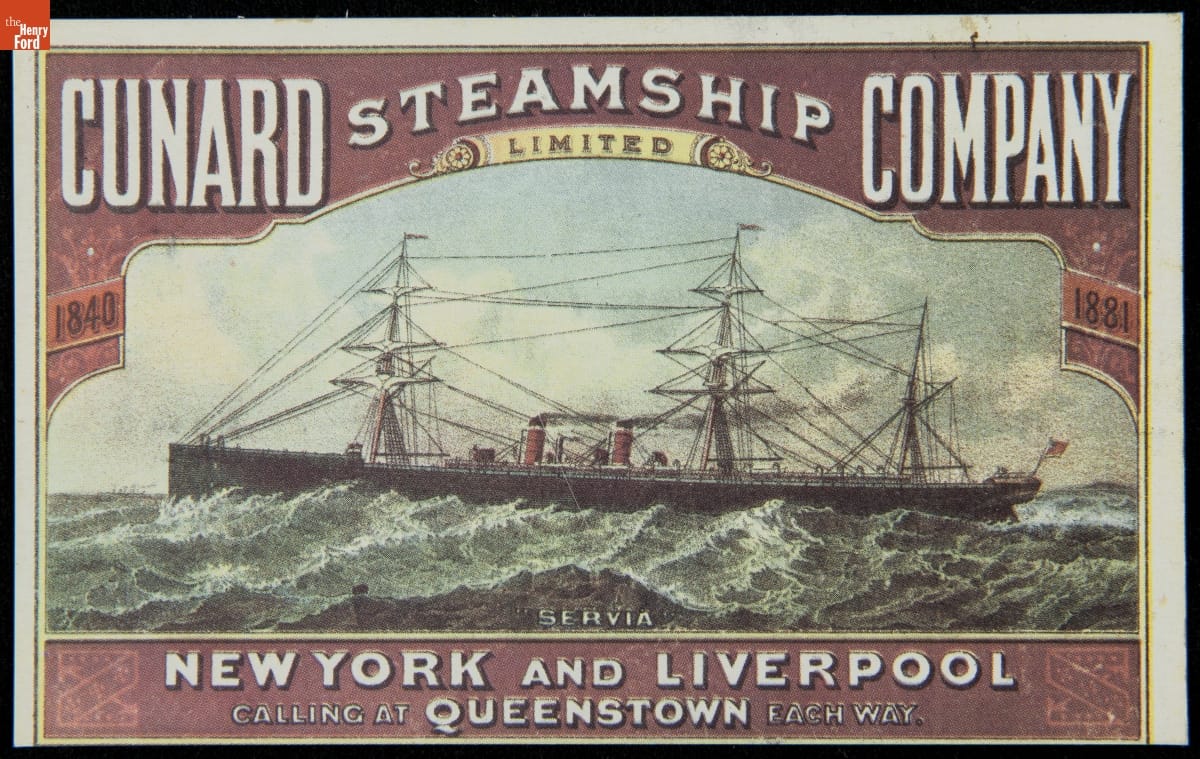
- Trade Card for the Cunard Steamship Company, 1881 - The Cunard Steamship Company Ltd. began its first regularly scheduled transatlantic service in 1840. The 392-ton <em>Servia</em>, built in 1881, was the company's first steel ship and the first in the world to use electric lights. The Cunard line profited through transatlantic trade, mail-carrying, transporting emigrants, and the pampering of first-class passengers who were taking extended pleasure trips.
- 1840-1881
- Collections - Artifact
Trade Card for the Cunard Steamship Company, 1881
The Cunard Steamship Company Ltd. began its first regularly scheduled transatlantic service in 1840. The 392-ton Servia, built in 1881, was the company's first steel ship and the first in the world to use electric lights. The Cunard line profited through transatlantic trade, mail-carrying, transporting emigrants, and the pampering of first-class passengers who were taking extended pleasure trips.
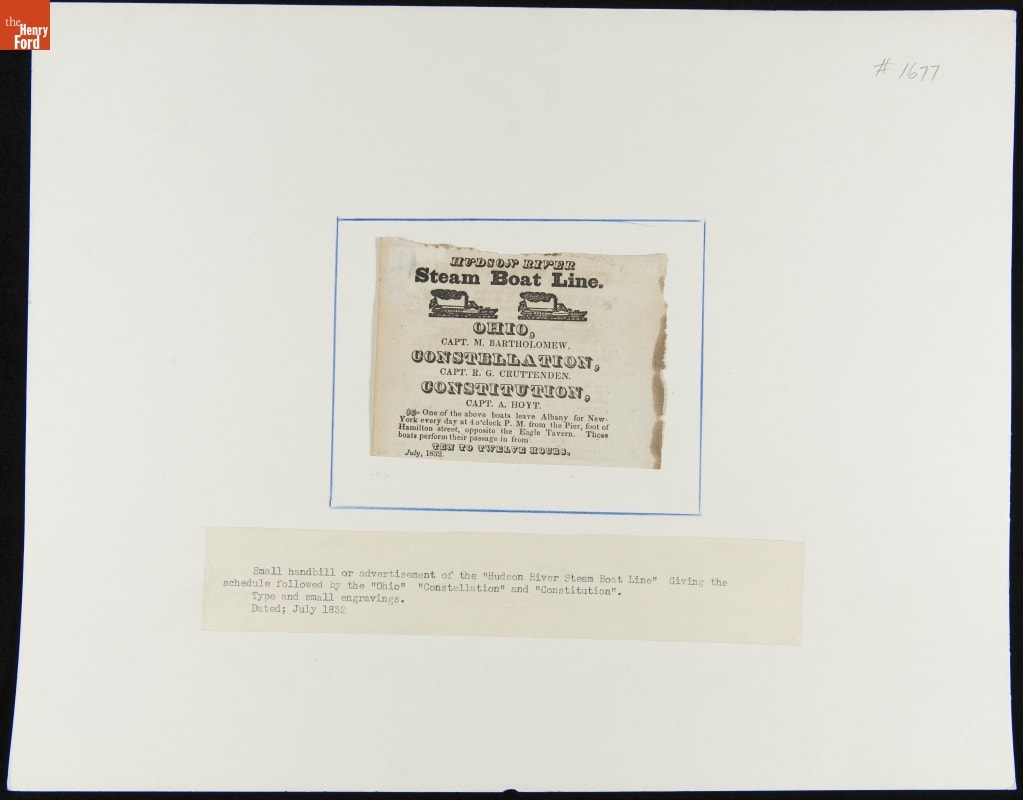
- "Hudson River Steam Boat Line," July 1832 - Robert Fulton operated the world's first commercially successful steamboat, <i>Clermont</i>, on the Hudson River in 1807. The Hudson was broad, deep and straight for many of the 150 miles between New York City and Albany. By the 1860s, steam-powered boats could cover that distance in about nine hours. Spacious, well-equipped steamboats offered a uniquely pleasant way to travel.
- July 01, 1832
- Collections - Artifact
"Hudson River Steam Boat Line," July 1832
Robert Fulton operated the world's first commercially successful steamboat, Clermont, on the Hudson River in 1807. The Hudson was broad, deep and straight for many of the 150 miles between New York City and Albany. By the 1860s, steam-powered boats could cover that distance in about nine hours. Spacious, well-equipped steamboats offered a uniquely pleasant way to travel.
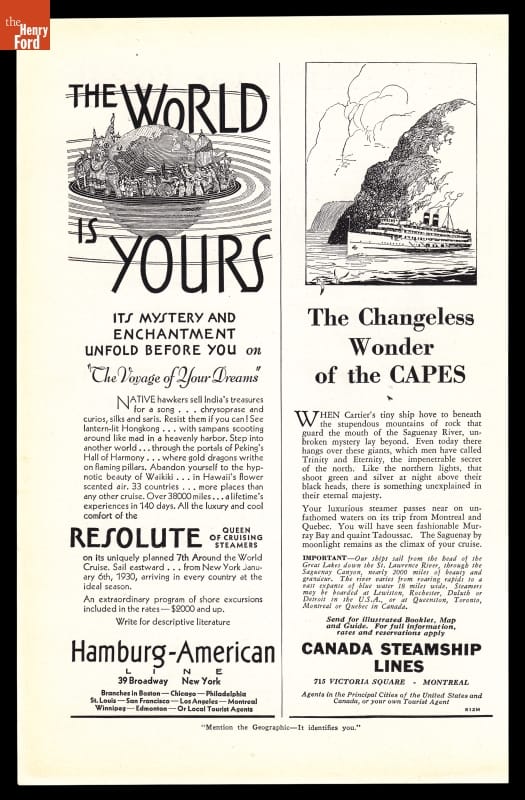
- Steamship Lines Advertisements, "The World is Yours," and "The Changeless Wonder of the Capes," July 1929 - From the mid-19th century into the mid-20th, large ocean liners carried passengers between Europe and North America, and to other places around the world. Operators competed to build the fastest or most luxurious ships. The arrival of long-range jet airliners in the late 1950s -- which cut travel time from days to hours -- ended the age of ocean liners.
- July 01, 1929
- Collections - Artifact
Steamship Lines Advertisements, "The World is Yours," and "The Changeless Wonder of the Capes," July 1929
From the mid-19th century into the mid-20th, large ocean liners carried passengers between Europe and North America, and to other places around the world. Operators competed to build the fastest or most luxurious ships. The arrival of long-range jet airliners in the late 1950s -- which cut travel time from days to hours -- ended the age of ocean liners.