
Search
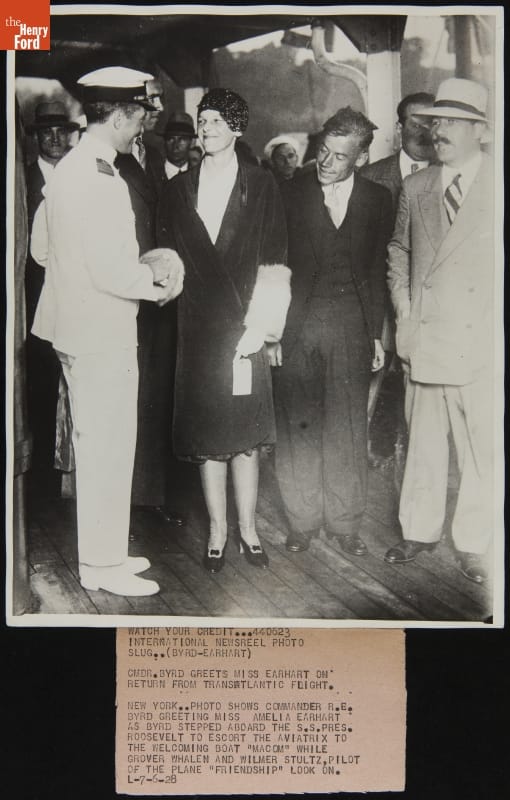
- Amelia Earhart Meets Richard Byrd aboard SS President Roosevelt, Returning from the Transatlantic Flight, July 6, 1928 - Amelia Earhart was congratulated by explorer Richard Byrd for her 1928 flight across the Atlantic Ocean. Earhart, riding as a passenger with pilot Wilmer Stultz and mechanic Louis Gordon, made the crossing in a Fokker F.VII Tri-Motor airplane. Byrd used a similar Fokker on his North Pole flight in 1926.
- July 06, 1928
- Collections - Artifact
Amelia Earhart Meets Richard Byrd aboard SS President Roosevelt, Returning from the Transatlantic Flight, July 6, 1928
Amelia Earhart was congratulated by explorer Richard Byrd for her 1928 flight across the Atlantic Ocean. Earhart, riding as a passenger with pilot Wilmer Stultz and mechanic Louis Gordon, made the crossing in a Fokker F.VII Tri-Motor airplane. Byrd used a similar Fokker on his North Pole flight in 1926.
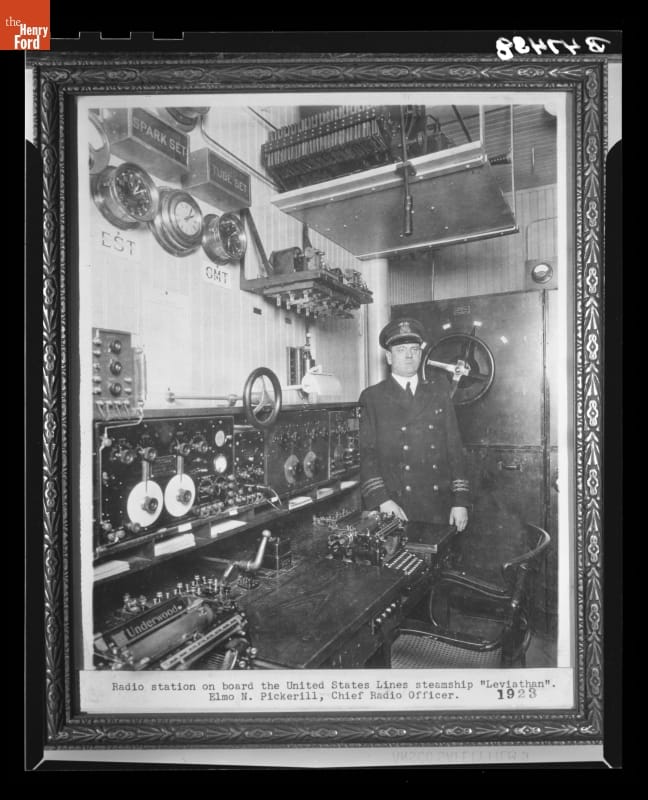
- Chief Radio Officer Elmo Pickerill in the Radio Station on the SS Leviathan, 1923 -
- 1923
- Collections - Artifact
Chief Radio Officer Elmo Pickerill in the Radio Station on the SS Leviathan, 1923
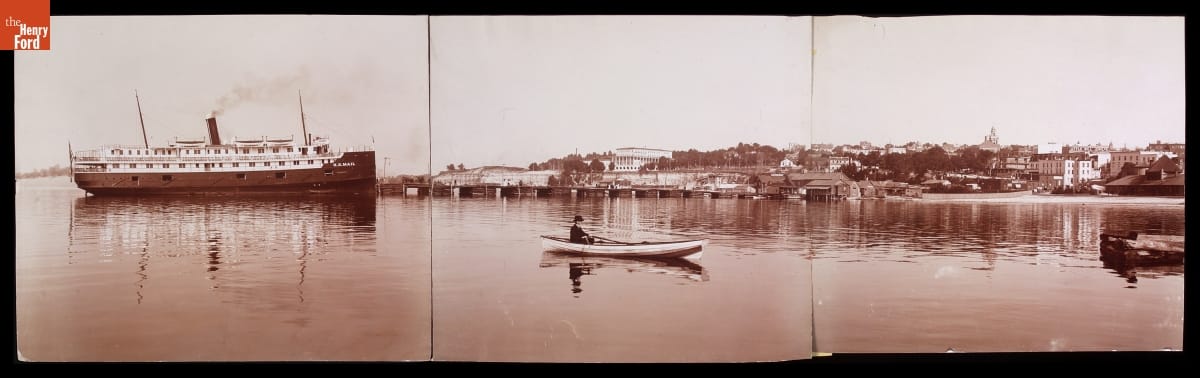
- View from the Harbor, Petoskey, Michigan, circa 1906 - From 1895 to 1924, the Detroit Publishing Company was one of the major image publishers in the world. The company's wide-ranging stock of original photographs documented life and landscapes from across the nation and around the globe. From the tens of thousands of negatives, the company created prints, postcards, lantern slides, panoramas, and other merchandise for sale to educators, businessmen, advertisers, homeowners and travelers.
- 1906
- Collections - Artifact
View from the Harbor, Petoskey, Michigan, circa 1906
From 1895 to 1924, the Detroit Publishing Company was one of the major image publishers in the world. The company's wide-ranging stock of original photographs documented life and landscapes from across the nation and around the globe. From the tens of thousands of negatives, the company created prints, postcards, lantern slides, panoramas, and other merchandise for sale to educators, businessmen, advertisers, homeowners and travelers.
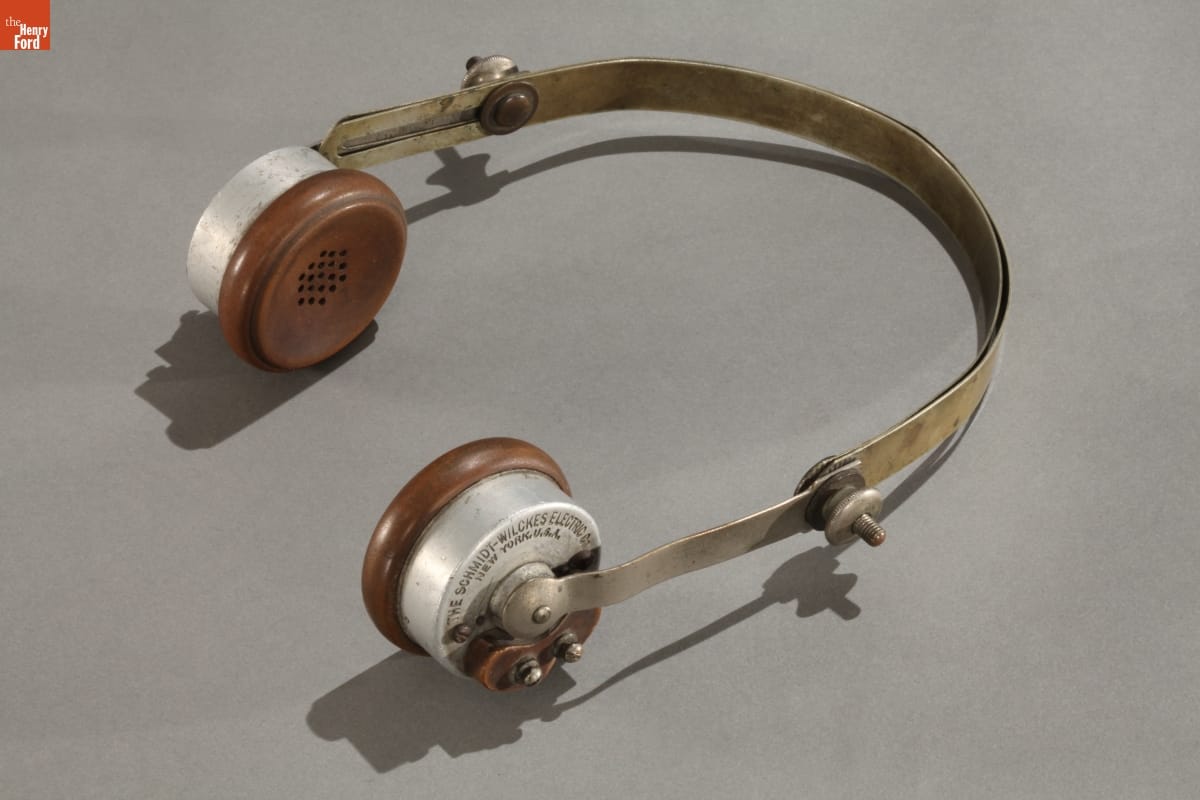
- Radio Headphones Used by Theodore Haubner While Transmitting the First "SOS" Distress Signal, August 11, 1909 - In 1909, telegraph operator Theodore Haubner sent the first American ship-to-shore wireless distress signal -- SOS. These headphones were part of his wireless equipment. Haubner was aboard the SS <EM>Arapahoe</EM> off Cape Hatteras, North Carolina, when it became disabled.
- August 11, 1909
- Collections - Artifact
Radio Headphones Used by Theodore Haubner While Transmitting the First "SOS" Distress Signal, August 11, 1909
In 1909, telegraph operator Theodore Haubner sent the first American ship-to-shore wireless distress signal -- SOS. These headphones were part of his wireless equipment. Haubner was aboard the SS Arapahoe off Cape Hatteras, North Carolina, when it became disabled.
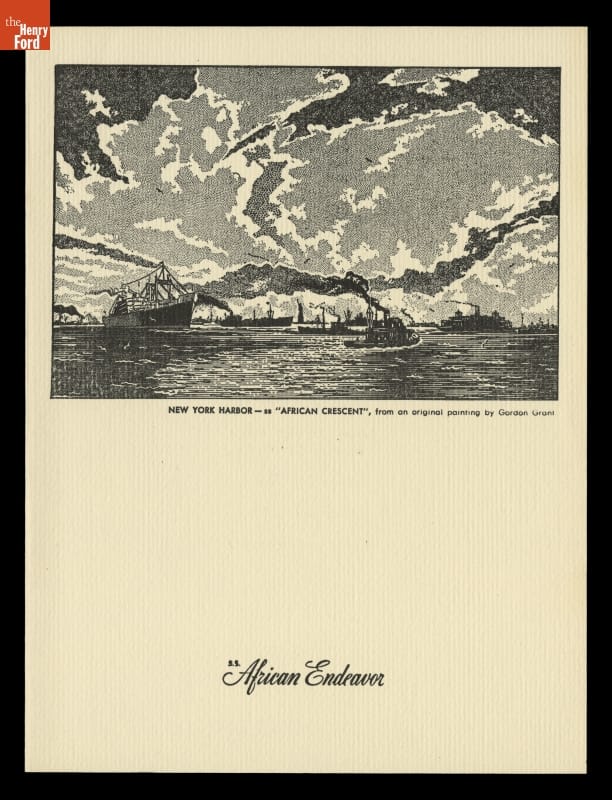
- Menu from the SS African Endeavor, March 12, 1954 -
- March 12, 1954
- Collections - Artifact
Menu from the SS African Endeavor, March 12, 1954
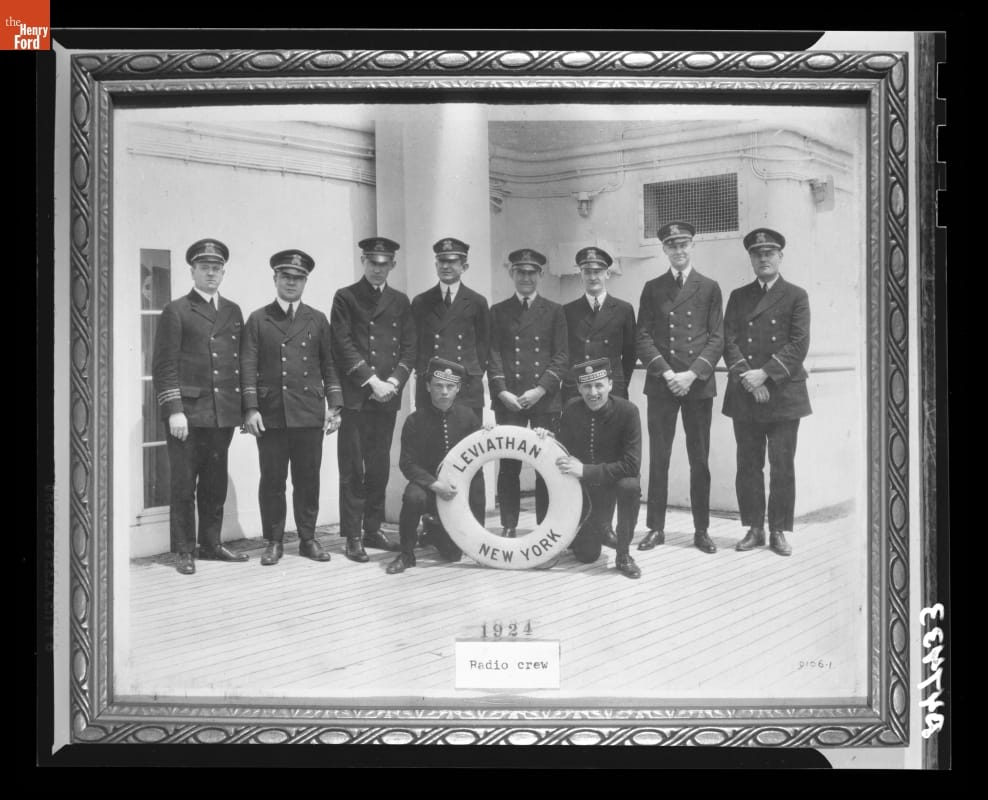
- Radio Crew of the SS Leviathan, 1924 -
- 1924
- Collections - Artifact
Radio Crew of the SS Leviathan, 1924
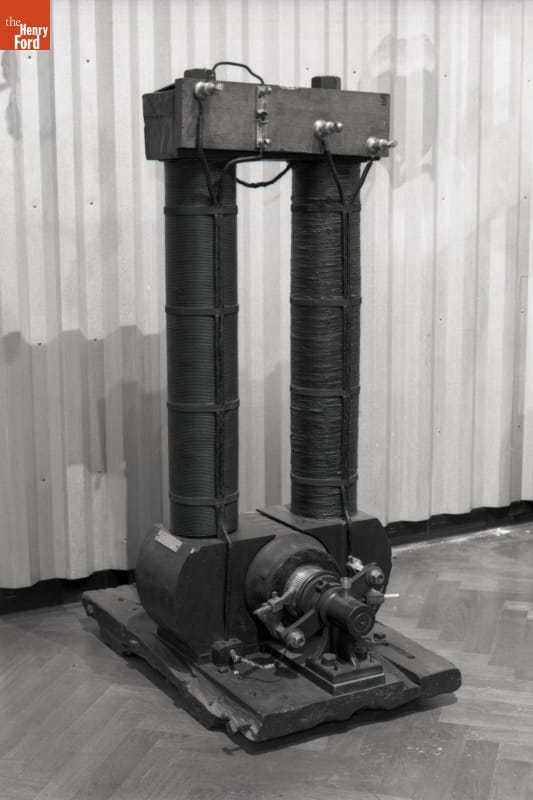
- Edison Dynamo Used on SS Columbia, 1880 - For Thomas Edison, successful experimental results were but a prelude to continual improvements that would lead to commercial implementation. This dynamo is from the first lighting system he sold -- installed on a ship, four months after the December 1879 experimental demonstration. Its crude finish, at odds with the highly advanced technology it embodied, suggests Edison's impatient eagerness to move from experiment to market.
- 1880
- Collections - Artifact
Edison Dynamo Used on SS Columbia, 1880
For Thomas Edison, successful experimental results were but a prelude to continual improvements that would lead to commercial implementation. This dynamo is from the first lighting system he sold -- installed on a ship, four months after the December 1879 experimental demonstration. Its crude finish, at odds with the highly advanced technology it embodied, suggests Edison's impatient eagerness to move from experiment to market.
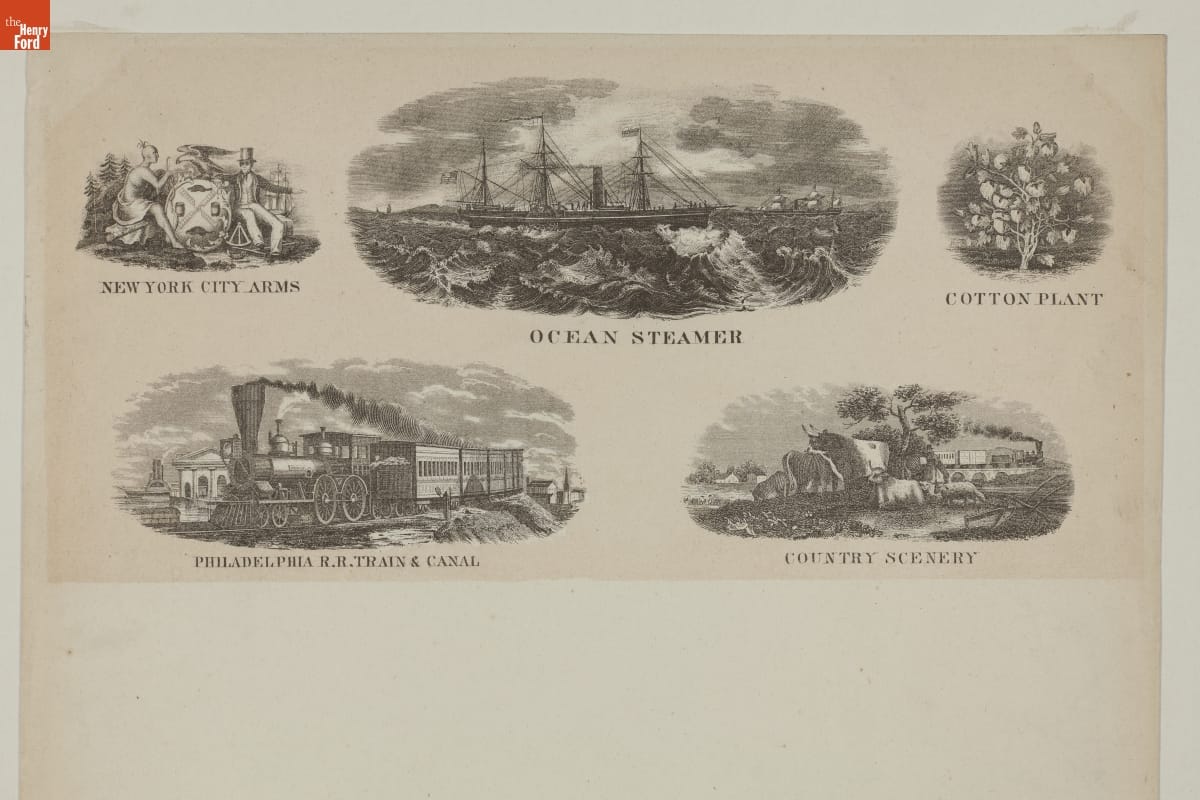
- Letterhead Samples, circa 1855 - Steam power stood at the technological forefront in the 19th century, so it's not surprising that steamships and steam locomotives were popular letterhead vignettes for companies wishing to project a modern image. Natural scenes still held some appeal, as shown by the cotton plant at upper right. The "country scenery" vignette at lower right blended the pastoral with the industrial.
- circa 1855
- Collections - Artifact
Letterhead Samples, circa 1855
Steam power stood at the technological forefront in the 19th century, so it's not surprising that steamships and steam locomotives were popular letterhead vignettes for companies wishing to project a modern image. Natural scenes still held some appeal, as shown by the cotton plant at upper right. The "country scenery" vignette at lower right blended the pastoral with the industrial.
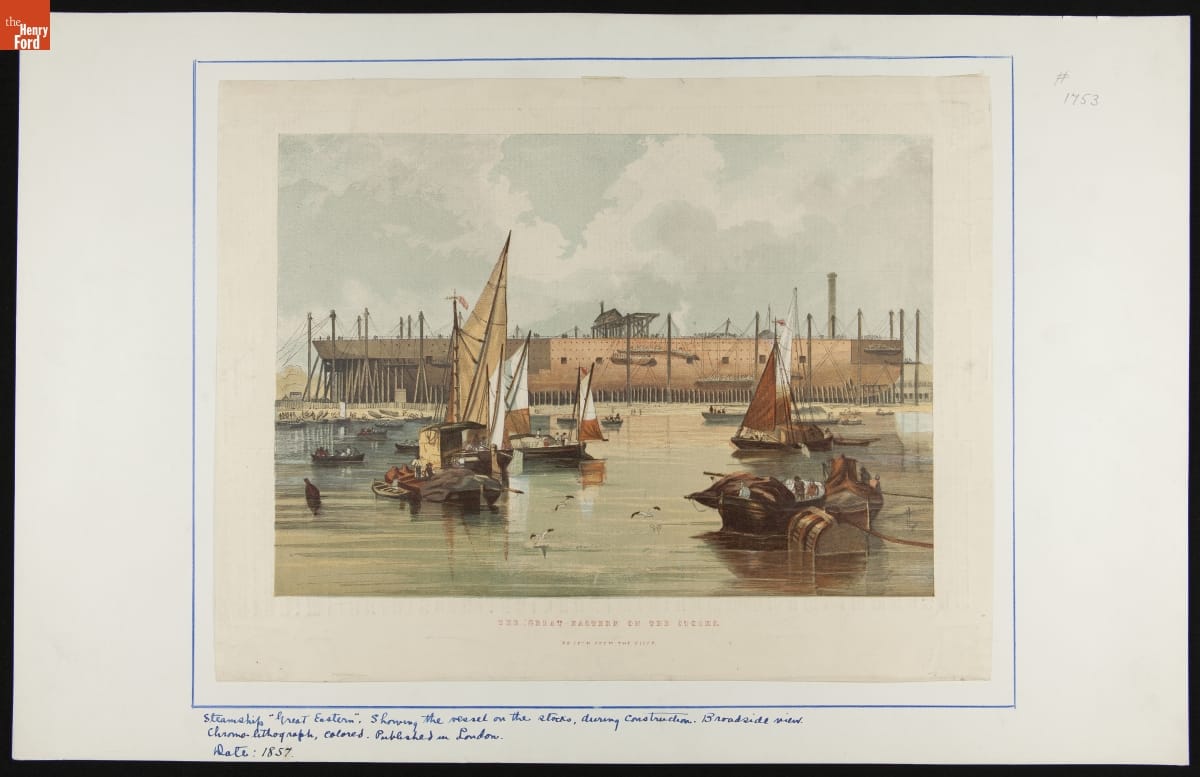
- Chromolithograph, "The Great Eastern on the Stocks as Seen From the River," 1857 - The SS <em>Great Eastern</em> is shown under construction in this print. It was the largest passenger ship ever built at the time of its launch in 1858. In 1866, the <em>Great Eastern</em> was converted to lay the second--and first successful--transatlantic cable. During its career, this ship laid multiple submarine communication cables totaling over 32,000 miles.
- 1857
- Collections - Artifact
Chromolithograph, "The Great Eastern on the Stocks as Seen From the River," 1857
The SS Great Eastern is shown under construction in this print. It was the largest passenger ship ever built at the time of its launch in 1858. In 1866, the Great Eastern was converted to lay the second--and first successful--transatlantic cable. During its career, this ship laid multiple submarine communication cables totaling over 32,000 miles.
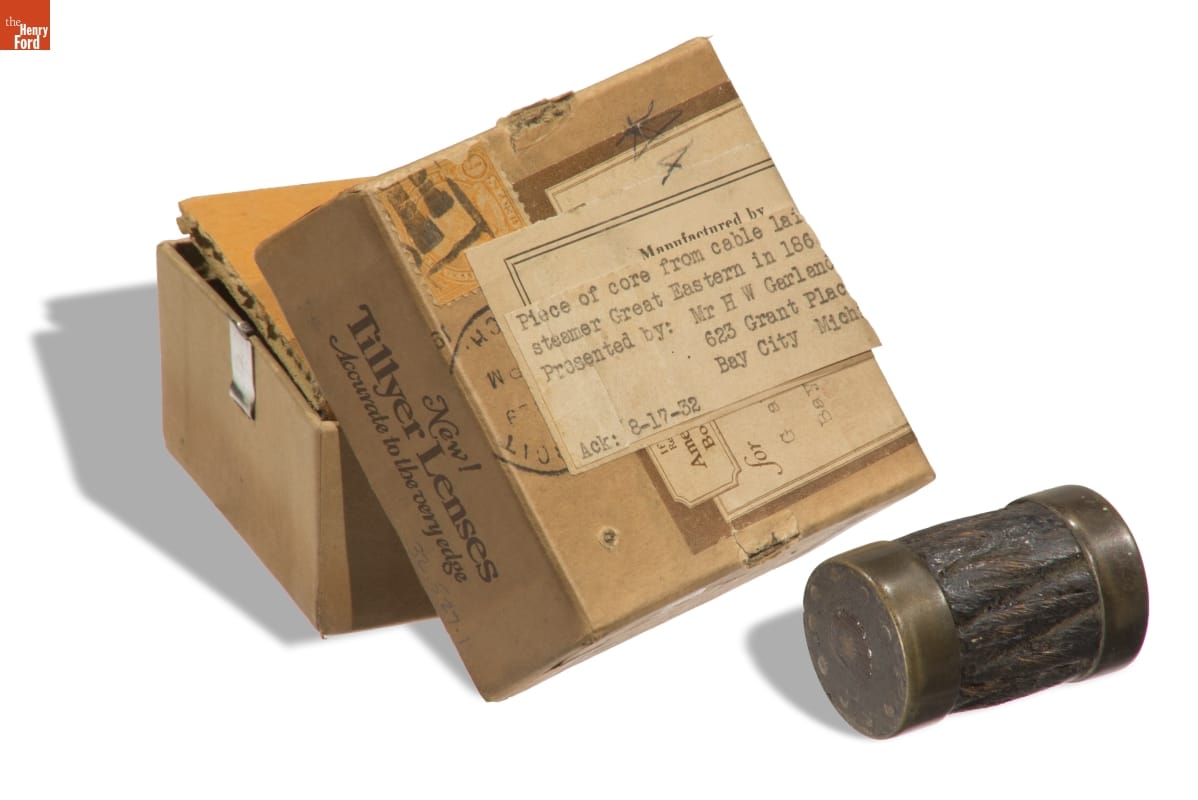
- Section of the Second Transatlantic Cable, 1865-1866 - Celebrations surrounding the installation of the 1858 transatlantic telegraph cable were short-lived. Three weeks after it was laid, it succeeded, faltered--and then failed. In 1866, a second cable was installed by the SS <EM>Great Eastern</EM>. This cable was more durable and able to send messages eighty times faster than the original.
- 1865-1866
- Collections - Artifact
Section of the Second Transatlantic Cable, 1865-1866
Celebrations surrounding the installation of the 1858 transatlantic telegraph cable were short-lived. Three weeks after it was laid, it succeeded, faltered--and then failed. In 1866, a second cable was installed by the SS Great Eastern. This cable was more durable and able to send messages eighty times faster than the original.