
Search
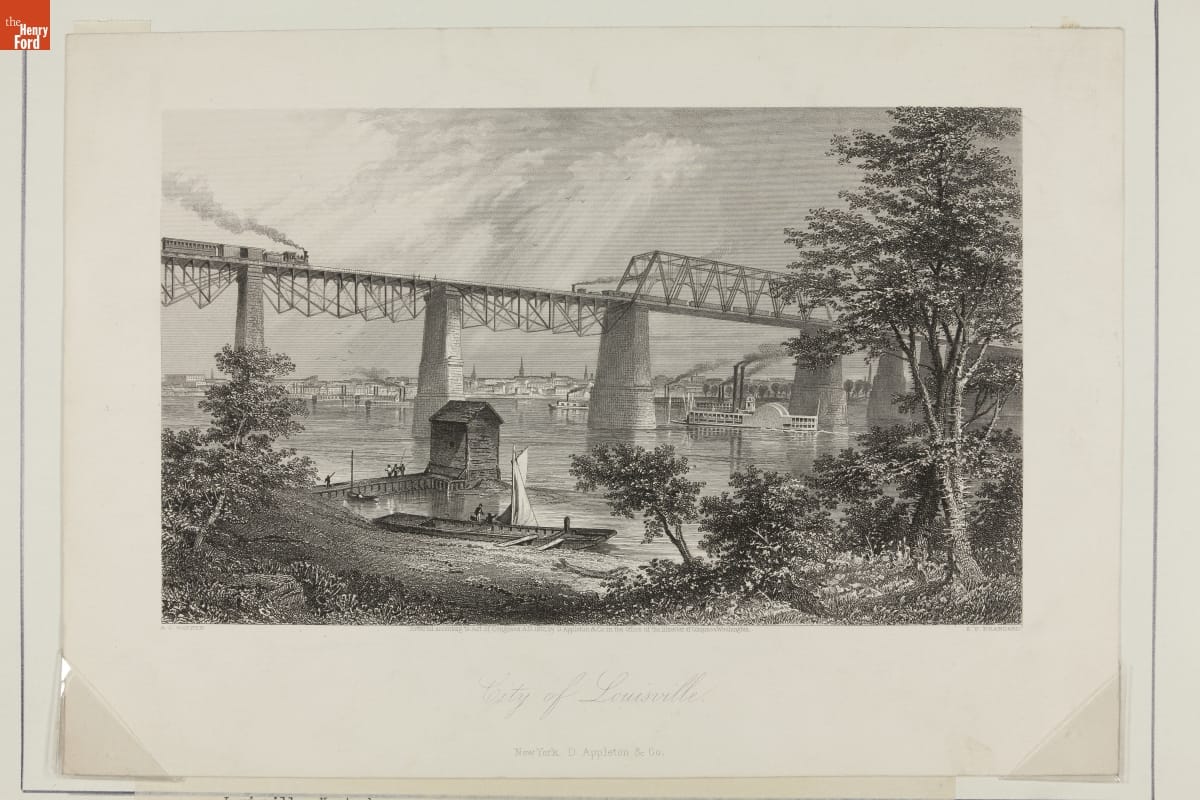
- Steel Engraving, "City of Louisville," circa 1870 - This circa 1870 steel engraving shows the city of Louisville, Kentucky, from a point across the Ohio River. Founded in 1780, Louisville grew rapidly into a major shipping port along the river, and this steel railroad bridge was the first to span the Ohio River in Louisville.
- circa 1872
- Collections - Artifact
Steel Engraving, "City of Louisville," circa 1870
This circa 1870 steel engraving shows the city of Louisville, Kentucky, from a point across the Ohio River. Founded in 1780, Louisville grew rapidly into a major shipping port along the river, and this steel railroad bridge was the first to span the Ohio River in Louisville.
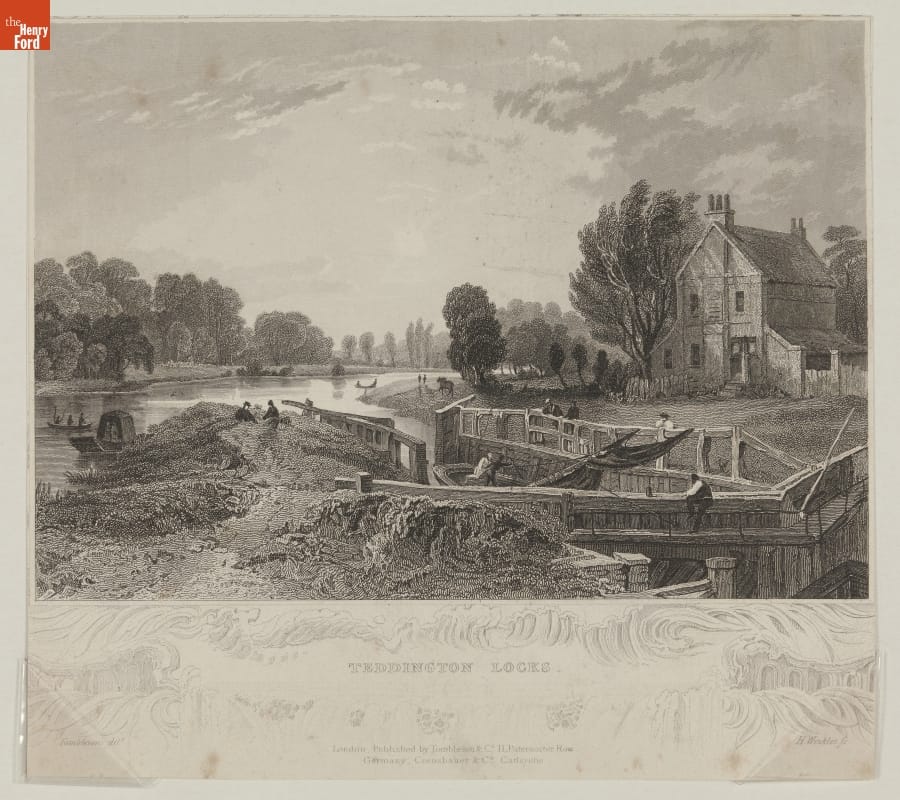
- Steel Engraving, "Teddington Locks," circa 1837 - Before railroads, rivers provided quick transportation routes for people and goods. But rapids and dams impeded a boat's movement. To avert these obstacles, a lock was built to lift or lower a boat from one navigable section of a waterway to another. This steel engraving, done about 1837, depicts the Teddington locks on the River Thames in England.
- 1835-1840
- Collections - Artifact
Steel Engraving, "Teddington Locks," circa 1837
Before railroads, rivers provided quick transportation routes for people and goods. But rapids and dams impeded a boat's movement. To avert these obstacles, a lock was built to lift or lower a boat from one navigable section of a waterway to another. This steel engraving, done about 1837, depicts the Teddington locks on the River Thames in England.
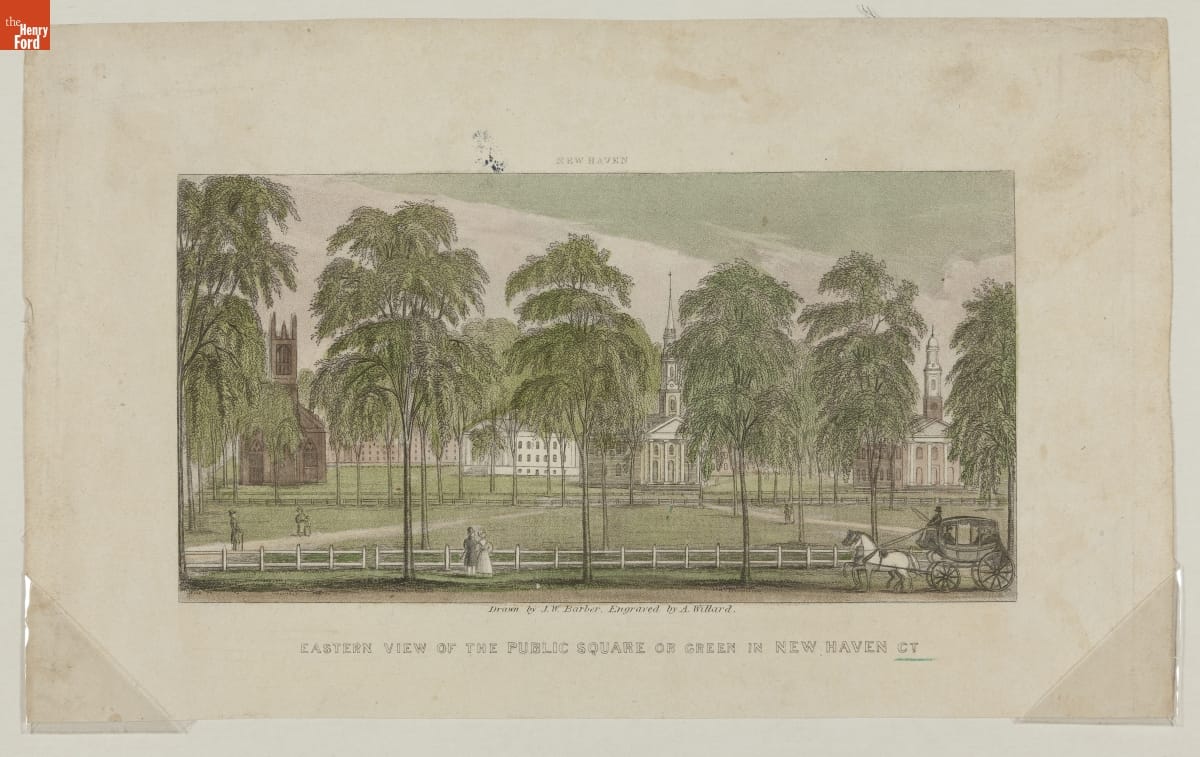
- Steel Engraving, "Eastern View of the Public Square or Green in New Haven CT," circa 1840 - Prolific illustrator John Warner Barber sketched this charming scene of the eastern view of the public square of New Haven, Connecticut. The circa 1840 color engraving depicts a pastoral scene of buildings, people strolling, and a stagecoach.
- circa 1840
- Collections - Artifact
Steel Engraving, "Eastern View of the Public Square or Green in New Haven CT," circa 1840
Prolific illustrator John Warner Barber sketched this charming scene of the eastern view of the public square of New Haven, Connecticut. The circa 1840 color engraving depicts a pastoral scene of buildings, people strolling, and a stagecoach.
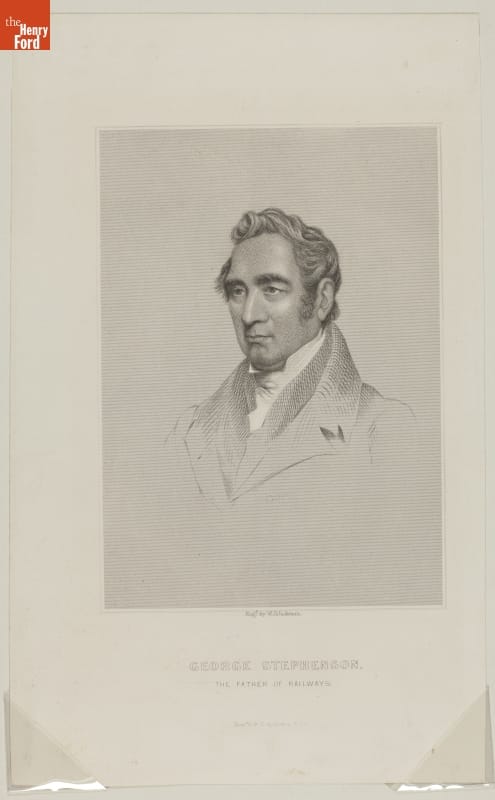
- Steel Engraving, Portrait of George Stephenson, "Father of Railways," circa 1855 - This circa 1855 engraving is a portrait of British engineer George Stephenson, known as the "Father of Railways." He built the first public rail line for steam locomotives, and set the world's standard gauge for rails, also called the "Stephenson gauge."
- circa 1855
- Collections - Artifact
Steel Engraving, Portrait of George Stephenson, "Father of Railways," circa 1855
This circa 1855 engraving is a portrait of British engineer George Stephenson, known as the "Father of Railways." He built the first public rail line for steam locomotives, and set the world's standard gauge for rails, also called the "Stephenson gauge."
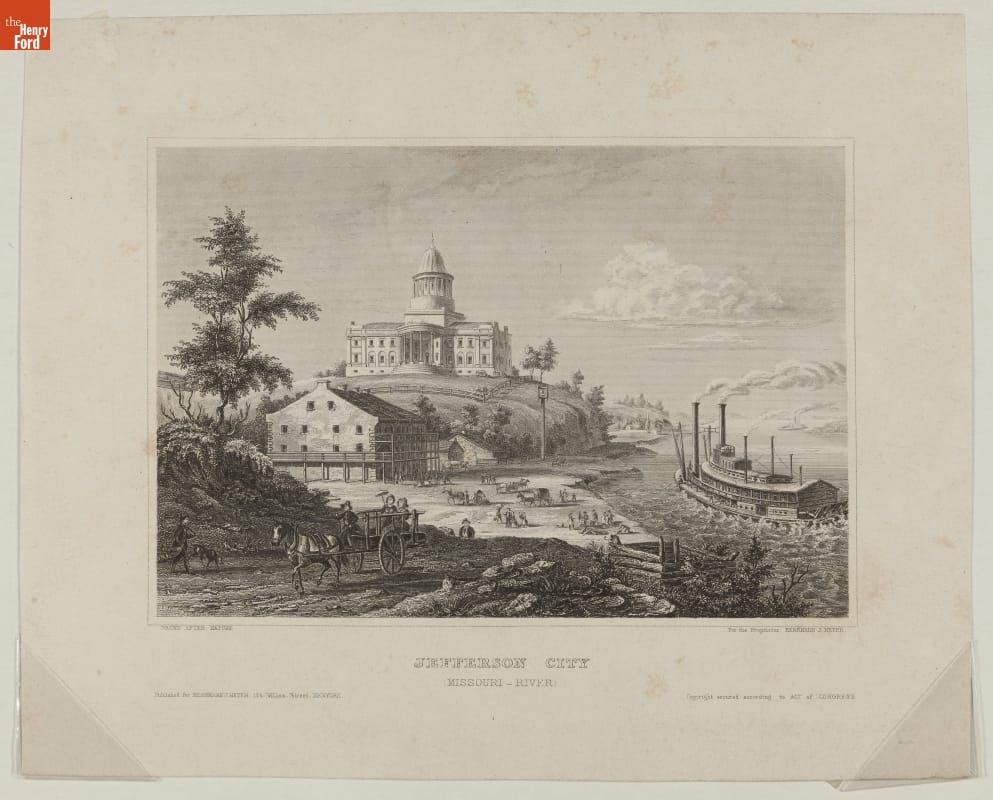
- Steel Engraving, "Jefferson City, Missouri River," circa 1840 - This circa 1840 steel engraving depicts the growing town of Jefferson City, Missouri, on the Missouri River. Chosen as the state capital in 1821, this rendering of Jefferson City is dominated by the domed Capitol building sitting on a bluff, overlooking the river landing and a passing steamboat.
- circa 1840
- Collections - Artifact
Steel Engraving, "Jefferson City, Missouri River," circa 1840
This circa 1840 steel engraving depicts the growing town of Jefferson City, Missouri, on the Missouri River. Chosen as the state capital in 1821, this rendering of Jefferson City is dominated by the domed Capitol building sitting on a bluff, overlooking the river landing and a passing steamboat.
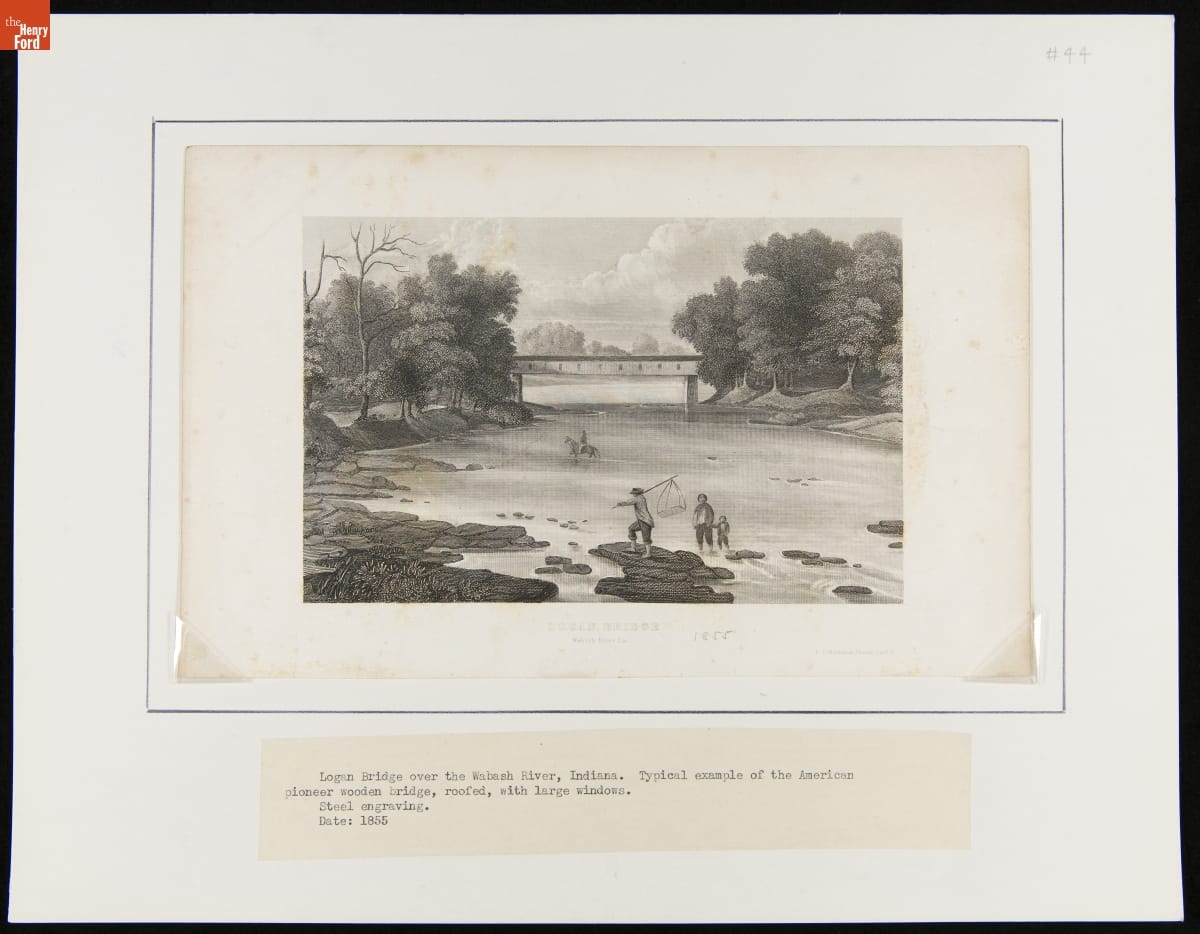
- "Logan Bridge, Wabash River, Ia.," Steel Engraving, 1855 - Covered bridges were built across the United States throughout the 19th and into the early 20th centuries. Bridges provided important commercial and community connections, but constructing them required careful planning and a substantial investment of time, labor, and materials. Walls and a roof helped preserve these valuable structures by protecting the truss system and keeping structural timbers dry.
- 1855
- Collections - Artifact
"Logan Bridge, Wabash River, Ia.," Steel Engraving, 1855
Covered bridges were built across the United States throughout the 19th and into the early 20th centuries. Bridges provided important commercial and community connections, but constructing them required careful planning and a substantial investment of time, labor, and materials. Walls and a roof helped preserve these valuable structures by protecting the truss system and keeping structural timbers dry.
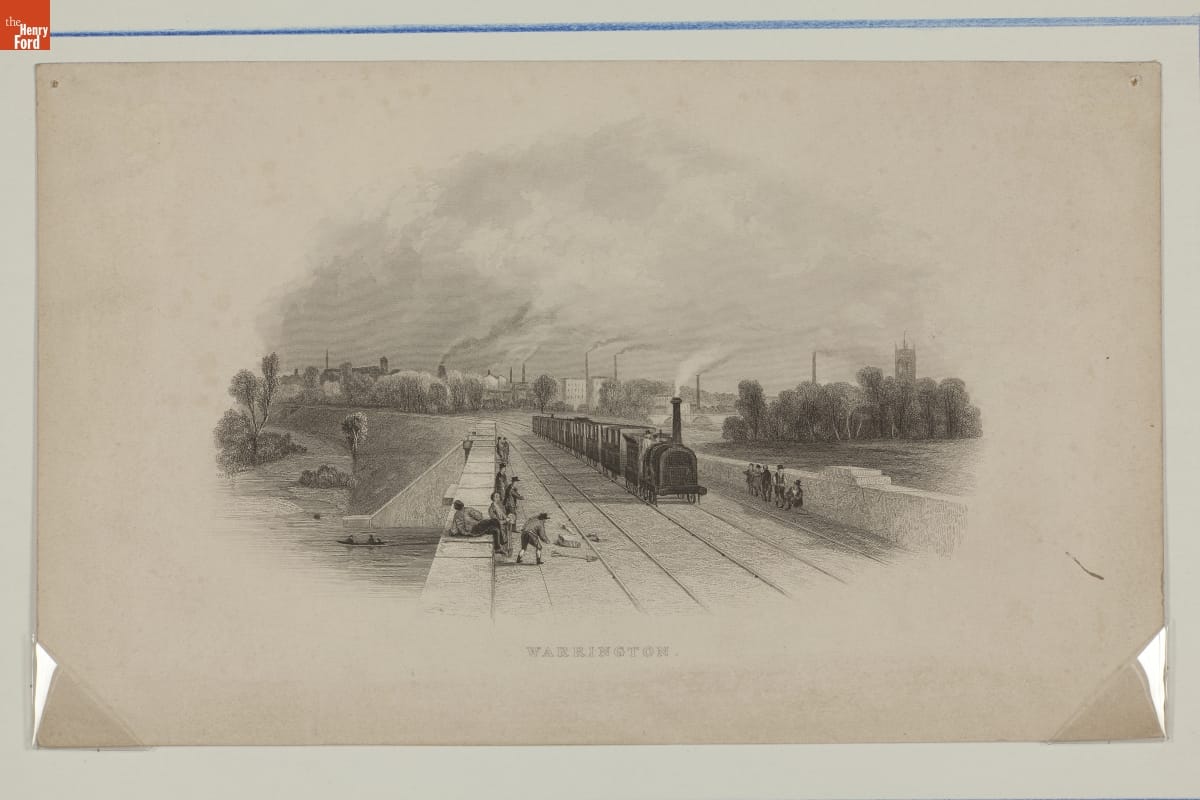
- "Warrington" (England), circa 1850 - In contrast to the slapdash construction found on many 19th-century American railroads, British lines were built to very high standards. Double track was common, grades and curves were kept as gentle as possible, and durable stone viaducts were built in preference to wooden bridges. This illustration shows a train crossing the River Mersey at Warrington, England.
- circa 1850
- Collections - Artifact
"Warrington" (England), circa 1850
In contrast to the slapdash construction found on many 19th-century American railroads, British lines were built to very high standards. Double track was common, grades and curves were kept as gentle as possible, and durable stone viaducts were built in preference to wooden bridges. This illustration shows a train crossing the River Mersey at Warrington, England.
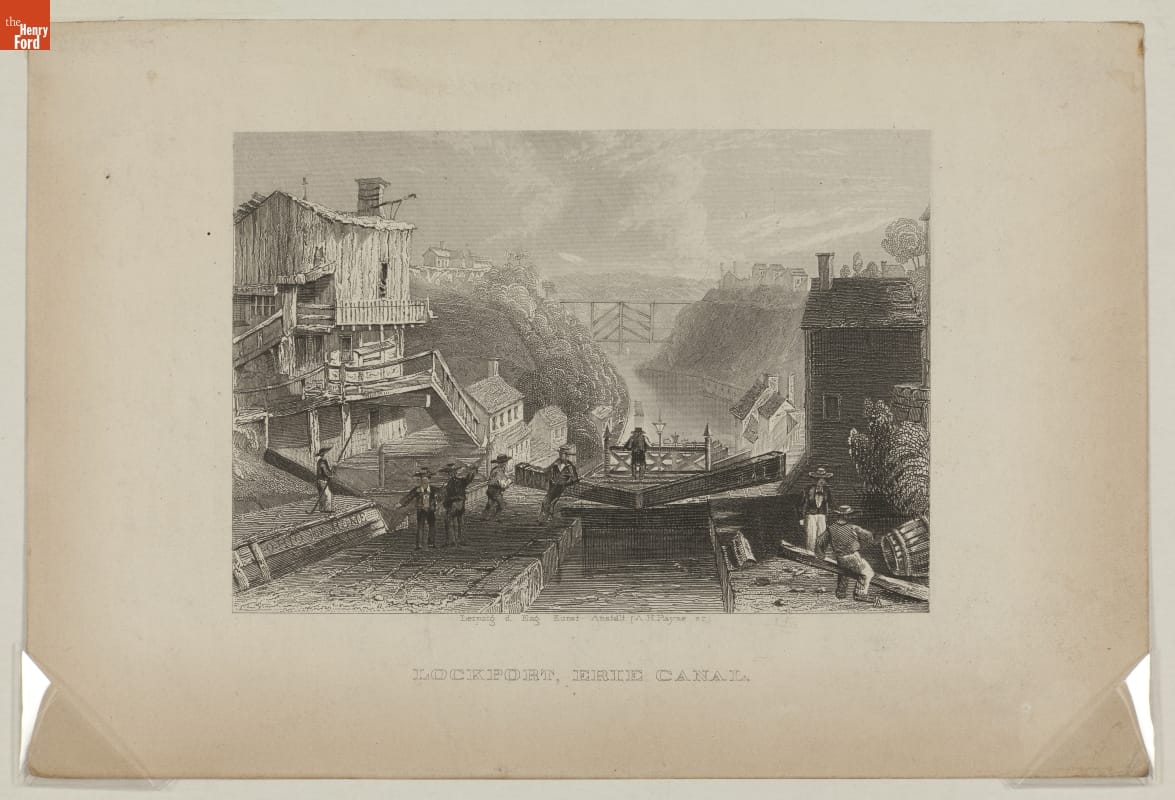
- Steel Engraving, "Lockport, Erie Canal," circa 1850 - The first half of the 19th century was the heyday of canal construction in the United States. The Erie Canal, connecting Albany, New York, with Buffalo, New York, began in 1817 and was completed in 1825. This print shows the canal from the top of the series of locks at Lockport, one of the most difficult portions of this canal's construction.
- circa 1850
- Collections - Artifact
Steel Engraving, "Lockport, Erie Canal," circa 1850
The first half of the 19th century was the heyday of canal construction in the United States. The Erie Canal, connecting Albany, New York, with Buffalo, New York, began in 1817 and was completed in 1825. This print shows the canal from the top of the series of locks at Lockport, one of the most difficult portions of this canal's construction.
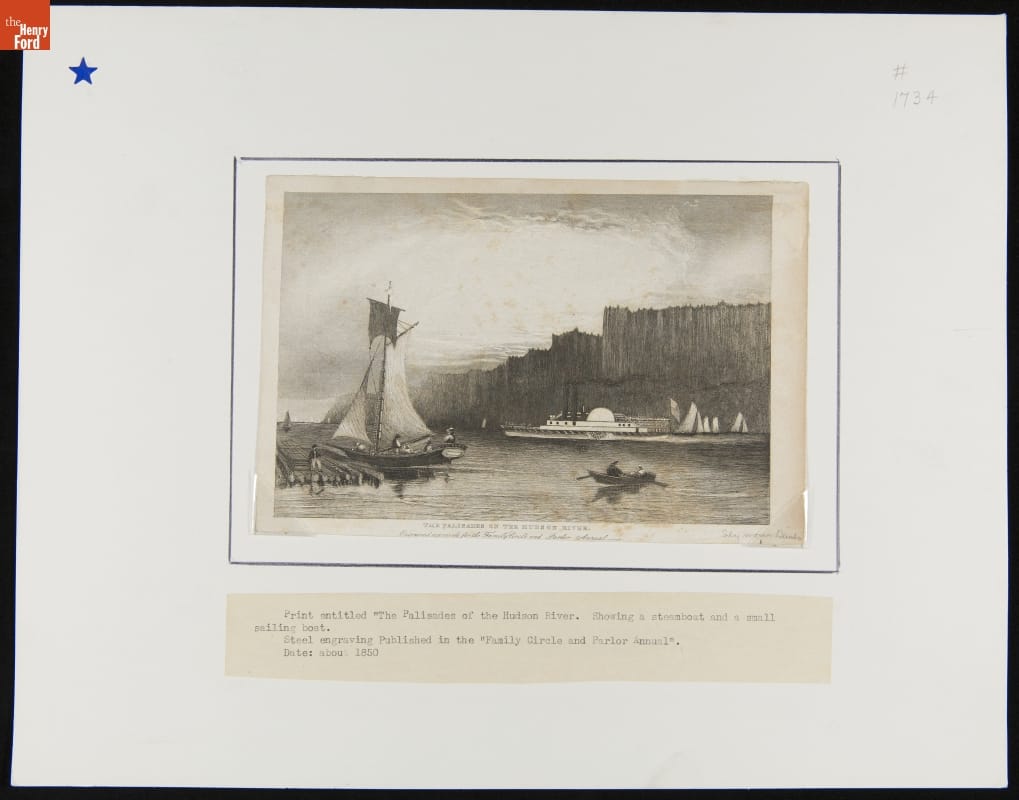
- "The Palisades on the Hudson River," circa 1850 - Robert Fulton operated the world's first commercially successful steamboat, <i>Clermont</i>, on the Hudson River in 1807. The Hudson was broad, deep and straight for many of the 150 miles between New York City and Albany. By the 1860s, steam-powered boats could cover that distance in about nine hours. Spacious, well-equipped steamboats offered a uniquely pleasant way to travel.
- circa 1850
- Collections - Artifact
"The Palisades on the Hudson River," circa 1850
Robert Fulton operated the world's first commercially successful steamboat, Clermont, on the Hudson River in 1807. The Hudson was broad, deep and straight for many of the 150 miles between New York City and Albany. By the 1860s, steam-powered boats could cover that distance in about nine hours. Spacious, well-equipped steamboats offered a uniquely pleasant way to travel.
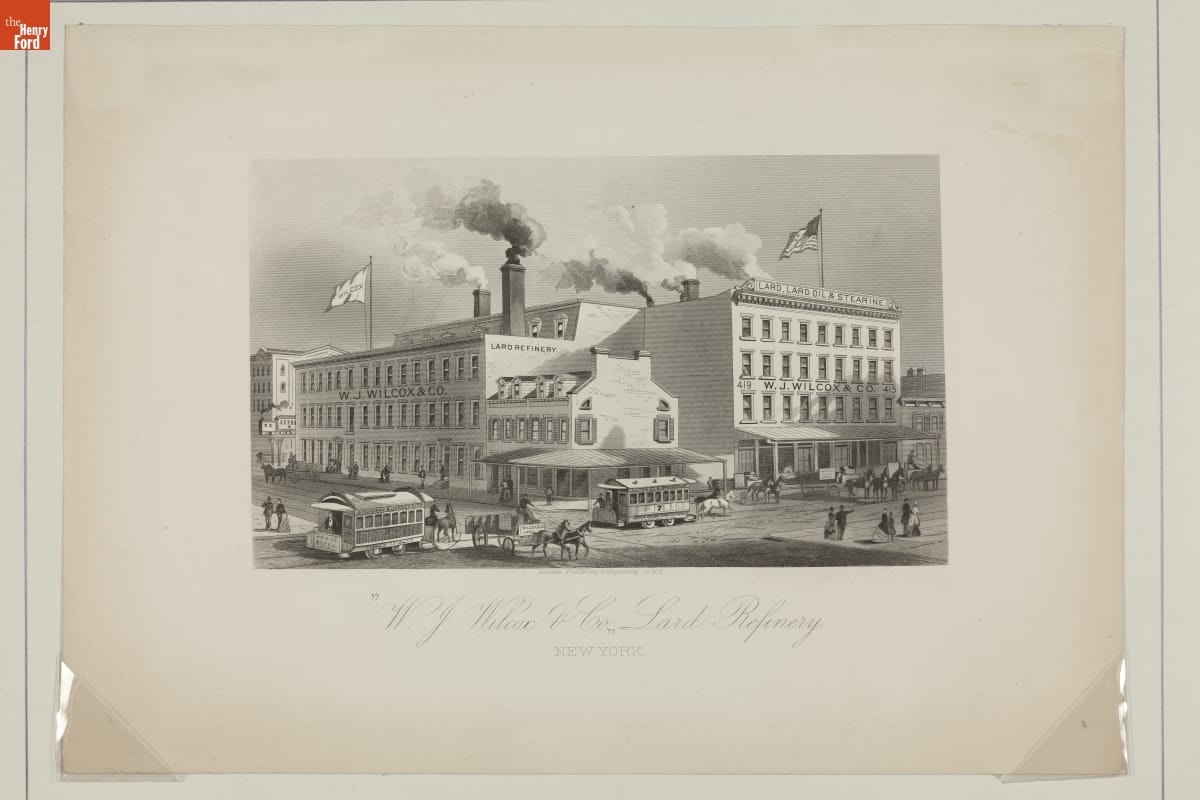
- "W.J. Wilcox & Co., Lard Refinery. New York," circa 1876 - W. J. Wilcox and Company's refined lard (hog fat) and sent its products throughout the world. The company was one of the largest lard refiner and exporter in the late 1800s. The massive factory building and the bustling New York City street scene -- with a variety of transportation options -- depicted in this print conveys the company's commercial importance.
- circa 1876
- Collections - Artifact
"W.J. Wilcox & Co., Lard Refinery. New York," circa 1876
W. J. Wilcox and Company's refined lard (hog fat) and sent its products throughout the world. The company was one of the largest lard refiner and exporter in the late 1800s. The massive factory building and the bustling New York City street scene -- with a variety of transportation options -- depicted in this print conveys the company's commercial importance.