
Search
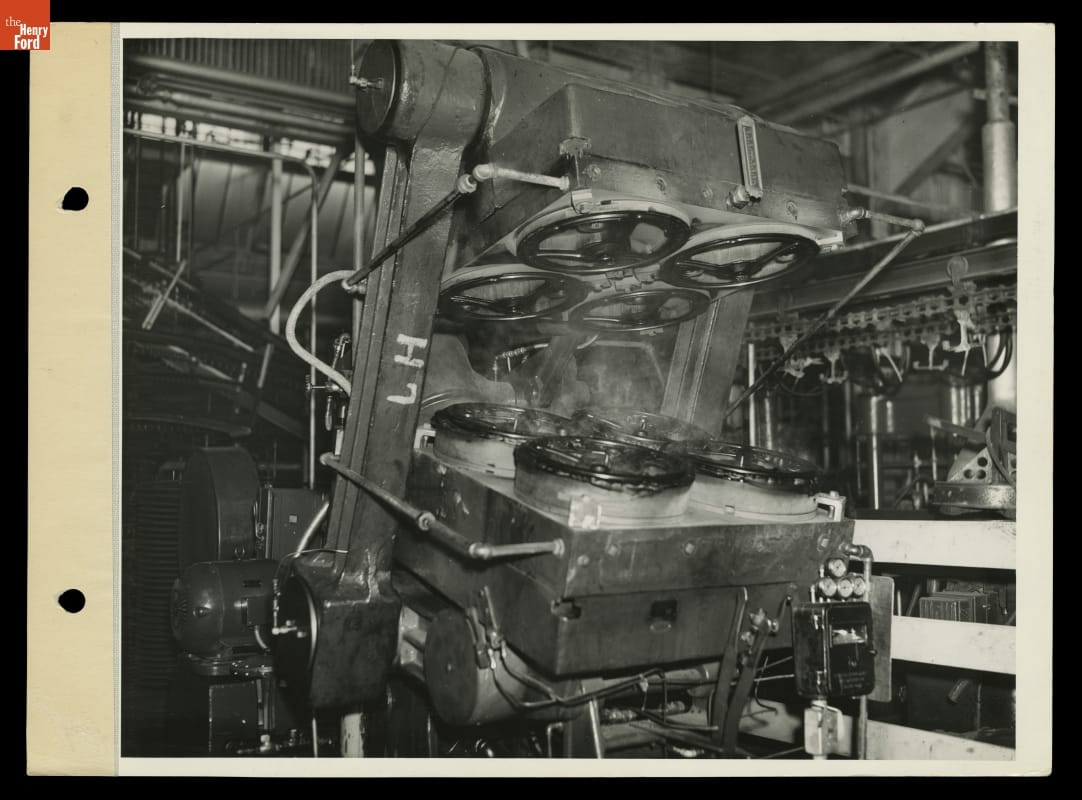
- Machine for Forming Steering Wheels, Ford Rouge Plant, 1934 - At its peak in the 1930s, Ford Motor Company's enormous Rouge factory employed more than 100,000 workers. The complex included more than 15 million square feet of floor space and 120 miles of conveyors that turned out a new car every 49 seconds. In 1934, when this photo was taken, Ford employees built nearly 564,000 automobiles.
- November 15, 1934
- Collections - Artifact
Machine for Forming Steering Wheels, Ford Rouge Plant, 1934
At its peak in the 1930s, Ford Motor Company's enormous Rouge factory employed more than 100,000 workers. The complex included more than 15 million square feet of floor space and 120 miles of conveyors that turned out a new car every 49 seconds. In 1934, when this photo was taken, Ford employees built nearly 564,000 automobiles.
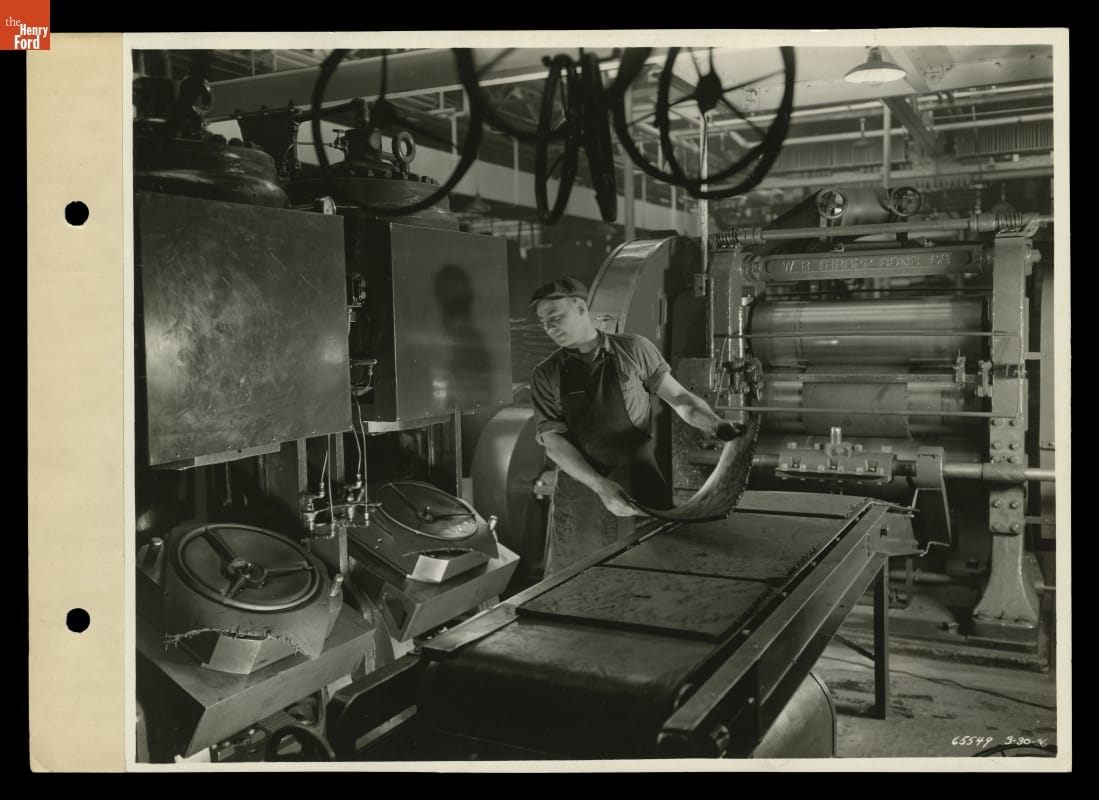
- Forming Steering Wheels, Ford Rouge Plant, 1936 - At its peak in the 1930s, Ford Motor Company's massive Rouge factory employed more than 100,000 workers. The complex included more than 15 million square feet of floor space and 120 miles of conveyors that turned out a new car every 49 seconds. In 1936, when this photo was taken, the people of Ford built more than 790,000 automobiles.
- March 27, 1936
- Collections - Artifact
Forming Steering Wheels, Ford Rouge Plant, 1936
At its peak in the 1930s, Ford Motor Company's massive Rouge factory employed more than 100,000 workers. The complex included more than 15 million square feet of floor space and 120 miles of conveyors that turned out a new car every 49 seconds. In 1936, when this photo was taken, the people of Ford built more than 790,000 automobiles.
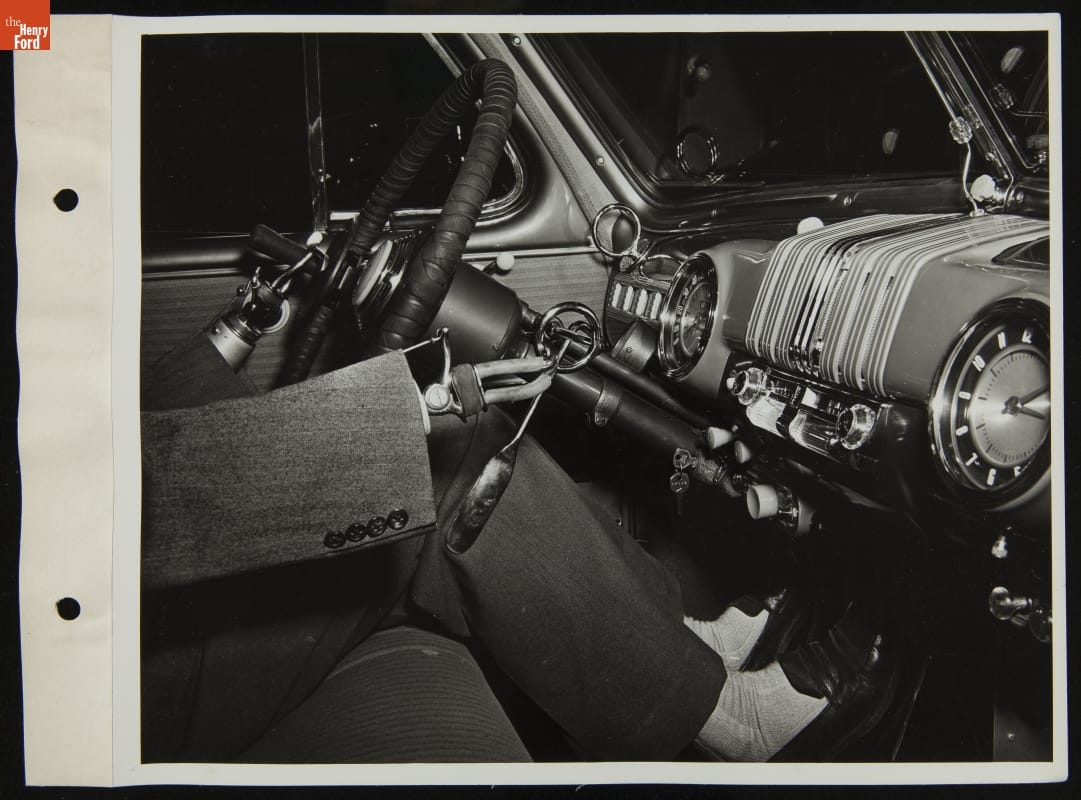
- Driver Demonstrates Special Mercury Car Equipped for Disabled Drivers, February 1946 - More than 670,000 American soldiers were wounded in World War II. Many of them returned home with lasting injuries. Ford Motor Company's Mercury Division adapted this car for use by drivers without hands. Control-mounted rings and a special steering wheel spinner made it possible to operate the car with prosthetic hooks.
- February 26, 1946
- Collections - Artifact
Driver Demonstrates Special Mercury Car Equipped for Disabled Drivers, February 1946
More than 670,000 American soldiers were wounded in World War II. Many of them returned home with lasting injuries. Ford Motor Company's Mercury Division adapted this car for use by drivers without hands. Control-mounted rings and a special steering wheel spinner made it possible to operate the car with prosthetic hooks.
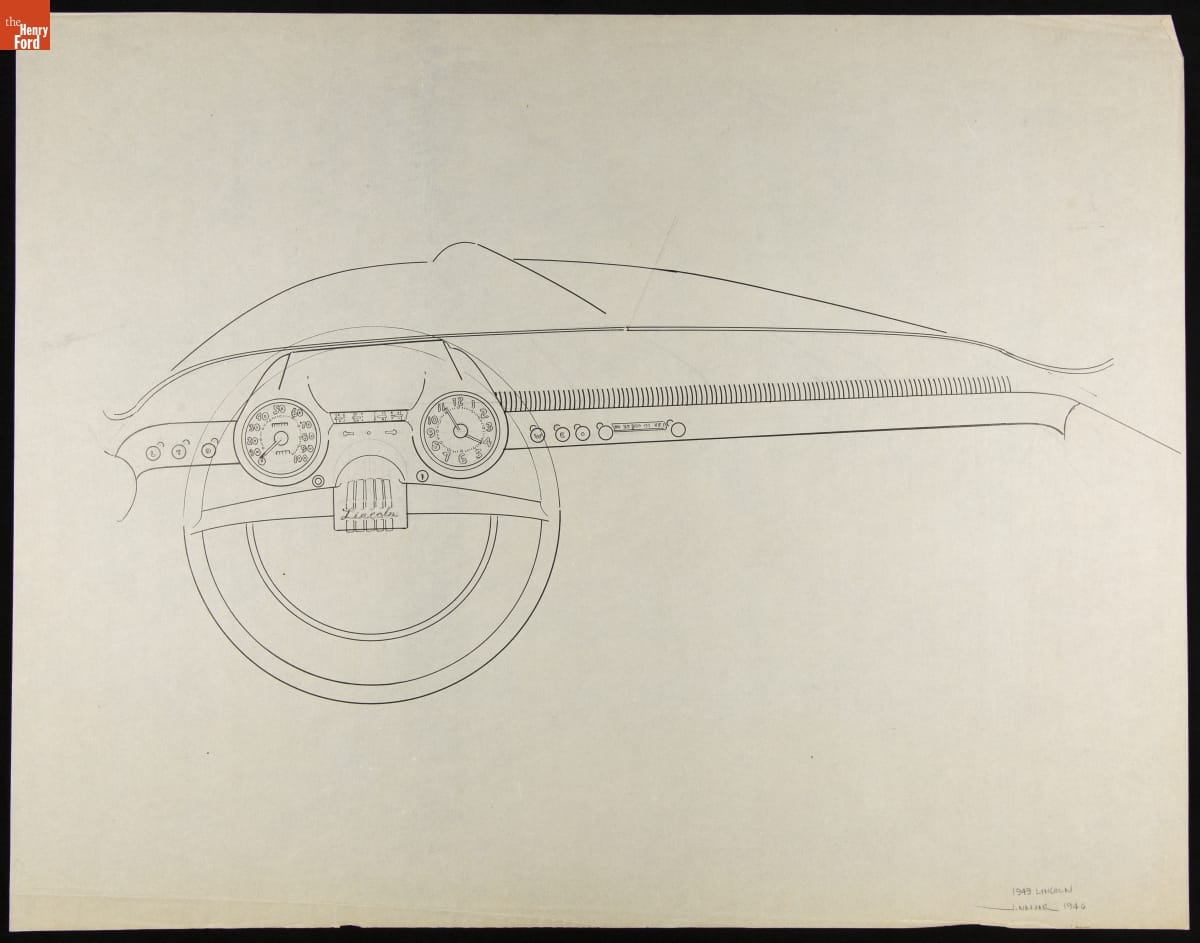
- Sketch, 1949 Lincoln Continental Steering Wheel and Instrument Panel - Designer John Najjar spent more than 40 years at Ford Motor Company. He made significant contributions to the styling of the 1957 and 1958 Lincolns, the 1961 Lincoln Continental and the 1961 Ford Thunderbird. Najjar also supervised design of the 1962 Mustang I concept car, and he headed interior design on the 1965 Ford Mustang production car.
- 1949
- Collections - Artifact
Sketch, 1949 Lincoln Continental Steering Wheel and Instrument Panel
Designer John Najjar spent more than 40 years at Ford Motor Company. He made significant contributions to the styling of the 1957 and 1958 Lincolns, the 1961 Lincoln Continental and the 1961 Ford Thunderbird. Najjar also supervised design of the 1962 Mustang I concept car, and he headed interior design on the 1965 Ford Mustang production car.
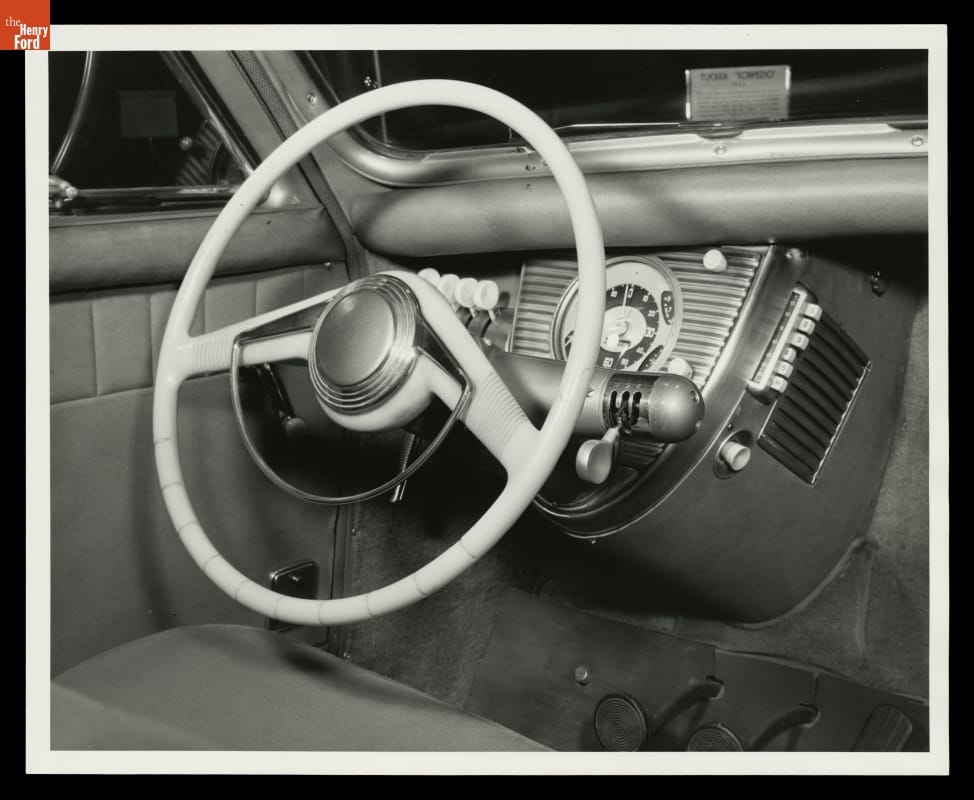
- Driver Controls, 1948 Tucker Sedan in Henry Ford Museum, December 1964 - The Tucker 48's driver controls were underdeveloped compared with the car's exciting exterior. The steering wheel, in fact, was secondhand. Ford Motor Company supplied Tucker with steering wheels from its Lincoln Zephyr line. That cooperative gesture seemingly undercut the argument that Detroit's Big Three -- or Ford, at least -- were out to destroy Tucker.
- December 22, 1964
- Collections - Artifact
Driver Controls, 1948 Tucker Sedan in Henry Ford Museum, December 1964
The Tucker 48's driver controls were underdeveloped compared with the car's exciting exterior. The steering wheel, in fact, was secondhand. Ford Motor Company supplied Tucker with steering wheels from its Lincoln Zephyr line. That cooperative gesture seemingly undercut the argument that Detroit's Big Three -- or Ford, at least -- were out to destroy Tucker.
- Driver Demonstrates Special Mercury Car Equipped for Disabled Drivers, February 1946 - More than 670,000 American soldiers were wounded in World War II. Many of them returned home with lasting injuries. Ford Motor Company's Mercury Division adapted this car for use by drivers without hands. Control-mounted rings and a special steering wheel spinner made it possible to operate the car with prosthetic hooks.
- February 26, 1946
- Collections - Artifact
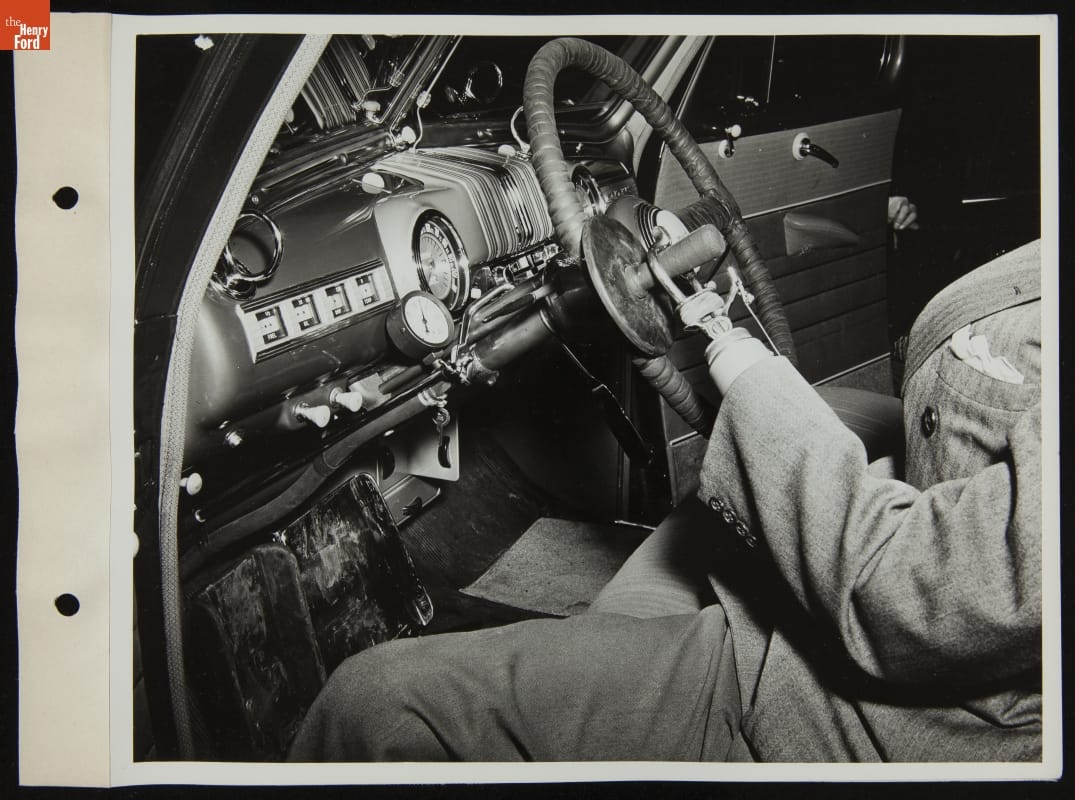
Driver Demonstrates Special Mercury Car Equipped for Disabled Drivers, February 1946
More than 670,000 American soldiers were wounded in World War II. Many of them returned home with lasting injuries. Ford Motor Company's Mercury Division adapted this car for use by drivers without hands. Control-mounted rings and a special steering wheel spinner made it possible to operate the car with prosthetic hooks.
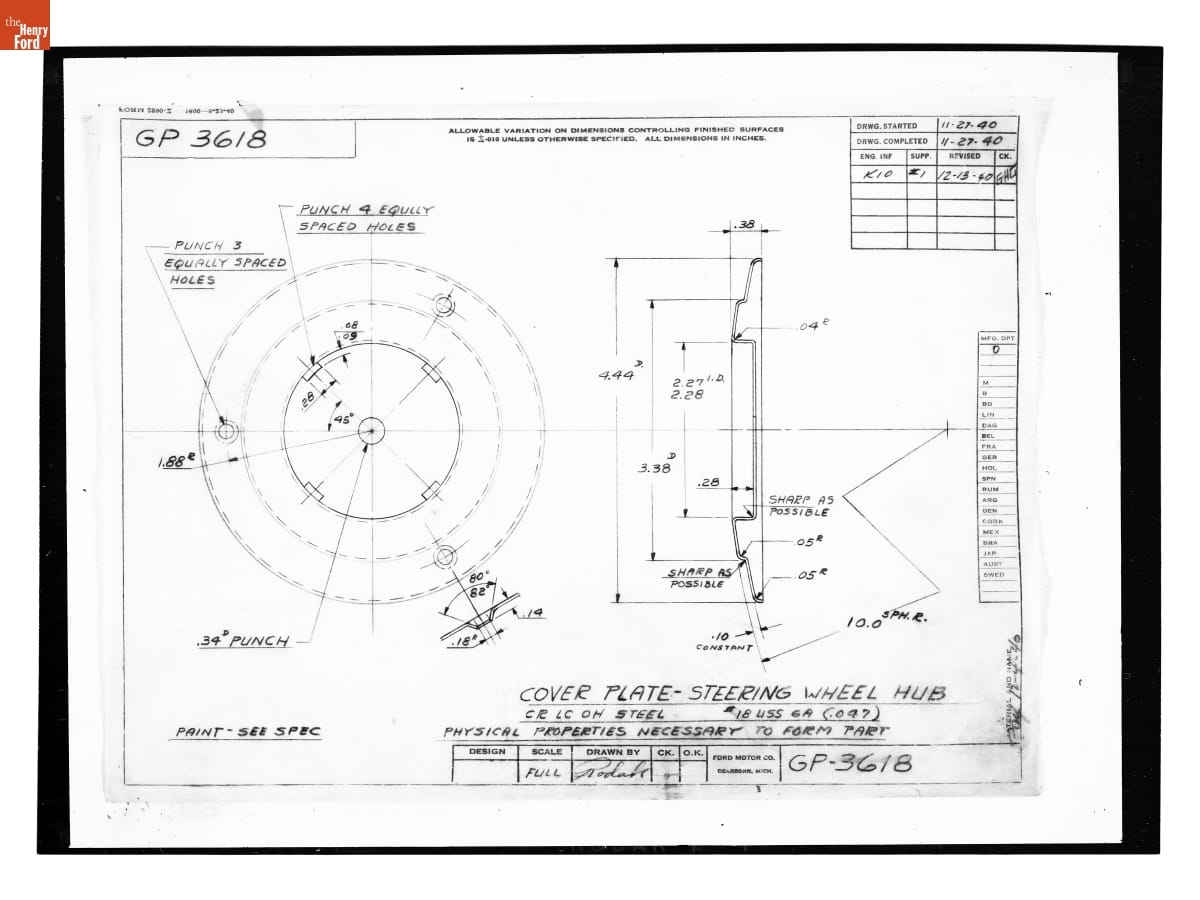
- Drawing, "Cover Plate - Steering Wheel Hub," Ford GP, December 13, 1940 - The Ford Motor Company created over a million parts drawings from 1903 to 1957. Many of these drawings specify engineering requirements for the components of Ford-made vehicles--including automobiles, trucks, tractors, military vehicles and Tri-motor airplanes. Others document assembly components, stages of casting and forging, or experimental designs. Beginning in the 1940s, Ford transferred the drawings to microfilm.
- December 13, 1940
- Collections - Artifact
Drawing, "Cover Plate - Steering Wheel Hub," Ford GP, December 13, 1940
The Ford Motor Company created over a million parts drawings from 1903 to 1957. Many of these drawings specify engineering requirements for the components of Ford-made vehicles--including automobiles, trucks, tractors, military vehicles and Tri-motor airplanes. Others document assembly components, stages of casting and forging, or experimental designs. Beginning in the 1940s, Ford transferred the drawings to microfilm.
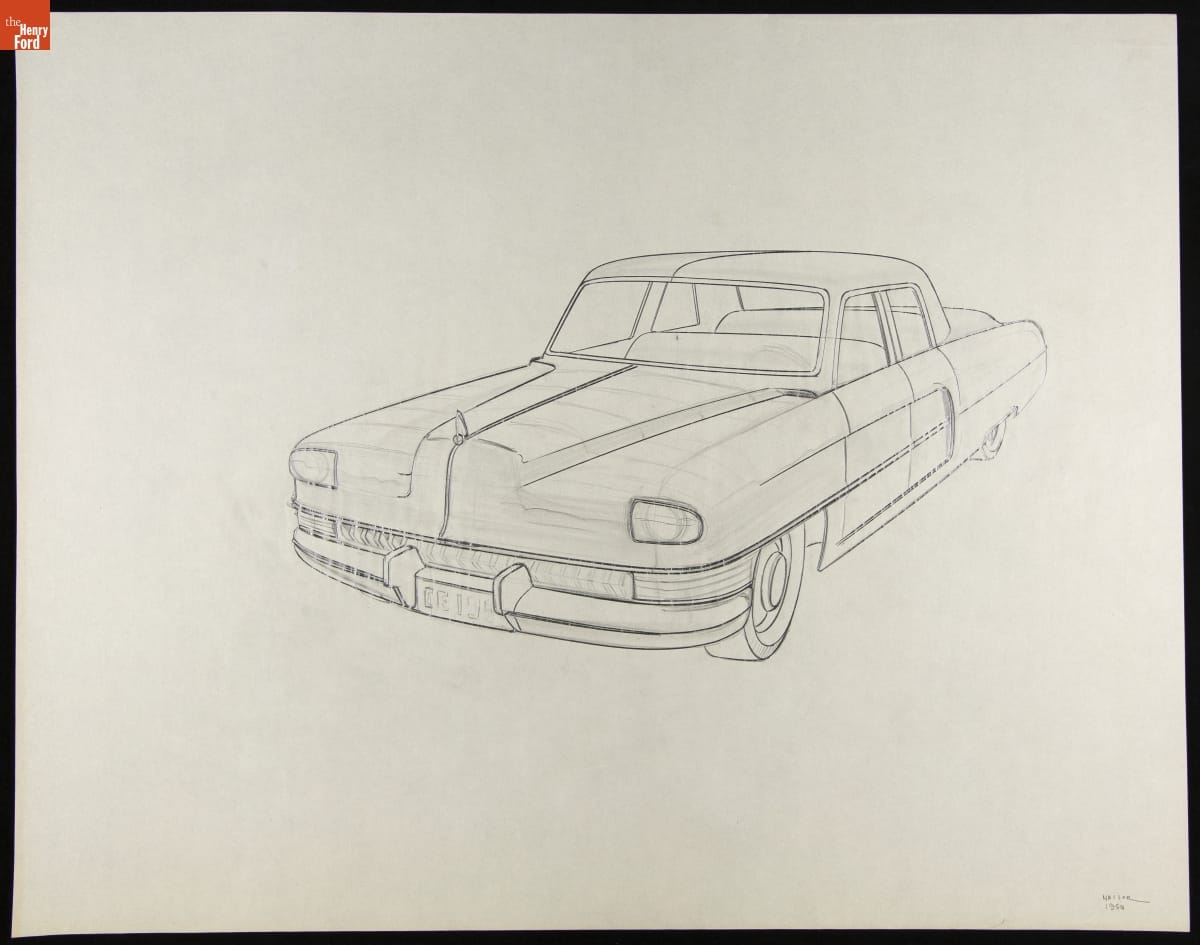
- Sketch, circa 1950 Lincoln 4-door Sedan - Designer John Najjar spent more than 40 years at Ford Motor Company. He made significant contributions to the styling of the 1957 and 1958 Lincolns, the 1961 Lincoln Continental and the 1961 Ford Thunderbird. Najjar also supervised design of the 1962 Mustang I concept car, and he headed interior design on the 1965 Ford Mustang production car.
- circa 1950
- Collections - Artifact
Sketch, circa 1950 Lincoln 4-door Sedan
Designer John Najjar spent more than 40 years at Ford Motor Company. He made significant contributions to the styling of the 1957 and 1958 Lincolns, the 1961 Lincoln Continental and the 1961 Ford Thunderbird. Najjar also supervised design of the 1962 Mustang I concept car, and he headed interior design on the 1965 Ford Mustang production car.
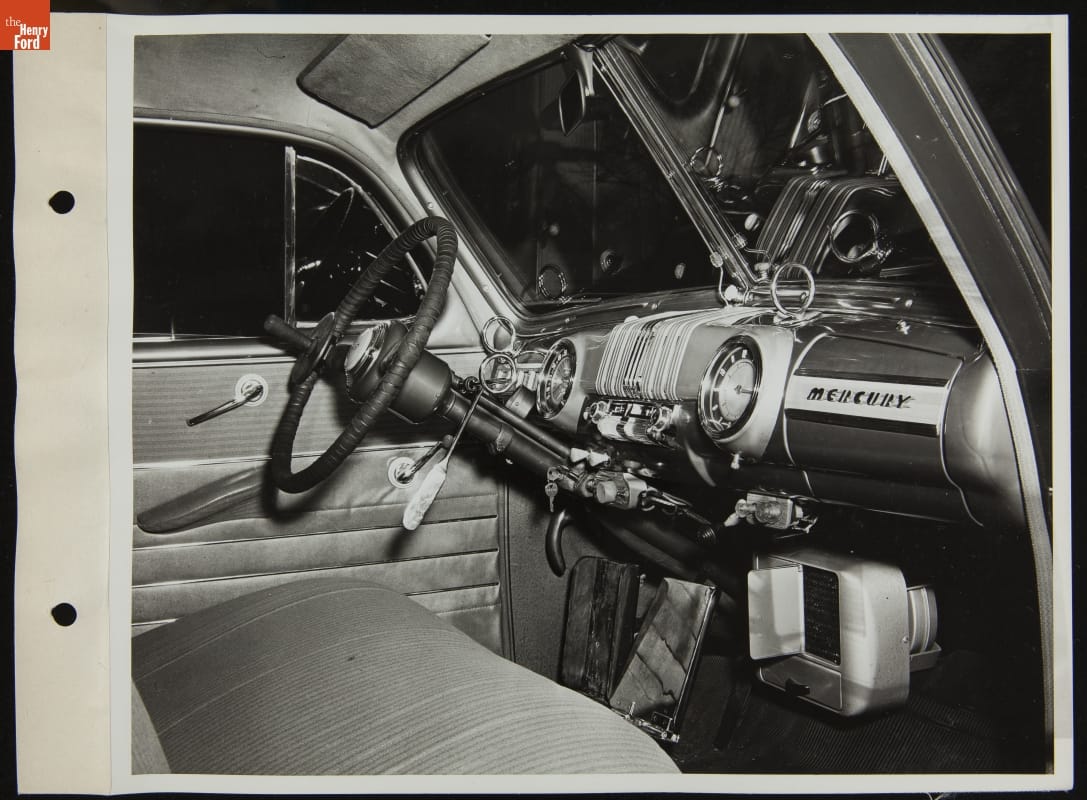
- Mercury Car Specially Fitted for Disabled Drivers, February 1946 - More than 670,000 American soldiers were wounded in World War II. Many of them returned home with lasting injuries. Ford Motor Company's Mercury Division adapted this car for use by drivers without hands. Control-mounted rings and a special steering wheel spinner made it possible to operate the car with prosthetic hooks.
- February 26, 1946
- Collections - Artifact
Mercury Car Specially Fitted for Disabled Drivers, February 1946
More than 670,000 American soldiers were wounded in World War II. Many of them returned home with lasting injuries. Ford Motor Company's Mercury Division adapted this car for use by drivers without hands. Control-mounted rings and a special steering wheel spinner made it possible to operate the car with prosthetic hooks.
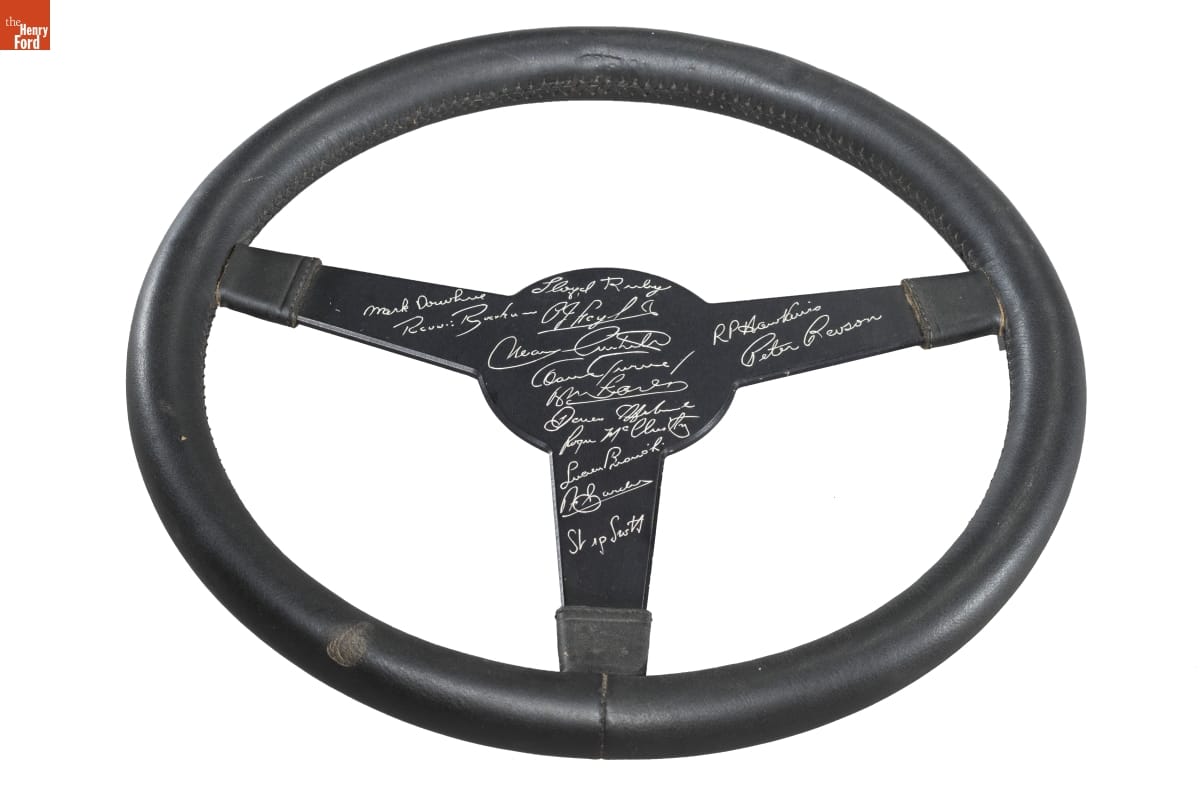
- Replica of a Ford GT Steering Wheel from the 24 Hours of Le Mans, 1967 - This steering wheel includes facsimile signatures from Ford drivers who raced at the 24 Hours of Le Mans in 1967. The names include Mark Donohue, Ronnie Bucknum, Lloyd Ruby, A.J. Foyt, Mario Andretti, Dan Gurney, Bruce McLaren, Denny Hulme, Roger McCluskey, Lucien Bianchi, Frank Gardner, Skip Scott, Paul Hawkins, and Peter Revson.
- 1967
- Collections - Artifact
Replica of a Ford GT Steering Wheel from the 24 Hours of Le Mans, 1967
This steering wheel includes facsimile signatures from Ford drivers who raced at the 24 Hours of Le Mans in 1967. The names include Mark Donohue, Ronnie Bucknum, Lloyd Ruby, A.J. Foyt, Mario Andretti, Dan Gurney, Bruce McLaren, Denny Hulme, Roger McCluskey, Lucien Bianchi, Frank Gardner, Skip Scott, Paul Hawkins, and Peter Revson.