
Search
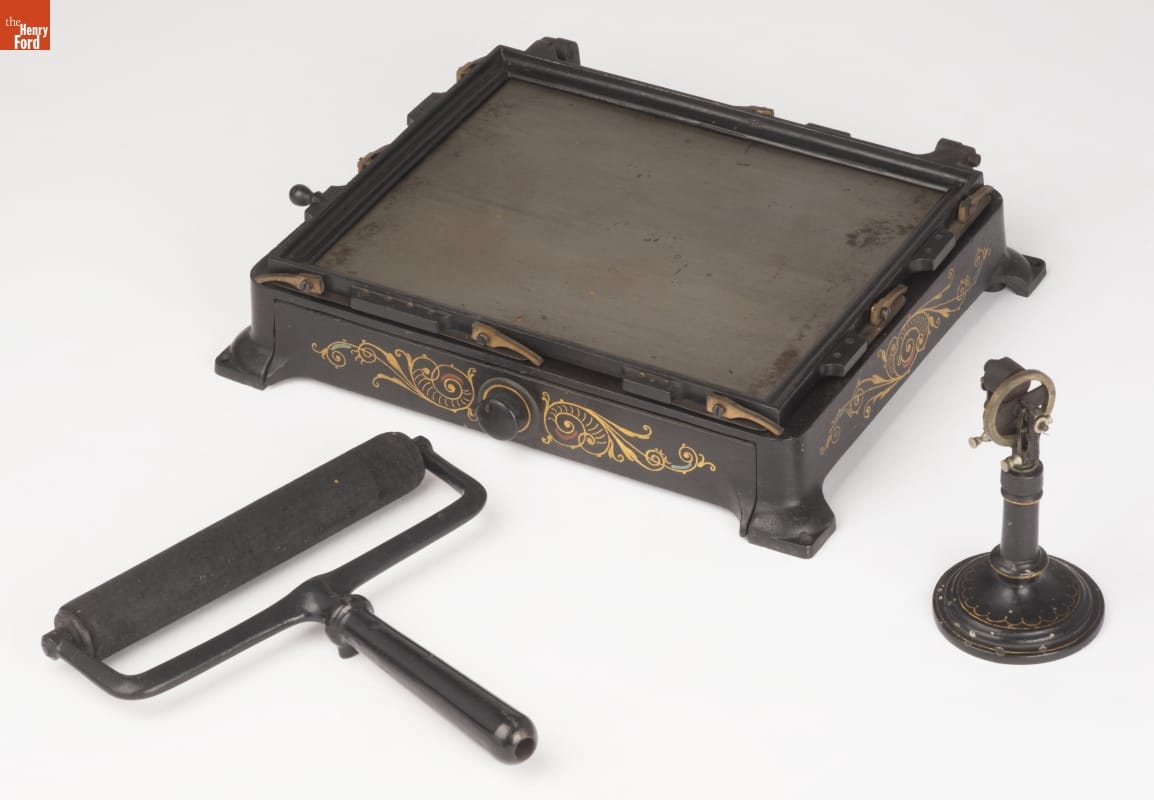
- Edison's Autographic Press and Electric Pen, 1875-1880 - Thomas Edison's electric pen, an ancestor of both the mimeograph and the tattoo needle, was a successful product in the mid-1870s. Users would write normally with the pen, which, instead of a nib, had a needle powered by an electric motor. The needle poked holes into a stencil, which was then used to copy the document. Many businesses found document duplication an attractive possibility.
- 1875-1880
- Collections - Artifact
Edison's Autographic Press and Electric Pen, 1875-1880
Thomas Edison's electric pen, an ancestor of both the mimeograph and the tattoo needle, was a successful product in the mid-1870s. Users would write normally with the pen, which, instead of a nib, had a needle powered by an electric motor. The needle poked holes into a stencil, which was then used to copy the document. Many businesses found document duplication an attractive possibility.
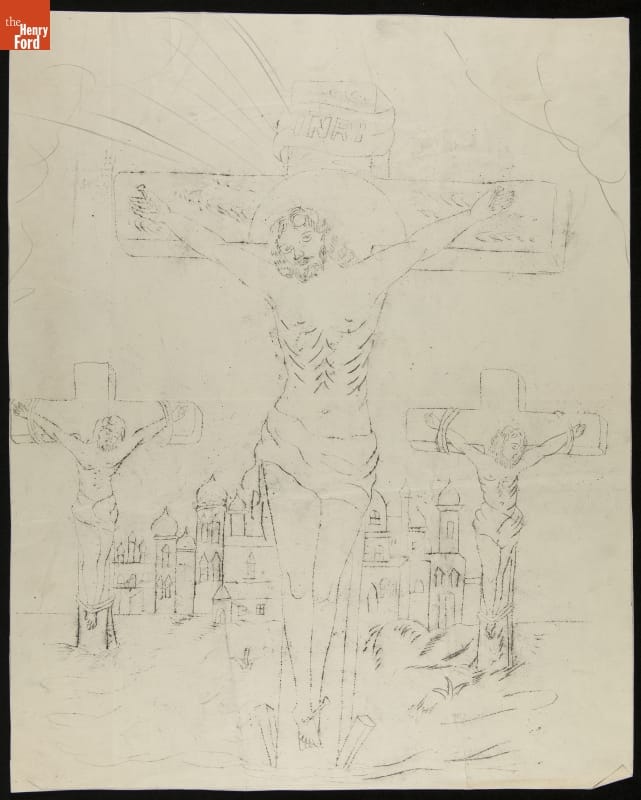
- Tattoo Stencil, 1915-1950 - Tattoos communicate stories. Their content ranges from deeply personal and traditional--to regrettable and frivolous. In the early 1900s, "Professor" Waters apprenticed as a tattoo artist in carnivals and New York's Bowery District. He ran a successful supply shop in Detroit (1918-1939), patenting the standard "two-coil" tattoo machine in 1929. Designs from his flash sheets continue to inspire tattooists today.
- 1915-1950
- Collections - Artifact
Tattoo Stencil, 1915-1950
Tattoos communicate stories. Their content ranges from deeply personal and traditional--to regrettable and frivolous. In the early 1900s, "Professor" Waters apprenticed as a tattoo artist in carnivals and New York's Bowery District. He ran a successful supply shop in Detroit (1918-1939), patenting the standard "two-coil" tattoo machine in 1929. Designs from his flash sheets continue to inspire tattooists today.
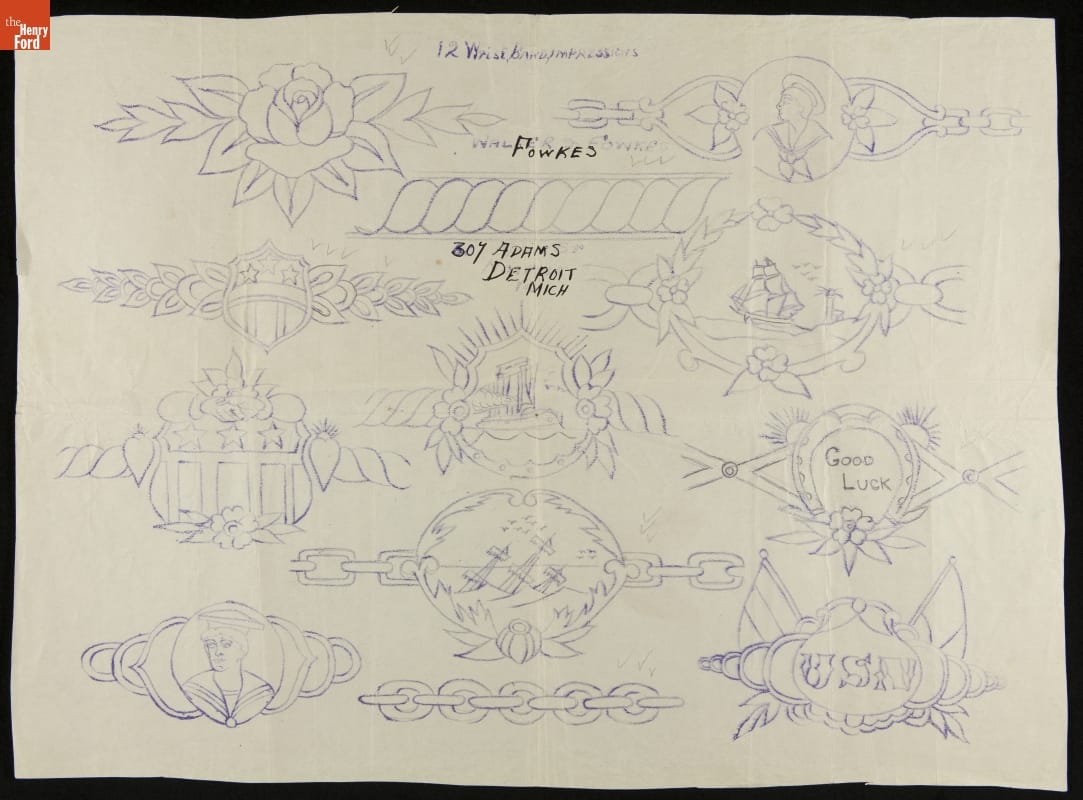
- Tattoo Stencils, 1920-1922 - Tattoo stencils range in material from disposable paper to plastic. Designs were drawn on transfer paper or scratched into plastic with a needle. With plastic stencils, powdered charcoal was rubbed into the lines; Vaseline was applied to the skin. When the stencil was pressed against the skin, the charcoal transferred as an outline. Stencils allowed tattooists to circulate and exchange ideas.
- 1920-1922
- Collections - Artifact
Tattoo Stencils, 1920-1922
Tattoo stencils range in material from disposable paper to plastic. Designs were drawn on transfer paper or scratched into plastic with a needle. With plastic stencils, powdered charcoal was rubbed into the lines; Vaseline was applied to the skin. When the stencil was pressed against the skin, the charcoal transferred as an outline. Stencils allowed tattooists to circulate and exchange ideas.
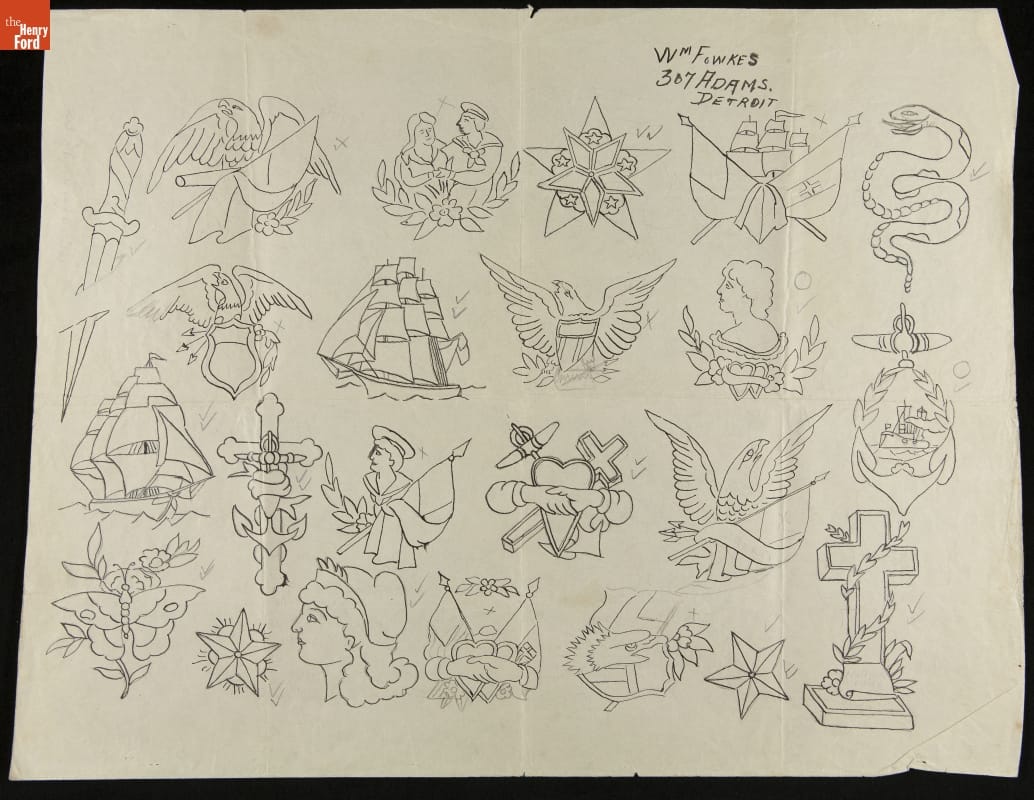
- Tattoo Stencils, 1923-1926 - Tattoo stencils range in material from disposable paper to plastic. Designs were drawn on transfer paper or scratched into plastic with a needle. With plastic stencils, powdered charcoal was rubbed into the lines; Vaseline was applied to the skin. When the stencil was pressed against the skin, the charcoal transferred as an outline. Stencils allowed tattooists to circulate and exchange ideas.
- 1923-1926
- Collections - Artifact
Tattoo Stencils, 1923-1926
Tattoo stencils range in material from disposable paper to plastic. Designs were drawn on transfer paper or scratched into plastic with a needle. With plastic stencils, powdered charcoal was rubbed into the lines; Vaseline was applied to the skin. When the stencil was pressed against the skin, the charcoal transferred as an outline. Stencils allowed tattooists to circulate and exchange ideas.
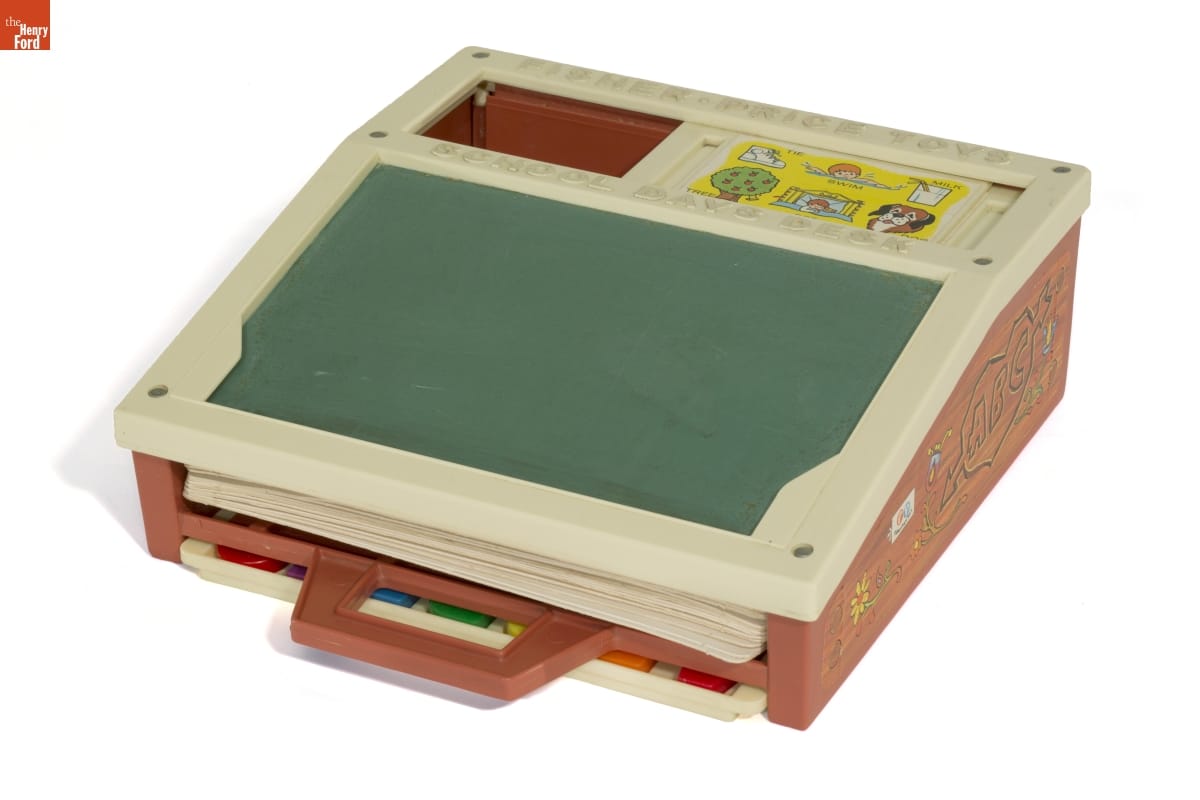
- Fisher-Price "School Days Play Desk," 1975 -
- 1975
- Collections - Artifact
Fisher-Price "School Days Play Desk," 1975
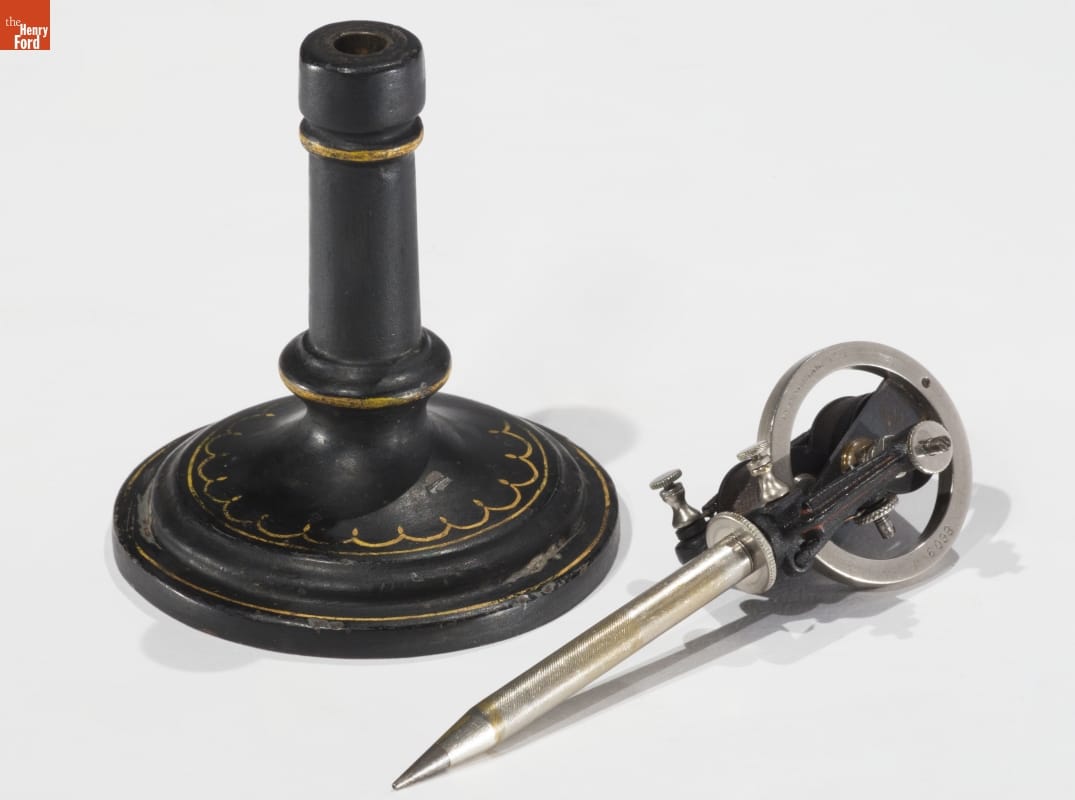
- Edison Electric Pen, circa 1877 - Thomas Edison's electric pen, an ancestor of both the mimeograph and the tattoo needle, was a successful product in the mid-1870s. Users would write normally with the pen, which, instead of a nib, had a needle powered by an electric motor. The needle poked holes into a stencil, which was then used to copy the document. Many businesses found document duplication an attractive possibility.
- circa 1877
- Collections - Artifact
Edison Electric Pen, circa 1877
Thomas Edison's electric pen, an ancestor of both the mimeograph and the tattoo needle, was a successful product in the mid-1870s. Users would write normally with the pen, which, instead of a nib, had a needle powered by an electric motor. The needle poked holes into a stencil, which was then used to copy the document. Many businesses found document duplication an attractive possibility.
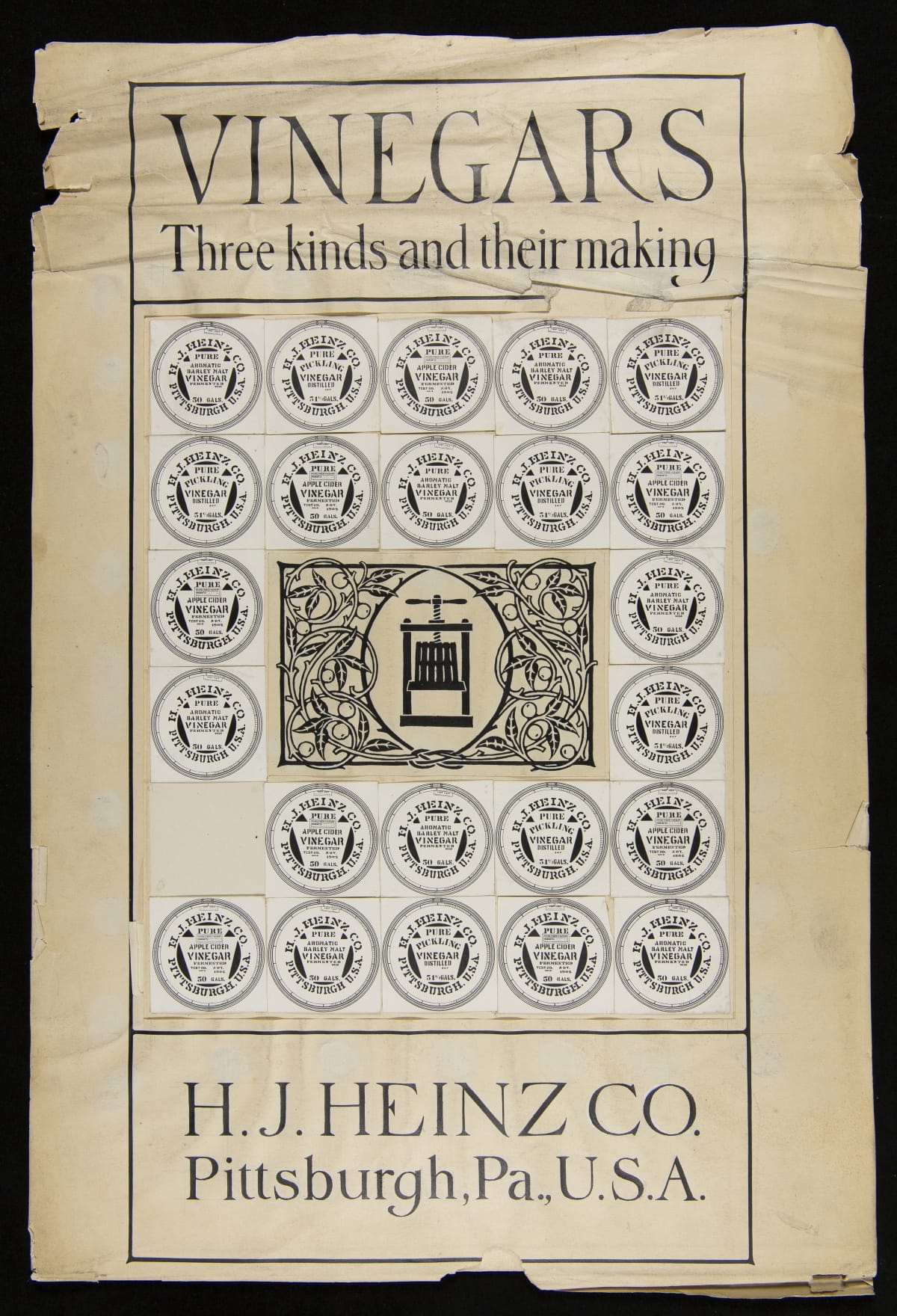
- Layout for Heinz Company Publication, "Vinegars: Three Kinds and Their Making," 1915-1925 - The H.J. Heinz Company published pamphlets, brochures, and booklets that detailed the company's history and manufacturing process. This advertising layout was created for a pamphlet that informed readers about Heinz vinegar products. The famous "57 Varieties" of the H.J. Heinz Company included several kinds of vinegar. This pamphlet highlighted the company's Malt Barley, Apple Cider, and Pickling vinegars.
- 1915-1925
- Collections - Artifact
Layout for Heinz Company Publication, "Vinegars: Three Kinds and Their Making," 1915-1925
The H.J. Heinz Company published pamphlets, brochures, and booklets that detailed the company's history and manufacturing process. This advertising layout was created for a pamphlet that informed readers about Heinz vinegar products. The famous "57 Varieties" of the H.J. Heinz Company included several kinds of vinegar. This pamphlet highlighted the company's Malt Barley, Apple Cider, and Pickling vinegars.
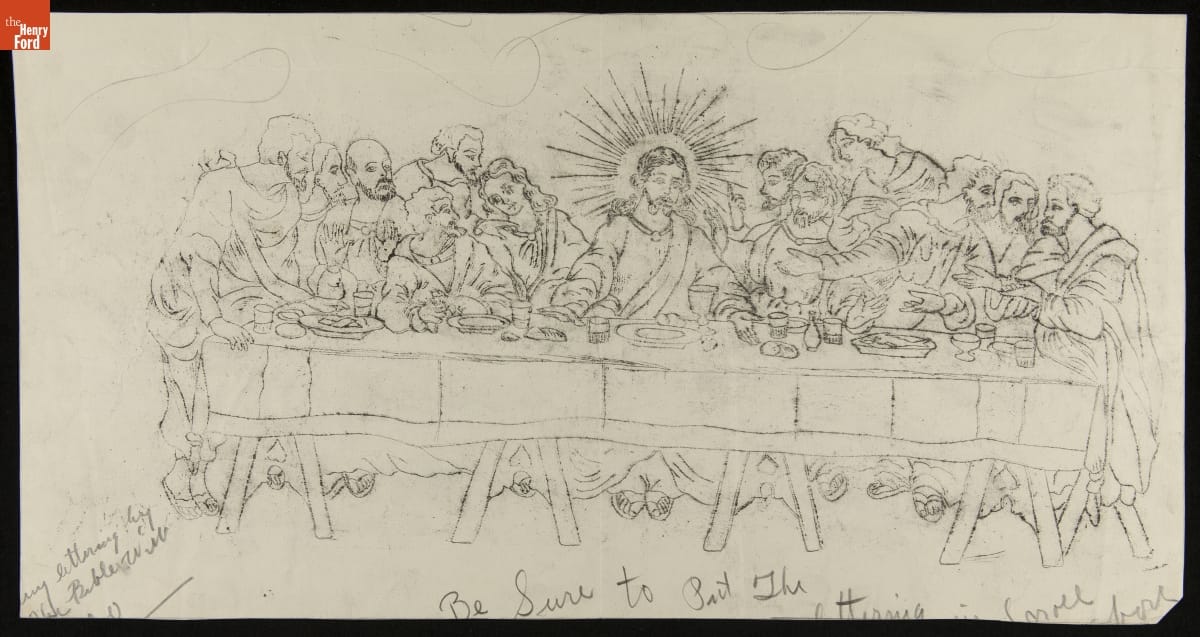
- Tattoo Stencil, 1915-1950 - Tattoos communicate stories. Their content ranges from deeply personal and traditional--to regrettable and frivolous. In the early 1900s, "Professor" Waters apprenticed as a tattoo artist in carnivals and New York's Bowery District. He ran a successful supply shop in Detroit (1918-1939), patenting the standard "two-coil" tattoo machine in 1929. Designs from his flash sheets continue to inspire tattooists today.
- 1915-1950
- Collections - Artifact
Tattoo Stencil, 1915-1950
Tattoos communicate stories. Their content ranges from deeply personal and traditional--to regrettable and frivolous. In the early 1900s, "Professor" Waters apprenticed as a tattoo artist in carnivals and New York's Bowery District. He ran a successful supply shop in Detroit (1918-1939), patenting the standard "two-coil" tattoo machine in 1929. Designs from his flash sheets continue to inspire tattooists today.
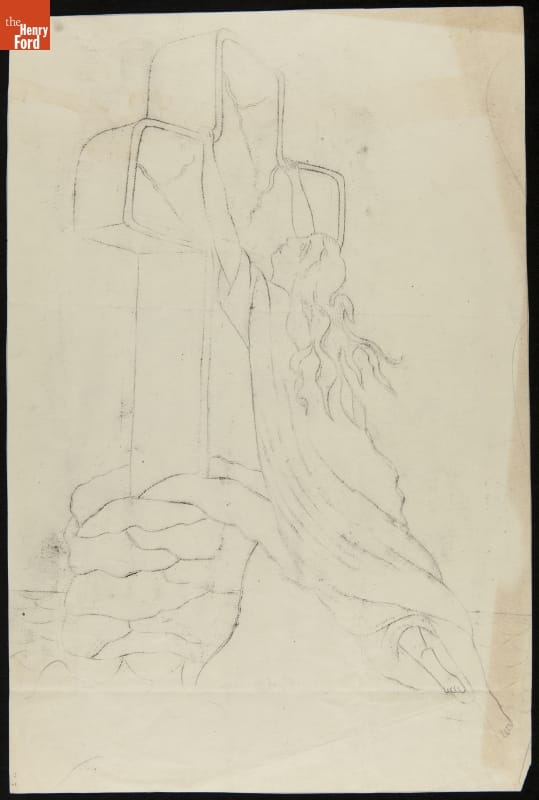
- Tattoo Stencil, 1915-1950 - Tattoos communicate stories. Their content ranges from deeply personal and traditional--to regrettable and frivolous. In the early 1900s, "Professor" Waters apprenticed as a tattoo artist in carnivals and New York's Bowery District. He ran a successful supply shop in Detroit (1918-1939), patenting the standard "two-coil" tattoo machine in 1929. Designs from his flash sheets continue to inspire tattooists today.
- 1915-1950
- Collections - Artifact
Tattoo Stencil, 1915-1950
Tattoos communicate stories. Their content ranges from deeply personal and traditional--to regrettable and frivolous. In the early 1900s, "Professor" Waters apprenticed as a tattoo artist in carnivals and New York's Bowery District. He ran a successful supply shop in Detroit (1918-1939), patenting the standard "two-coil" tattoo machine in 1929. Designs from his flash sheets continue to inspire tattooists today.
- A.B. Dick Company Mimeograph Stencil Paper, 1892-1912 -
- 1892-1912
- Collections - Artifact
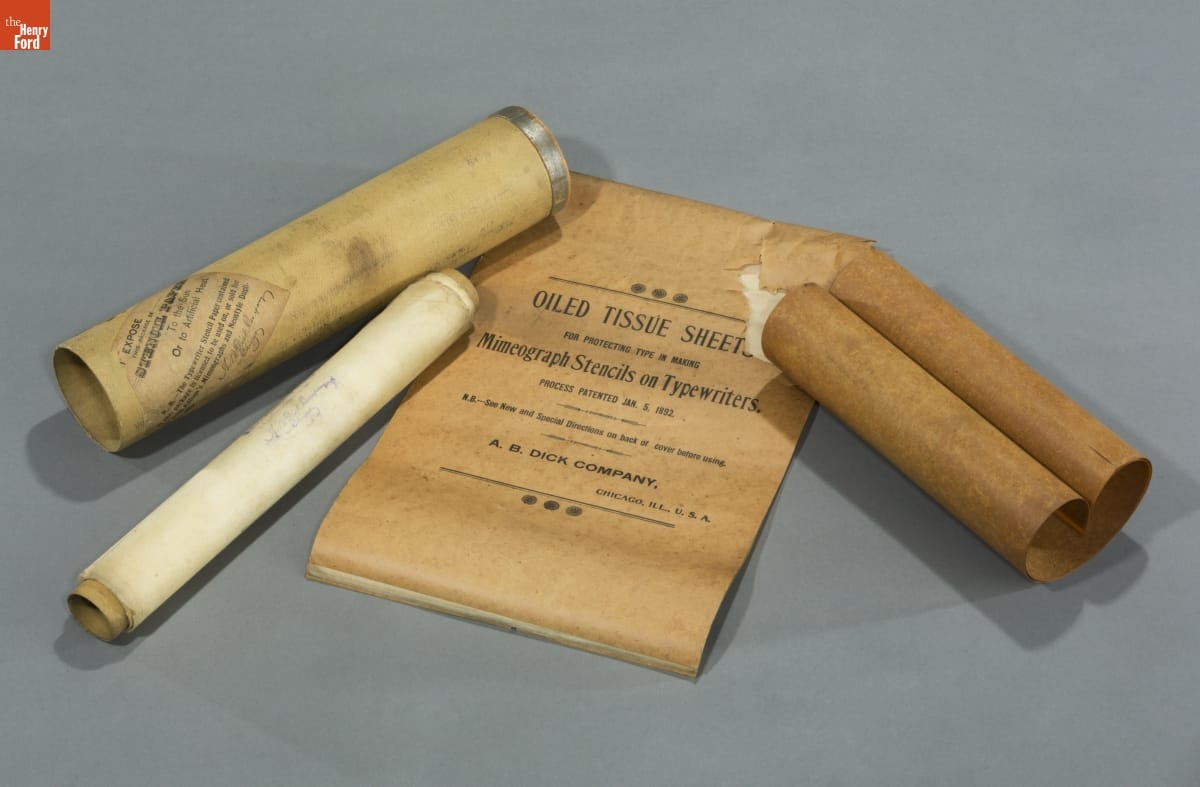
A.B. Dick Company Mimeograph Stencil Paper, 1892-1912