
Search
- Picking Cotton, Georgia, 1887 -
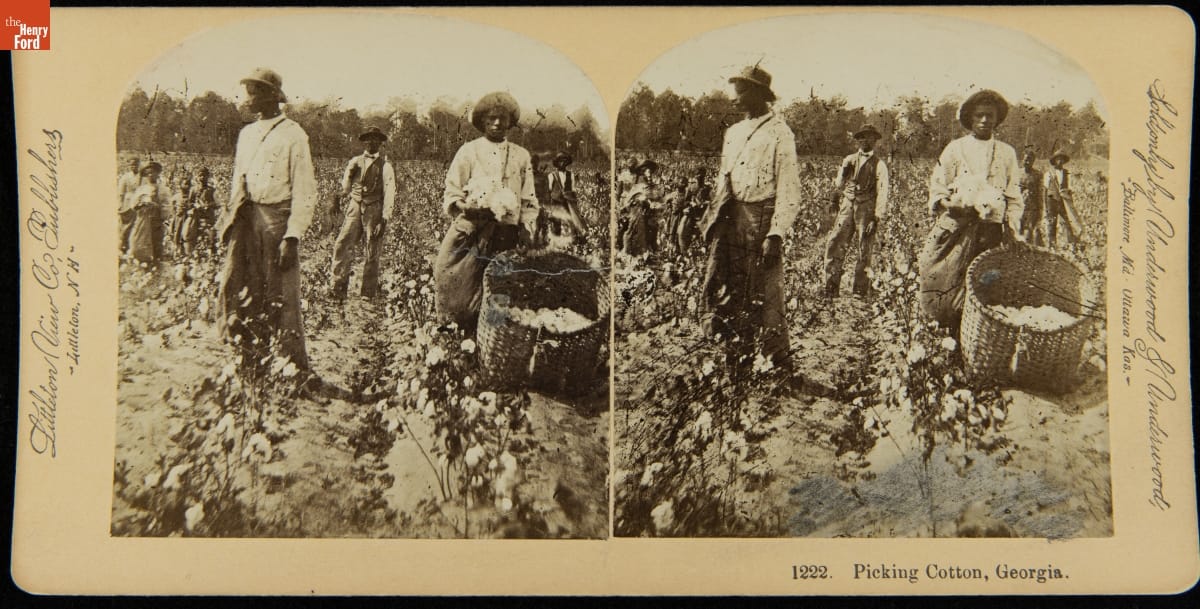
- 1887
- Collections - Artifact
Picking Cotton, Georgia, 1887
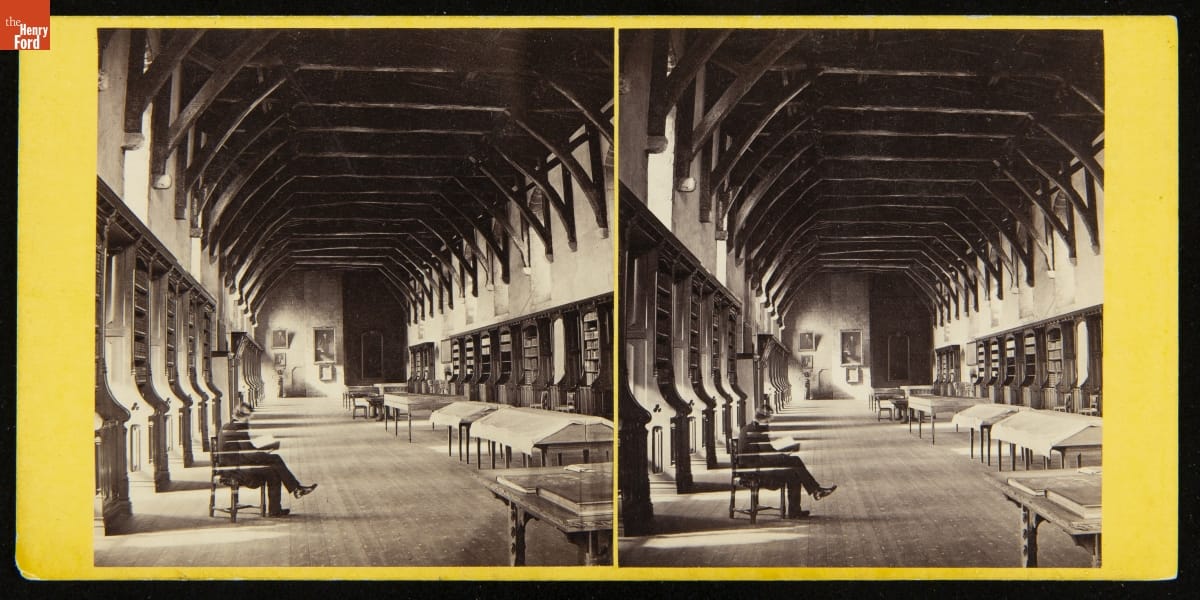
- Stereograph, "Durham Cathedral--The Library," 1870-1873 - The Durham Cathedral in northern England has housed a collection of religious texts, manuscripts, and secular works since its early founding. Dedicated areas throughout the Cathedral served as a library space over time. The library pictured in this stereograph opened in the mid-1800s to accommodate the Cathedral's growing collection.
- 1870-1873
- Collections - Artifact
Stereograph, "Durham Cathedral--The Library," 1870-1873
The Durham Cathedral in northern England has housed a collection of religious texts, manuscripts, and secular works since its early founding. Dedicated areas throughout the Cathedral served as a library space over time. The library pictured in this stereograph opened in the mid-1800s to accommodate the Cathedral's growing collection.
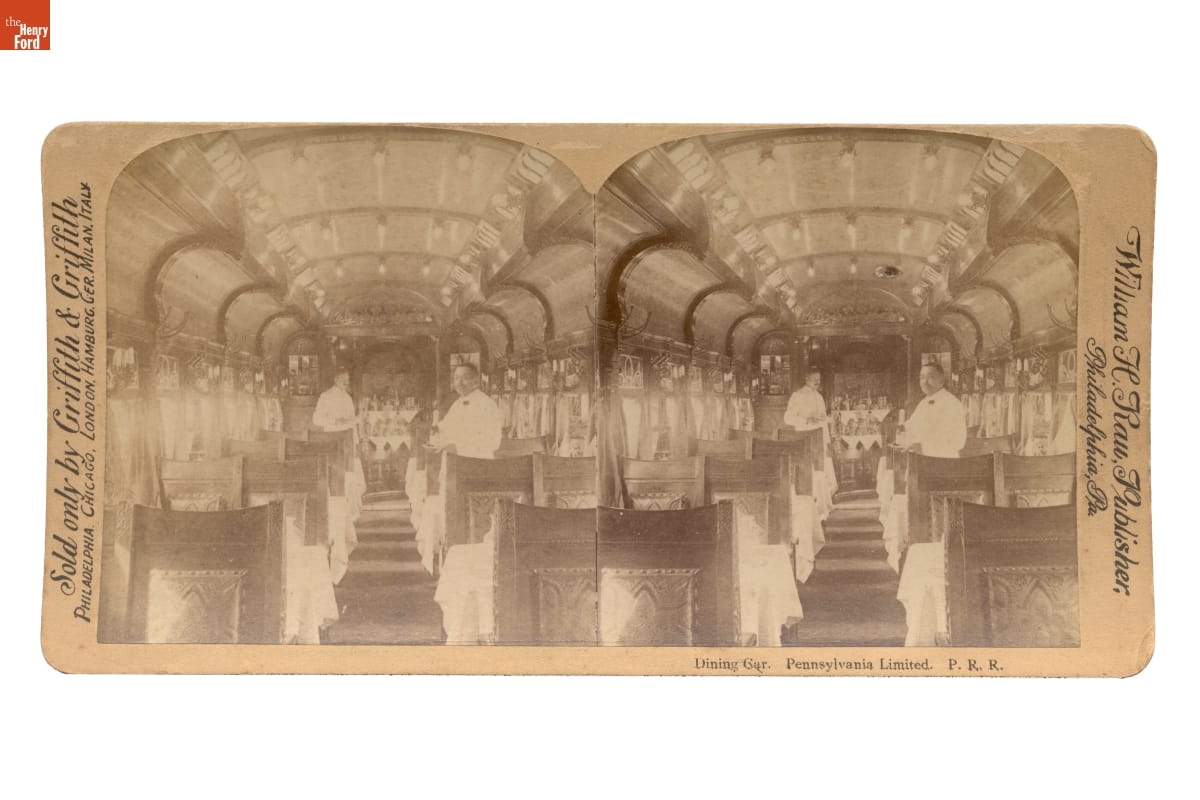
- Dining Car, Pennsylvania Limited, Pennsylvania Railroad, circa 1900 - Railroads took pride in their dining cars. They were expensive to operate, but quality food and service helped a railroad distinguish itself from competitors. For African Americans, working on a railroad dining car was one of the few avenues available to enter the Black middle class in the 19th and early 20th centuries.
- circa 1900
- Collections - Artifact
Dining Car, Pennsylvania Limited, Pennsylvania Railroad, circa 1900
Railroads took pride in their dining cars. They were expensive to operate, but quality food and service helped a railroad distinguish itself from competitors. For African Americans, working on a railroad dining car was one of the few avenues available to enter the Black middle class in the 19th and early 20th centuries.
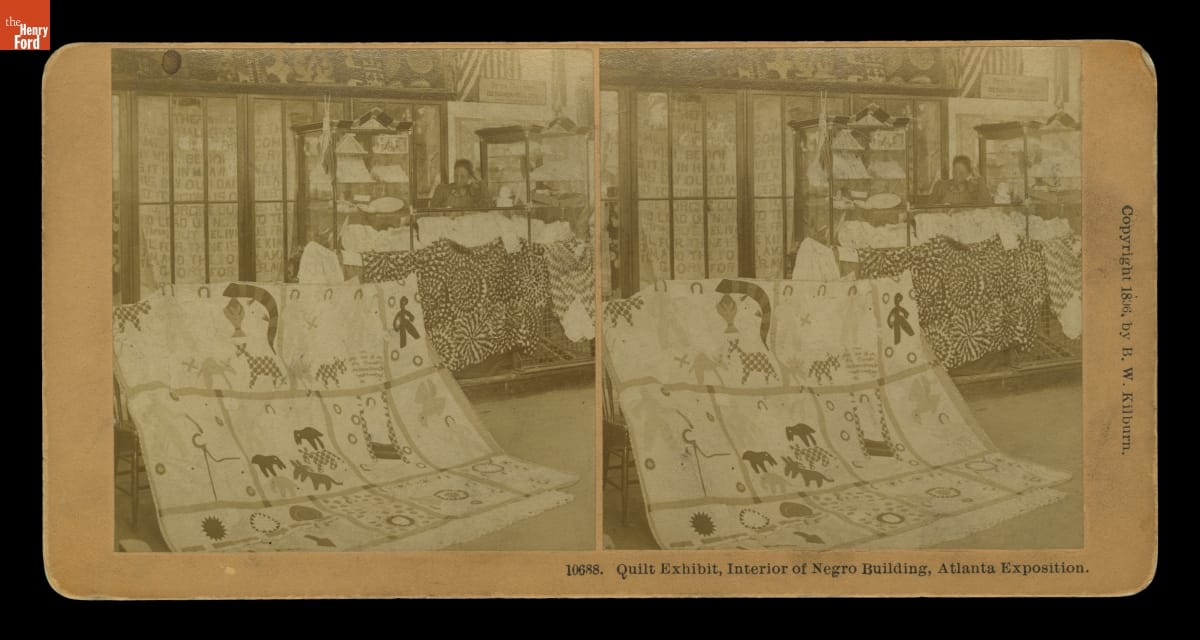
- "Quilt Exhibit, Interior of Negro Building at Atlanta Exposition," 1895 - Former slave Harriet Powers made this striking Bible quilt, with its bold figures that depict biblical events, during the mid-1880s. A decade later, the quilt--sold by Powers out of need--was exhibited at this 1895 exposition in Atlanta. For decades, Powers received little recognition for her work. Today, she is one of the best-known Southern quilt makers.
- 1895
- Collections - Artifact
"Quilt Exhibit, Interior of Negro Building at Atlanta Exposition," 1895
Former slave Harriet Powers made this striking Bible quilt, with its bold figures that depict biblical events, during the mid-1880s. A decade later, the quilt--sold by Powers out of need--was exhibited at this 1895 exposition in Atlanta. For decades, Powers received little recognition for her work. Today, she is one of the best-known Southern quilt makers.
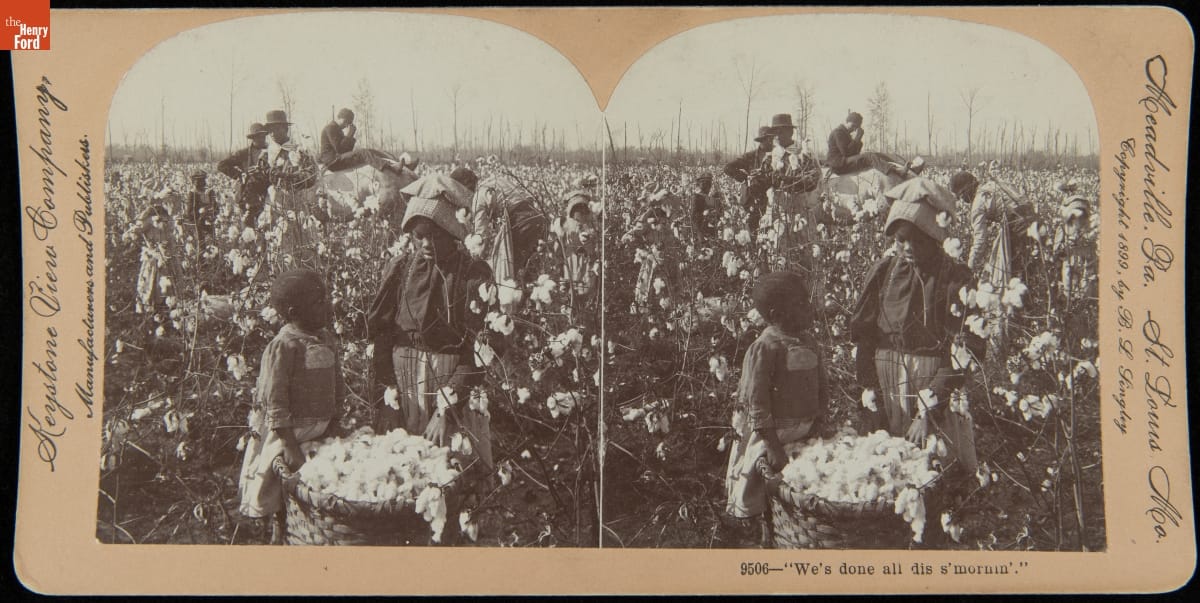
- "We's done all dis s'mornin'," 1899 - This stereograph features children with a full basket of cotton, the cash crop dominating southern agriculture at the time. The caption, in dialect, implied that these children were uneducated. Its translation into six languages conveyed that impression internationally. In reality, cotton pickers earned low wages (one penny per pound) and their impoverished condition undermined access to adequate education.
- 1899
- Collections - Artifact
"We's done all dis s'mornin'," 1899
This stereograph features children with a full basket of cotton, the cash crop dominating southern agriculture at the time. The caption, in dialect, implied that these children were uneducated. Its translation into six languages conveyed that impression internationally. In reality, cotton pickers earned low wages (one penny per pound) and their impoverished condition undermined access to adequate education.
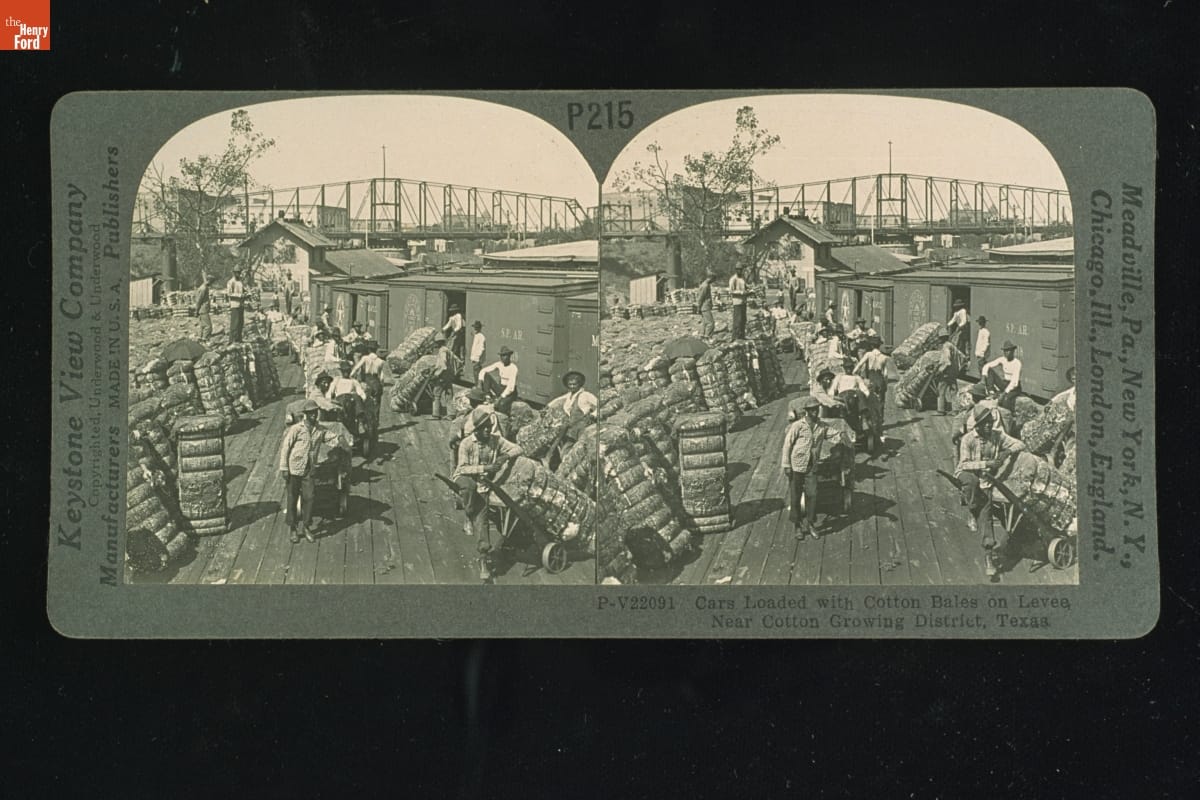
- Cars Loaded with Cotton Bales on Levee, near Cotton Growing District, Texas, circa 1920 -
- circa 1920
- Collections - Artifact
Cars Loaded with Cotton Bales on Levee, near Cotton Growing District, Texas, circa 1920
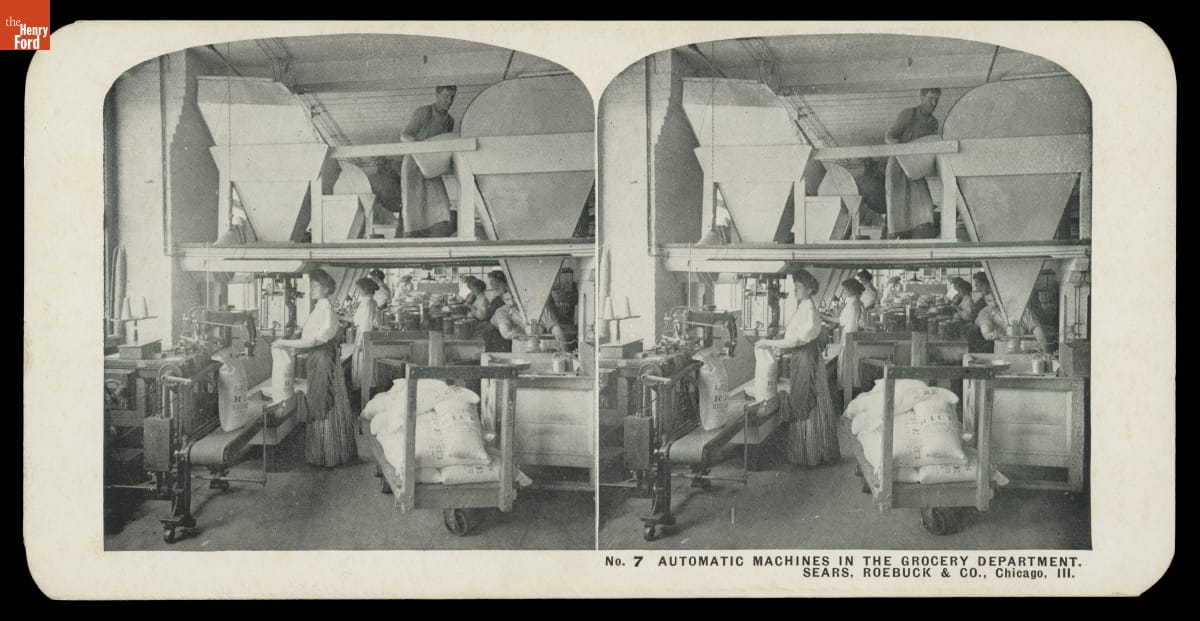
- "Automatic Machines in the Grocery Department. Sears, Roebuck & Co., Chicago, Ill.," 1906-1908 - Mail-order firm Sears, Roebuck, & Co. had become one of America's largest corporations by the early 1900s. Sears was particularly popular among rural Americans, as it offered better options, lower costs, and more efficient delivery methods than traditional general stores. This stereograph, one of a set of 50 sold through the Sears catalog beginning in 1908, offered a behind-the-scenes look at the company's operation.
- 1906-1908
- Collections - Artifact
"Automatic Machines in the Grocery Department. Sears, Roebuck & Co., Chicago, Ill.," 1906-1908
Mail-order firm Sears, Roebuck, & Co. had become one of America's largest corporations by the early 1900s. Sears was particularly popular among rural Americans, as it offered better options, lower costs, and more efficient delivery methods than traditional general stores. This stereograph, one of a set of 50 sold through the Sears catalog beginning in 1908, offered a behind-the-scenes look at the company's operation.
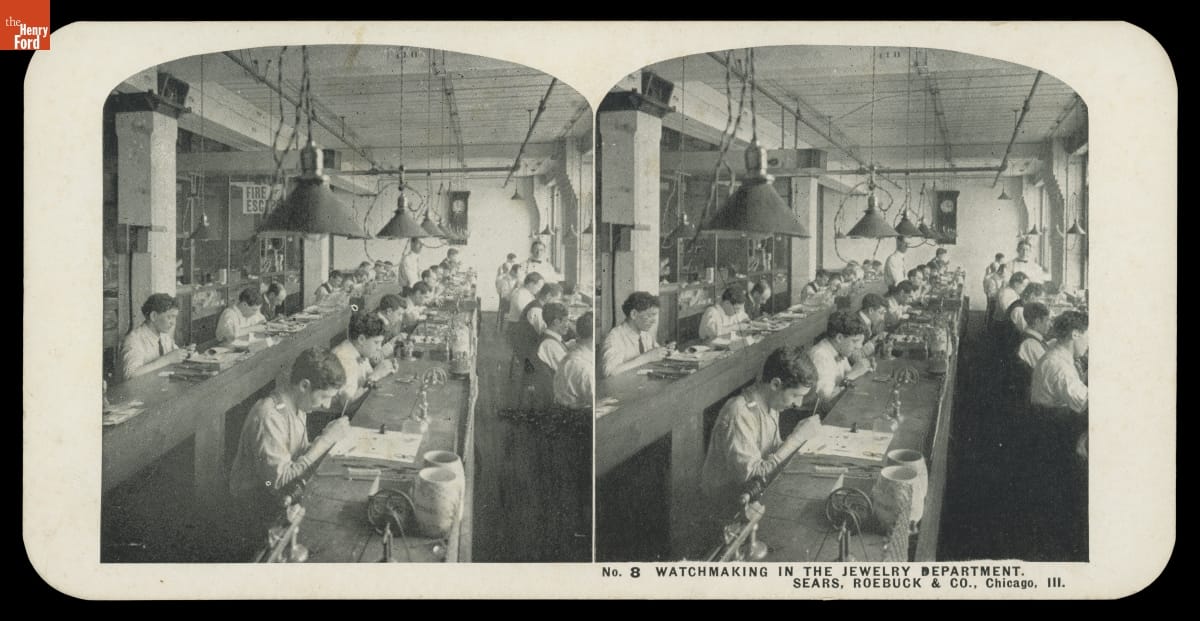
- "Watchmaking in the Jewelry Department. Sears, Roebuck & Co., Chicago, Ill.," 1906-1908 - Mail-order firm Sears, Roebuck, & Co. had become one of America's largest corporations by the early 1900s. Sears was particularly popular among rural Americans, as it offered better options, lower costs, and more efficient delivery methods than traditional general stores. This stereograph, one of a set of 50 sold through the Sears catalog beginning in 1908, offered a behind-the-scenes look at the company's operation.
- 1906-1908
- Collections - Artifact
"Watchmaking in the Jewelry Department. Sears, Roebuck & Co., Chicago, Ill.," 1906-1908
Mail-order firm Sears, Roebuck, & Co. had become one of America's largest corporations by the early 1900s. Sears was particularly popular among rural Americans, as it offered better options, lower costs, and more efficient delivery methods than traditional general stores. This stereograph, one of a set of 50 sold through the Sears catalog beginning in 1908, offered a behind-the-scenes look at the company's operation.
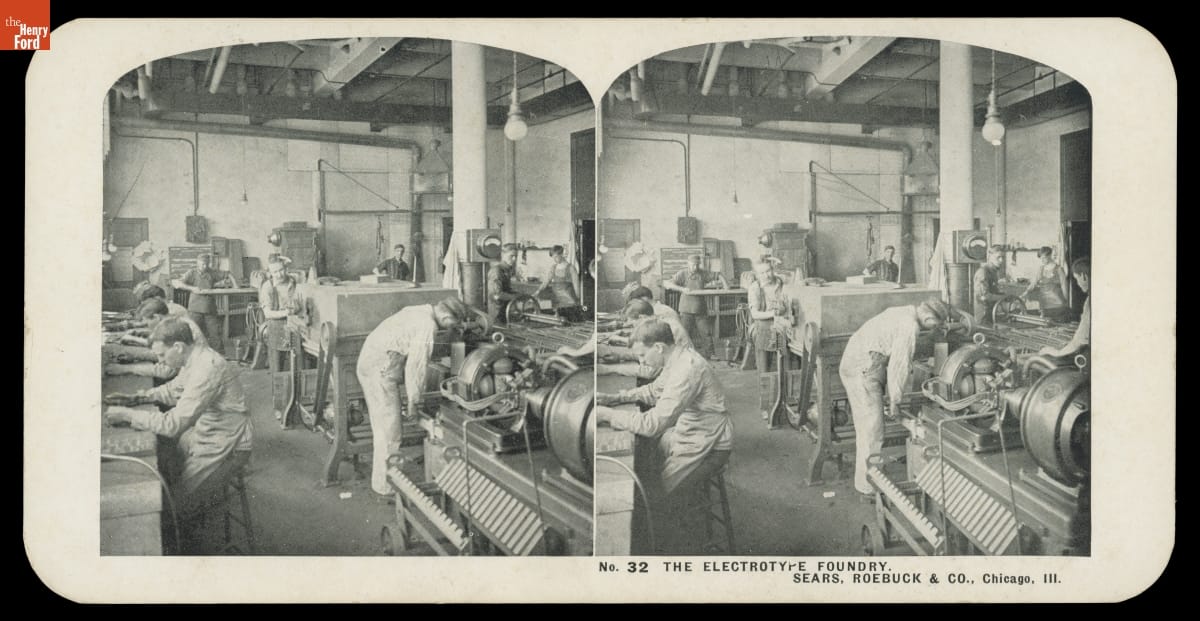
- "The Electrotype Foundry. Sears, Roebuck & Co., Chicago, Ill.," 1906-1908 - Mail-order firm Sears, Roebuck, & Co. had become one of America's largest corporations by the early 1900s. Sears was particularly popular among rural Americans, as it offered better options, lower costs, and more efficient delivery methods than traditional general stores. This stereograph, one of a set of 50 sold through the Sears catalog beginning in 1908, offered a behind-the-scenes look at the company's operation.
- 1906-1908
- Collections - Artifact
"The Electrotype Foundry. Sears, Roebuck & Co., Chicago, Ill.," 1906-1908
Mail-order firm Sears, Roebuck, & Co. had become one of America's largest corporations by the early 1900s. Sears was particularly popular among rural Americans, as it offered better options, lower costs, and more efficient delivery methods than traditional general stores. This stereograph, one of a set of 50 sold through the Sears catalog beginning in 1908, offered a behind-the-scenes look at the company's operation.
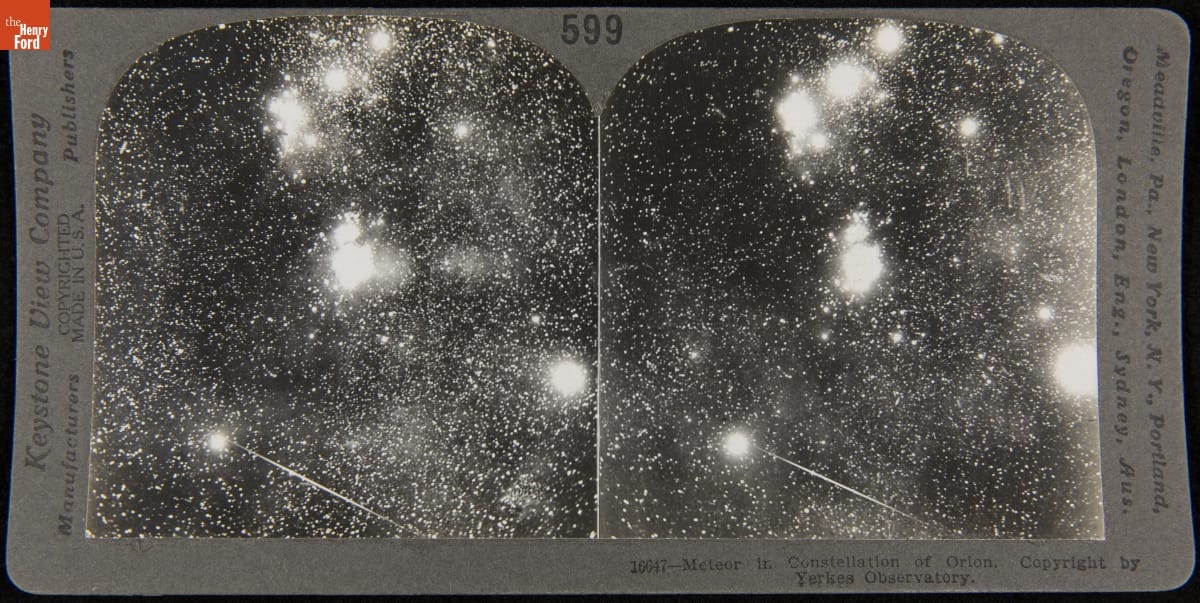
- Stereograph, "Meteor in Constellation of Orion," 1904 - Americans loved stereographs -- millions were made from the mid-1800s through the 1930s. A stereograph consists of two offset photos that appear to have three-dimensional depth when viewed through a stereoscope. These images entertained and educated. Stereographs could transport viewers to distant events, exotic places, and even worlds beyond, like this image of the Orion constellation.
- November 15, 1904
- Collections - Artifact
Stereograph, "Meteor in Constellation of Orion," 1904
Americans loved stereographs -- millions were made from the mid-1800s through the 1930s. A stereograph consists of two offset photos that appear to have three-dimensional depth when viewed through a stereoscope. These images entertained and educated. Stereographs could transport viewers to distant events, exotic places, and even worlds beyond, like this image of the Orion constellation.