
Search
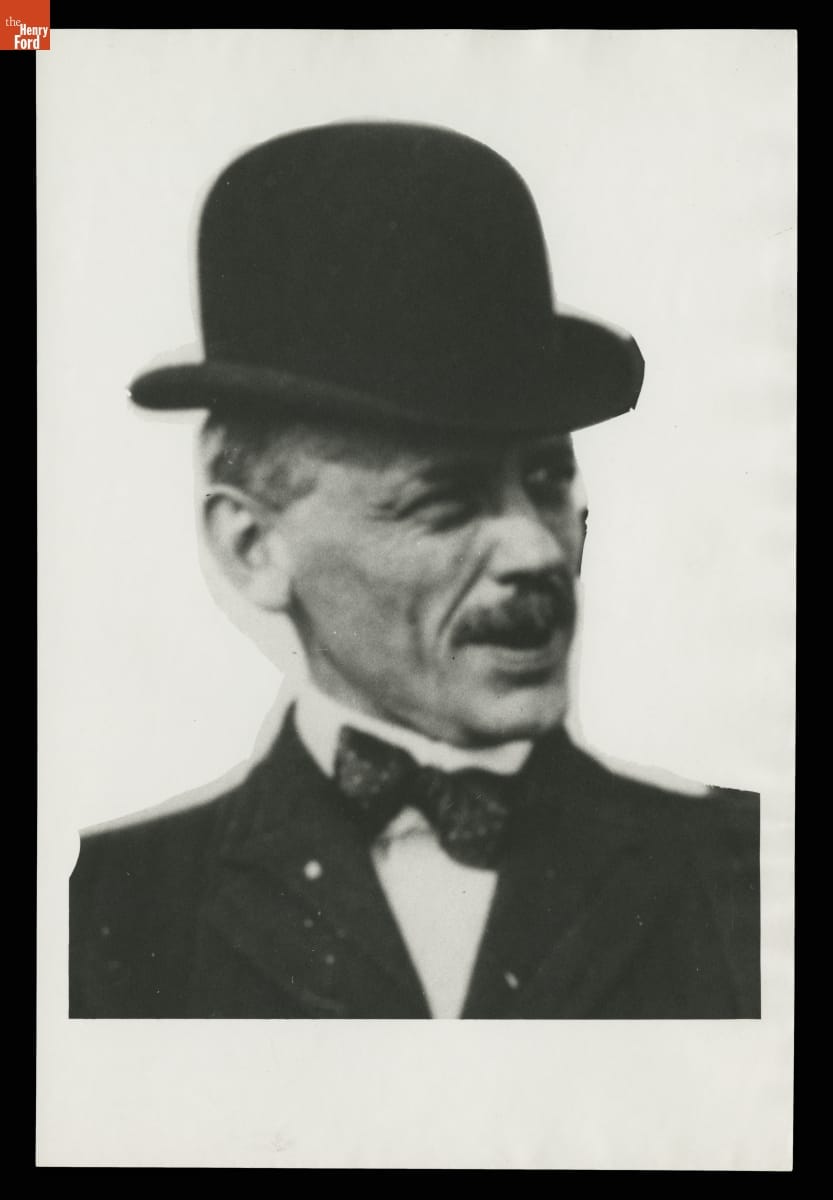
- John W. Anderson, a Stockholder in Ford Motor Company, September 17, 1908 - In 1903, John W. Anderson was an attorney for Alexander Malcomson, Detroit's largest coal dealer and a partner in Henry Ford's budding new car company. Anderson became one of Ford Motor Company's first investors. He was bullish on the company's prospects from the start, confidently writing to his father that, "the demand for automobiles is a perfect craze."
- September 17, 1908
- Collections - Artifact
John W. Anderson, a Stockholder in Ford Motor Company, September 17, 1908
In 1903, John W. Anderson was an attorney for Alexander Malcomson, Detroit's largest coal dealer and a partner in Henry Ford's budding new car company. Anderson became one of Ford Motor Company's first investors. He was bullish on the company's prospects from the start, confidently writing to his father that, "the demand for automobiles is a perfect craze."
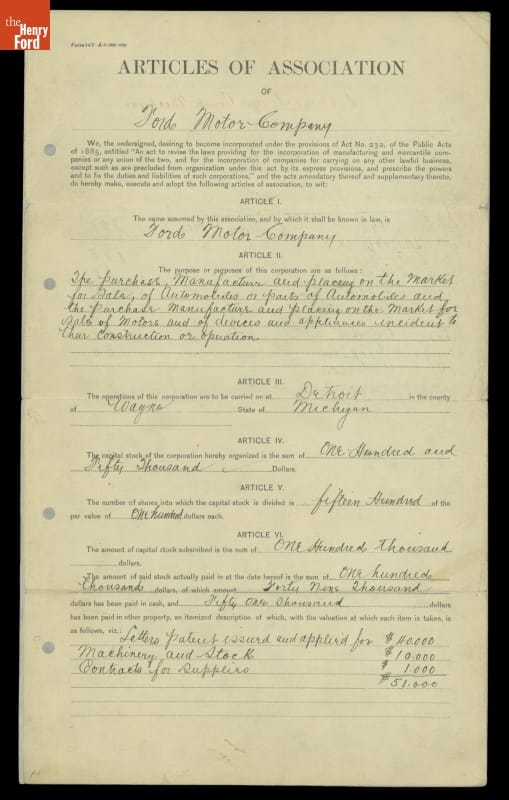
- Ford Motor Company Articles of Association, June 16, 1903 - These four pages are the original Articles of Association that established Ford Motor Company on June 16, 1903. They provided the company name, the purpose for which it was formed, the place of operation, the amount of capital stock, the term of years the company would exist, and the names of the stockholders. Note that Henry Ford was not president.
- June 16, 1903
- Collections - Artifact
Ford Motor Company Articles of Association, June 16, 1903
These four pages are the original Articles of Association that established Ford Motor Company on June 16, 1903. They provided the company name, the purpose for which it was formed, the place of operation, the amount of capital stock, the term of years the company would exist, and the names of the stockholders. Note that Henry Ford was not president.
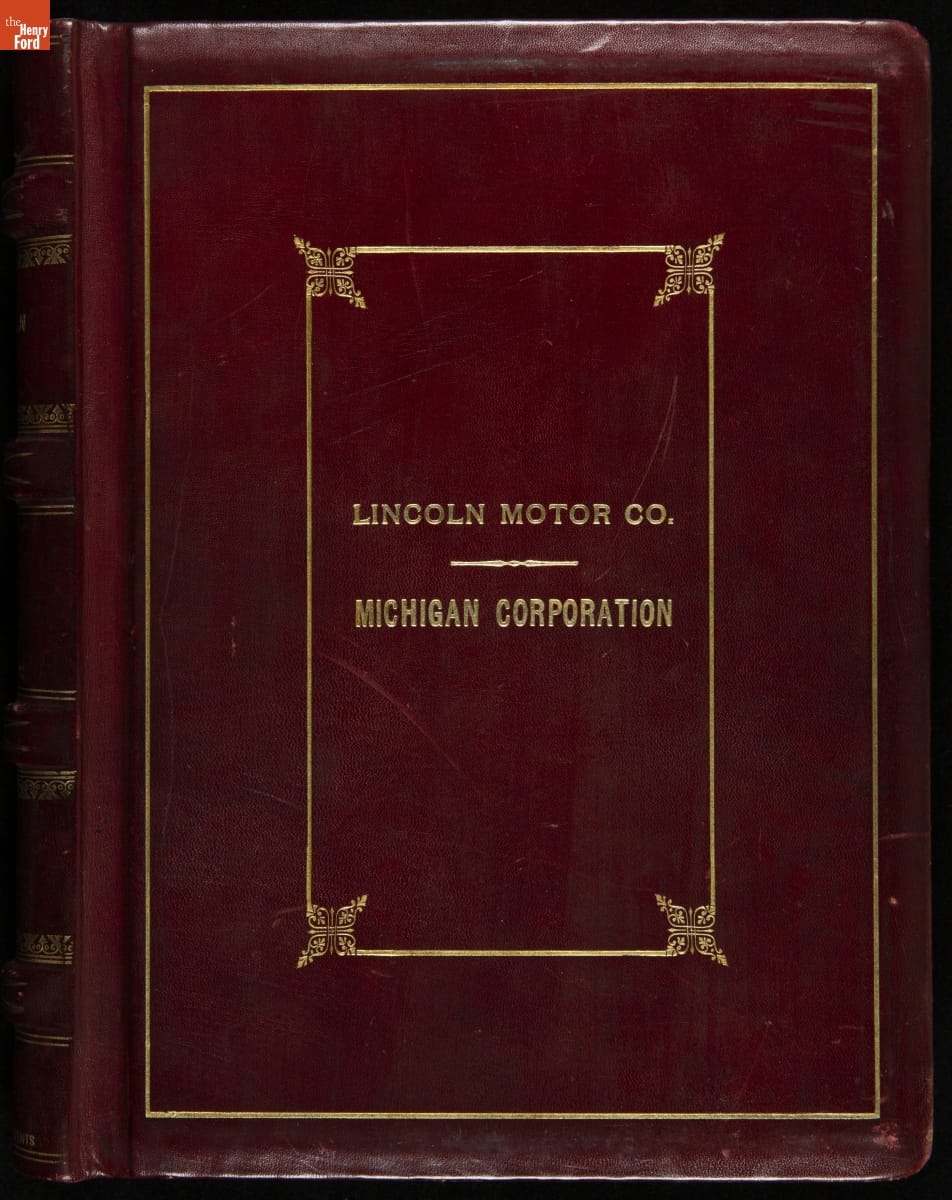
- Lincoln Motor Company Records, 1922-1940 - Ford Motor Company purchased the struggling Lincoln Motor Company in February 1922. Over the next two decades, the company flourished under Ford's ownership and under the guidance of Edsel B. Ford. Lincoln introduced a series of cars that combined innovative engineering and striking design, and it grew into one of America's most admired luxury automakers.
- 1922-1940
- Collections - Artifact
Lincoln Motor Company Records, 1922-1940
Ford Motor Company purchased the struggling Lincoln Motor Company in February 1922. Over the next two decades, the company flourished under Ford's ownership and under the guidance of Edsel B. Ford. Lincoln introduced a series of cars that combined innovative engineering and striking design, and it grew into one of America's most admired luxury automakers.
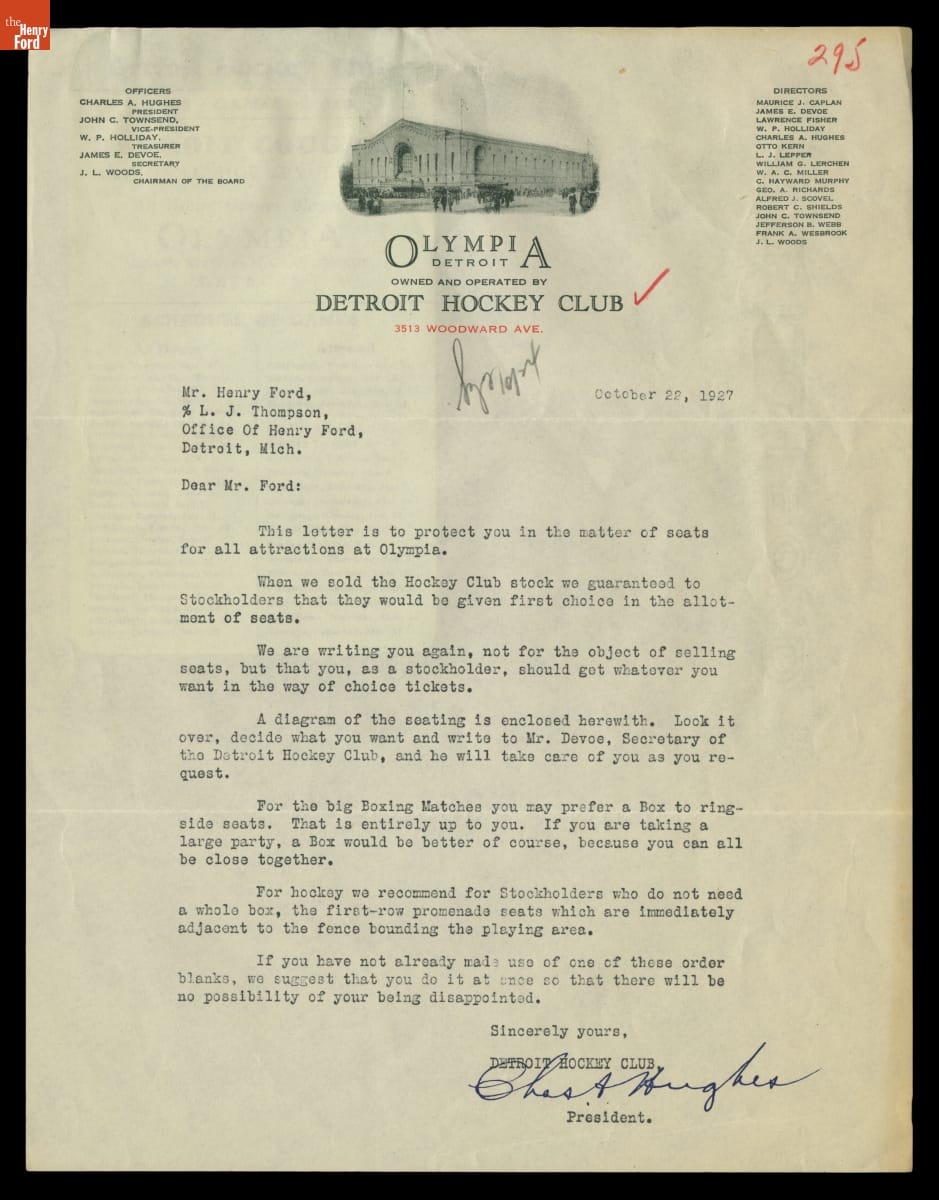
- Letter to Henry Ford from Charles A. Hughes, President of Detroit Hockey Club, Regarding Tickets and Seats, October 22, 1927 - Henry Ford purchased stock in the new Detroit ice hockey team in 1927. One of the perks for shareholders was the choice of allotted seats for events at Olympia Stadium -- the newly built arena where the National Hockey League team played. The Detroit Hockey Club's president, Charles Hughes, sent this letter and a stadium seating diagram with the team's schedule to Ford.
- October 22, 1927
- Collections - Artifact
Letter to Henry Ford from Charles A. Hughes, President of Detroit Hockey Club, Regarding Tickets and Seats, October 22, 1927
Henry Ford purchased stock in the new Detroit ice hockey team in 1927. One of the perks for shareholders was the choice of allotted seats for events at Olympia Stadium -- the newly built arena where the National Hockey League team played. The Detroit Hockey Club's president, Charles Hughes, sent this letter and a stadium seating diagram with the team's schedule to Ford.
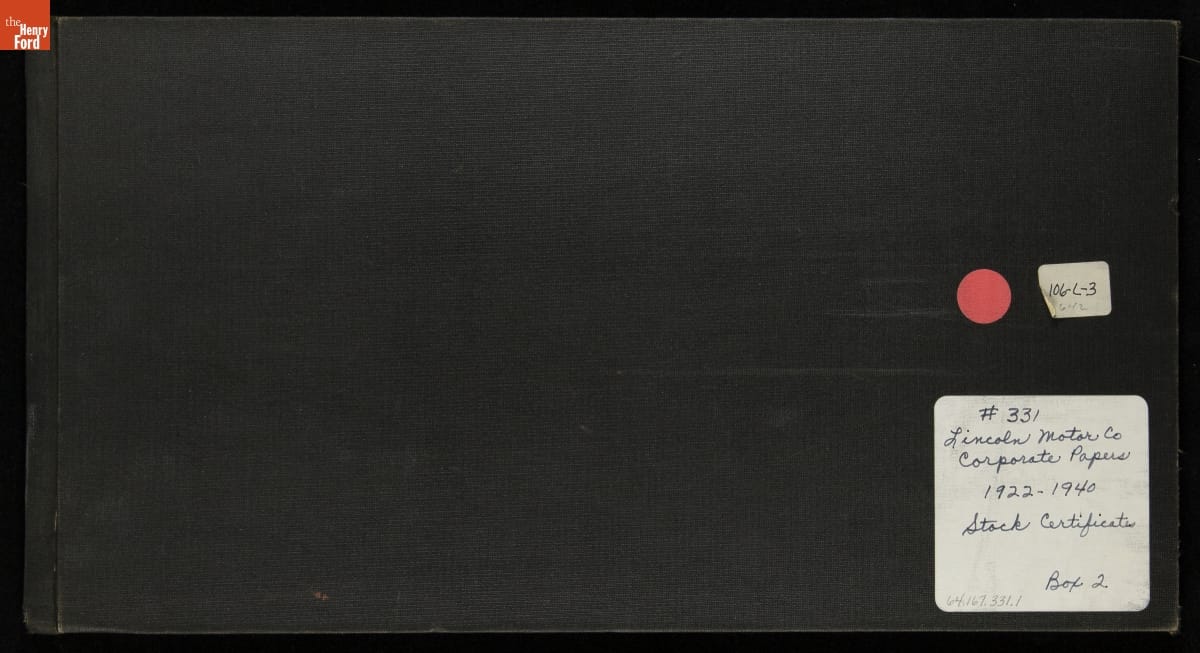
- Lincoln Motor Company Stock Certificate Book, 1922-1926 - Ford Motor Company purchased Lincoln Motor Company in 1922, after the struggling Lincoln was placed in receivership. Lincoln founders Henry Leland and Wilfred Leland hoped Ford would compensate Lincoln's original stockholders after the sale, and they later insisted there was an oral agreement to that effect. Four years of litigation failed to resolve the matter to the Lelands' satisfaction.
- 03 May 1922-22 August 1926
- Collections - Artifact
Lincoln Motor Company Stock Certificate Book, 1922-1926
Ford Motor Company purchased Lincoln Motor Company in 1922, after the struggling Lincoln was placed in receivership. Lincoln founders Henry Leland and Wilfred Leland hoped Ford would compensate Lincoln's original stockholders after the sale, and they later insisted there was an oral agreement to that effect. Four years of litigation failed to resolve the matter to the Lelands' satisfaction.
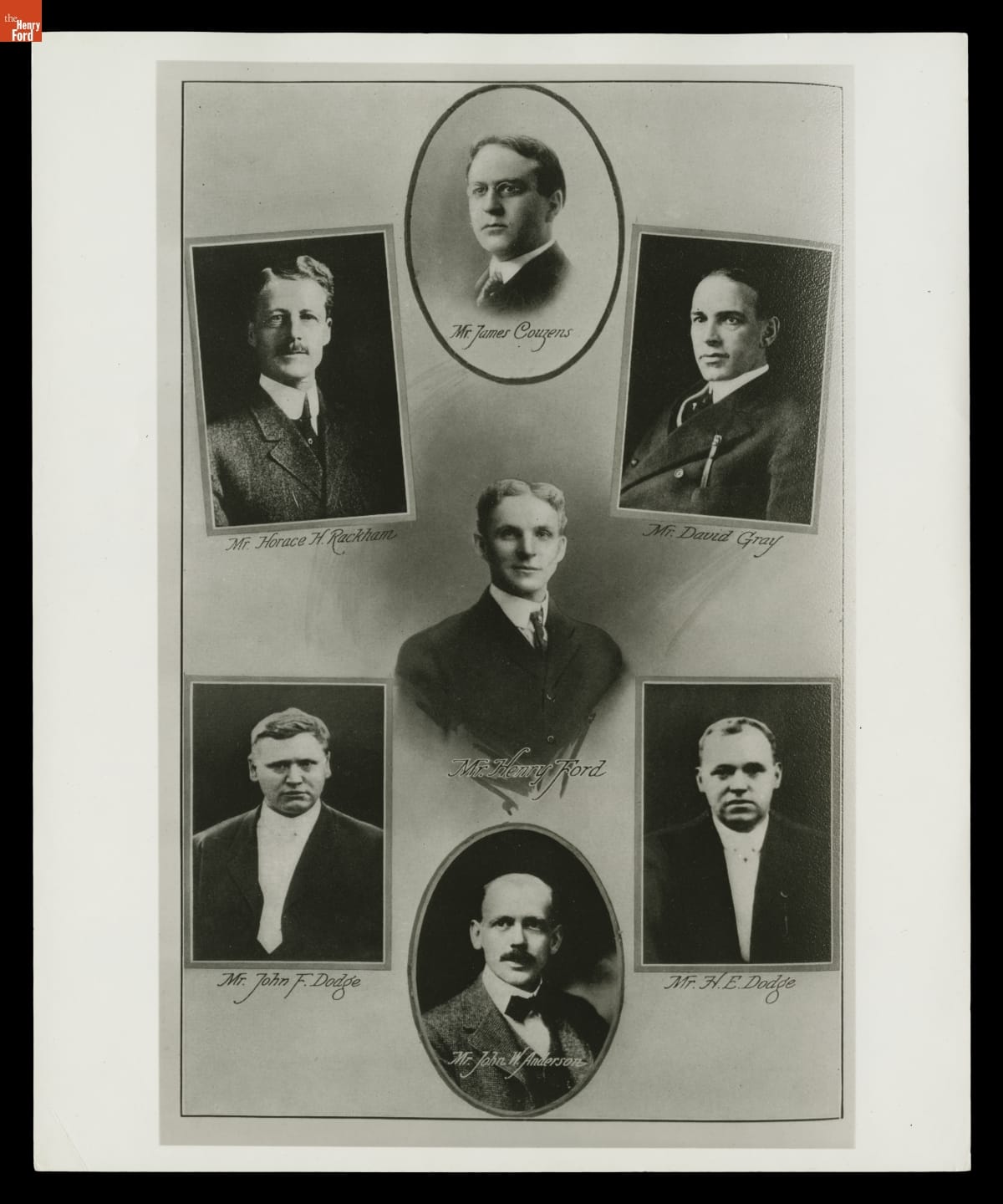
- Ford Motor Company Stockholders, June 1911 - Seven of Ford Motor Company's most prominent stockholders were pictured in this image from 1911. Over the following years, Henry Ford methodically and clandestinely bought up shares from minority stockholders until he obtained a controlling interest. When the task was finished in 1919, Mr. Ford at last had complete control of Ford Motor Company.
- June 01, 1911
- Collections - Artifact
Ford Motor Company Stockholders, June 1911
Seven of Ford Motor Company's most prominent stockholders were pictured in this image from 1911. Over the following years, Henry Ford methodically and clandestinely bought up shares from minority stockholders until he obtained a controlling interest. When the task was finished in 1919, Mr. Ford at last had complete control of Ford Motor Company.
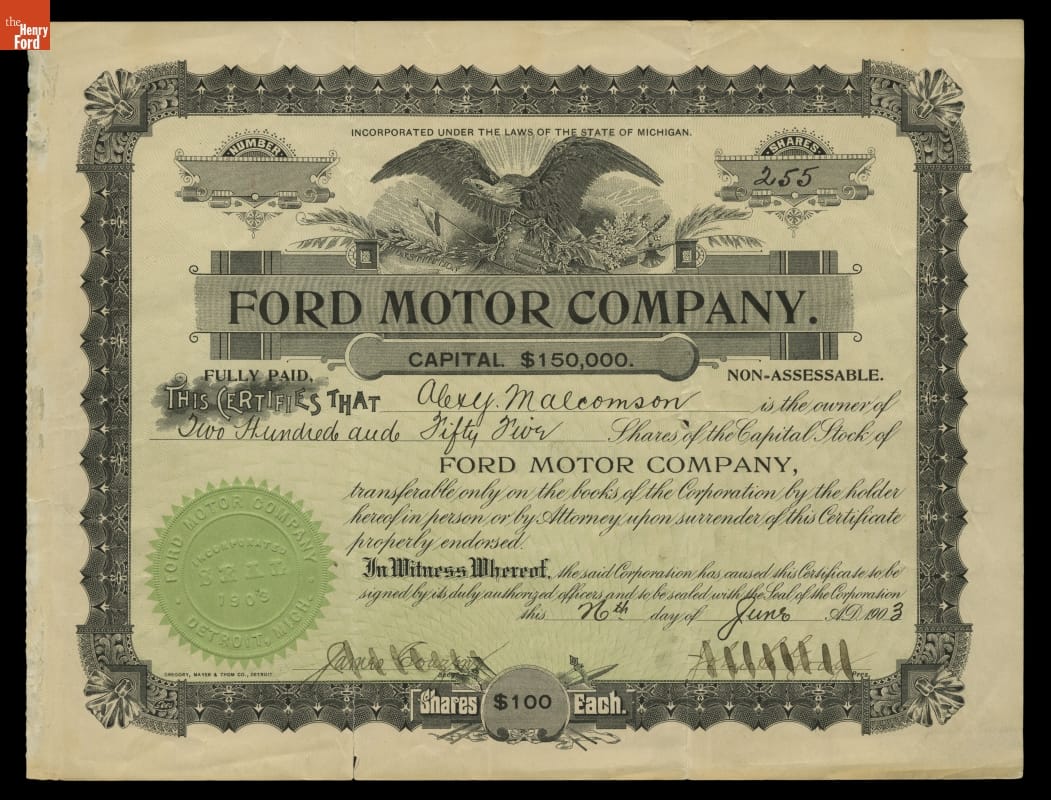
- Ford Motor Company Original Stock Certificate, June 26, 1903 - This is one of the first shares of Ford stock. It was issued to Alexander Malcomson, a wealthy Detroit coal merchant. He took a liking to young Henry and agreed to back his third attempt at starting a company despite the fact that Ford had failed twice before. Malcomson was instrumental in finding wealthy backers for the new company.
- June 26, 1903
- Collections - Artifact
Ford Motor Company Original Stock Certificate, June 26, 1903
This is one of the first shares of Ford stock. It was issued to Alexander Malcomson, a wealthy Detroit coal merchant. He took a liking to young Henry and agreed to back his third attempt at starting a company despite the fact that Ford had failed twice before. Malcomson was instrumental in finding wealthy backers for the new company.
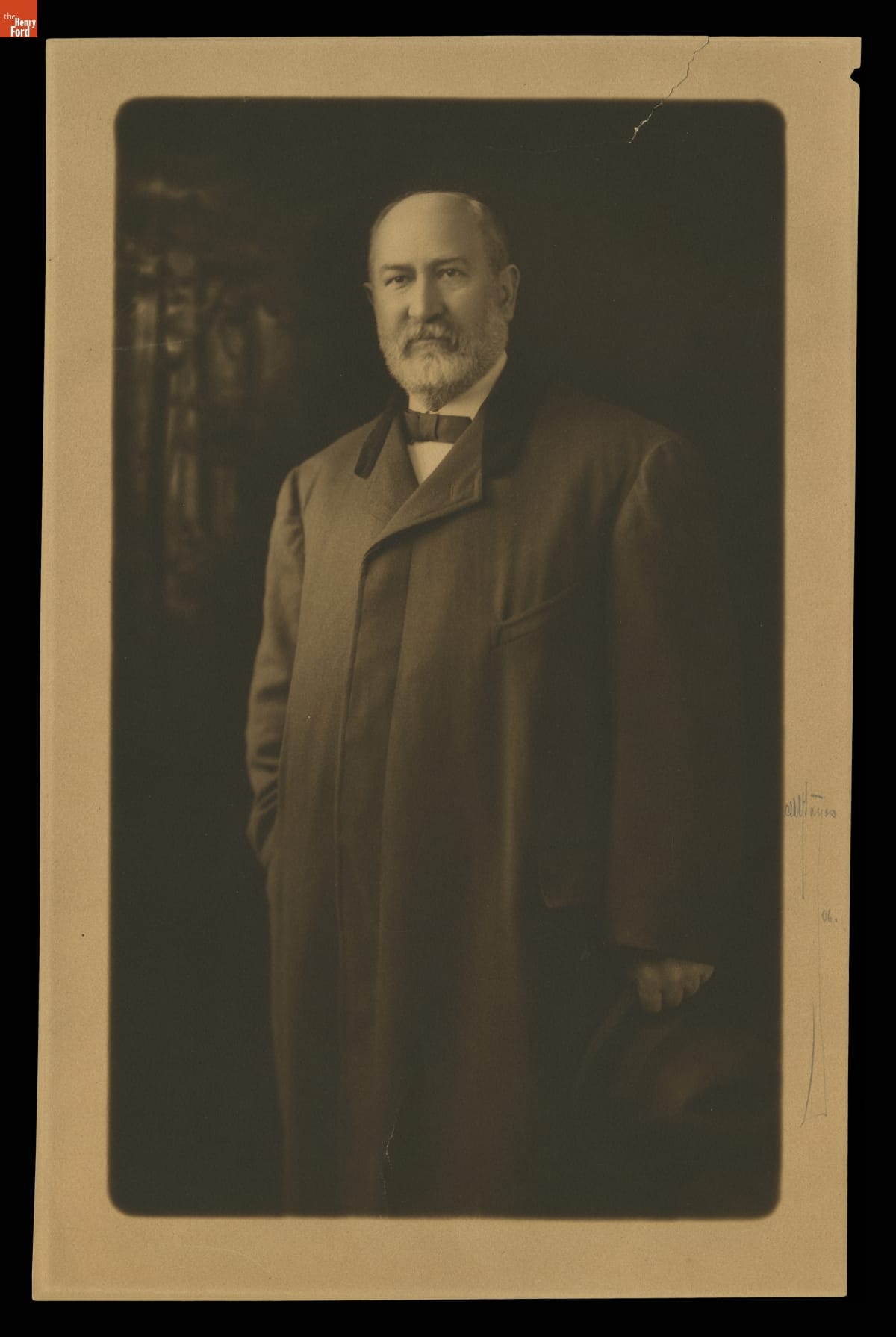
- John S. Gray, One of the Original Stockholders in Ford Motor Company, circa 1903 - John S. Gray was president of Detroit's German-American Bank in 1903 when his nephew, coal dealer Alexander Malcomson, convinced him to invest in the upstart Ford Motor Company. Gray's prominent reputation encouraged others to invest in the automaker too. Gray served as Ford Motor Company's first president until his death in 1906, when he was succeeded by Henry Ford.
- circa 1903
- Collections - Artifact
John S. Gray, One of the Original Stockholders in Ford Motor Company, circa 1903
John S. Gray was president of Detroit's German-American Bank in 1903 when his nephew, coal dealer Alexander Malcomson, convinced him to invest in the upstart Ford Motor Company. Gray's prominent reputation encouraged others to invest in the automaker too. Gray served as Ford Motor Company's first president until his death in 1906, when he was succeeded by Henry Ford.
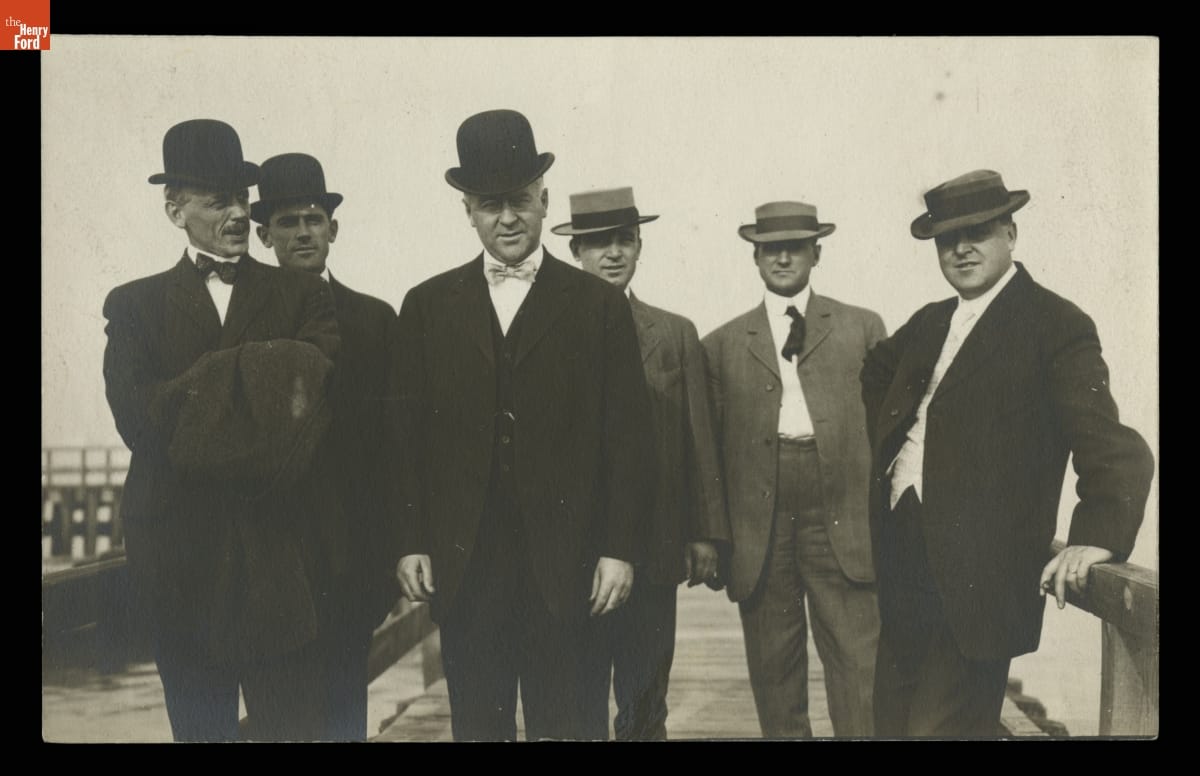
- Ford Motor Company Stockholders at Detroit Boat Club, September 17, 1908 - Stockholders of Ford Motor Company gathered at the Detroit Boat Club in September 1908. John W. Anderson (left) was an attorney for Alexander Malcomson, Henry Ford's primary backer. James Couzens (left center) was Ford Motor Company's general manager. John Dodge (right), with his brother Horace, supplied most of the mechanical components used in Ford cars.
- September 17, 1908
- Collections - Artifact
Ford Motor Company Stockholders at Detroit Boat Club, September 17, 1908
Stockholders of Ford Motor Company gathered at the Detroit Boat Club in September 1908. John W. Anderson (left) was an attorney for Alexander Malcomson, Henry Ford's primary backer. James Couzens (left center) was Ford Motor Company's general manager. John Dodge (right), with his brother Horace, supplied most of the mechanical components used in Ford cars.
- American Locomotive Company Annual Report, 1950 - The American Locomotive Company, established in 1901, wisely transitioned from manufacturing steam locomotives to diesel-electric units in the 1920s. ALCO locomotives, built in partnership with General Electric, were popular with American railroads until GE ended the collaboration in 1953 and became a direct competitor. ALCO's market share fell steadily until the company was forced to end production in 1969.
- 1950
- Collections - Artifact
American Locomotive Company Annual Report, 1950
The American Locomotive Company, established in 1901, wisely transitioned from manufacturing steam locomotives to diesel-electric units in the 1920s. ALCO locomotives, built in partnership with General Electric, were popular with American railroads until GE ended the collaboration in 1953 and became a direct competitor. ALCO's market share fell steadily until the company was forced to end production in 1969.