
Search
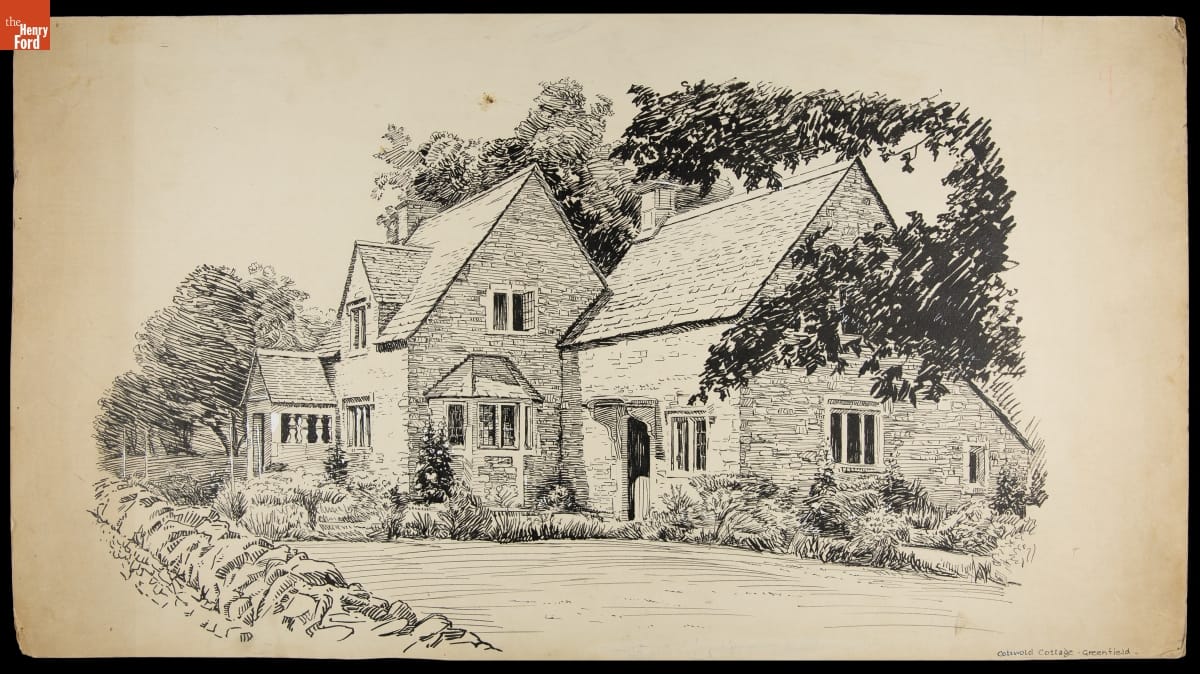
- Cotswold Cottage in Greenfield Village, circa 1933 - Irving Bacon, a Ford Motor Company employee and Henry Ford's personal artist, created pen-and-ink drawings to illustrate guidebooks for the Edison Institute Museum and Greenfield Village (now The Henry Ford) when they officially opened to the public in 1933. An illustrated souvenir guidebook helped visitors navigate the exhibits and grounds. Ford also used these drawings in other company publications.
- circa 1933
- Collections - Artifact
Cotswold Cottage in Greenfield Village, circa 1933
Irving Bacon, a Ford Motor Company employee and Henry Ford's personal artist, created pen-and-ink drawings to illustrate guidebooks for the Edison Institute Museum and Greenfield Village (now The Henry Ford) when they officially opened to the public in 1933. An illustrated souvenir guidebook helped visitors navigate the exhibits and grounds. Ford also used these drawings in other company publications.
- Cottage Near Crohane, Ireland, Possibly Home to Henry Ford's Ancestors, circa 1920 - Henry Ford had Irish roots. This stone cottage near Crohane, in southwest Ireland, is thought to have been the home of William and Rebecca Ford, Henry's great-grandparents. When the Great Famine struck Ireland in 1847, Henry's father, William Ford, migrated to the United States and settled near Dearborn, Michigan, where Henry was born in 1863.

- circa 1920
- Collections - Artifact
Cottage Near Crohane, Ireland, Possibly Home to Henry Ford's Ancestors, circa 1920
Henry Ford had Irish roots. This stone cottage near Crohane, in southwest Ireland, is thought to have been the home of William and Rebecca Ford, Henry's great-grandparents. When the Great Famine struck Ireland in 1847, Henry's father, William Ford, migrated to the United States and settled near Dearborn, Michigan, where Henry was born in 1863.
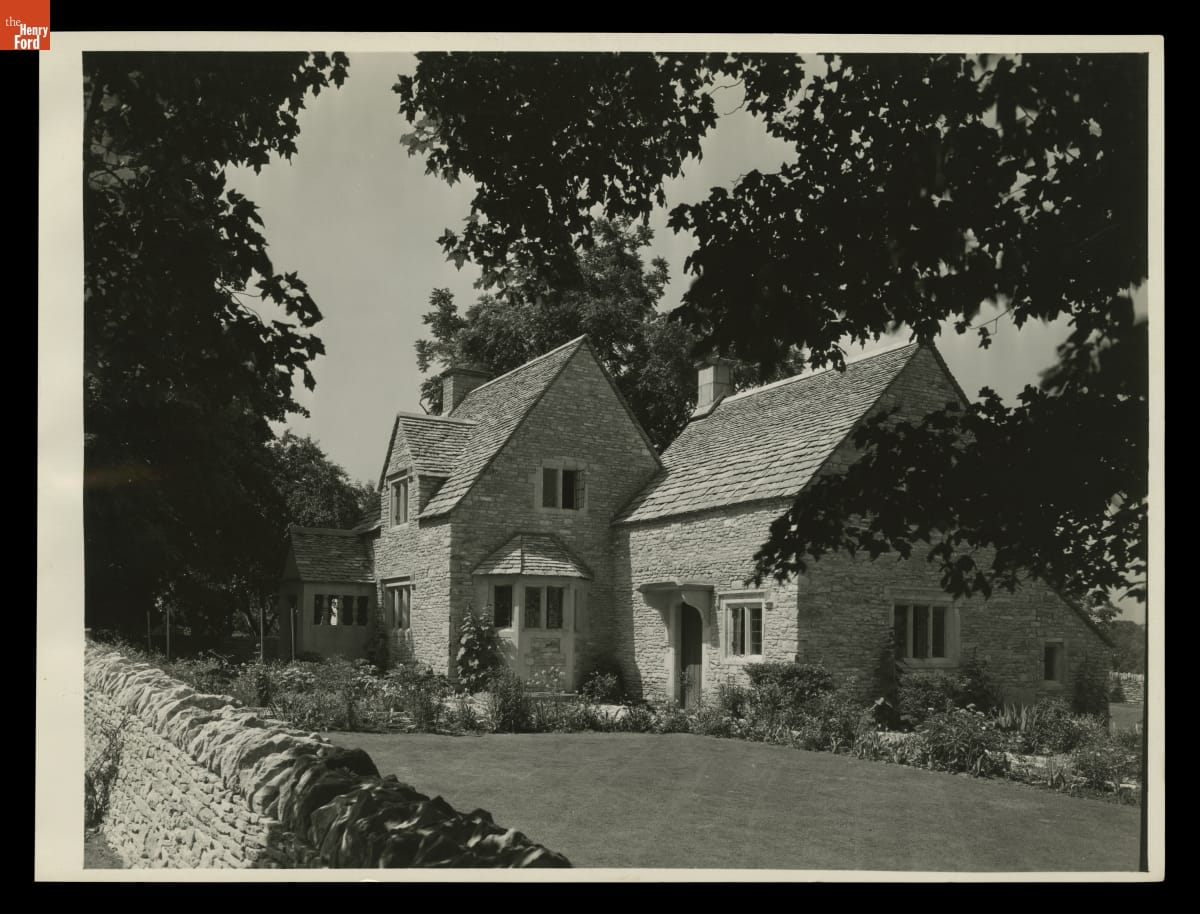
- Cotswold Cottage in Greenfield Village, June 1931 -
- June 20, 1931
- Collections - Artifact
Cotswold Cottage in Greenfield Village, June 1931
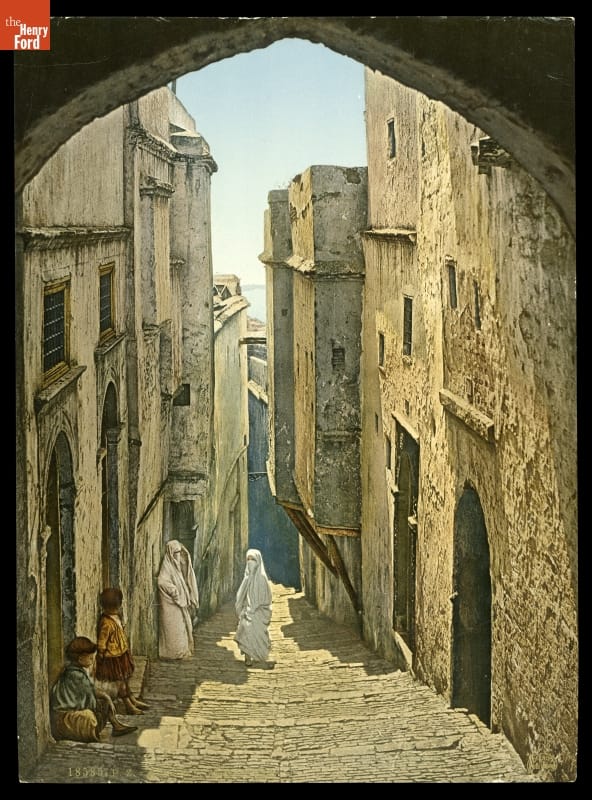
- Rue Ben Ali, Algiers, Algeria, circa 1905 - From 1895 to 1924, the Detroit Publishing Company was one of the major image publishers in the world. The company had a wide-ranging stock of original photographs, including many scenes from around the world. These colorful prints were reproduced for ads, purchased to decorate homes and offices, bought as souvenirs, and used as teaching tools in schools and libraries.
- circa 1905
- Collections - Artifact
Rue Ben Ali, Algiers, Algeria, circa 1905
From 1895 to 1924, the Detroit Publishing Company was one of the major image publishers in the world. The company had a wide-ranging stock of original photographs, including many scenes from around the world. These colorful prints were reproduced for ads, purchased to decorate homes and offices, bought as souvenirs, and used as teaching tools in schools and libraries.
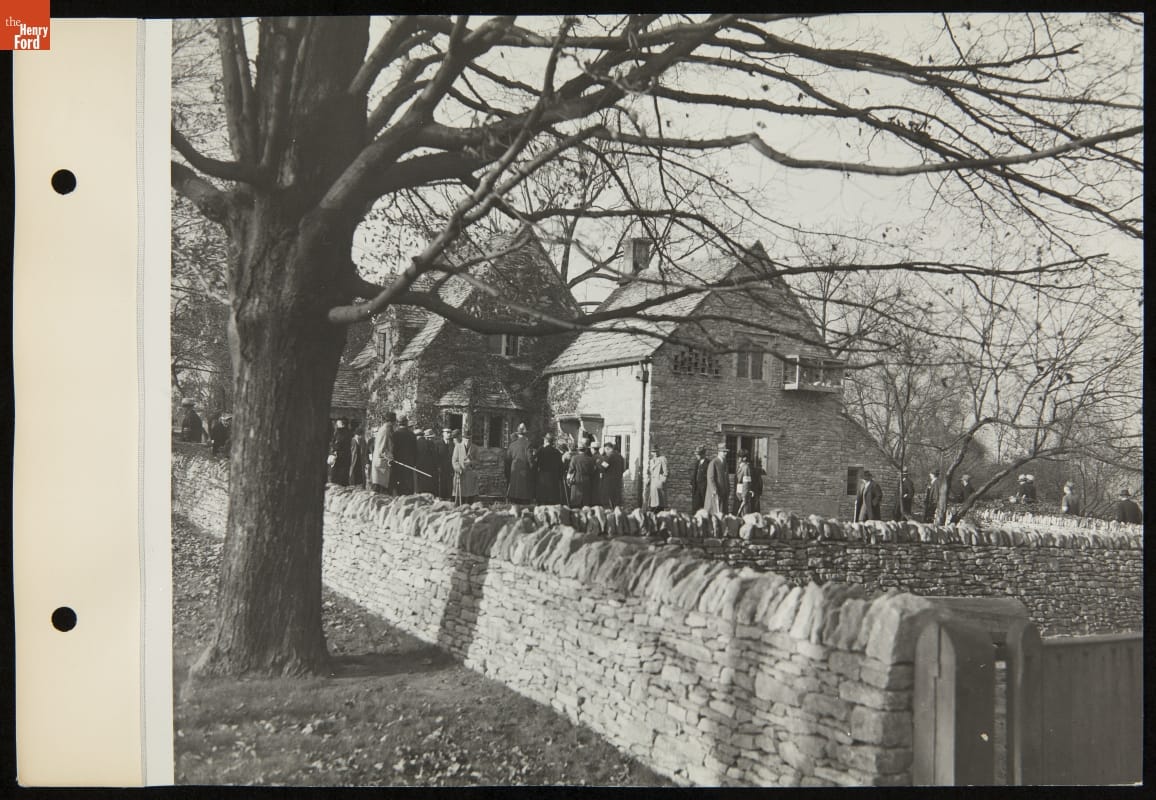
- Ford Dealers in Greenfield Village for the Presentation of Farris Windmill to Henry Ford, November 6, 1936 - The Ford Dealers of the United States and Canada purchased the Farris windmill in 1935. The Cape Cod structure, built in the mid-1600s and said to be the oldest windmill in the United States, would be a gift to Henry Ford. The windmill was dismantled and reassembled in Ford's Greenfield Village. In November 1936, thousands of Ford dealers attended the official presentation ceremony.
- November 06, 1936
- Collections - Artifact
Ford Dealers in Greenfield Village for the Presentation of Farris Windmill to Henry Ford, November 6, 1936
The Ford Dealers of the United States and Canada purchased the Farris windmill in 1935. The Cape Cod structure, built in the mid-1600s and said to be the oldest windmill in the United States, would be a gift to Henry Ford. The windmill was dismantled and reassembled in Ford's Greenfield Village. In November 1936, thousands of Ford dealers attended the official presentation ceremony.
- "Small Stone Houses of the Cotswold District," 1931 -
- 1931
- Collections - Artifact
"Small Stone Houses of the Cotswold District," 1931