
Search
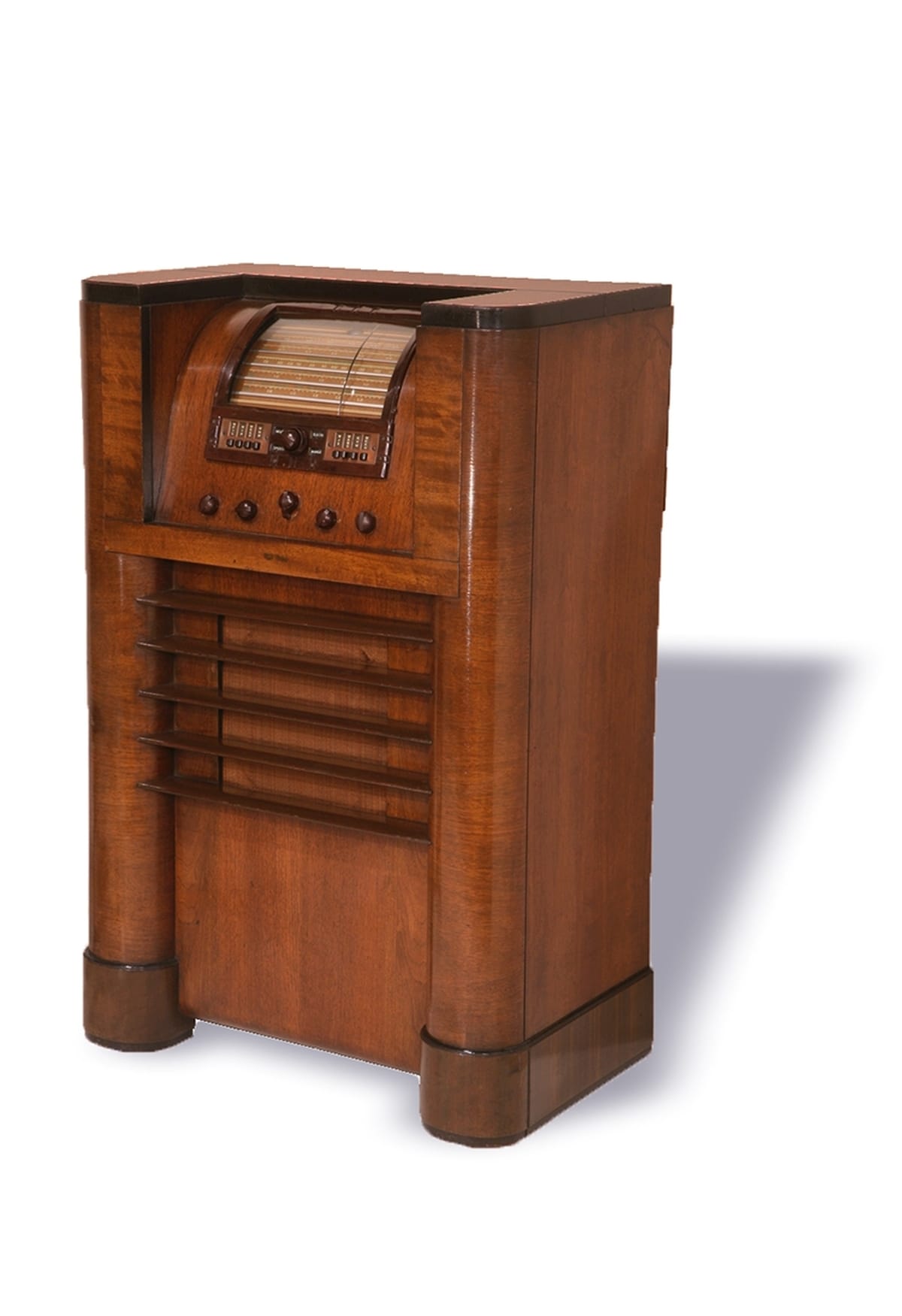
- RCA Console Radio Receiver, 1935-1940 - During the 1930s, consoles were the most popular form of radio receiver in America. Essentially large pieces of furniture, these receivers were the center focus of a middle class living room. They were always designed to blend with the decor, whether colonial, a European historical style or modern, streamlined style like this example.
- 1935-1940
- Collections - Artifact
RCA Console Radio Receiver, 1935-1940
During the 1930s, consoles were the most popular form of radio receiver in America. Essentially large pieces of furniture, these receivers were the center focus of a middle class living room. They were always designed to blend with the decor, whether colonial, a European historical style or modern, streamlined style like this example.
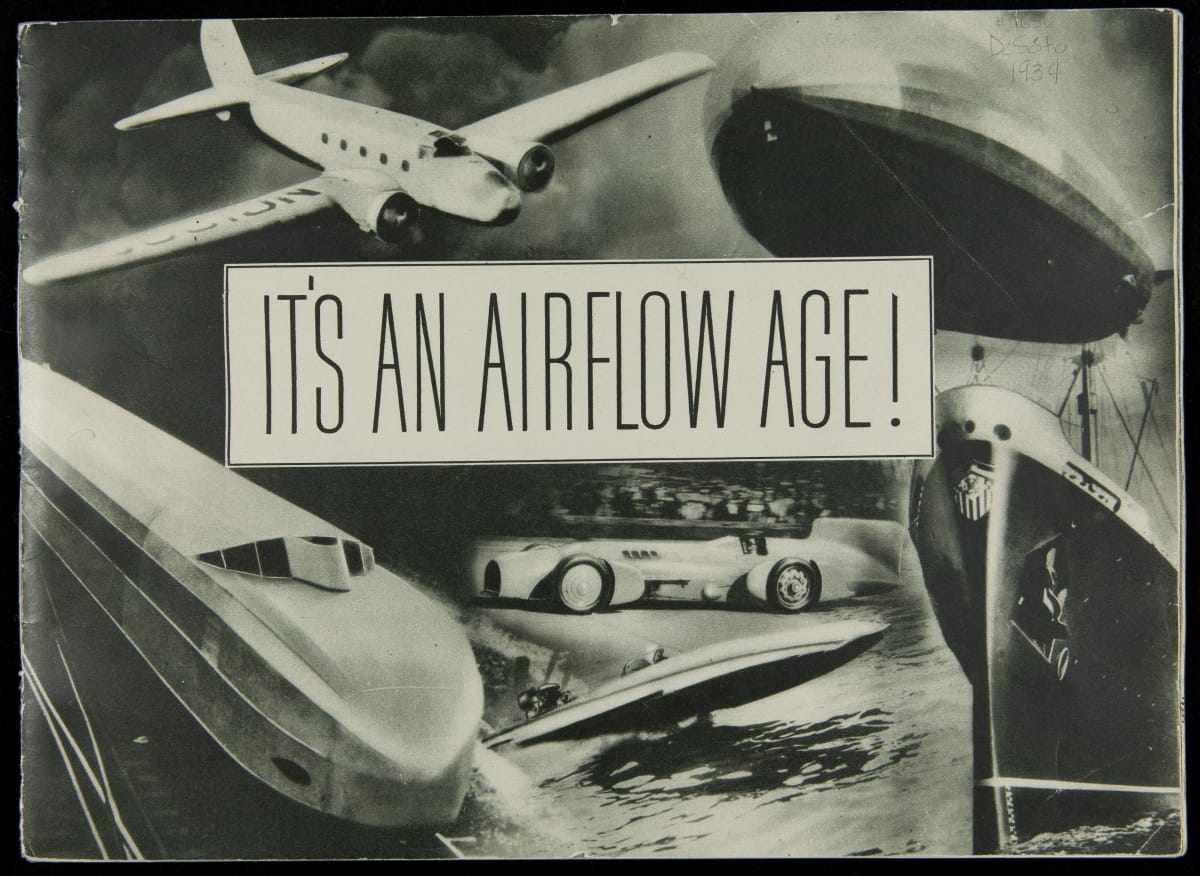
- Sales Brochure for the DeSoto Airflow, "It's an Airflow Age!," 1934 - Chrysler introduced the Airflow, sold under the Chrysler and DeSoto makes, for 1934. The car's streamlined appearance was in keeping with styling trends in airplanes, trains, and ships -- a point made clear by the cover of this sales brochure. But the Airflow's look was too unconventional for customers. Chrysler canceled DeSoto's version after three years of disappointing sales.
- 1934
- Collections - Artifact
Sales Brochure for the DeSoto Airflow, "It's an Airflow Age!," 1934
Chrysler introduced the Airflow, sold under the Chrysler and DeSoto makes, for 1934. The car's streamlined appearance was in keeping with styling trends in airplanes, trains, and ships -- a point made clear by the cover of this sales brochure. But the Airflow's look was too unconventional for customers. Chrysler canceled DeSoto's version after three years of disappointing sales.
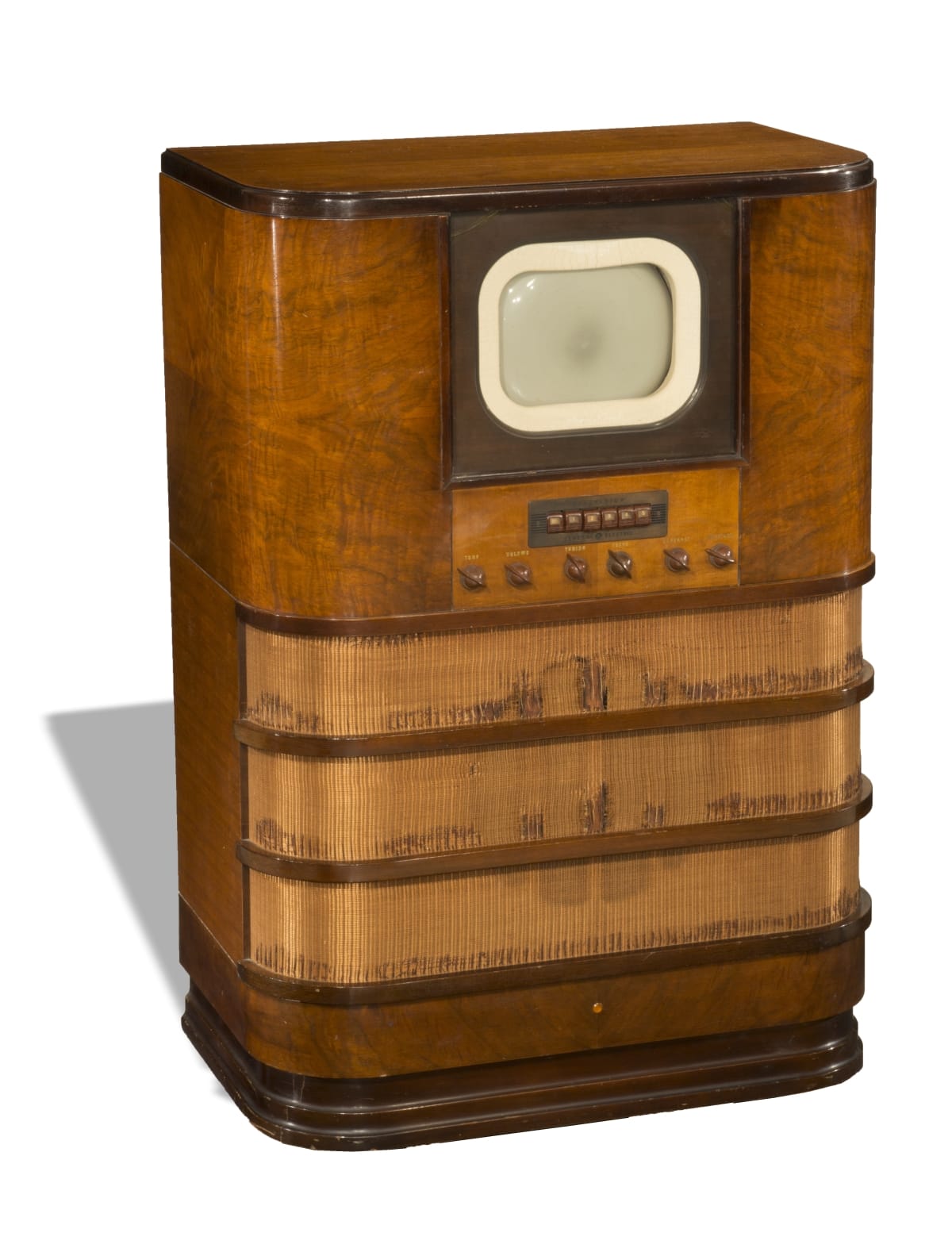
- GE Console Television, Model HM-225, 1939 - 1939 was a year of "firsts" in television. Introduced to the mass public at the 1939 World's Fair, Roosevelt's presidential speech at the opening ceremony was the first to be televised. The HM-225 was among examples exhibited in General Electric's pavilion at the Fair. Its art deco inspired case demonstrated the how new technology could be integrated into domestic space.
- 1939
- Collections - Artifact
GE Console Television, Model HM-225, 1939
1939 was a year of "firsts" in television. Introduced to the mass public at the 1939 World's Fair, Roosevelt's presidential speech at the opening ceremony was the first to be televised. The HM-225 was among examples exhibited in General Electric's pavilion at the Fair. Its art deco inspired case demonstrated the how new technology could be integrated into domestic space.
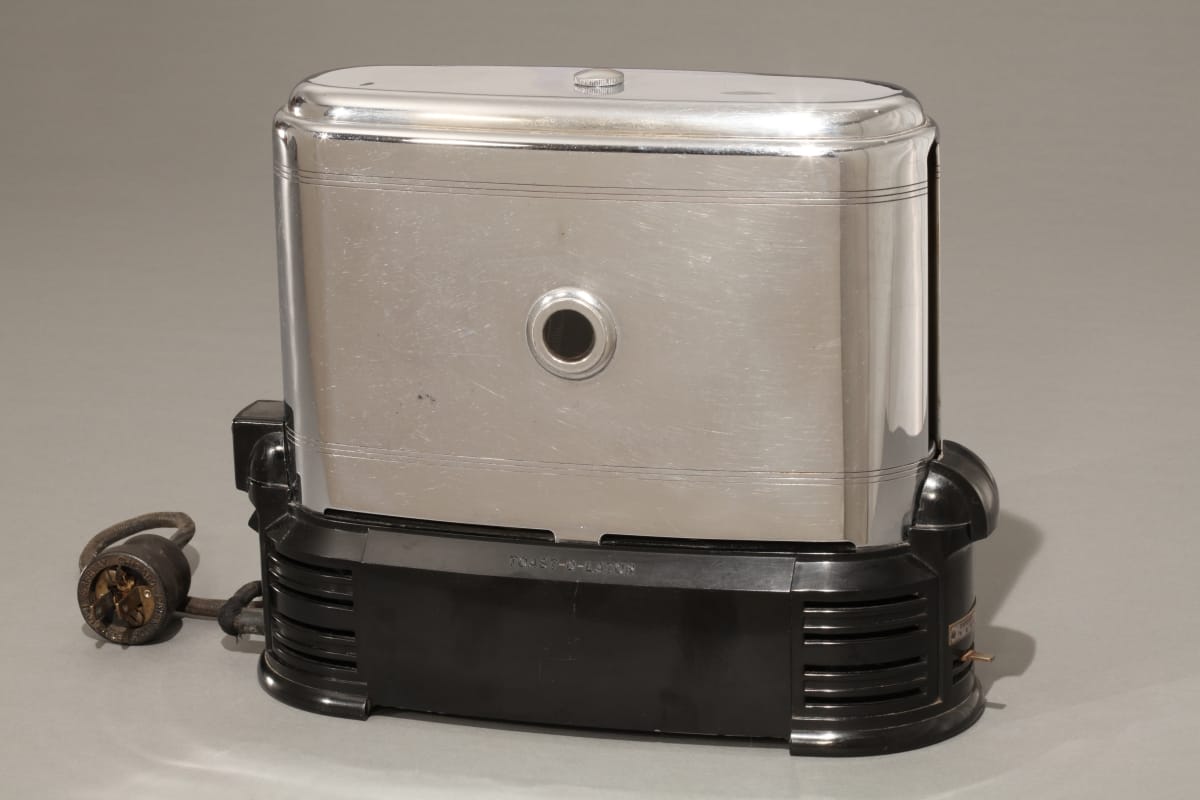
- Toast-O-Lator Electric Toaster by Crocker Wheeler Co., 1939 - This Toast-O-Lator toaster brought the assembly line to the breakfast table. Homemakers inserted bread into the vertical entry slot. Saw-toothed mechanical strips pushed the bread past heating elements and out the other end. This 1938 model is a key example of wild experimentation in toaster design, and was developed in age where new technologies were romanticized within the home.
- 1939
- Collections - Artifact
Toast-O-Lator Electric Toaster by Crocker Wheeler Co., 1939
This Toast-O-Lator toaster brought the assembly line to the breakfast table. Homemakers inserted bread into the vertical entry slot. Saw-toothed mechanical strips pushed the bread past heating elements and out the other end. This 1938 model is a key example of wild experimentation in toaster design, and was developed in age where new technologies were romanticized within the home.
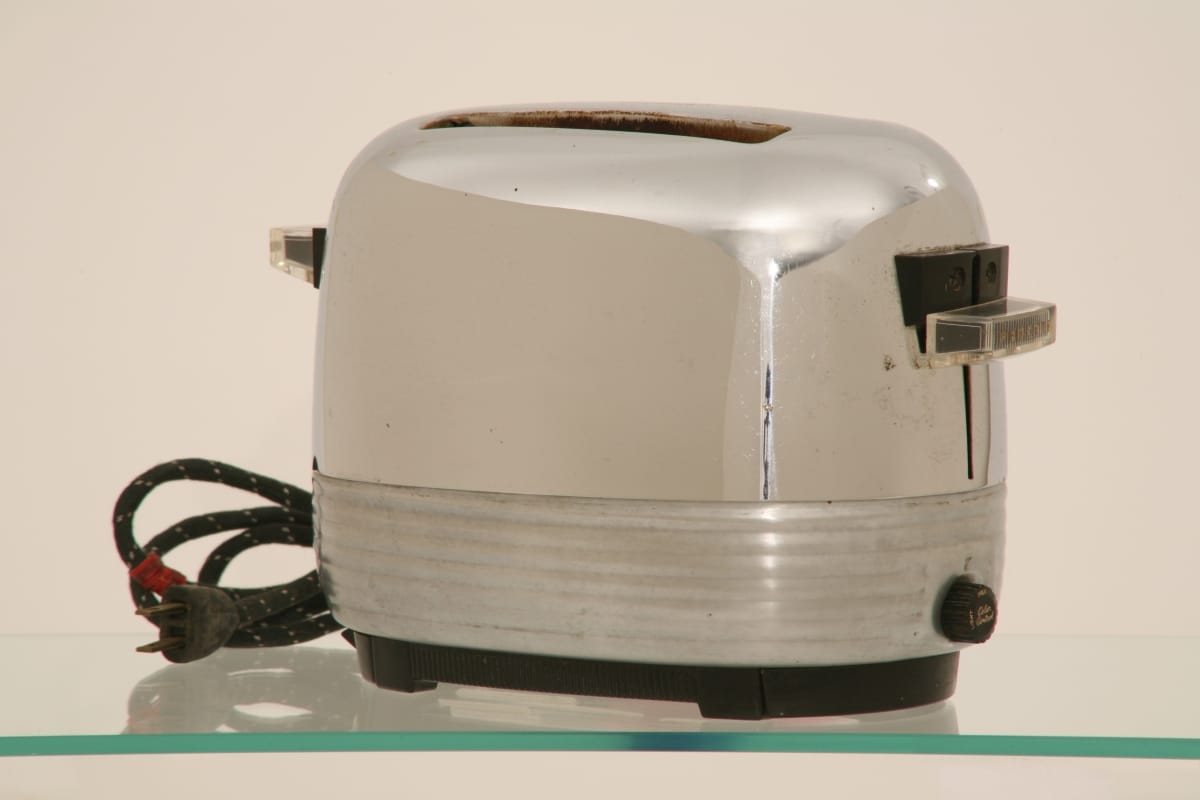
- Proctor Automatic Pop-Up Toaster by the Proctor Electric Company, 1948 - 1949 - Designers during the 1930s applied popular streamlined shapes to everything from high-end cars to ordinary toasters. Rounded and sleek, this electric toaster became an object of desire in the 1940s.
- 1948-1949
- Collections - Artifact
Proctor Automatic Pop-Up Toaster by the Proctor Electric Company, 1948 - 1949
Designers during the 1930s applied popular streamlined shapes to everything from high-end cars to ordinary toasters. Rounded and sleek, this electric toaster became an object of desire in the 1940s.