
Search
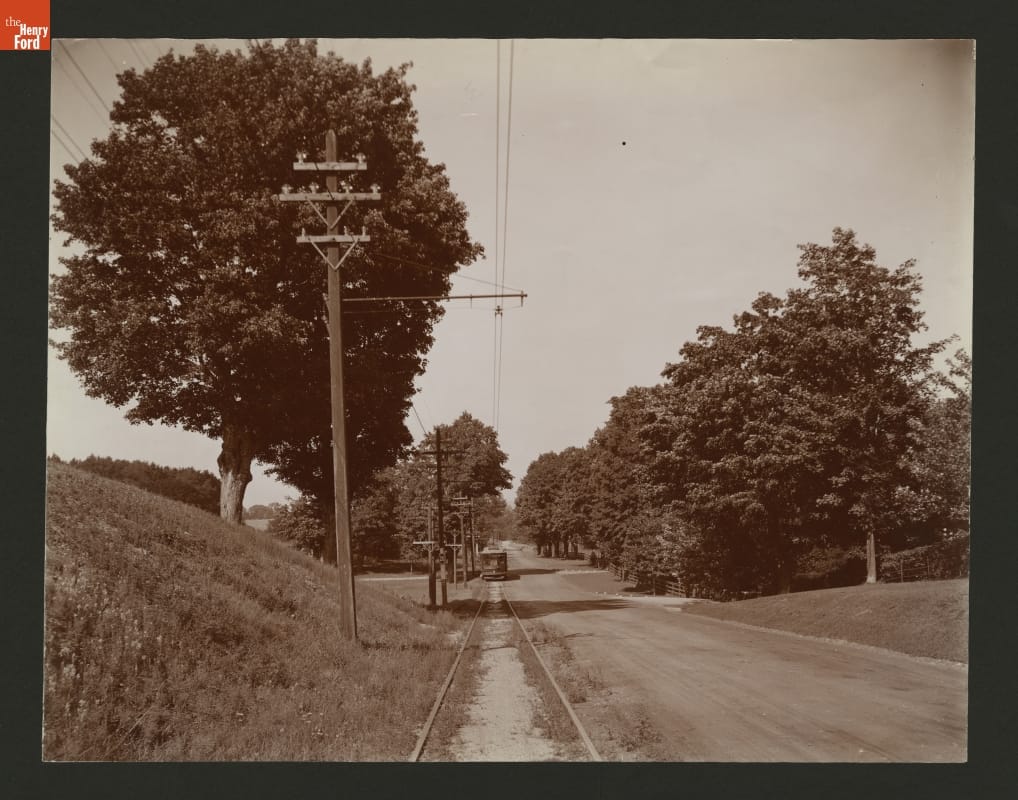
- Electric Street Railroad Car on Holmes Road, Pittsfield, Massachusetts, circa 1910 - Interurban railways were electric trains with features of both streetcars and passenger trains. They were lifelines between small towns and cities starting in the 1880s. This interurban ran through Western Massachusetts in the 1910s.
- circa 1910
- Collections - Artifact
Electric Street Railroad Car on Holmes Road, Pittsfield, Massachusetts, circa 1910
Interurban railways were electric trains with features of both streetcars and passenger trains. They were lifelines between small towns and cities starting in the 1880s. This interurban ran through Western Massachusetts in the 1910s.
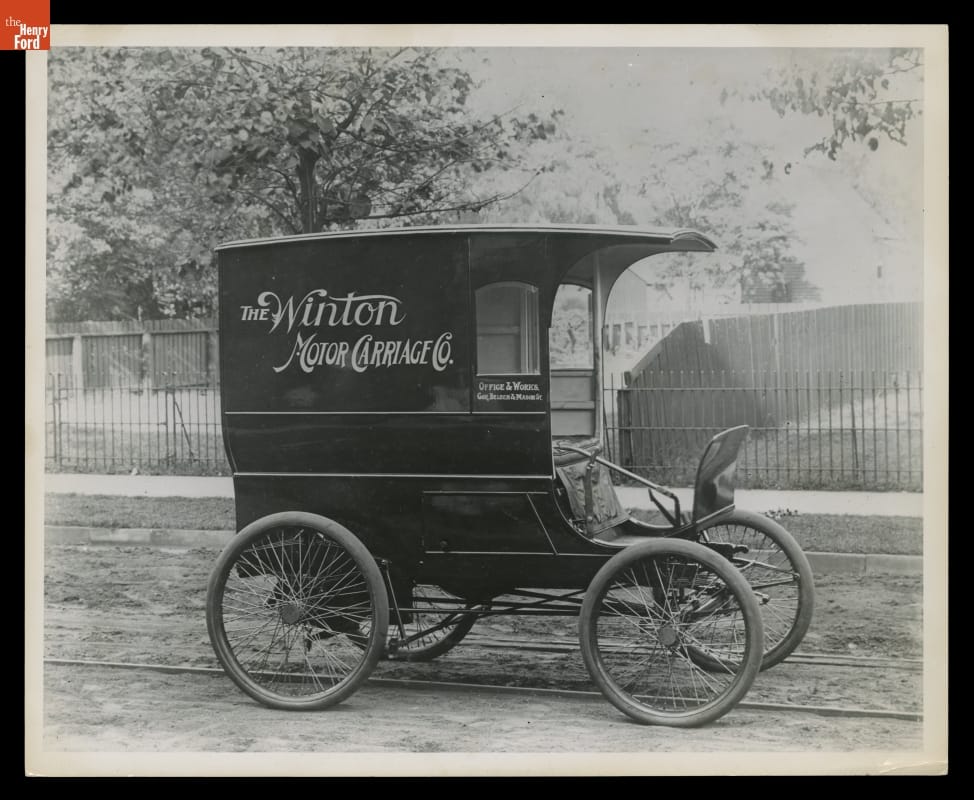
- Winton Motor Carriage Company Delivery Wagon, 1898 - Alexander Winton founded the Winton Motor Carriage Company in Cleveland in 1897, making him one of the first American automobile manufacturers. The company's early cars and delivery wagons were powered by single-cylinder engines producing around nine horsepower. Winton built his last vehicles in 1924, when he shifted his attention to marine engines. General Motors acquired Winton's engine company in 1930.
- 1898
- Collections - Artifact
Winton Motor Carriage Company Delivery Wagon, 1898
Alexander Winton founded the Winton Motor Carriage Company in Cleveland in 1897, making him one of the first American automobile manufacturers. The company's early cars and delivery wagons were powered by single-cylinder engines producing around nine horsepower. Winton built his last vehicles in 1924, when he shifted his attention to marine engines. General Motors acquired Winton's engine company in 1930.
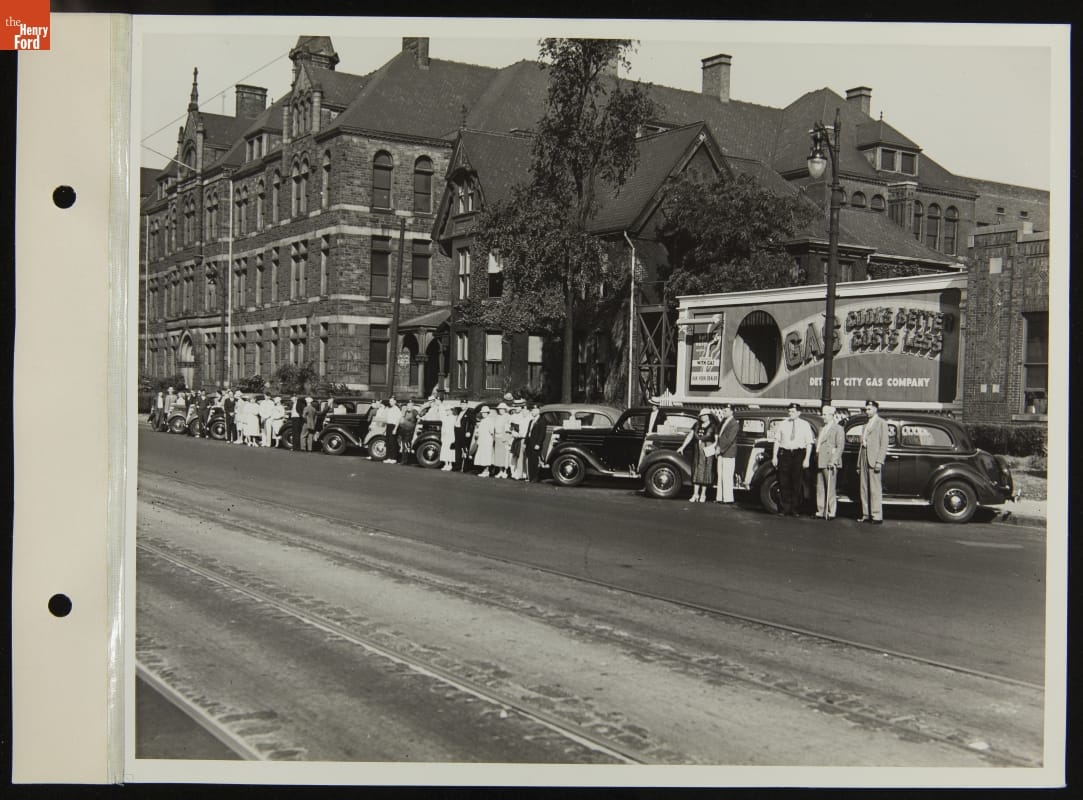
- Michigan Disabled Veterans Caravan Preparing to Leave for Convention in Milwaukee, Wisconsin, July 1936 - Disabled American Veterans (DAV) was formed in 1920 to support and advocate for military veterans with lasting wartime injuries. DAV partnered with Ford Motor Company in 1922, and Ford organized caravans to transport underserved DAV members to the organization's annual conventions. DAV received a federal charter from Congress in 1932, and the organization expanded rapidly during World War II.
- July 19, 1936
- Collections - Artifact
Michigan Disabled Veterans Caravan Preparing to Leave for Convention in Milwaukee, Wisconsin, July 1936
Disabled American Veterans (DAV) was formed in 1920 to support and advocate for military veterans with lasting wartime injuries. DAV partnered with Ford Motor Company in 1922, and Ford organized caravans to transport underserved DAV members to the organization's annual conventions. DAV received a federal charter from Congress in 1932, and the organization expanded rapidly during World War II.
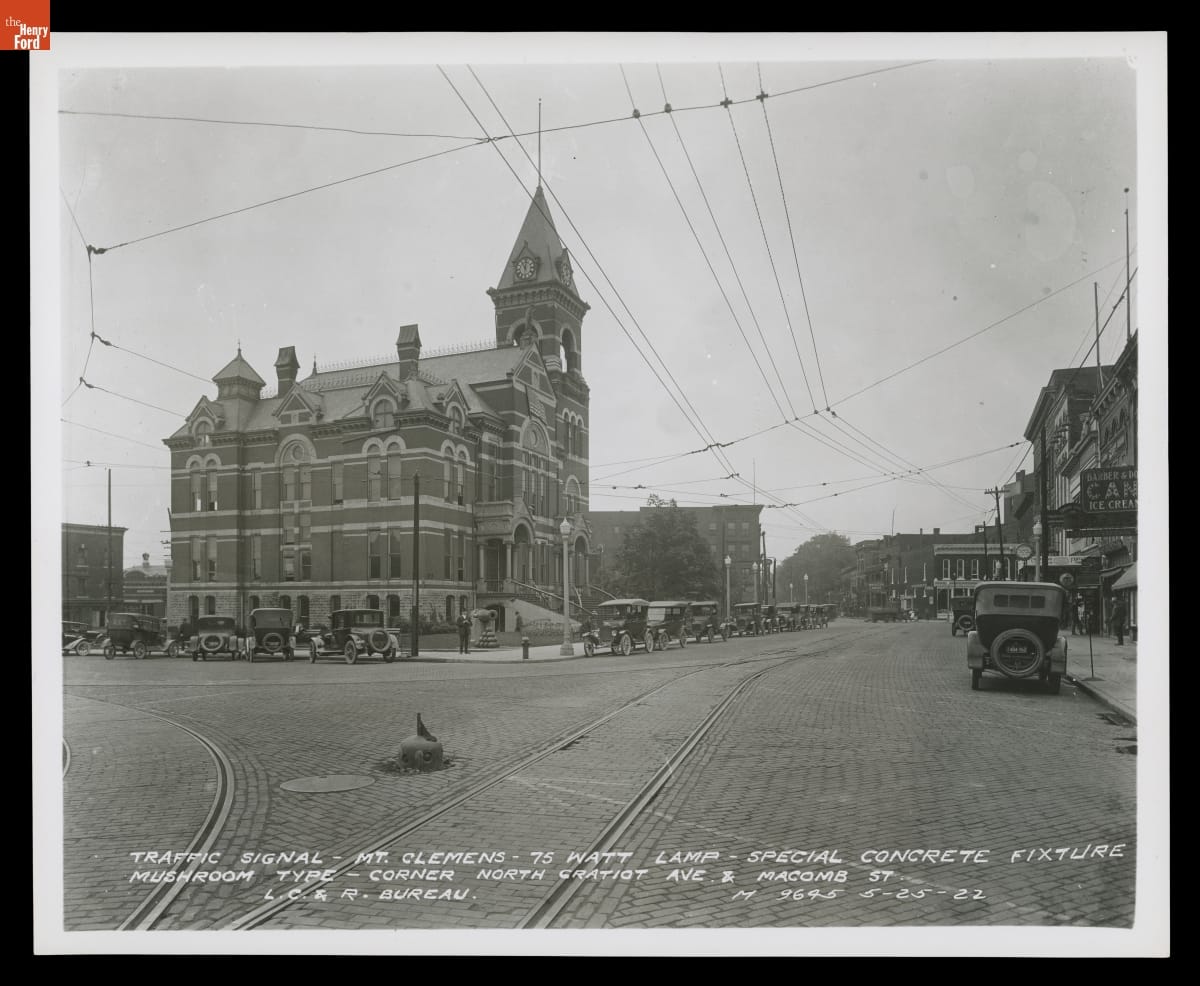
- Mount Clemens, Michigan Street with "Mushroom" Type Traffic Signal, May 1922 - As automobile traffic increased, cities installed multi-colored signal lights to control it. Traffic signals could be placed on poles, hung from overhead wires, or in some cases mounted onto the street itself. This "mushroom" traffic signal, named for its resemblance to the fungus, directed traffic in Mount Clemens, Michigan. Though durable, mushroom signals weren't particularly visible from a distance.
- May 25, 1922
- Collections - Artifact
Mount Clemens, Michigan Street with "Mushroom" Type Traffic Signal, May 1922
As automobile traffic increased, cities installed multi-colored signal lights to control it. Traffic signals could be placed on poles, hung from overhead wires, or in some cases mounted onto the street itself. This "mushroom" traffic signal, named for its resemblance to the fungus, directed traffic in Mount Clemens, Michigan. Though durable, mushroom signals weren't particularly visible from a distance.
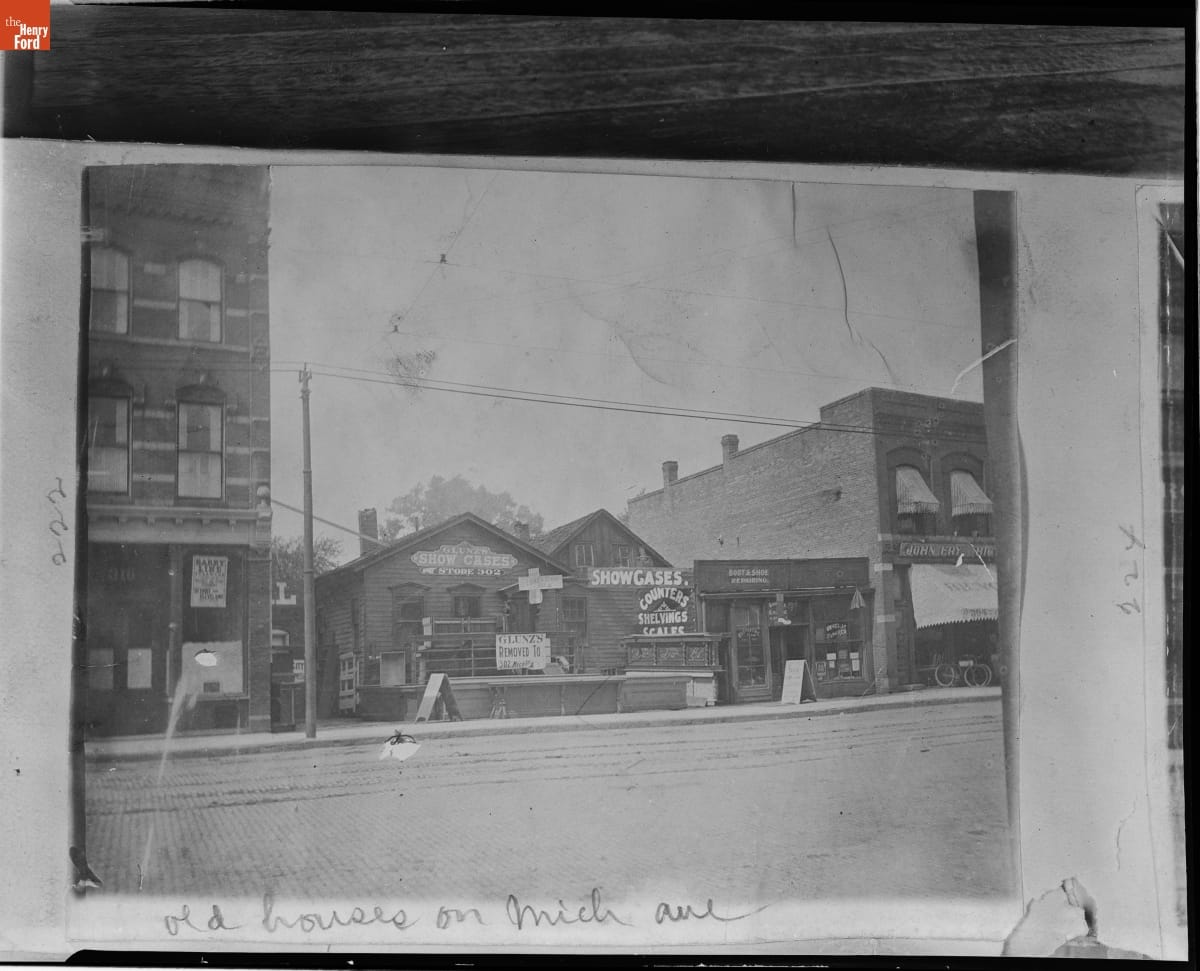
- Businesses on Michigan Avenue including John Fry Bicycle Shop, Detroit, Michigan - A display case and sales counter store, a shoe repair shop, and a bicycle store are all visible in this photograph taken on Detroit's Michigan Avenue. Close inspection reveals two bicycles exhibited prominently on the sidewalk in front of John Fry's bicycle shop. Bike stores often sold, rented and repaired the popular two-wheeled vehicles.
- Collections - Artifact
Businesses on Michigan Avenue including John Fry Bicycle Shop, Detroit, Michigan
A display case and sales counter store, a shoe repair shop, and a bicycle store are all visible in this photograph taken on Detroit's Michigan Avenue. Close inspection reveals two bicycles exhibited prominently on the sidewalk in front of John Fry's bicycle shop. Bike stores often sold, rented and repaired the popular two-wheeled vehicles.
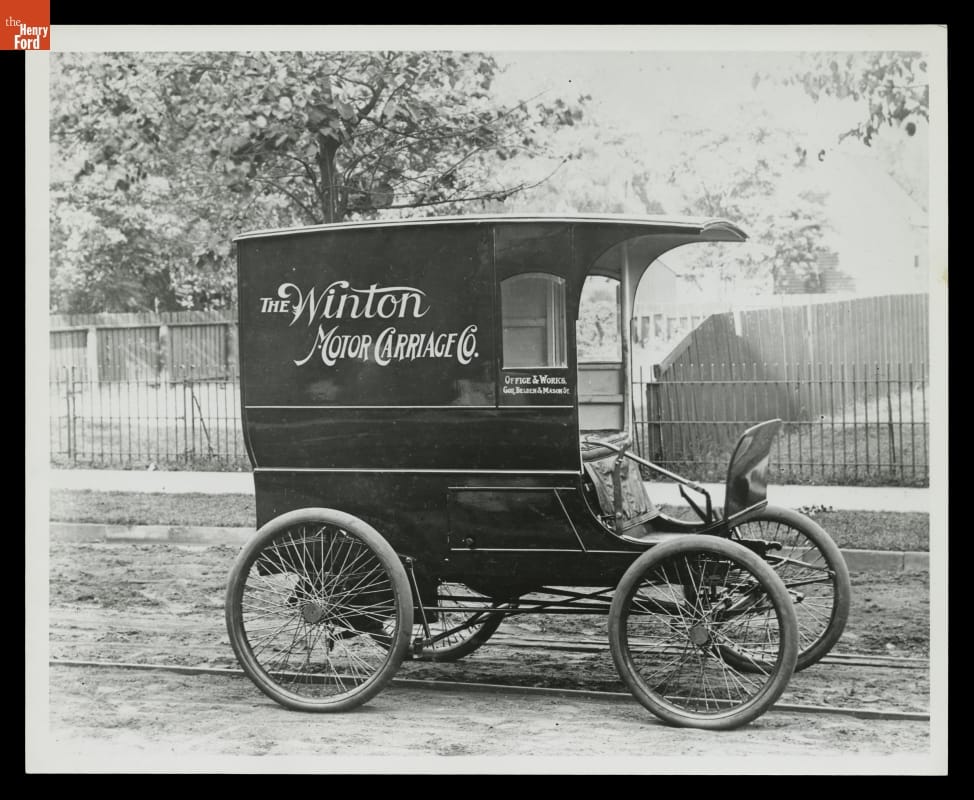
- Winton Motor Carriage Company Delivery Wagon, 1898 - Alexander Winton founded the Winton Motor Carriage Company in Cleveland in 1897, making him one of the first American automobile manufacturers. The company's early cars and delivery wagons were powered by single-cylinder engines producing around nine horsepower. Winton built his last vehicles in 1924, when he shifted his attention to marine engines. General Motors acquired Winton's engine company in 1930.
- 1898
- Collections - Artifact
Winton Motor Carriage Company Delivery Wagon, 1898
Alexander Winton founded the Winton Motor Carriage Company in Cleveland in 1897, making him one of the first American automobile manufacturers. The company's early cars and delivery wagons were powered by single-cylinder engines producing around nine horsepower. Winton built his last vehicles in 1924, when he shifted his attention to marine engines. General Motors acquired Winton's engine company in 1930.
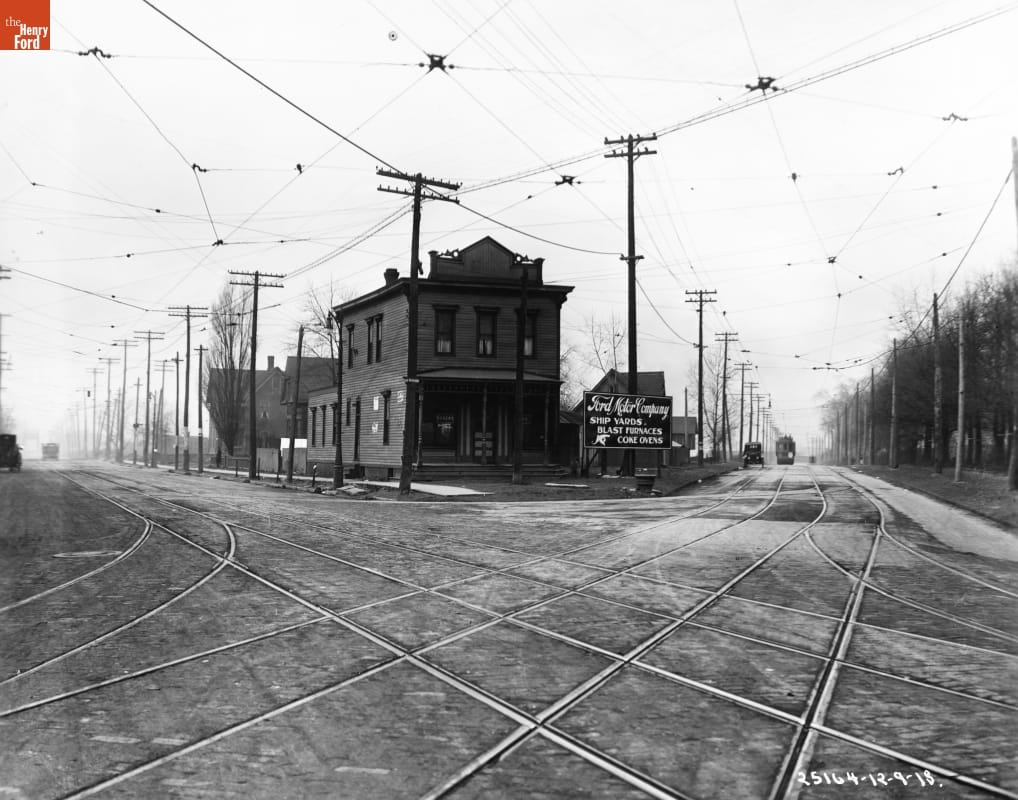
- Intersection of Electric Railroad Lines at Fort and Dearborn Streets, Detroit, Michigan, 1918 - Streetcar tracks laid on roads and electric trolley wires running overhead formed key infrastructure for the urban public transportation network in the late 19th and early 20th centuries. This photoprint shows the intersection of Fort Street and Dearborn Street in Detroit, Michigan, in 1918. The streetcar lines helped people, including Ford Motor Company workers, travel easily without a car.
- December 19, 1918
- Collections - Artifact
Intersection of Electric Railroad Lines at Fort and Dearborn Streets, Detroit, Michigan, 1918
Streetcar tracks laid on roads and electric trolley wires running overhead formed key infrastructure for the urban public transportation network in the late 19th and early 20th centuries. This photoprint shows the intersection of Fort Street and Dearborn Street in Detroit, Michigan, in 1918. The streetcar lines helped people, including Ford Motor Company workers, travel easily without a car.
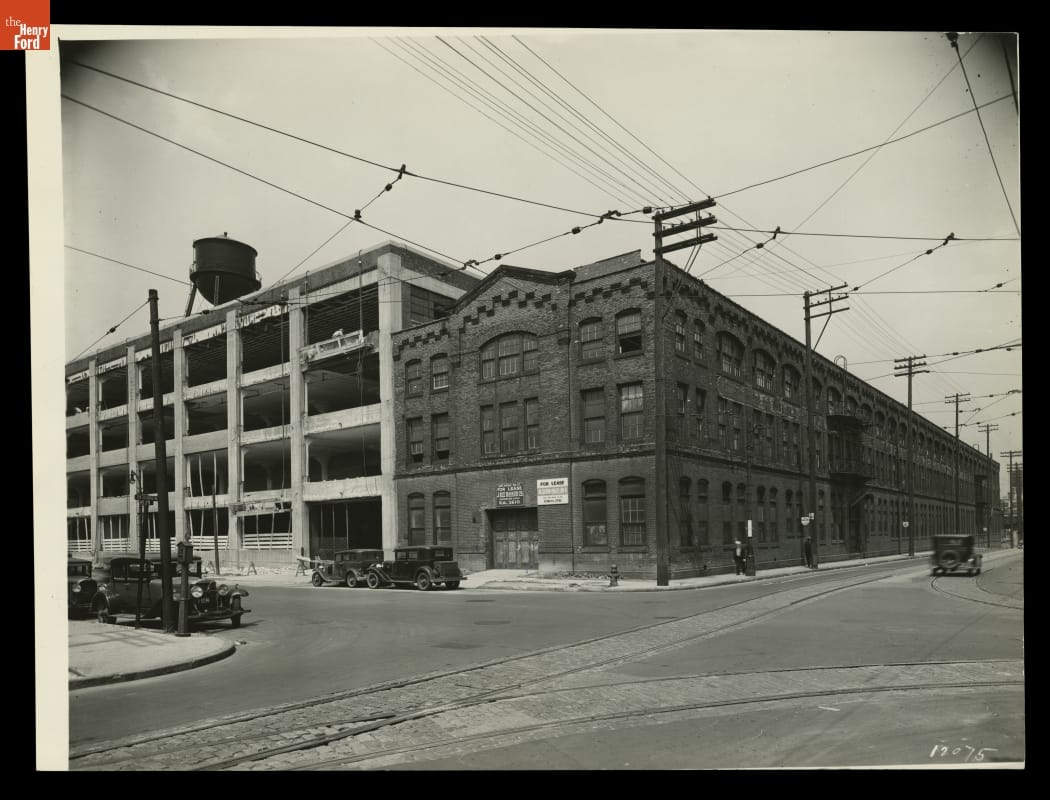
- Former Ford Motor Company Piquette Avenue Plant, Detroit, Michigan, 1936 - Ford Motor Company quickly outgrew its first factory on Detroit's Mack Avenue and, in 1904, moved into the newly constructed Piquette Avenue Plant. At first, the three-story building seemed too large. One employee wondered if the company could ever use all the space, but his concerns soon seemed quaint. In 1910, the burgeoning company again moved into more spacious quarters.
- 1936
- Collections - Artifact
Former Ford Motor Company Piquette Avenue Plant, Detroit, Michigan, 1936
Ford Motor Company quickly outgrew its first factory on Detroit's Mack Avenue and, in 1904, moved into the newly constructed Piquette Avenue Plant. At first, the three-story building seemed too large. One employee wondered if the company could ever use all the space, but his concerns soon seemed quaint. In 1910, the burgeoning company again moved into more spacious quarters.
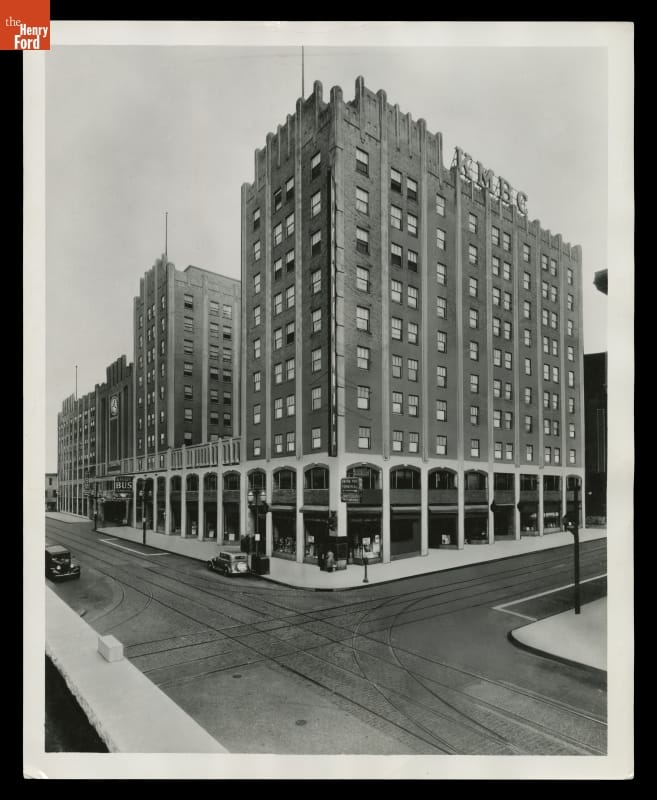
- Pickwick Hotel with Greyhound Bus Terminal, Kansas City, Missouri, circa 1931 - Bus terminals of the 1920s and 1930s were often located in hotels. The Pickwick organization owned the Pickwick bus line and operated a chain of hotels. They often built terminals inside or adjacent to their hotels. The bus terminal in their Kansas City, Missouri, hotel featured a turntable that rotated buses 180 degrees -- allowing buses to exit the same way they entered.
- circa 1931
- Collections - Artifact
Pickwick Hotel with Greyhound Bus Terminal, Kansas City, Missouri, circa 1931
Bus terminals of the 1920s and 1930s were often located in hotels. The Pickwick organization owned the Pickwick bus line and operated a chain of hotels. They often built terminals inside or adjacent to their hotels. The bus terminal in their Kansas City, Missouri, hotel featured a turntable that rotated buses 180 degrees -- allowing buses to exit the same way they entered.
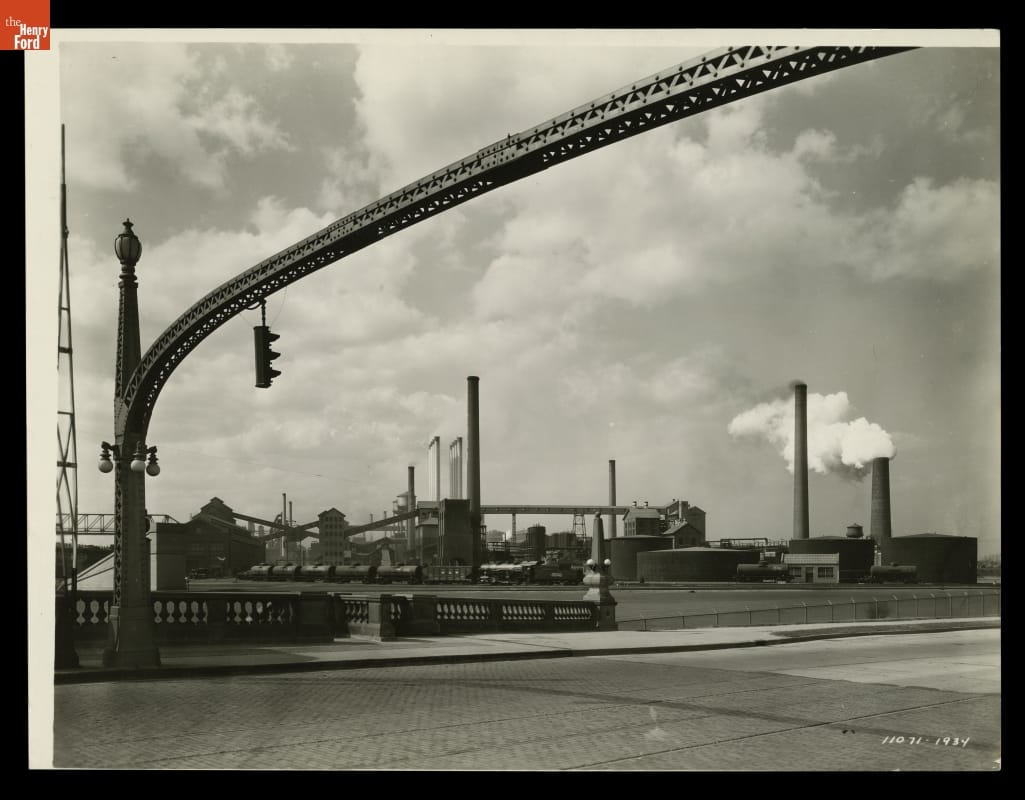
- Ford Motor Company Rouge Plant, View from Dix Bridge, 1934 - The Ford building at the 1933-1934 Chicago World's Fair was lined with murals depicting the River Rouge Plant -- a symbol of industrial efficiency that exemplified the fair's Century of Progress theme. One mural included this majestic view of the plant, which was the largest and most efficient manufacturing complex of its time.
- 1934
- Collections - Artifact
Ford Motor Company Rouge Plant, View from Dix Bridge, 1934
The Ford building at the 1933-1934 Chicago World's Fair was lined with murals depicting the River Rouge Plant -- a symbol of industrial efficiency that exemplified the fair's Century of Progress theme. One mural included this majestic view of the plant, which was the largest and most efficient manufacturing complex of its time.