
Search
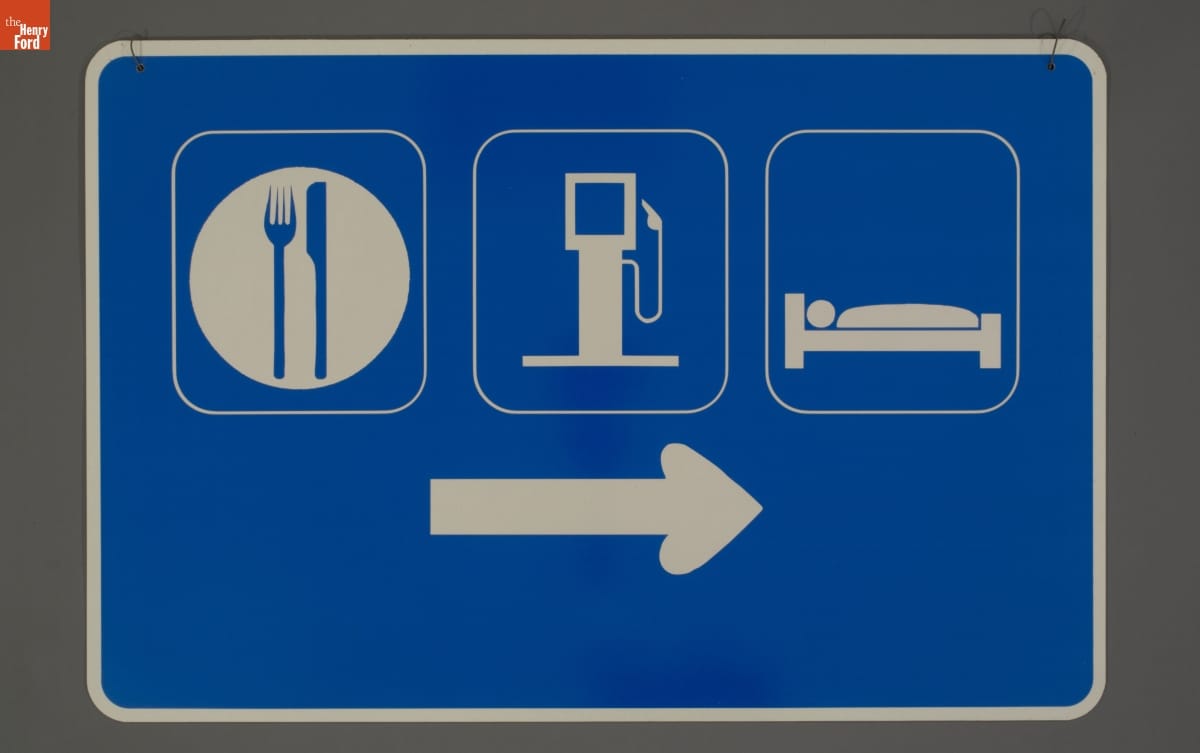
- Food, Gas, & Lodging Sign, 1975-1987 - During the 1970s, the American Institute of Graphic Arts (AIGA) collaborated with the U.S. Department of Transportation to produce 50 standard symbols to be used on signs. Before this, numerous international, national, and local organizations used a variety of visuals to get across their messages. This road sign with arrow displays the symbols for food, gas, and lodging.
- 1975-1987
- Collections - Artifact
Food, Gas, & Lodging Sign, 1975-1987
During the 1970s, the American Institute of Graphic Arts (AIGA) collaborated with the U.S. Department of Transportation to produce 50 standard symbols to be used on signs. Before this, numerous international, national, and local organizations used a variety of visuals to get across their messages. This road sign with arrow displays the symbols for food, gas, and lodging.
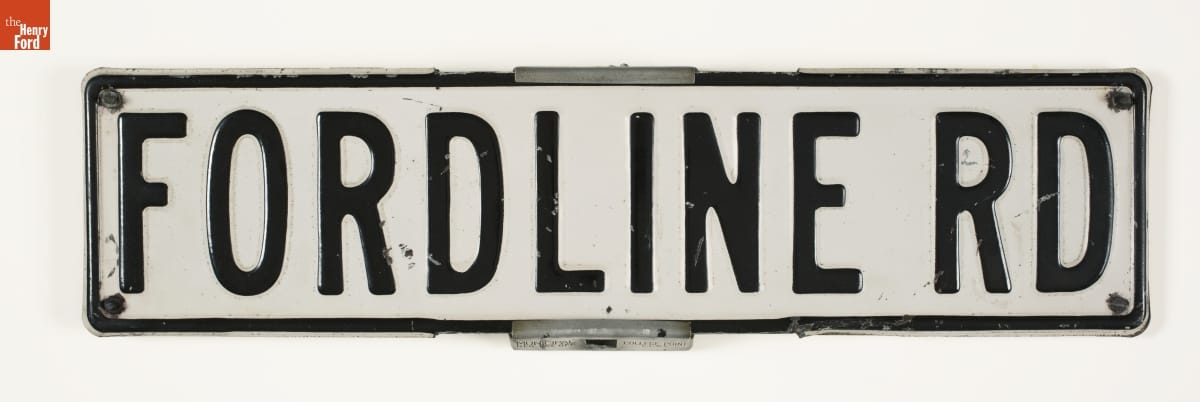
- Fordline Rd. Street Sign, 1920-1970 - Cities and towns inevitably had to figure out how to name their streets. Some named them on a numbering system, others after places and people -- like this sign from Allen Park, Michigan, commemorating Henry Ford.
- 1920-1970
- Collections - Artifact
Fordline Rd. Street Sign, 1920-1970
Cities and towns inevitably had to figure out how to name their streets. Some named them on a numbering system, others after places and people -- like this sign from Allen Park, Michigan, commemorating Henry Ford.
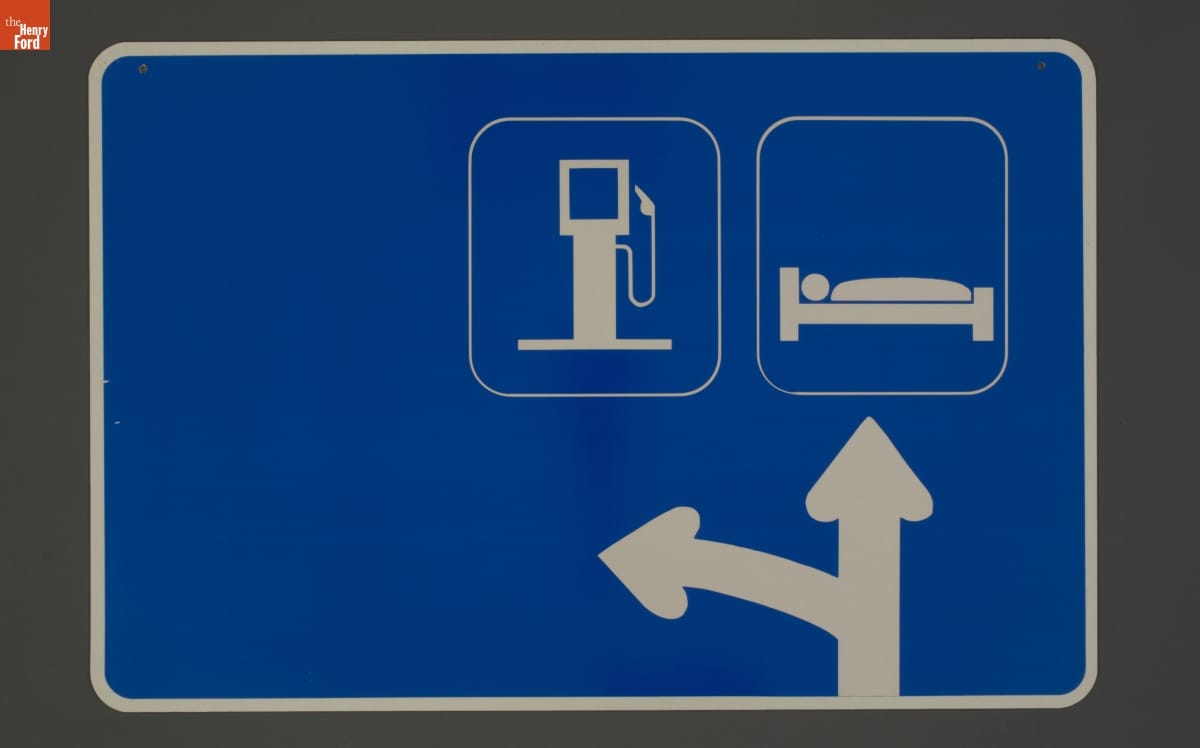
- Gas & Lodging Sign, 1975-1987 - During the 1970s, the American Institute of Graphic Arts (AIGA) collaborated with the U.S. Department of Transportation to produce 50 standard symbols to be used on signs. Before this, numerous international, national, and local organizations used a variety of visuals to get across their messages. This road sign with arrows displays the symbols for gas and lodging.
- 1975-1987
- Collections - Artifact
Gas & Lodging Sign, 1975-1987
During the 1970s, the American Institute of Graphic Arts (AIGA) collaborated with the U.S. Department of Transportation to produce 50 standard symbols to be used on signs. Before this, numerous international, national, and local organizations used a variety of visuals to get across their messages. This road sign with arrows displays the symbols for gas and lodging.
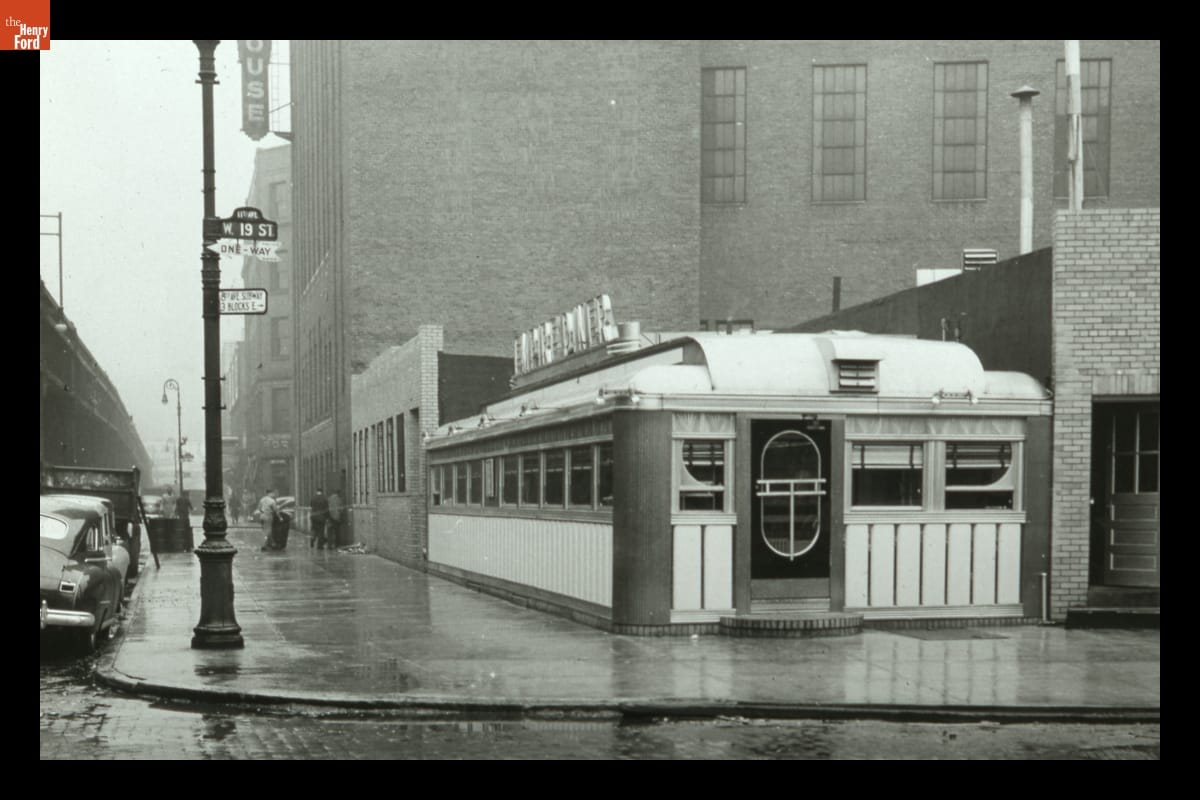
- The Empire Diner, New York City, 1948 -
- 1948
- Collections - Artifact
The Empire Diner, New York City, 1948
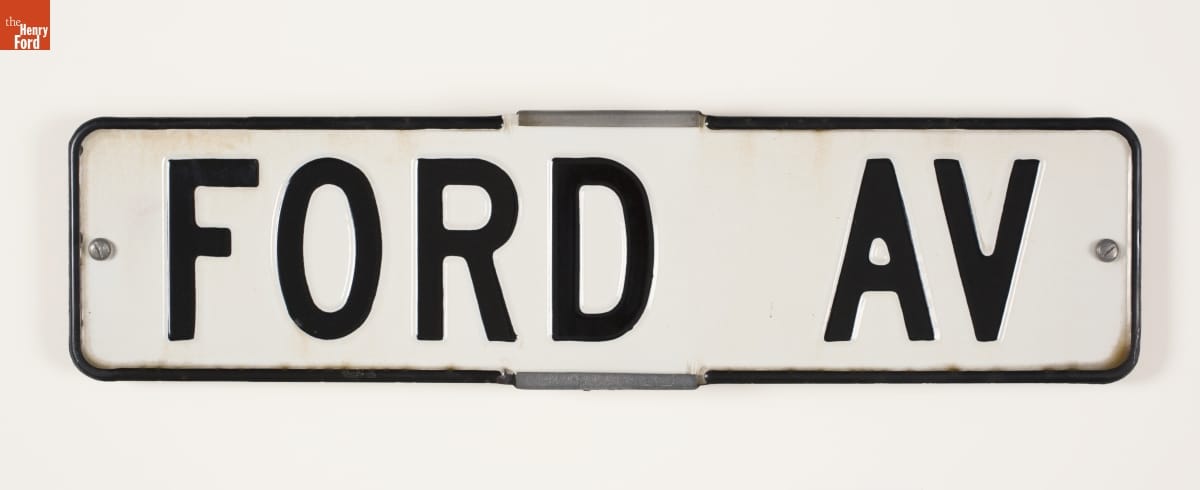
- Ford Av. Street Sign, 1920-1970 - Cities and towns inevitably had to figure out how to name their streets. Some named them on a numbering system, others after places and people -- like this sign from Allen Park, Michigan, commemorating Henry Ford.
- 1920-1970
- Collections - Artifact
Ford Av. Street Sign, 1920-1970
Cities and towns inevitably had to figure out how to name their streets. Some named them on a numbering system, others after places and people -- like this sign from Allen Park, Michigan, commemorating Henry Ford.
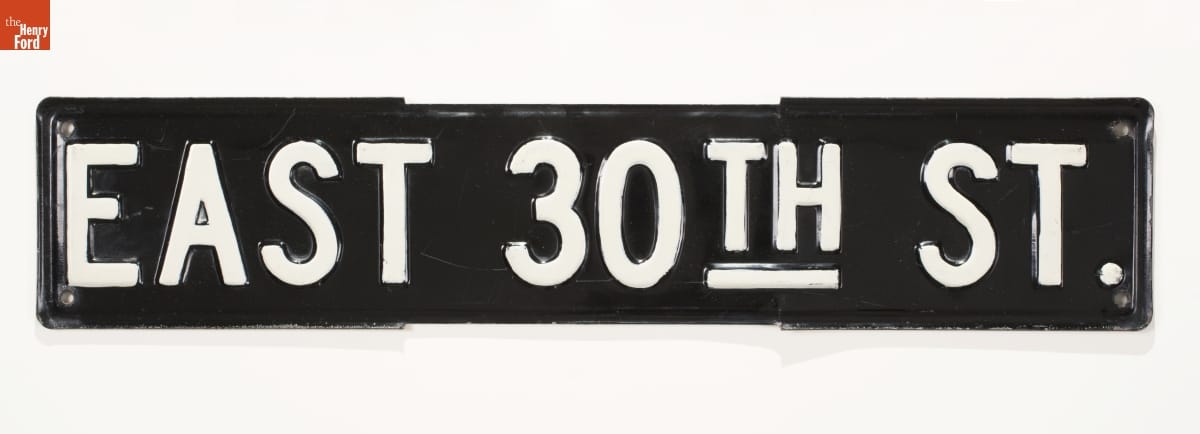
- East 30th St Sign, circa 1940 - Cities and towns inevitably had to figure out how to name their streets. Some named them after people and places, others on a numbering system -- like this sign.
- circa 1940
- Collections - Artifact
East 30th St Sign, circa 1940
Cities and towns inevitably had to figure out how to name their streets. Some named them after people and places, others on a numbering system -- like this sign.
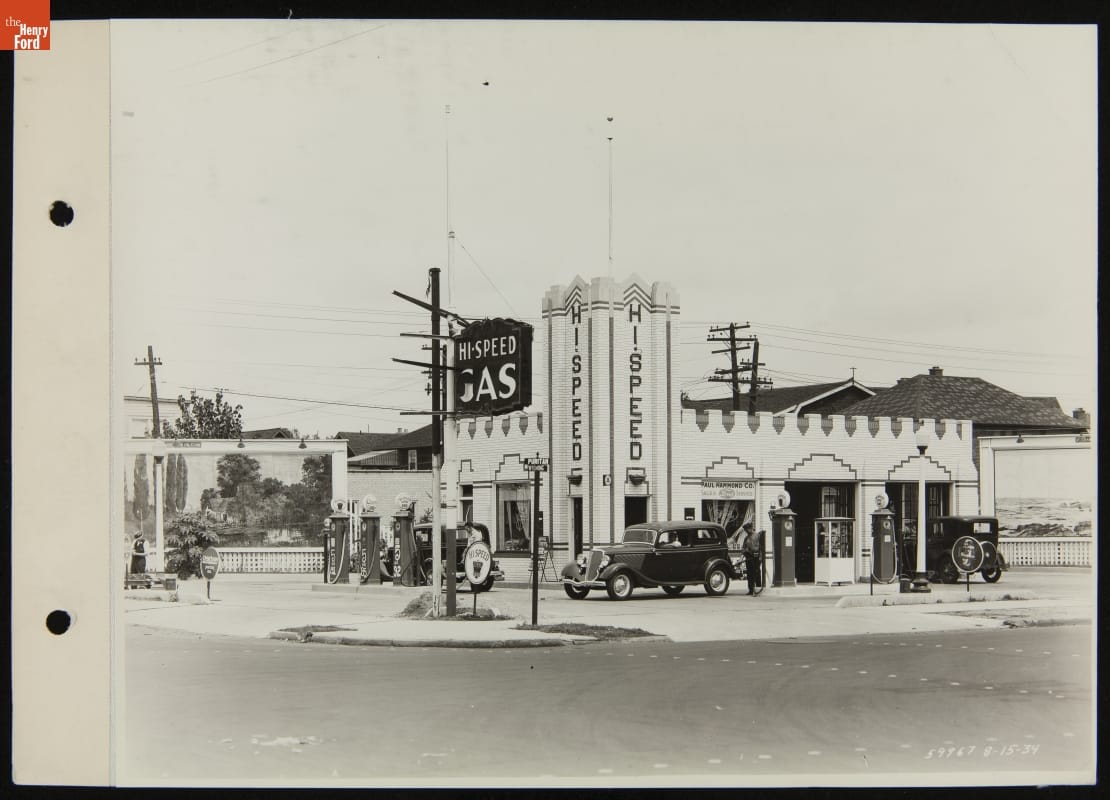
- Paul Hammond Co. Super Service Station, Puritan and Wyoming Streets, Detroit, Michigan, August 1934 - In the 1930s, Ford Motor Company promoted the "Super Service Station" concept for its franchisee dealers. These stations provided one-stop shopping for motorists by selling gasoline, motor oil, parts, and accessories along with new Ford vehicles. The stations also provided automotive service and repairs.
- August 15, 1934
- Collections - Artifact
Paul Hammond Co. Super Service Station, Puritan and Wyoming Streets, Detroit, Michigan, August 1934
In the 1930s, Ford Motor Company promoted the "Super Service Station" concept for its franchisee dealers. These stations provided one-stop shopping for motorists by selling gasoline, motor oil, parts, and accessories along with new Ford vehicles. The stations also provided automotive service and repairs.
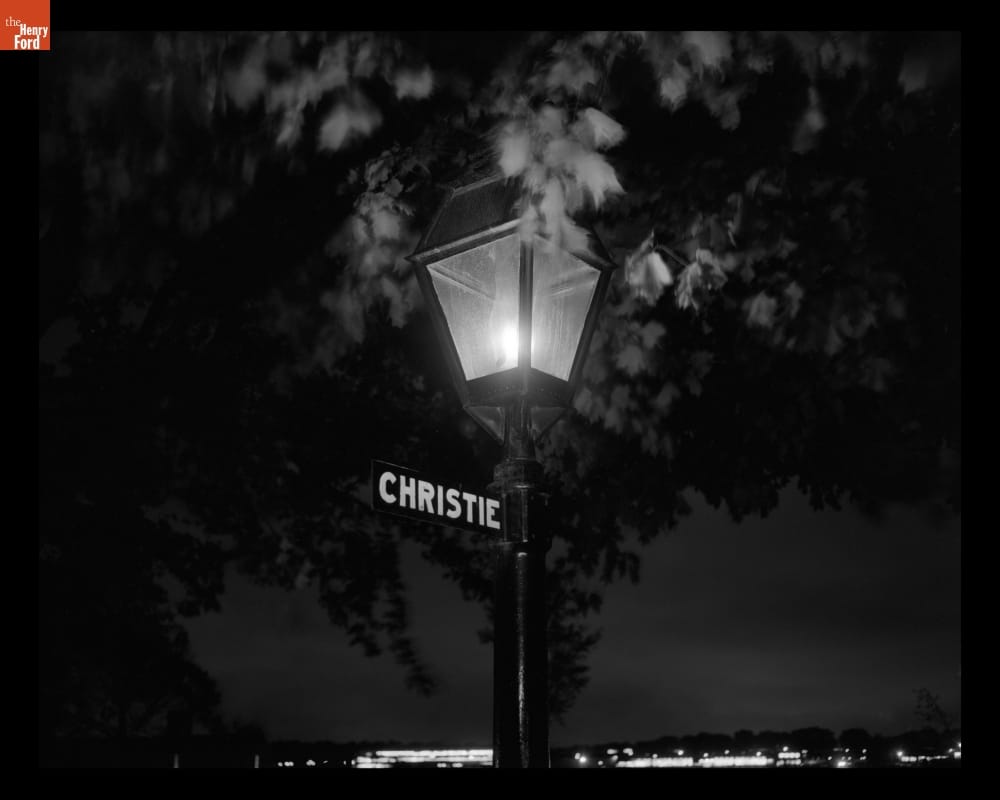
- Christie Street Sign in Greenfield Village, October 1970 -
- October 01, 1970
- Collections - Artifact
Christie Street Sign in Greenfield Village, October 1970
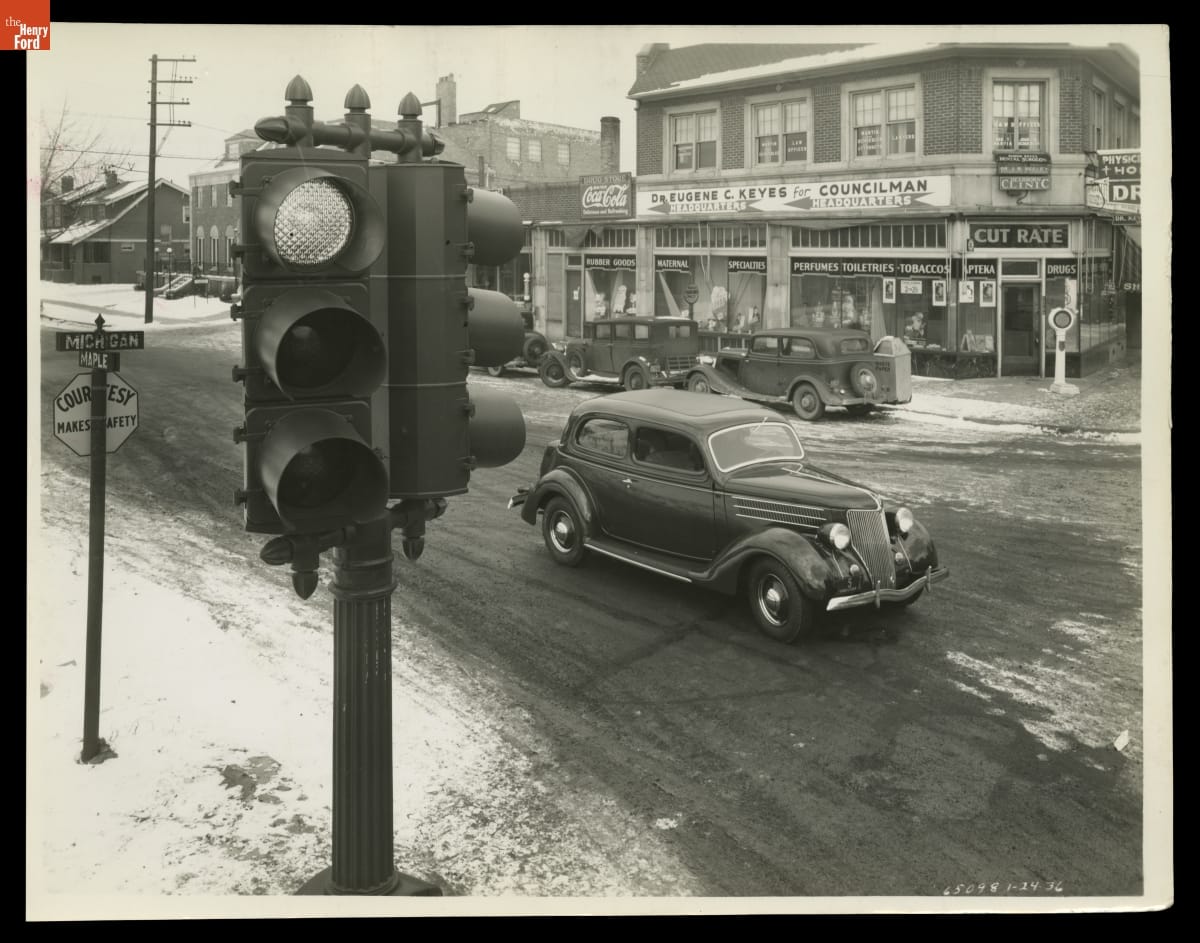
- Ford Tudor V-8 Stopped at a Traffic Signal, Dearborn, Michigan, 1936 - By the mid-1930s, the three-color traffic signal had become standard. The signals also operated automatically, freeing traffic officers for other duties. This photograph, taken in 1936, shows an automatic traffic light controlling traffic flow at a commercial intersection.
- January 24, 1936
- Collections - Artifact
Ford Tudor V-8 Stopped at a Traffic Signal, Dearborn, Michigan, 1936
By the mid-1930s, the three-color traffic signal had become standard. The signals also operated automatically, freeing traffic officers for other duties. This photograph, taken in 1936, shows an automatic traffic light controlling traffic flow at a commercial intersection.
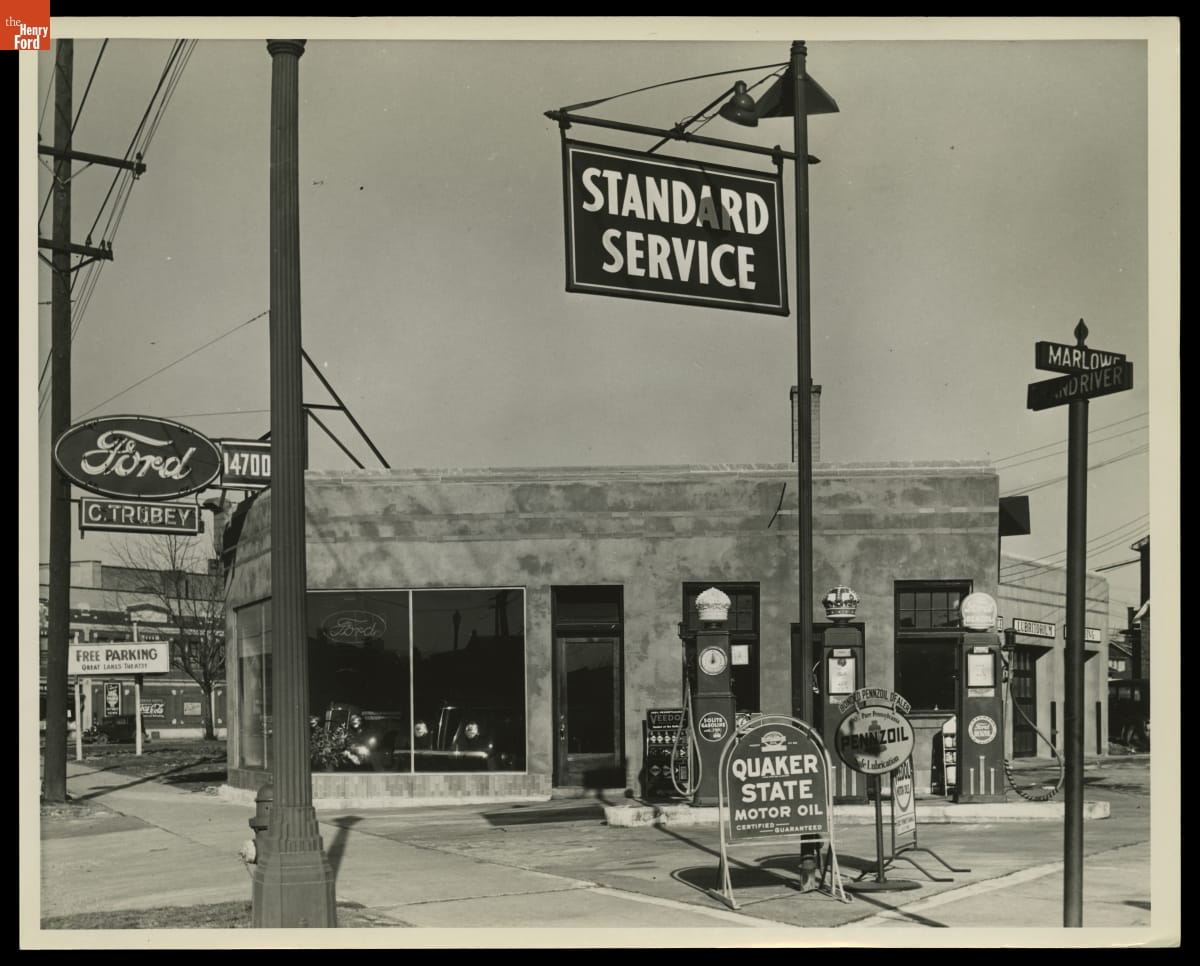
- C. Trubey Ford Super Service Station, Marlowe Street and Grand River Avenue, Detroit, Michigan, 1937 - In the 1930s, Ford Motor Company promoted the "Super Service Station" concept for its franchisee dealers. These stations provided one-stop shopping for motorists by selling gasoline, motor oil, parts, and accessories along with new Ford vehicles. The stations also provided automotive service and repairs.
- February 22, 1937
- Collections - Artifact
C. Trubey Ford Super Service Station, Marlowe Street and Grand River Avenue, Detroit, Michigan, 1937
In the 1930s, Ford Motor Company promoted the "Super Service Station" concept for its franchisee dealers. These stations provided one-stop shopping for motorists by selling gasoline, motor oil, parts, and accessories along with new Ford vehicles. The stations also provided automotive service and repairs.