
Search
- Flat Iron Building, New York City, 1903 - From 1895 to 1924, the Detroit Publishing Company was one of the major image publishers in the world. The company's wide-ranging stock of original photographs documented life and landscapes from across the nation and around the globe. From the tens of thousands of negatives, the company created prints, postcards, lantern slides, panoramas, and other merchandise for sale to educators, businessmen, advertisers, homeowners and travelers.
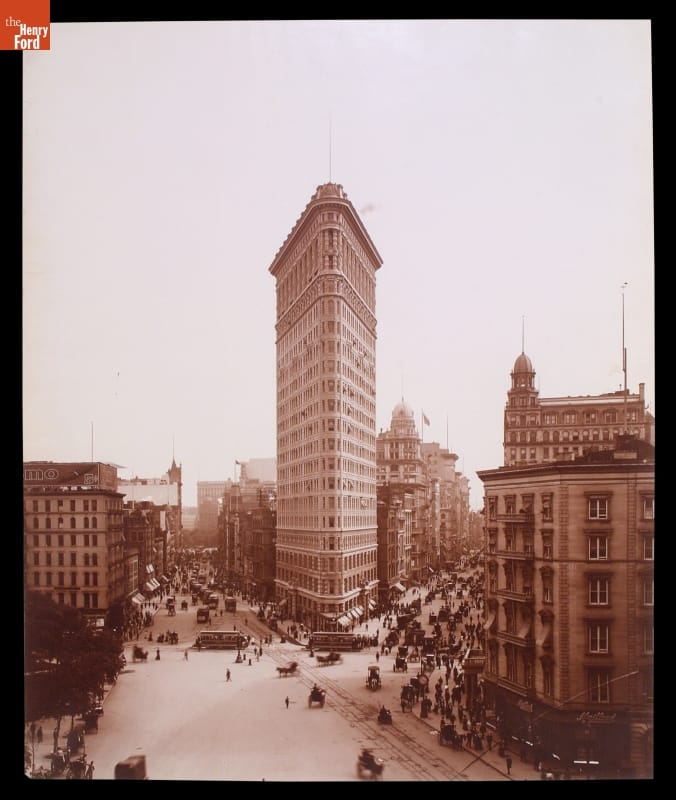
- 1903
- Collections - Artifact
Flat Iron Building, New York City, 1903
From 1895 to 1924, the Detroit Publishing Company was one of the major image publishers in the world. The company's wide-ranging stock of original photographs documented life and landscapes from across the nation and around the globe. From the tens of thousands of negatives, the company created prints, postcards, lantern slides, panoramas, and other merchandise for sale to educators, businessmen, advertisers, homeowners and travelers.
- Woodward Avenue, North from Jefferson Avenue, Detroit, Michigan, circa 1905 - From 1895 to 1924, the Detroit Publishing Company was one of the major image publishers in the world. The company's wide-ranging stock of original photographs documented life and landscapes from across the nation and around the globe. From the tens of thousands of negatives, the company created prints, postcards, lantern slides, panoramas, and other merchandise for sale to educators, businessmen, advertisers, homeowners and travelers.
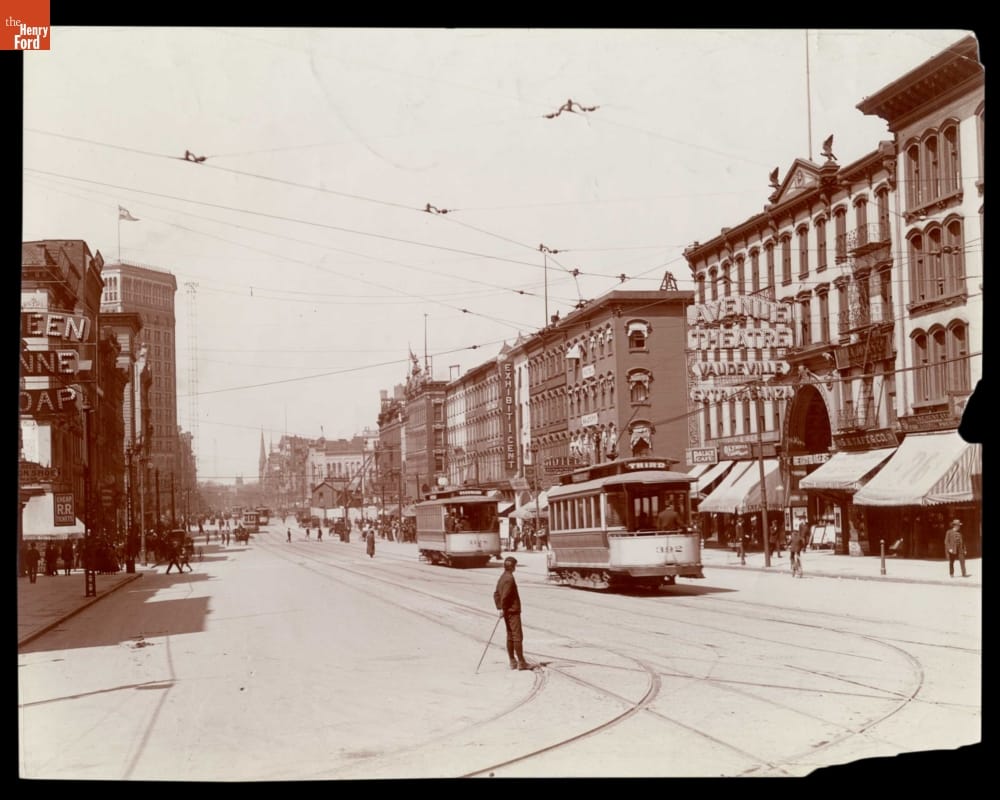
- circa 1905
- Collections - Artifact
Woodward Avenue, North from Jefferson Avenue, Detroit, Michigan, circa 1905
From 1895 to 1924, the Detroit Publishing Company was one of the major image publishers in the world. The company's wide-ranging stock of original photographs documented life and landscapes from across the nation and around the globe. From the tens of thousands of negatives, the company created prints, postcards, lantern slides, panoramas, and other merchandise for sale to educators, businessmen, advertisers, homeowners and travelers.
- "Jefferson Market, Sixth Avenue, New York City," 1857 - In the mid-1800s, horse-drawn streetcars provided a convenient and affordable way to get around a growing city. These streetcars traveled the main urban thoroughfares and took passengers to their workplaces, local shops and businesses, parks and other destinations. In this 1857 print, riders get on and off a streetcar at New York's Jefferson Market, while another streetcar approaches from down the street.
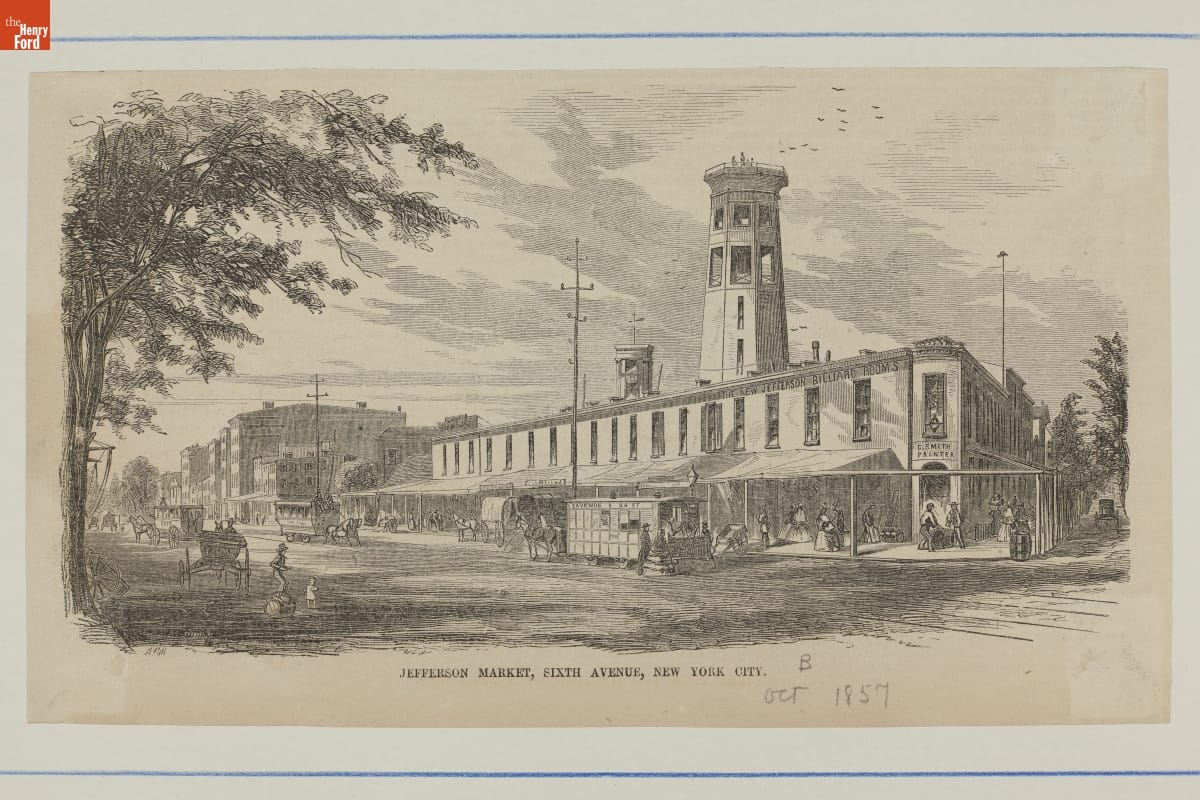
- 1857
- Collections - Artifact
"Jefferson Market, Sixth Avenue, New York City," 1857
In the mid-1800s, horse-drawn streetcars provided a convenient and affordable way to get around a growing city. These streetcars traveled the main urban thoroughfares and took passengers to their workplaces, local shops and businesses, parks and other destinations. In this 1857 print, riders get on and off a streetcar at New York's Jefferson Market, while another streetcar approaches from down the street.
- "The Boston and Cambridge New Horse Railroad," 1856 - This wood engraving depicts the early horse-drawn railroads in 1856 that ran from Boston through Cambridge to Mount Auburn in Massachusetts. The print was originally engraved by printmaker John Andrew for the publication "Ballou's Pictorial."
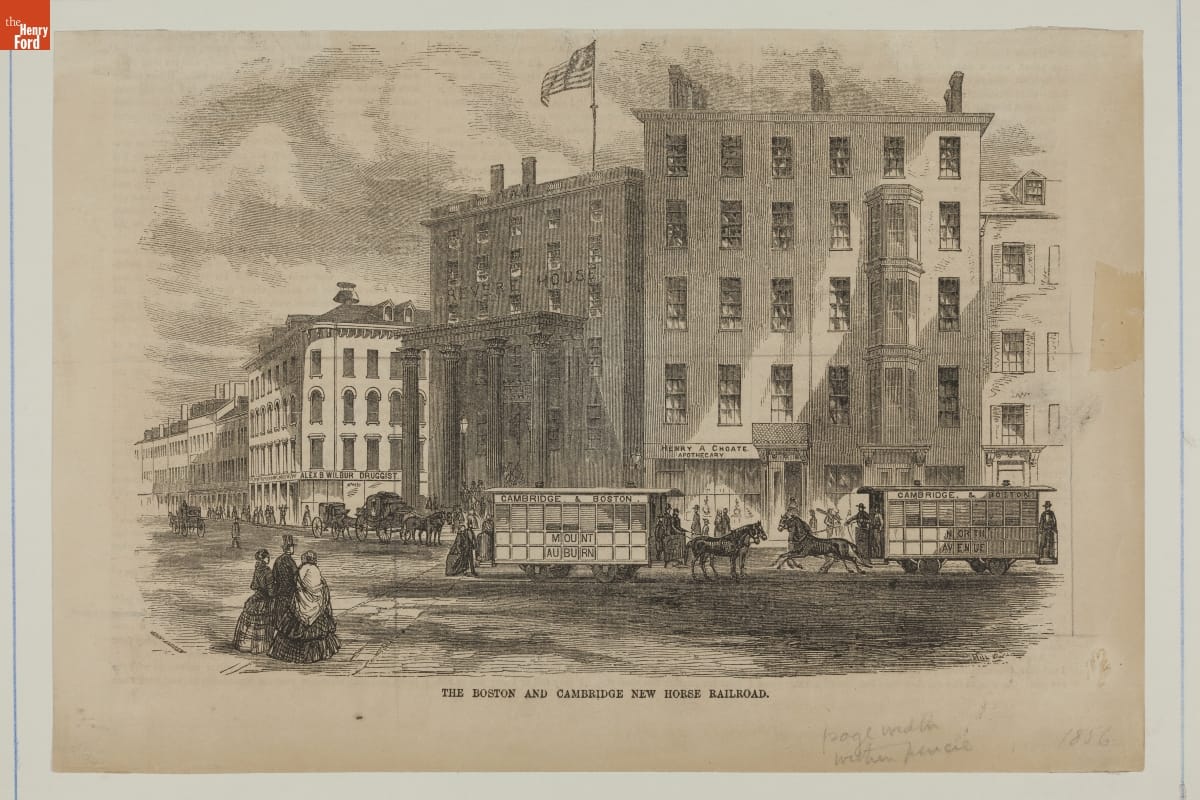
- 1856
- Collections - Artifact
"The Boston and Cambridge New Horse Railroad," 1856
This wood engraving depicts the early horse-drawn railroads in 1856 that ran from Boston through Cambridge to Mount Auburn in Massachusetts. The print was originally engraved by printmaker John Andrew for the publication "Ballou's Pictorial."
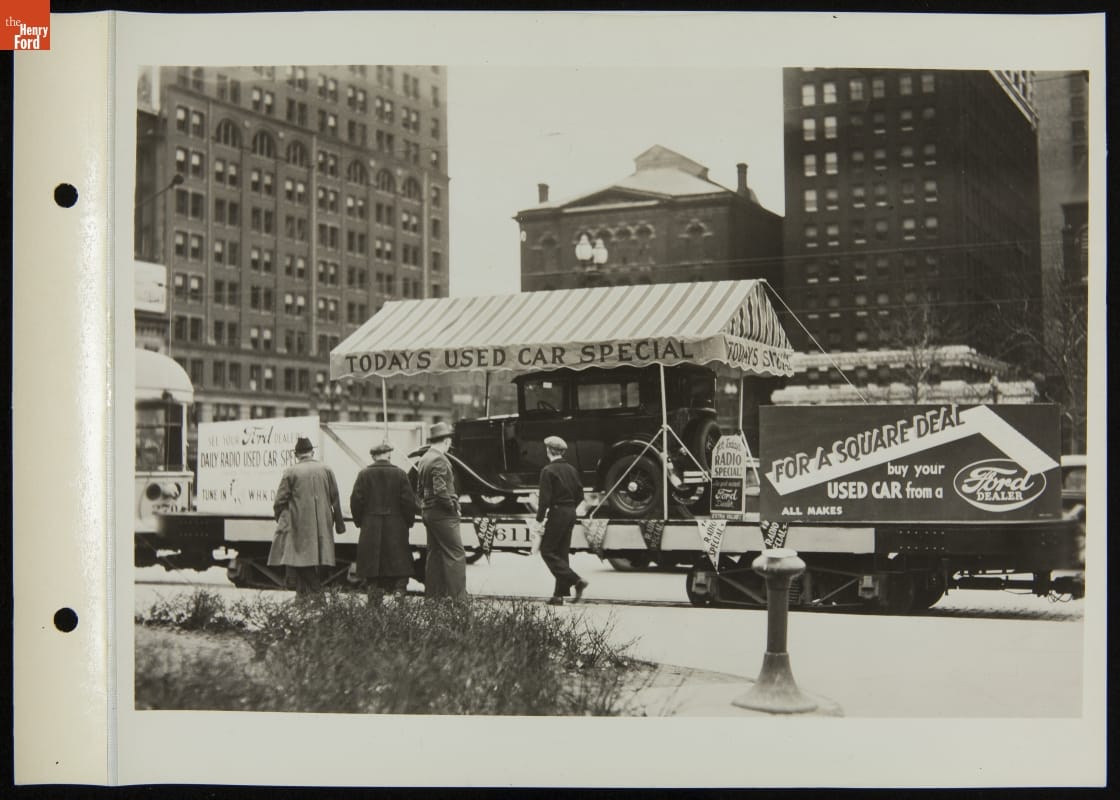
- Used Car Displayed on Platform Trailer Behind Street Car, May 1935 - Automobile dealers always looked for novel ways to advertise used cars for sale. This scene from May 1935 shows a used Ford Model A sedan being pulled through Cleveland, Ohio, behind a streetcar. The car was described as a "Radio Special." Radio advertising provided an effective way for dealers to reach potential customers.
- May 31, 1935
- Collections - Artifact
Used Car Displayed on Platform Trailer Behind Street Car, May 1935
Automobile dealers always looked for novel ways to advertise used cars for sale. This scene from May 1935 shows a used Ford Model A sedan being pulled through Cleveland, Ohio, behind a streetcar. The car was described as a "Radio Special." Radio advertising provided an effective way for dealers to reach potential customers.
- Streetcar in Garage, circa 1890 -
- circa 1890
- Collections - Artifact
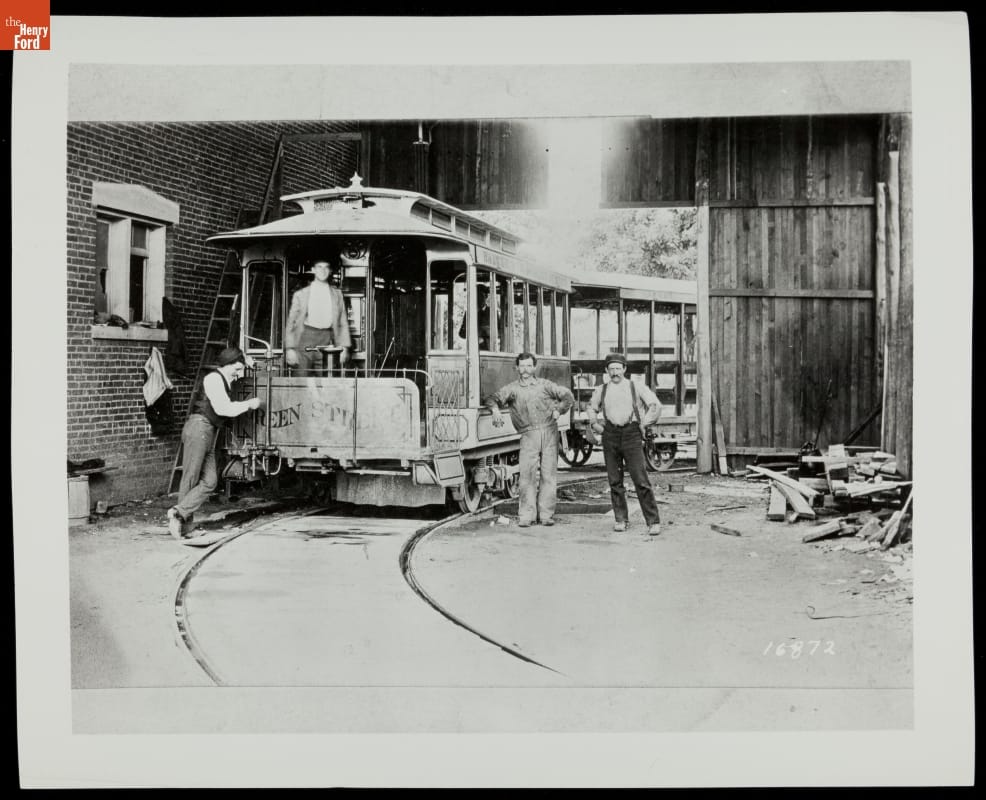
Streetcar in Garage, circa 1890
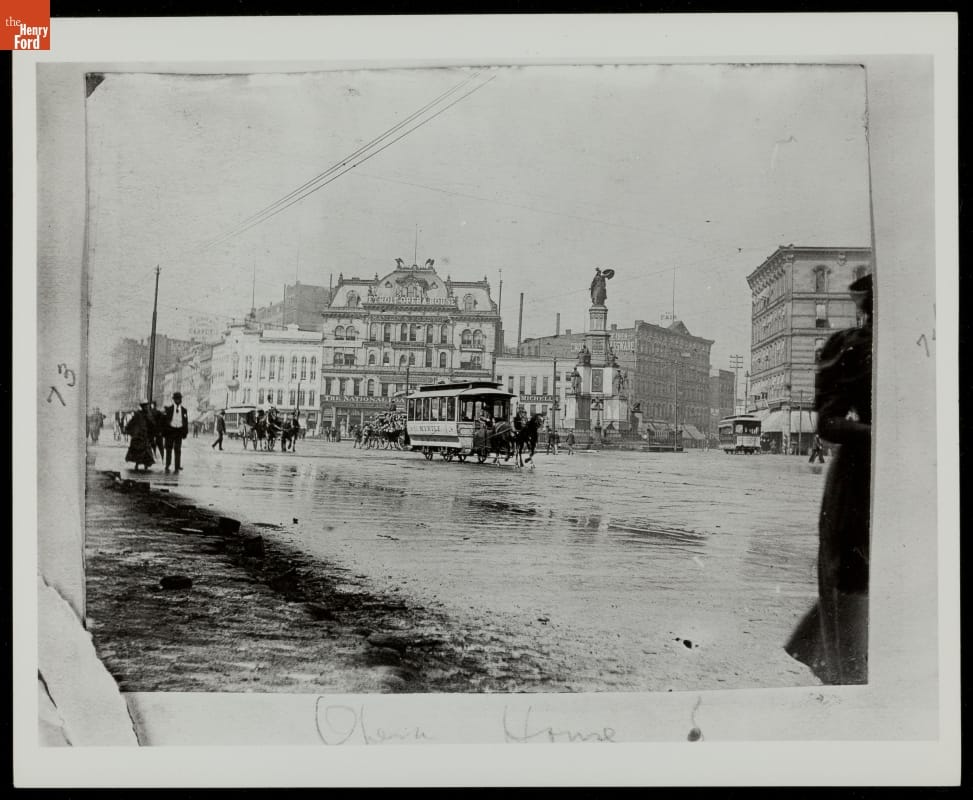
- Detroit Opera House, Detroit, Michigan, circa 1890 - The first Detroit Opera House stands behind a horse-drawn streetcar at Campus Martius, a former military training ground that became the "point of origin" of Detroit's coordinate street system and site of the Michigan Soldiers' and Sailors' Monument. Electric streetcar lines (note the wires strung above the streets) coexisted with horsecars in turn-of-the-ninteenth-century Detroit.
- circa 1890
- Collections - Artifact
Detroit Opera House, Detroit, Michigan, circa 1890
The first Detroit Opera House stands behind a horse-drawn streetcar at Campus Martius, a former military training ground that became the "point of origin" of Detroit's coordinate street system and site of the Michigan Soldiers' and Sailors' Monument. Electric streetcar lines (note the wires strung above the streets) coexisted with horsecars in turn-of-the-ninteenth-century Detroit.
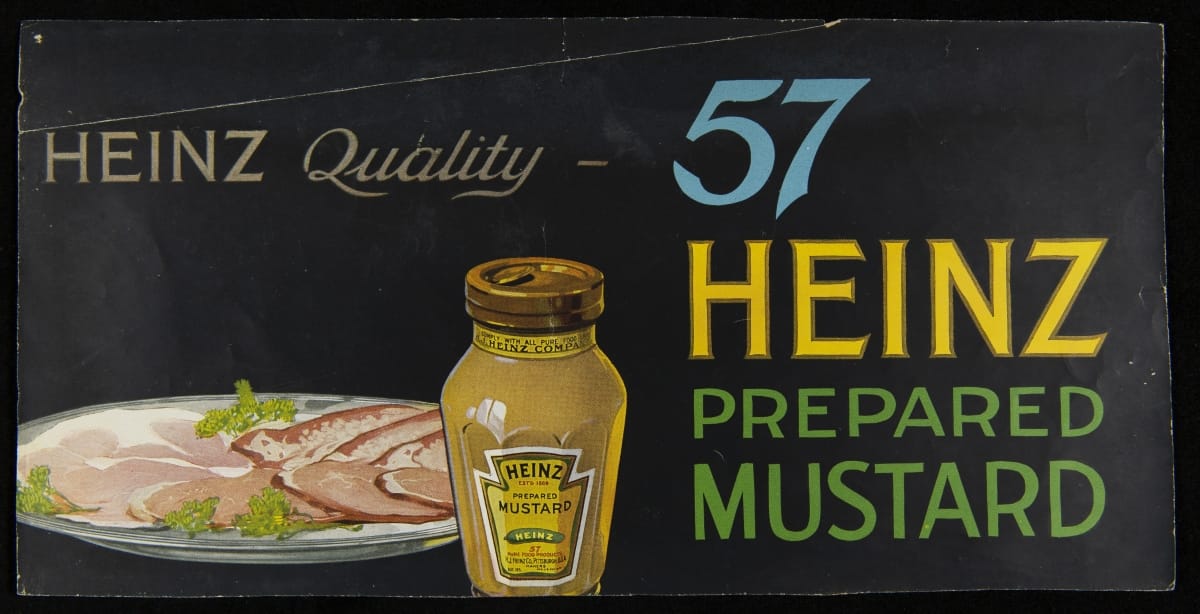
- Streetcar Advertising Poster for Heinz Prepared Mustard, circa 1925 - Henry J. Heinz rarely missed an opportunity to market his "57 Varieties" -- a catchy slogan he created despite offering a line of more than 60 packaged food products. A prolific promoter, Heinz aimed to reach consumers in stores, at home, and everywhere in-between. This colorful poster advertised Heinz Prepared Mustard to passengers riding in a streetcar.
- circa 1925
- Collections - Artifact
Streetcar Advertising Poster for Heinz Prepared Mustard, circa 1925
Henry J. Heinz rarely missed an opportunity to market his "57 Varieties" -- a catchy slogan he created despite offering a line of more than 60 packaged food products. A prolific promoter, Heinz aimed to reach consumers in stores, at home, and everywhere in-between. This colorful poster advertised Heinz Prepared Mustard to passengers riding in a streetcar.
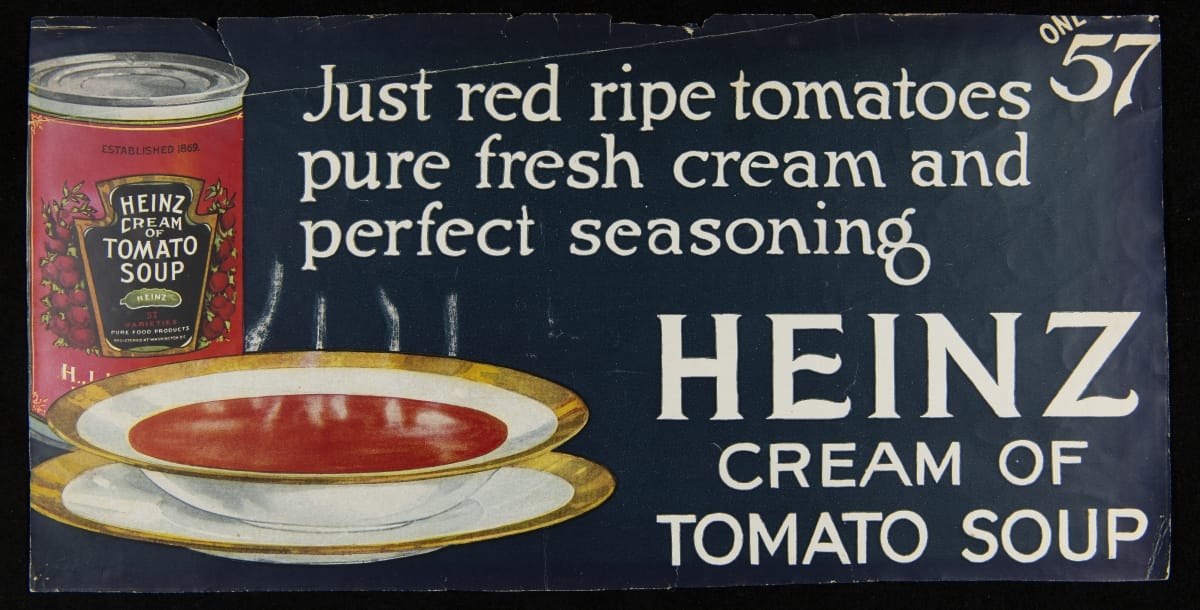
- Streetcar Advertising Poster for Heinz Cream of Tomato Soup, circa 1925 - Henry J. Heinz rarely missed an opportunity to market his "57 Varieties" -- a catchy slogan he created despite offering a line of more than 60 packaged food products. A prolific promoter, Heinz aimed to reach consumers in stores, at home, and everywhere in-between. This colorful poster advertised Heinz Cream of Tomato Soup to passengers riding a streetcar.
- circa 1925
- Collections - Artifact
Streetcar Advertising Poster for Heinz Cream of Tomato Soup, circa 1925
Henry J. Heinz rarely missed an opportunity to market his "57 Varieties" -- a catchy slogan he created despite offering a line of more than 60 packaged food products. A prolific promoter, Heinz aimed to reach consumers in stores, at home, and everywhere in-between. This colorful poster advertised Heinz Cream of Tomato Soup to passengers riding a streetcar.
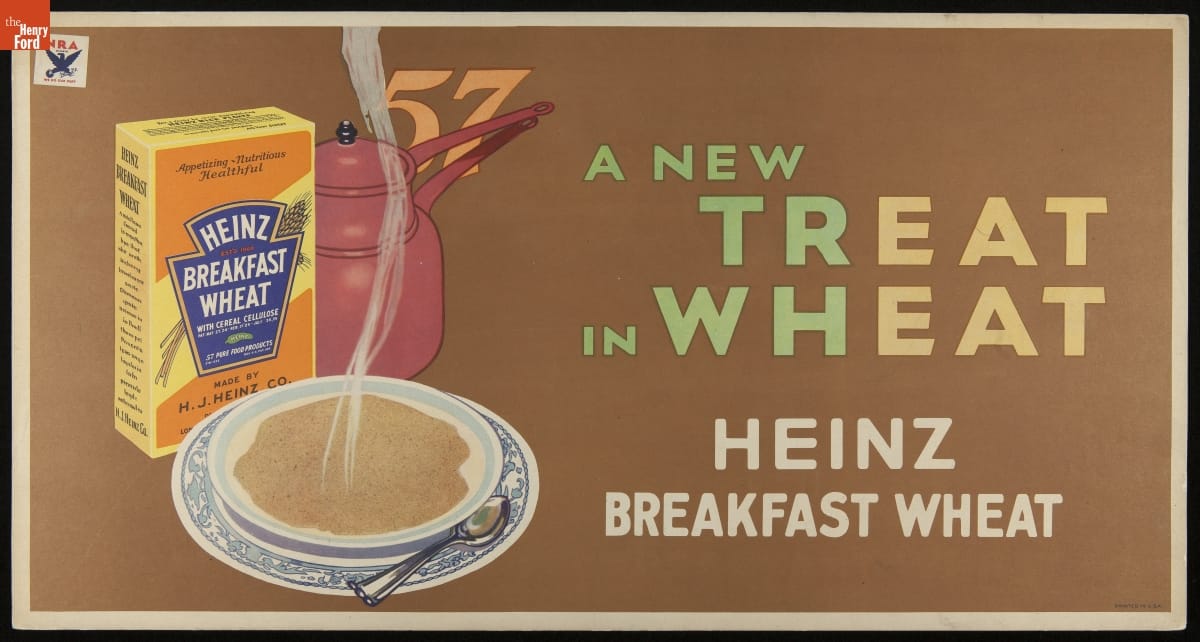
- Streetcar Advertising Poster for Heinz Breakfast Wheat, "A New Treat in Wheat," 1933-1935 - Henry J. Heinz rarely missed an opportunity to market his "57 Varieties" -- a catchy slogan he created despite offering a line of more than 60 packaged food products. A prolific promoter, Heinz aimed to reach consumers in stores, at home, and everywhere in-between. This colorful poster advertised Heinz Breakfast Wheat, a hot cereal, to passengers riding a streetcar.
- 1933-1935
- Collections - Artifact
Streetcar Advertising Poster for Heinz Breakfast Wheat, "A New Treat in Wheat," 1933-1935
Henry J. Heinz rarely missed an opportunity to market his "57 Varieties" -- a catchy slogan he created despite offering a line of more than 60 packaged food products. A prolific promoter, Heinz aimed to reach consumers in stores, at home, and everywhere in-between. This colorful poster advertised Heinz Breakfast Wheat, a hot cereal, to passengers riding a streetcar.