
Search
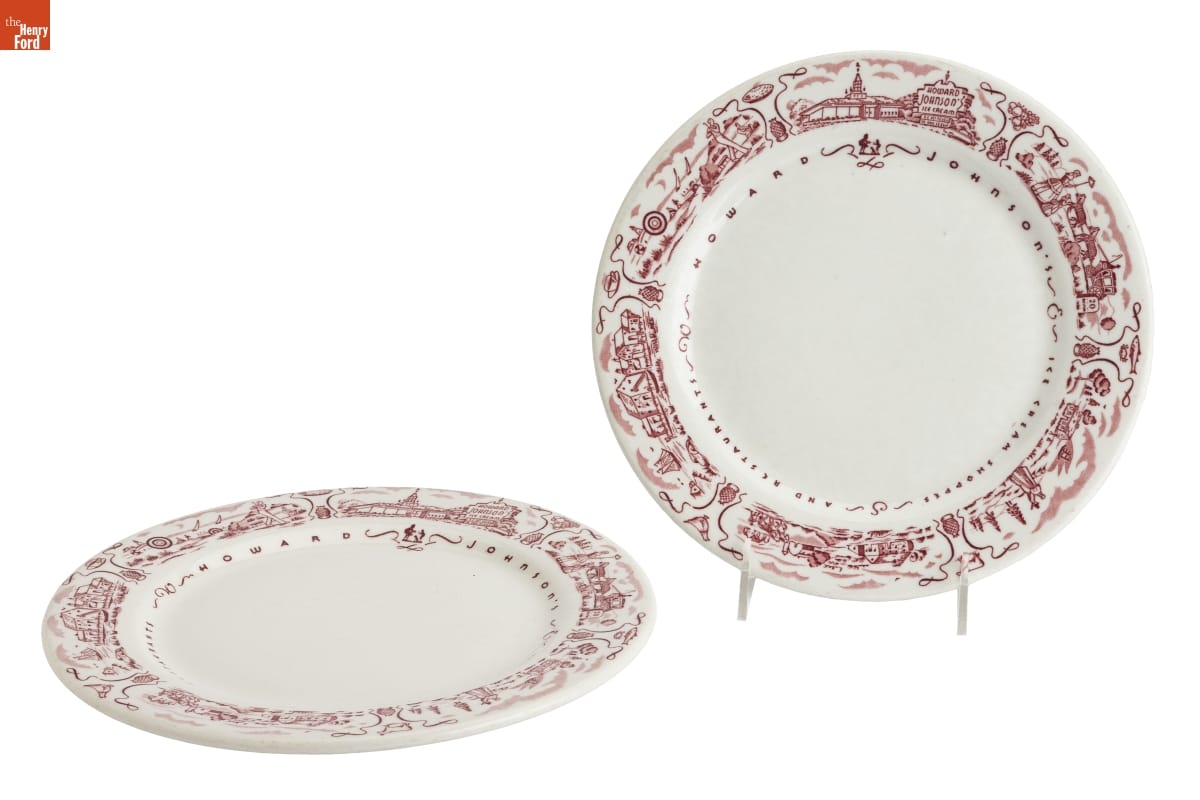
- Howard Johnson's Plates, 1951-1954 - In the 1920s, Howard Deering Johnson began selling ice cream from food stands around Boston, Massachusetts. Johnson later expanded his business to full-service restaurants. He franchised these orange-roofed establishments across America, locating them along highways to cater to the traveling public. This plate celebrates America's growth with idyllic scenes on the rim, including one of a Howard Johnson's restaurant.
- 1951-1954
- Collections - Artifact
Howard Johnson's Plates, 1951-1954
In the 1920s, Howard Deering Johnson began selling ice cream from food stands around Boston, Massachusetts. Johnson later expanded his business to full-service restaurants. He franchised these orange-roofed establishments across America, locating them along highways to cater to the traveling public. This plate celebrates America's growth with idyllic scenes on the rim, including one of a Howard Johnson's restaurant.
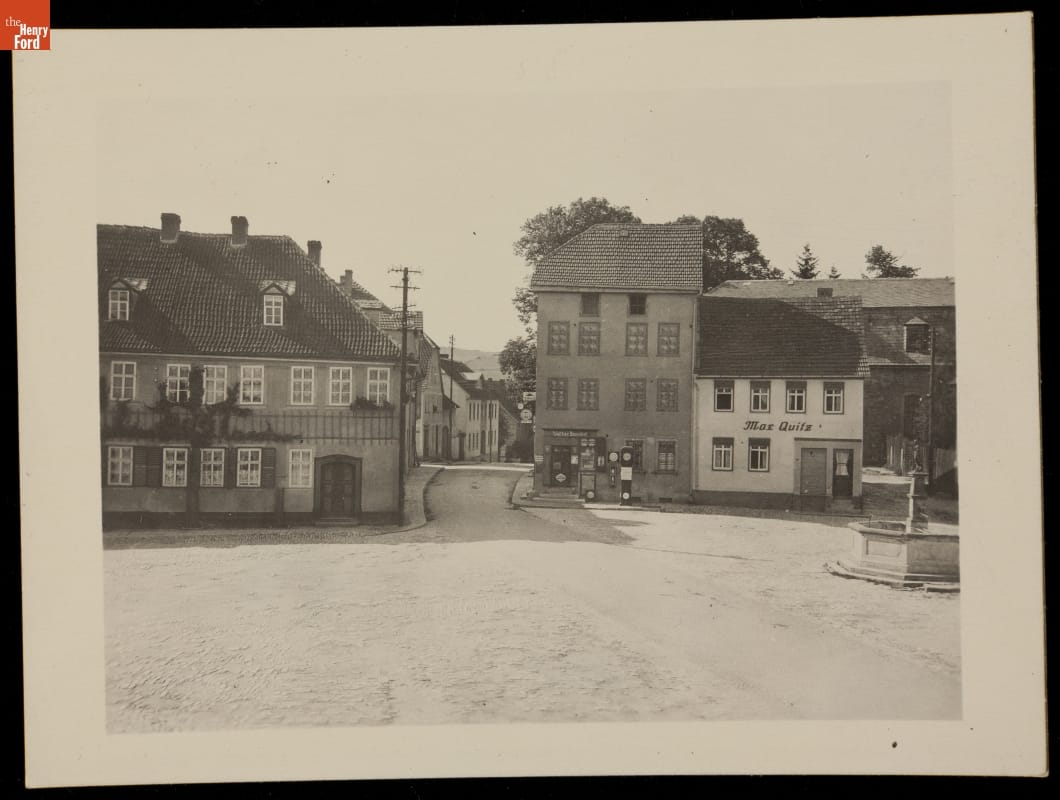
- Marketplace, Remda, Germany, circa 1935 - In 1913, Henry Ford established Ford Motor Company's photographic department. Though few internal records describe company photography, remaining photographs reveal a wide range of departmental activity. Over nearly 100 years, Ford photographers documented company ventures, personal affairs, and daily life around the world. This photograph shows a German marketplace around 1935.
- circa 1935
- Collections - Artifact
Marketplace, Remda, Germany, circa 1935
In 1913, Henry Ford established Ford Motor Company's photographic department. Though few internal records describe company photography, remaining photographs reveal a wide range of departmental activity. Over nearly 100 years, Ford photographers documented company ventures, personal affairs, and daily life around the world. This photograph shows a German marketplace around 1935.
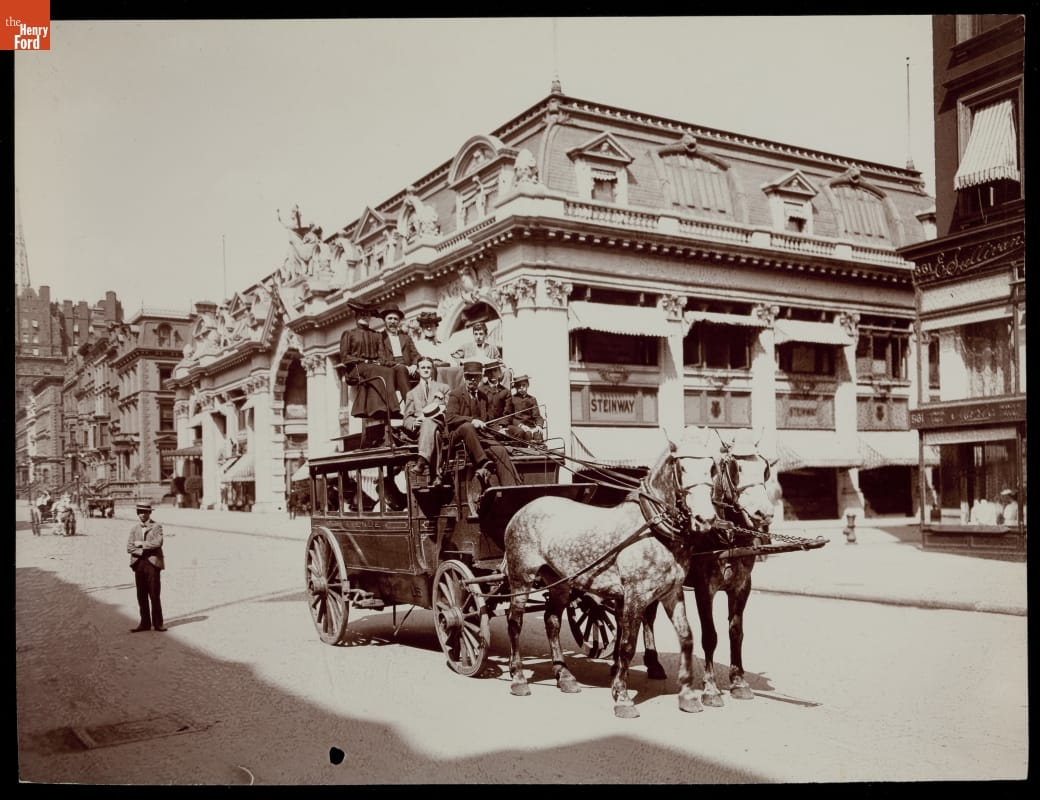
- Horse-Drawn Omnibus on Fifth Avenue, New York City, circa 1900 - Fifth Avenue residents opposed streetcar lines, claiming the vehicles were too quick and quiet to safely share the street with pedestrians and horse-drawn traffic. As an alternative, the Fifth Avenue Coach Company ran omnibuses like the one in this Detroit Publishing Company photograph. The fleet was replaced by gasoline-driven motor coaches in 1907.
- circa 1900
- Collections - Artifact
Horse-Drawn Omnibus on Fifth Avenue, New York City, circa 1900
Fifth Avenue residents opposed streetcar lines, claiming the vehicles were too quick and quiet to safely share the street with pedestrians and horse-drawn traffic. As an alternative, the Fifth Avenue Coach Company ran omnibuses like the one in this Detroit Publishing Company photograph. The fleet was replaced by gasoline-driven motor coaches in 1907.
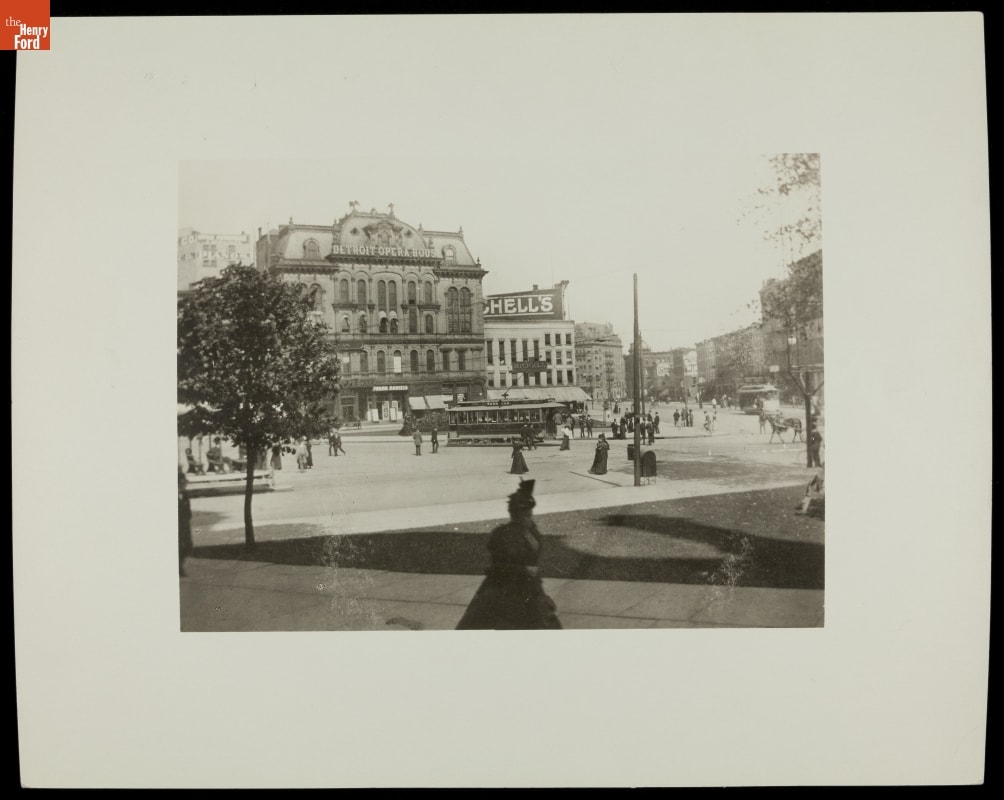
- Street scene showing Detroit Opera House, circa 1890 - Streetcars and pedestrians travel through Campus Martius, a former military training ground that became the "point of origin" of Detroit's coordinate street system. The tall French Renaissance building behind them is the first Detroit Opera House.
- circa 1890
- Collections - Artifact
Street scene showing Detroit Opera House, circa 1890
Streetcars and pedestrians travel through Campus Martius, a former military training ground that became the "point of origin" of Detroit's coordinate street system. The tall French Renaissance building behind them is the first Detroit Opera House.
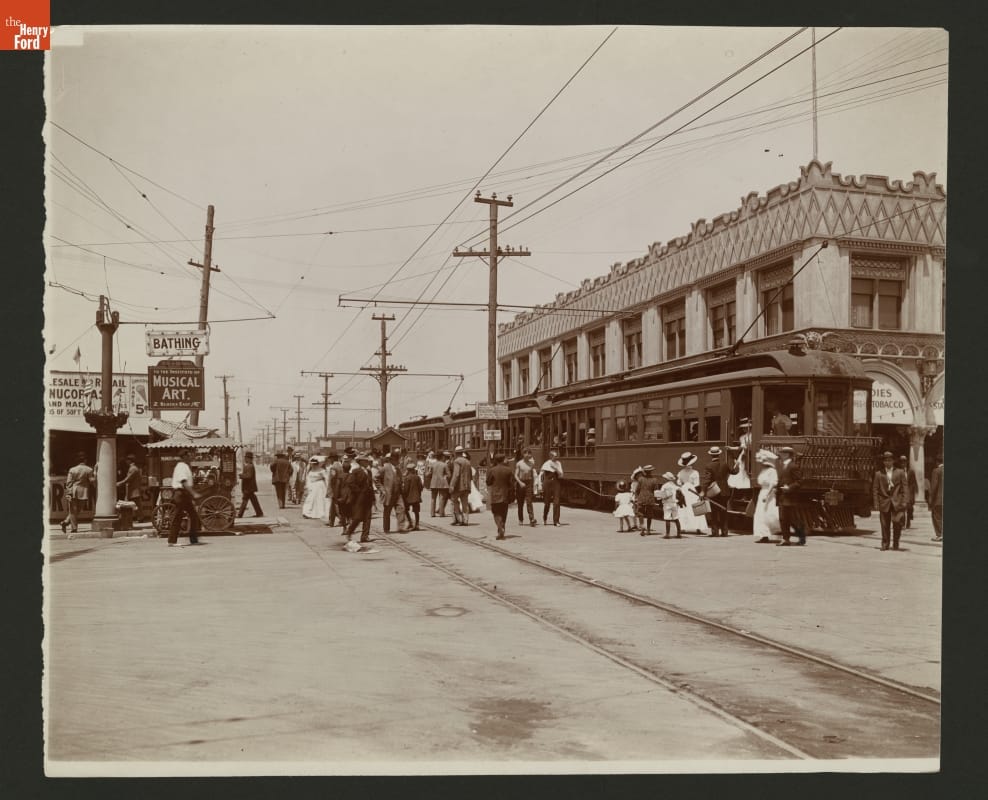
- Passengers Exiting Electric Streetcar at Venice, California, 1910 - Starting in the late 1800s, streetcars were the circulatory system of American cities. They were cheap, convenient and went where riders needed to go. Passengers took streetcars to city leisure destinations like Los Angeles's Venice Beach, seen here in 1910.
- August 01, 1910
- Collections - Artifact
Passengers Exiting Electric Streetcar at Venice, California, 1910
Starting in the late 1800s, streetcars were the circulatory system of American cities. They were cheap, convenient and went where riders needed to go. Passengers took streetcars to city leisure destinations like Los Angeles's Venice Beach, seen here in 1910.
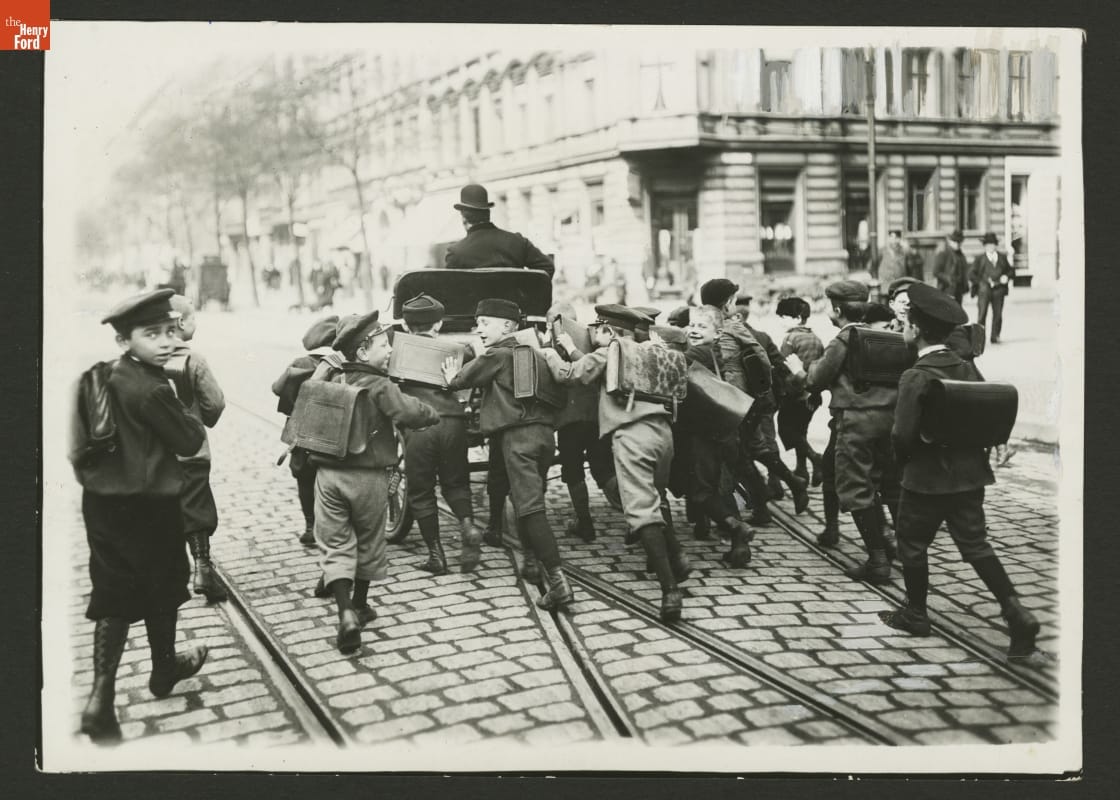
- Schoolboys Following a Benz Automobile, circa 1901 - This photograph, taken about 1901, shows a group of inquisitive schoolboys attracted to a Benz automobile. Karl Benz of Germany developed the world's first practical gasoline-powered automobile in 1885.
- circa 1901
- Collections - Artifact
Schoolboys Following a Benz Automobile, circa 1901
This photograph, taken about 1901, shows a group of inquisitive schoolboys attracted to a Benz automobile. Karl Benz of Germany developed the world's first practical gasoline-powered automobile in 1885.
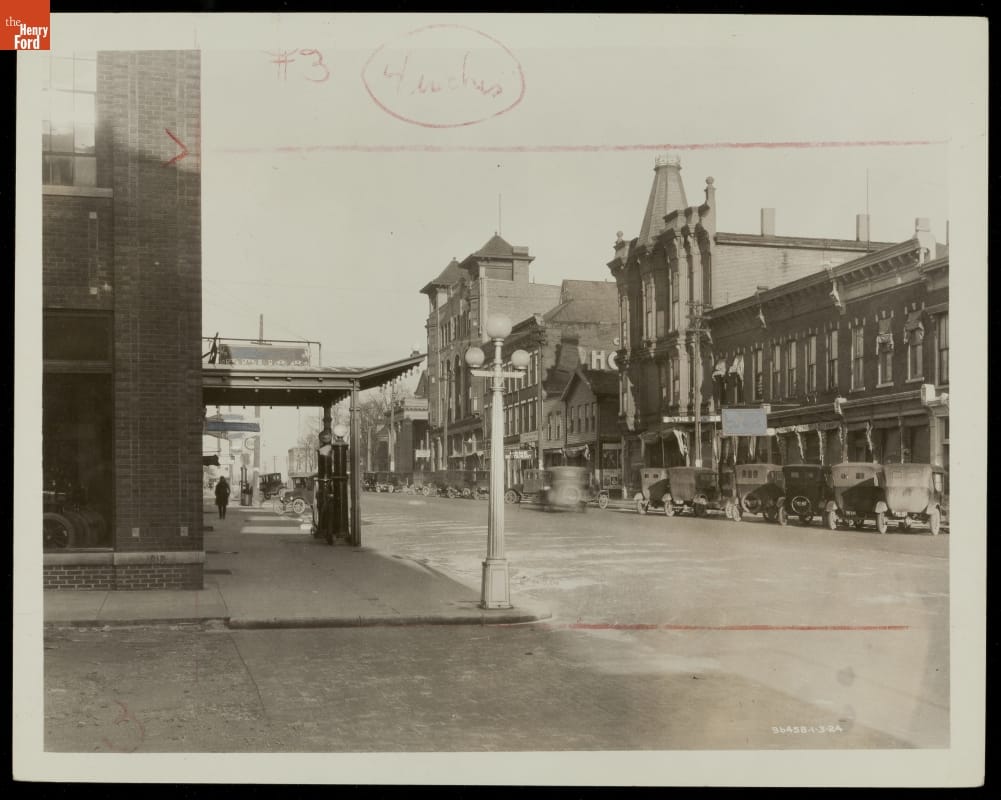
- Main Street, Jackson, Ohio, circa 1925 - The automobile was a firmly established part of American life by the mid-1920s. That fact is clear in this circa 1925 photo taken at the corner of Church and Main Streets in Jackson, Ohio. Parked cars line both sides of the street while, on the left, a service station awaits customers for its two gas pumps.
- circa 1925
- Collections - Artifact
Main Street, Jackson, Ohio, circa 1925
The automobile was a firmly established part of American life by the mid-1920s. That fact is clear in this circa 1925 photo taken at the corner of Church and Main Streets in Jackson, Ohio. Parked cars line both sides of the street while, on the left, a service station awaits customers for its two gas pumps.
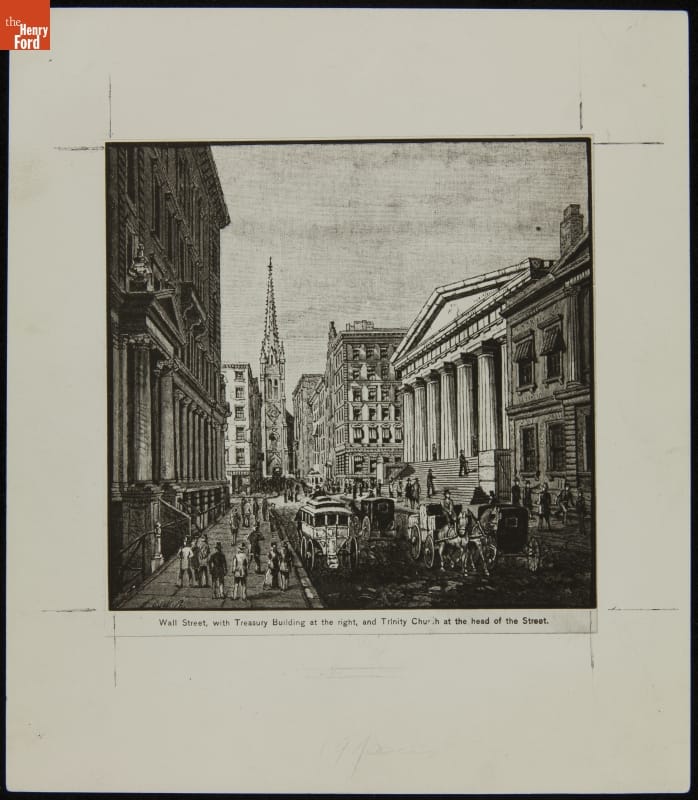
- Wall Street with Treasury Building and Trinity Church, New York City, circa 1877 -
- circa 1877
- Collections - Artifact
Wall Street with Treasury Building and Trinity Church, New York City, circa 1877
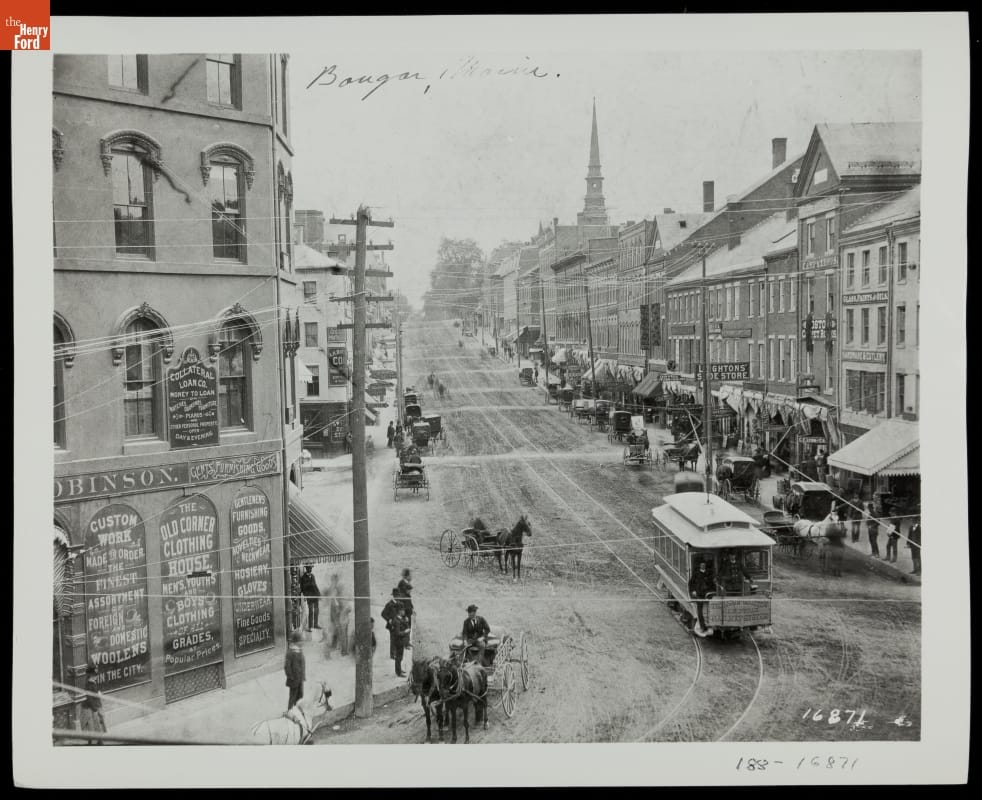
- Electric Streetcar and Horse-Drawn Vehicles on City Street in Bangor, Maine, circa 1885 - Horse-drawn drawn vehicles, pedestrians, and an electric streetcar share a street lined with shops in this photograph of Bangor, a prosperous nineteenth-century lumber port on Maine's Penobscot River.
- circa 1885
- Collections - Artifact
Electric Streetcar and Horse-Drawn Vehicles on City Street in Bangor, Maine, circa 1885
Horse-drawn drawn vehicles, pedestrians, and an electric streetcar share a street lined with shops in this photograph of Bangor, a prosperous nineteenth-century lumber port on Maine's Penobscot River.
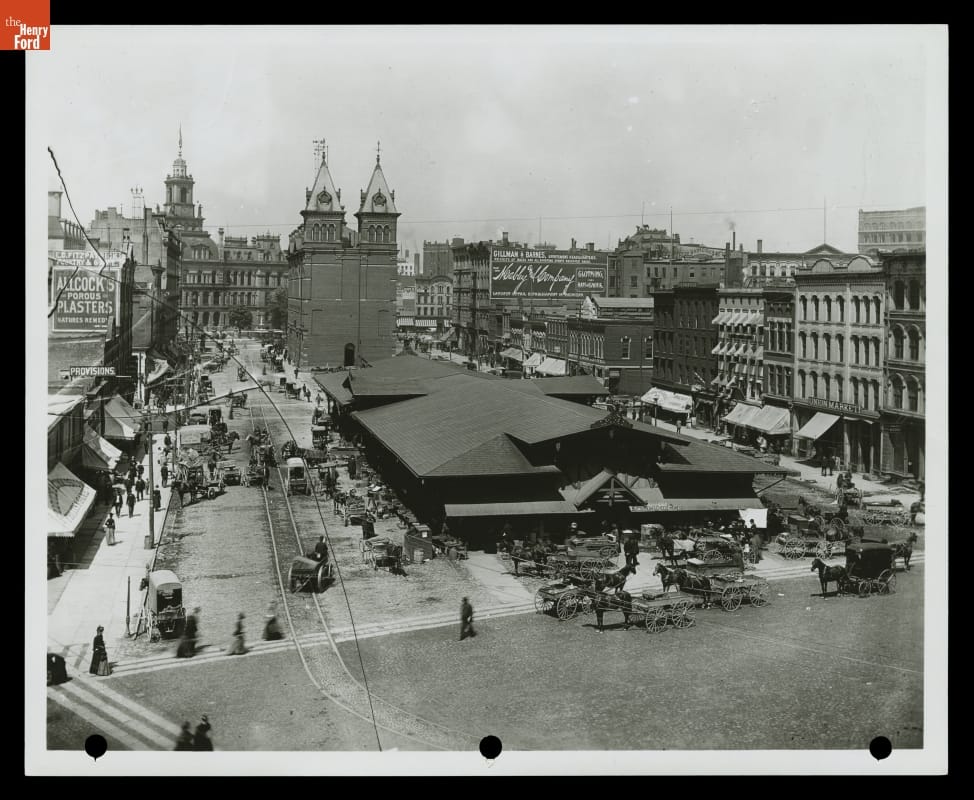
- Central Market in Downtown Detroit, Michigan, circa 1890 - Open-air public markets consolidated sales of perishable fruits and vegetables for easy access by urban consumers. This vegetable shed at Detroit's Central Market, constructed in 1860 with 48 cast-iron columns and ornate timber framing, provided shelter to dozens of market gardeners, florists, and other vendors. It was located on Michigan Grand Avenue between Bates and Randolph Streets. City officials closed the market and dismantled it in 1894.
- circa 1890
- Collections - Artifact
Central Market in Downtown Detroit, Michigan, circa 1890
Open-air public markets consolidated sales of perishable fruits and vegetables for easy access by urban consumers. This vegetable shed at Detroit's Central Market, constructed in 1860 with 48 cast-iron columns and ornate timber framing, provided shelter to dozens of market gardeners, florists, and other vendors. It was located on Michigan Grand Avenue between Bates and Randolph Streets. City officials closed the market and dismantled it in 1894.