
Search
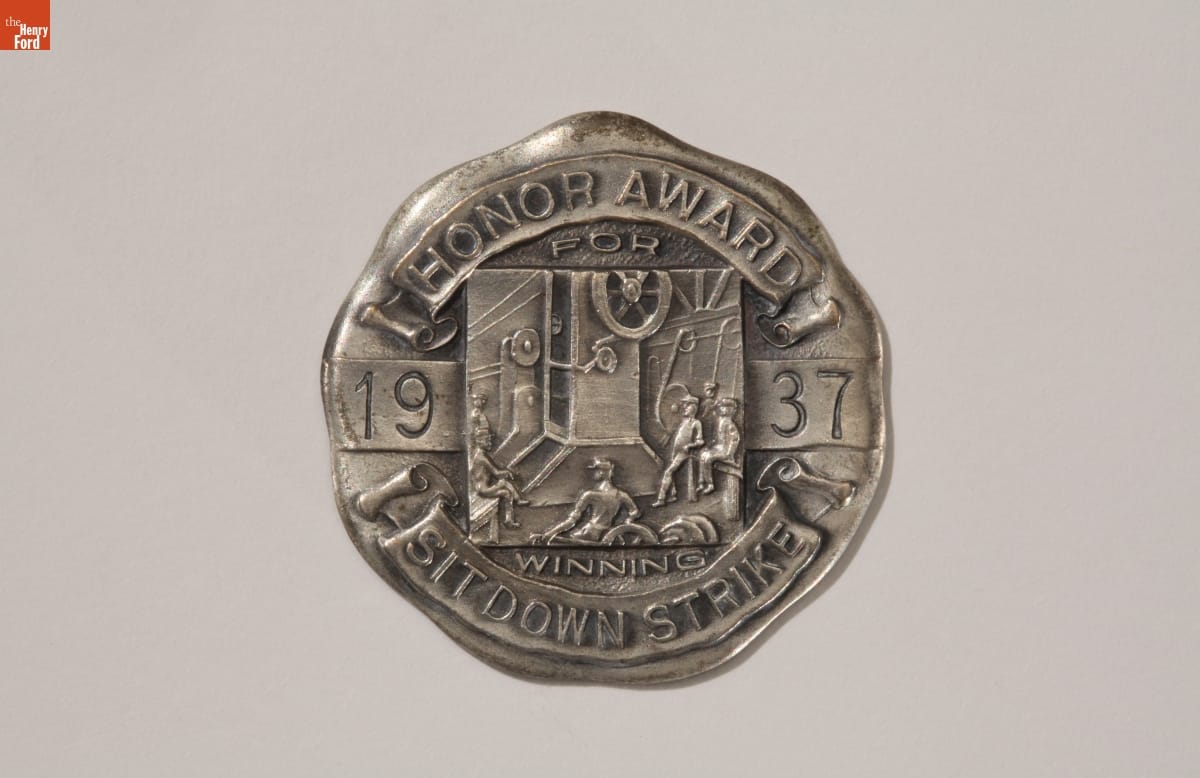
- United Steelworkers Honor Award Medal for Winning "Sit Down Strike," 1937 - Sit-down strikes became a successful strategy for labor organizers in the 1930s. These strikes required employees to stop working and simply "sit down" at their workstations -- effectively stopping production and taking over the workplace. General Motors workers staged a sit-down strike at a plant in Flint, Michigan, in 1936-1937. The 44-day strike forced GM to recognize the United Auto Workers union.
- 1937
- Collections - Artifact
United Steelworkers Honor Award Medal for Winning "Sit Down Strike," 1937
Sit-down strikes became a successful strategy for labor organizers in the 1930s. These strikes required employees to stop working and simply "sit down" at their workstations -- effectively stopping production and taking over the workplace. General Motors workers staged a sit-down strike at a plant in Flint, Michigan, in 1936-1937. The 44-day strike forced GM to recognize the United Auto Workers union.
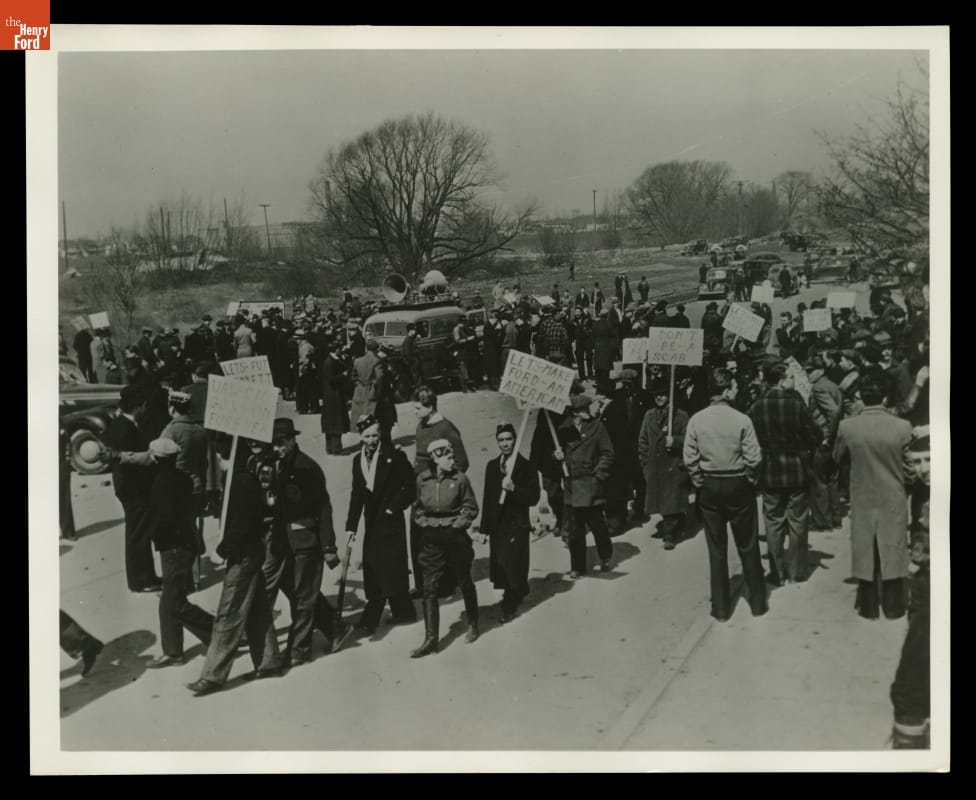
- Union Picket Line at the Ford Rouge Plant, April 1941 - In 1937, the United Auto Workers (UAW) began efforts to unionize Ford Motor Company workers. The long and--at times--violent struggle culminated in a turbulent ten-day strike in April 1941. Here, demonstrators carry placards and wear caps with union buttons outside Ford's Rouge Plant gates. By June 1941 Ford became the last major automotive manufacturer to recognize the UAW and agree to a union contract.
- April 04, 1941
- Collections - Artifact
Union Picket Line at the Ford Rouge Plant, April 1941
In 1937, the United Auto Workers (UAW) began efforts to unionize Ford Motor Company workers. The long and--at times--violent struggle culminated in a turbulent ten-day strike in April 1941. Here, demonstrators carry placards and wear caps with union buttons outside Ford's Rouge Plant gates. By June 1941 Ford became the last major automotive manufacturer to recognize the UAW and agree to a union contract.
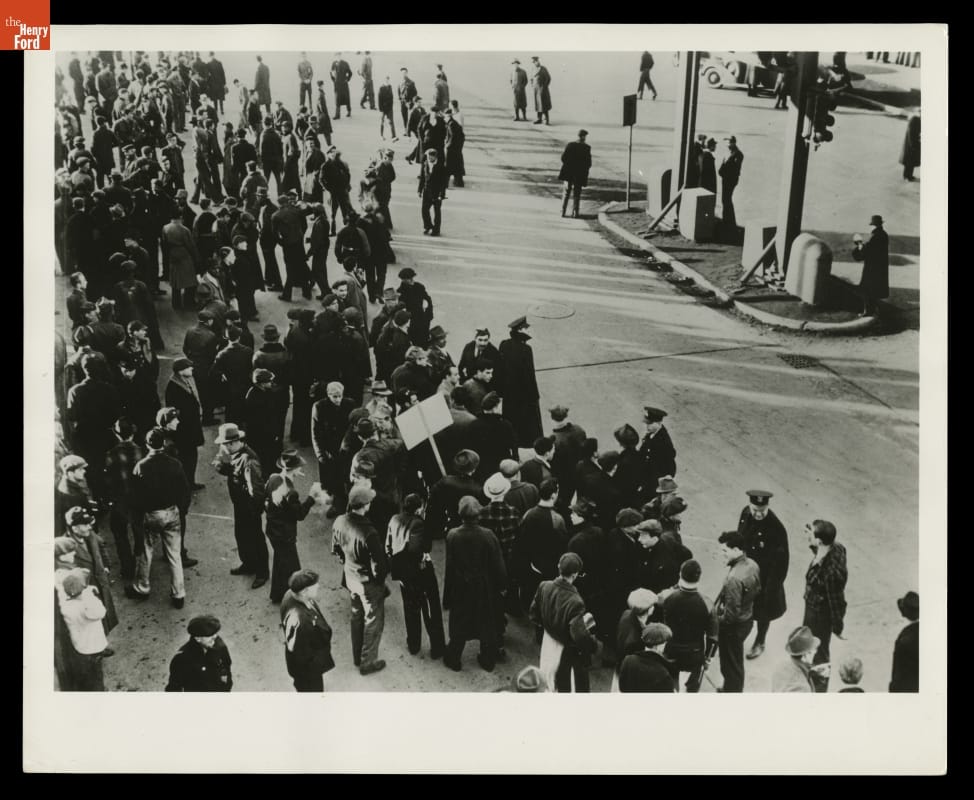
- Union Demonstration at the Ford Rouge Plant, 1937 - The struggle to unionize Ford Motor Company workers was long and--at times--violent. This photograph shows United Auto Workers (UAW) labor organizers demonstrating outside Ford's Rouge Plant pedestrian overpass during 1937. Four years later, following a turbulent ten-day strike in April 1941, Ford became the last major automotive manufacturer to recognize the UAW and agree to a union contract.
- 1937
- Collections - Artifact
Union Demonstration at the Ford Rouge Plant, 1937
The struggle to unionize Ford Motor Company workers was long and--at times--violent. This photograph shows United Auto Workers (UAW) labor organizers demonstrating outside Ford's Rouge Plant pedestrian overpass during 1937. Four years later, following a turbulent ten-day strike in April 1941, Ford became the last major automotive manufacturer to recognize the UAW and agree to a union contract.
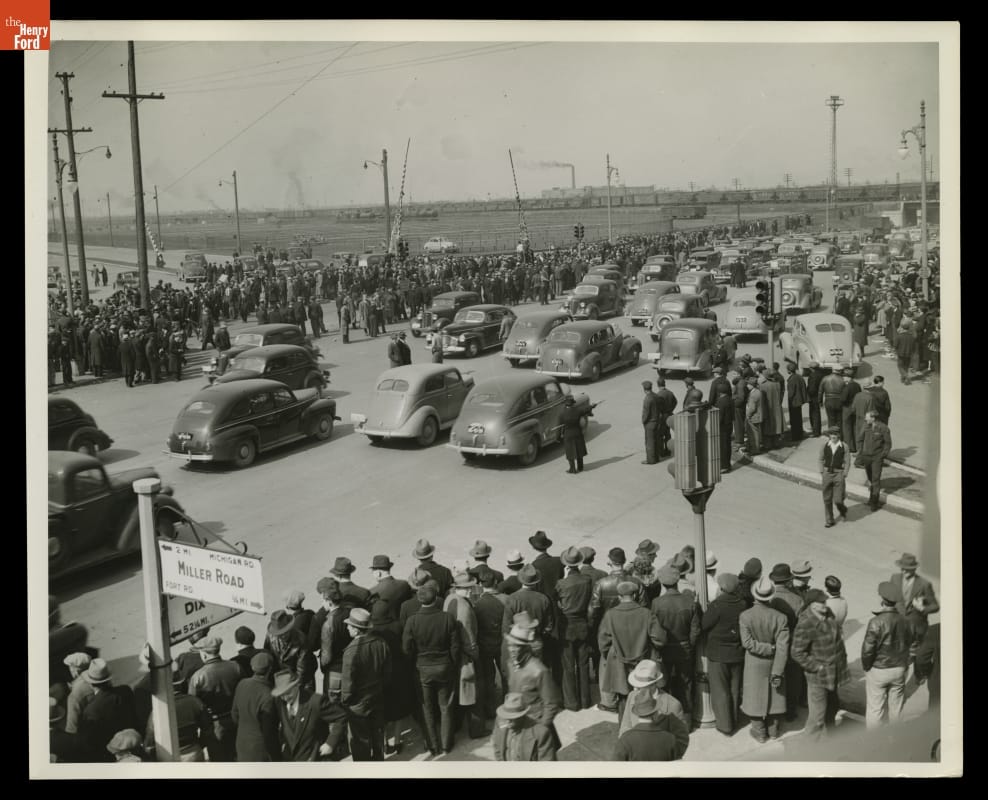
- Traffic Slowdown at Miller and Dix Roads during Ford Rouge Plant Strike, Dearborn, Michigan, 1941 - Ford Motor Company was the last major auto manufacturer to be organized by the United Auto Workers. On April 1, 1941, workers at Ford's Dearborn, Michigan, Rouge Plant -- reacting to anti-union firings and violence -- shut down the factory. After a turbulent ten-day strike, Ford agreed to union demands. Here, workers and their cars block access to the plant as onlookers watch.
- April 01, 1941
- Collections - Artifact
Traffic Slowdown at Miller and Dix Roads during Ford Rouge Plant Strike, Dearborn, Michigan, 1941
Ford Motor Company was the last major auto manufacturer to be organized by the United Auto Workers. On April 1, 1941, workers at Ford's Dearborn, Michigan, Rouge Plant -- reacting to anti-union firings and violence -- shut down the factory. After a turbulent ten-day strike, Ford agreed to union demands. Here, workers and their cars block access to the plant as onlookers watch.
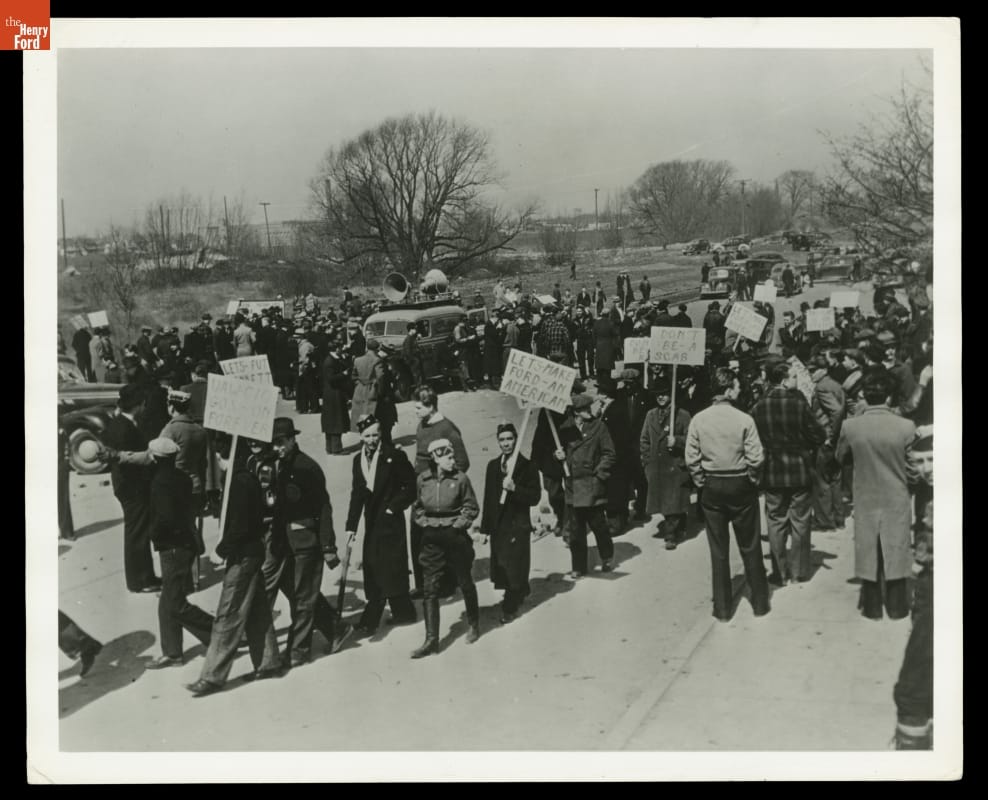
- United Auto Workers Picketing the Ford Rouge River Plant, Dearborn, Michigan, 1941 - The workers who manufactured and bought cars organized into labor unions to better their working conditions. The United Auto Workers, founded in 1935, quickly organized the auto industry. In this photograph, workers picket Ford Motor Company -- the last major automaker to unionize -- during a 1941 strike.
- 1941
- Collections - Artifact
United Auto Workers Picketing the Ford Rouge River Plant, Dearborn, Michigan, 1941
The workers who manufactured and bought cars organized into labor unions to better their working conditions. The United Auto Workers, founded in 1935, quickly organized the auto industry. In this photograph, workers picket Ford Motor Company -- the last major automaker to unionize -- during a 1941 strike.
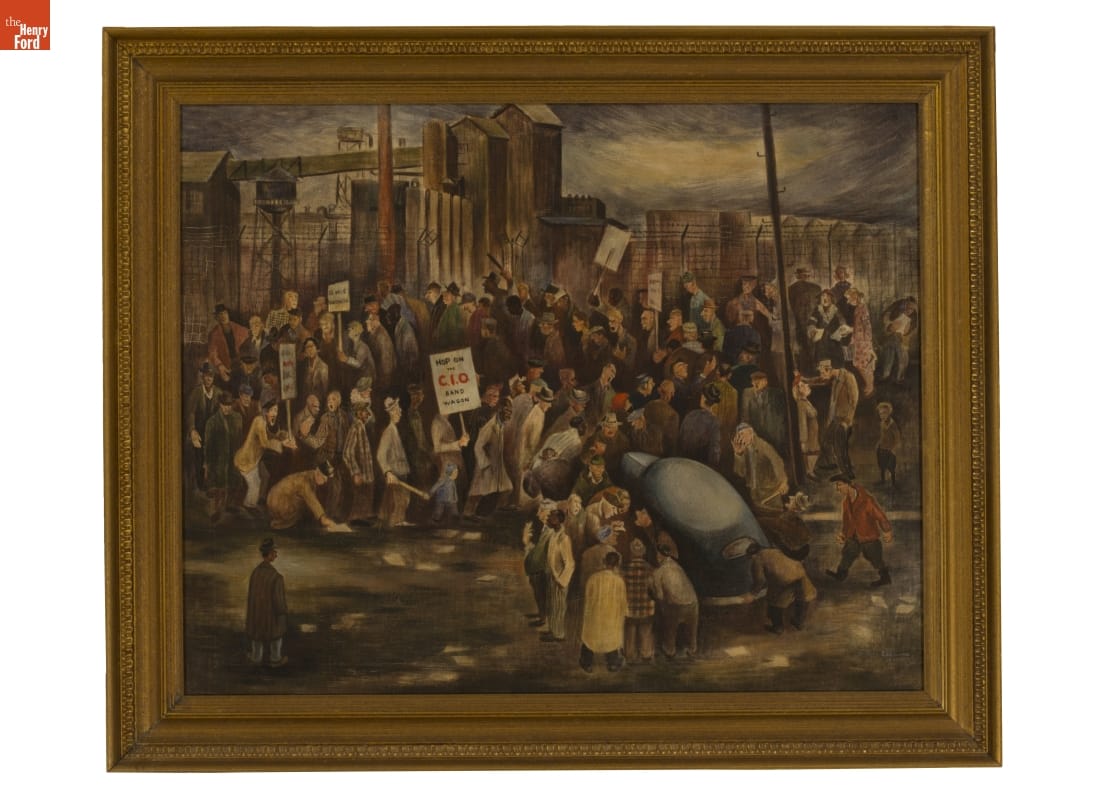
- Tempera Painting, "The Strike," by Arthur R. Lehmann, 1941 - Arthur Lehmann created this painting while employed by the Works Progress Administration in Detroit. Lehmann chanced upon unionizing efforts at the Ford Rouge Plant in 1937, creating a sketch of workers picketing outside the plant gates. Ultimately, the workers were successful and in 1941 Ford became a union shop. In a meticulously personal style, Lehmann depicts the unionizing process in the finished painting.
- 1937
- Collections - Artifact
Tempera Painting, "The Strike," by Arthur R. Lehmann, 1941
Arthur Lehmann created this painting while employed by the Works Progress Administration in Detroit. Lehmann chanced upon unionizing efforts at the Ford Rouge Plant in 1937, creating a sketch of workers picketing outside the plant gates. Ultimately, the workers were successful and in 1941 Ford became a union shop. In a meticulously personal style, Lehmann depicts the unionizing process in the finished painting.