
Search
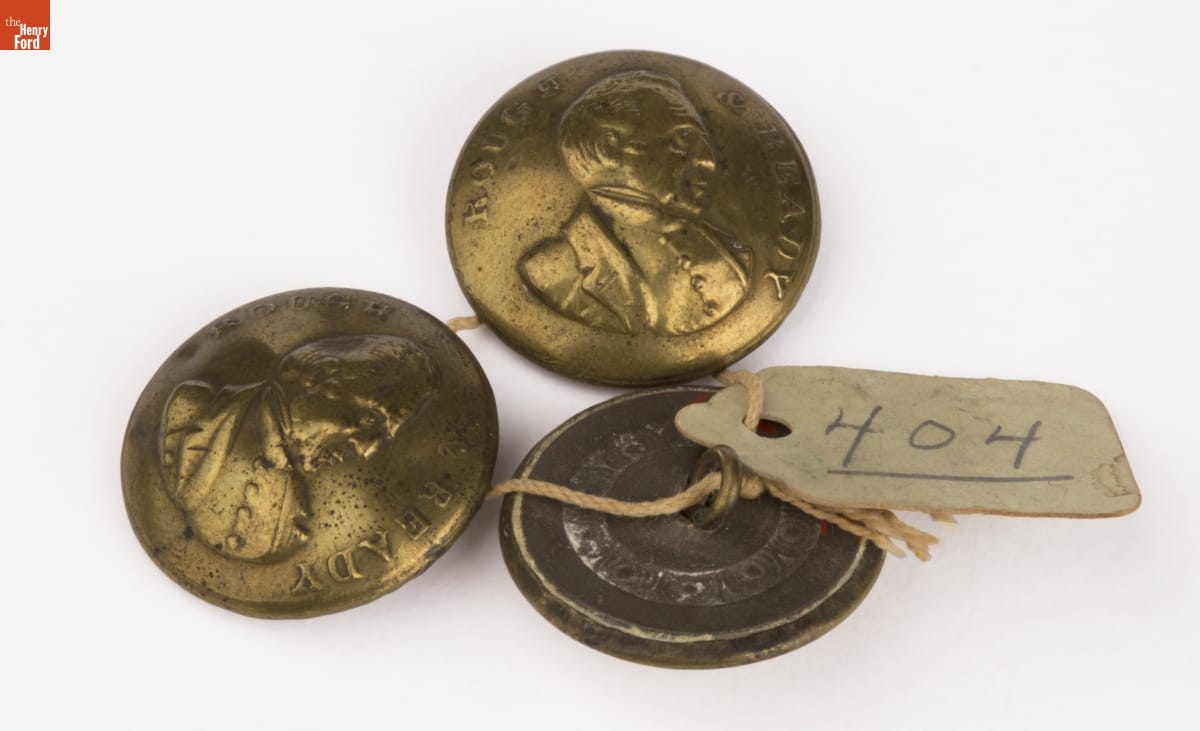
- Zachary Taylor Campaign Buttons, 1848 - Zachary Taylor served in the military most of his life and earned the nickname "Old Rough and Ready" from his men for his willingness to share in the hardships of field duty. The moniker became widespread after his victories during the Mexican-America War. In 1848, when Taylor ran for President, backers donned buttons such as these to show their support.
- 1848
- Collections - Artifact
Zachary Taylor Campaign Buttons, 1848
Zachary Taylor served in the military most of his life and earned the nickname "Old Rough and Ready" from his men for his willingness to share in the hardships of field duty. The moniker became widespread after his victories during the Mexican-America War. In 1848, when Taylor ran for President, backers donned buttons such as these to show their support.
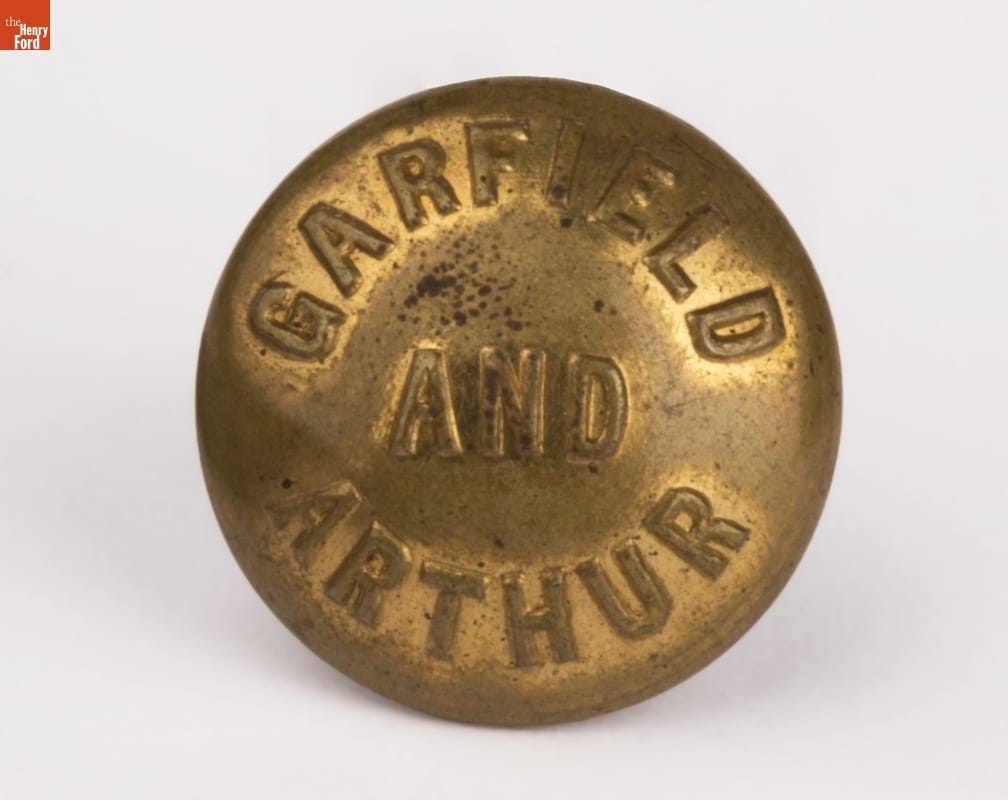
- Garfield-Arthur Campaign Button, 1880 - James Garfield became the Republican Party's presidential nominee in 1880 only after the convention had deadlocked. Delegates could not decide among the three leading candidates and turned to Garfield--who did not seek the nomination--as a compromise candidate. He and his running mate Chester Arthur would face Democrat Winfield Hancock. Voters chose Garfield by the narrowest of margins--fewer than 7,500 votes.
- 1880
- Collections - Artifact
Garfield-Arthur Campaign Button, 1880
James Garfield became the Republican Party's presidential nominee in 1880 only after the convention had deadlocked. Delegates could not decide among the three leading candidates and turned to Garfield--who did not seek the nomination--as a compromise candidate. He and his running mate Chester Arthur would face Democrat Winfield Hancock. Voters chose Garfield by the narrowest of margins--fewer than 7,500 votes.
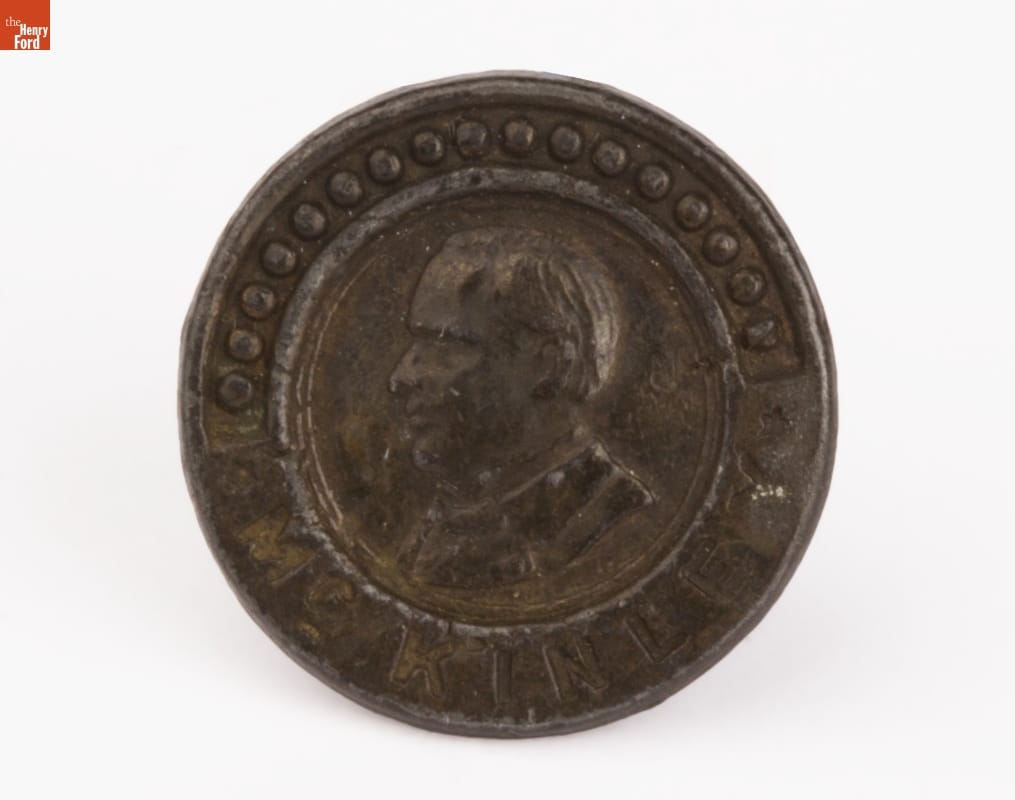
- William McKinley Campaign Button, ca. 1896 - William McKinley was elected president in 1896 and 1900. In each election, McKinley employed a "front porch campaign" -- a strategy where supporters visited the candidate's home to hear the nominee speak. It worked. Thousands came and then returned to their own homes to get out the vote. McKinley defeated Democratic Party candidate William Jennings Bryan both times.
- ca. 1896-1900
- Collections - Artifact
William McKinley Campaign Button, ca. 1896
William McKinley was elected president in 1896 and 1900. In each election, McKinley employed a "front porch campaign" -- a strategy where supporters visited the candidate's home to hear the nominee speak. It worked. Thousands came and then returned to their own homes to get out the vote. McKinley defeated Democratic Party candidate William Jennings Bryan both times.
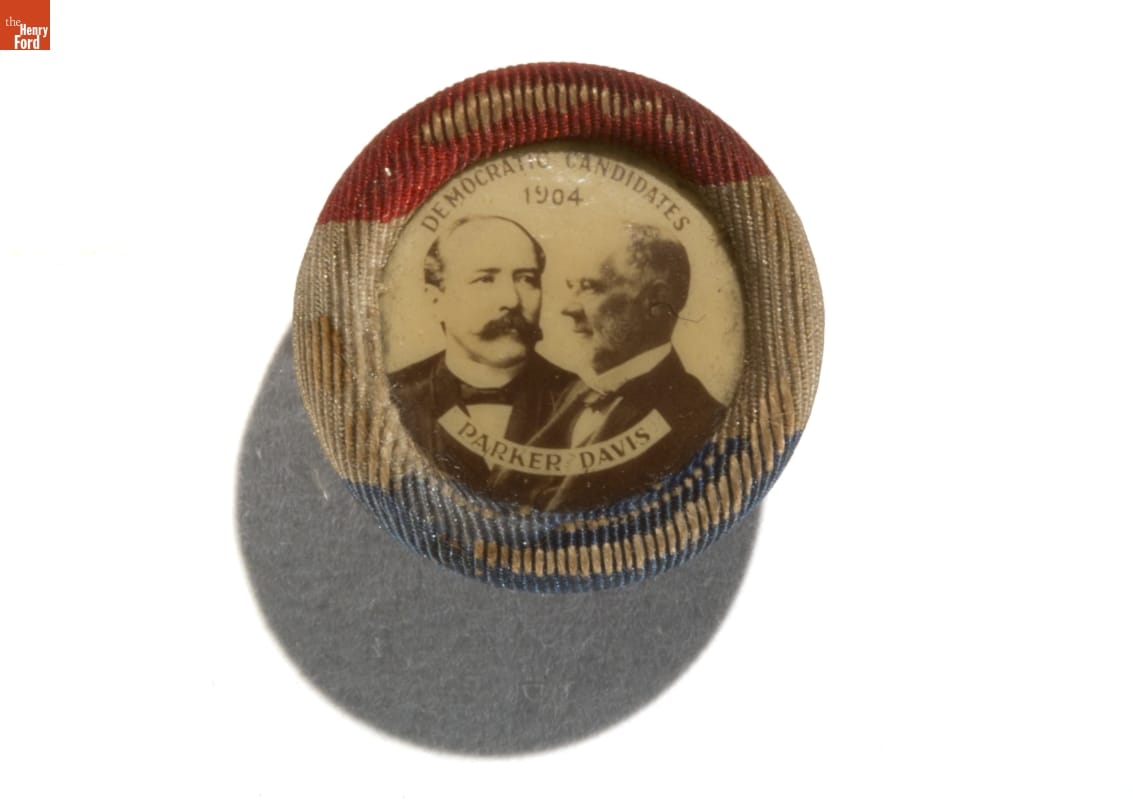
- Parker-Davis Campaign Button, 1904 - The Democrats nominated New Yorker Alton B. Parker for president in 1904. Parker never distinguished his political views from those of his Republican opponent during the campaign. This did not bode well for the virtually unknown Democratic candidate. Parker and his running mate, Henry Davis, lost to Theodore Roosevelt, the popular and energetic incumbent.
- 1904
- Collections - Artifact
Parker-Davis Campaign Button, 1904
The Democrats nominated New Yorker Alton B. Parker for president in 1904. Parker never distinguished his political views from those of his Republican opponent during the campaign. This did not bode well for the virtually unknown Democratic candidate. Parker and his running mate, Henry Davis, lost to Theodore Roosevelt, the popular and energetic incumbent.
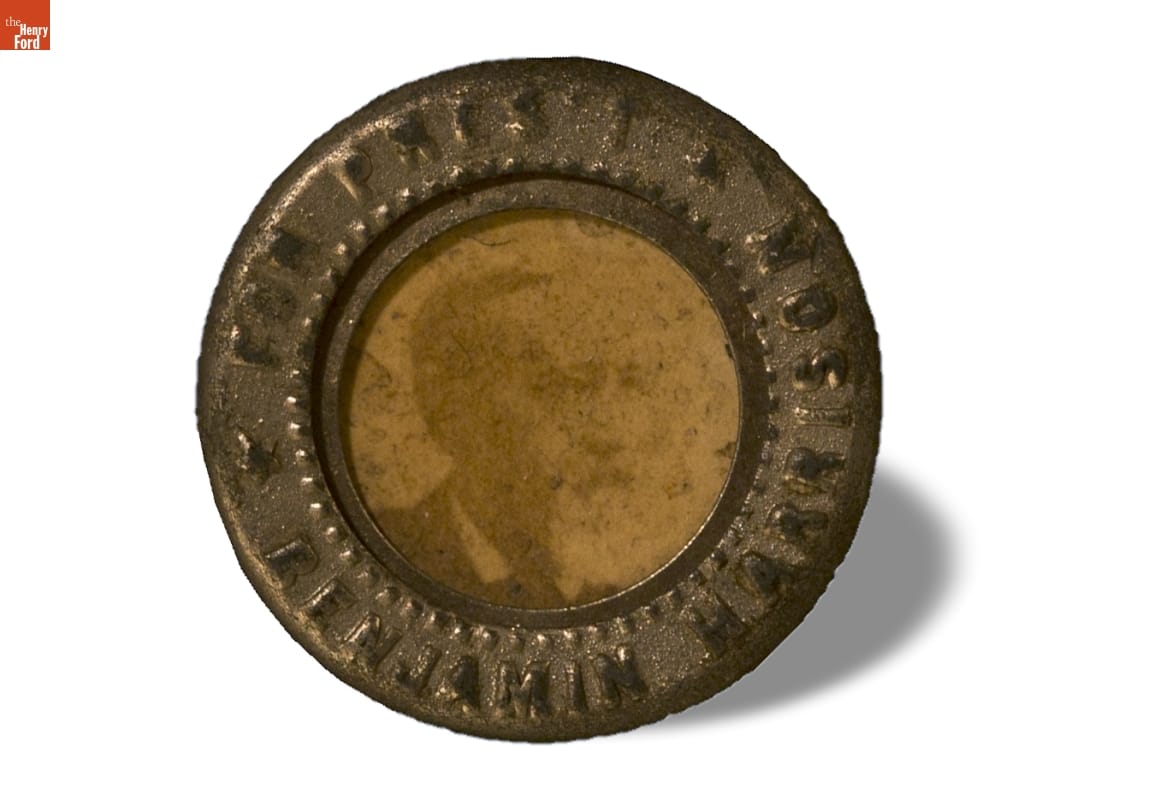
- Benjamin Harrison Campaign Button, 1888, 1892 - The Republican Party selected Benjamin Harrison to run for president in 1888 and 1892. Harrison was a proponent of strong protective tariffs, sound money and pensions for Civil War veterans. He was also the grandson of a William Henry Harrison, the ninth President of the United States. Touting "protection" and his family's political lineage, Benjamin won in 1888, but lost in 1892.
- 1888-1892
- Collections - Artifact
Benjamin Harrison Campaign Button, 1888, 1892
The Republican Party selected Benjamin Harrison to run for president in 1888 and 1892. Harrison was a proponent of strong protective tariffs, sound money and pensions for Civil War veterans. He was also the grandson of a William Henry Harrison, the ninth President of the United States. Touting "protection" and his family's political lineage, Benjamin won in 1888, but lost in 1892.
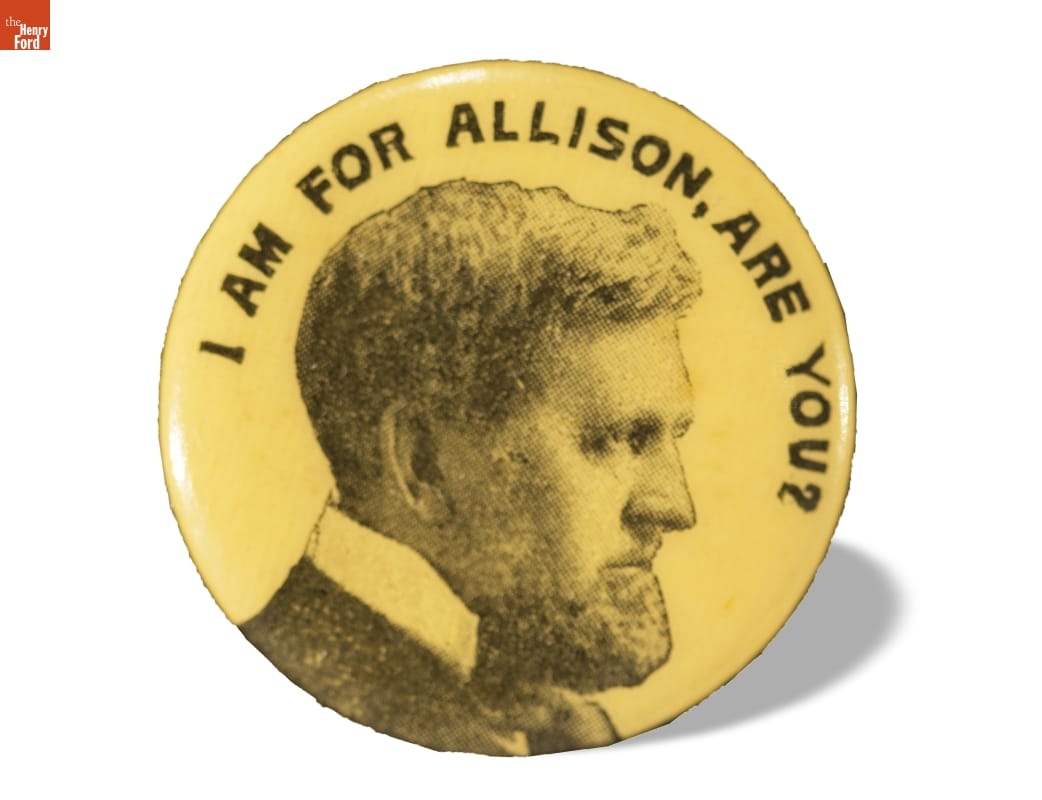
- William Allison Campaign Button,1896 - William B. Allison (1829-1908) was a long-serving Republican politician from Iowa. Iowans elected him to serve four terms in the U.S. House of Representatives and six in the U.S. Senate. In 1896, Allison was a candidate for the Republican presidential nomination. Iowa delegates backed their favorite son, but few others were "for Allison." Future president William McKinley easily won the nomination.
- 1896
- Collections - Artifact
William Allison Campaign Button,1896
William B. Allison (1829-1908) was a long-serving Republican politician from Iowa. Iowans elected him to serve four terms in the U.S. House of Representatives and six in the U.S. Senate. In 1896, Allison was a candidate for the Republican presidential nomination. Iowa delegates backed their favorite son, but few others were "for Allison." Future president William McKinley easily won the nomination.
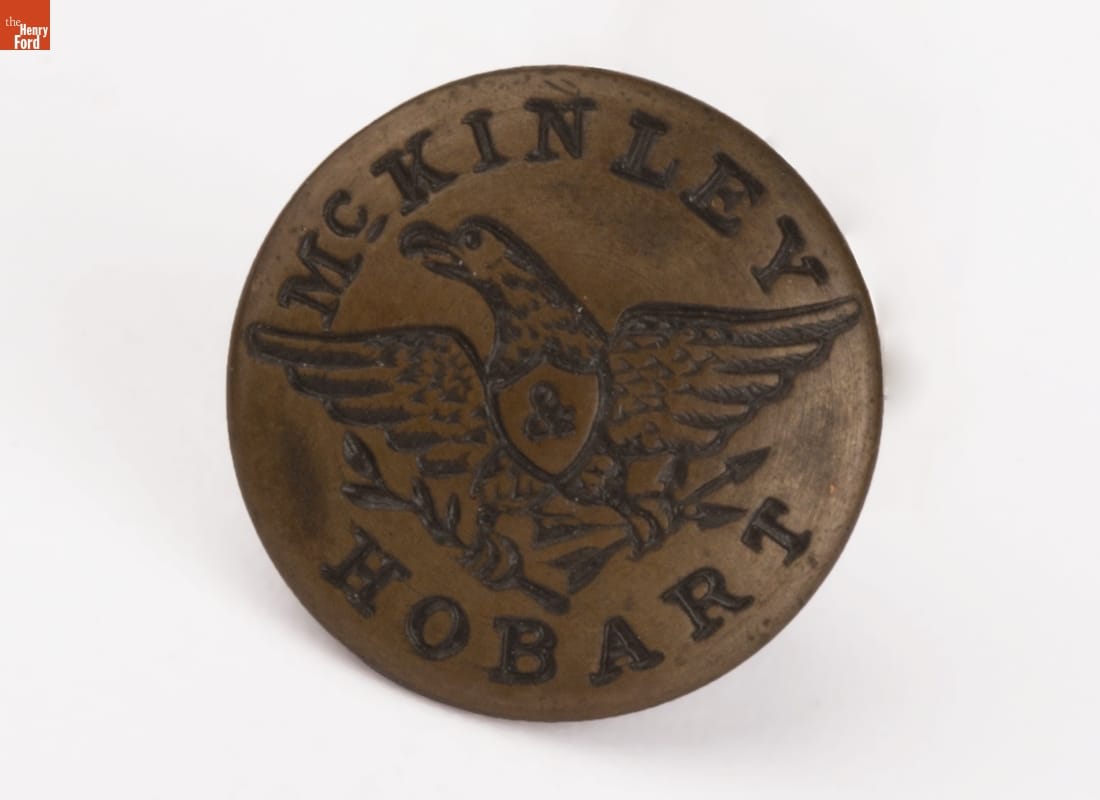
- McKinley-Hobart Campaign Button, 1896 - In 1896, America was still reeling from a depression that began in 1893 during the previous Democratic administration. The Republican Party promised a return to prosperity and nominated William McKinley for president. Thousands visited the nominee at his home in Canton, Ohio, where he delivered his campaign speeches. Voters approved and sent McKinley and his running mate, Garret Hobart, to Washington.
- 1896
- Collections - Artifact
McKinley-Hobart Campaign Button, 1896
In 1896, America was still reeling from a depression that began in 1893 during the previous Democratic administration. The Republican Party promised a return to prosperity and nominated William McKinley for president. Thousands visited the nominee at his home in Canton, Ohio, where he delivered his campaign speeches. Voters approved and sent McKinley and his running mate, Garret Hobart, to Washington.
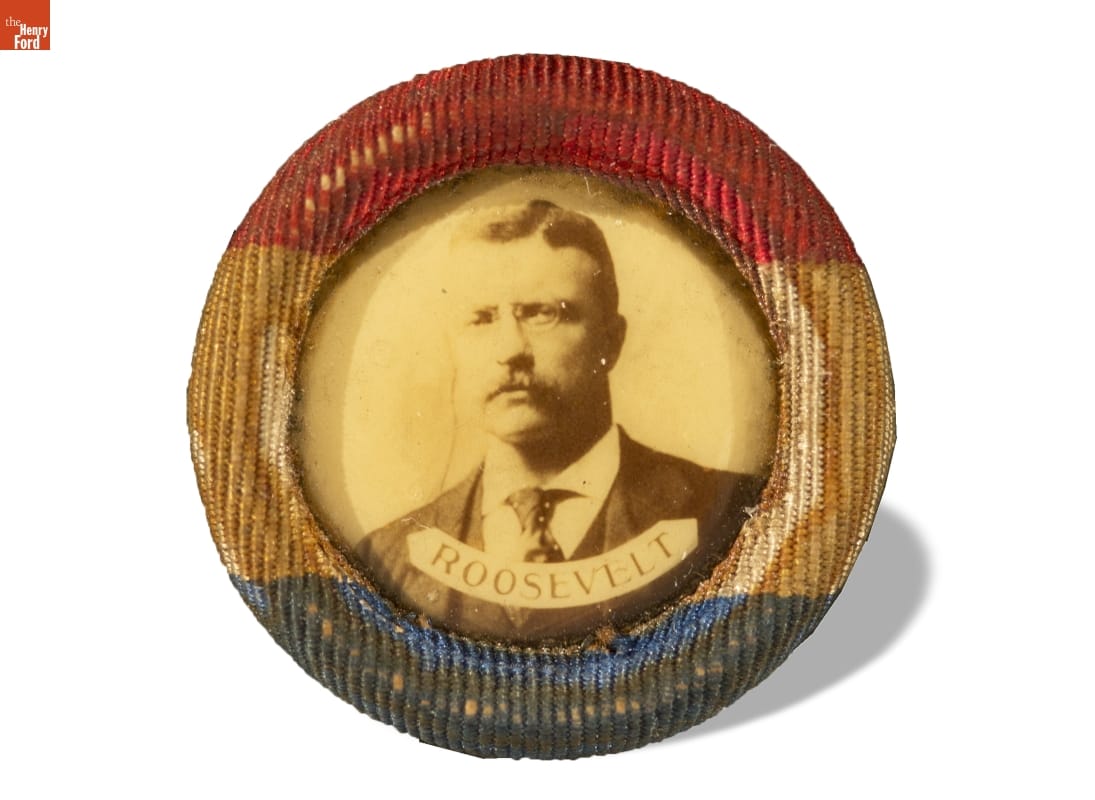
- Theodore Roosevelt Campaign Button, 1904, 1912 - Having assumed the presidency when McKinley was assassinated in 1901, Theodore Roosevelt was already immensely popular when he ran for re-election. His exuberance, interests, and skillful use of media enchanted the public. He was re-elected in a landslide in 1904. However, his running against Taft in 1912 split the Republican vote, allowing Democrat Woodrow Wilson to win the election.
- 1904-1912
- Collections - Artifact
Theodore Roosevelt Campaign Button, 1904, 1912
Having assumed the presidency when McKinley was assassinated in 1901, Theodore Roosevelt was already immensely popular when he ran for re-election. His exuberance, interests, and skillful use of media enchanted the public. He was re-elected in a landslide in 1904. However, his running against Taft in 1912 split the Republican vote, allowing Democrat Woodrow Wilson to win the election.
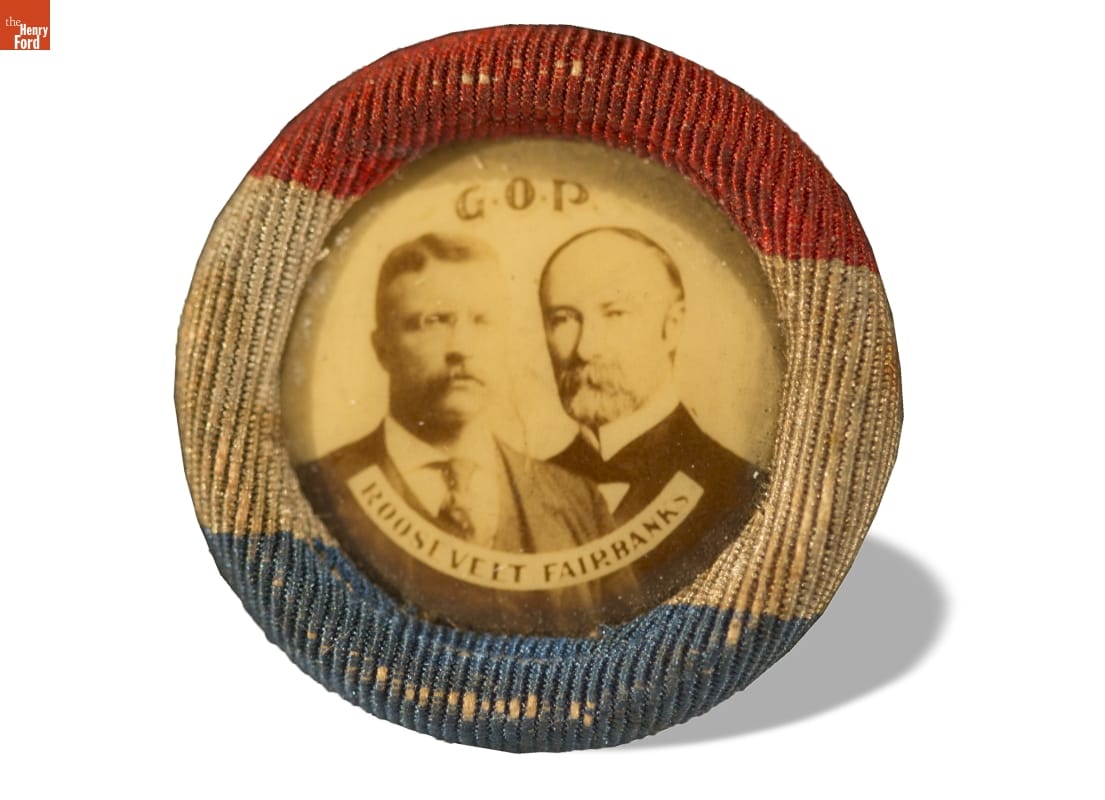
- Roosevelt-Fairbanks Campaign Button, 1904 - Having assumed the presidency when McKinley was assassinated in 1901, Theodore Roosevelt was already immensely popular when he ran for president in 1904. His colorful and exuberant personality, range of interests and achievements, and skillful use of media gained him a wide following. Picking conservative Senator Charles W. Fairbanks as his running mate, Roosevelt was reelected in a landslide.
- 1904
- Collections - Artifact
Roosevelt-Fairbanks Campaign Button, 1904
Having assumed the presidency when McKinley was assassinated in 1901, Theodore Roosevelt was already immensely popular when he ran for president in 1904. His colorful and exuberant personality, range of interests and achievements, and skillful use of media gained him a wide following. Picking conservative Senator Charles W. Fairbanks as his running mate, Roosevelt was reelected in a landslide.
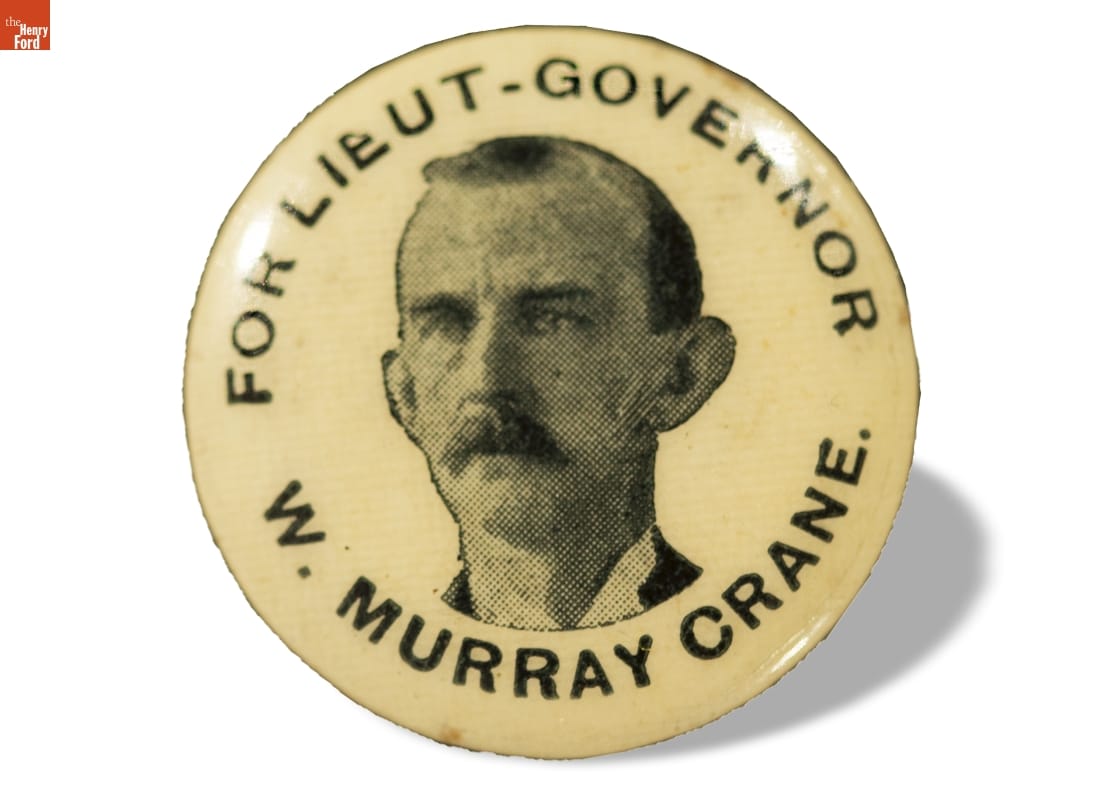
- Winthrop Murray Crane Campaign Button, 1896 -
- 1896
- Collections - Artifact
Winthrop Murray Crane Campaign Button, 1896