
Search
- Bryce Brothers "Buzz Star" Toy Tableware Set, 1907-1930 -
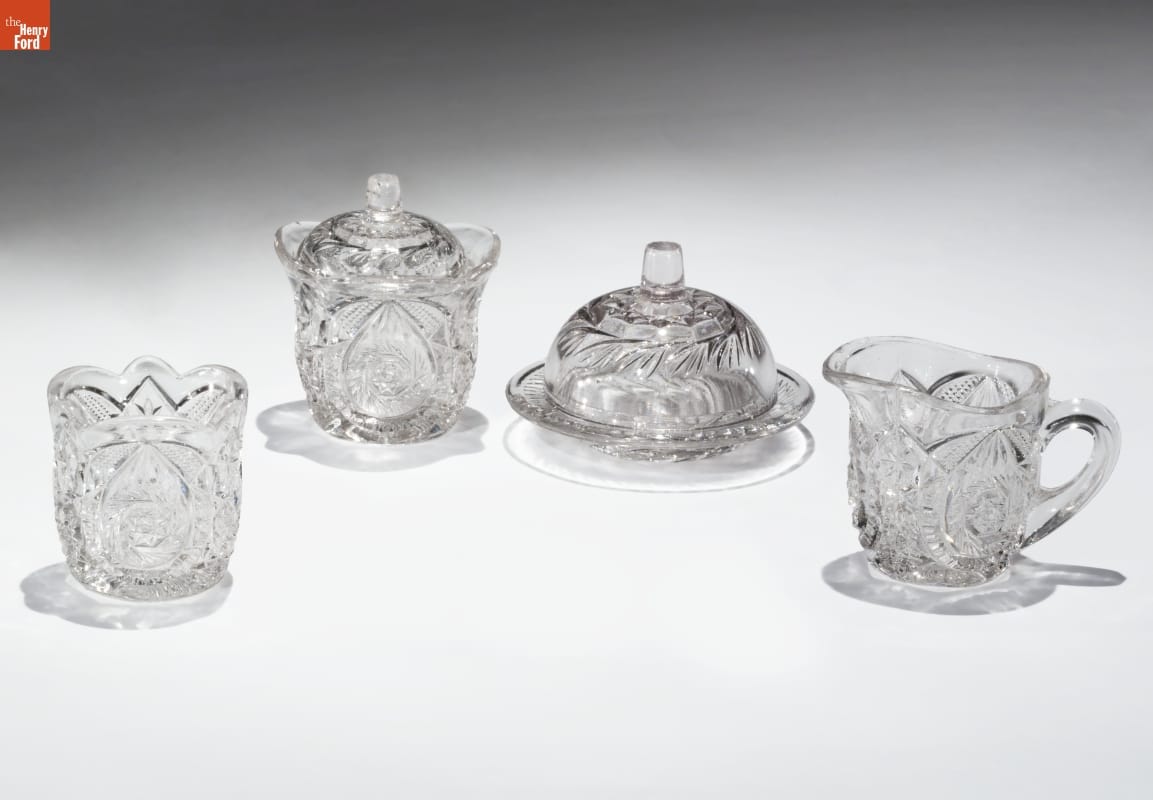
- 1907-1930
- Collections - Artifact
Bryce Brothers "Buzz Star" Toy Tableware Set, 1907-1930
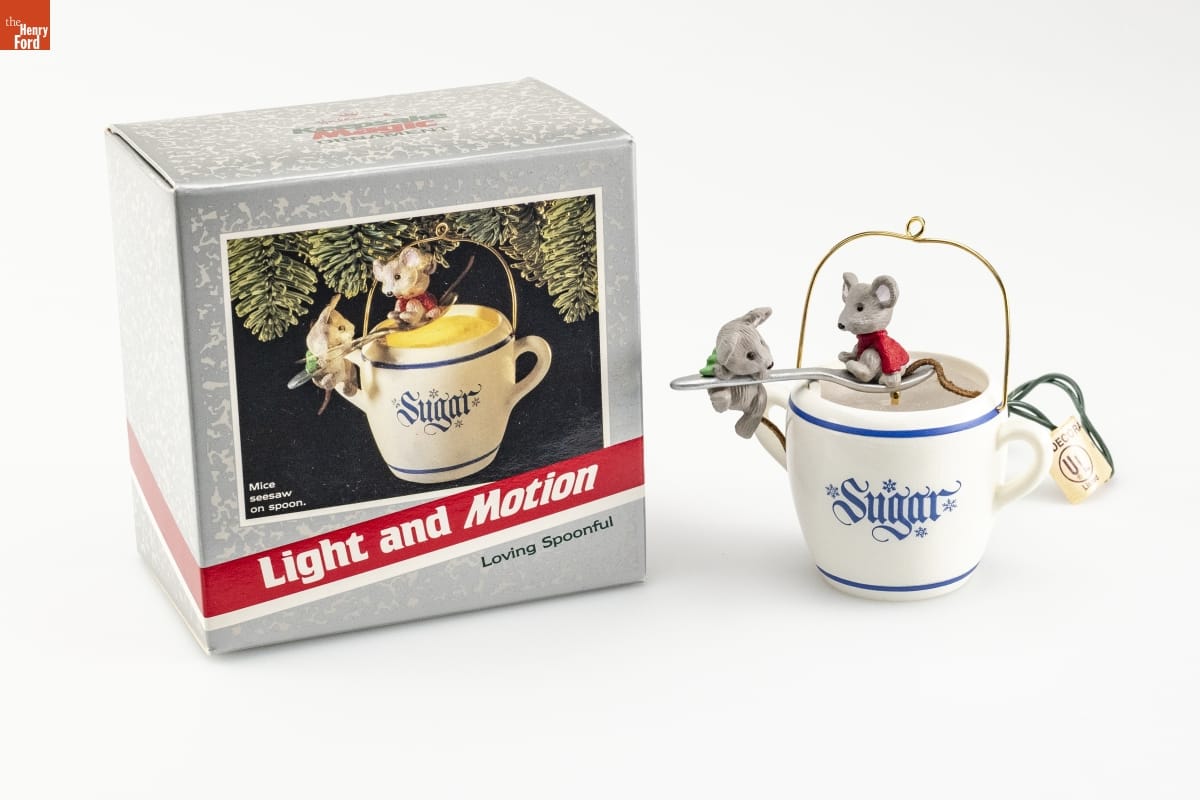
- Hallmark "Loving Spoonful" Christmas Ornament, 1989 - Already known for greeting cards, Hallmark introduced a line of Christmas ornaments in 1973. The company's annual release of an increasing array of ornaments revolutionized Christmas decorating, appealing to customers' interest in marking memories and milestones as well as expressing one's personality and unique tastes.
- 1989
- Collections - Artifact
Hallmark "Loving Spoonful" Christmas Ornament, 1989
Already known for greeting cards, Hallmark introduced a line of Christmas ornaments in 1973. The company's annual release of an increasing array of ornaments revolutionized Christmas decorating, appealing to customers' interest in marking memories and milestones as well as expressing one's personality and unique tastes.
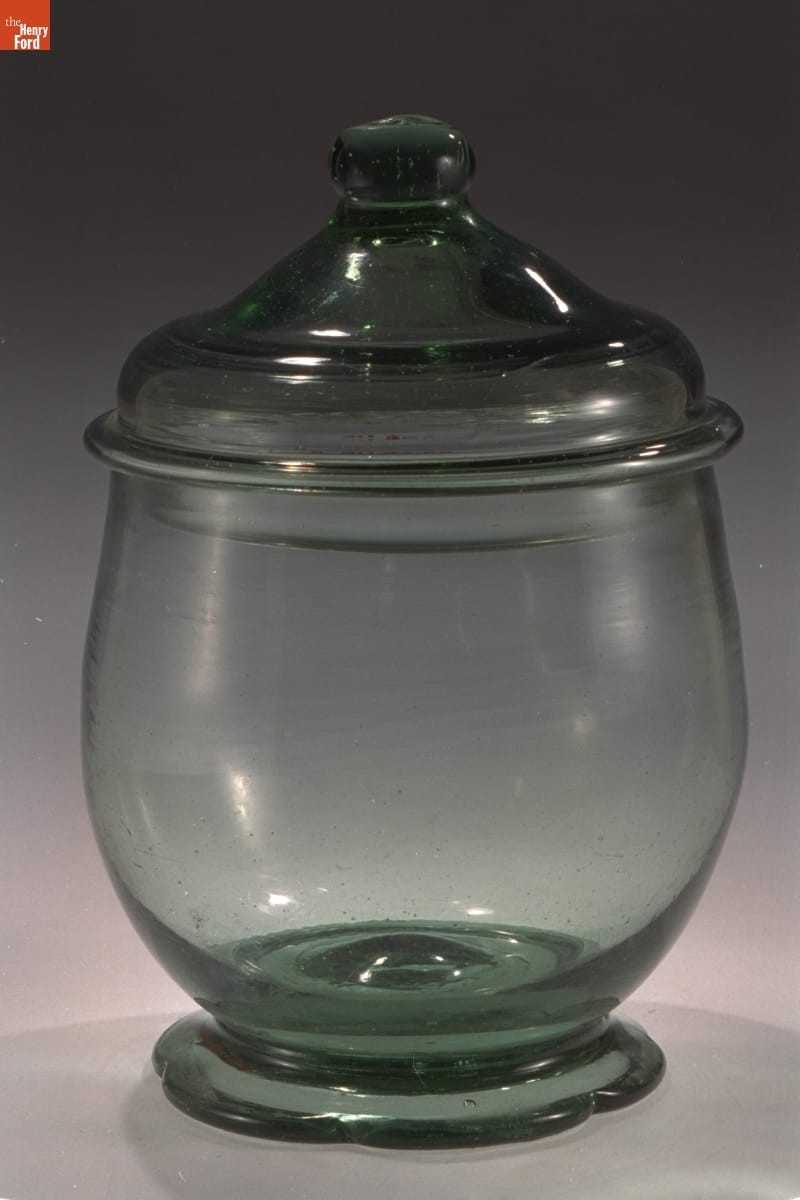
- Sugar Bowl, 1797-1840 - American glass factories made a variety of glass products for the early-nineteenth-century consumer. Glassblowers turned out bottles, flasks, tableware and other household items. Earlier products were affordable only to the well-to-do. But by the second quarter of the 19th century, a growing number of manufacturers made reasonably priced blown-glass items available to the expanding middle class.
- 1797-1840
- Collections - Artifact
Sugar Bowl, 1797-1840
American glass factories made a variety of glass products for the early-nineteenth-century consumer. Glassblowers turned out bottles, flasks, tableware and other household items. Earlier products were affordable only to the well-to-do. But by the second quarter of the 19th century, a growing number of manufacturers made reasonably priced blown-glass items available to the expanding middle class.
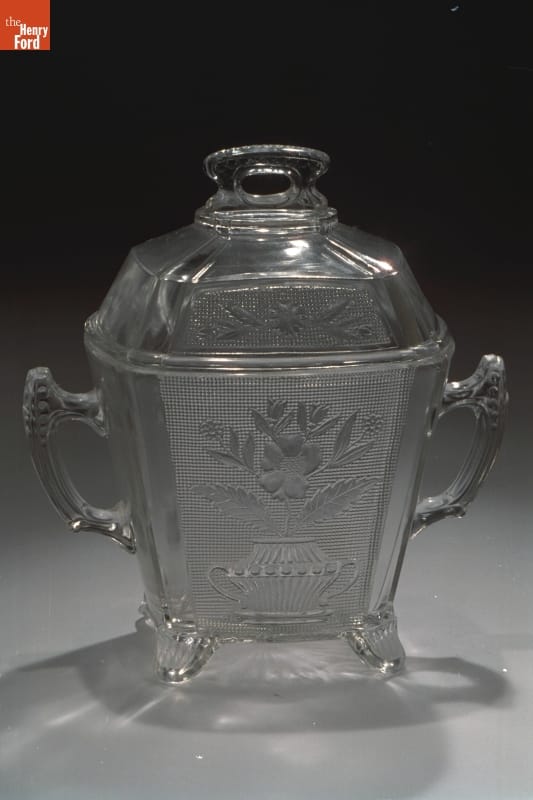
- Covered Sugar Bowl, 1879-1908 - Middle-class Americans in the late 19th century arrayed their dining tables with affordable pressed-glass tableware. These items, usually sold in sets, came in a wide variety of patterns, colors and styles. These decorative pieces -- like this sugar bowl -- communicated a family's status and taste to visitors and guests.
- 1879-1908
- Collections - Artifact
Covered Sugar Bowl, 1879-1908
Middle-class Americans in the late 19th century arrayed their dining tables with affordable pressed-glass tableware. These items, usually sold in sets, came in a wide variety of patterns, colors and styles. These decorative pieces -- like this sugar bowl -- communicated a family's status and taste to visitors and guests.
- Cut Glass Tableware, 1855-1870 -
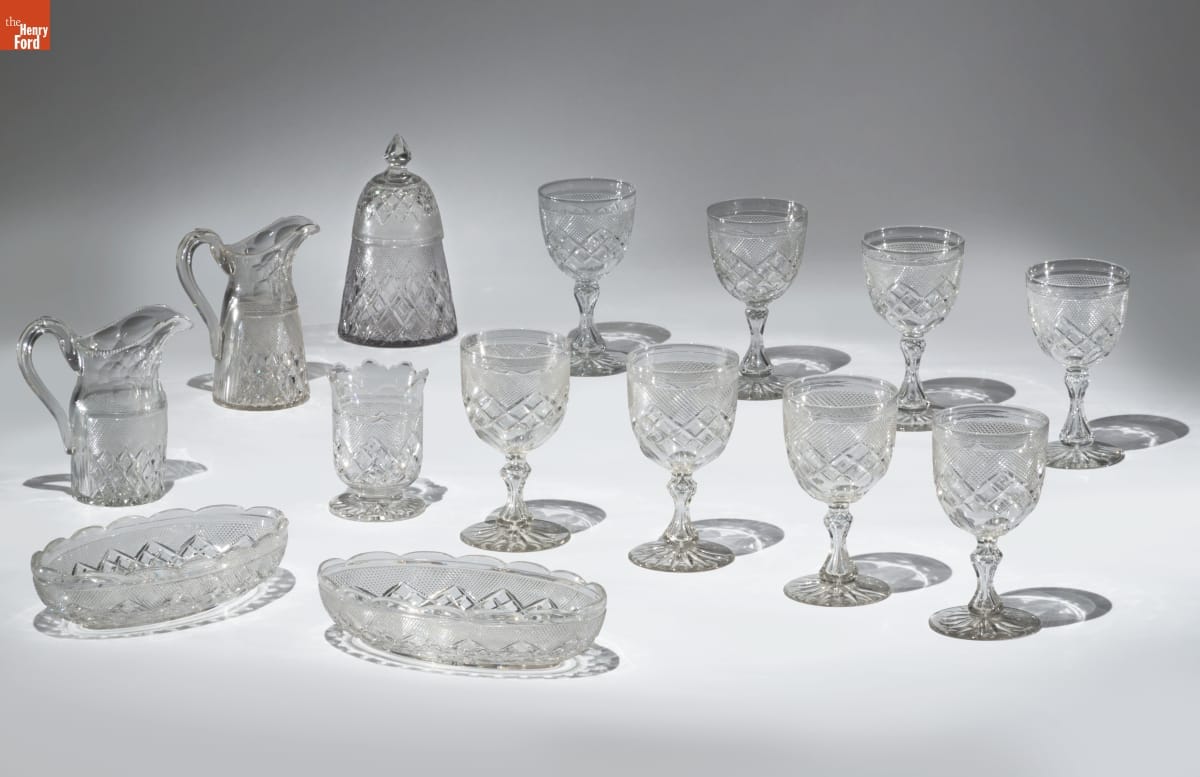
- 1855-1870
- Collections - Artifact
Cut Glass Tableware, 1855-1870
- Covered Sugar Bowl, 1874-1895 - Middle-class Americans in the late 19th century arrayed their dining tables with affordable pressed-glass tableware. These items, usually sold in sets, came in a wide variety of patterns, colors and styles. These decorative pieces -- like this sugar bowl -- communicated a family's status and taste to visitors and guests.
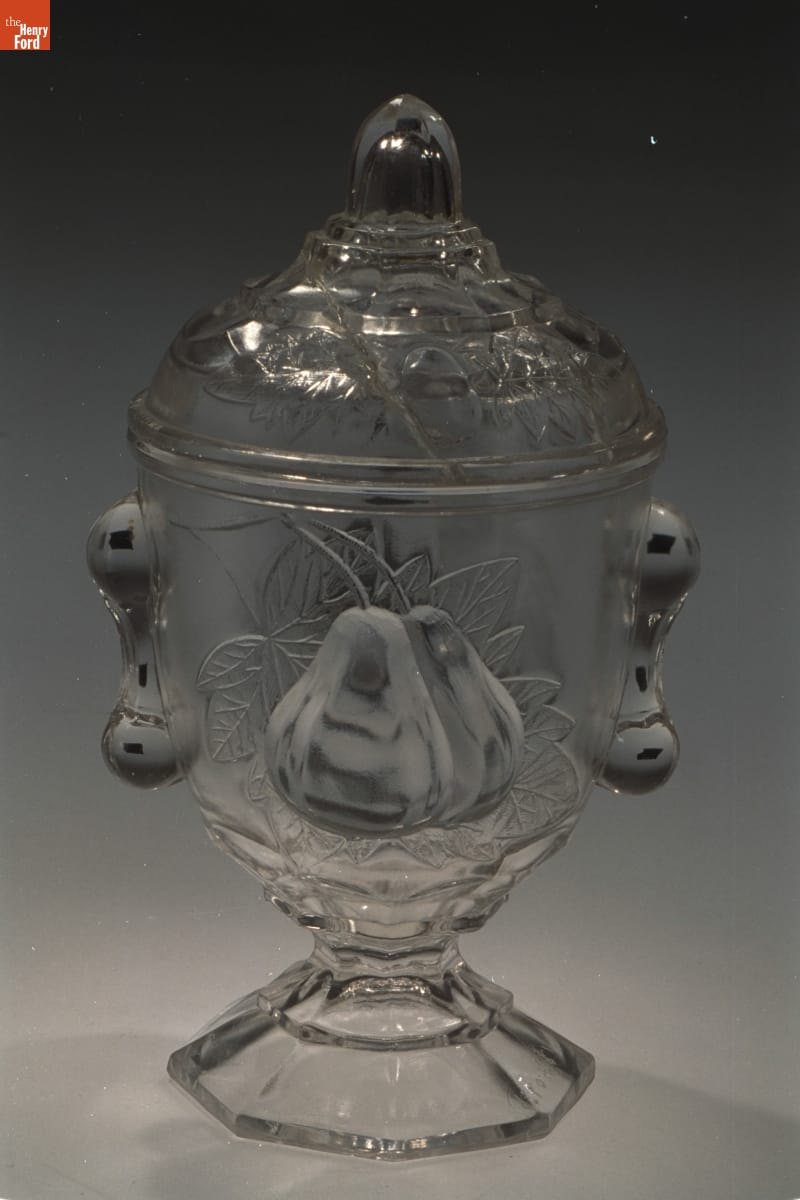
- 1874-1895
- Collections - Artifact
Covered Sugar Bowl, 1874-1895
Middle-class Americans in the late 19th century arrayed their dining tables with affordable pressed-glass tableware. These items, usually sold in sets, came in a wide variety of patterns, colors and styles. These decorative pieces -- like this sugar bowl -- communicated a family's status and taste to visitors and guests.
- Sugar Bowl, 1828-1845 - Pewter goods could be found in many American homes and public buildings in the late 18th and early 19th centuries. Most Americans of modest means could afford to have pewter spoons, tankards, dishes, plates or other items, such as this covered sugar bowl.
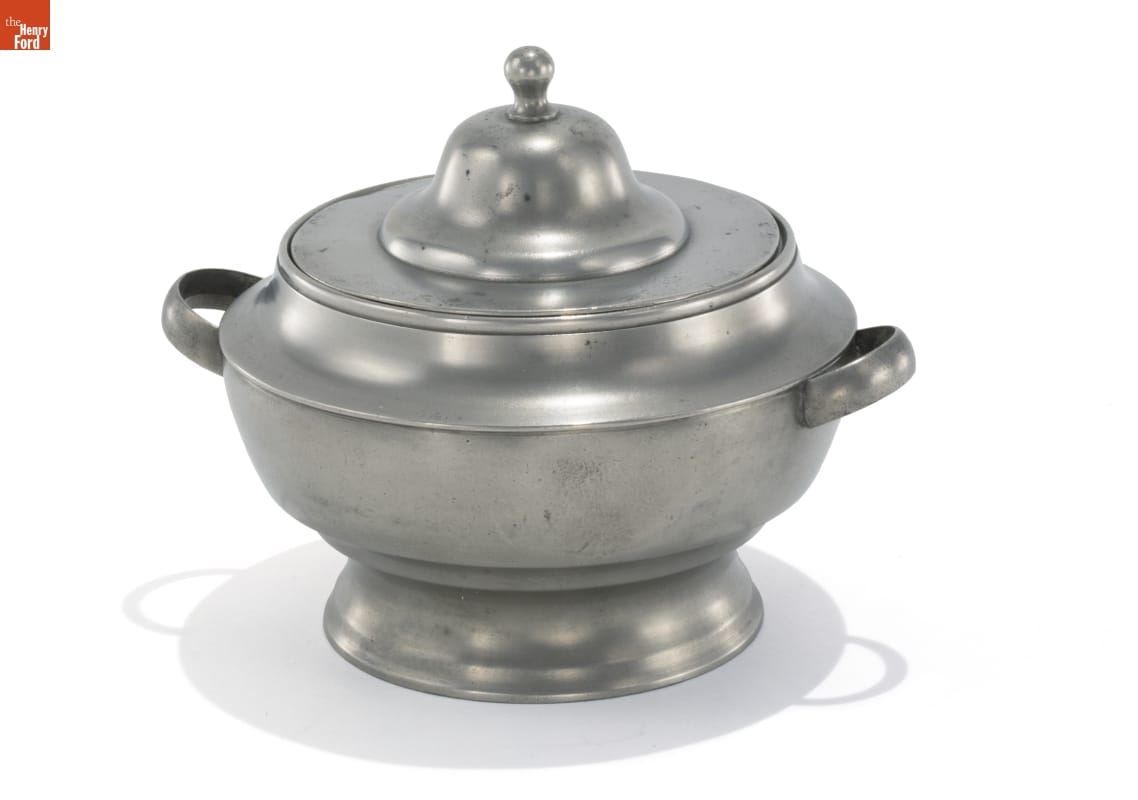
- 1828-1845
- Collections - Artifact
Sugar Bowl, 1828-1845
Pewter goods could be found in many American homes and public buildings in the late 18th and early 19th centuries. Most Americans of modest means could afford to have pewter spoons, tankards, dishes, plates or other items, such as this covered sugar bowl.
- Sugar Bowl, 1835-1850 - Mechanically pressed glass was an innovation in glass history, making decorative, "patterned" glass available to a broad audience. One of the earliest types of pressed glass, dating to the 1830s is known as "Lacy Glass". Complex stippled patterns were developed to help hide technical defects caused by early presses, when the glass gather was cut off and dropped into a mold.
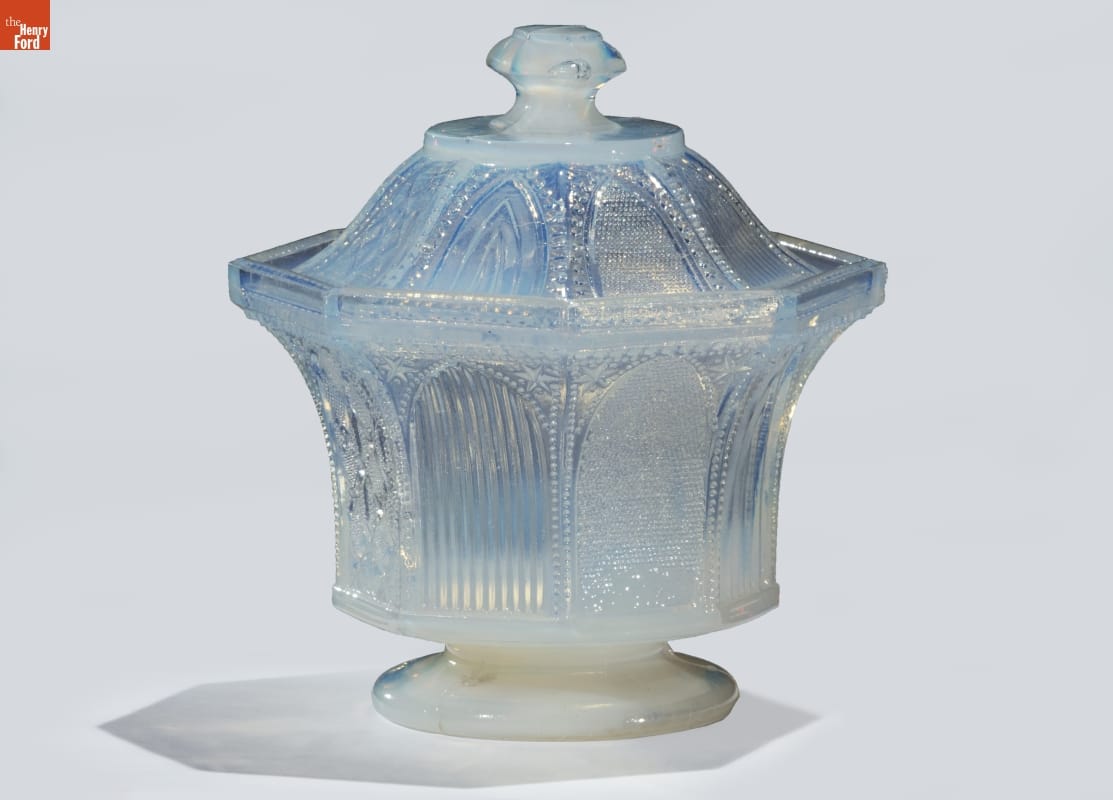
- 1835-1850
- Collections - Artifact
Sugar Bowl, 1835-1850
Mechanically pressed glass was an innovation in glass history, making decorative, "patterned" glass available to a broad audience. One of the earliest types of pressed glass, dating to the 1830s is known as "Lacy Glass". Complex stippled patterns were developed to help hide technical defects caused by early presses, when the glass gather was cut off and dropped into a mold.
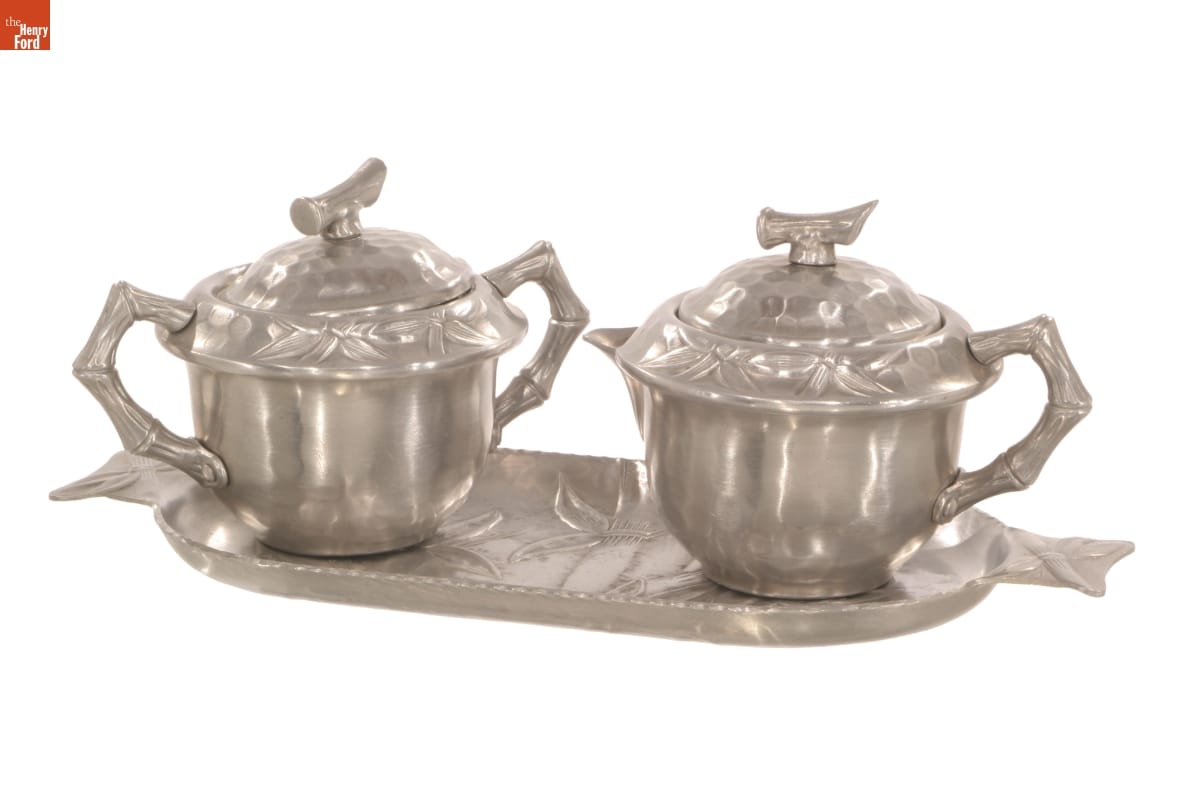
- Everlast "Bali Bamboo" Sugar and Creamer Set, 1948-1959 - In 1932, Louis Schnitzer and Nathan Gelfman formed Everlast Metal Products Corporation, producing high-quality, hand-forged aluminum giftware. In an era of growing uniformity via factory production, the "made by hand" aspect of these products held an aesthetic appeal for consumers. Everlast's most successful line, "Bali Bamboo," was a direct result of America's fascination with the South Pacific following World War II.
- 1948-1959
- Collections - Artifact
Everlast "Bali Bamboo" Sugar and Creamer Set, 1948-1959
In 1932, Louis Schnitzer and Nathan Gelfman formed Everlast Metal Products Corporation, producing high-quality, hand-forged aluminum giftware. In an era of growing uniformity via factory production, the "made by hand" aspect of these products held an aesthetic appeal for consumers. Everlast's most successful line, "Bali Bamboo," was a direct result of America's fascination with the South Pacific following World War II.
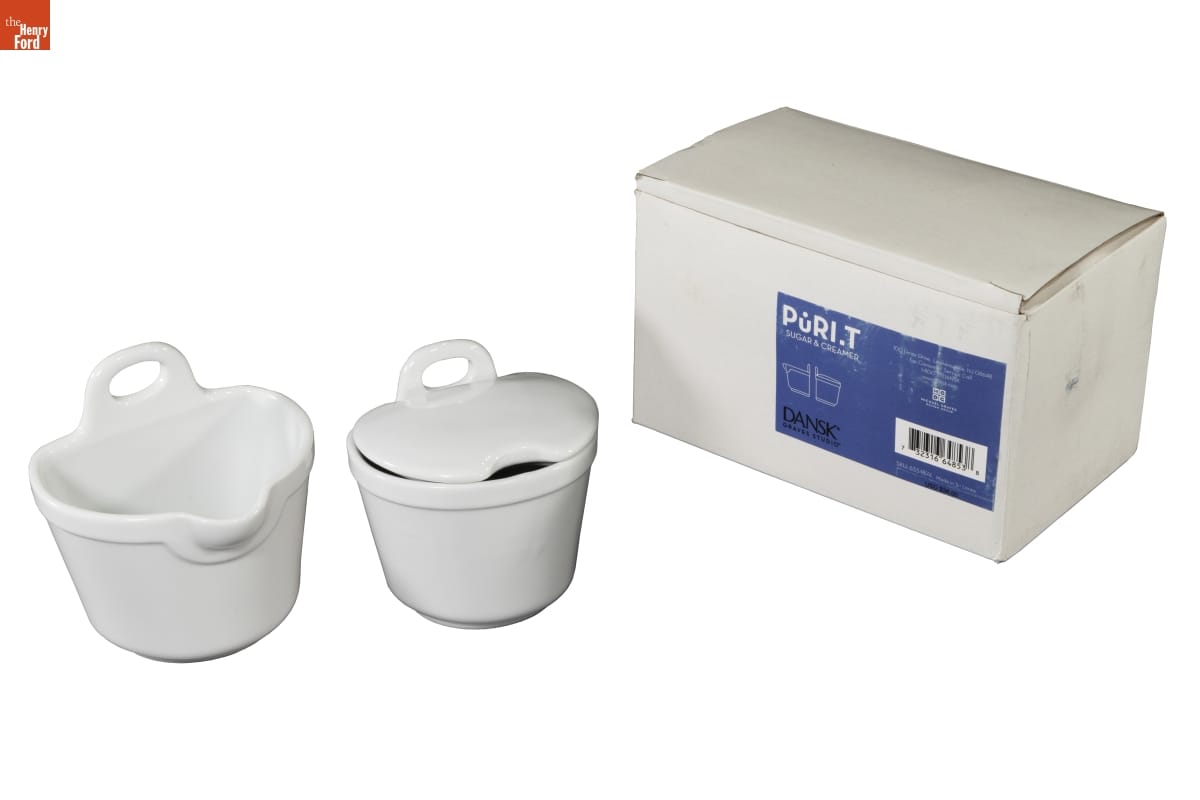
- "PuRI.T" Sugar & Creamer Set, 2005 - Starting in the early 1980s--and already established as an internationally recognized architect--Michael Graves began to pursue a parallel career as a product designer. Over the following three and a half decades he and his collaborators designed everything from humble household goods to limited edition luxury items for clients as diverse as Steuben, Alessi, Target, J. C. Penney, and Disney.
- 2005
- Collections - Artifact
"PuRI.T" Sugar & Creamer Set, 2005
Starting in the early 1980s--and already established as an internationally recognized architect--Michael Graves began to pursue a parallel career as a product designer. Over the following three and a half decades he and his collaborators designed everything from humble household goods to limited edition luxury items for clients as diverse as Steuben, Alessi, Target, J. C. Penney, and Disney.