
Search
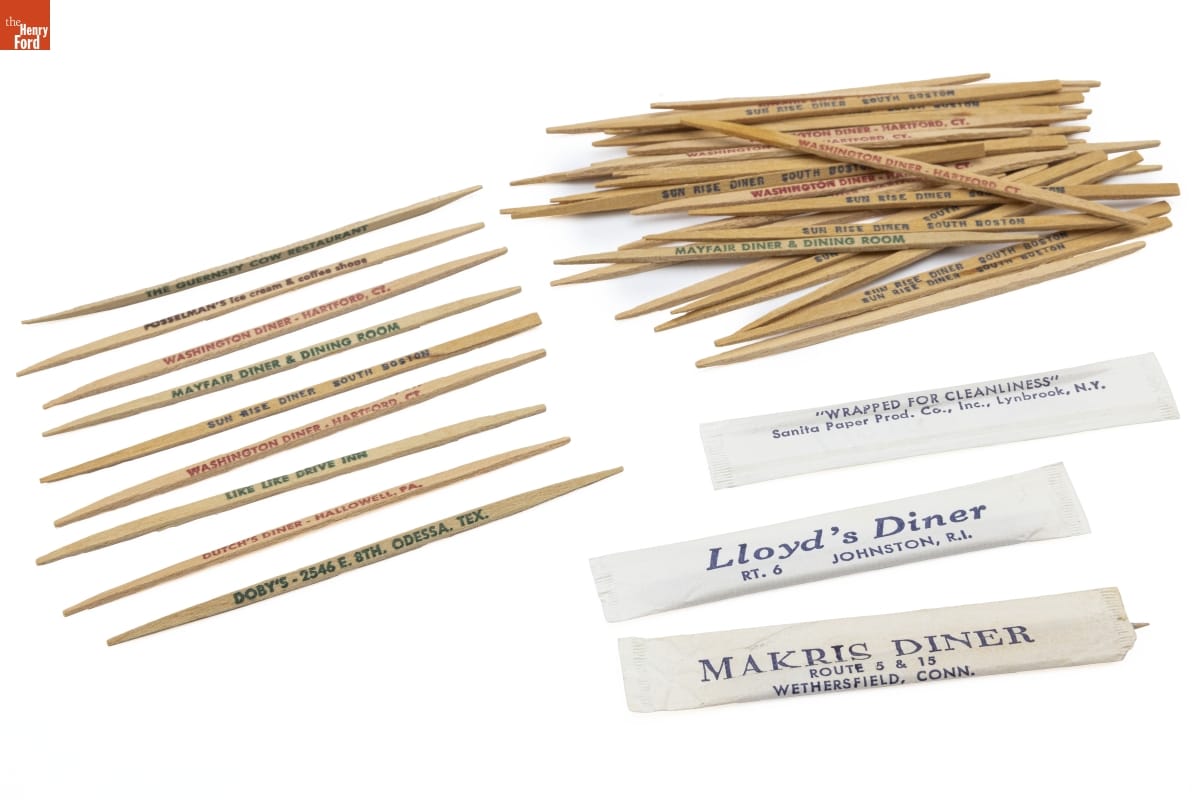
- Monogrammed Diner Toothpicks, 1950-1960 -
- 1950-1960
- Collections - Artifact
Monogrammed Diner Toothpicks, 1950-1960
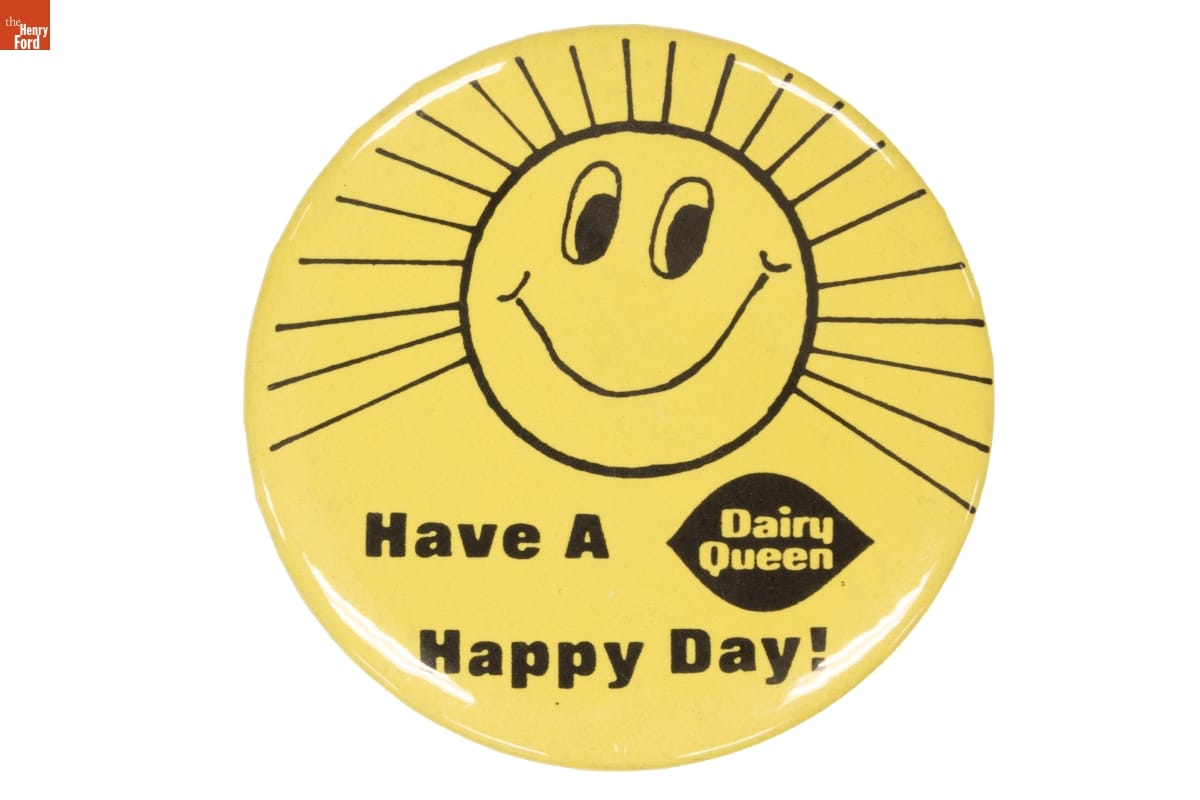
- "Have A Happy Day! Dairy Queen" Button, 1978-1984 - The first Dairy Queen restaurant opened in Joliet, Illinois, in 1940. Since then, the company expanded with franchises offering fast food and brand-named frozen dairy products, including Dilly Bars, Peanut Buster Parfaits, and Blizzards. Many customers remember the signature curly top on Dairy Queen soft-serve ice cream cones. A franchise employee wore this button in the late 1970s and early 1980s.
- 1978-1984
- Collections - Artifact
"Have A Happy Day! Dairy Queen" Button, 1978-1984
The first Dairy Queen restaurant opened in Joliet, Illinois, in 1940. Since then, the company expanded with franchises offering fast food and brand-named frozen dairy products, including Dilly Bars, Peanut Buster Parfaits, and Blizzards. Many customers remember the signature curly top on Dairy Queen soft-serve ice cream cones. A franchise employee wore this button in the late 1970s and early 1980s.
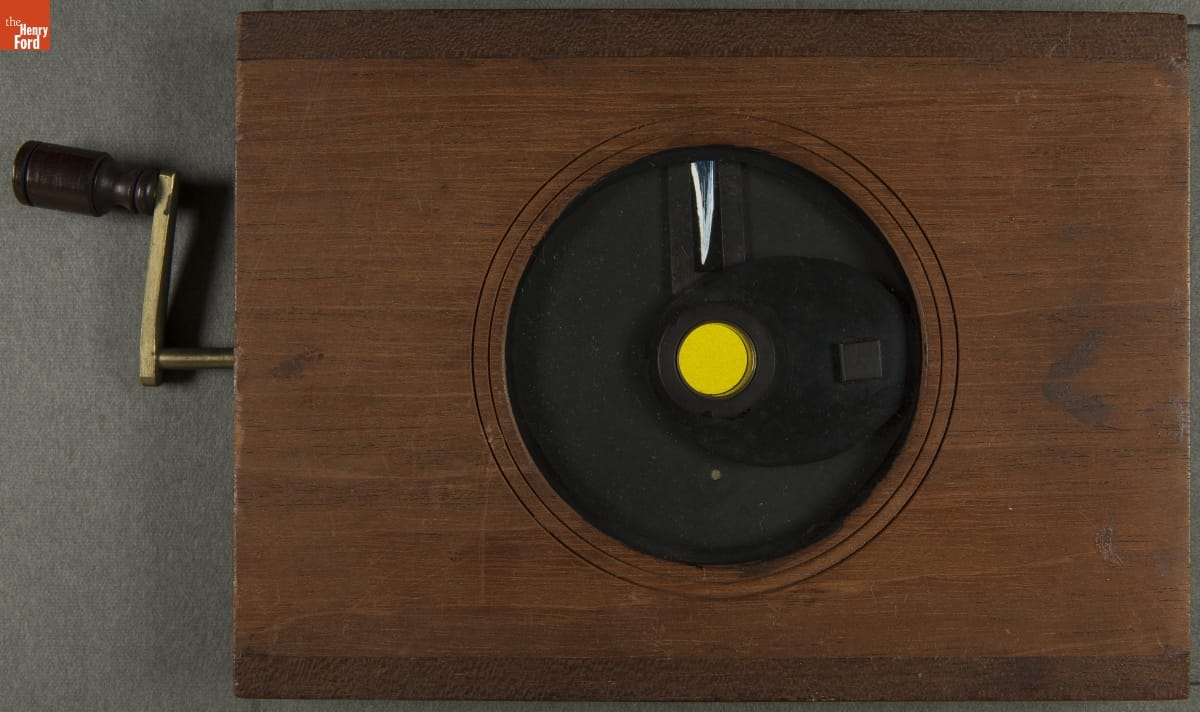
- Mechanical Lantern Slide, Movement of a Comet, 1860-1900 - Magic lanterns use a concave mirror and light source to project images on glass slides with painted or photographic scenes. Developed in the 17th century, magic lanterns predate slide projectors and motion pictures. In the hands of magicians, they became "lanterns of fright," projecting wondrous images and apparitions. Slide themes ranged widely: exotic travel, folklore, advertising, history, science, and art.
- 1860-1900
- Collections - Artifact
Mechanical Lantern Slide, Movement of a Comet, 1860-1900
Magic lanterns use a concave mirror and light source to project images on glass slides with painted or photographic scenes. Developed in the 17th century, magic lanterns predate slide projectors and motion pictures. In the hands of magicians, they became "lanterns of fright," projecting wondrous images and apparitions. Slide themes ranged widely: exotic travel, folklore, advertising, history, science, and art.
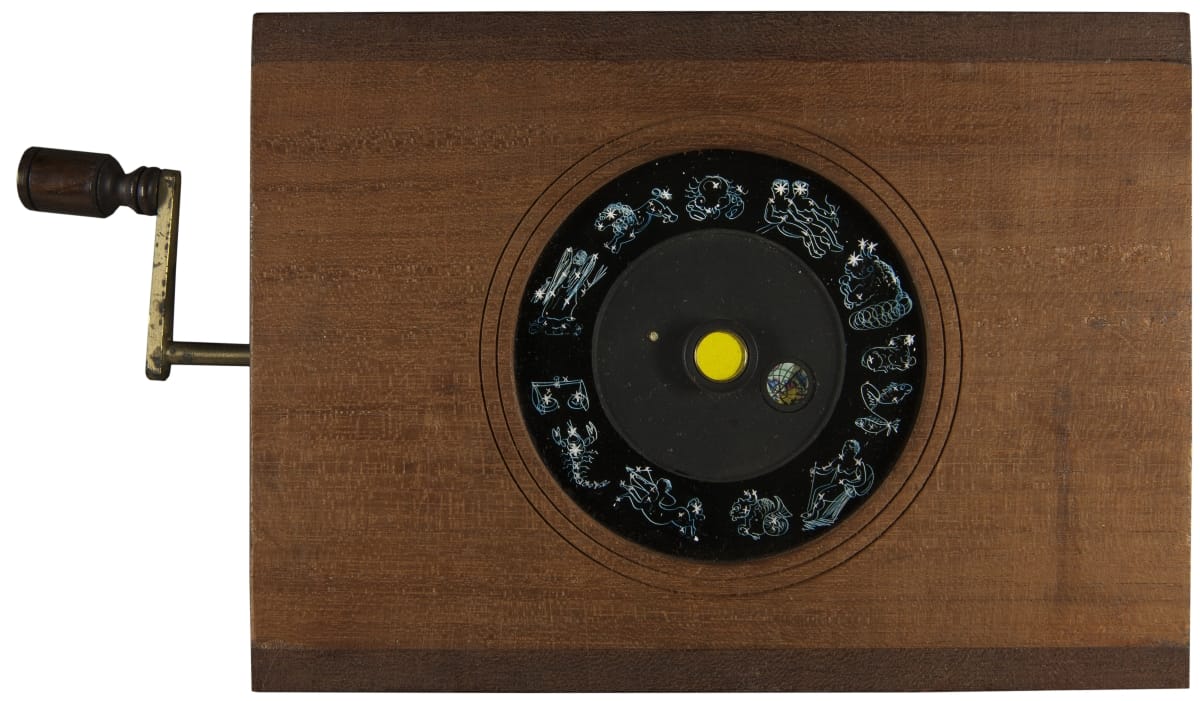
- Mechanical Lantern Slide, Earth's Orbit and Astrological Constellations, 1860-1900 - Magic lanterns use a concave mirror and light source to project images on glass slides with painted or photographic scenes. Developed in the 17th century, magic lanterns predate slide projectors and motion pictures. In the hands of magicians, they became "lanterns of fright," projecting wondrous images and apparitions. Slide themes ranged widely: exotic travel, folklore, advertising, history, science, and art.
- 1860-1900
- Collections - Artifact
Mechanical Lantern Slide, Earth's Orbit and Astrological Constellations, 1860-1900
Magic lanterns use a concave mirror and light source to project images on glass slides with painted or photographic scenes. Developed in the 17th century, magic lanterns predate slide projectors and motion pictures. In the hands of magicians, they became "lanterns of fright," projecting wondrous images and apparitions. Slide themes ranged widely: exotic travel, folklore, advertising, history, science, and art.
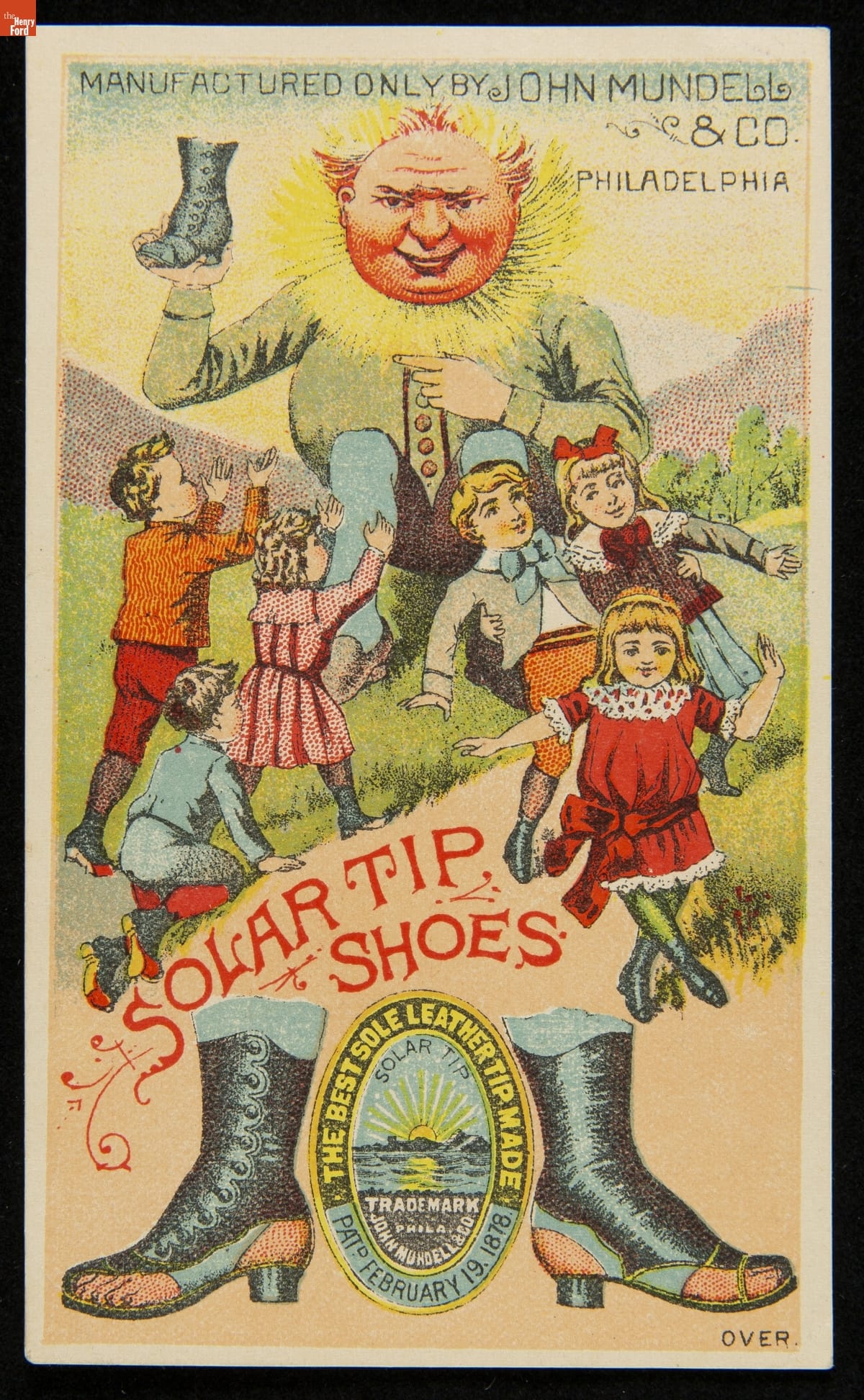
- Trade Card for Solar Tip Shoes, John Mundell & Co., 1870-1890 - As color printing gained momentum in the late 19th century, trade cards became a major means of advertising goods and services. Americans enjoyed and often saved the little advertisements found in product packages or distributed by local merchants. This trade card advertises Solar Tip Shoes sold by John Mundell & Company.
- 1870-1890
- Collections - Artifact
Trade Card for Solar Tip Shoes, John Mundell & Co., 1870-1890
As color printing gained momentum in the late 19th century, trade cards became a major means of advertising goods and services. Americans enjoyed and often saved the little advertisements found in product packages or distributed by local merchants. This trade card advertises Solar Tip Shoes sold by John Mundell & Company.
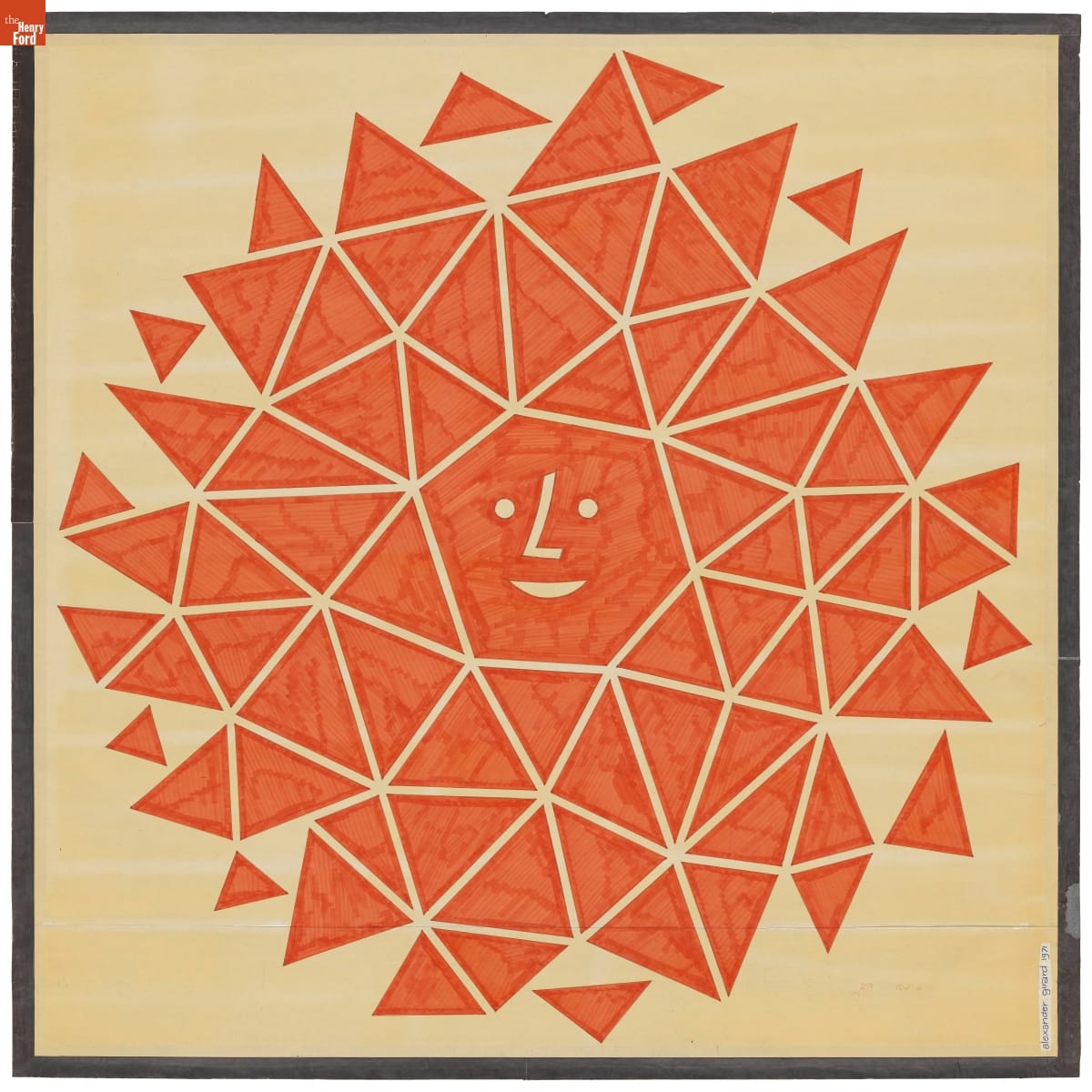
- "New Sun," Design Drawing by Alexander Girard for Herman Miller, 1971 - Alexander Girard, Herman Miller Textile Division's Director of Design, created a series of forty folk art-inspired graphic panels aptly named "Environmental Enrichment Panels" in 1972. They were meant to enrich the office environment, adorning the moveable walls of Robert Propst's Action Office II -- more commonly known as the cubicle. This drawing from 1971 laid out the design for the "New Sun" panel.
- 1971
- Collections - Artifact
"New Sun," Design Drawing by Alexander Girard for Herman Miller, 1971
Alexander Girard, Herman Miller Textile Division's Director of Design, created a series of forty folk art-inspired graphic panels aptly named "Environmental Enrichment Panels" in 1972. They were meant to enrich the office environment, adorning the moveable walls of Robert Propst's Action Office II -- more commonly known as the cubicle. This drawing from 1971 laid out the design for the "New Sun" panel.
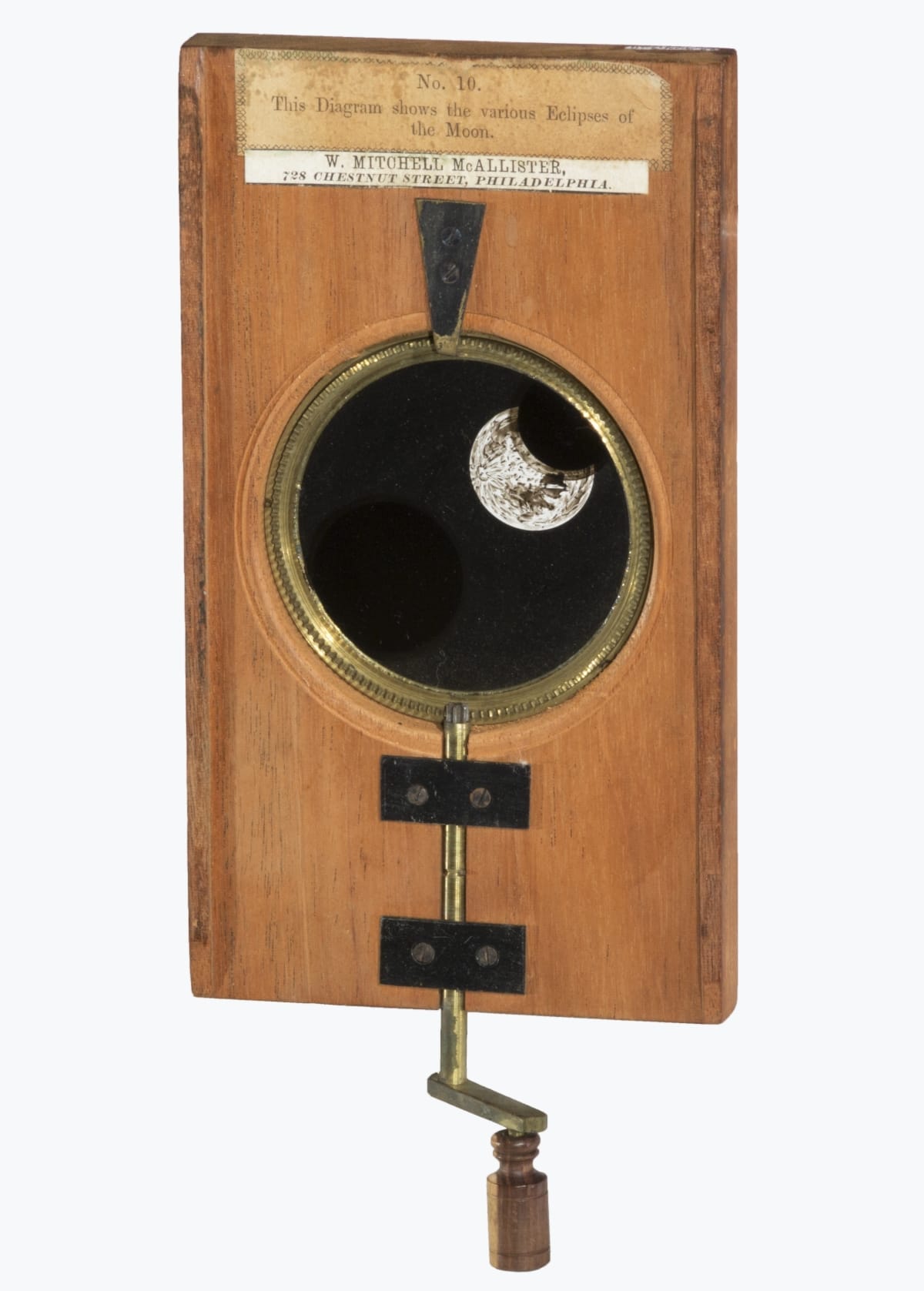
- Lantern Slide, Lunar Eclipses, 1872-1900 - Magic lanterns use a concave mirror and light source to project images on glass slides with painted or photographic scenes. Developed in the 17th century, magic lanterns predate slide projectors and motion pictures. In the hands of magicians, they became "lanterns of fright," projecting wondrous images and apparitions. Slide themes ranged widely: exotic travel, folklore, advertising, history, science, and art.
- 1872-1900
- Collections - Artifact
Lantern Slide, Lunar Eclipses, 1872-1900
Magic lanterns use a concave mirror and light source to project images on glass slides with painted or photographic scenes. Developed in the 17th century, magic lanterns predate slide projectors and motion pictures. In the hands of magicians, they became "lanterns of fright," projecting wondrous images and apparitions. Slide themes ranged widely: exotic travel, folklore, advertising, history, science, and art.
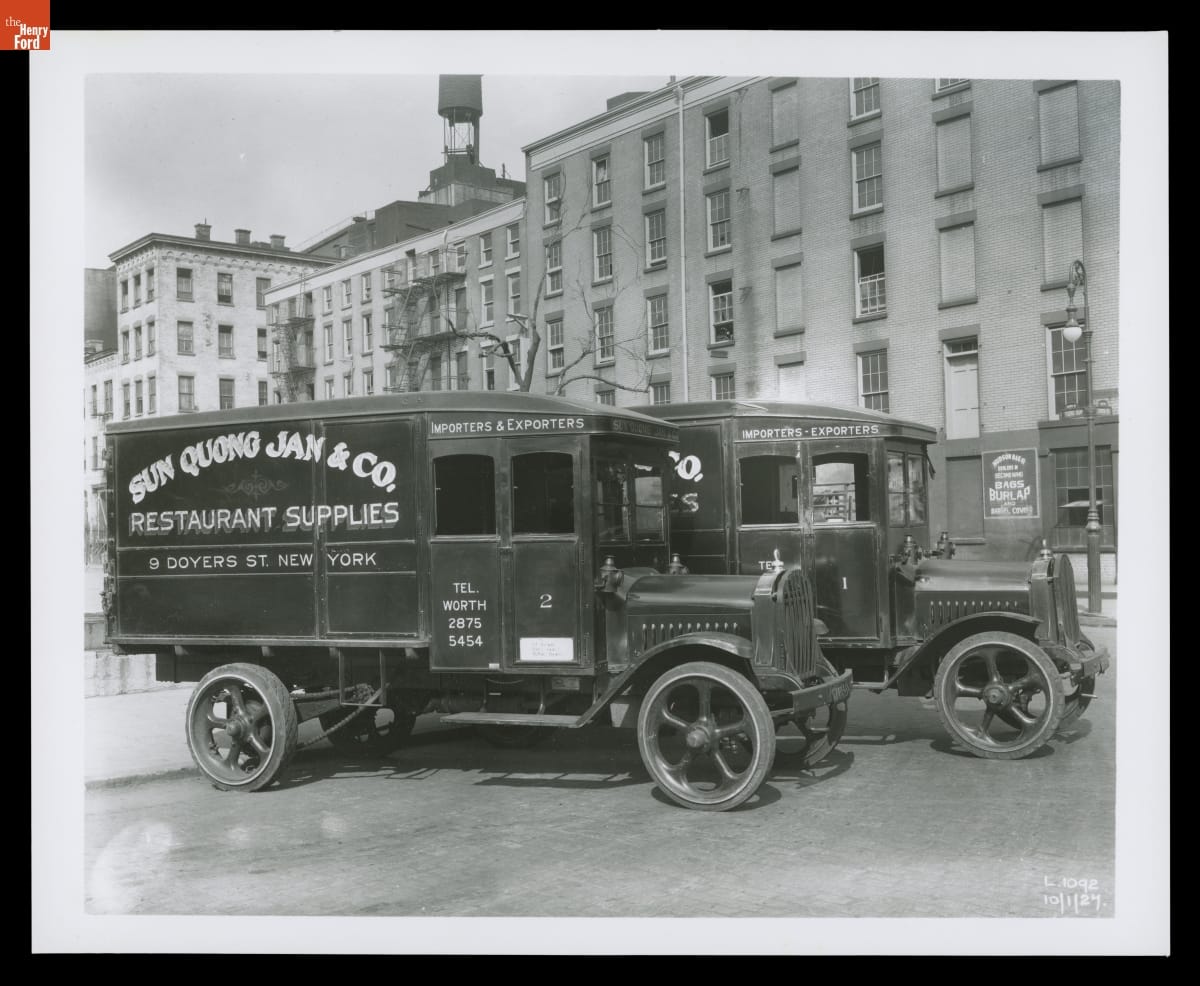
- Two Mack Model AB Trucks Used by Sun Quong Jan & Co. Restaurant Supplies, New York City, October 1927 - Founded in Brooklyn, New York, in 1900, Mack Brothers Company relocated to Allentown, Pennsylvania, in 1905 and adopted the name Mack Trucks in 1922. The company introduced its medium-duty Model AB truck in 1914. The model remained in production until 1936, and Mack built more than 50,000 units. Optional chain or worm-drive transmissions remained available on the AB to the end.
- October 01, 1927
- Collections - Artifact
Two Mack Model AB Trucks Used by Sun Quong Jan & Co. Restaurant Supplies, New York City, October 1927
Founded in Brooklyn, New York, in 1900, Mack Brothers Company relocated to Allentown, Pennsylvania, in 1905 and adopted the name Mack Trucks in 1922. The company introduced its medium-duty Model AB truck in 1914. The model remained in production until 1936, and Mack built more than 50,000 units. Optional chain or worm-drive transmissions remained available on the AB to the end.
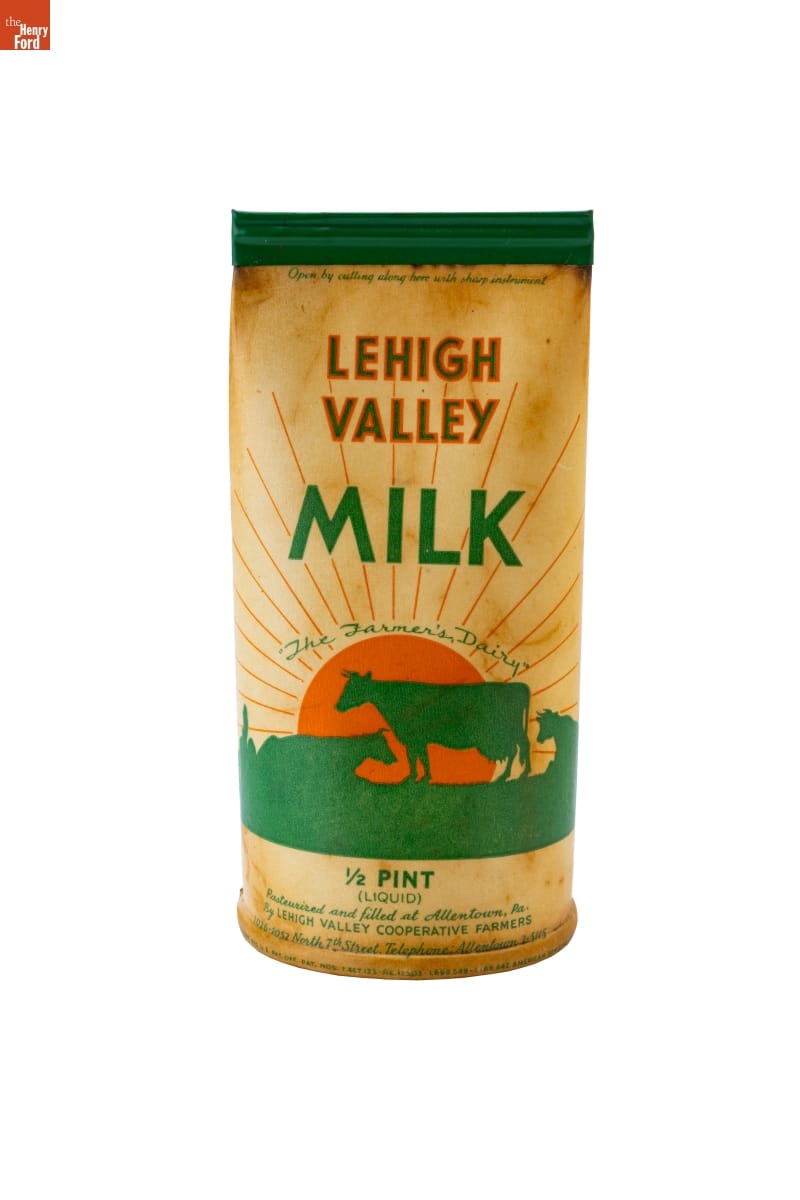
- Lehigh Valley Milk Carton -
- Collections - Artifact
Lehigh Valley Milk Carton
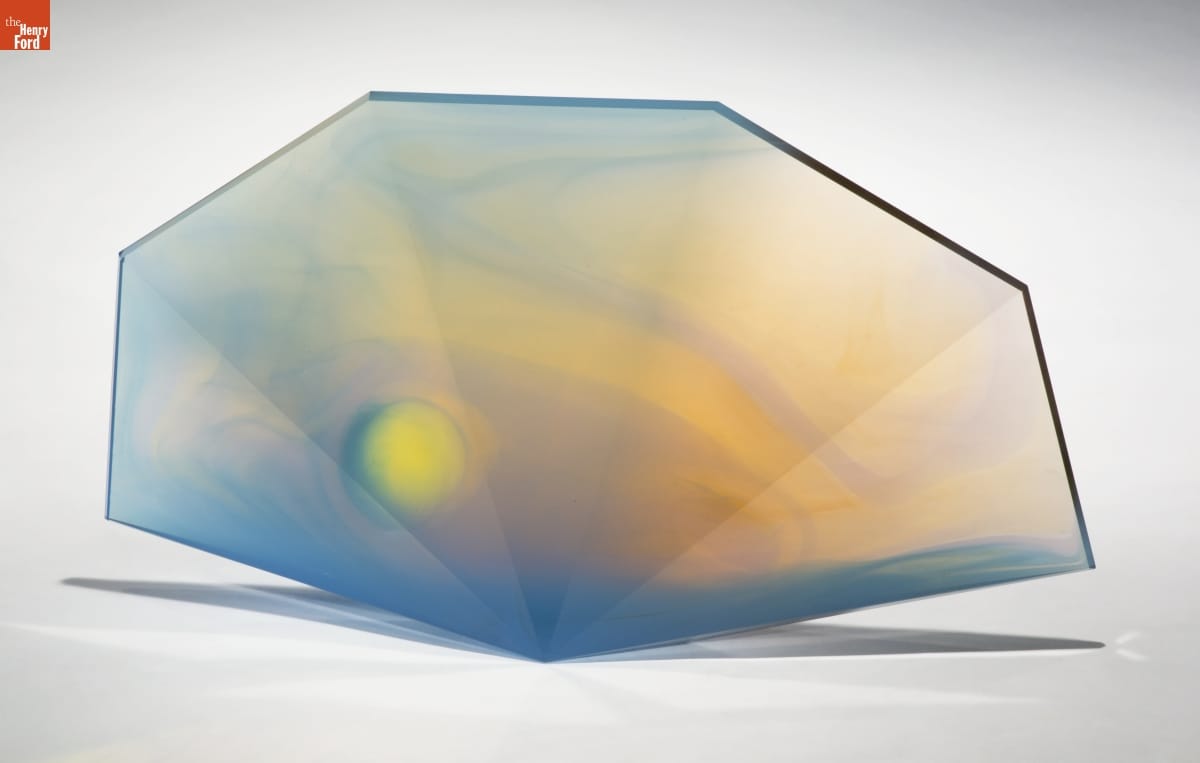
- "Obfuscated Skyscape" by Mark Peiser, 1992 - "For me, technique is not cheap -- it's imperative," asserts Mark Peiser. This contrasts with the comment made by Harvey Littleton, the founder of the studio glass movement, that, "Technique is cheap." Peiser creates innovative technical processes that express his ideas. His Innerspace Series (1983-1994) explores how to compose a solid three dimensional image within a mass of a different color.
- 1992
- Collections - Artifact
"Obfuscated Skyscape" by Mark Peiser, 1992
"For me, technique is not cheap -- it's imperative," asserts Mark Peiser. This contrasts with the comment made by Harvey Littleton, the founder of the studio glass movement, that, "Technique is cheap." Peiser creates innovative technical processes that express his ideas. His Innerspace Series (1983-1994) explores how to compose a solid three dimensional image within a mass of a different color.