
Search
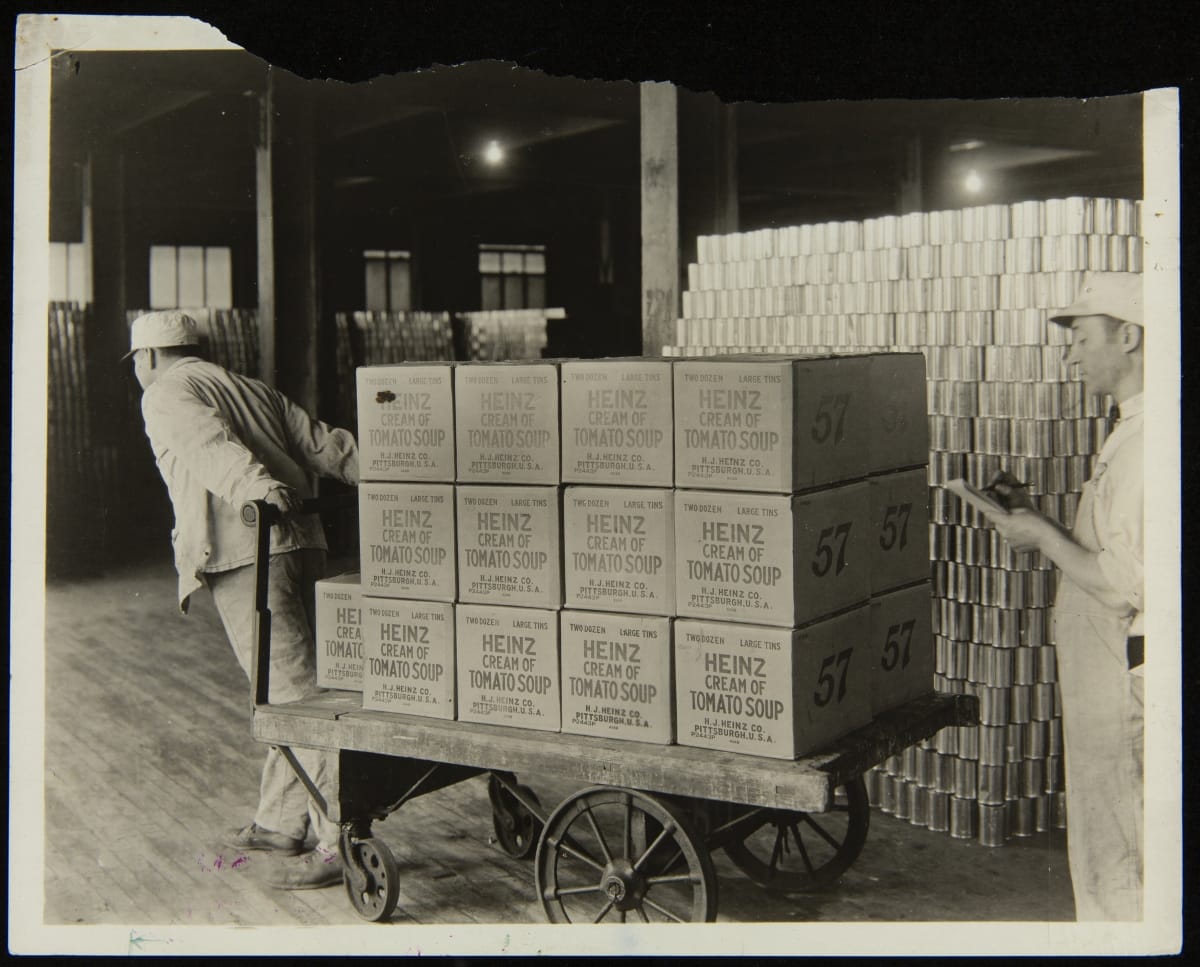
- Employee Moving Boxes of H. J. Heinz Cream of Tomato Soup, Pittsburgh, Pennsylvania, circa 1920 - Before complete mechanization of the manufacturing process, many tasks at the Heinz factory were done by hand. The H.J. Heinz Company documented the many departments of the manufacturing process through photographs. This photograph shows an employee moving boxes. These boxes were possibly heading for the shipping dock to be loaded onto a train or truck.
- circa 1920
- Collections - Artifact
Employee Moving Boxes of H. J. Heinz Cream of Tomato Soup, Pittsburgh, Pennsylvania, circa 1920
Before complete mechanization of the manufacturing process, many tasks at the Heinz factory were done by hand. The H.J. Heinz Company documented the many departments of the manufacturing process through photographs. This photograph shows an employee moving boxes. These boxes were possibly heading for the shipping dock to be loaded onto a train or truck.
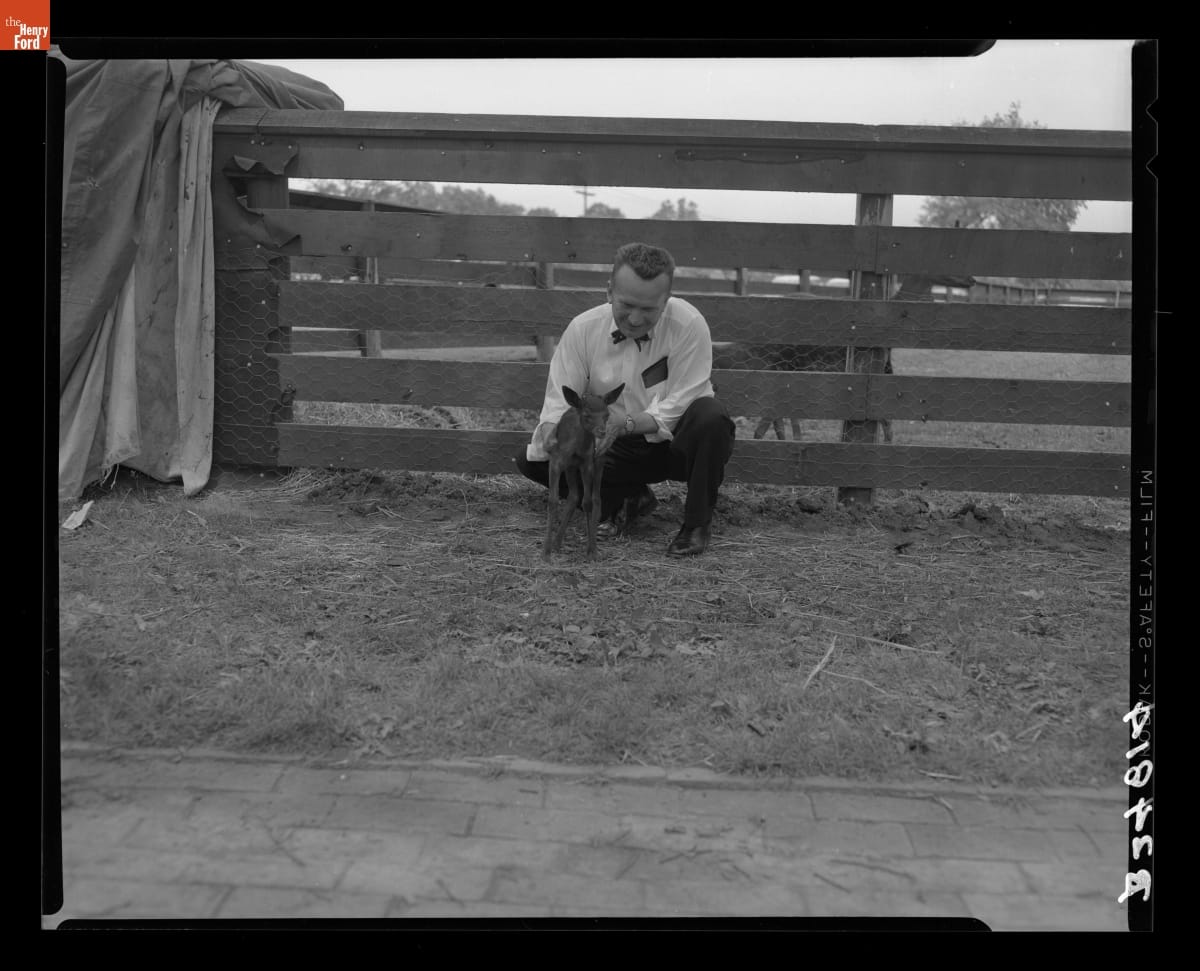
- Gus Munchow with a New Fawn in Greenfield Village, June 17, 1960 - Gustav Munchow became the gardener at Henry and Clara Ford's Fair Lane estate in Dearborn, Michigan, around 1930, after emigrating from Germany. Soon after, Henry asked him to landscape the gardens of the Cotswold Cottage, an English cottage Ford had recently moved to Greenfield Village. Munchow's work impressed the Fords. Munchow later led the grounds and maintenance departments for the Museum and Greenfield Village.
- June 17, 1960
- Collections - Artifact
Gus Munchow with a New Fawn in Greenfield Village, June 17, 1960
Gustav Munchow became the gardener at Henry and Clara Ford's Fair Lane estate in Dearborn, Michigan, around 1930, after emigrating from Germany. Soon after, Henry asked him to landscape the gardens of the Cotswold Cottage, an English cottage Ford had recently moved to Greenfield Village. Munchow's work impressed the Fords. Munchow later led the grounds and maintenance departments for the Museum and Greenfield Village.
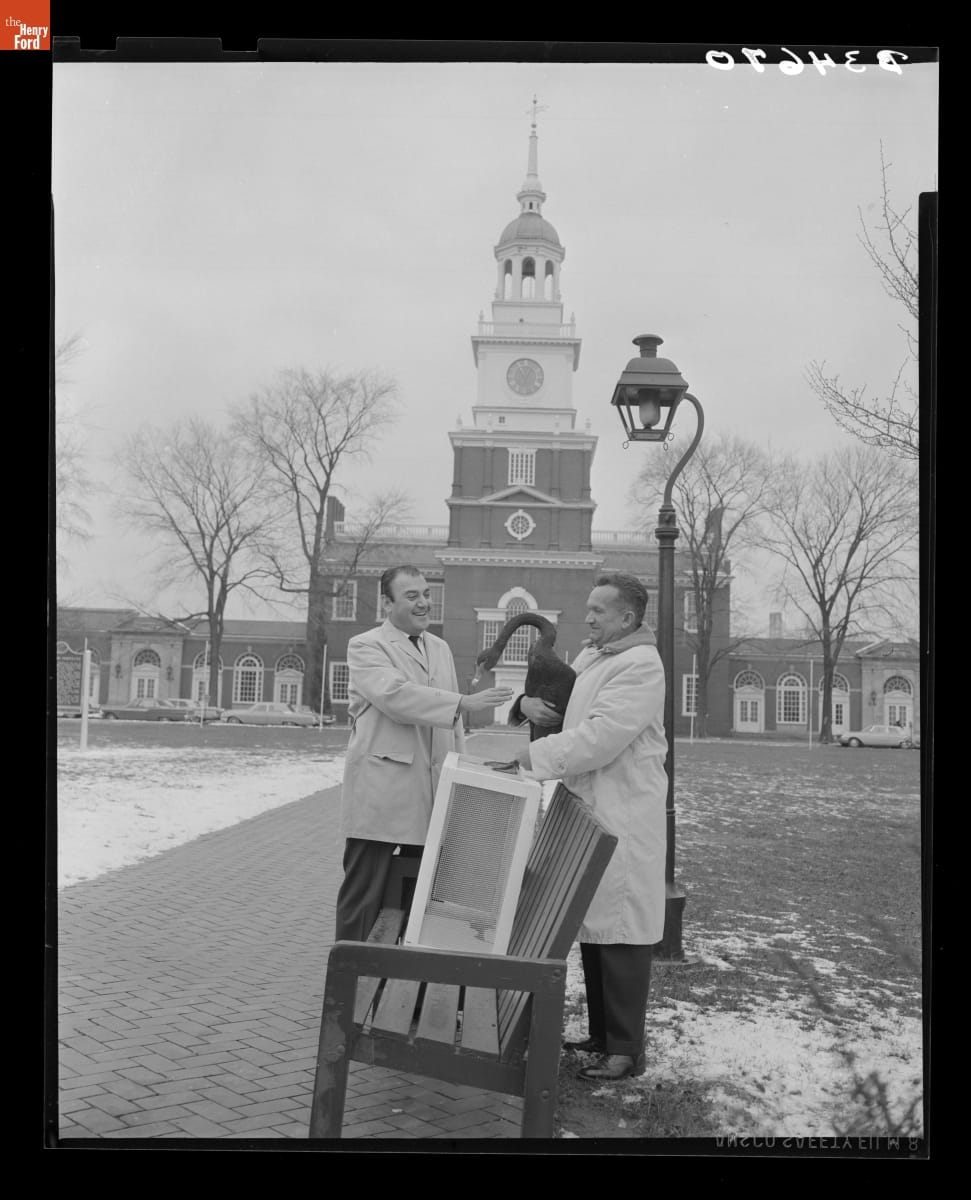
- Gus Munchow is Presented with a Rare Australian Black Swan Found at Camp Dearborn, December 1963 - Gustav Munchow became the gardener at Henry and Clara Ford's Fair Lane estate in Dearborn, Michigan, around 1930, after emigrating from Germany. Soon after, Henry asked him to landscape the gardens of the Cotswold Cottage, an English cottage Ford had recently moved to Greenfield Village. Munchow's work impressed the Fords. Munchow later led the grounds and maintenance departments for the Museum and Greenfield Village.
- December 01, 1963
- Collections - Artifact
Gus Munchow is Presented with a Rare Australian Black Swan Found at Camp Dearborn, December 1963
Gustav Munchow became the gardener at Henry and Clara Ford's Fair Lane estate in Dearborn, Michigan, around 1930, after emigrating from Germany. Soon after, Henry asked him to landscape the gardens of the Cotswold Cottage, an English cottage Ford had recently moved to Greenfield Village. Munchow's work impressed the Fords. Munchow later led the grounds and maintenance departments for the Museum and Greenfield Village.
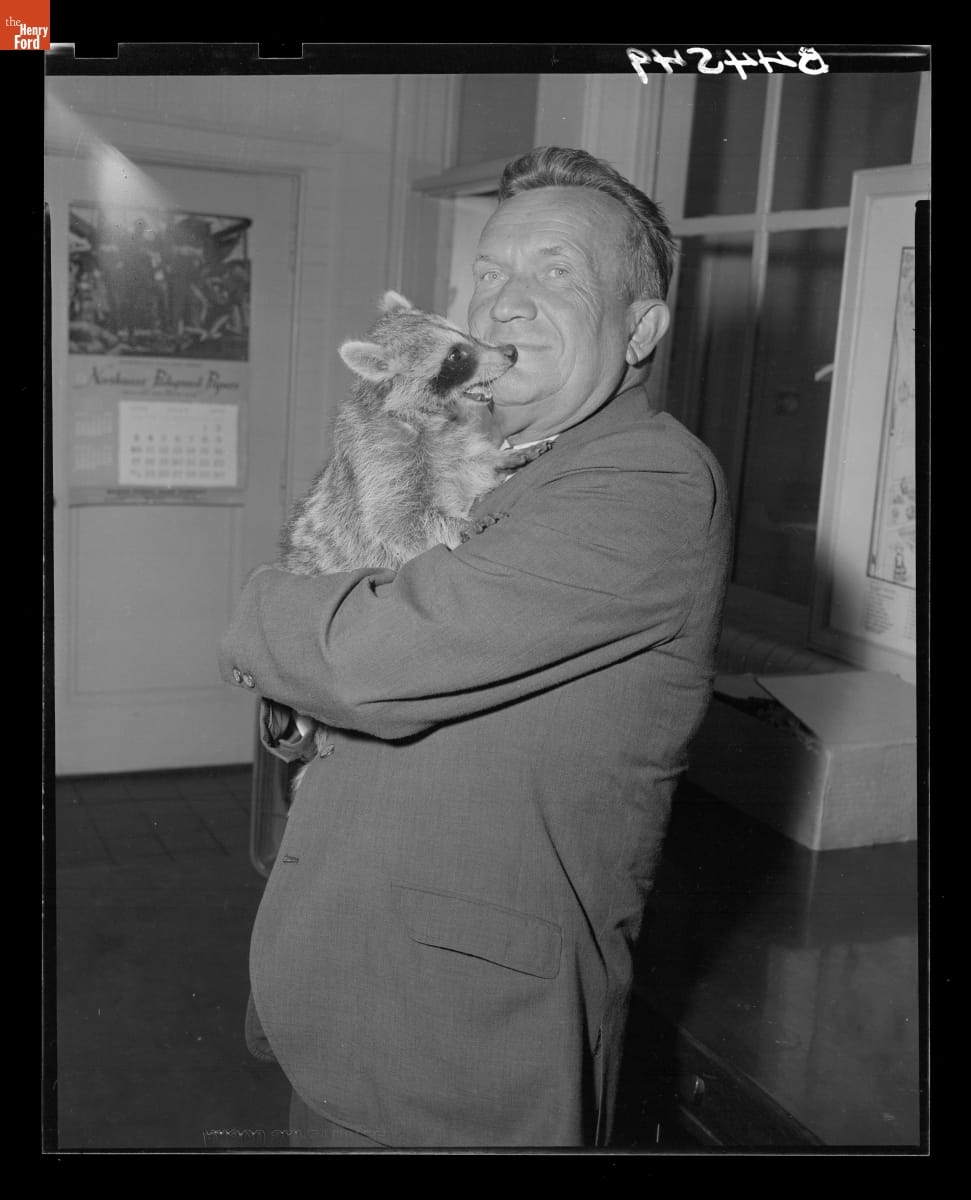
- Gus Munchow Holding a Raccoon, July 1966 - Gustav Munchow became the gardener at Henry and Clara Ford's Fair Lane estate in Dearborn, Michigan, around 1930, after emigrating from Germany. Soon after, Henry asked him to landscape the gardens of the Cotswold Cottage, an English cottage Ford had recently moved to Greenfield Village. Munchow's work impressed the Fords. Munchow later led the grounds and maintenance departments for the Museum and Greenfield Village.
- July 01, 1966
- Collections - Artifact
Gus Munchow Holding a Raccoon, July 1966
Gustav Munchow became the gardener at Henry and Clara Ford's Fair Lane estate in Dearborn, Michigan, around 1930, after emigrating from Germany. Soon after, Henry asked him to landscape the gardens of the Cotswold Cottage, an English cottage Ford had recently moved to Greenfield Village. Munchow's work impressed the Fords. Munchow later led the grounds and maintenance departments for the Museum and Greenfield Village.
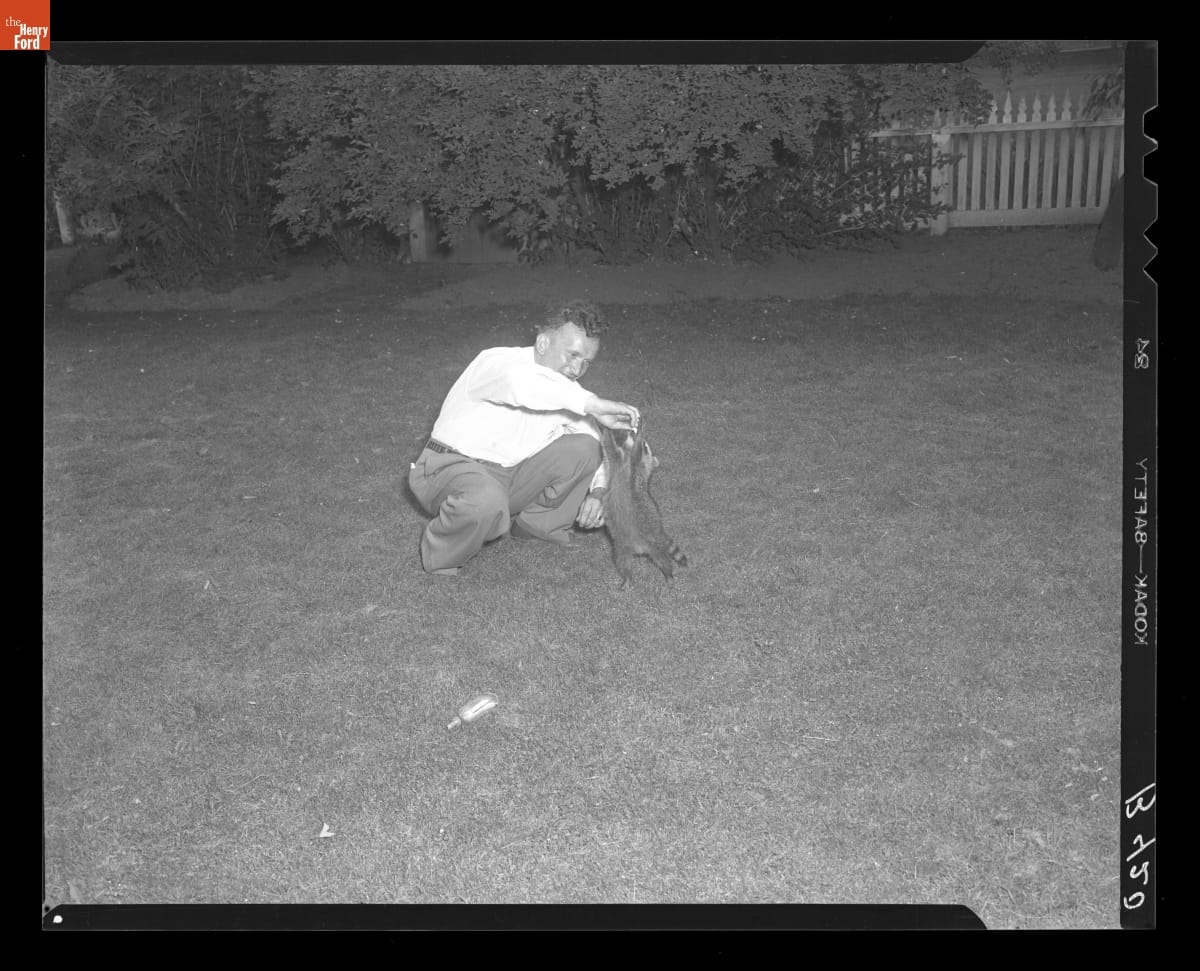
- Gus Munchow Feeding Pet Raccoon behind the Sarah Jordan Boarding House, 1949 - Gustav Munchow became the gardener at Henry and Clara Ford's Fair Lane estate in Dearborn, Michigan, around 1930, after emigrating from Germany. Soon after, Henry asked him to landscape the gardens of the Cotswold Cottage, an English cottage Ford had recently moved to Greenfield Village. Munchow's work impressed the Fords. Munchow later led the grounds and maintenance departments for the Museum and Greenfield Village.
- 1949
- Collections - Artifact
Gus Munchow Feeding Pet Raccoon behind the Sarah Jordan Boarding House, 1949
Gustav Munchow became the gardener at Henry and Clara Ford's Fair Lane estate in Dearborn, Michigan, around 1930, after emigrating from Germany. Soon after, Henry asked him to landscape the gardens of the Cotswold Cottage, an English cottage Ford had recently moved to Greenfield Village. Munchow's work impressed the Fords. Munchow later led the grounds and maintenance departments for the Museum and Greenfield Village.
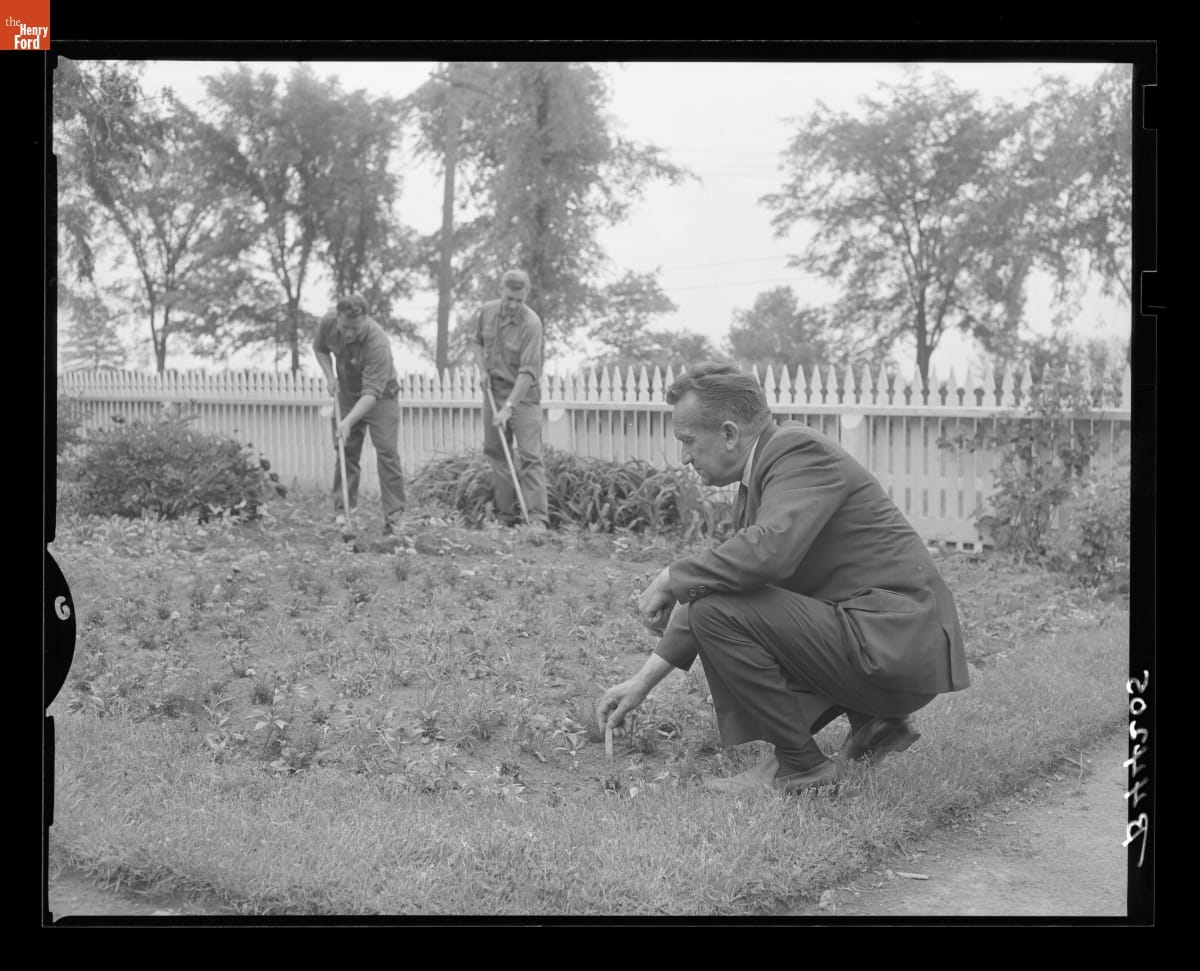
- Gus Munchow Inspecting a Garden in Greenfield Village, June 1966 - Gustav Munchow became the gardener at Henry and Clara Ford's Fair Lane estate in Dearborn, Michigan, around 1930, after emigrating from Germany. Soon after, Henry asked him to landscape the gardens of the Cotswold Cottage, an English cottage Ford had recently moved to Greenfield Village. Munchow's work impressed the Fords. Munchow later led the grounds and maintenance departments for the Museum and Greenfield Village.
- June 01, 1966
- Collections - Artifact
Gus Munchow Inspecting a Garden in Greenfield Village, June 1966
Gustav Munchow became the gardener at Henry and Clara Ford's Fair Lane estate in Dearborn, Michigan, around 1930, after emigrating from Germany. Soon after, Henry asked him to landscape the gardens of the Cotswold Cottage, an English cottage Ford had recently moved to Greenfield Village. Munchow's work impressed the Fords. Munchow later led the grounds and maintenance departments for the Museum and Greenfield Village.
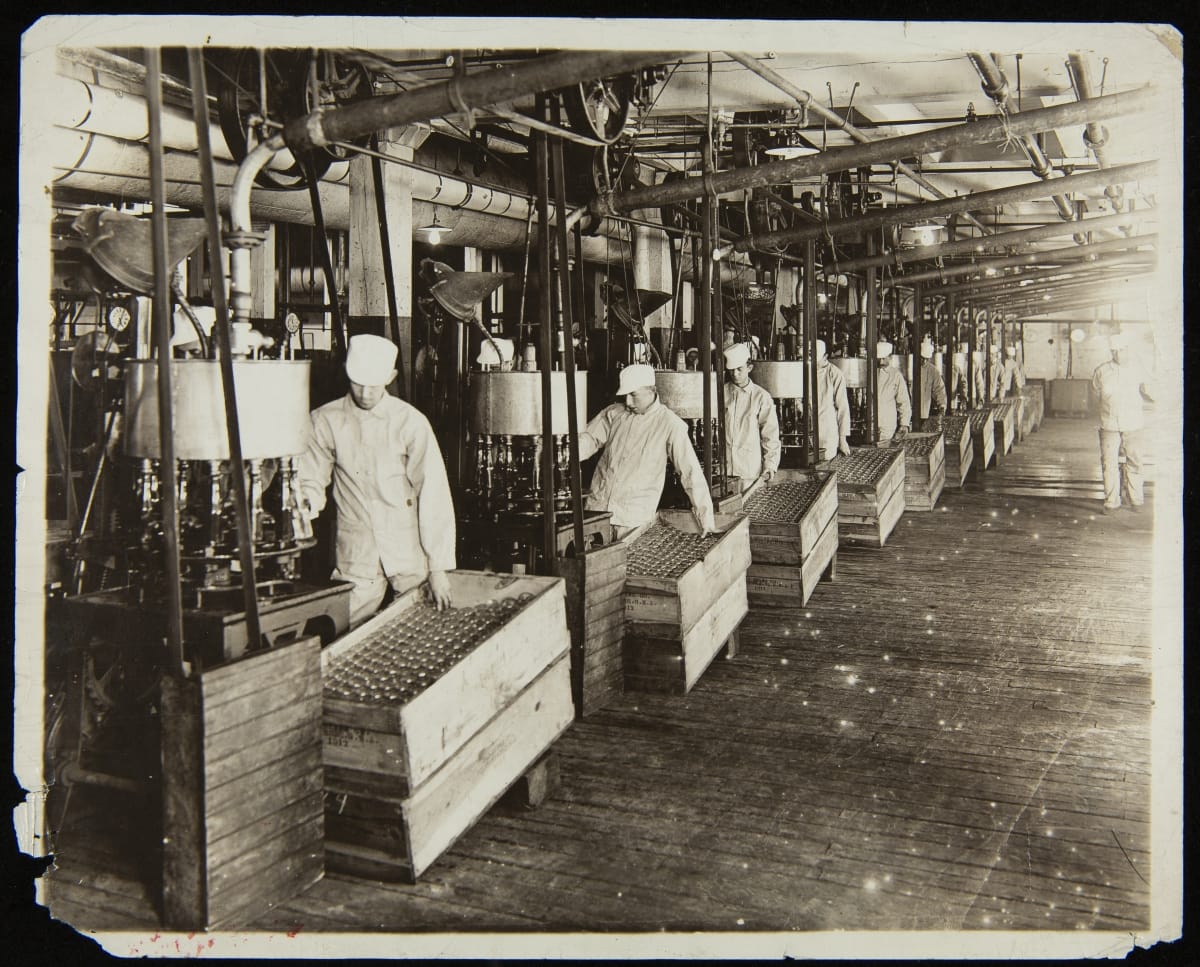
- Employees Loading Glass Jars into Crates, H. J. Heinz Company, Pittsburgh, Pennsylvania, circa 1920 - Before complete mechanization of the manufacturing process, many tasks at the Heinz factory were done by hand. The H.J. Heinz Company documented the many departments of the manufacturing process through photographs. This photograph shows glass jars being loaded into crates.
- circa 1920
- Collections - Artifact
Employees Loading Glass Jars into Crates, H. J. Heinz Company, Pittsburgh, Pennsylvania, circa 1920
Before complete mechanization of the manufacturing process, many tasks at the Heinz factory were done by hand. The H.J. Heinz Company documented the many departments of the manufacturing process through photographs. This photograph shows glass jars being loaded into crates.
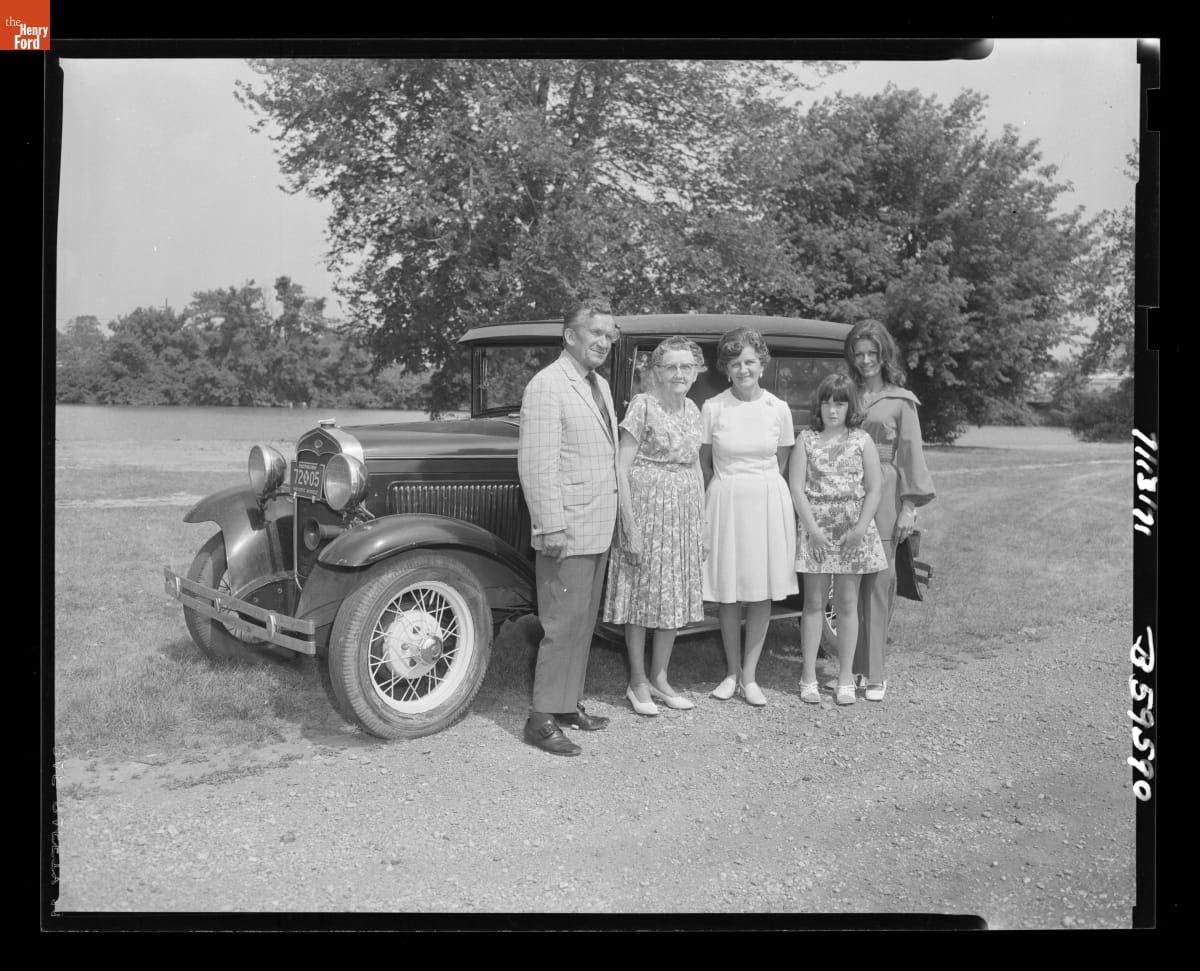
- Gus Munchow Greets Louise Lane, a Former Neighbor of Henry Ford, and Her Family in Greenfield Village, July 15, 1971 -
- July 15, 1971
- Collections - Artifact
Gus Munchow Greets Louise Lane, a Former Neighbor of Henry Ford, and Her Family in Greenfield Village, July 15, 1971
- Charles White, Gus Munchow, and Edmond Miezcur Feeding a Baby Rabbit, May 10, 1956 - Gustav Munchow became the gardener at Henry and Clara Ford's Fair Lane estate in Dearborn, Michigan, around 1930, after emigrating from Germany. Soon after, Henry asked him to landscape the gardens of the Cotswold Cottage, an English cottage Ford had recently moved to Greenfield Village. Munchow's work impressed the Fords. Munchow later led the grounds and maintenance departments for the Museum and Greenfield Village.
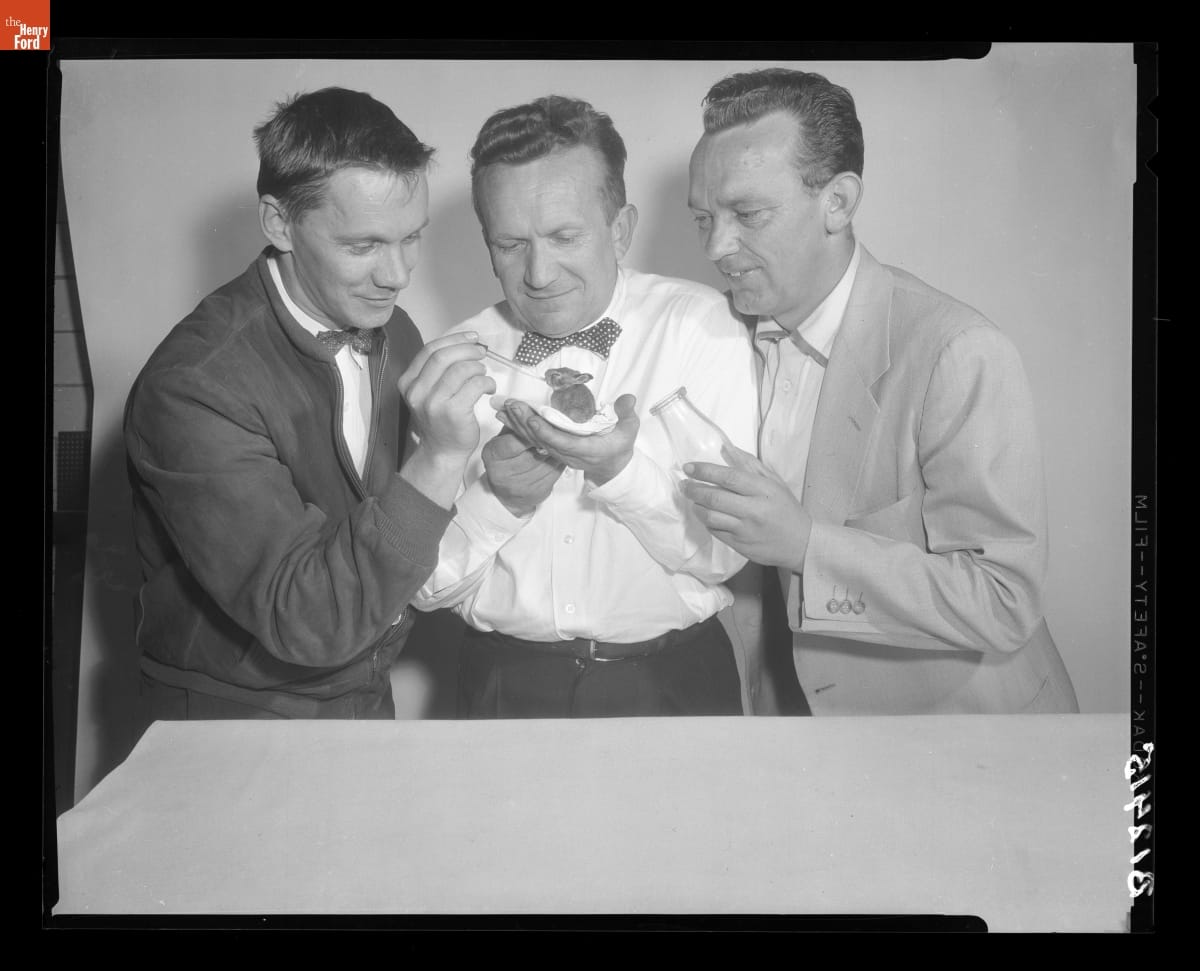
- May 10, 1956
- Collections - Artifact
Charles White, Gus Munchow, and Edmond Miezcur Feeding a Baby Rabbit, May 10, 1956
Gustav Munchow became the gardener at Henry and Clara Ford's Fair Lane estate in Dearborn, Michigan, around 1930, after emigrating from Germany. Soon after, Henry asked him to landscape the gardens of the Cotswold Cottage, an English cottage Ford had recently moved to Greenfield Village. Munchow's work impressed the Fords. Munchow later led the grounds and maintenance departments for the Museum and Greenfield Village.
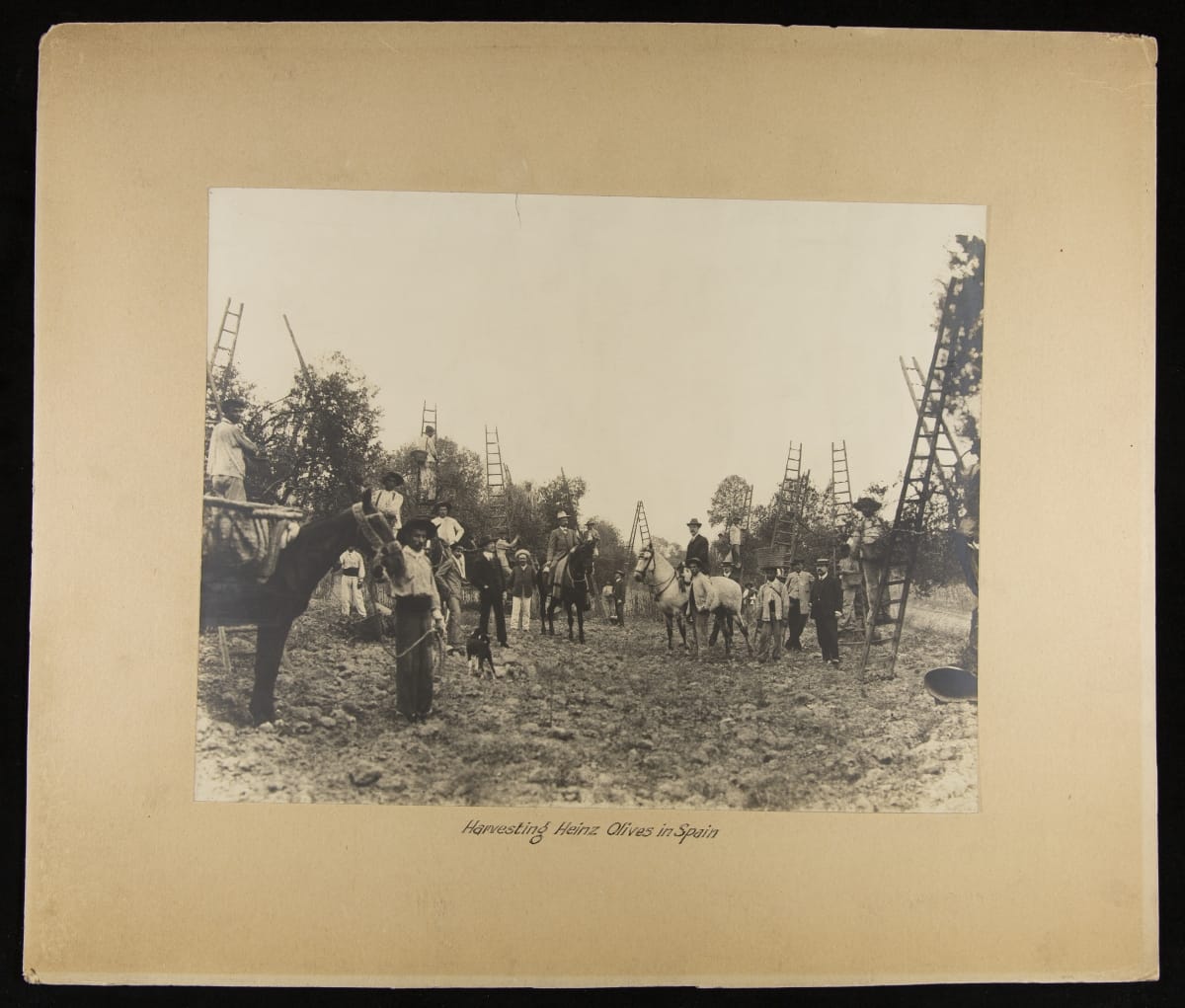
- Harvesting Olives in Seville, Spain, H. J. Heinz Company, 1904-1910 - H. J. Heinz recognized that specific climates and soil-types were best for each fruit and vegetable, ensuring a better taste for his products. He considered Spain to be the best for olives. Laborers picked the olives and sent them to the nearby Heinz factory where they were cleaned, processed, and packaged in clear glass jars for market.
- Collections - Artifact
Harvesting Olives in Seville, Spain, H. J. Heinz Company, 1904-1910
H. J. Heinz recognized that specific climates and soil-types were best for each fruit and vegetable, ensuring a better taste for his products. He considered Spain to be the best for olives. Laborers picked the olives and sent them to the nearby Heinz factory where they were cleaned, processed, and packaged in clear glass jars for market.