
Search
- Bandbox, circa 1830 - In the early 1800s, Americans used bandboxes to store clothing, accessories, and other small items. Bandboxes were handy containers in the home or when traveling by stage, boat, or rail. Manufacturers covered these inexpensive pasteboard or wooden boxes with colorful papers. This bandbox's paper consists of roses, drapery and vase-shaped pillars.
- circa 1830
- Collections - Artifact
Bandbox, circa 1830
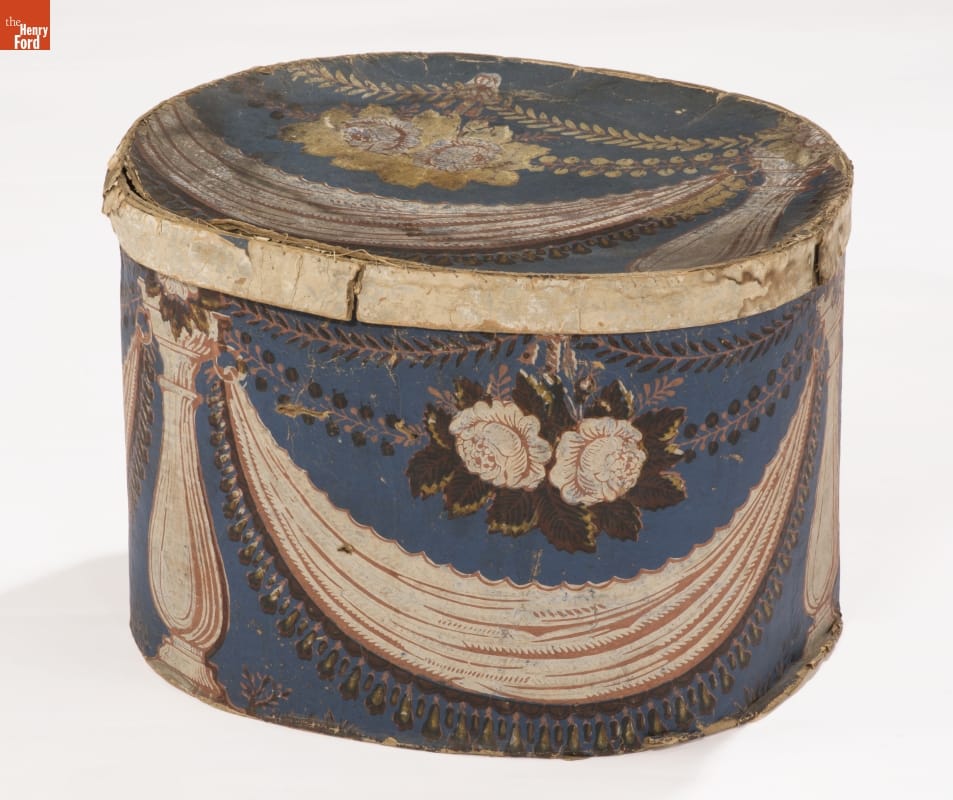
In the early 1800s, Americans used bandboxes to store clothing, accessories, and other small items. Bandboxes were handy containers in the home or when traveling by stage, boat, or rail. Manufacturers covered these inexpensive pasteboard or wooden boxes with colorful papers. This bandbox's paper consists of roses, drapery and vase-shaped pillars.
- Jar, 1800-1820 - Clarkson Crolius's New York City pottery produced this durable, leak-proof stoneware jar in the early 1800s. Its orange-peel-like outer glaze formed when the potter threw handfuls of common rock salt into a white-hot kiln during the piece's firing. Clarkson Crolius was the grandson of William Crolius, a German immigrant who founded the family pottery businesses in 1730.
- 1800-1820
- Collections - Artifact
Jar, 1800-1820
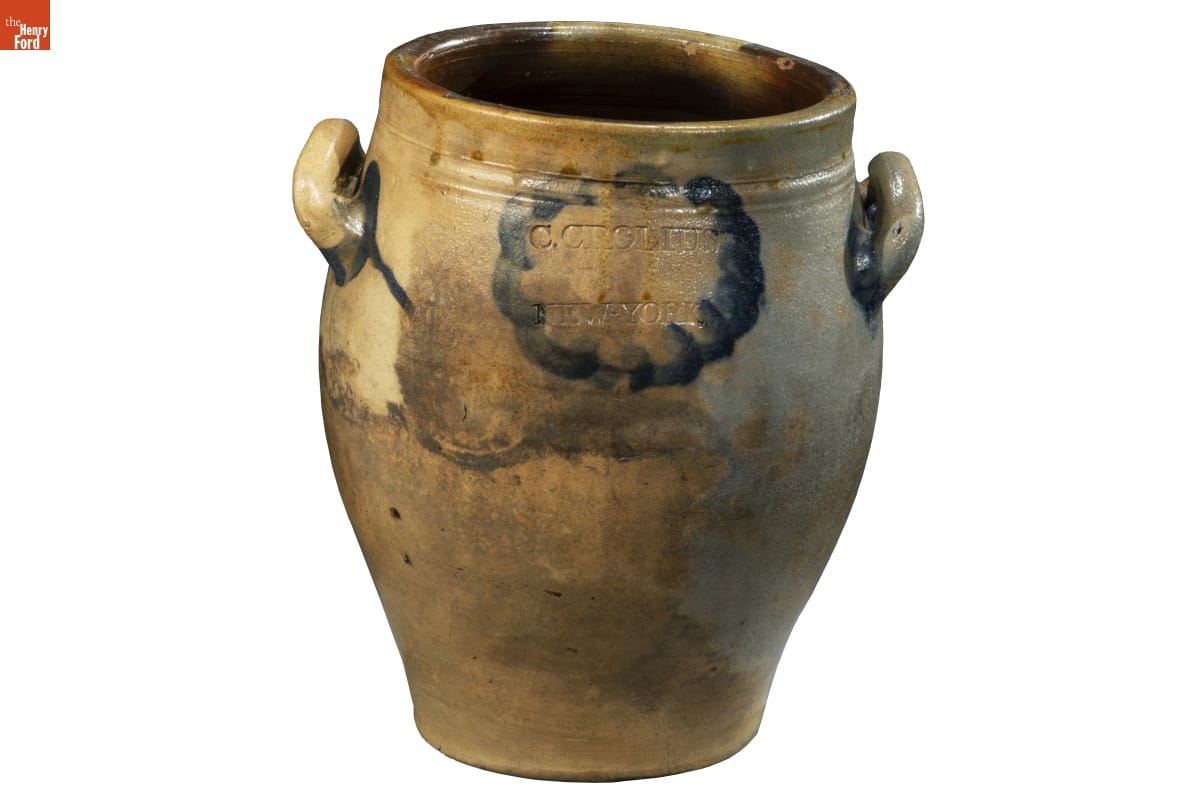
Clarkson Crolius's New York City pottery produced this durable, leak-proof stoneware jar in the early 1800s. Its orange-peel-like outer glaze formed when the potter threw handfuls of common rock salt into a white-hot kiln during the piece's firing. Clarkson Crolius was the grandson of William Crolius, a German immigrant who founded the family pottery businesses in 1730.
- Jug, 1797-1819 - Thomas Commeraw, a free African American potter and entrepreneur, produced salt-glazed stoneware in the Corlears Hook neighborhood of New York City from 1791 to 1819. These stoneware jars and crocks were durable and helped preserve food for storage in cool cellars and ice houses. Commeraw's distinctive stoneware typically contains cobalt blue swags and tassel decoration.
- 1797-1819
- Collections - Artifact
Jug, 1797-1819
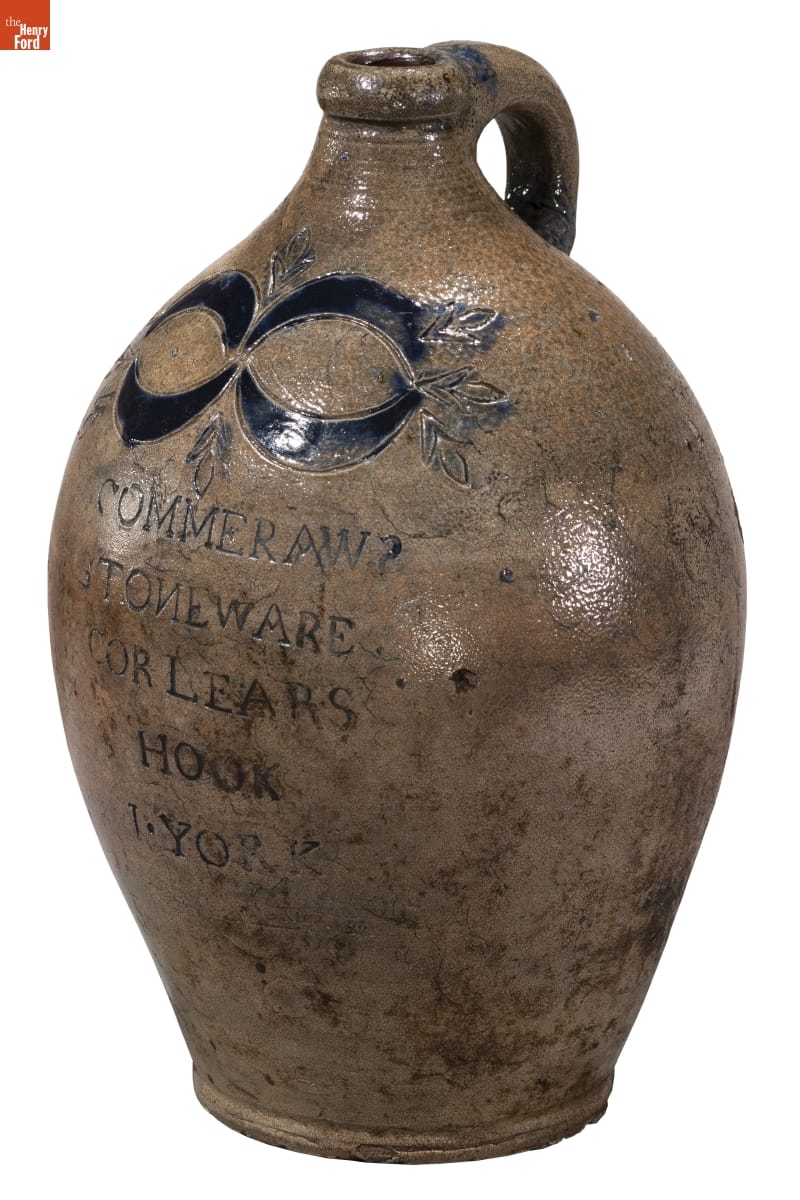
Thomas Commeraw, a free African American potter and entrepreneur, produced salt-glazed stoneware in the Corlears Hook neighborhood of New York City from 1791 to 1819. These stoneware jars and crocks were durable and helped preserve food for storage in cool cellars and ice houses. Commeraw's distinctive stoneware typically contains cobalt blue swags and tassel decoration.
- Jar, 1797-1819 - Thomas Commeraw, a free African American potter and entrepreneur, produced salt-glazed stoneware in the Corlears Hook neighborhood of New York City from 1791 to 1819. These stoneware jars and crocks were durable and helped preserve food for storage in cool cellars and ice houses. Commeraw's distinctive stoneware typically contains cobalt blue swags and tassel decoration.
- 1797-1819
- Collections - Artifact
Jar, 1797-1819
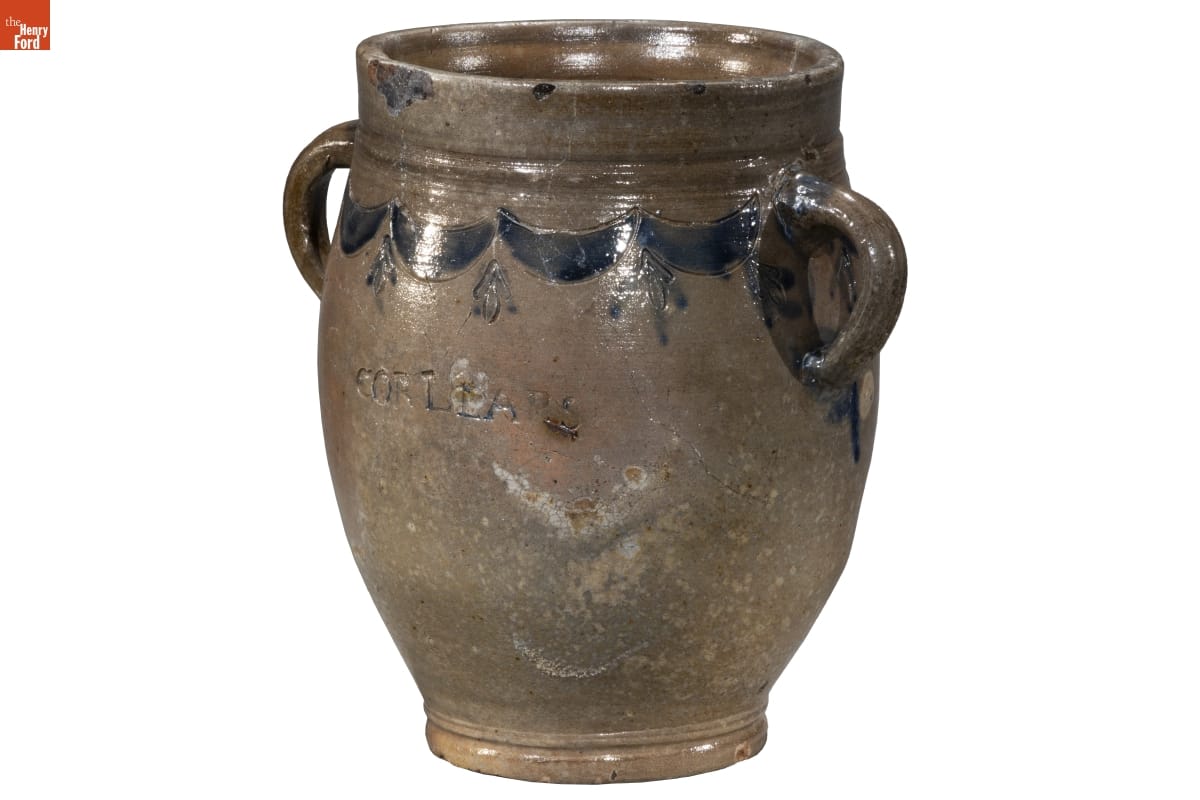
Thomas Commeraw, a free African American potter and entrepreneur, produced salt-glazed stoneware in the Corlears Hook neighborhood of New York City from 1791 to 1819. These stoneware jars and crocks were durable and helped preserve food for storage in cool cellars and ice houses. Commeraw's distinctive stoneware typically contains cobalt blue swags and tassel decoration.
- Jar, 1797-1819 - Thomas Commeraw, a free African American potter and entrepreneur, produced salt-glazed stoneware in the Corlears Hook neighborhood of New York City from 1791 to 1819. These stoneware jars and crocks were durable and helped preserve food for storage in cool cellars and ice houses. Commeraw's distinctive stoneware typically contains cobalt blue swags and tassel decoration.
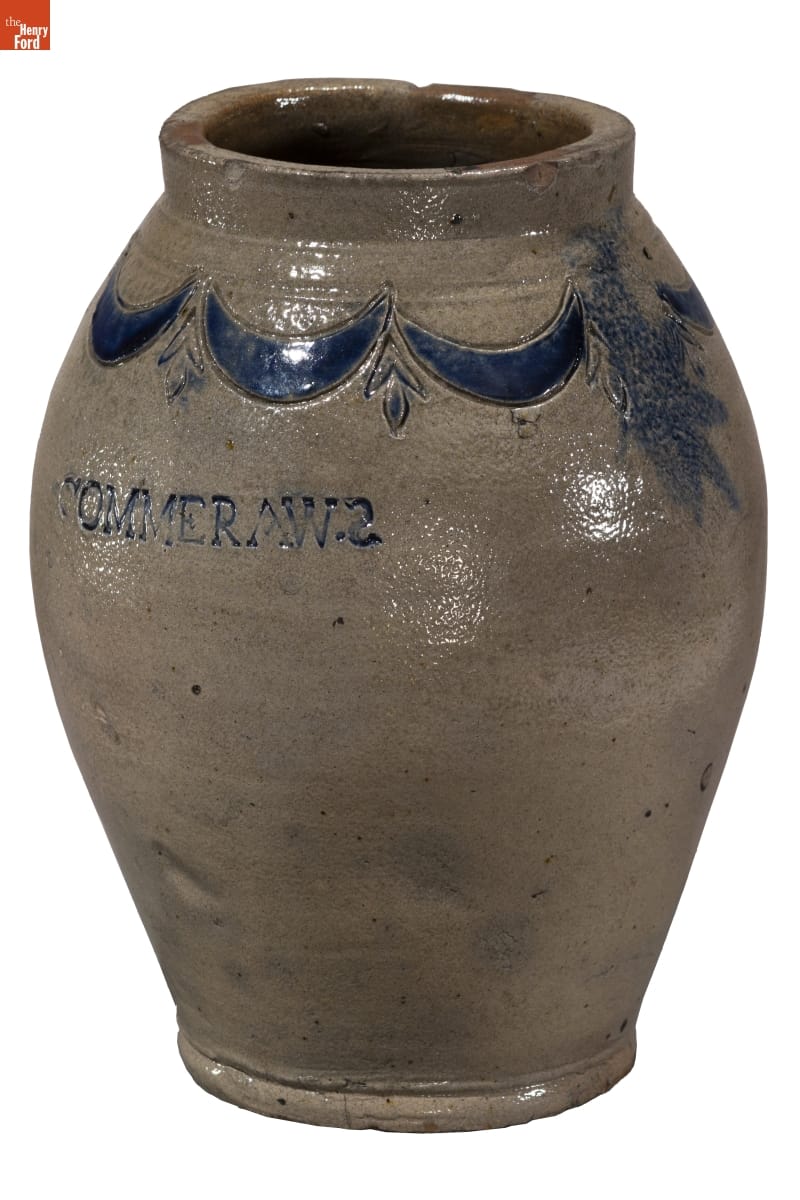
- 1797-1819
- Collections - Artifact
Jar, 1797-1819
Thomas Commeraw, a free African American potter and entrepreneur, produced salt-glazed stoneware in the Corlears Hook neighborhood of New York City from 1791 to 1819. These stoneware jars and crocks were durable and helped preserve food for storage in cool cellars and ice houses. Commeraw's distinctive stoneware typically contains cobalt blue swags and tassel decoration.