
Search
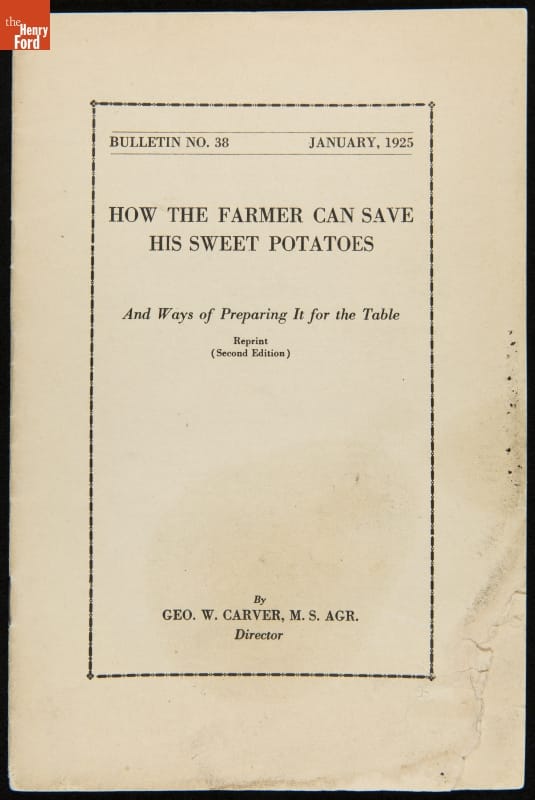
- How the Farmer Can Save His Sweet Potatoes and Ways of Preparing It for the Table, January 1925 (2nd ed.) -
- January 01, 1925
- Collections - Artifact
How the Farmer Can Save His Sweet Potatoes and Ways of Preparing It for the Table, January 1925 (2nd ed.)
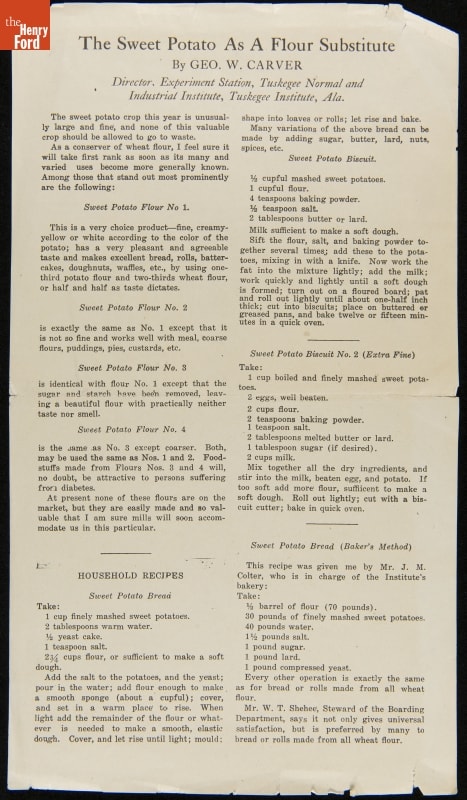
- The Sweet Potato as a Flour Substitute, 1918 -
- 1918
- Collections - Artifact
The Sweet Potato as a Flour Substitute, 1918
- Program from the H. J. Heinz Company Employee Auditorium Dedication, Pittsburgh, Pennsylvania, November 8th, 1930 - H.J. Heinz valued a strong relationship between his company and its employees. This relationship continued long after he passed and became the focal point for the H.J. Heinz Company's 61st anniversary in 1930. To honor and continue this relationship, the company dedicated a new employee auditorium and service building. This program is from the dedication ceremony.
- November 08, 1930
- Collections - Artifact
Program from the H. J. Heinz Company Employee Auditorium Dedication, Pittsburgh, Pennsylvania, November 8th, 1930
H.J. Heinz valued a strong relationship between his company and its employees. This relationship continued long after he passed and became the focal point for the H.J. Heinz Company's 61st anniversary in 1930. To honor and continue this relationship, the company dedicated a new employee auditorium and service building. This program is from the dedication ceremony.
- "How the Farmer Can Save His Sweet Potatoes and Ways of Preparing It for the Table" (2nd ed.), January 1925 - George Washington Carver directed the agricultural Experiment Station at Tuskegee Institute in Alabama. As part of his work, Carver wrote what he called "threefold" agricultural bulletins, with information for farmers, teachers, and housewives. Carver advocated that Southern farmers grow sweet potatoes: they helped nitrogenate depleted soils, were nutritious, and kept well.

- January 01, 1925
- Collections - Artifact
"How the Farmer Can Save His Sweet Potatoes and Ways of Preparing It for the Table" (2nd ed.), January 1925
George Washington Carver directed the agricultural Experiment Station at Tuskegee Institute in Alabama. As part of his work, Carver wrote what he called "threefold" agricultural bulletins, with information for farmers, teachers, and housewives. Carver advocated that Southern farmers grow sweet potatoes: they helped nitrogenate depleted soils, were nutritious, and kept well.
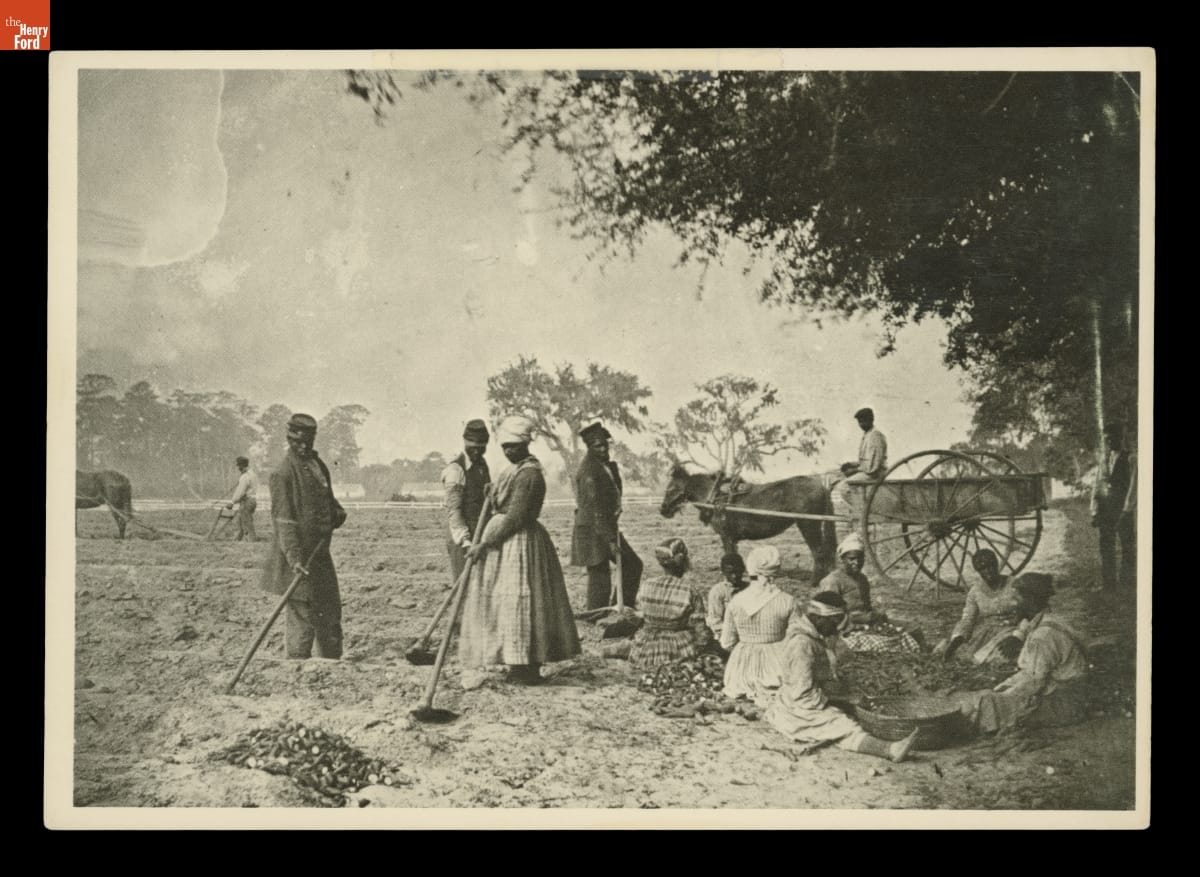
- "Planting Sweet Potatoes on the James Hopkinson Plantation, Edisto Island, South Carolina," April 8, 1862 -
- April 08, 1862
- Collections - Artifact
"Planting Sweet Potatoes on the James Hopkinson Plantation, Edisto Island, South Carolina," April 8, 1862