
Search
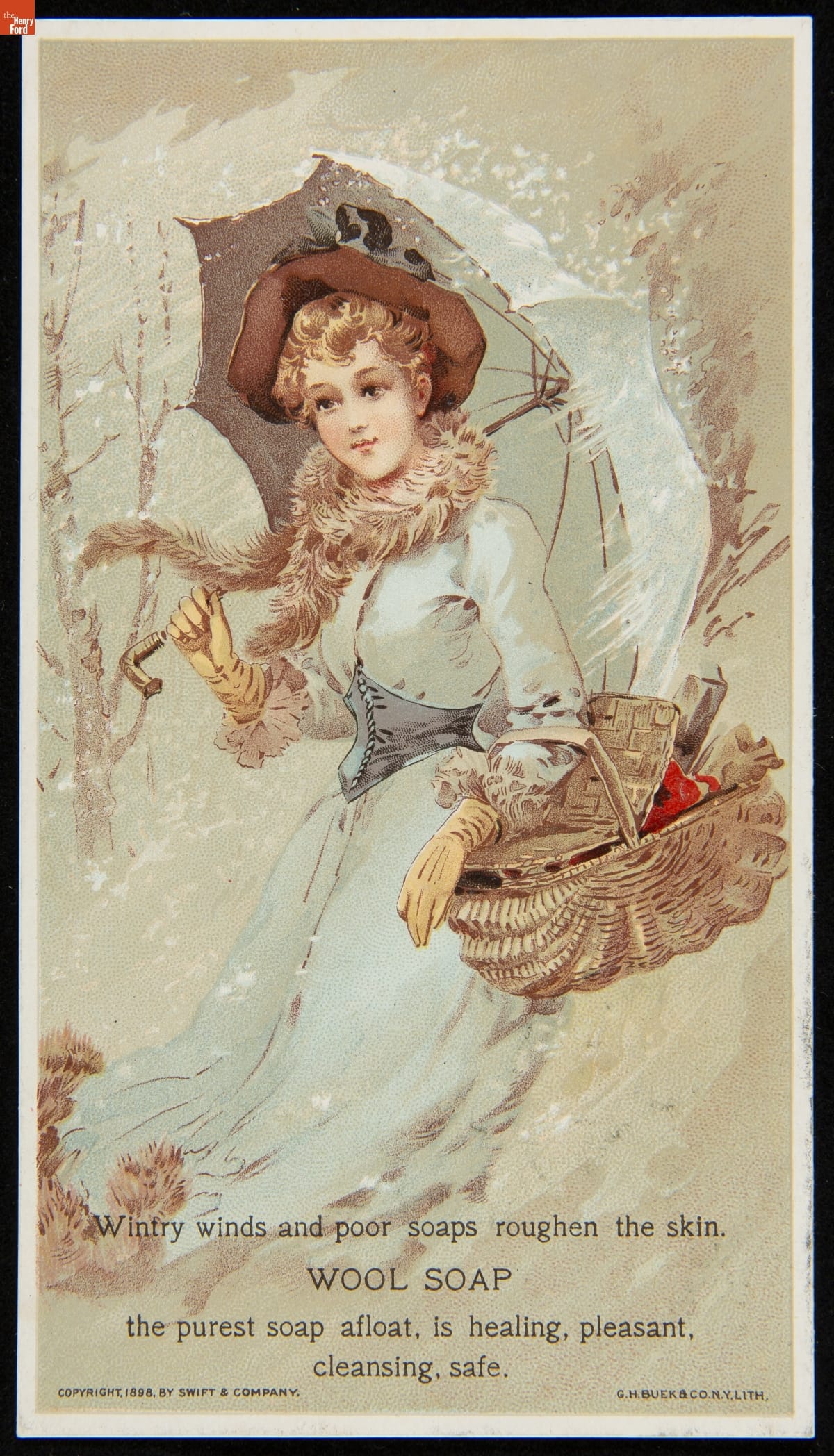
- Trade Card for Wool Soap, Swift & Co., 1898 - In the last third of the nineteenth century, an unprecedented variety of consumer goods and services flooded the American market. Advertisers, armed with new methods of color printing, bombarded potential customers with trade cards. Americans enjoyed and often saved the vibrant little advertisements found in product packages or distributed by local merchants. Many survive as historical records of commercialism in the United States.
- circa 1898
- Collections - Artifact
Trade Card for Wool Soap, Swift & Co., 1898
In the last third of the nineteenth century, an unprecedented variety of consumer goods and services flooded the American market. Advertisers, armed with new methods of color printing, bombarded potential customers with trade cards. Americans enjoyed and often saved the vibrant little advertisements found in product packages or distributed by local merchants. Many survive as historical records of commercialism in the United States.
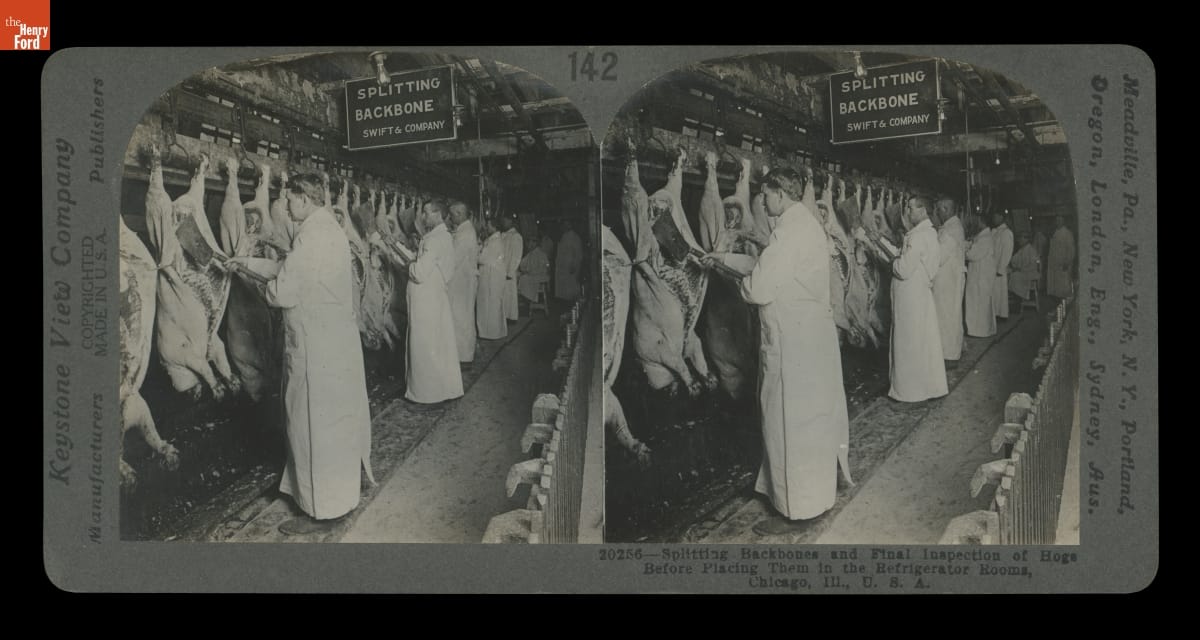
- Swift & Company's Meat Packing House, Chicago, Illinois, "Splitting Backbones and Final Inspection of Hogs," 1910-1915 - At this meat packing operation, a conveyor moved hog carcasses past meat cutters, who then removed various pieces of the animal. To keep Model T production up with demand, Ford engineers borrowed ideas from other industries. Sometime in 1913 they realized that the "disassembly line" principle employed in slaughterhouses could be adapted to building automobiles -- on a moving assembly line.
- 1910-1915
- Collections - Artifact
Swift & Company's Meat Packing House, Chicago, Illinois, "Splitting Backbones and Final Inspection of Hogs," 1910-1915
At this meat packing operation, a conveyor moved hog carcasses past meat cutters, who then removed various pieces of the animal. To keep Model T production up with demand, Ford engineers borrowed ideas from other industries. Sometime in 1913 they realized that the "disassembly line" principle employed in slaughterhouses could be adapted to building automobiles -- on a moving assembly line.
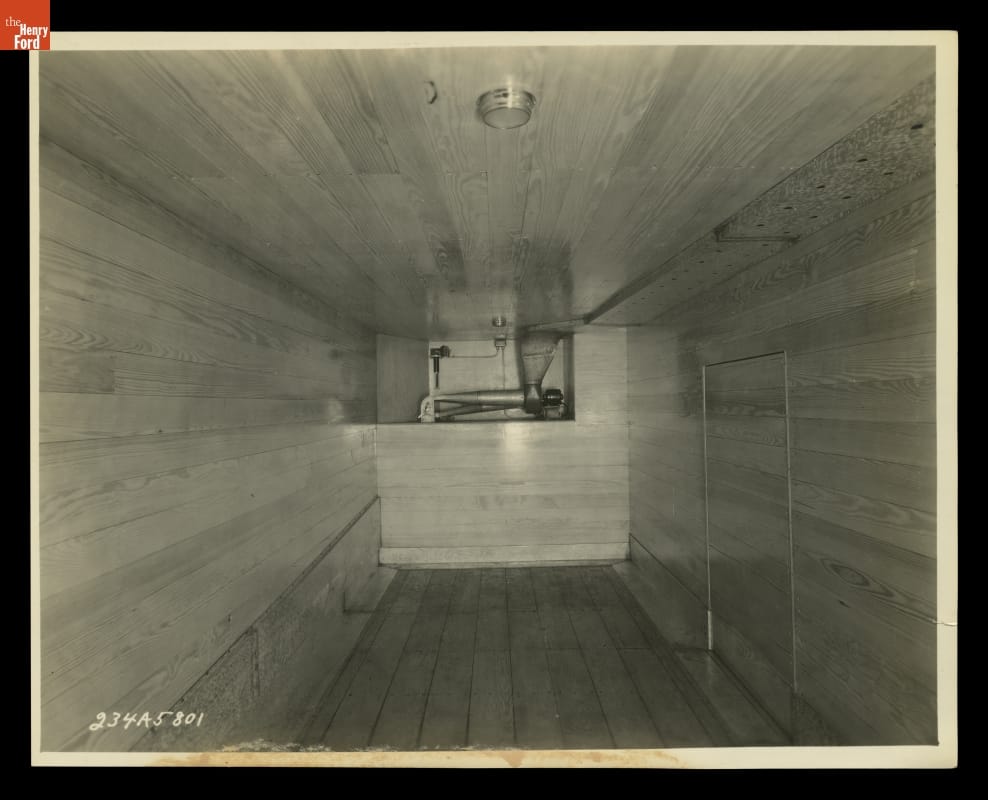
- Dry Ice Compartment inside a 1934 Mack Model BM Truck with Statotherm Refrigerated Body - Mack Trucks introduced its Statotherm refrigeration system about 1933. It placed a refrigerant -- usually dry ice -- in a special compartment, while electric blowers controlled by a highly sensitive thermostat circulated cool air throughout the truck body. In a test run from Florida to New York, the Statotherm system kept a truck's interior at a near-constant 33 degrees Fahrenheit.
- February 01, 1934
- Collections - Artifact
Dry Ice Compartment inside a 1934 Mack Model BM Truck with Statotherm Refrigerated Body
Mack Trucks introduced its Statotherm refrigeration system about 1933. It placed a refrigerant -- usually dry ice -- in a special compartment, while electric blowers controlled by a highly sensitive thermostat circulated cool air throughout the truck body. In a test run from Florida to New York, the Statotherm system kept a truck's interior at a near-constant 33 degrees Fahrenheit.
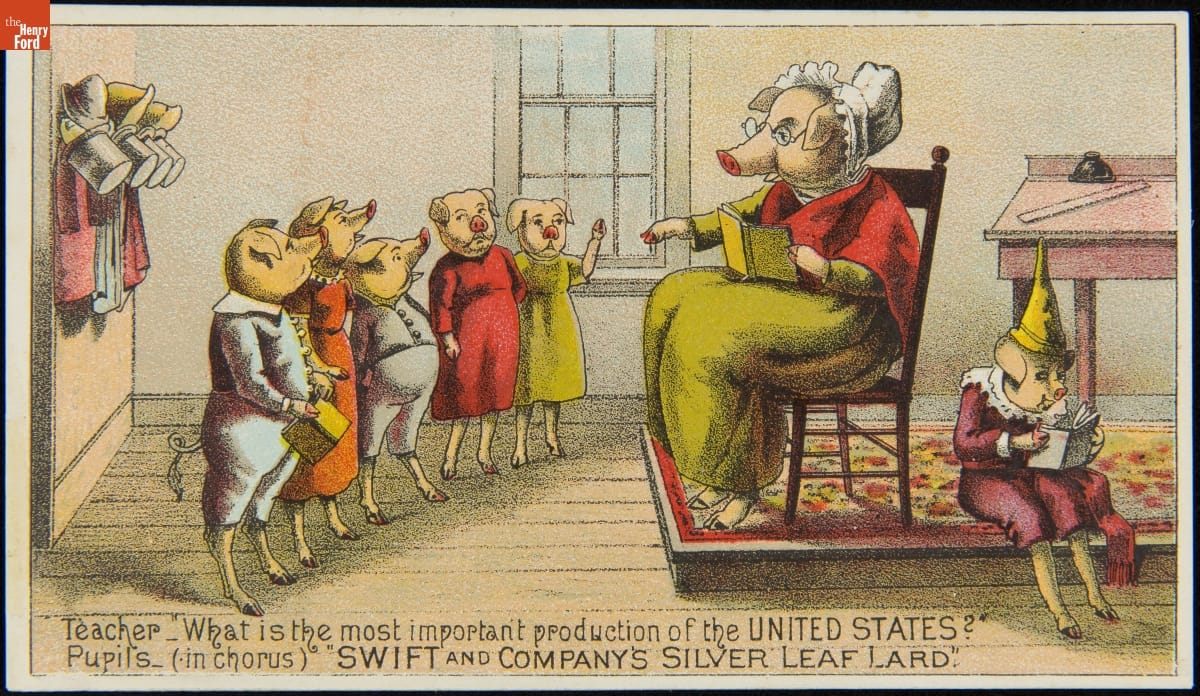
- Trade Card for Swift & Company "Silver Leaf Lard," circa 1900 - In the last third of the nineteenth century, an unprecedented variety of consumer goods and services flooded the American market. Advertisers, armed with new methods of color printing, bombarded potential customers with trade cards. Americans enjoyed and often saved the vibrant little advertisements found in product packages or distributed by local merchants. Many survive as historical records of commercialism in the United States.
- 1880-1905
- Collections - Artifact
Trade Card for Swift & Company "Silver Leaf Lard," circa 1900
In the last third of the nineteenth century, an unprecedented variety of consumer goods and services flooded the American market. Advertisers, armed with new methods of color printing, bombarded potential customers with trade cards. Americans enjoyed and often saved the vibrant little advertisements found in product packages or distributed by local merchants. Many survive as historical records of commercialism in the United States.
- 1931 Ford Model AA Stake Truck - Ford Motor Company's Model AA truck was based on its Model A automobile platform, but with a longer wheelbase, a stronger frame, and generally sturdier chassis components. The Model AA was available in several body styles to permit its use as a panel truck, an express delivery truck, a garbage truck, a bus, or an ambulance, among other options.
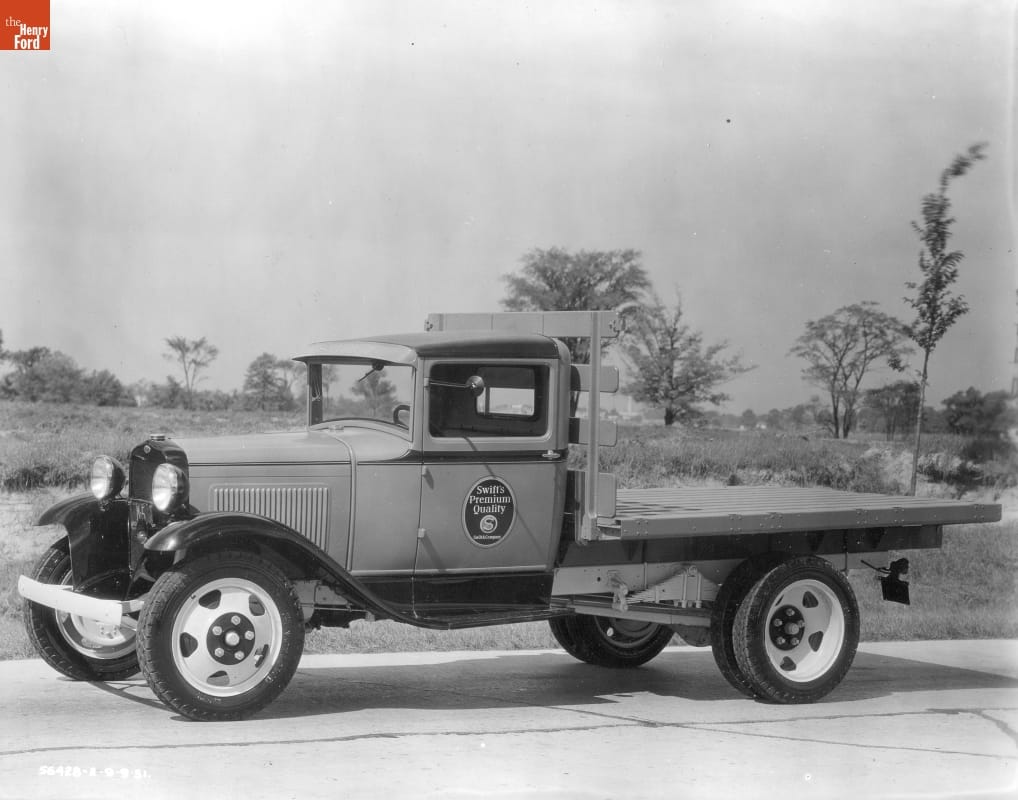
- September 09, 1931
- Collections - Artifact
1931 Ford Model AA Stake Truck
Ford Motor Company's Model AA truck was based on its Model A automobile platform, but with a longer wheelbase, a stronger frame, and generally sturdier chassis components. The Model AA was available in several body styles to permit its use as a panel truck, an express delivery truck, a garbage truck, a bus, or an ambulance, among other options.
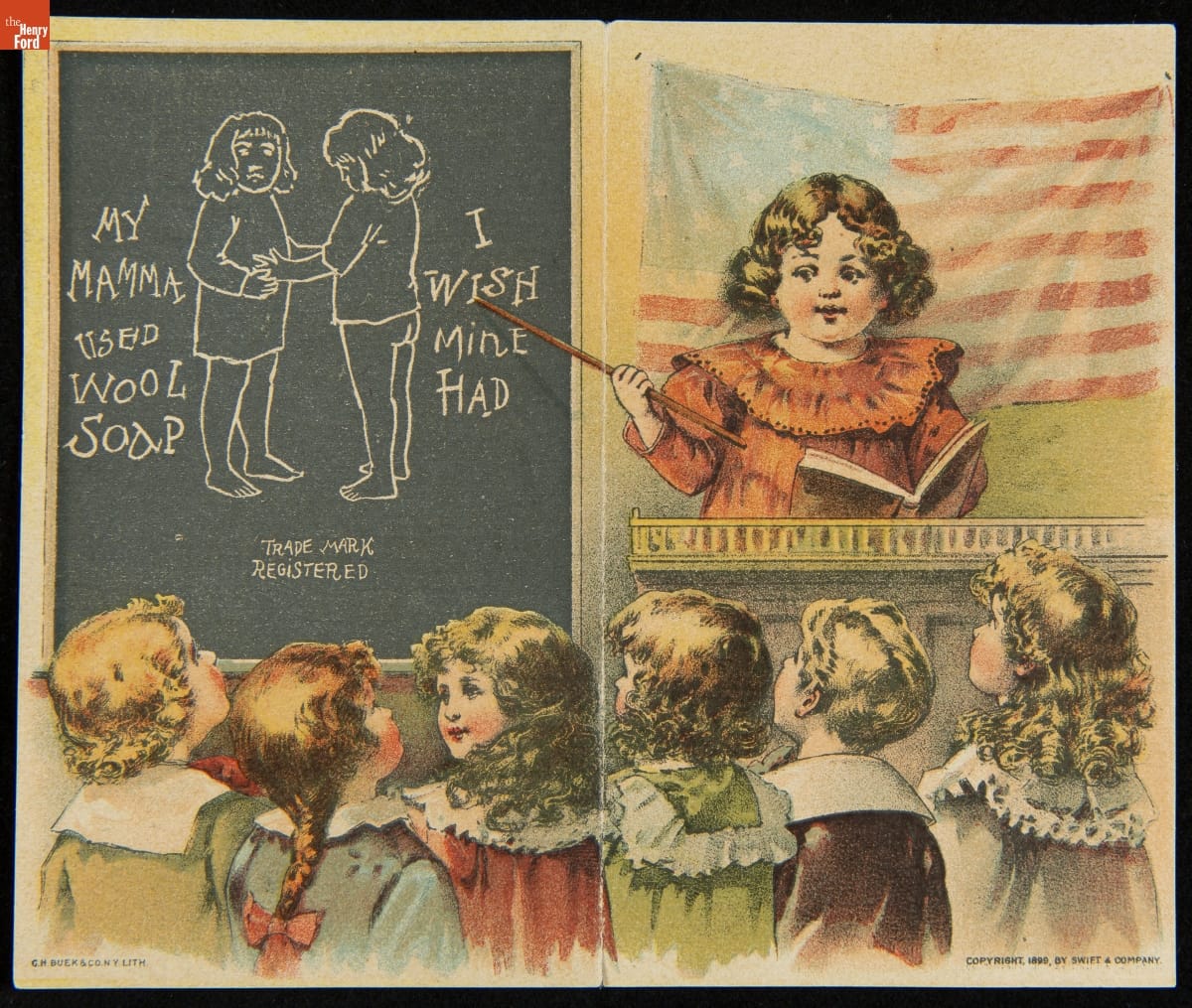
- Trade Card for Wool Soap, Swift & Co., 1899 - In the last third of the nineteenth century, an unprecedented variety of consumer goods and services flooded the American market. Advertisers, armed with new methods of color printing, bombarded potential customers with trade cards. Americans enjoyed and often saved the vibrant little advertisements found in product packages or distributed by local merchants. Many survive as historical records of commercialism in the United States.
- circa 1899
- Collections - Artifact
Trade Card for Wool Soap, Swift & Co., 1899
In the last third of the nineteenth century, an unprecedented variety of consumer goods and services flooded the American market. Advertisers, armed with new methods of color printing, bombarded potential customers with trade cards. Americans enjoyed and often saved the vibrant little advertisements found in product packages or distributed by local merchants. Many survive as historical records of commercialism in the United States.