
Search
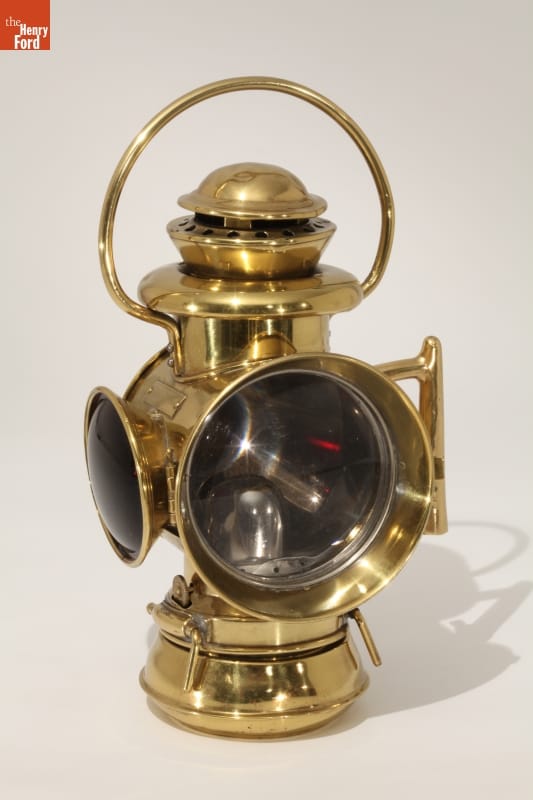
- Tail Lamp, circa 1907 - Taillights were not a standard fixture on early automobiles. Only when cars and roads improved -- and drivers braved the darkness -- did this safety feature become a necessity. Early taillights resembled carriage lamps found on horse-drawn vehicles. This kerosene-fueled tail lamp -- cars usually had only one -- used a red lens to warn approaching vehicles. A clear lens illuminated the license plate or back step.
- circa 1907
- Collections - Artifact
Tail Lamp, circa 1907
Taillights were not a standard fixture on early automobiles. Only when cars and roads improved -- and drivers braved the darkness -- did this safety feature become a necessity. Early taillights resembled carriage lamps found on horse-drawn vehicles. This kerosene-fueled tail lamp -- cars usually had only one -- used a red lens to warn approaching vehicles. A clear lens illuminated the license plate or back step.
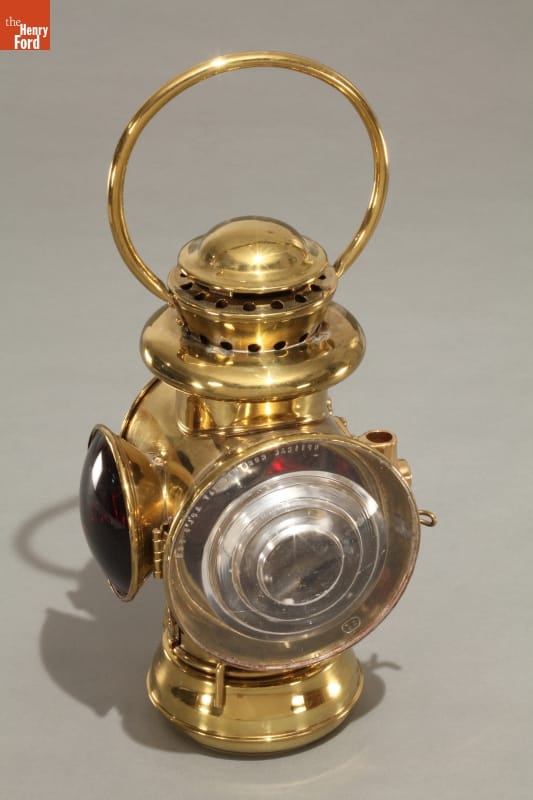
- Automobile Tail Lamp, circa 1906 - The first automobile head and tail lamps used kerosene -- a fuel used in lighting fixtures found on horse-drawn vehicles. These early lights illuminated dark roads or generated a visible safety feature. This brass, kerosene tail lamp, made be the R. E. Deitz Company, warned approaching vehicles that an automobile was ahead.
- circa 1906
- Collections - Artifact
Automobile Tail Lamp, circa 1906
The first automobile head and tail lamps used kerosene -- a fuel used in lighting fixtures found on horse-drawn vehicles. These early lights illuminated dark roads or generated a visible safety feature. This brass, kerosene tail lamp, made be the R. E. Deitz Company, warned approaching vehicles that an automobile was ahead.
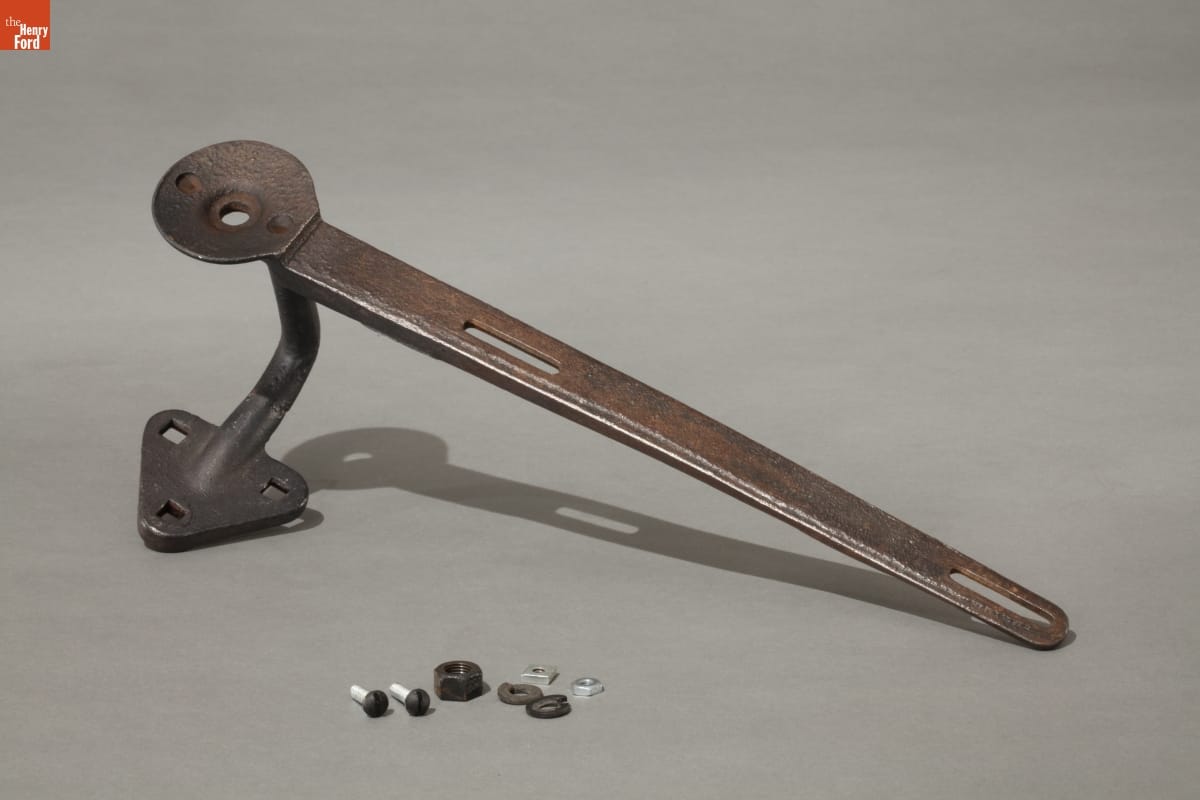
- Automobile License Plate and Tail Lamp Mounting Bracket, 1917-1924 -
- 1917-1924
- Collections - Artifact
Automobile License Plate and Tail Lamp Mounting Bracket, 1917-1924
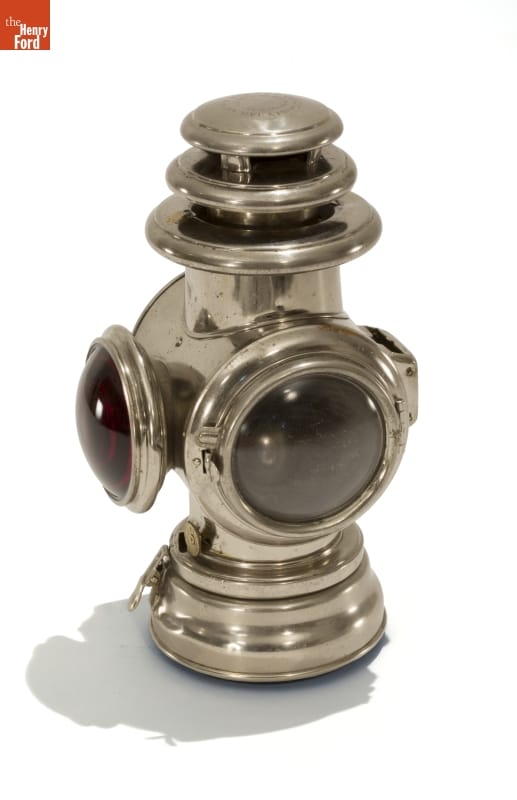
- Dietz Dainty Tail Lamp, circa 1908 - Taillights were not a standard fixture on early automobiles. Only when cars and roads improved -- and drivers braved the darkness -- did this safety feature become a necessity. Early taillights resembled carriage lamps found on horse-drawn vehicles. This kerosene-fueled tail lamp -- cars usually had only one -- used a red lens to warn approaching vehicles. A clear lens illuminated the license plate or back step.
- circa 1908
- Collections - Artifact
Dietz Dainty Tail Lamp, circa 1908
Taillights were not a standard fixture on early automobiles. Only when cars and roads improved -- and drivers braved the darkness -- did this safety feature become a necessity. Early taillights resembled carriage lamps found on horse-drawn vehicles. This kerosene-fueled tail lamp -- cars usually had only one -- used a red lens to warn approaching vehicles. A clear lens illuminated the license plate or back step.
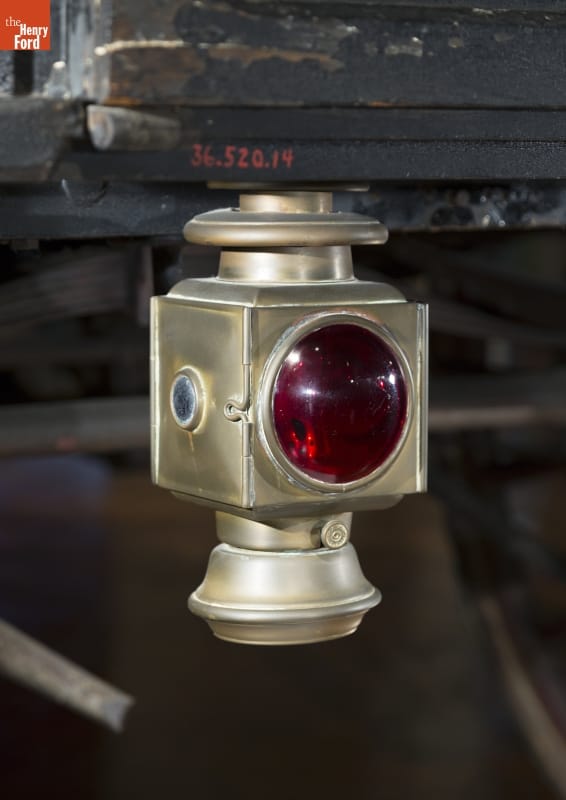
- Atwood Model No. 6 Tail Lamp, circa 1910 -
- circa 1910
- Collections - Artifact
Atwood Model No. 6 Tail Lamp, circa 1910
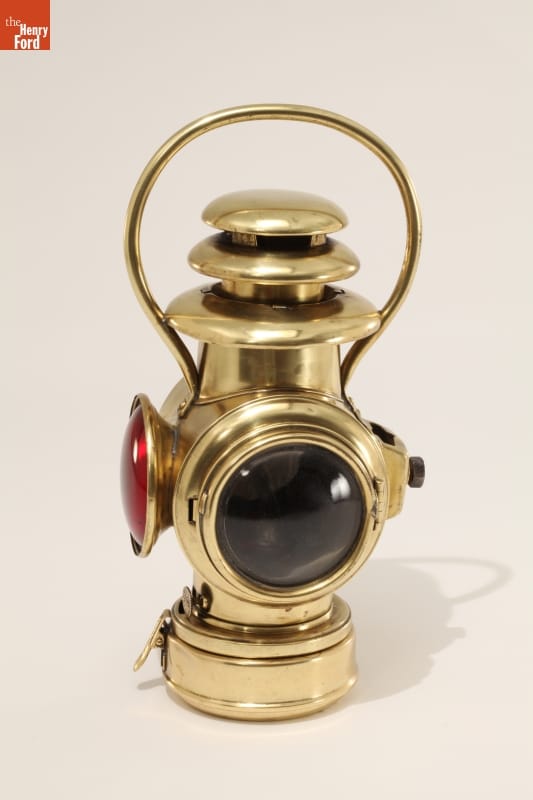
- Dietz Dainty Tail Lamp, circa 1905 - Taillights were not a standard fixture on early automobiles. Only when cars and roads improved -- and drivers braved the darkness -- did this safety feature become a necessity. Early taillights resembled carriage lamps found on horse-drawn vehicles. This kerosene-fueled tail lamp -- cars usually had only one -- used a red lens to warn approaching vehicles. A clear lens illuminated the license plate or back step.
- circa 1905
- Collections - Artifact
Dietz Dainty Tail Lamp, circa 1905
Taillights were not a standard fixture on early automobiles. Only when cars and roads improved -- and drivers braved the darkness -- did this safety feature become a necessity. Early taillights resembled carriage lamps found on horse-drawn vehicles. This kerosene-fueled tail lamp -- cars usually had only one -- used a red lens to warn approaching vehicles. A clear lens illuminated the license plate or back step.
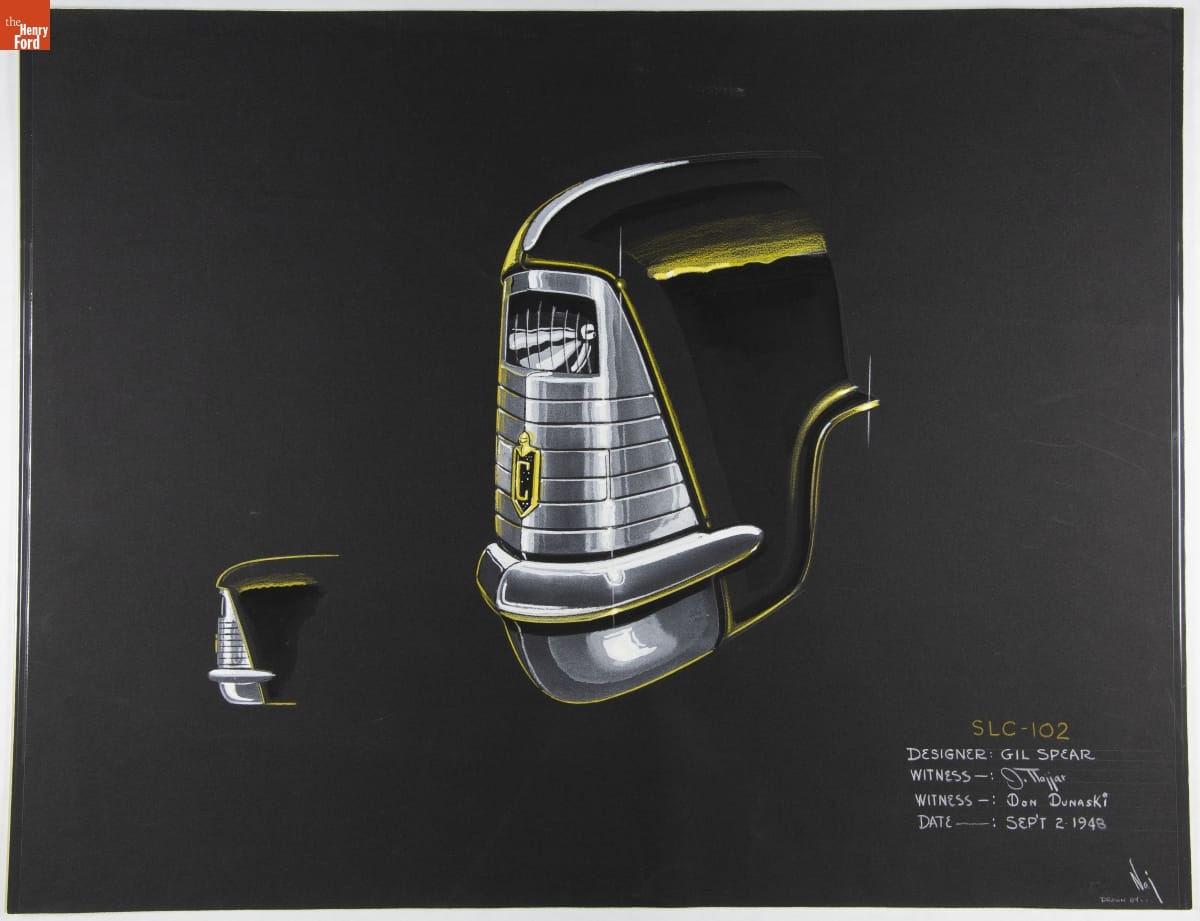
- Rendering, "SLC-102" (Lincoln Continental Rear Light), September 2, 1948 - Gil Spear started his career in automotive design at General Motors' Cadillac studio in 1937. Subsequent years saw him working for Norman Bel Geddes, Chrysler, and Briggs Manufacturing Company. In 1947, Spear joined Ford's design department where he often worked on advanced concepts for future vehicles. Spear was chief designer for Ford of England before he retired in 1974.
- September 02, 1948
- Collections - Artifact
Rendering, "SLC-102" (Lincoln Continental Rear Light), September 2, 1948
Gil Spear started his career in automotive design at General Motors' Cadillac studio in 1937. Subsequent years saw him working for Norman Bel Geddes, Chrysler, and Briggs Manufacturing Company. In 1947, Spear joined Ford's design department where he often worked on advanced concepts for future vehicles. Spear was chief designer for Ford of England before he retired in 1974.
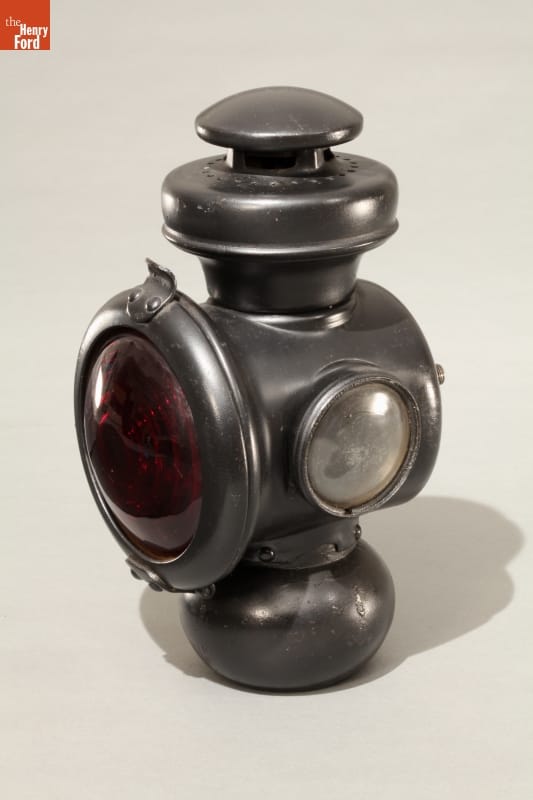
- Kerosene Automobile Tail Lamp, 1917-1924 - Early automobile lights used kerosene -- a fuel used in lighting fixtures found on horse-drawn vehicles. The John W. Brown Manufacturing Company made this tail lamp for Ford in the late 1910s and early 1920s at a time when electric lights were more common. The lamp's red lens warned approaching vehicles that an automobile was ahead. Its clear side lens illuminated the license plate.
- 1917-1924
- Collections - Artifact
Kerosene Automobile Tail Lamp, 1917-1924
Early automobile lights used kerosene -- a fuel used in lighting fixtures found on horse-drawn vehicles. The John W. Brown Manufacturing Company made this tail lamp for Ford in the late 1910s and early 1920s at a time when electric lights were more common. The lamp's red lens warned approaching vehicles that an automobile was ahead. Its clear side lens illuminated the license plate.
- Tail Lamp, circa 1910 - Taillights were not a standard fixture on early automobiles. Only when cars and roads improved -- and drivers braved the darkness -- did this safety feature become a necessity. Early taillights resembled carriage lamps found on horse-drawn vehicles. This kerosene-fueled tail lamp -- cars usually had only one -- used a red lens to warn approaching vehicles. A clear lens illuminated the license plate or back step.
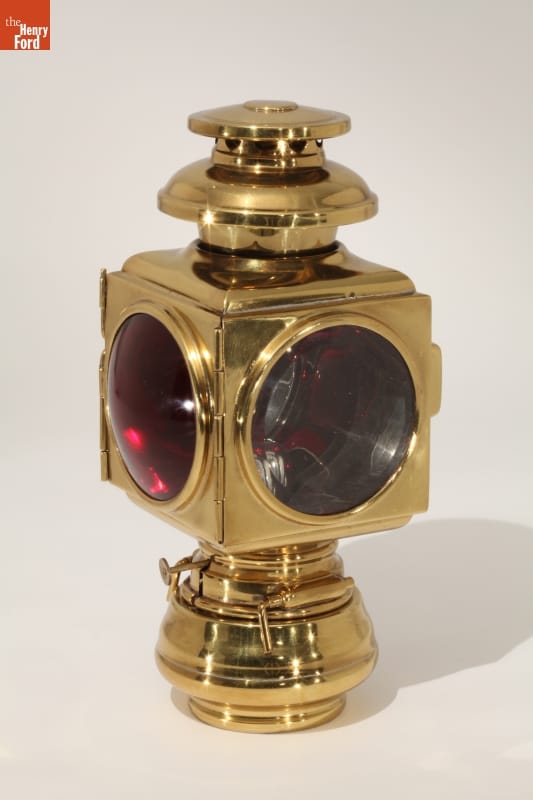
- circa 1910
- Collections - Artifact
Tail Lamp, circa 1910
Taillights were not a standard fixture on early automobiles. Only when cars and roads improved -- and drivers braved the darkness -- did this safety feature become a necessity. Early taillights resembled carriage lamps found on horse-drawn vehicles. This kerosene-fueled tail lamp -- cars usually had only one -- used a red lens to warn approaching vehicles. A clear lens illuminated the license plate or back step.
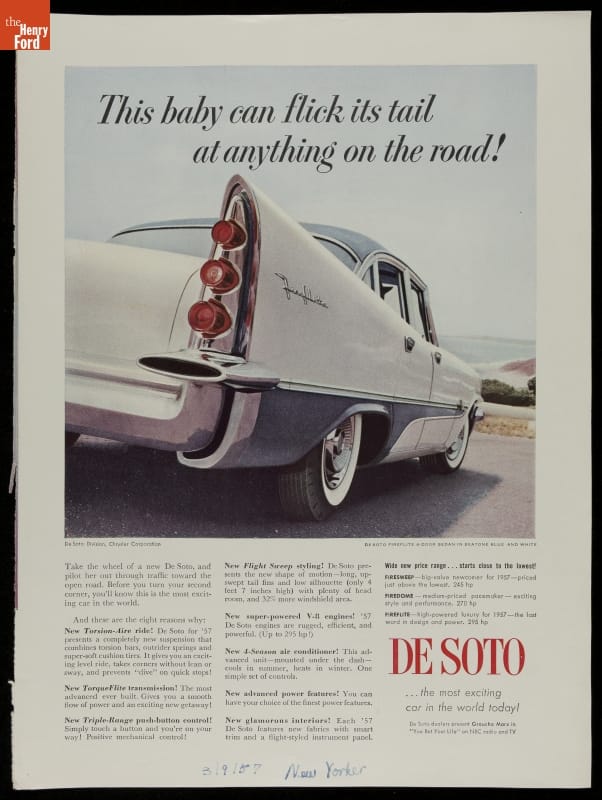
- 1957 DeSoto Advertisement, "This Baby Can Flick its Tail at Anything on the Road!" - The automobile is a paradox -- a practical tool that plays host to both human needs and fantasies. Like car consumers, automotive ads seem to land somewhere between fantasy and reality, emotions and rationality. Many ads incorporate apparent opposites: fantasy can sell practicality, and vice versa. Sometimes the car has disappeared completely -- an emotional appeal prompts us to complete the ad.
- March 01, 1957
- Collections - Artifact
1957 DeSoto Advertisement, "This Baby Can Flick its Tail at Anything on the Road!"
The automobile is a paradox -- a practical tool that plays host to both human needs and fantasies. Like car consumers, automotive ads seem to land somewhere between fantasy and reality, emotions and rationality. Many ads incorporate apparent opposites: fantasy can sell practicality, and vice versa. Sometimes the car has disappeared completely -- an emotional appeal prompts us to complete the ad.