
Search
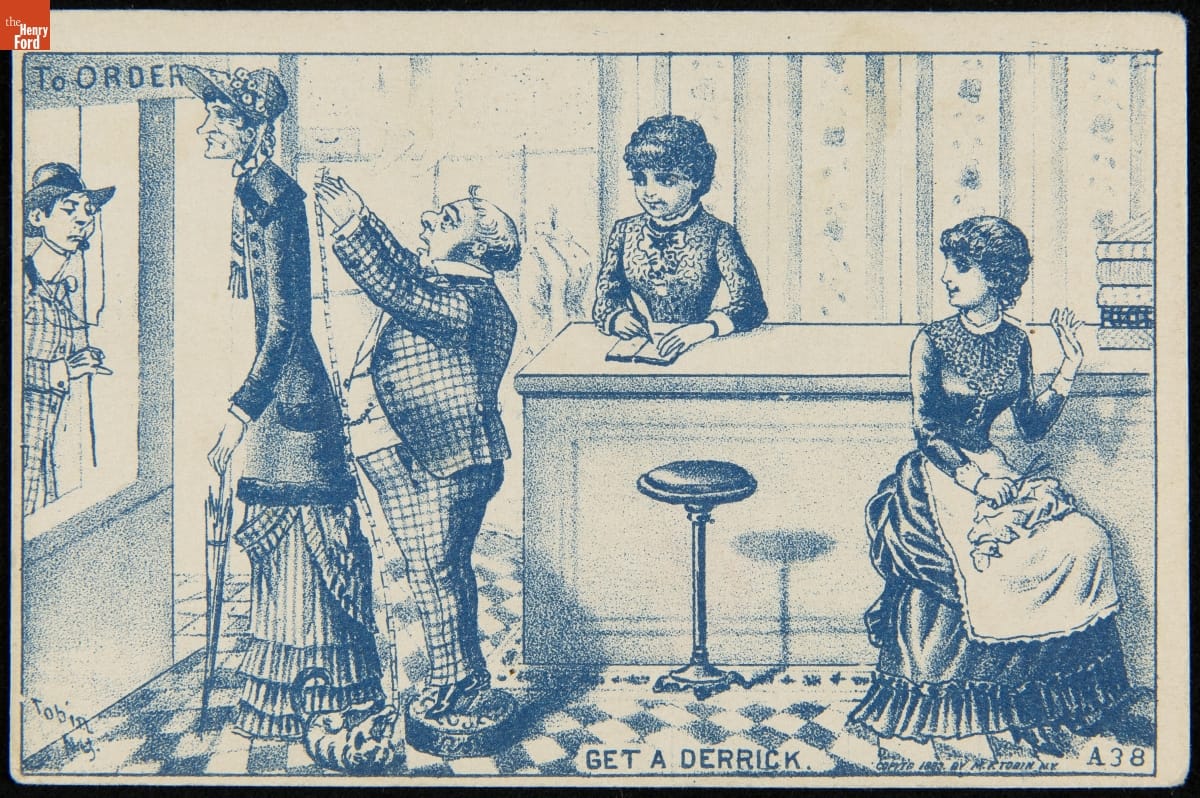
- Trade Card for Clothing, Tower Clothing Co., 1883 - In the last third of the nineteenth century, an unprecedented variety of consumer goods and services flooded the American market. Advertisers, armed with new methods of color printing, bombarded potential customers with trade cards. Americans enjoyed and often saved the vibrant little advertisements found in product packages or distributed by local merchants. Many survive as historical records of commercialism in the United States.
- 1883
- Collections - Artifact
Trade Card for Clothing, Tower Clothing Co., 1883
In the last third of the nineteenth century, an unprecedented variety of consumer goods and services flooded the American market. Advertisers, armed with new methods of color printing, bombarded potential customers with trade cards. Americans enjoyed and often saved the vibrant little advertisements found in product packages or distributed by local merchants. Many survive as historical records of commercialism in the United States.
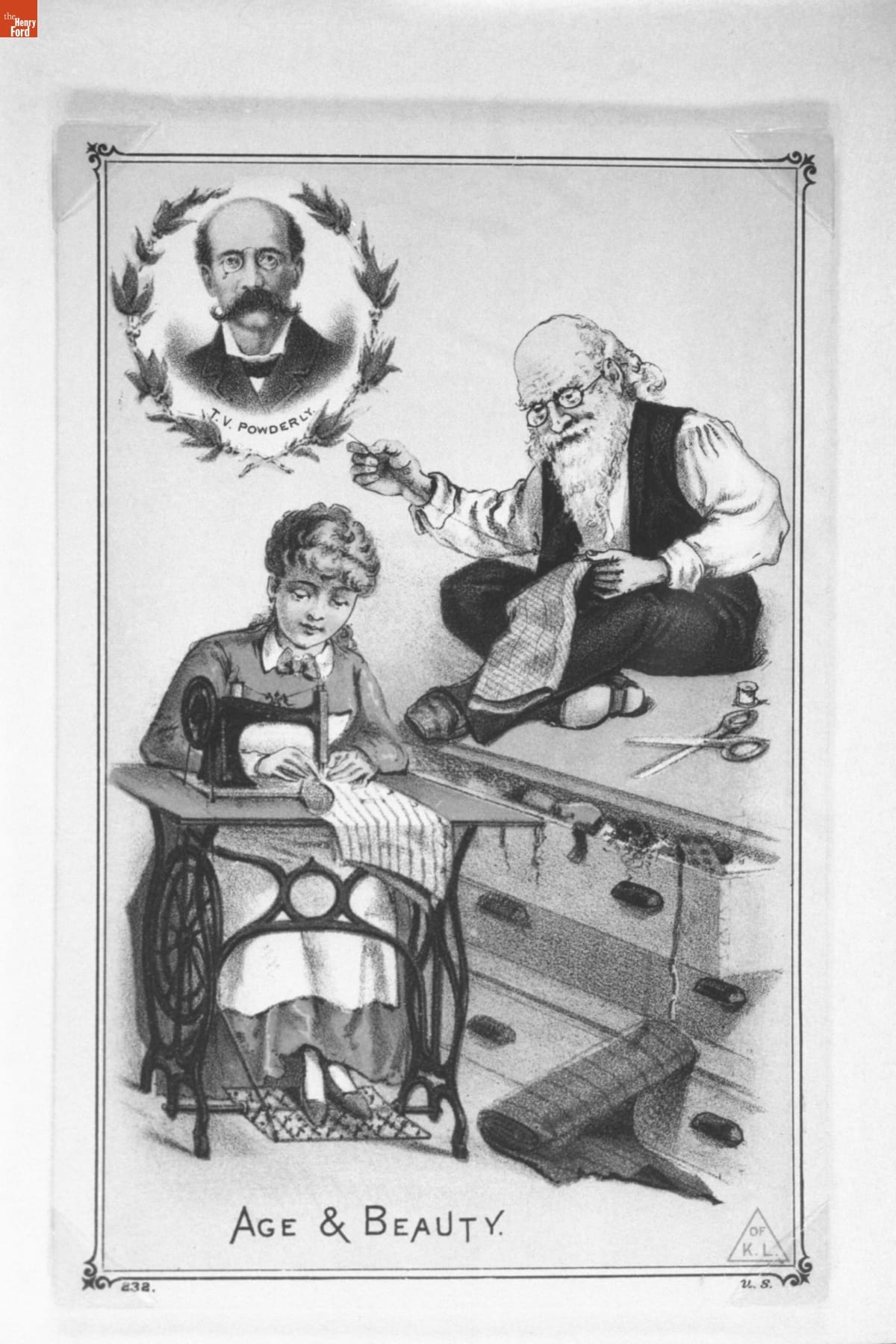
- Trade Card for the Knights of Labor, "Age & Beauty," 1884-1887 -
- 1884-1887
- Collections - Artifact
Trade Card for the Knights of Labor, "Age & Beauty," 1884-1887
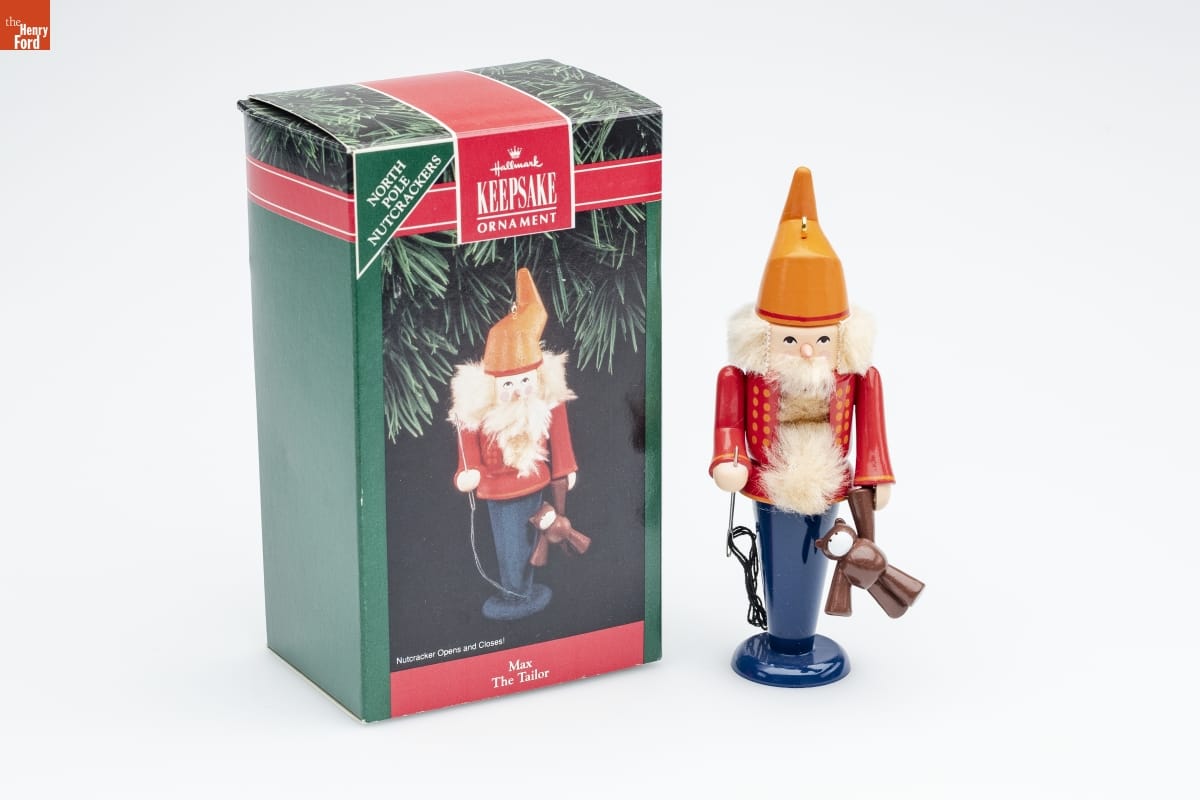
- Hallmark "North Pole Nutcrackers Collection: Max The Tailor" Christmas Ornament, 1992 - Already known for greeting cards, Hallmark introduced a line of Christmas ornaments in 1973. The company's annual release of an increasing array of ornaments revolutionized Christmas decorating, appealing to customers' interest in marking memories and milestones as well as expressing one's personality and unique tastes.
- 1992
- Collections - Artifact
Hallmark "North Pole Nutcrackers Collection: Max The Tailor" Christmas Ornament, 1992
Already known for greeting cards, Hallmark introduced a line of Christmas ornaments in 1973. The company's annual release of an increasing array of ornaments revolutionized Christmas decorating, appealing to customers' interest in marking memories and milestones as well as expressing one's personality and unique tastes.
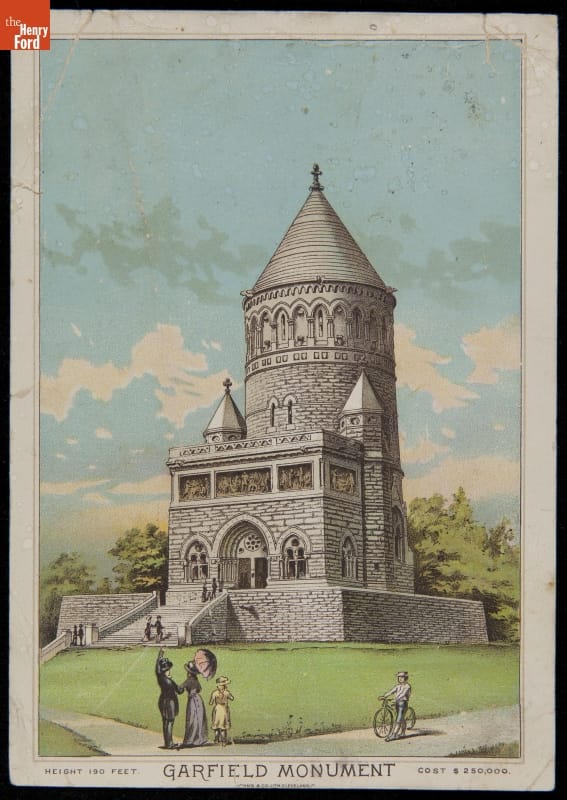
- Trade Card for E.R. Hull & Co. and Dedication of the Garfield Monument, 1890 - In the last third of the nineteenth century, promoters used a popular medium--trade cards--to announce shows, activities, and community events. Americans enjoyed and often saved the vibrant little advertisements, which survive as historical records of leisure in the United States.
- May 30, 1890
- Collections - Artifact
Trade Card for E.R. Hull & Co. and Dedication of the Garfield Monument, 1890
In the last third of the nineteenth century, promoters used a popular medium--trade cards--to announce shows, activities, and community events. Americans enjoyed and often saved the vibrant little advertisements, which survive as historical records of leisure in the United States.
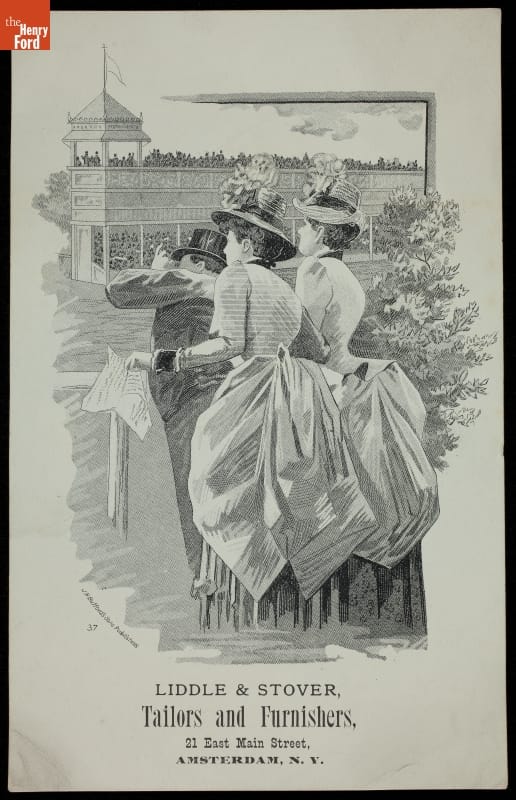
- Trade Card for Liddle & Stover Tailors, J.H. Bufford & Co., 1885 - In the last third of the nineteenth century, an unprecedented variety of consumer goods and services flooded the American market. Advertisers bombarded potential customers with trade cards. Americans enjoyed and saved the often illustrated little advertisements found in product packages or distributed by local merchants. Many survive as historical records of commercialism in the United States.
- 1885
- Collections - Artifact
Trade Card for Liddle & Stover Tailors, J.H. Bufford & Co., 1885
In the last third of the nineteenth century, an unprecedented variety of consumer goods and services flooded the American market. Advertisers bombarded potential customers with trade cards. Americans enjoyed and saved the often illustrated little advertisements found in product packages or distributed by local merchants. Many survive as historical records of commercialism in the United States.
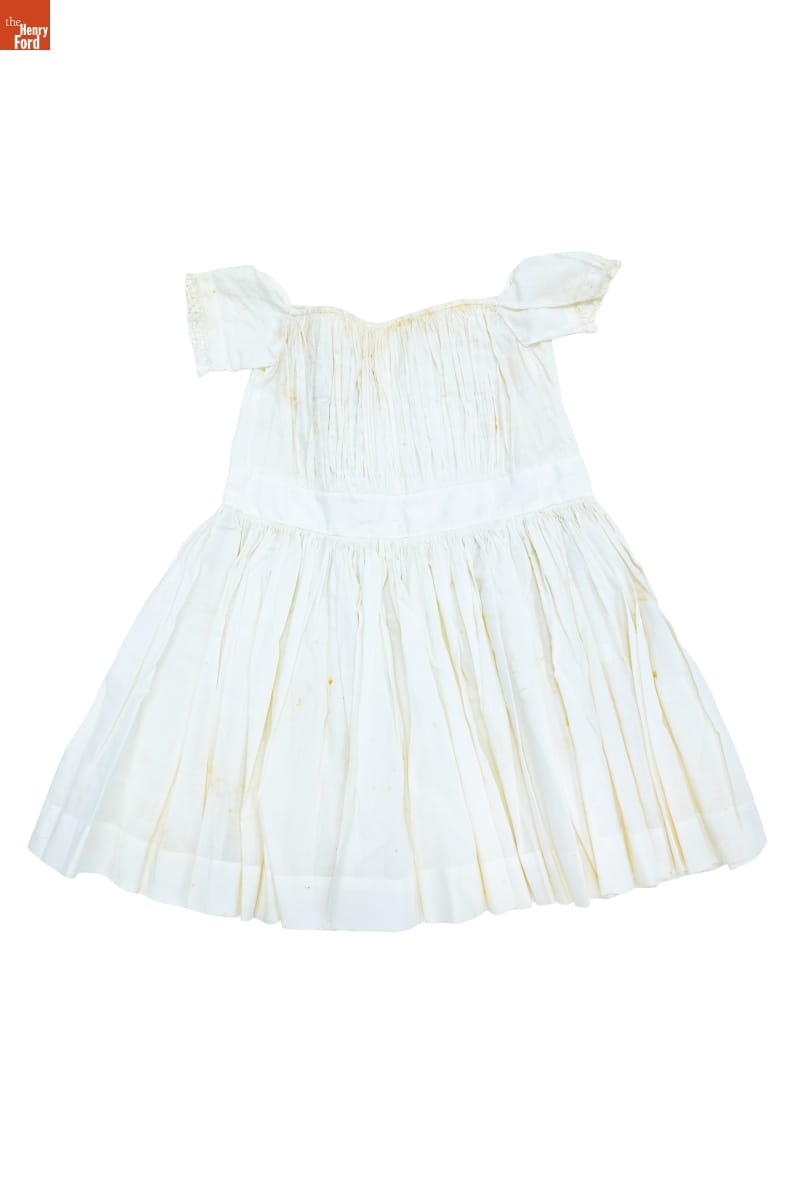
- Child's Dress, circa 1850 -
- circa 1850
- Collections - Artifact
Child's Dress, circa 1850
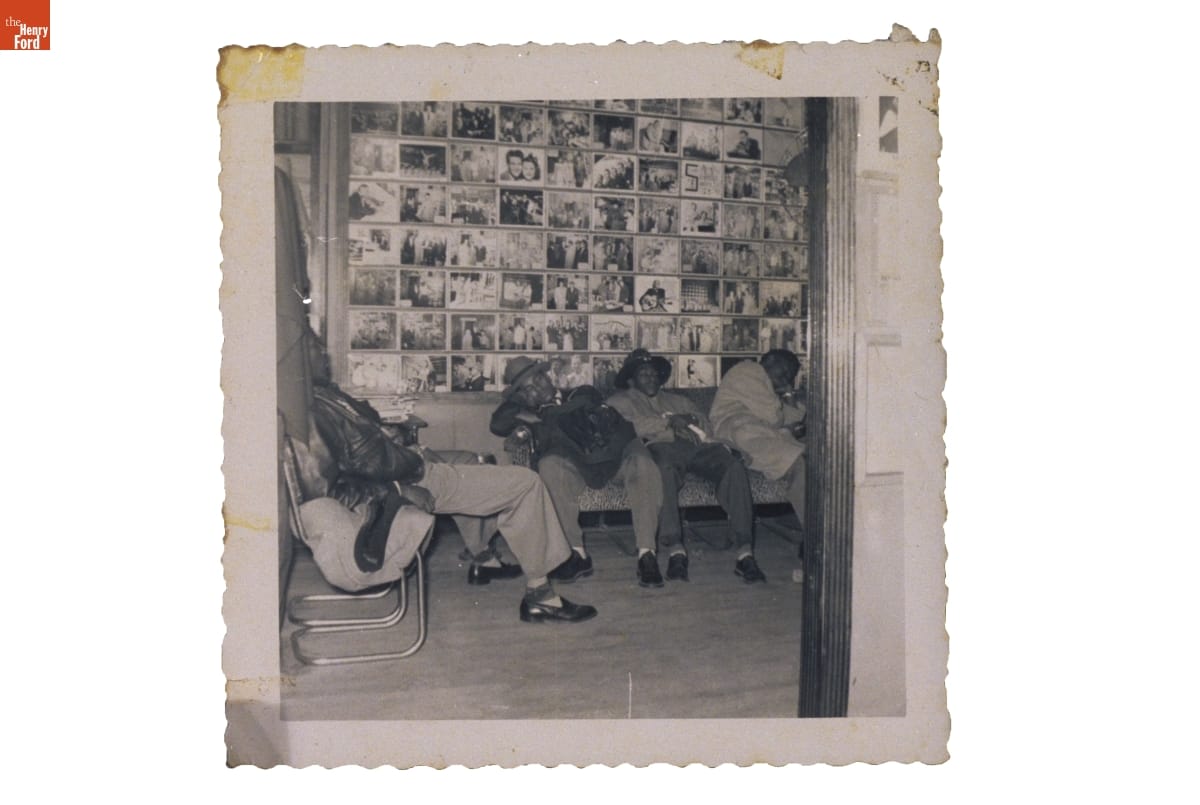
- The Orioles Music Group inside Fox Brothers Clothier, Chicago, Illinois, 1942 - Fox Brothers Clothier in Chicago outfitted many Black American entertainers. Shop owner Harold Fox (1910-1996) had previously worked as an itinerant musician. He used his connections to attract a high-profile clientele, which included artists such as Cab Calloway, Louis Armstrong, and Bill "Bojangles" Robison. This photograph shows The Orioles, a pioneering Rhythm and Blues vocal group, at his shop.
- 1942
- Collections - Artifact
The Orioles Music Group inside Fox Brothers Clothier, Chicago, Illinois, 1942
Fox Brothers Clothier in Chicago outfitted many Black American entertainers. Shop owner Harold Fox (1910-1996) had previously worked as an itinerant musician. He used his connections to attract a high-profile clientele, which included artists such as Cab Calloway, Louis Armstrong, and Bill "Bojangles" Robison. This photograph shows The Orioles, a pioneering Rhythm and Blues vocal group, at his shop.
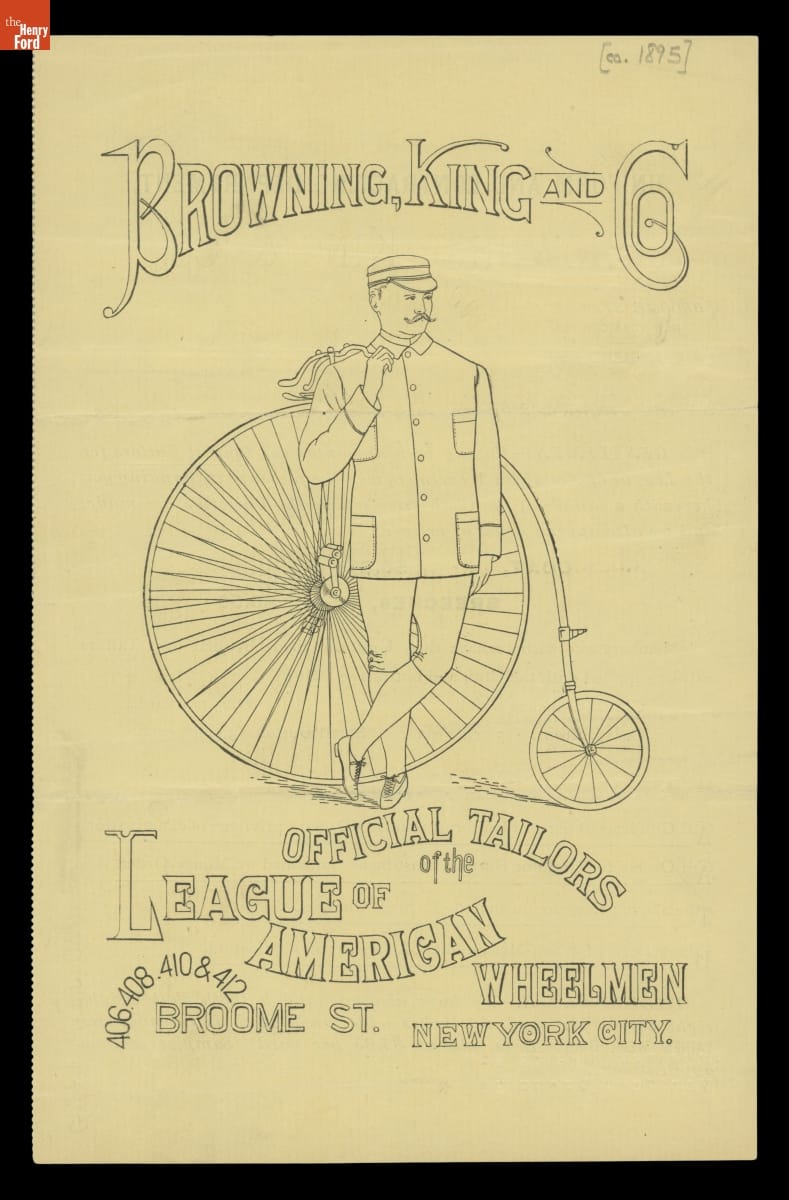
- Browning, King, and Co. Official Tailors of the League of American Wheelmen, circa 1890 - Browning, King & Company was the official tailors to the League of American Wheelmen, a late-19th-century cycling organization. Members could order coats and breeches from the company or request that cloth material be sent to the cyclist's tailor. Wheelmen could order other sundries -- shirts, caps, belts, stockings, and shoes -- from other official outfitters.
- circa 1890
- Collections - Artifact
Browning, King, and Co. Official Tailors of the League of American Wheelmen, circa 1890
Browning, King & Company was the official tailors to the League of American Wheelmen, a late-19th-century cycling organization. Members could order coats and breeches from the company or request that cloth material be sent to the cyclist's tailor. Wheelmen could order other sundries -- shirts, caps, belts, stockings, and shoes -- from other official outfitters.
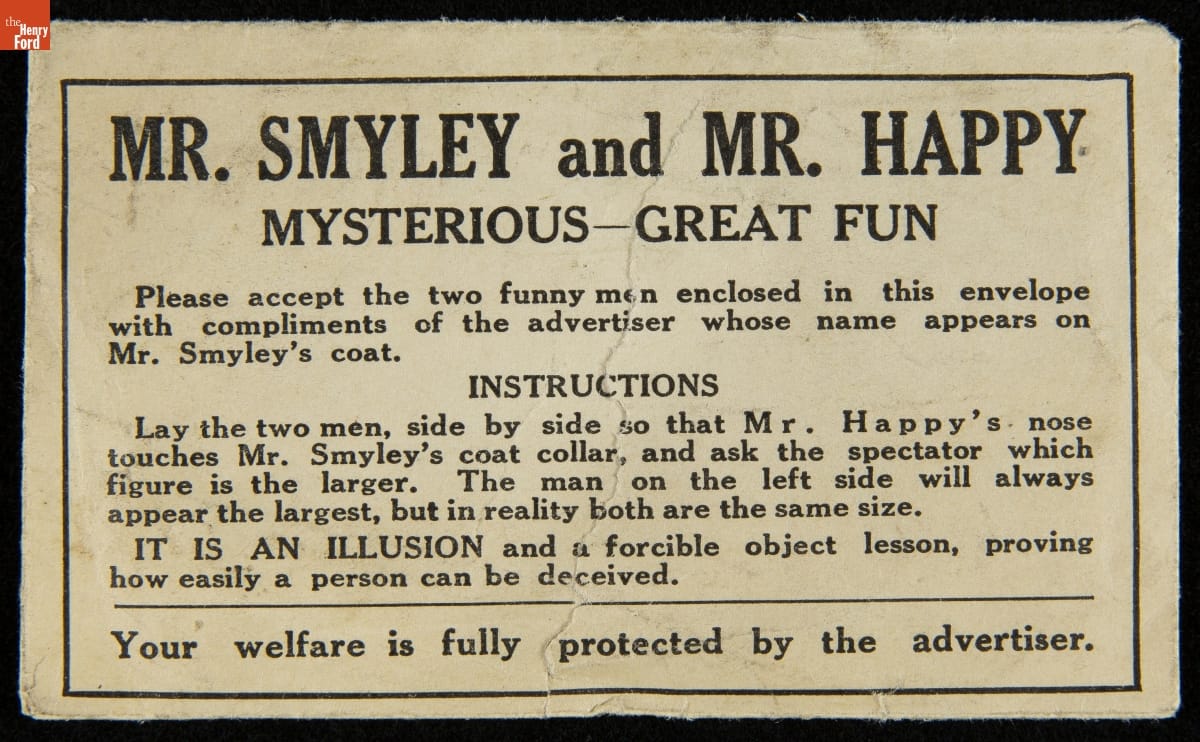
- Mr. Smyley and Mr. Happy's Optical Illusion Trade Card for Nick Pettine Tuxedo Rentals, 1924 -
- circa 1924
- Collections - Artifact
Mr. Smyley and Mr. Happy's Optical Illusion Trade Card for Nick Pettine Tuxedo Rentals, 1924
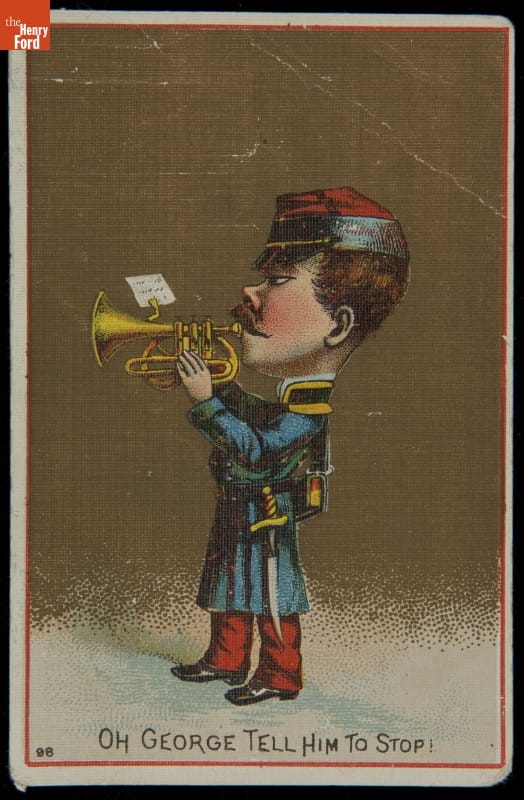
- Trade Card for Gourlay Brothers & Co., Shirt Makers and Importers Men's Furnishing Goods, 1875-1890 - In the last third of the nineteenth century, an unprecedented variety of consumer goods and services flooded the American market. Advertisers, armed with new methods of color printing, bombarded potential customers with trade cards. Americans enjoyed and often saved the vibrant little advertisements found in product packages or distributed by local merchants. Many survive as historical records of commercialism in the United States.
- 1875-1890
- Collections - Artifact
Trade Card for Gourlay Brothers & Co., Shirt Makers and Importers Men's Furnishing Goods, 1875-1890
In the last third of the nineteenth century, an unprecedented variety of consumer goods and services flooded the American market. Advertisers, armed with new methods of color printing, bombarded potential customers with trade cards. Americans enjoyed and often saved the vibrant little advertisements found in product packages or distributed by local merchants. Many survive as historical records of commercialism in the United States.