
Search
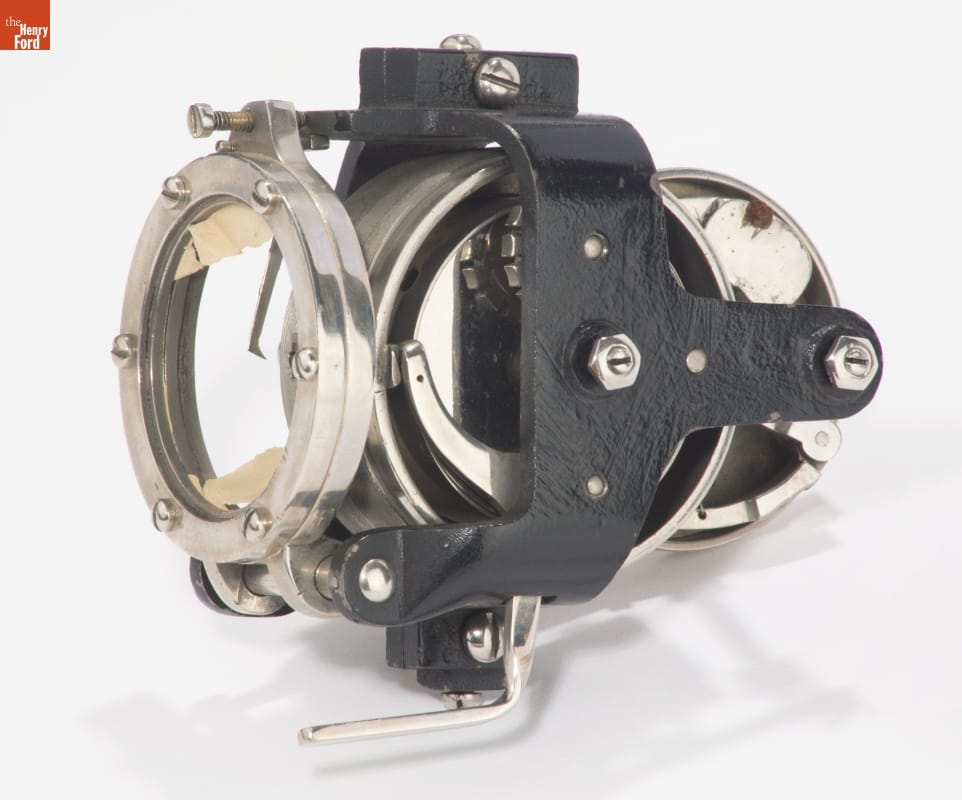
- Edison Talking Doll Phonograph with Cylinder Records, 1888 - Thomas Edison's 1878 patent for a "phonographic" doll resulted in the production of about 100 "talking" dolls between 1889 and 1890. This doll "talked" by means of a scaled-down phonograph inside its body, which played nursery rhymes like "Mary Had a Little Lamb." Only made for a short time, the doll's mechanism was unreliable and the recorded voices scared children.
- 1888
- Collections - Artifact
Edison Talking Doll Phonograph with Cylinder Records, 1888
Thomas Edison's 1878 patent for a "phonographic" doll resulted in the production of about 100 "talking" dolls between 1889 and 1890. This doll "talked" by means of a scaled-down phonograph inside its body, which played nursery rhymes like "Mary Had a Little Lamb." Only made for a short time, the doll's mechanism was unreliable and the recorded voices scared children.
- Edison Talking Doll, 1889-1890 - Thomas Edison's 1878 patent for a "phonographic" doll resulted in the production of about 100 "talking" dolls between 1889 and 1890. This doll "talked" by means of a scaled-down phonograph inside its body, which played nursery rhymes like "Mary Had a Little Lamb." Only made for a short time, the doll's mechanism was unreliable and the recorded voices scared children.

- 1889-1890
- Collections - Artifact
Edison Talking Doll, 1889-1890
Thomas Edison's 1878 patent for a "phonographic" doll resulted in the production of about 100 "talking" dolls between 1889 and 1890. This doll "talked" by means of a scaled-down phonograph inside its body, which played nursery rhymes like "Mary Had a Little Lamb." Only made for a short time, the doll's mechanism was unreliable and the recorded voices scared children.
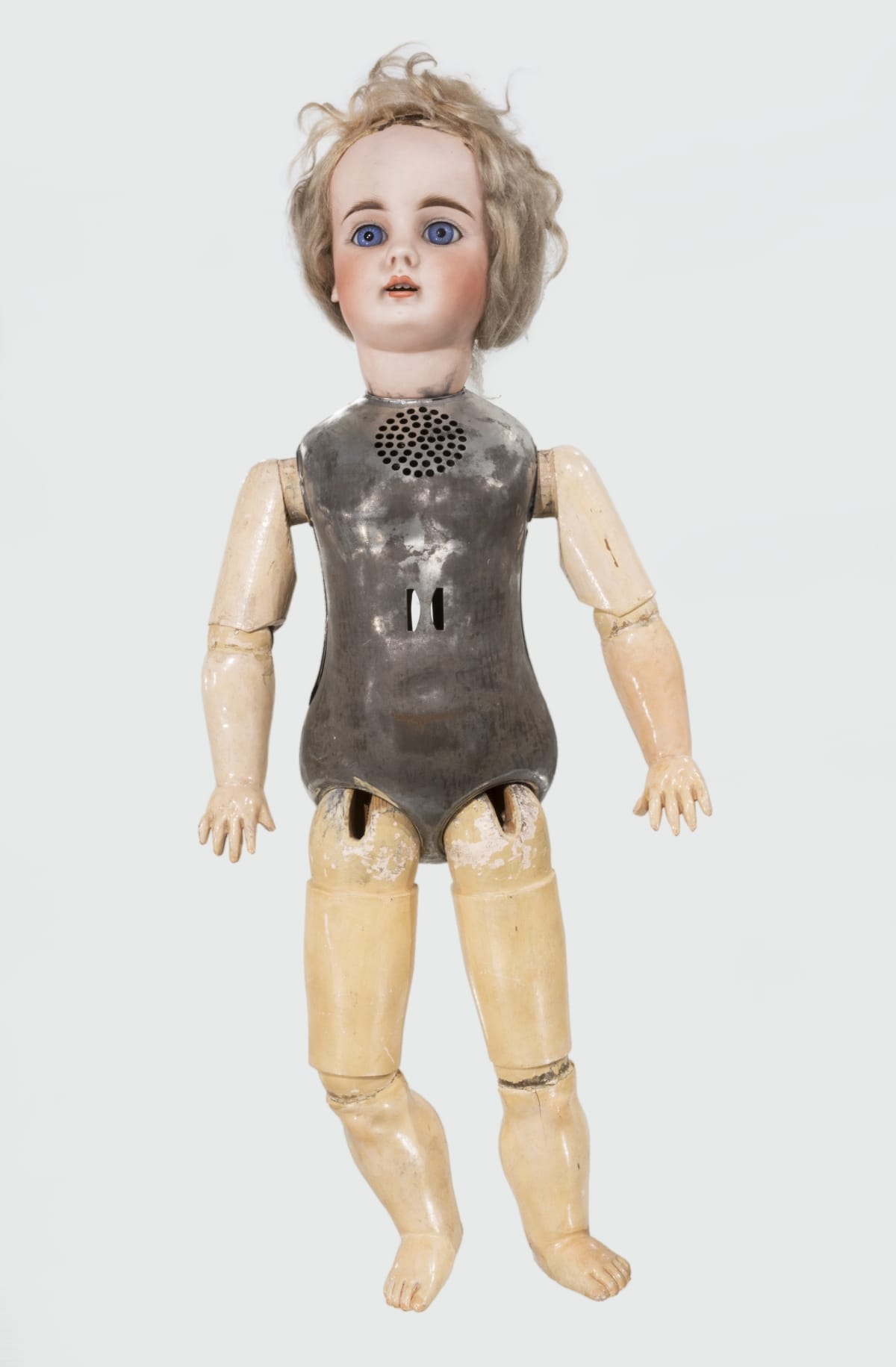
- Edison Talking Doll, 1889-1890 - Thomas Edison's 1878 patent for a "phonographic" doll resulted in the production of about 100 "talking" dolls between 1889 and 1890. This doll "talked" by means of a scaled-down phonograph inside its body, which played nursery rhymes like "Mary Had a Little Lamb." Only made for a short time, the doll's mechanism was unreliable and the recorded voices scared children.
- 1889-1890
- Collections - Artifact
Edison Talking Doll, 1889-1890
Thomas Edison's 1878 patent for a "phonographic" doll resulted in the production of about 100 "talking" dolls between 1889 and 1890. This doll "talked" by means of a scaled-down phonograph inside its body, which played nursery rhymes like "Mary Had a Little Lamb." Only made for a short time, the doll's mechanism was unreliable and the recorded voices scared children.
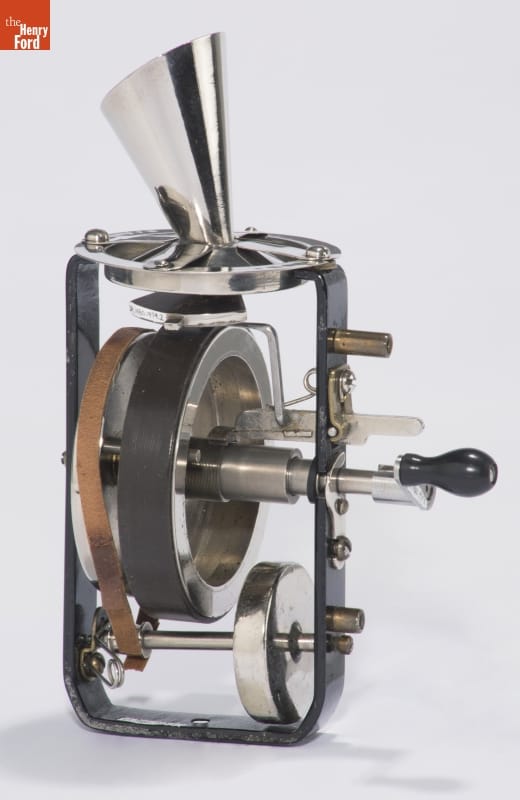
- Edison Talking Doll Phonograph with Cylinder Recording of "Mary Had a Little Lamb," 1890 - Thomas Edison's 1878 patent for a "phonographic" doll resulted in the production of about 100 "talking" dolls between 1889 and 1890. This doll "talked" by means of a scaled-down phonograph inside its body, which played nursery rhymes like "Mary Had a Little Lamb." Only made for a short time, the doll's mechanism was unreliable and the recorded voices scared children.
- 1890
- Collections - Artifact
Edison Talking Doll Phonograph with Cylinder Recording of "Mary Had a Little Lamb," 1890
Thomas Edison's 1878 patent for a "phonographic" doll resulted in the production of about 100 "talking" dolls between 1889 and 1890. This doll "talked" by means of a scaled-down phonograph inside its body, which played nursery rhymes like "Mary Had a Little Lamb." Only made for a short time, the doll's mechanism was unreliable and the recorded voices scared children.
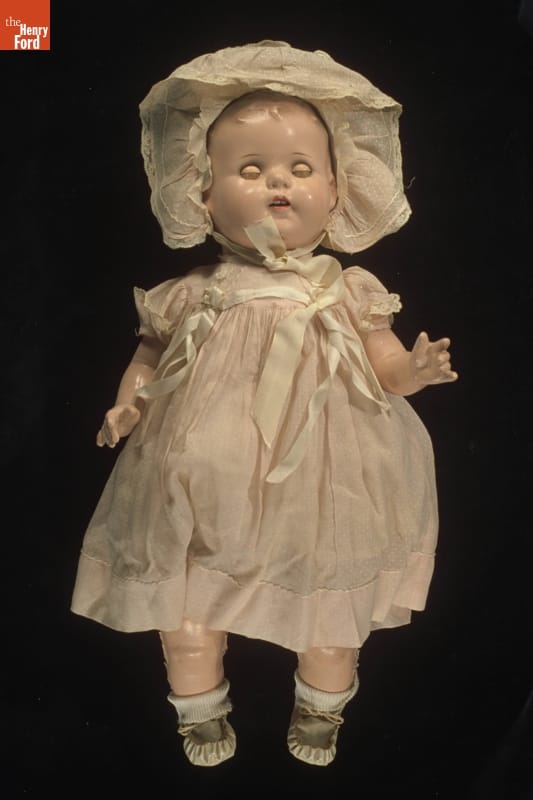
- Talking Baby Doll, 1910-1930 -
- 1910-1930
- Collections - Artifact
Talking Baby Doll, 1910-1930
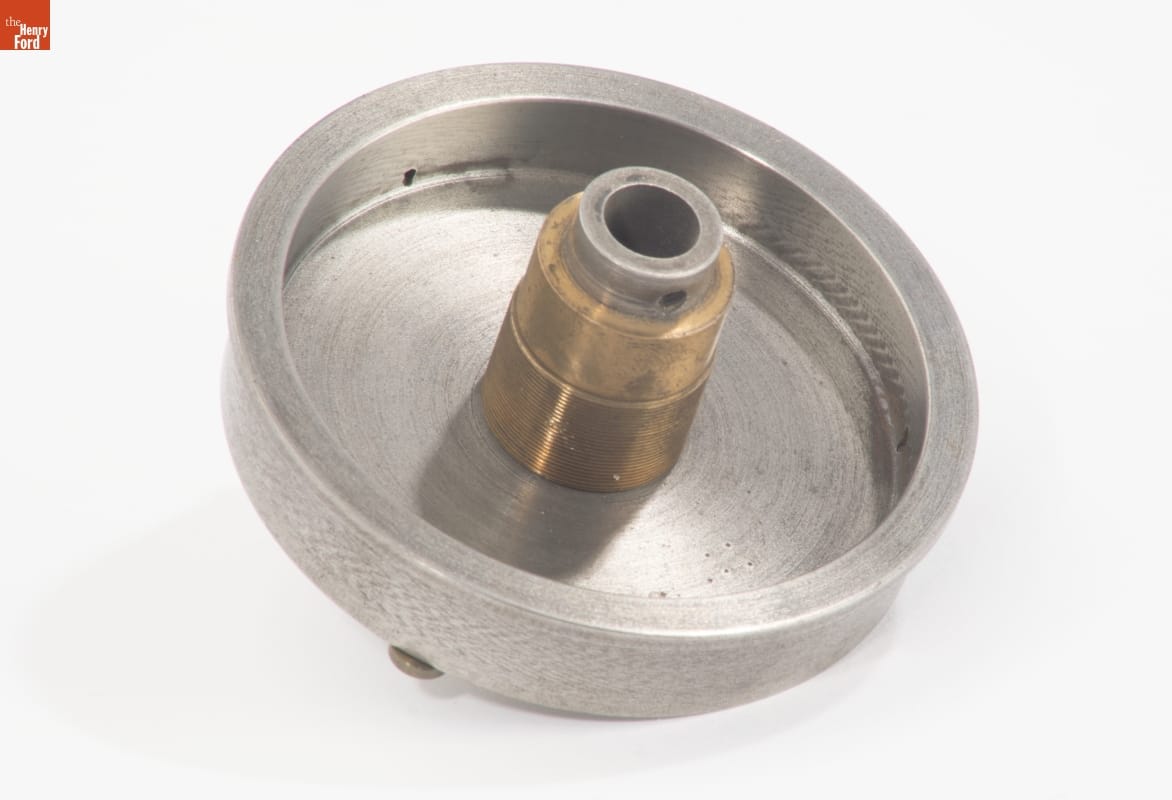
- Mandrel for Edison Talking Doll Phonograph, 1888-1890 - Thomas Edison's 1878 patent for a "phonographic" doll resulted in the production of about 100 "talking" dolls between 1889 and 1890. This doll "talked" by means of a scaled-down phonograph inside its body, which played nursery rhymes like "Mary Had a Little Lamb." Only made for a short time, the doll's mechanism was unreliable and the recorded voices scared children.
- 1888-1890
- Collections - Artifact
Mandrel for Edison Talking Doll Phonograph, 1888-1890
Thomas Edison's 1878 patent for a "phonographic" doll resulted in the production of about 100 "talking" dolls between 1889 and 1890. This doll "talked" by means of a scaled-down phonograph inside its body, which played nursery rhymes like "Mary Had a Little Lamb." Only made for a short time, the doll's mechanism was unreliable and the recorded voices scared children.
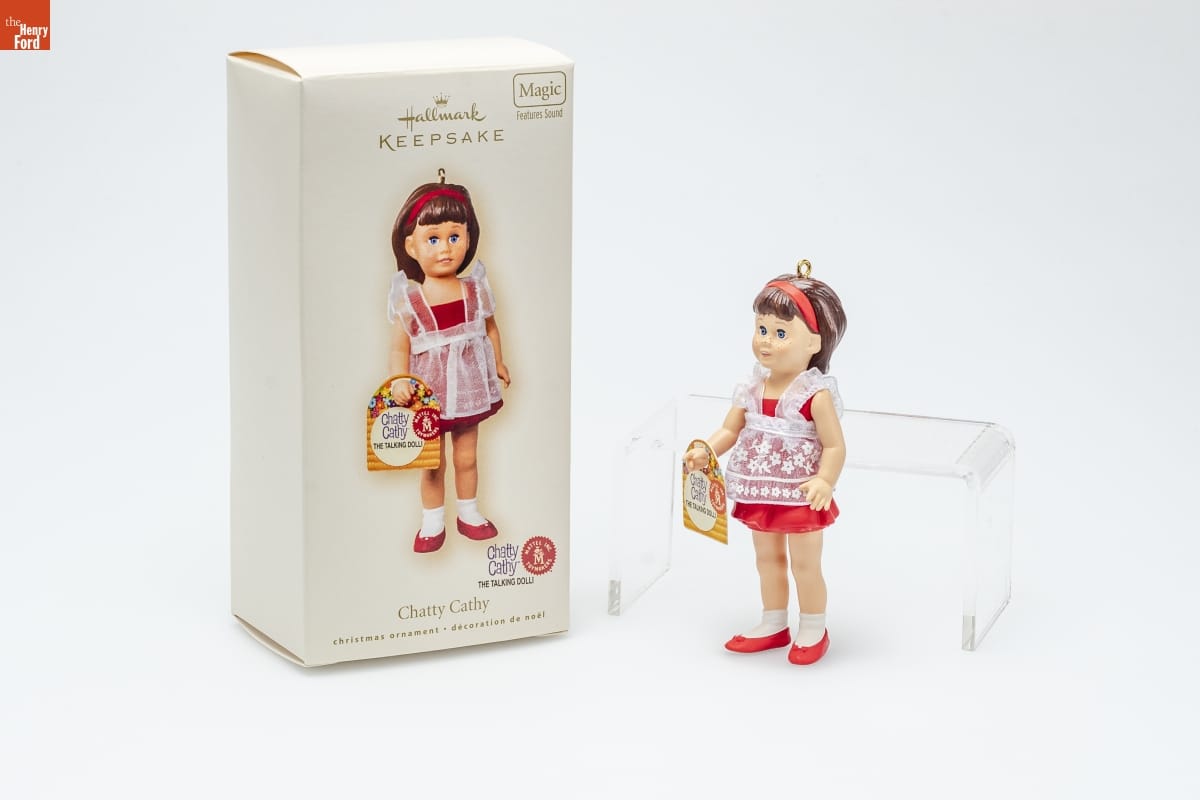
- Hallmark "Chatty Cathy" Christmas Ornament, 2007 - Already known for greeting cards, Hallmark introduced a line of Christmas ornaments in 1973. The company's annual release of an increasing array of ornaments revolutionized Christmas decorating, appealing to customers' interest in marking memories and milestones as well as expressing one's personality and unique tastes.
- 2007
- Collections - Artifact
Hallmark "Chatty Cathy" Christmas Ornament, 2007
Already known for greeting cards, Hallmark introduced a line of Christmas ornaments in 1973. The company's annual release of an increasing array of ornaments revolutionized Christmas decorating, appealing to customers' interest in marking memories and milestones as well as expressing one's personality and unique tastes.
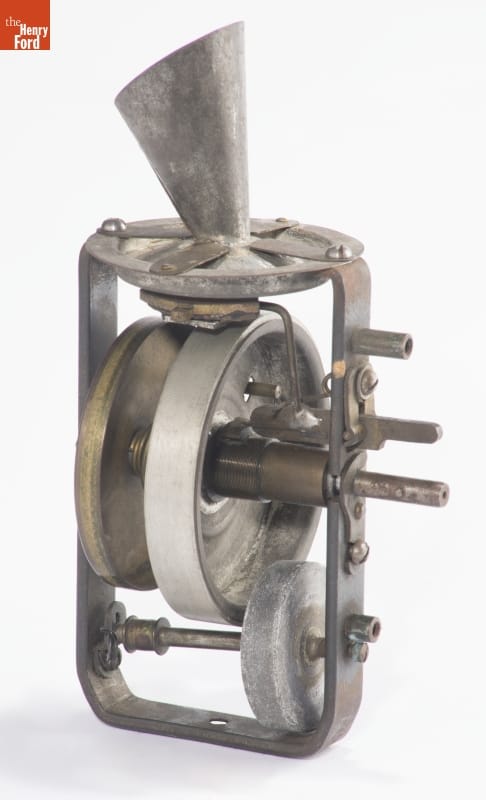
- Edison Talking Doll Phonograph with Cylinder Record, 1889 - Thomas Edison's 1878 patent for a "phonographic" doll resulted in the production of about 100 "talking" dolls between 1889 and 1890. This doll "talked" by means of a scaled-down phonograph inside its body, which played nursery rhymes like "Mary Had a Little Lamb." Only made for a short time, the doll's mechanism was unreliable and the recorded voices scared children.
- 1889
- Collections - Artifact
Edison Talking Doll Phonograph with Cylinder Record, 1889
Thomas Edison's 1878 patent for a "phonographic" doll resulted in the production of about 100 "talking" dolls between 1889 and 1890. This doll "talked" by means of a scaled-down phonograph inside its body, which played nursery rhymes like "Mary Had a Little Lamb." Only made for a short time, the doll's mechanism was unreliable and the recorded voices scared children.
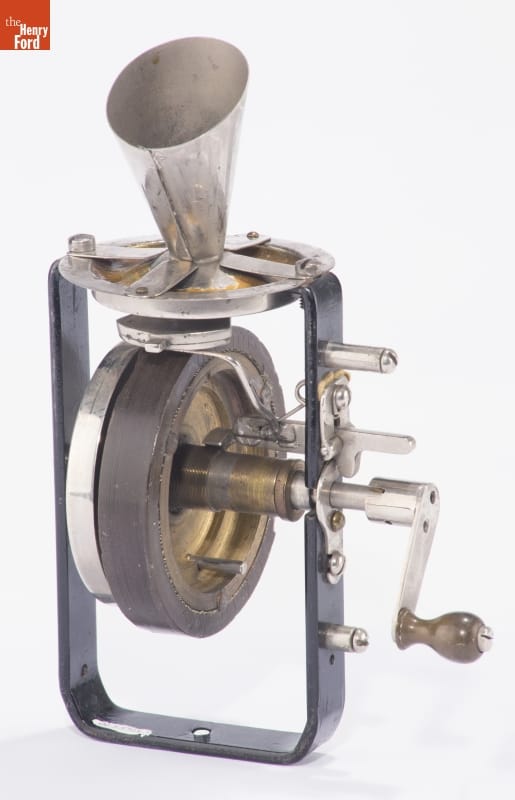
- Edison Talking Doll Phonograph and Cylinder Recording of "Twinkle, Twinkle, Little Star," 1890 - Thomas Edison's 1878 patent for a "phonographic" doll resulted in the production of about 100 "talking" dolls between 1889 and 1890. This doll "talked" by means of a scaled-down phonograph inside its body, which played nursery rhymes like "Mary Had a Little Lamb." Only made for a short time, the doll's mechanism was unreliable and the recorded voices scared children.
- 1890
- Collections - Artifact
Edison Talking Doll Phonograph and Cylinder Recording of "Twinkle, Twinkle, Little Star," 1890
Thomas Edison's 1878 patent for a "phonographic" doll resulted in the production of about 100 "talking" dolls between 1889 and 1890. This doll "talked" by means of a scaled-down phonograph inside its body, which played nursery rhymes like "Mary Had a Little Lamb." Only made for a short time, the doll's mechanism was unreliable and the recorded voices scared children.
- Edison Talking Doll Phonograph and Cylinder Record, 1889 - Thomas Edison's 1878 patent for a "phonographic" doll resulted in the production of about 100 "talking" dolls between 1889 and 1890. This doll "talked" by means of a scaled-down phonograph inside its body, which played nursery rhymes like "Mary Had a Little Lamb." Only made for a short time, the doll's mechanism was unreliable and the recorded voices scared children.
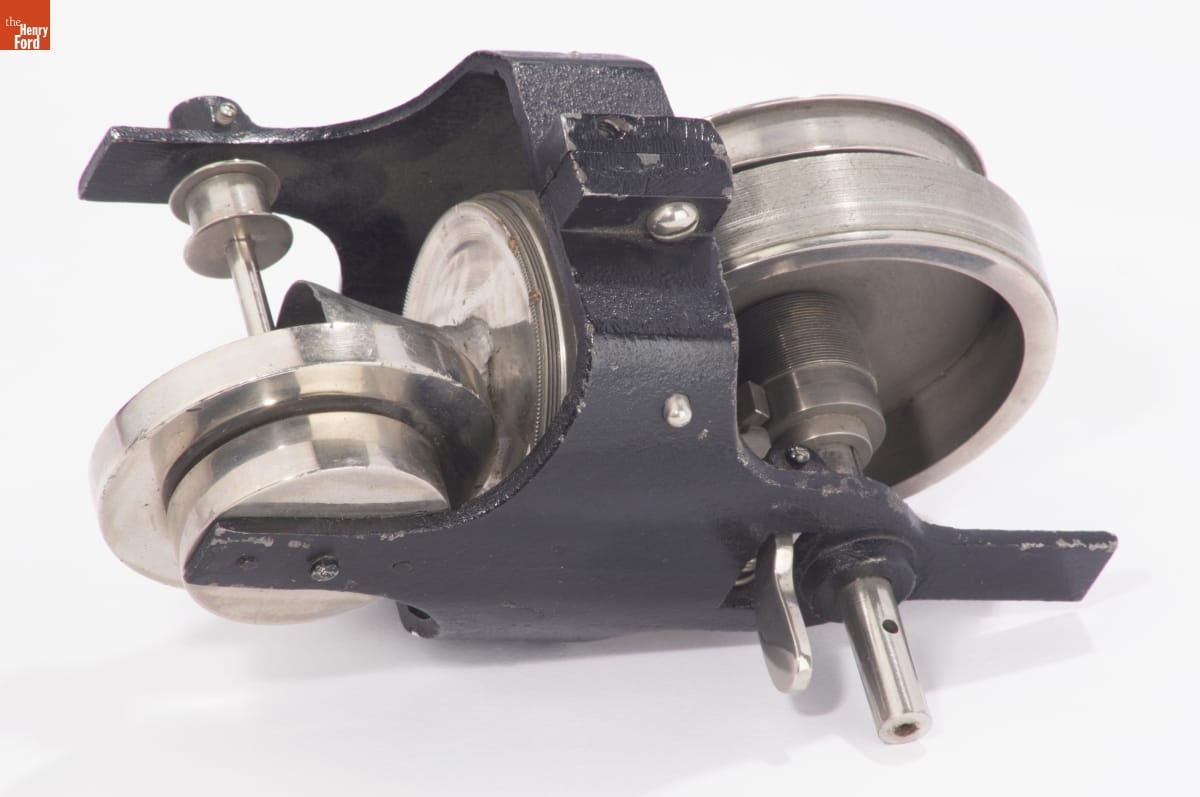
- 1889
- Collections - Artifact
Edison Talking Doll Phonograph and Cylinder Record, 1889
Thomas Edison's 1878 patent for a "phonographic" doll resulted in the production of about 100 "talking" dolls between 1889 and 1890. This doll "talked" by means of a scaled-down phonograph inside its body, which played nursery rhymes like "Mary Had a Little Lamb." Only made for a short time, the doll's mechanism was unreliable and the recorded voices scared children.