
Search
- Tattoo Sketch, 1915-1950 - Tattoos communicate stories. Their content ranges from deeply personal and traditional--to regrettable and frivolous. In the early 1900s, "Professor" Waters apprenticed as a tattoo artist in carnivals and New York's Bowery District. He ran a successful supply shop in Detroit (1918-1939), patenting the standard "two-coil" tattoo machine in 1929. Designs from his flash sheets continue to inspire tattooists today.
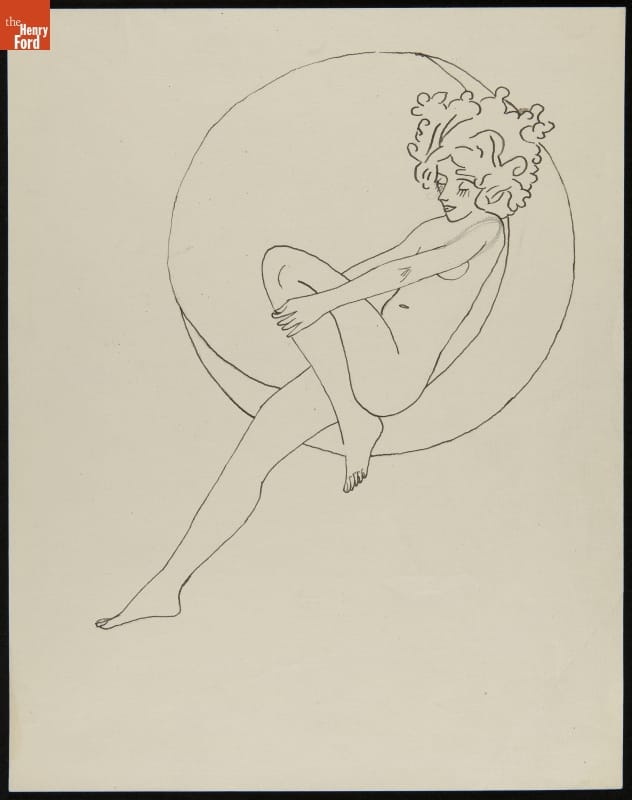
- 1915-1950
- Collections - Artifact
Tattoo Sketch, 1915-1950
Tattoos communicate stories. Their content ranges from deeply personal and traditional--to regrettable and frivolous. In the early 1900s, "Professor" Waters apprenticed as a tattoo artist in carnivals and New York's Bowery District. He ran a successful supply shop in Detroit (1918-1939), patenting the standard "two-coil" tattoo machine in 1929. Designs from his flash sheets continue to inspire tattooists today.
- Tattoo Sketch, 1915-1950 - Tattoos communicate stories. Their content ranges from deeply personal and traditional--to regrettable and frivolous. In the early 1900s, "Professor" Waters apprenticed as a tattoo artist in carnivals and New York's Bowery District. He ran a successful supply shop in Detroit (1918-1939), patenting the standard "two-coil" tattoo machine in 1929. Designs from his flash sheets continue to inspire tattooists today.
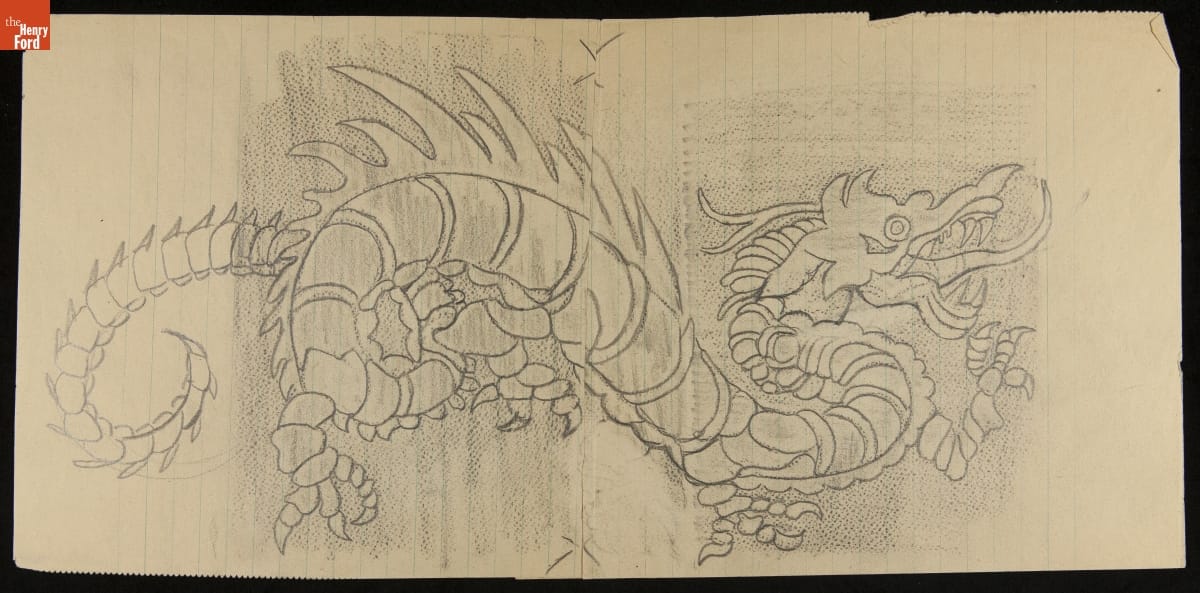
- 1915-1950
- Collections - Artifact
Tattoo Sketch, 1915-1950
Tattoos communicate stories. Their content ranges from deeply personal and traditional--to regrettable and frivolous. In the early 1900s, "Professor" Waters apprenticed as a tattoo artist in carnivals and New York's Bowery District. He ran a successful supply shop in Detroit (1918-1939), patenting the standard "two-coil" tattoo machine in 1929. Designs from his flash sheets continue to inspire tattooists today.
- Tattoo Flash Portfolio, circa 1918 - Tattoos communicate stories. Their content ranges from deeply personal and traditional--to regrettable and frivolous. In the early 1900s, "Professor" Waters apprenticed as a tattoo artist in carnivals and New York's Bowery District. He ran a successful supply shop in Detroit (1918-1939), patenting the standard "two-coil" tattoo machine in 1929. Designs from his flash sheets continue to inspire tattooists today.
- circa 1918
- Collections - Artifact
Tattoo Flash Portfolio, circa 1918
Tattoos communicate stories. Their content ranges from deeply personal and traditional--to regrettable and frivolous. In the early 1900s, "Professor" Waters apprenticed as a tattoo artist in carnivals and New York's Bowery District. He ran a successful supply shop in Detroit (1918-1939), patenting the standard "two-coil" tattoo machine in 1929. Designs from his flash sheets continue to inspire tattooists today.
- Tattoo Flash, circa 1925 - Tattoos communicate stories. Their content ranges from deeply personal and traditional--to regrettable and frivolous. In the early 1900s, "Professor" Waters apprenticed as a tattoo artist in carnivals and New York's Bowery District. He ran a successful supply shop in Detroit (1918-1939), patenting the standard "two-coil" tattoo machine in 1929. Designs from his flash sheets continue to inspire tattooists today.
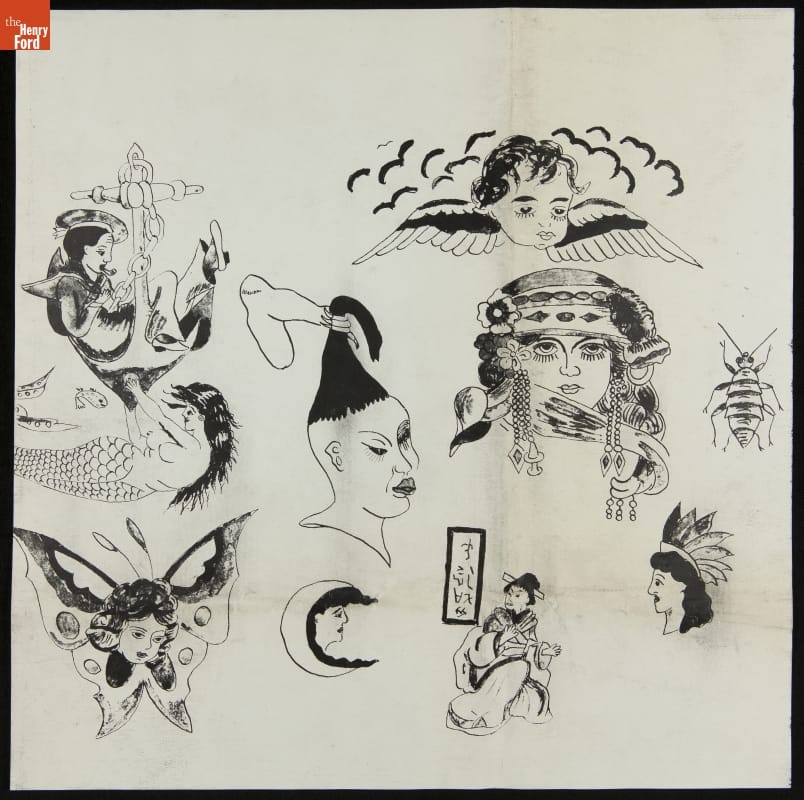
- circa 1925
- Collections - Artifact
Tattoo Flash, circa 1925
Tattoos communicate stories. Their content ranges from deeply personal and traditional--to regrettable and frivolous. In the early 1900s, "Professor" Waters apprenticed as a tattoo artist in carnivals and New York's Bowery District. He ran a successful supply shop in Detroit (1918-1939), patenting the standard "two-coil" tattoo machine in 1929. Designs from his flash sheets continue to inspire tattooists today.
- Tattoo Stencil, 1915-1950 - Tattoos communicate stories. Their content ranges from deeply personal and traditional--to regrettable and frivolous. In the early 1900s, "Professor" Waters apprenticed as a tattoo artist in carnivals and New York's Bowery District. He ran a successful supply shop in Detroit (1918-1939), patenting the standard "two-coil" tattoo machine in 1929. Designs from his flash sheets continue to inspire tattooists today.
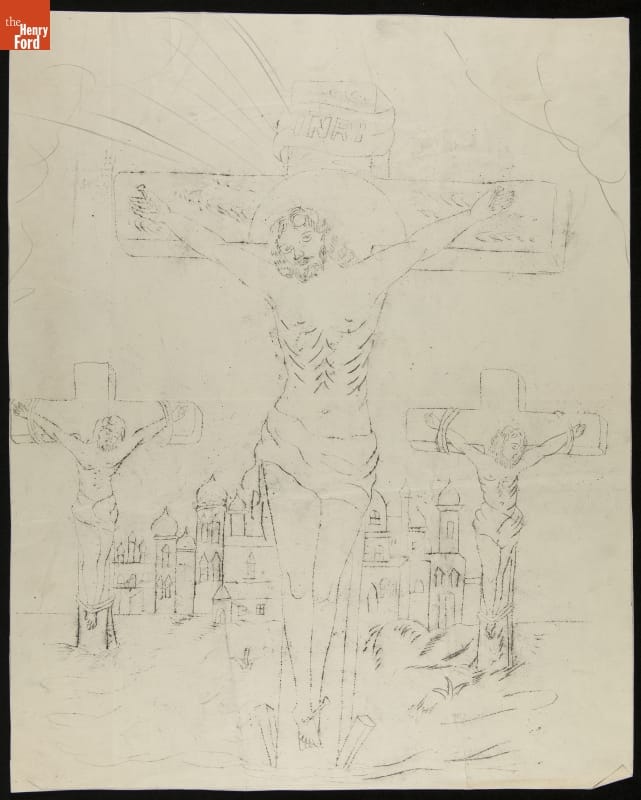
- 1915-1950
- Collections - Artifact
Tattoo Stencil, 1915-1950
Tattoos communicate stories. Their content ranges from deeply personal and traditional--to regrettable and frivolous. In the early 1900s, "Professor" Waters apprenticed as a tattoo artist in carnivals and New York's Bowery District. He ran a successful supply shop in Detroit (1918-1939), patenting the standard "two-coil" tattoo machine in 1929. Designs from his flash sheets continue to inspire tattooists today.
- Tattoo Stencils, 1920-1922 - Tattoo stencils range in material from disposable paper to plastic. Designs were drawn on transfer paper or scratched into plastic with a needle. With plastic stencils, powdered charcoal was rubbed into the lines; Vaseline was applied to the skin. When the stencil was pressed against the skin, the charcoal transferred as an outline. Stencils allowed tattooists to circulate and exchange ideas.
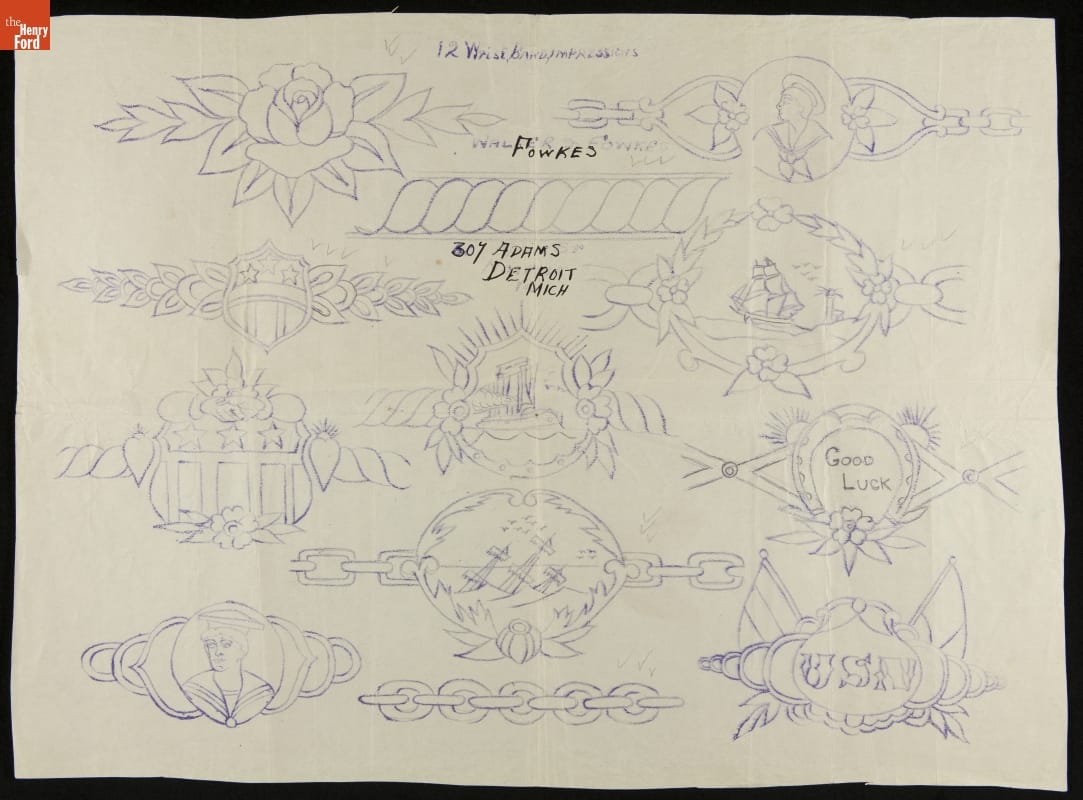
- 1920-1922
- Collections - Artifact
Tattoo Stencils, 1920-1922
Tattoo stencils range in material from disposable paper to plastic. Designs were drawn on transfer paper or scratched into plastic with a needle. With plastic stencils, powdered charcoal was rubbed into the lines; Vaseline was applied to the skin. When the stencil was pressed against the skin, the charcoal transferred as an outline. Stencils allowed tattooists to circulate and exchange ideas.
- Tattoo Stencils, 1923-1926 - Tattoo stencils range in material from disposable paper to plastic. Designs were drawn on transfer paper or scratched into plastic with a needle. With plastic stencils, powdered charcoal was rubbed into the lines; Vaseline was applied to the skin. When the stencil was pressed against the skin, the charcoal transferred as an outline. Stencils allowed tattooists to circulate and exchange ideas.
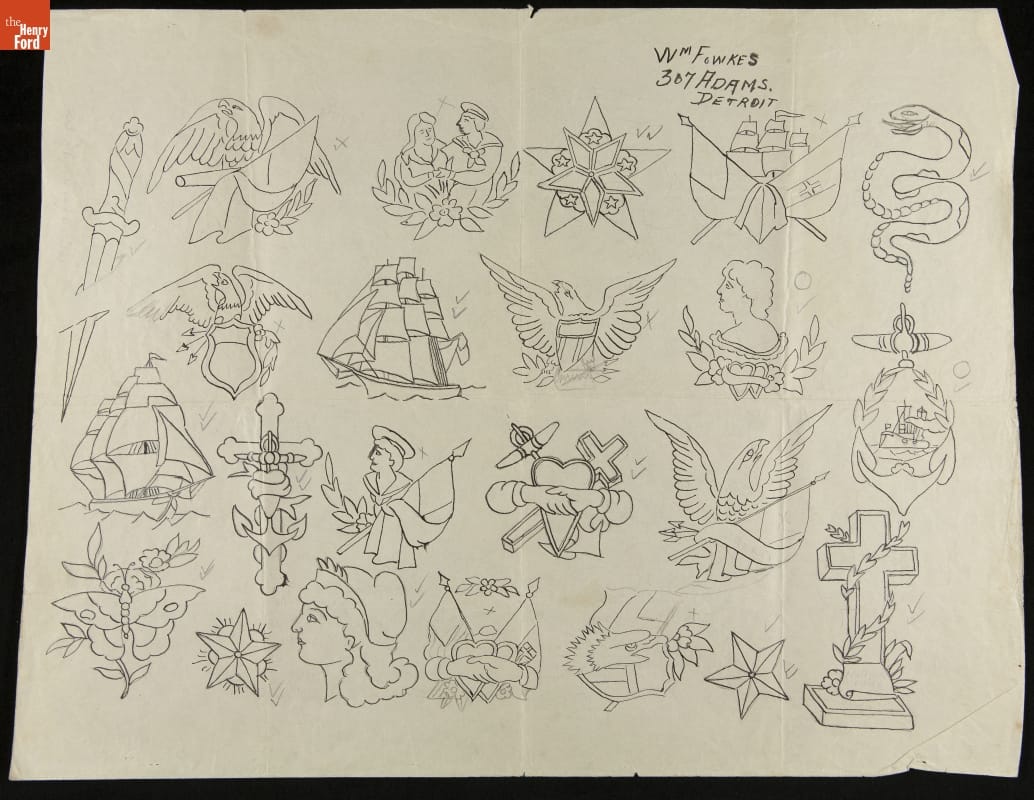
- 1923-1926
- Collections - Artifact
Tattoo Stencils, 1923-1926
Tattoo stencils range in material from disposable paper to plastic. Designs were drawn on transfer paper or scratched into plastic with a needle. With plastic stencils, powdered charcoal was rubbed into the lines; Vaseline was applied to the skin. When the stencil was pressed against the skin, the charcoal transferred as an outline. Stencils allowed tattooists to circulate and exchange ideas.
- Manuscript for the Book "Skin Deep," circa 1926 - Tattoos communicate stories. Their content ranges from deeply personal and traditional--to regrettable and frivolous. In the early 1900s, "Professor" Waters apprenticed as a tattoo artist in carnivals and New York's Bowery District. He ran a successful supply shop in Detroit (1918-1939), patenting the standard "two-coil" tattoo machine in 1929. Designs from his flash sheets continue to inspire tattooists today.
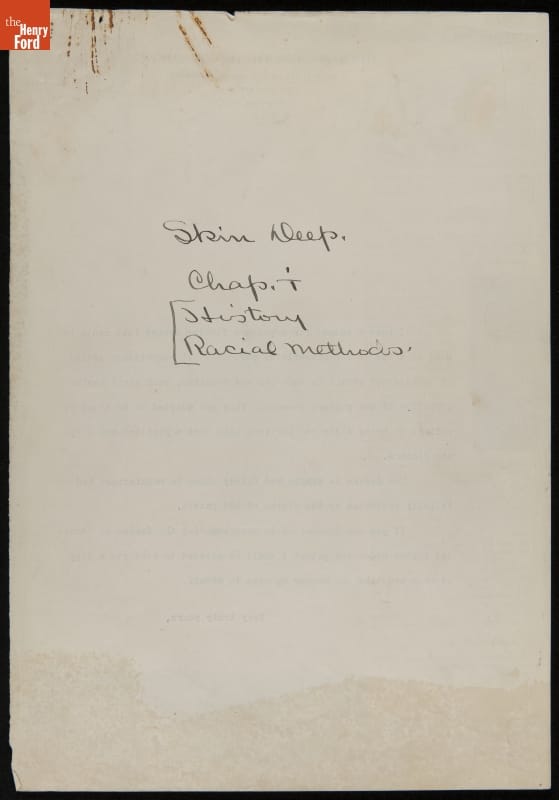
- circa 1926
- Collections - Artifact
Manuscript for the Book "Skin Deep," circa 1926
Tattoos communicate stories. Their content ranges from deeply personal and traditional--to regrettable and frivolous. In the early 1900s, "Professor" Waters apprenticed as a tattoo artist in carnivals and New York's Bowery District. He ran a successful supply shop in Detroit (1918-1939), patenting the standard "two-coil" tattoo machine in 1929. Designs from his flash sheets continue to inspire tattooists today.
- Tattoo Flash, circa 1920 - Tattoos communicate stories. Their content ranges from deeply personal and traditional--to regrettable and frivolous. In the early 1900s, "Professor" Waters apprenticed as a tattoo artist in carnivals and New York's Bowery District. He ran a successful supply shop in Detroit (1918-1939), patenting the standard "two-coil" tattoo machine in 1929. Designs from his flash sheets continue to inspire tattooists today.
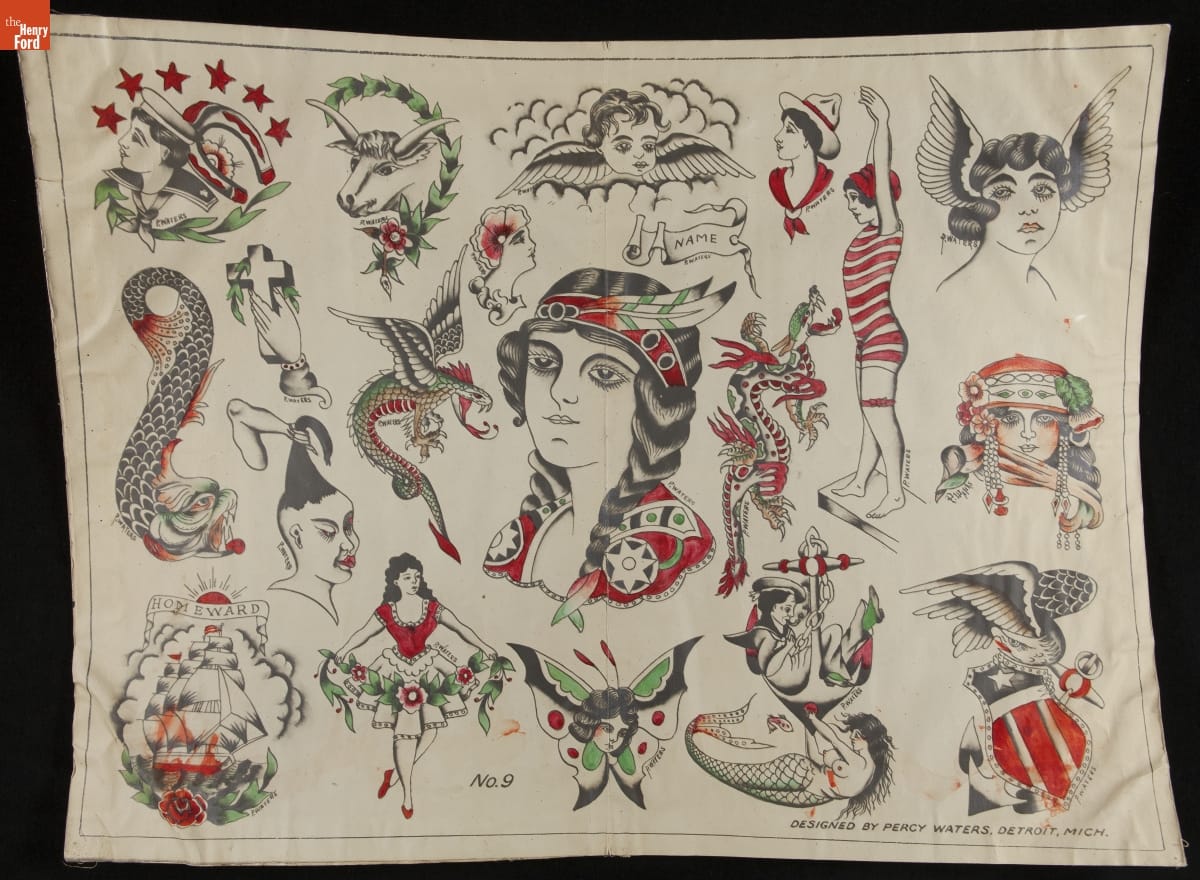
- circa 1920
- Collections - Artifact
Tattoo Flash, circa 1920
Tattoos communicate stories. Their content ranges from deeply personal and traditional--to regrettable and frivolous. In the early 1900s, "Professor" Waters apprenticed as a tattoo artist in carnivals and New York's Bowery District. He ran a successful supply shop in Detroit (1918-1939), patenting the standard "two-coil" tattoo machine in 1929. Designs from his flash sheets continue to inspire tattooists today.
- Tattoo Flash, circa 1920 - Tattoos communicate stories. Their content ranges from deeply personal and traditional--to regrettable and frivolous. In the early 1900s, "Professor" Waters apprenticed as a tattoo artist in carnivals and New York's Bowery District. He ran a successful supply shop in Detroit (1918-1939), patenting the standard "two-coil" tattoo machine in 1929. Designs from his flash sheets continue to inspire tattooists today.
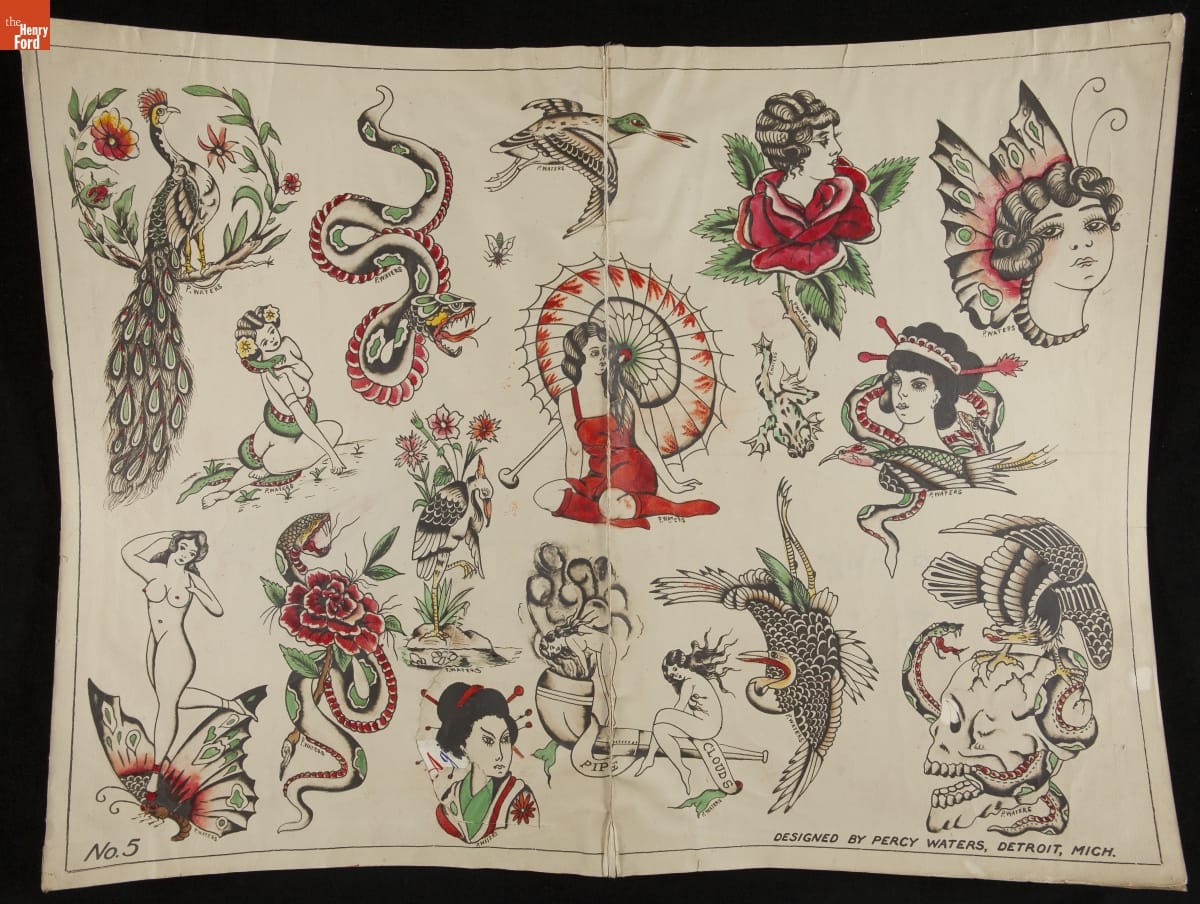
- circa 1920
- Collections - Artifact
Tattoo Flash, circa 1920
Tattoos communicate stories. Their content ranges from deeply personal and traditional--to regrettable and frivolous. In the early 1900s, "Professor" Waters apprenticed as a tattoo artist in carnivals and New York's Bowery District. He ran a successful supply shop in Detroit (1918-1939), patenting the standard "two-coil" tattoo machine in 1929. Designs from his flash sheets continue to inspire tattooists today.