
Search
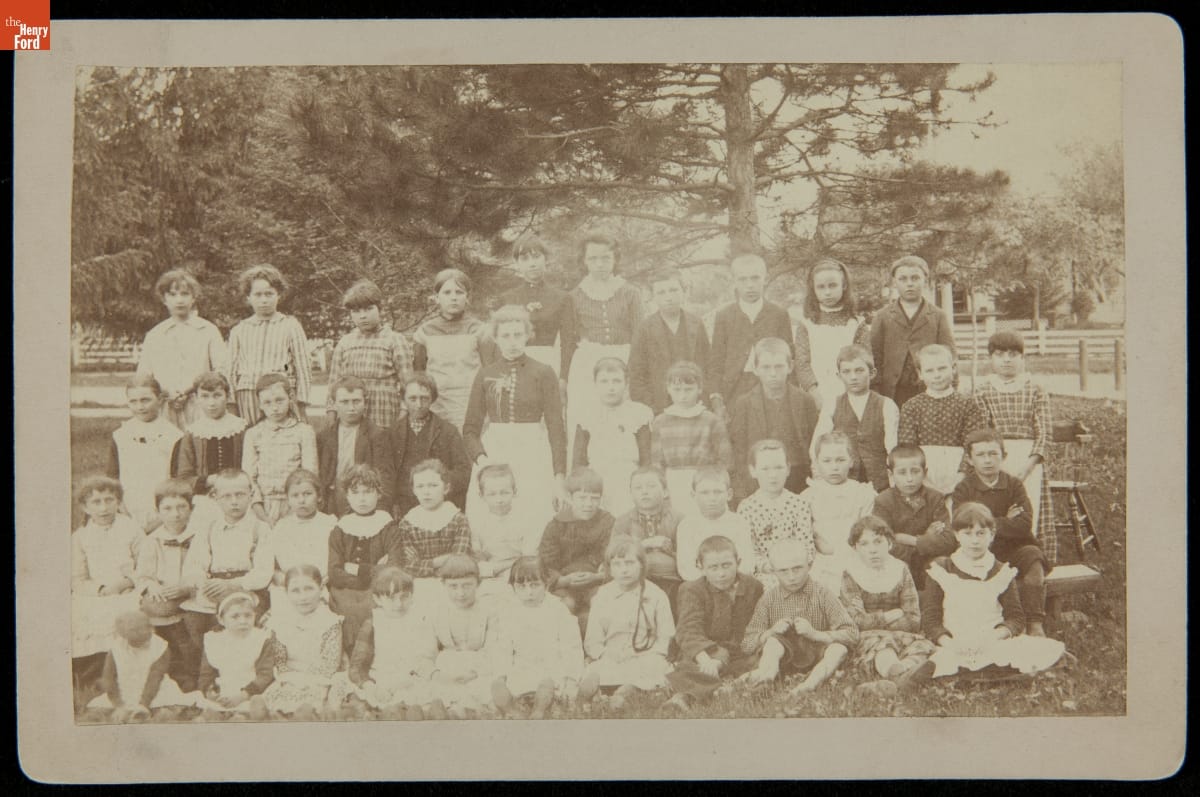
- Group of School Children and Teachers, Hillsdale, Michigan, circa 1890 - This cabinet card shows three teachers and 44 students posing outdoors, perhaps outside the school. This was not a one-room school; the students are approximately the same age. Hillsdale, Michigan, a busy railroad town, had a graded school system. The boys wear shirts, suspenders, and jackets; girls wear pinafores or aprons over their dresses. The teachers wear high-necked, long-sleeve dresses with aprons.
- circa 1890
- Collections - Artifact
Group of School Children and Teachers, Hillsdale, Michigan, circa 1890
This cabinet card shows three teachers and 44 students posing outdoors, perhaps outside the school. This was not a one-room school; the students are approximately the same age. Hillsdale, Michigan, a busy railroad town, had a graded school system. The boys wear shirts, suspenders, and jackets; girls wear pinafores or aprons over their dresses. The teachers wear high-necked, long-sleeve dresses with aprons.
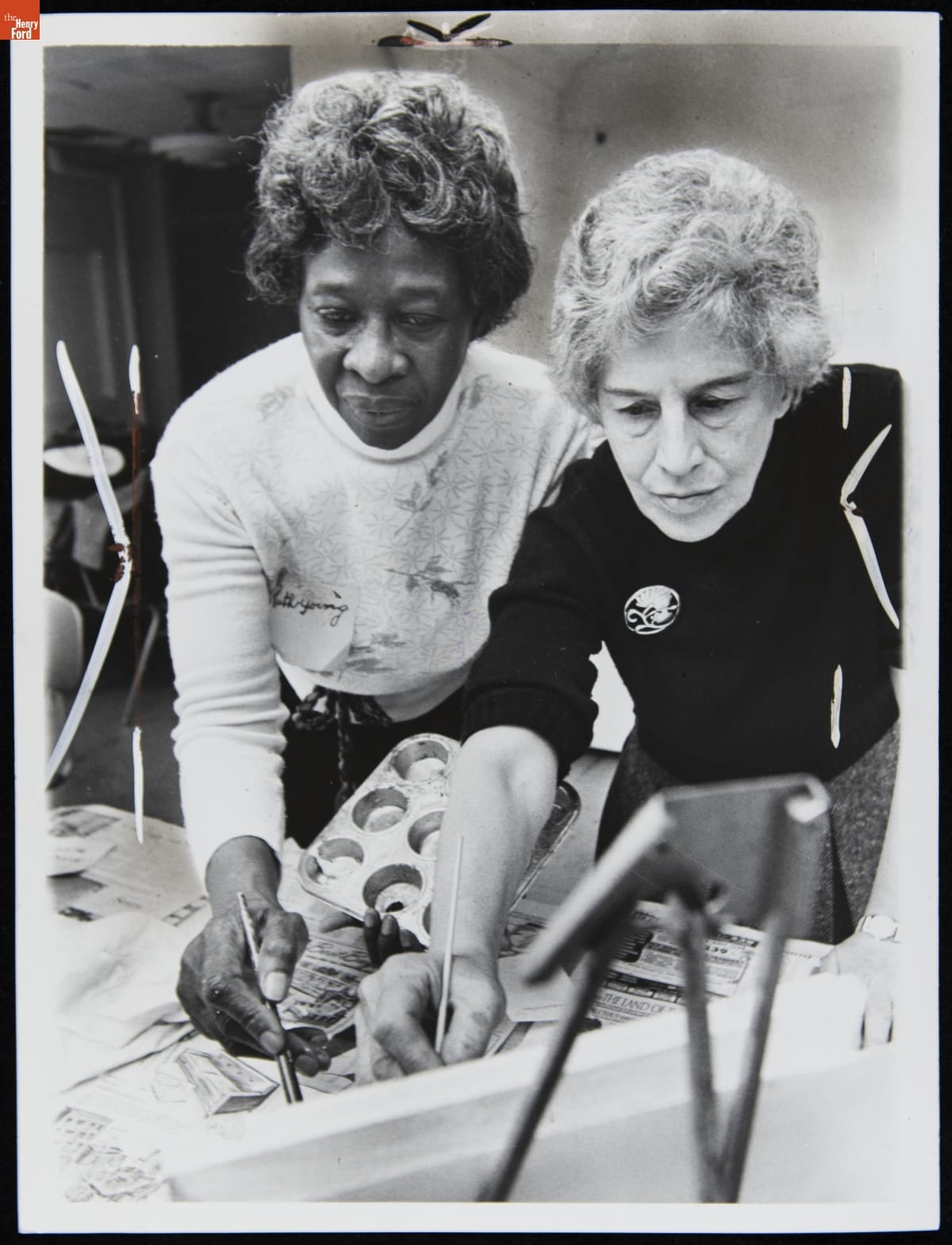
- Ruth Young and Art Teacher Josephine Barrett Mason Painting at George Washington Carver School in Detroit, March 3, 1971 -
- March 03, 1971
- Collections - Artifact
Ruth Young and Art Teacher Josephine Barrett Mason Painting at George Washington Carver School in Detroit, March 3, 1971
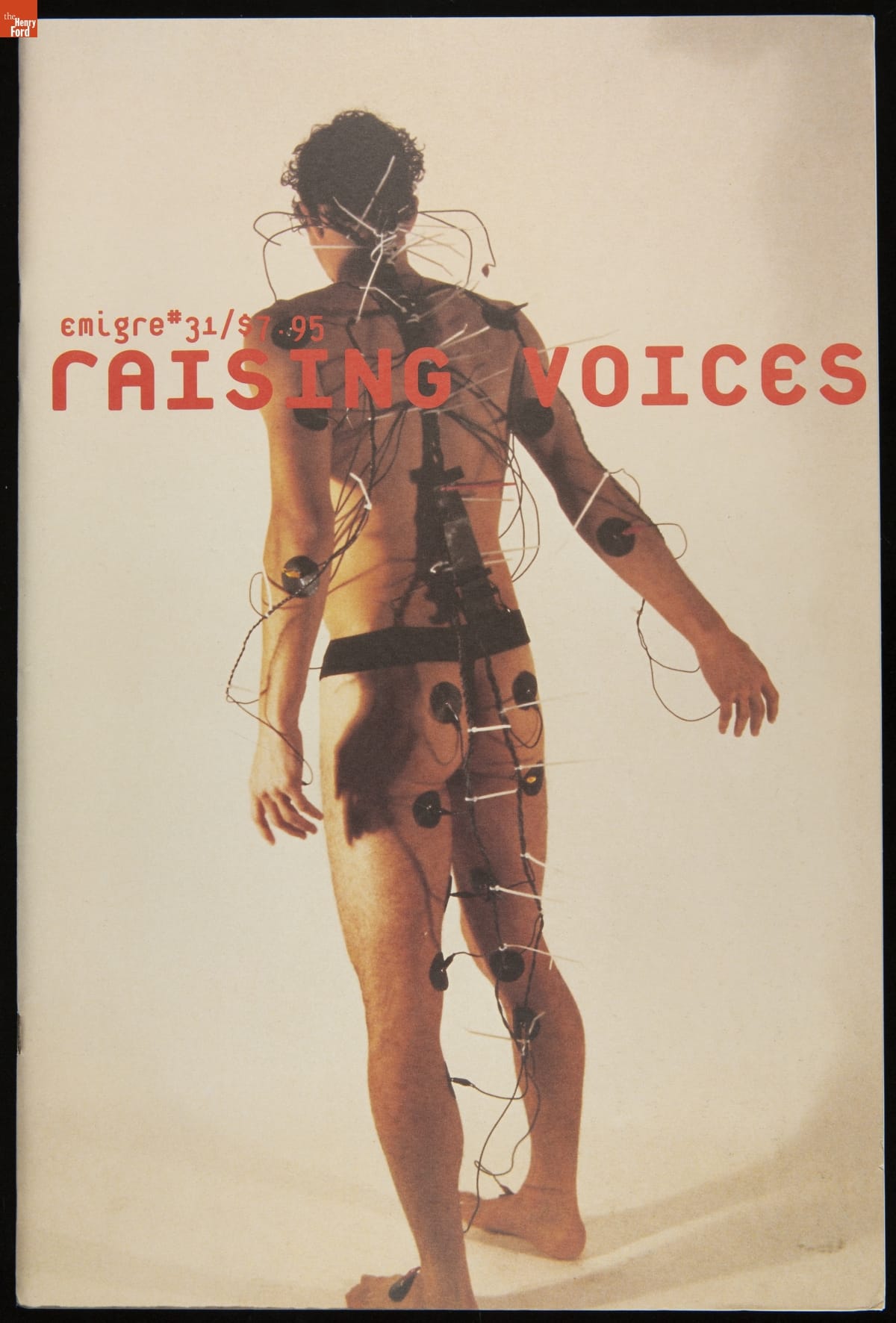
- Magazine, Emigre No. 31, "Raising Voices," 1994 - Emigre is a digital type foundry established by Rudy VanderLans and Zuzana Licko. The company's history is linked with the introduction of the 1984 Macintosh computer, used to design their early bitmapped typefaces. Emigre's digital work gained notoriety -- defying visual communication standards with fractured, layered combinations of text and image. <em>Emigre</em> magazine showcased their fonts and promoted groundbreaking designers.
- 1994
- Collections - Artifact
Magazine, Emigre No. 31, "Raising Voices," 1994
Emigre is a digital type foundry established by Rudy VanderLans and Zuzana Licko. The company's history is linked with the introduction of the 1984 Macintosh computer, used to design their early bitmapped typefaces. Emigre's digital work gained notoriety -- defying visual communication standards with fractured, layered combinations of text and image. Emigre magazine showcased their fonts and promoted groundbreaking designers.
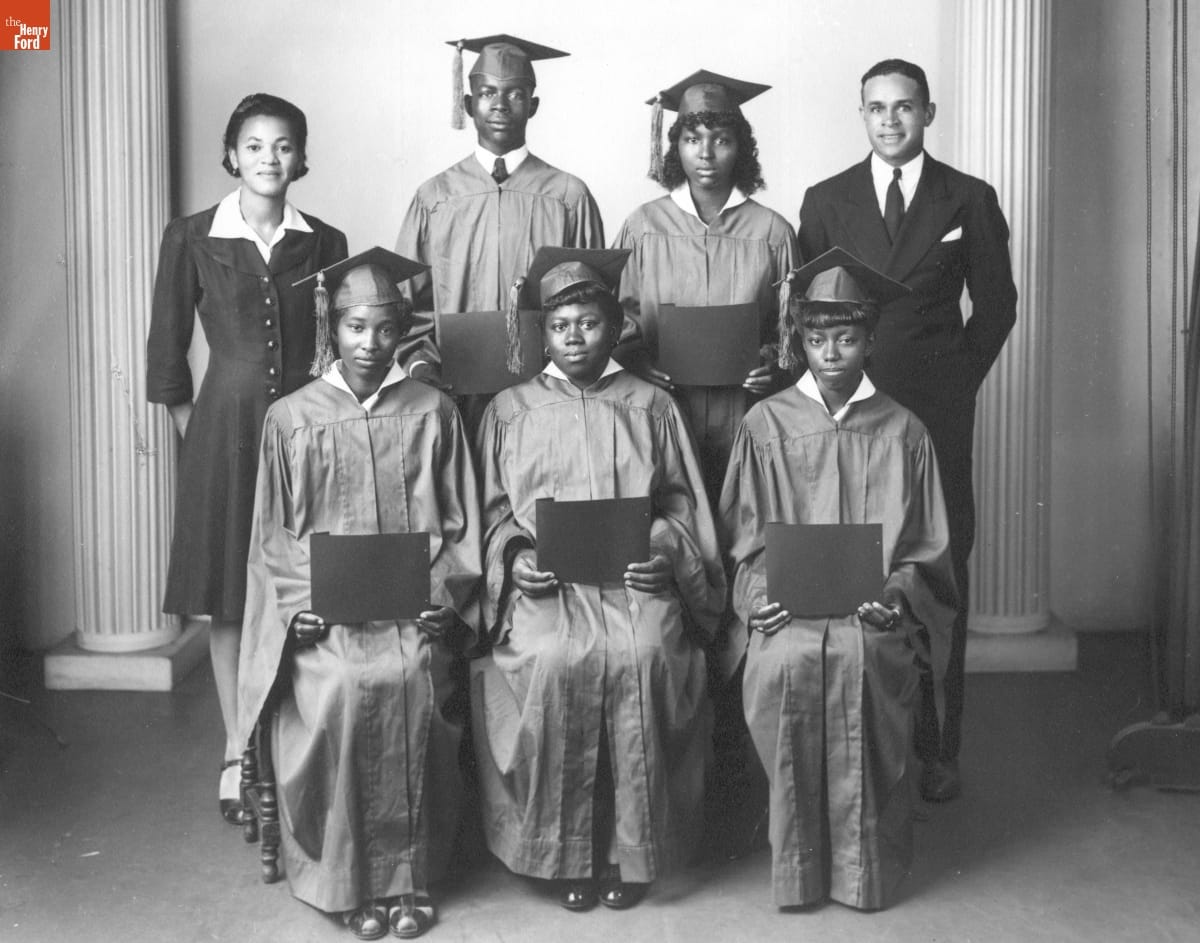
- Graduating Students and Teachers at George Washington Carver School, Richmond Hill, Georgia, 1945 - Henry Ford purchased vast amounts of land around present-day Richmond Hill, Georgia, beginning in the 1920s. After acquiring the property, Ford became interested in the economic and civic improvement of the area. He built schools, churches, and community centers. In 1939, Ford founded the George Washington Carver School. This image shows the 1945 graduating class and their teachers.
- June 01, 1945
- Collections - Artifact
Graduating Students and Teachers at George Washington Carver School, Richmond Hill, Georgia, 1945
Henry Ford purchased vast amounts of land around present-day Richmond Hill, Georgia, beginning in the 1920s. After acquiring the property, Ford became interested in the economic and civic improvement of the area. He built schools, churches, and community centers. In 1939, Ford founded the George Washington Carver School. This image shows the 1945 graduating class and their teachers.
- Flight Instructors Glenn Brown, Barbara Kibbee, and Juan Basella, Civilian Pilot Training Program, July 13, 1939 - As the world descended toward war in the late 1930s, the United States government recognized a vital need for trained aviators. It established the Civilian Pilot Training Program in 1938. Ostensibly a peacetime initiative, CPTP in fact produced flyers ready for overseas combat or stateside support missions. Pilot Barbara Kibbee was the program's first female instructor.
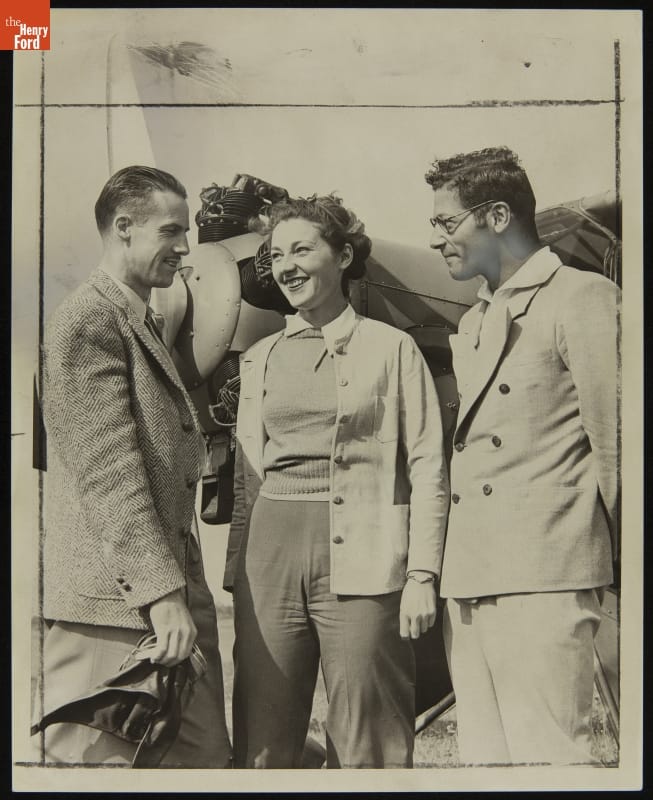
- July 13, 1939
- Collections - Artifact
Flight Instructors Glenn Brown, Barbara Kibbee, and Juan Basella, Civilian Pilot Training Program, July 13, 1939
As the world descended toward war in the late 1930s, the United States government recognized a vital need for trained aviators. It established the Civilian Pilot Training Program in 1938. Ostensibly a peacetime initiative, CPTP in fact produced flyers ready for overseas combat or stateside support missions. Pilot Barbara Kibbee was the program's first female instructor.
- Flight Instructor Barbara Kibbee, Civilian Pilot Training Program, November 21, 1939 - Barbara Kibbee started flying in 1937, earned a commercial rating, and took a job as a check pilot for the Ryan Aeronautical Company of San Diego. As the looming war created a need for trained flyers, Kibbee joined the Civilian Pilot Training Program as an instructor based at New York's Rensselaer Polytechnic Institute. She was the program's first female instructor.
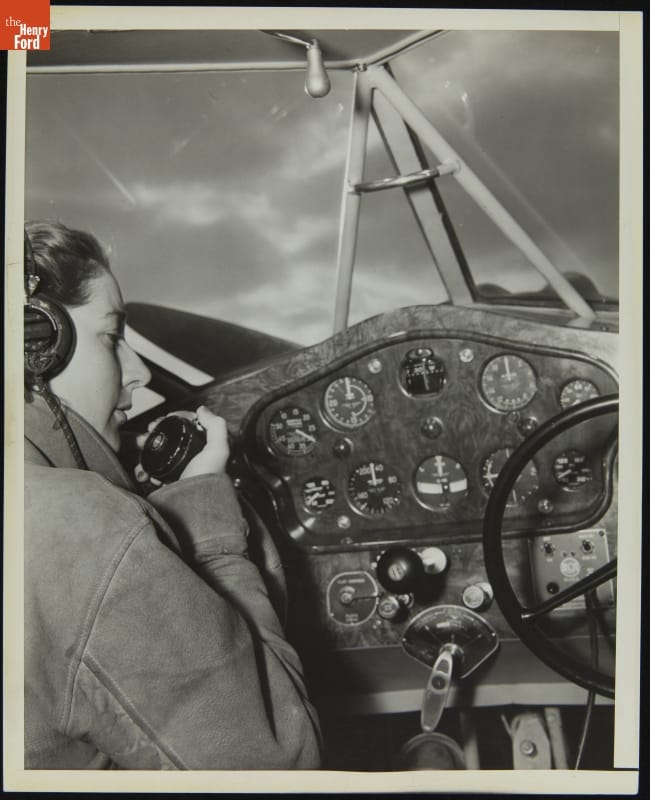
- November 21, 1939
- Collections - Artifact
Flight Instructor Barbara Kibbee, Civilian Pilot Training Program, November 21, 1939
Barbara Kibbee started flying in 1937, earned a commercial rating, and took a job as a check pilot for the Ryan Aeronautical Company of San Diego. As the looming war created a need for trained flyers, Kibbee joined the Civilian Pilot Training Program as an instructor based at New York's Rensselaer Polytechnic Institute. She was the program's first female instructor.
- Flight Instructor Barbara Kibbee, Civilian Pilot Training Program, November 21, 1939 - Barbara Kibbee started flying in 1937, earned a commercial rating, and took a job as a check pilot for the Ryan Aeronautical Company of San Diego. As the looming war created a need for trained flyers, Kibbee joined the Civilian Pilot Training Program as an instructor based at New York's Rensselaer Polytechnic Institute. She was the program's first female instructor.
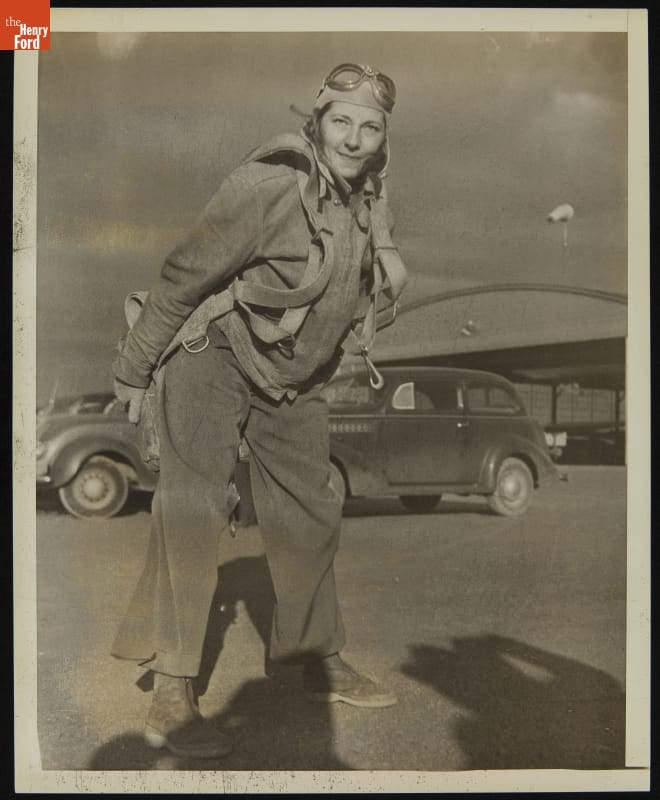
- November 21, 1939
- Collections - Artifact
Flight Instructor Barbara Kibbee, Civilian Pilot Training Program, November 21, 1939
Barbara Kibbee started flying in 1937, earned a commercial rating, and took a job as a check pilot for the Ryan Aeronautical Company of San Diego. As the looming war created a need for trained flyers, Kibbee joined the Civilian Pilot Training Program as an instructor based at New York's Rensselaer Polytechnic Institute. She was the program's first female instructor.
- "Herald" Magazine, Bound Volume IX for February 1942 - January 1943 - The students of the Greenfield Village and Associated Schools of the Edison Institute began publishing the <em>Herald</em> in 1934. They took the name from a weekly newspaper printed and sold by Thomas Alva Edison when he worked for the Grand Trunk Railroad in 1862-63. The students' version included articles on academic, social, and recreational activities. The publication continued until 1952.
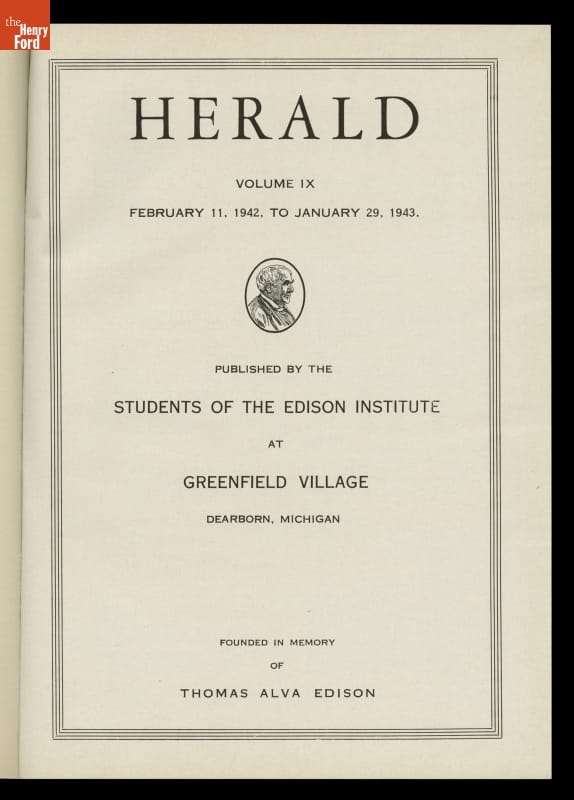
- 11 February 1942 - 29 January 1943
- Collections - Artifact
"Herald" Magazine, Bound Volume IX for February 1942 - January 1943
The students of the Greenfield Village and Associated Schools of the Edison Institute began publishing the Herald in 1934. They took the name from a weekly newspaper printed and sold by Thomas Alva Edison when he worked for the Grand Trunk Railroad in 1862-63. The students' version included articles on academic, social, and recreational activities. The publication continued until 1952.
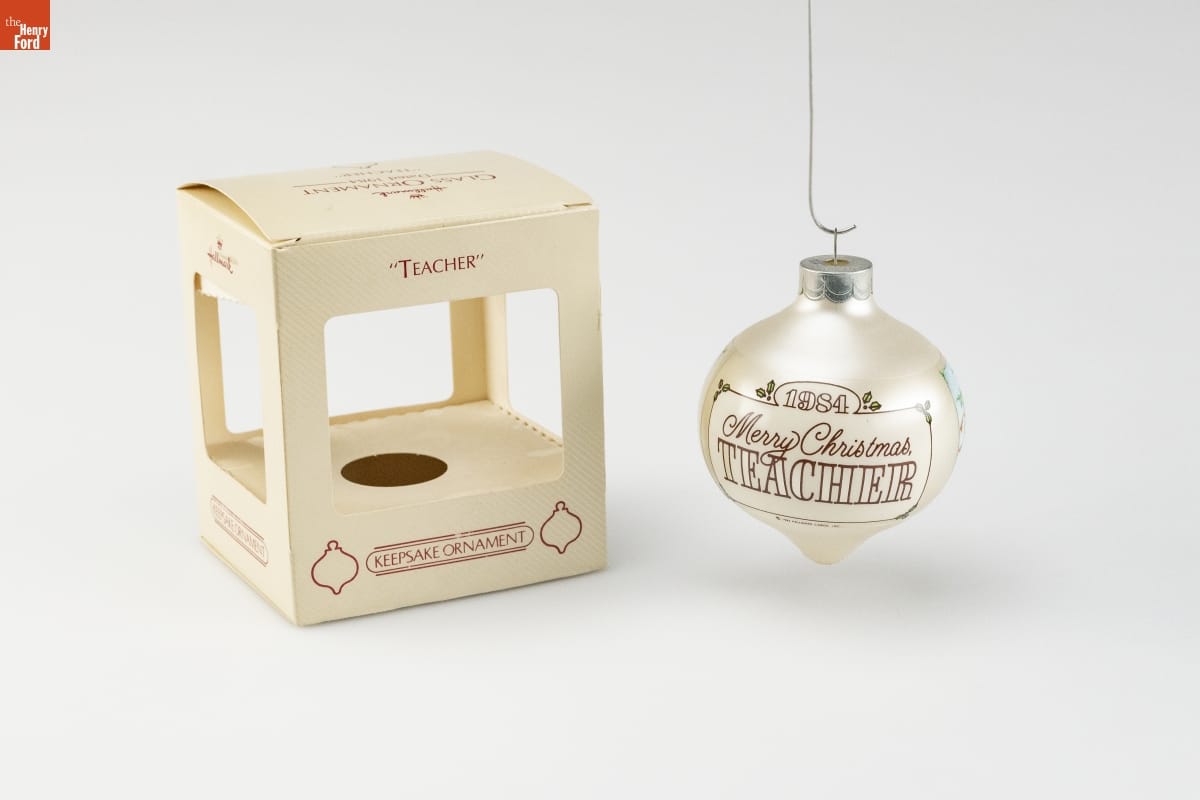
- Hallmark "Teacher" Christmas Ornament, 1984 - Already known for greeting cards, Hallmark introduced a line of Christmas ornaments in 1973. The company's annual release of an increasing array of ornaments revolutionized Christmas decorating, appealing to customers' interest in marking memories and milestones as well as expressing one's personality and unique tastes.
- 1984
- Collections - Artifact
Hallmark "Teacher" Christmas Ornament, 1984
Already known for greeting cards, Hallmark introduced a line of Christmas ornaments in 1973. The company's annual release of an increasing array of ornaments revolutionized Christmas decorating, appealing to customers' interest in marking memories and milestones as well as expressing one's personality and unique tastes.
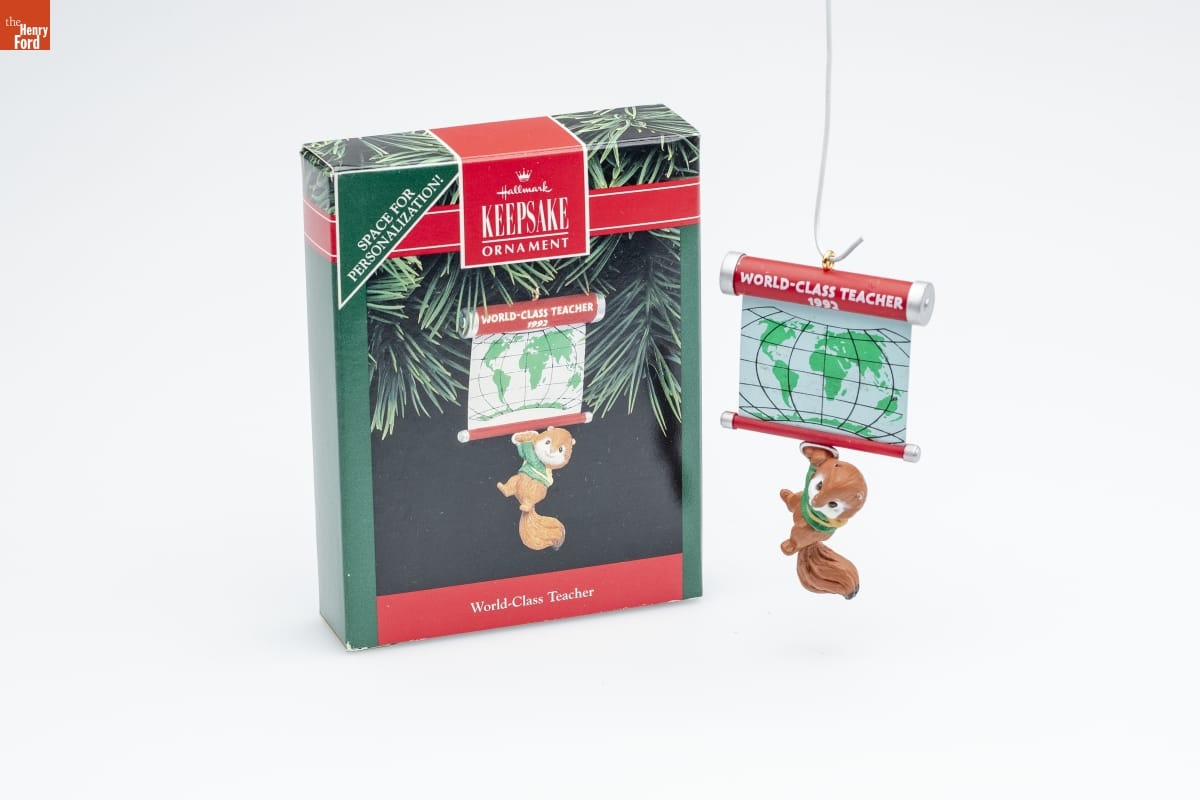
- Hallmark "World-Class Teacher" Christmas Ornament, 1992 - Already known for greeting cards, Hallmark introduced a line of Christmas ornaments in 1973. The company's annual release of an increasing array of ornaments revolutionized Christmas decorating, appealing to customers' interest in marking memories and milestones as well as expressing one's personality and unique tastes.
- 1992
- Collections - Artifact
Hallmark "World-Class Teacher" Christmas Ornament, 1992
Already known for greeting cards, Hallmark introduced a line of Christmas ornaments in 1973. The company's annual release of an increasing array of ornaments revolutionized Christmas decorating, appealing to customers' interest in marking memories and milestones as well as expressing one's personality and unique tastes.